On this page
- 1What can you use instead of a serrano?
- 2Which serrano swap should you pick?
- 3How hot is a serrano compared with its swaps?
- 4How many grams of swap carry one serrano's heat?
- 5How many jalapeños equal one serrano?
- 6Can a poblano or bell pepper stand in?
- 7Does a jalapeño taste like a serrano?
- 8Is a Fresno a good serrano swap?
- 9What about dried serrano or powder?
- 10What if the salsa comes out too hot?
- 11How long do serranos and their swaps keep?
- 12Taste at three quarters
- 13Sources
What can you use instead of a serrano?
Reach for a jalapeño first, because UF/IFAS calls it the pepper a serrano most resembles, only much milder1. You use more of it to get the same heat. If you want that heat without the extra volume, cayenne or a Thai chile gets there with less.
| Swap | Heat vs serrano | How much for 10 g serrano | Best for | Flavor note |
|---|---|---|---|---|
| Jalapeño2 | Milder: 2,000–8,000 SHU, about 0.3 × | 35 g | Raw salsa and pico de gallo | Spicy but not overwhelming |
| Hungarian wax2 | Milder: 5,000–10,000 SHU, about 0.4 × | 23 g | Raw salsa, pickles, stuffing | Not described by the source |
| Cayenne, fresh or ground1 | Hotter: 25,000–50,000 SHU, about 2 × | 5 g fresh; ¼ tsp ground3 to start | Cooked sauce, curry, soup | Not described; usually dried for powder or flakes |
| Thai (bird's eye)1 | Hotter: 50,000–100,000 SHU, about 4 × | 2.3 g | Stir-fry, curry, cooked sauce | Not described by the source |
| Tabasco pepper2 | Hotter: 30,000–50,000 SHU, about 2.3 × | 4 g | Hot sauce, peppered vinegar | Not described; known for sauce and vinegar |
| Habanero2 | Much hotter: 100,000–350,000 SHU, about 13 × | 0.8 g | Fruit salsa, only in a pinch | Fruity, citrus-like, floral |
| Poblano plus cayenne2 | Poblano 1,000–2,000 SHU; the cayenne carries the heat | 25 g poblano + 3.8 g fresh cayenne | Green crunch in salsa with a hot helper | Poblano: rich melon flavor |
The order puts flavor and use first and heat second. A jalapeño keeps your salsa tasting like the recipe; everything below it in the table trades flavor for heat.
Jalapeño, the closest swap
A jalapeño goes into the same fresh salsa a serrano does, and UF/IFAS describes it as spicy but not overwhelming2. Its midpoint is 5,000 SHU against the serrano's 17,500, so you use about 3.5 times the weight, an estimate. The bowl gets more green flesh, so cut the onion a little if it looks crowded.
Hungarian wax, a bit hotter than a jalapeño
At 5,000–10,000 SHU2, a Hungarian wax gets you closer to a serrano with less pepper: about 2.3 times the weight. Use it raw or pickled, the way you would a jalapeño. No source we read describes its flavor.
Cayenne, fresh or ground, for cooked dishes
A cayenne runs 25,000–50,000 SHU and is usually dried for powder or flakes1. Fresh, you use about half the serrano's weight. Ground, nobody we read rates the powder against a fresh pod, so start your pot with a quarter teaspoon (about 0.45 g by USDA's weight3) and taste.
Thai chiles, for a curry or stir-fry
A Thai chile rates 50,000–100,000 SHU1, about four times a serrano by midpoint. Use about a quarter of the weight, minced fine, in a dish where the pepper cooks down. Raw in salsa, one small pod is easy to overdo.
Tabasco peppers, if you grow them
UF/IFAS lists the Tabasco pepper at 30,000–50,000 SHU and ties it to sauce and peppered vinegar2. Use about 4 g for each 10 g of serrano. The pods are small and soft, so they suit a blended sauce better than a chunky salsa.
Habanero, only in an emergency
A habanero is about 13 times a serrano by midpoint and tastes fruity, citrus-like and floral2. That means under a gram replaces 10 g of serrano, and the fruit flavor changes your dish. Weigh it, because a one-gram slip doubles the burn.
Poblano plus a pinch of cayenne, for body
A poblano alone is too mild: its 1,500 SHU midpoint2 would need over 100 g to match 10 g of serrano. Use it for the green crunch and let cayenne carry the heat: 25 g poblano and 3.8 g fresh cayenne give (25 × 1,500) + (3.8 × 37,500) = 180,000 heat units, close to the serrano's 175,000, an estimate.
Why no Fresno in the list? No primary source we read gives it a heat range, so we can't work a ratio for it. The Fresno section further down tells you how to use one anyway.
Which serrano swap should you pick?
Pick by what the serrano does in your dish, then by how much heat you can live with. These five cases cover most recipes that call for one:
- Raw salsa or pico de galloJalapeño3.5 times the weight. Both peppers go into fresh salsa, so your bowl looks much the same.2
- A cooked sauce, curry or soupCayenne or Thai chileabout half the weight in cayenne, or a quarter in Thai chile, since the pepper melts into the pot.12
- Less heat than the recipeJalapeño, one for oneby weight you land at about 30 % of the serrano's heat, from the midpoints.2
- Only a mild pepper at homePoblano plus cayennethe poblano gives body, the cayenne gives heat.2
- A bottled hot sauceTabasco or cayenneboth are hotter, so you blend in less.2
The habanero is the one row we leave for emergencies, because its fruit flavor and its 13 × heat change the dish more than any other swap.
How hot is a serrano compared with its swaps?
A serrano rates 10,000 to 25,000 SHU2, which sits it in the medium band, above every jalapeño. The jalapeño tops out at 8,0002, so even the hottest jalapeño is milder than the mildest serrano.
Log scale; bars are published ranges.2
Heat also moves from field to field. NMSU's own serrano cultivars show it: NuMex CaJohns averages 3,500 SHU and NuMex LotaLutein 31,5004, both serranos, nine times apart. Taste your swap before you add the last of it.
Other extension sources print other ranges, which is why swap charts online disagree. Texas AgriLife gives the serrano an average of 7,000–25,000 SHU and the jalapeño 3,500–4,5005. We use the UF/IFAS ranges on this page, because UF/IFAS rates every swap in the table on one list, so you compare like with like.
How many grams of swap carry one serrano's heat?
Divide the serrano's midpoint by the swap's midpoint, then multiply by the weight the recipe asks for. The result is grams of swap that carry about the same heat. It is an estimate, because each range covers many pods.
- Weigh the serranoOr count pods: about 6.1 g each
- Multiply by 17,500The serrano midpoint gives heat units
- Divide by the swap's midpointJalapeño 5,000, cayenne 37,500
- Turn grams into podsA jalapeño weighs about 14 g
- Add three quarters, tasteThen add the rest if you need it
Sources for this line2. University of Florida IFAS Extension6. USDA Agricultural Research Service, FoodData Central (SR Legacy)7. USDA Agricultural Research Service, FoodData Central (SR Legacy)
The serrano midpoint is (10,000 + 25,000) ÷ 2 = 17,500 SHU. For a jalapeño, (2,000 + 8,000) ÷ 2 = 5,000. So 17,500 ÷ 5,000 = 3.5: each gram of serrano becomes 3.5 g of jalapeño.
A worked example for 20 g of serrano
Say your pico de gallo calls for 20 g of serrano. Here is the same heat from each swap, using the midpoints from the table above.
| Swap | Midpoint | Serrano ÷ swap | Grams to use |
|---|---|---|---|
| Jalapeño | 5,000 SHU | 17,500 ÷ 5,000 = 3.5 | 70 g |
| Hungarian wax | 7,500 SHU | 17,500 ÷ 7,500 = 2.3 | 47 g |
| Cayenne | 37,500 SHU | 17,500 ÷ 37,500 = 0.47 | 9 g |
| Thai (bird's eye) | 75,000 SHU | 17,500 ÷ 75,000 = 0.23 | 5 g |
Seventy grams of jalapeño is a lot more pepper in the bowl. If that changes the salsa too much, split it: 40 g of jalapeño and 4 g of cayenne give (40 × 5,000) + (4 × 37,500) = 350,000, the same total as 20 g × 17,500 for the serrano.
How many jalapeños equal one serrano?
About one and a half. USDA weighs one raw serrano at 6.1 g6 and one raw jalapeño at 14 g7. At 3.5 times the weight, one serrano becomes 6.1 × 3.5 = 21 g of jalapeño, and 21 ÷ 14 = 1.5 pods.
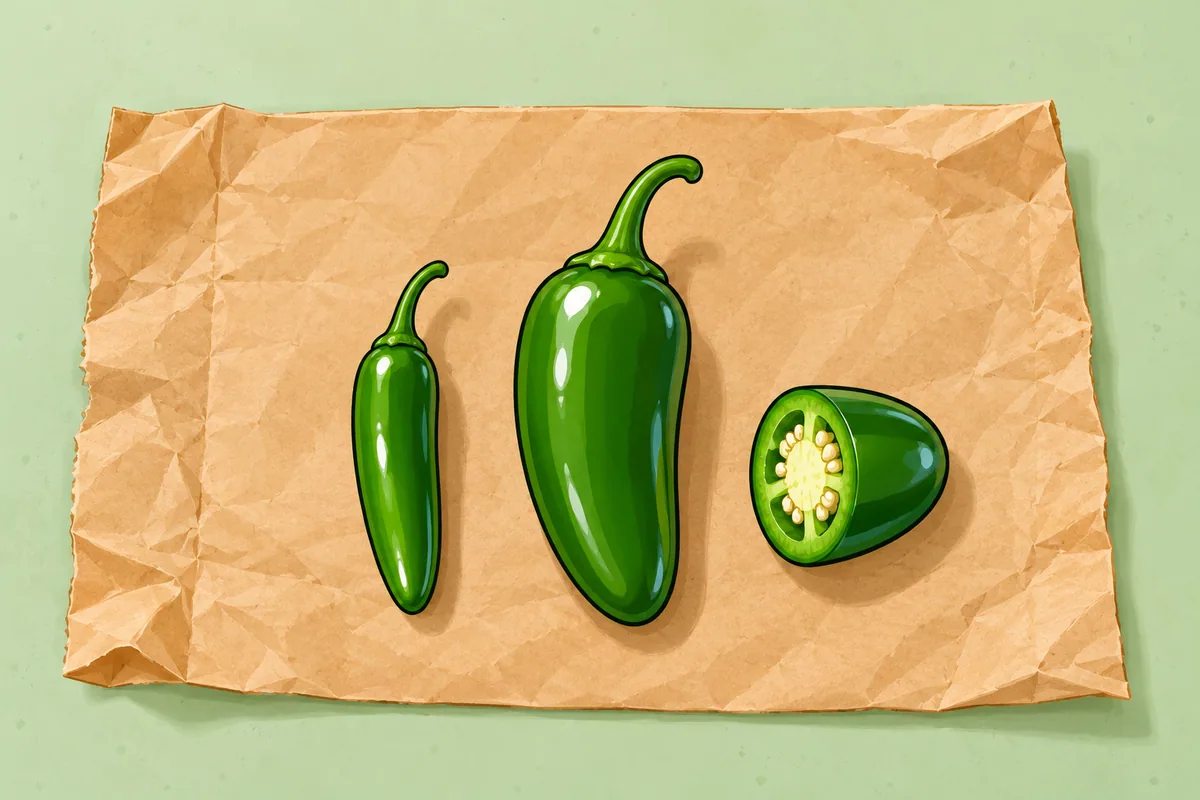 One serrano: about 6.1 g6One jalapeño: about 14 g7Plus half a jalapeño matches one serrano's heatSources for this line2. University of Florida IFAS Extension6. USDA Agricultural Research Service, FoodData Central (SR Legacy)7. USDA Agricultural Research Service, FoodData Central (SR Legacy)
- One serrano: about 6.1 g6
- One jalapeño: about 14 g7
- Plus half a jalapeño matches one serrano's heatSources for this line2. University of Florida IFAS Extension6. USDA Agricultural Research Service, FoodData Central (SR Legacy)7. USDA Agricultural Research Service, FoodData Central (SR Legacy)
| Recipe says | Serrano weight | Jalapeño weight for the same heat | Jalapeños to use |
|---|---|---|---|
| 1 serrano | 6 g | 21 g | 1½ |
| 2 serranos | 12 g | 43 g | 3 |
| 3 serranos | 18 g | 64 g | 4½ |
| 4 serranos | 24 g | 85 g | 6 |
Those are USDA averages, and the pods in your bag will differ, so weigh them if you have a scale. Count pods only when you have none.
Can a poblano or bell pepper stand in?
Not on its own. A poblano's midpoint is 1,500 SHU2, so matching the 350,000 heat units of 20 g of serrano takes 350,000 ÷ 1,500 = 233 g of poblano, more than ten times the pepper your salsa was built for. A bell pepper rates 0 SHU2 and can never get there.
What a mild pepper can give you is the green crunch, while a hot one carries the burn. Chop 50 g of poblano for body and add 7.5 g of cayenne: (50 × 1,500) + (7.5 × 37,500) = 356,250 heat units, within 2 % of the serrano's 350,000.
Does a jalapeño taste like a serrano?
Close, and they do the same jobs. UF/IFAS describes the serrano's flavor as bright and biting and the jalapeño as spicy but not overwhelming2. People usually eat serranos raw, often in pico de gallo1.
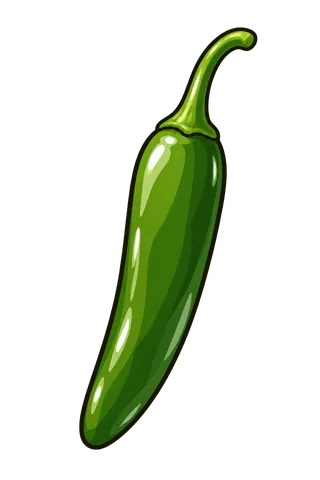
Serrano
Hotter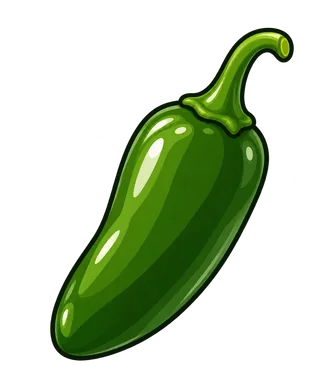
The flesh row is why a jalapeño works so well in salsa: both pods give you a thick, wet bite rather than a thin skin. Kentucky's extension calls serranos small and usually very hot peppers that ripen from green to red8, so a red serrano in your recipe swaps for a red jalapeño the same way.
Is a Fresno a good serrano swap?
Maybe, but we can't give you a ratio. Texas AgriLife lists Fresno among its hot hybrids and specialty varieties without a heat figure5, and neither UF/IFAS list rates it. Swap charts that call it a one-for-one match print a number with no lab behind it.
If a Fresno is what you have, treat it as an unknown: chop one, taste a sliver, and add it to your salsa in thirds. The jalapeño rows above are the safer plan when you are cooking for guests.
What about dried serrano or powder?
Cayenne is the pepper you are most likely to have dried, since UF/IFAS says it is usually dried and ground into powder or flakes1. USDA weighs a teaspoon of ground red pepper at 1.8 g3. No source we read rates the powder against the fresh pod, so start your sauce with a quarter teaspoon, about 0.45 g, stir, taste and add more from there.
What if the salsa comes out too hot?
You can pull a hot swap back at three points: before you chop, in the bowl, and at the table.
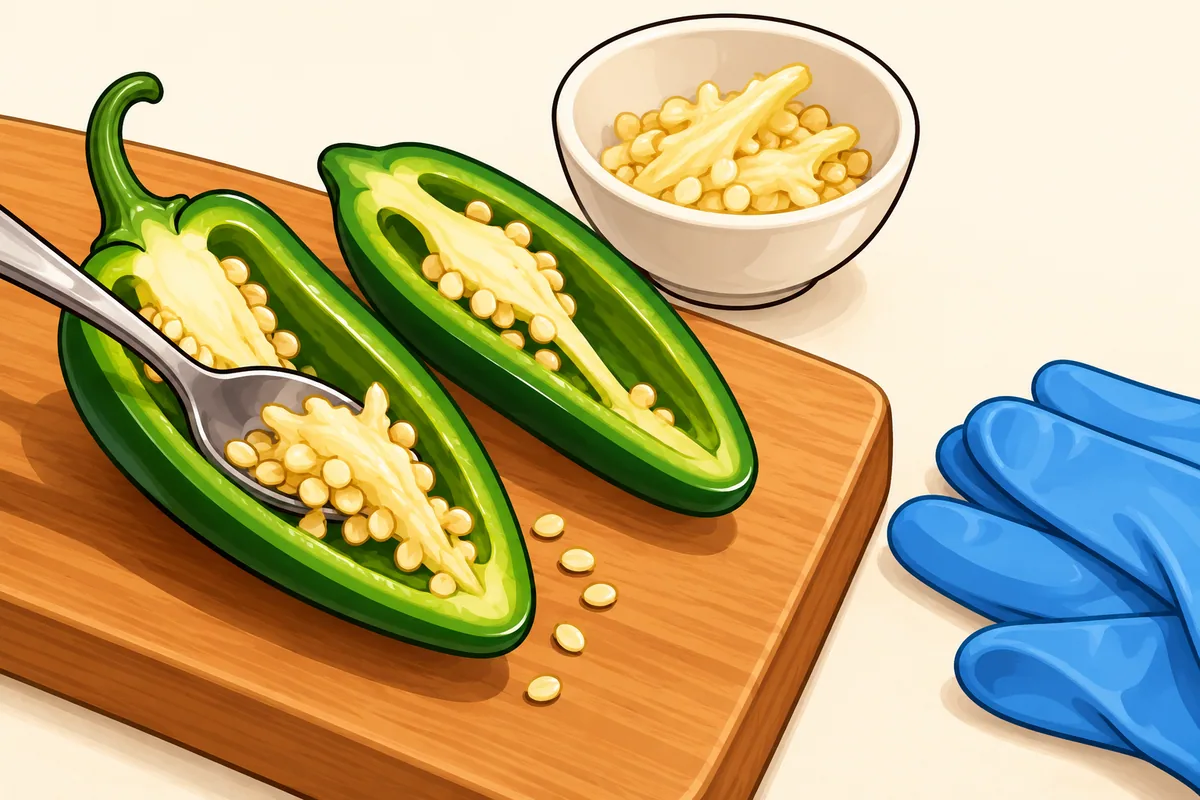
- Before you chop, split the pods and scrape out the pale ribs and seeds, where most of the capsaicin sits.9
- In the bowl, add more of everything else. Doubling the tomato, onion and lime halves the heat in each spoonful, because the same heat units spread through twice the salsa.2
- At the table, pour milk. In a 2019 Penn State study of seven drinks, whole and skim milk cut the burn the most, while cola, seltzer and other carbonated drinks did poorly.10
- On your hands, soak them in plain vinegar to ease the sting. Next time wear rubber gloves or a thin layer of solid fat, and keep your fingers away from your eyes.11
For a pot of chili or soup that overshot, the fixes for food that is too spicy go further than a salsa allows.
How long do serranos and their swaps keep?
About two to three weeks, if you keep them cool but not cold. The numbers below come from Texas and Kentucky extension guides for fresh hot peppers:
A home fridge usually runs colder than 45°F, so use fridge-stored pods within the first week or two and watch for soft, sunken spots. Kentucky also tells you to keep peppers away from apples, melons, pears and tomatoes, which give off ethylene8.
At the store, pick pods with whole, unbroken skin. Kentucky's guide warns that breaks and punctures in the skin lead to decay, and that cooling peppers soon after harvest extends their shelf life8, so get your bag of jalapeños into a cool spot the day you buy it.
If a bag of jalapeños will not get used in time, freeze them. Penn State freezes hot peppers raw with no blanching: wash, stem, pack with no headspace and seal12. The freezing steps cover thawing for salsa.
Taste at three quarters
Chop the swap, add three quarters of the worked amount, taste, then add the rest. That last quarter is your buffer for a hot pod in a mild bag, which the NMSU cultivar spread above shows you can't rule out.
The serrano's entry has its full range and uses. For any other pepper, the pepper swap chart runs the same math.
If you came here from the mild end, the Anaheim swaps cover green chiles at about a sixth of a serrano's heat, by midpoint.