On this page
What can you use instead of aji panca?
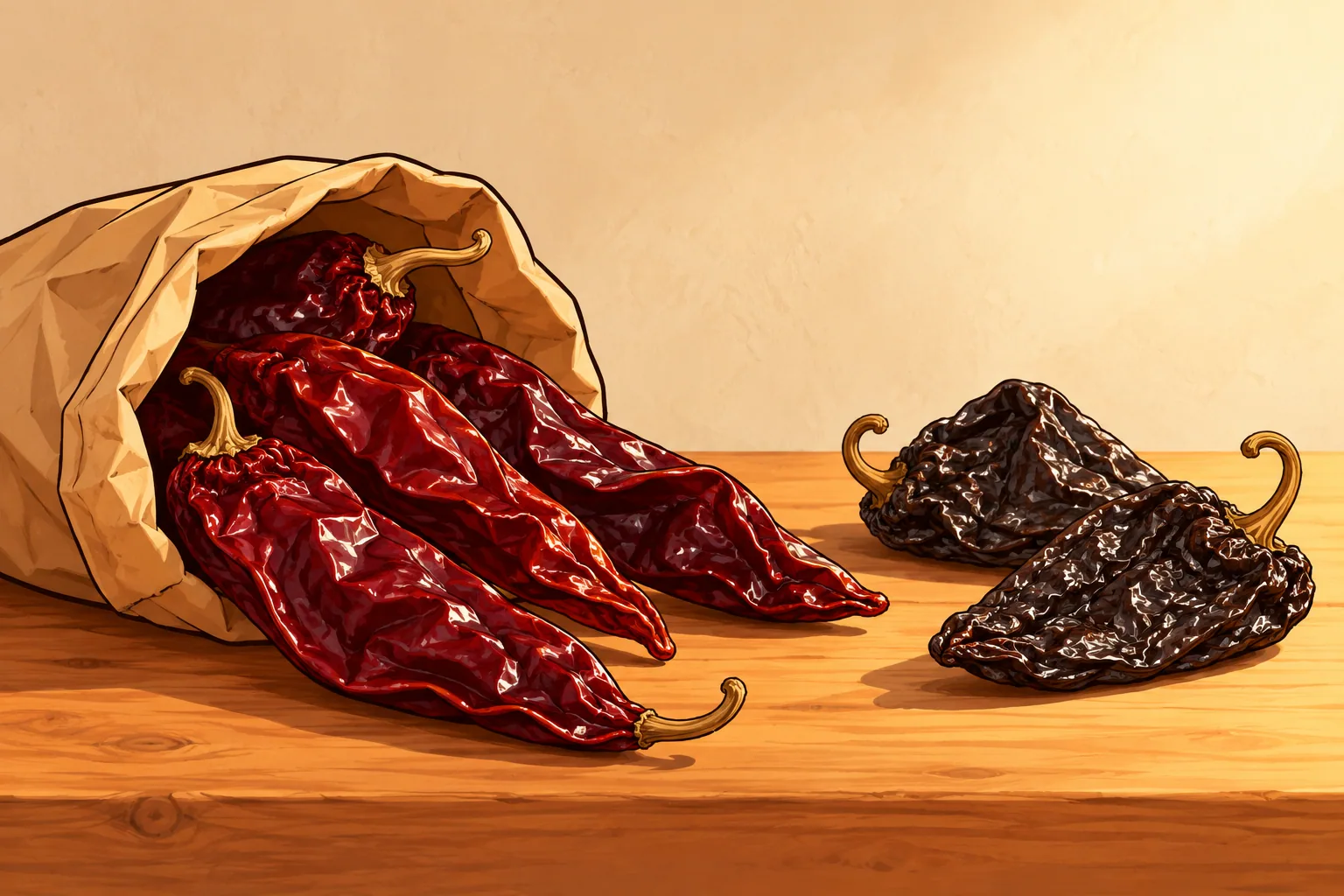
Use ancho for your swap; it is simply the dried form of the poblano pepper1. It is mild, dried and dark red like panca, and slightly hotter, so you use a bit less and make up the color with paprika. Chipotle adds the smoky note in small amounts.
| Swap | Heat vs aji panca | How much for 10 g aji panca | Best for | Flavor note |
|---|---|---|---|---|
| Ancho (dried poblano)1 | A little hotter: poblano 1,000–2,000 SHU2, about 1.5 × | 6.5 g, plus 3.5 g paprika | Stews and adobo | Fresh poblano: rich melon flavor; dried flavor not described |
| Ground mild New Mexican red3 | About the same: about 900 SHU average, about 0.9 × | 10 g | Stews and dry rubs | Not described by the source |
| Ancho, paprika and chipotle paste4 | About the same: about 1,225 SHU per gram, about 1.2 × | 10 g of the blend: 6.5 g ancho, 3 g paprika, 0.5 g chipotle | Adobo and marinades | Smoke from the chipotle, by the pinch |
| Chipotle plus paprika1 | Chipotle alone about 5 ×: jalapeño range 2,000–8,000 SHU2 | 2 g chipotle plus 8 g paprika | Grill marinades | Smoke from the drying |
| Paprika plus a pinch of cayenne2 | About the same: about 1,125 SHU per gram | 9.7 g paprika plus 0.3 g cayenne | Snack seasoning, rubs, long stews | Not described; no smoke |
| Paprika alone1 | Almost none: non-pungent | 10 g | Color in a mild pot for kids | Red chile used as a spice or for color |
Panca is mostly about color and a little heat, so paprika belongs in almost every swap. The heat-carrying pepper in each row is there to put back the mild warmth paprika lacks.
Why only six, and no fresh pepper? Cooks use panca dried5, so every swap that copies it is dried or ground too. A cayenne row on its own would be about 37 times hotter by midpoint, so it only works as the pinch in row five.
Ancho, the closest single pepper
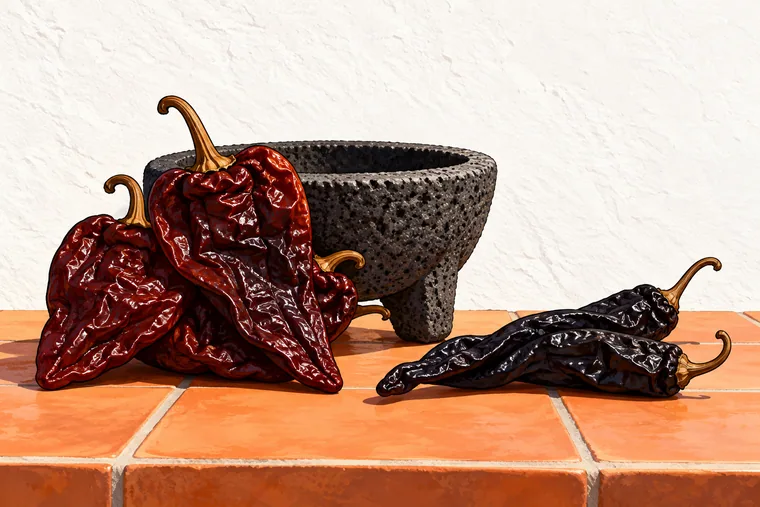
Ancho is the dried poblano1, and the poblano rates 1,000–2,000 SHU2. That is about 1.5 times panca by midpoint, so you use 6.5 g of ancho per 10 g of panca and make up the rest with paprika for color. USDA weighs one dried ancho at about 17 g6.
Ground mild New Mexican red, the closest on heat
NMSU averages NM 6-4 and NuMex Joe E. Parker at about 900 SHU3, close to panca's 1,000 SHU midpoint. If your shop sells ground New Mexico red chile from a mild cultivar, swap it weight for weight and skip the arithmetic. Hotter cultivars exist, so check the label.
The three-jar paste, for adobo
Ancho gives body, paprika gives red, and chipotle gives smoke. At the midpoints the blend lands near 1,225 SHU per gram, inside the panca spec4. The supplier compares panca's smoke to a milder chipotle, so you add chipotle by the pinch, never by the spoon.
- AnchoBody and mild heat, 1,000–2,000 SHU
- Panca-style pasteAbout 1,000 SHU per gram
- PaprikaRed color, no heatMild
- ChipotleSmoke, used by the pinch
Bars show published heat ranges. Sources for this line1. New Mexico State University, Chile Pepper Institute2. University of Florida IFAS Extension3. New Mexico State University4. PRODERNA (J.H. Lüttge GmbH), ingredient supplier, spec for its own product
Chipotle plus paprika, for smoke on the grill
Chipotle is a smoke-dried red jalapeño1, and jalapeños rate 2,000–8,000 SHU2. That makes it about five times hotter than panca, so you use only 2 g and add 8 g of paprika to bring back the color. Your marinade tastes smokier than panca would.
Paprika plus a pinch of cayenne, from the spice rack
Cayenne rates 25,000–50,000 SHU2, so 0.3 g of it in 9.7 g of paprika gives about 1,125 SHU per gram. You get the color and the gentle heat, but no smoke and no berry note. It works best dusted on snacks or simmered in a long stew.
Paprika alone, for color and no heat
Paprika is any non-pungent red chile used for color1. Swap it gram for gram when you cook for kids or anyone who wants zero heat. Your dish keeps the red and loses the warmth.
Which aji panca swap should you pick?
Pick your swap by what panca does in the dish: in most Peruvian recipes it gives color first and gentle heat second5.
- Adobo and other marinadesThe three-jar pasteyour meat sits in it, so the smoke shows.4
- Stews such as carapulcra, chupe or parihuelaAncho and paprikaskip the chipotle, since a long simmer lets the ancho's body carry the dish.5
- Snack seasoning and dry rubsPaprika plus cayennedry and easy to dust.2
- Only one jar on the shelfGround mild New Mexican redweight for weight, no blending.3
- A mild pot for kidsPaprika alonethe color with no heat at all.1
What is aji panca like?
Aji panca is a Peruvian chile that cooks generally use dried: its heat is low, and it gives dishes an intense color5. It goes into chupe, adobo, escabeche, carapulcra, pachamanca and parihuela, and into seasonings for snacks5.
PRODERNA, the supplier behind that spec, describes a fruity, berry-like flavor with an aromatic, smoky taste and a mild lingering heat4. It compares the smoke to chipotle, only less overpowering, which is why your blend uses chipotle by the pinch and not by the spoon4.
The pods it sells measure 8–10 cm long and 3–4 cm across, with medium-thick flesh. They turn from yellowish green to a dark burgundy red, stay on the plant to partly dry, and finish drying in the sun4. A dried ancho of about 17 g is a fair stand-in for that size6.
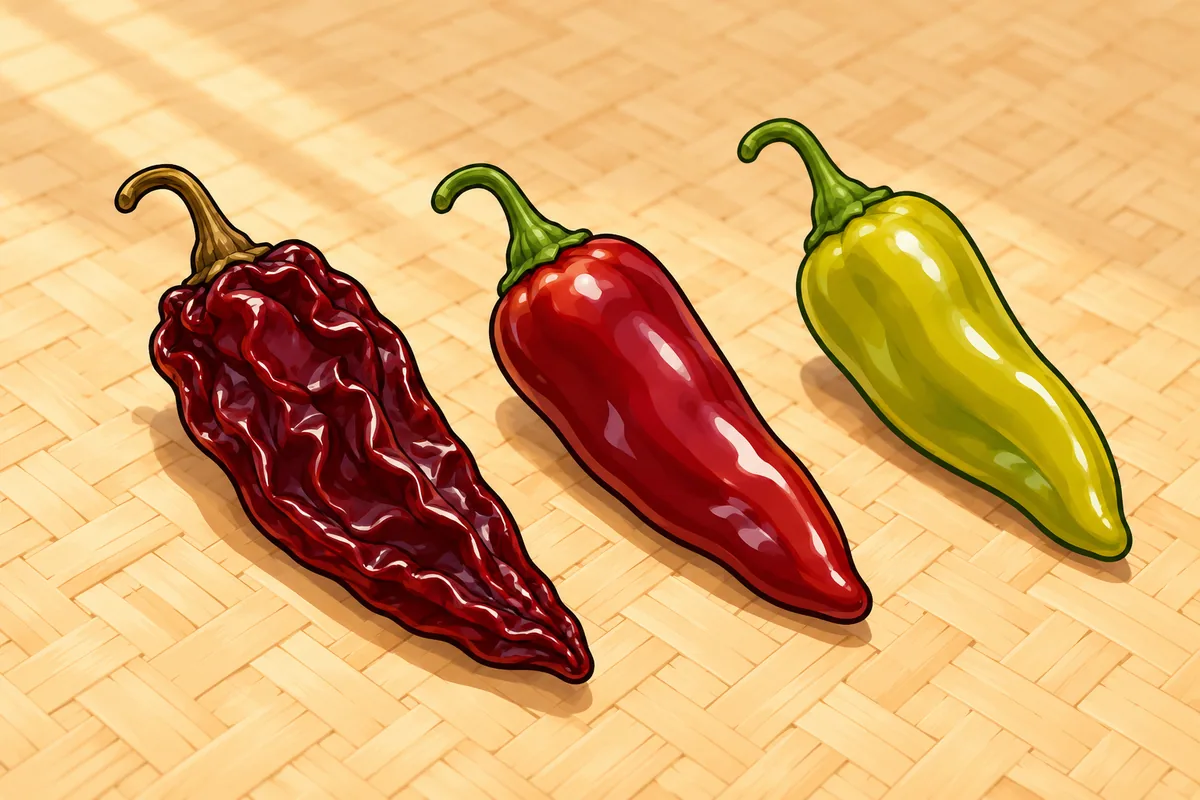
In Peru you may also find it sold as ají colorado, especial or rosado, grown along the coast and in Lambayeque, La Libertad, Lima, Ancash and Ica5. Ground panca (ají panca molido) is a common shop product there, so a recipe that says "panca powder" means the same dried pepper5.
Sources disagree on the species: Barboza's monograph lists Ají Panca among C. chinense names7, and the Bioversity guide places it under C. chinense in one table and under C. baccatum in a photo caption5. For the swap, the species matters less than the heat and the color.
How do you replace aji panca paste?
Build it from three jars: ancho for body and mild heat, paprika for red color, a pinch of chipotle for smoke. Aim for the panca midpoint, (500 + 1,500) ÷ 2 = 1,000 SHU per gram4.
A worked example for 100 g of paste
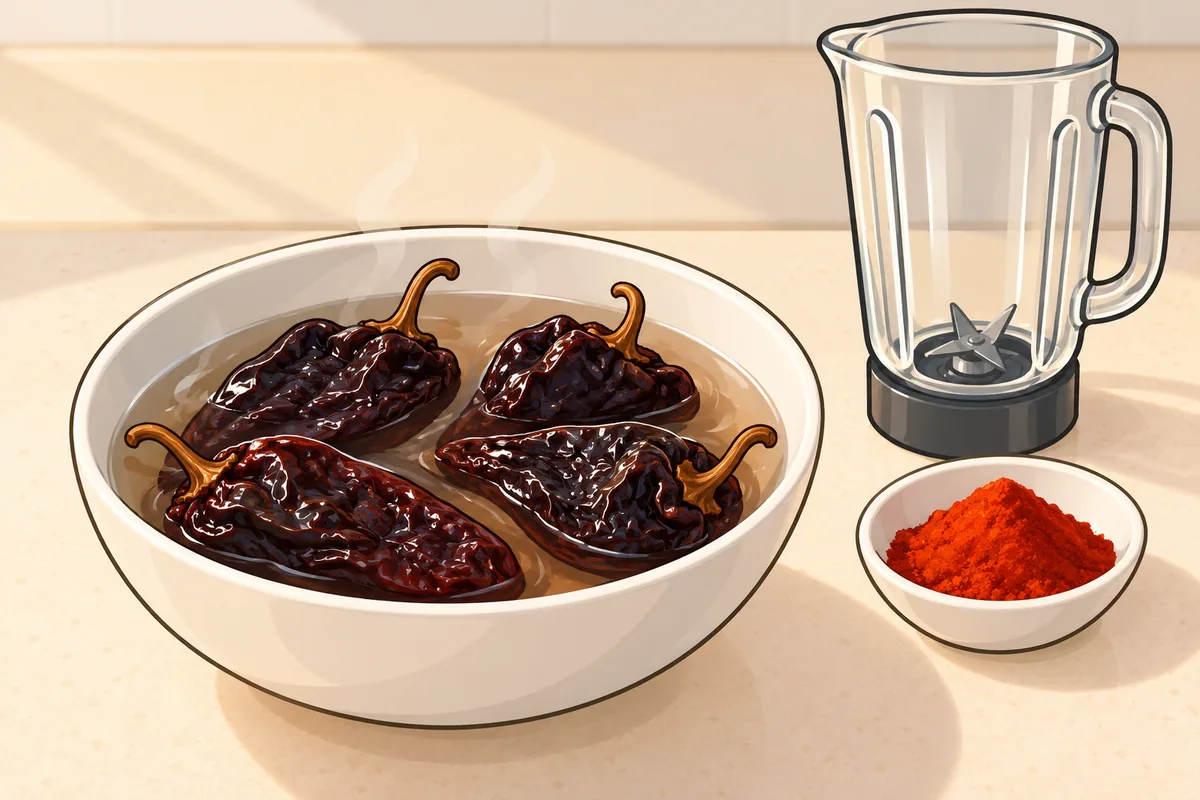
Soak the dried pods in hot water, then blend them with the paprika and a little of the soaking liquid. USDA weighs one dried ancho at about 17 g6, so the 65 g below is roughly four pods.
| Ingredient | Weight | Heat units | Why it is there |
|---|---|---|---|
| Ancho (poblano midpoint 1,500) | 65 g | 65 × 1,500 = 97,500 | Body, dark red, mild heat |
| Paprika | 30 g | 30 × 0 = 0 | Red color |
| Chipotle (jalapeño midpoint 5,000) | 5 g | 5 × 5,000 = 25,000 | Smoke |
| Blend | 100 g | 122,500 ÷ 100 = 1,225 per gram | Inside the 500–1,500 SHU spec |
Weigh your pods dry, before you soak them.
The midpoints hide a spread, so it helps you to know the worst case. If your anchos sit at 2,000 SHU and your chipotle at 8,000, the blend comes to (65 × 2,000 + 5 × 8,000) ÷ 100 = 1,700 SHU per gram; at the low ends it drops to 7502. If your first taste bites, stir in 15 g more paprika: 170,000 ÷ 115 ≈ 1,480 SHU per gram, back inside the panca spec4. If you want it milder, drop the chipotle and use 70 g ancho with 30 g paprika: 70 × 1,500 ÷ 100 = 1,050 SHU per gram2.
USDA weighs a tablespoon of paprika at 6.8 g and a teaspoon at 2.3 g9. So your 30 g of paprika is about 4 tablespoons plus 1 teaspoon, and you can measure it with spoons if your scale only reads whole grams.
Making it, step by step
- 1
Weigh four anchos
Four dried anchos come to about 68 g, close to the 65 g in the table.6
- 2
Stem and seed them
Pull out the seeds and the pale placenta, which holds the most capsaicin, and wear gloves so the oil stays off your face.10
- 3
Soak until soft
Cover the pods with hot water and let them soften, then keep the soaking liquid for blending.
- 4
- 5
Cook a spoonful and taste
Fry a teaspoon of paste in oil for a minute, taste it, and add more chipotle only if you miss the smoke.
Scaling it to a 250 g jar
Peruvian brands sell panca paste in jars of 250 g5. To fill one, you need 162 g of ancho (about nine or ten pods), 75 g of paprika (about 11 tablespoons) and 13 g of chipotle69. The heat stays the same as the 100 g batch, about 1,225 SHU per gram.
Can you use paprika or chipotle alone?
Paprika alone gets the color and none of the warmth. Chipotle alone gets warmth and smoke, but it is about five times hotter than panca, so you use so little that the color goes missing.
Paprika alone
Chipotle alone
If you do go with one jar, choose it by the dish. Paprika alone suits a stew where you want the red and can live without warmth; chipotle with 8 g of paprika per 2 g suits a grill marinade where you want the smoke to show4. Either way, your result tastes closer to panca the moment you add the second jar.
The pantry version, paprika and a pinch of cayenne
If all you have is a spice rack, mix 9.7 g of paprika with 0.3 g of cayenne for every 10 g of panca. Cayenne rates 25,000–50,000 SHU2, so that tiny pinch gives 0.3 × 37,500 ÷ 10 = about 1,125 SHU per gram, inside the panca spec4.
For 30 g of panca, that is about 4¼ tablespoons of paprika and half a teaspoon of cayenne, using USDA's 6.8 g per tablespoon of paprika and 1.8 g per teaspoon of cayenne911. You lose the berry flavor and the smoke, so this works best in a long-cooked stew where color matters most.
Can you use aji amarillo paste instead?
Only in very small amounts, because the two pastes sit far apart on heat. Most people reach for it because the jars sit side by side on the shelf.
If you already have amarillo open, use a quarter teaspoon for heat and let paprika carry the color. The aji amarillo swaps work the other way round, for when your recipe needs the yellow paste and you only have panca.
What goes wrong with a panca swap?
Your blend can miss on color, heat or texture, and each miss has a quick check. Run these before the paste goes into the pot:
- The paste looks brown, not red: you used too little paprika. Panca brings an intense color, so add paprika a tablespoon at a time.59
- It bites more than you expected: your anchos sat at the top of the poblano range, 2,000 SHU. Add paprika to dilute the heat.2
- It tastes of smoke and nothing else: you used too much chipotle. Make another half batch without it and mix the two.4
- Bits of tough skin in the paste: blend longer with more soaking liquid, or push it through a sieve.
- A jar of paste under oil sat in the fridge a week: throw it out. Low-acid peppers in oil can carry botulism bacteria; use within 4 days or freeze.13
Before you season the pot
Blend the paste, cook a spoonful in oil, and taste it before it goes into the adobo. The aji panca entry tracks the species question, and the ancho entry has the dried poblano's profile.
If you make the 250 g batch, freeze it in an ice cube tray and keep the cubes in a bag; a paste with oil keeps 4 days in the fridge13. One cube per pot of stew is an easy habit, and the swap chart runs the same ratio for the next pepper you cannot find.
Write the weights on the bag before it goes into the freezer. Your second batch goes faster once you know that four anchos, four tablespoons of paprika and a pinch of chipotle make about 100 g, and you can scale from there for a party or a single pot.