On this page
- 1What can you use instead of Urfa biber?
- 2Which Urfa biber swap should you pick?
- 3What makes Urfa biber dark and oily?
- 4Is Maraş pepper the same as Urfa biber?
- 5Is Urfa biber the same as Aleppo pepper?
- 6How hot is Urfa biber?
- 7How do you make a swap taste more like Urfa?
- 8What goes wrong with an Urfa swap?
- 9How do you mix the swap before you season?
- 10Sources
What can you use instead of Urfa biber?
Use Turkish red pepper flakes, pul biber, if you can get them, weighed one for one. Researchers in Turkey treat red pepper flakes and isot (the local name for Urfa biber) as two products made from the same fresh red pepper, just processed differently1. Black Maraş flakes come even closer, and ground ancho and paprika come after them.
| Swap | Heat vs Urfa | How much for 10 g Urfa | Best for | Flavor note |
|---|---|---|---|---|
| Maraş black flakes (isot)2 | Sold as hot; neither has a primary SHU | 10 g | Yogurt, eggs and kebabs, where dark flakes show | Red pepper turned black by sweating; oil and salt added |
| Red pepper flakes (pul biber, Aleppo style)1 | Same pepper; flakes lose capsaicinoids in processing, while isot gains them | 10 g | Dishes where bright red is fine | Brighter red, less browned |
| Ground ancho3 | Fresh poblano 1,000–2,000 SHU4; no Urfa figure to compare | 10 g, plus about 0.34 g oil5 | A dark color where the flakes show | Dried red poblano; no flavor given for the dried form |
| Sweet paprika plus cayenne3 | Paprika non-pungent; you set the heat with cayenne at 25,000–50,000 SHU4 | 10 g paprika, plus cayenne in 0.2 g pinches6 | Stews and sauces, where it cooks in | Red, not dark |
| Ground chipotle plus paprika3 | Jalapeño 2,000–8,000 SHU before smoking4 | 5 g chipotle plus 5 g paprika | Grilled meat, where smoke is welcome | Smoke-dried red jalapeño; smoky where Urfa is not |
Flakes give you the same pepper and the same texture; ancho gives you the dark color; only black Maraş flakes give you both, so pick by what your dish shows. On a kebab or a bowl of yogurt where you see the flakes, color wins. In a stew it hardly matters.
Why only five? Urfa is a dried, sweated, oiled flake, so no fresh pepper copies it, and every honest swap is a dried one. Cayenne on its own runs 25,000–50,000 SHU4, too hot to use at Urfa amounts, so it appears here only as a pinch inside row four.
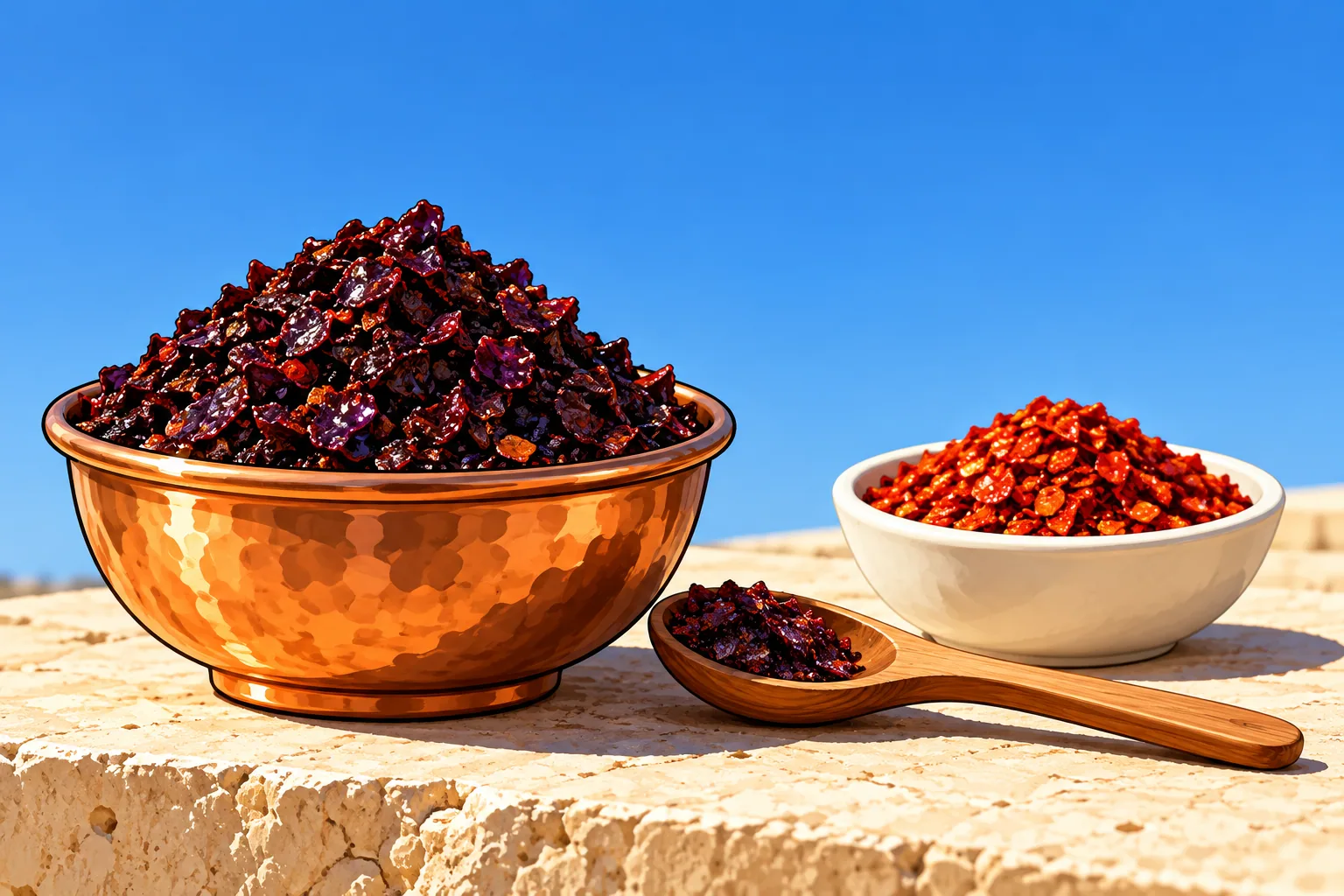
Maraş black flakes, the closest match
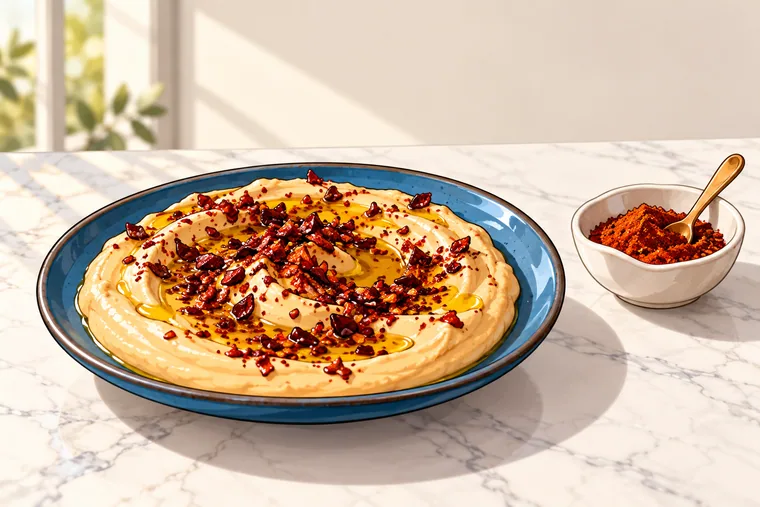
Kahramanmaraş registers a black flake that locals also call isot: crushed red pepper is warmed until it sweats and turns black, then oiled and salted2. That is the same idea as Urfa, from a neighboring registered pepper. Use it gram for gram wherever you would sprinkle Urfa.
Pul biber, the same pepper, brighter
The 2021 study treats red pepper flakes and isot as two products of the same fresh pepper1. The flakes skip the sweating, so they stay bright red and keep the most carotenoids. Swap 10 g for 10 g, and expect your dish to look redder.
Ground ancho, for the dark color
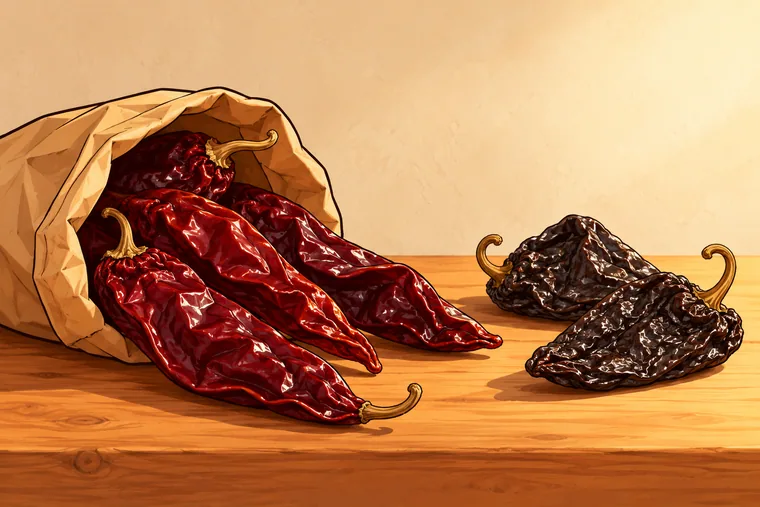
Ancho is the dried poblano3, and it gives you a dark powder close to Urfa's color. USDA's figures put its oil below Urfa's registered floor, so you rub about 0.34 g of oil, a few drops, into 10 g5. You get a powder, not a flake, so it disappears into a sauce more easily.
Sweet paprika plus cayenne, for cooked dishes
Paprika is non-pungent and used for color3, and its oil already sits close to Urfa's floor7. You set the heat yourself with cayenne, 0.2 g at a time6. It stays red, not dark, so use it where the pepper cooks into the dish.
Ground chipotle plus paprika, if you like smoke
Chipotle is a smoke-dried red jalapeño3, so half chipotle and half paprika gives you a blend with some heat and a lot of smoke. Urfa is sun-dried, not smoked, so your dish tastes smokier than the recipe meant. Keep it for grilled meat, where the smoke fits.
Which Urfa biber swap should you pick?
Ask yourself two things: will anyone see the flakes, and do you mind a little smoke? Those two answers settle almost every Urfa swap, and the tree below follows them branch by branch.
- shows, darkYes, and you want them darkMaraş black flakes, or ground ancho with a few drops of oil
- shows, redYes, and bright red is finePul biber, one for one by weight
- cooked inNo, it cooks into the dishSweet paprika, then cayenne by the pinch
- if you like smokeSmoke is welcomeHalf chipotle, half paprika
- if you like smoke
Sources for this line1. Food Chemistry (Elsevier)2. Türk Patent Enstitüsü (Turkish Patent Institute), geographical indication registry3. New Mexico State University, Chile Pepper Institute5. USDA Agricultural Research Service, FoodData Central (SR Legacy)
If none of the Turkish flakes are near you, the ancho branch is the one to remember. Ancho is the dried form of the poblano3, most supermarkets carry it ground, and a few drops of oil close most of the gap.
What makes Urfa biber dark and oily?
The way it dries. Şanlıurfa registered its pepper as a protected designation of origin in 2001, and the registration describes the home method step by step8:
- 1
Sort and split
Pick out rotten and unripe pods, pull off stems and seeds, and split each pepper into two or three pieces.8
- 2
Sun-dry, cut side up
Spread the pieces on concrete or a plastic sheet in the sun for 3–4 days, until the moisture is down to about 20 %.8
- 3
Sweat in bags
Pack the half-dry pepper into plastic bags and leave them in the sun again; at night, take it out and spread it. Repeat for 2–3 days until it reaches the color you want.8
- 4
Break, sieve, oil and salt
Beat the dried pepper into flakes in cloth bags, sieve it, then mix in salt and oil and give it another hour or two in the sun.8
That sweating step is what plain flakes skip. A 2021 study compared red pepper flakes with traditional and factory isot: the flakes kept the most carotenoids and the brightest color, while traditional isot browned on purpose and ended with more capsaicinoids than it started with1.
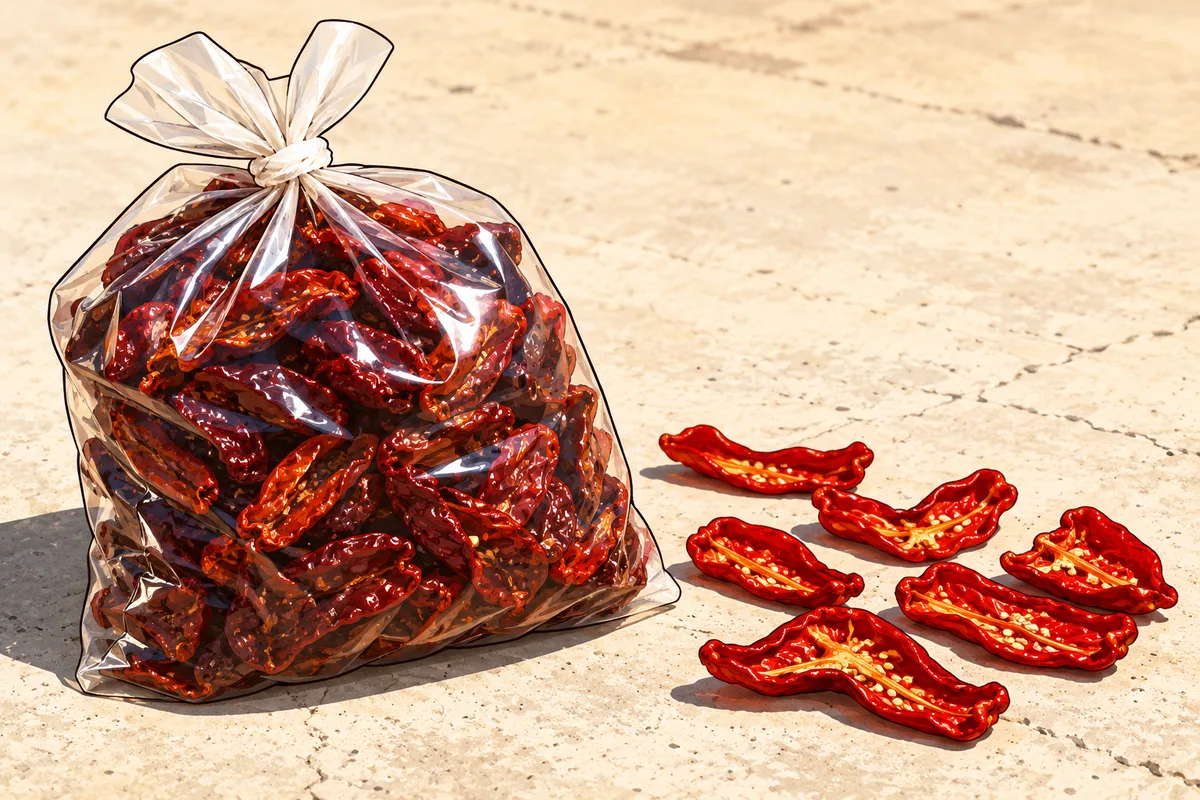
Factories reach the same dark flake faster. The registration sets out both routes, and the difference shows you why a jar from a factory can look a shade different from a home batch.
Home method
Factory method
- Sun on concrete or plastic, 3–4 days, to about 20 % moisture8First dryingOvens with heater fans at 75–80 °C for 1.5–2 hours8
- Plastic bags in the sun by day, spread out at night, 2–3 days8DarkeningA blackening machine at 75–80 °C before crushing, then covered tanks8
- Beaten into flakes, sieved, salt and oil mixed in, an hour or two more in the sun8FinishSalt and oil mixed in, rested 8–10 hours, sieved8
Both routes end the same way, with oil and salt worked into the flakes. Keep that in mind when you build a swap: the oil and the salt belong to Urfa as much as the pepper does. If your swap skips both, your dish can look right and still taste thinner than the recipe meant.
Is Maraş pepper the same as Urfa biber?
Close, but it has its own registration. Kahramanmaraş registered Maraş biberi in 2002, and its area covers six provinces, Şanlıurfa among them2. The same document lists three forms: a hot red powder, red flakes, and a black flake that locals also call isot2.
The black Maraş flake goes through the same idea as Urfa: the makers crush red pepper, warm it until it sweats and ferments, and the red turns black on its own2. Then they add oil and salt and roast it under a millstone. So if your shop sells "Maraş isot" or black Maraş flakes, you can treat them as the closest swap you will find.
The red Maraş flakes are a registered kind of pul biber, the leaf-like flake the document calls pul (yaprak)2. They fit the second row of the table: same texture, same oil and salt, but bright instead of dark.
Is Urfa biber the same as Aleppo pepper?
No. Both are flakes of dried red pepper, and both get cooked the same way, but they part ways at the drying. The Aleppo-style flake is the bright red pul biber in the second row of the table, while Urfa goes through the bag-sweating step that turns it dark8.
The 2021 study shows what that step changes: the bright flakes kept the most carotenoids, and the sweated isot browned and gained capsaicinoids1. So if your recipe asks for Urfa and you only have Aleppo-style flakes, you get the right pepper and texture with a brighter color, and you can darken the dish a little with a pinch of ground ancho.
How hot is Urfa biber?
No lab figure we could check exists. The Şanlıurfa registration lists a high capsaicin content yet describes a sweeter taste that does not burn much, with far more glucose than peppers from other regions8. No primary source we read gives it a Scoville number, so we print none and work no ratio against it.
Log scale; bars are published ranges.9
The chart is why cayenne only goes into the table as a pinch. At 25,000–50,000 SHU4, it is twelve to fifty times a fresh poblano, so it goes in by the pinch, never by the spoon.
So how do you judge heat when no number exists to match? Start from the mild end of the table. Pul biber and ancho swap by weight, and if your dish turns out milder than you hoped, you can pass cayenne at the table. You cannot take heat back out of your pot once it is in.
How do you make a swap taste more like Urfa?
Add a little oil, because Urfa is a moist, oily flake. Its registration sets a floor of 15 % ether extract (the oil a lab pulls out) in the dry matter, and a ceiling of 11 % moisture8. USDA's figures let you check each swap against that floor.
| Swap | Water | Fat per 100 g | Fat in dry matter | Oil to add per 10 g |
|---|---|---|---|---|
| Urfa biber (registration)8 | 11 % at most | Not given | 15 % at least | None |
| Ground ancho5 | 22.6 % | 8.2 g | 10.6 % | About 0.3 g |
| Paprika7 | 11.2 % | 12.9 g | 14.5 % | About 0.05 g, skip it |
| Ground dried pasilla10 | 14.8 % | 15.8 g | 18.5 % | None |
| Cayenne6 | 8.1 % | 17.3 g | 18.8 % | None |
A worked example for 10 g of ancho
Ten grams of ancho at 22.6 % water holds 7.74 g of dry matter5. Fifteen percent of that is 1.16 g of oil; the ancho already has 0.82 g (8.2 % of 10 g). So you add 1.16 − 0.82 = about 0.34 g of oil, a few drops of olive oil rubbed into the powder.
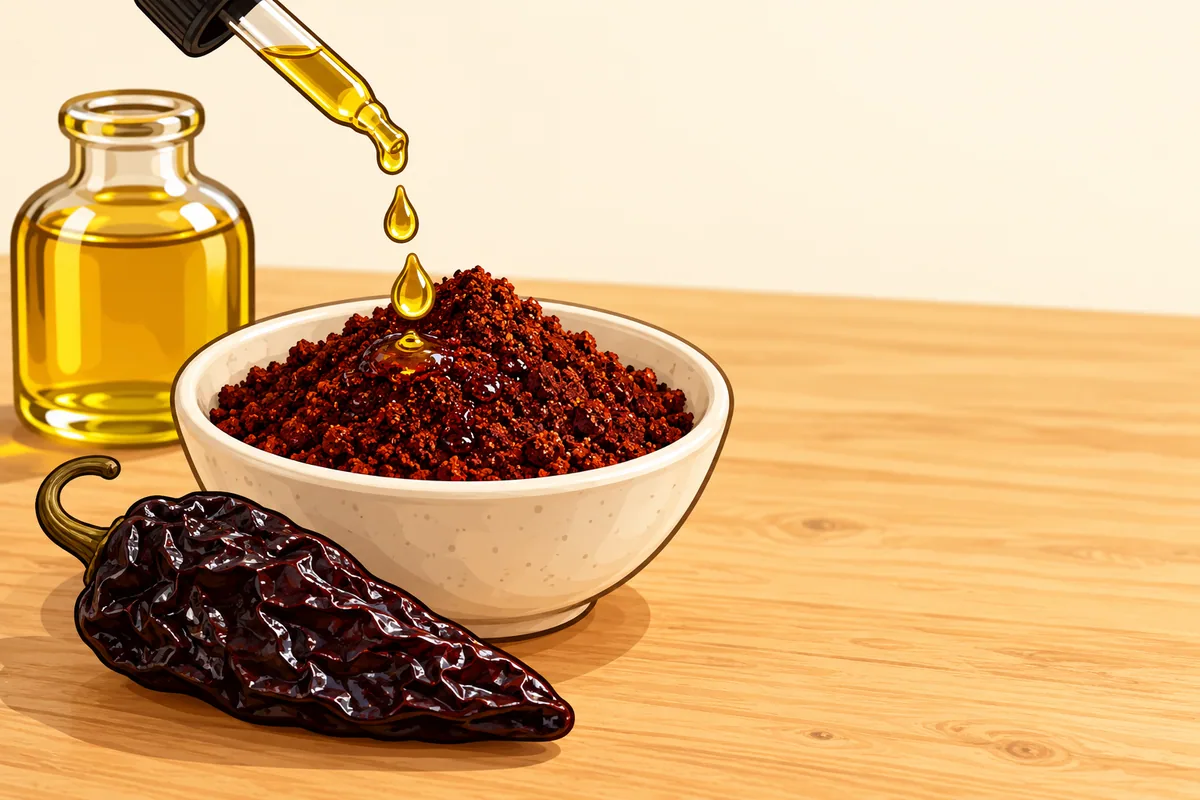
Paprika needs almost nothing, which is why it makes a fair base. A tablespoon weighs 6.8 g7; add cayenne an eighth of a teaspoon at a time (about 0.2 g, from USDA's 1.8 g teaspoon6) and taste between pinches.
The Maraş registration shows why the oil matters so much. Its dried pepper, before any processing, tested at just 2.72 % fat with 11.1 % moisture2, so most of the oily feel in Turkish flakes comes from the oil the makers add. Your few drops copy that step.
What goes wrong with an Urfa swap?
Most problems come from treating your swap as plain chili powder. Each item below names what you will notice in the dish, then the fix you can make on the spot.
- The dish turns too hot. Cayenne runs 25,000–50,000 SHU4, so a full spoon in place of Urfa overshoots by a long way. Use paprika as the bulk and add cayenne in 0.2 g pinches.
- The flakes look bright red on a dark dish. Plain flakes keep the most carotenoids and the brightest color1. Switch to ancho or black Maraş flakes where the color shows.
- The dish tastes flat or under-salted. Both registrations mix salt into the finished flakes28, so an unsalted swap brings less salt than the recipe expects. Taste the dish and add a pinch of salt at the end.
- It tastes of smoke. Chipotle is a smoke-dried red jalapeño3, and Urfa is sun-dried, not smoked. Keep chipotle to half the blend, or leave it out.
- The blend turns greasy. Ten grams of ancho needs about 0.34 g of oil, only a few drops. Add oil one drop at a time and rub it in with your fingers.
How do you mix the swap before you season?
Build the blend in a small bowl before it goes near the food. The Şanlıurfa method oils and salts its flakes before their last hour in the sun8, and your swap works best in the same order.
- Weigh the swap: 10 g for every 10 g of Urfa the recipe asks for.8
- Rub in oil drop by drop if you use ancho; skip it for paprika, pasilla or cayenne.57
- Add cayenne last, a pinch at a time, and taste between pinches.6
- Mix in a small pinch of salt if your swap came unsalted.8
- Let the blend sit for ten minutes so the oil soaks into the powder.
The Urfa biber entry tells you what the pepper itself is like, and the Aleppo pepper entry covers the brighter flake that sits second in the table.
For other dried chiles you cannot find, the aji panca swaps also lean on ancho, and the swap chart covers every other missing pepper.