On this page
- 1What can you use instead of bell pepper?
- 2What can you substitute for red bell pepper in chili con carne?
- 3Does a green bell taste different from a red one?
- 4Which bell swap holds its shape when you stuff it?
- 5Which swap should you buy for your recipe?
- 6How much heat does a mild swap add to a pot?
- 7Can you leave the bell pepper out?
- 8Why did your bell pepper swap go watery or split?
- 9What should you check before you buy a bell swap?
- 10Sources
What can you use instead of bell pepper?
Any sweet or barely warm pepper you can weigh. A cubanelle comes first: UF/IFAS notes that many cooks prefer it to bell types in Cuban, Dominican and Puerto Rican cooking1. For a red bell in a sauce, a jar of pimentos gets closer, and for stuffing, you want a poblano's thick wall.
| Swap | Heat vs bell | How much for 119 g bell | Best for | Flavor note |
|---|---|---|---|---|
| Cubanelle1 | A touch warmer: about 1,000 SHU | 119 g, sliced | Sautés, sofrito, peppers and onions | Sweet, very mild, rich |
| Sweet Italian pepper2 | Same: in the 0 SHU band | 119 g, sliced | Frying, sandwiches | Not described by the source |
| Jarred pimento, for red bell3 | Same: pimiento sits in the 0 SHU band2 | About 1.8 whole pimientos (66 g each) | Sauces, chili, dips | Fruity and earthy4 |
| Poblano1 | Warmer: 1,000–2,000 SHU | 119 g, or one pod per bell for stuffing | Stuffed peppers, roasting | Rich melon flavor |
| Anaheim5 | Warmer: 1,000–5,000 SHU | 119 g, in strips | Grilling, fajitas | Mild, sweet, slightly smoky4 |
| Sweet banana pepper1 | Near zero: 0–500 SHU | About 2.6 medium pods (46 g each)6 | Raw in salads, sandwiches | Mild, tangy, slightly sweet4 |
| Sweet paprika, for color7 | Same: non-pungent | 1–2 tsp (2.3 g each)8 in a pot | Red color in stews and chili | Dried, ground pimiento-type pepper9 |
Weigh, don't count: a medium bell is 119 g, and every swap in this table works by matching that number.10 A pod of one pepper rarely weighs what a pod of another weighs, so "one bell, one cubanelle" can leave your dish short.
Cubanelle, the cook's favorite swap
UF/IFAS describes the cubanelle as sweet, very mild and rich, at about 1,000 SHU, with thinner flesh than a bell1. That thin wall browns faster, so your stir-fry or sofrito cooks a few minutes sooner. The cubanelle swaps page works the same problem the other way round.
Sweet Italian pepper, zero heat in a long shape
Iowa State files sweet Italian peppers in the same 0 SHU group as bells and pimientos2. You get no heat and a long, thin pod, so it suits slicing more than stuffing. Use it by weight in anything you would sauté.
Jarred pimentos, for a red bell in sauces
A pimiento is a sweet, heart-shaped pepper that ripens red9, and USDA weighs one canned whole pimiento at 66 g3. For one medium red bell you open about two. They come soft and already cooked, so stir them in near the end of a sauce rather than frying them.
Poblano, the stuffing pepper
A poblano has thick walls, a rich melon flavor and 1,000–2,000 SHU1. It holds a filling as well as a bell does, and UF/IFAS puts it at about 4 inches long and 2 inches wide1. Expect a gentle warmth in every bite, and pick a cheese or rice filling that welcomes it.
Anaheim, for the grill
An Anaheim spans 1,000–5,000 SHU5, with a mild, sweet, slightly smoky taste4. It grills in long strips the way bell strips do for fajitas. Taste one pod first, because a hot one sits at five times the low end.
Sweet banana pepper, for crunch
A sweet banana pepper rates 0–500 SHU1 and weighs 46 g as a medium pod6, so about 2.6 pods match a medium bell. Its waxy skin and crisp, thick flesh4 make it the best raw swap on this list. Slice it into a salad where you wanted bell crunch.
Sweet paprika, when only the color matters
Paprika is any non-pungent chile ripened red and used as a spice or for color7, and Kentucky notes that dried, ground pimientos sell as sweet paprika9. It gives a stew or chili the red you lost with the bell, without any of the texture. Start with a teaspoon, 2.3 g by USDA8, and add more after a taste.
What can you substitute for red bell pepper in chili con carne?
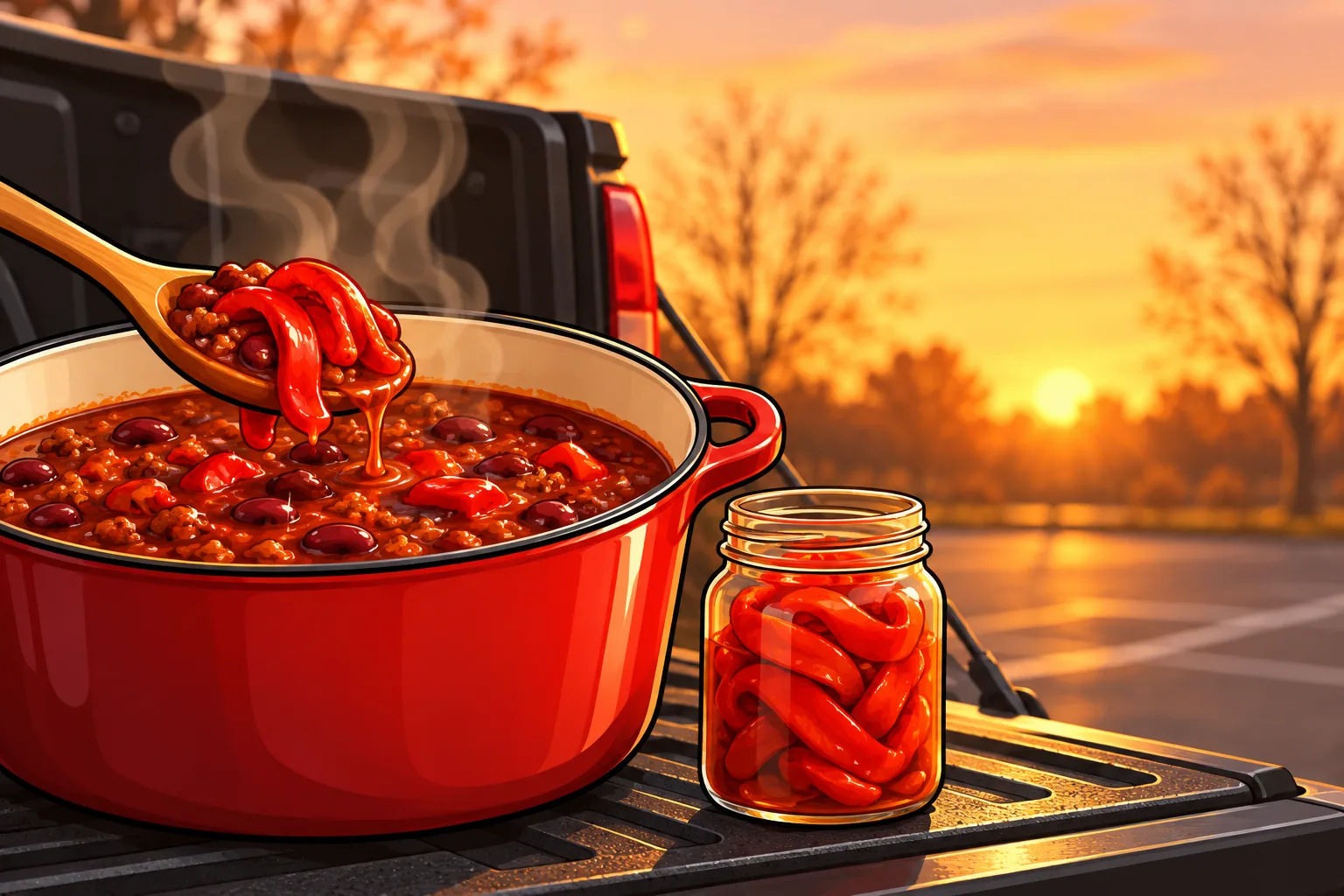
Jarred pimentos, with a teaspoon of sweet paprika if you want the color back. NMSU defines chili as a dish of chile powder, beans, tomato and ground beef7, so the bell is a supporting voice; you are replacing sweetness and red, not structure.
A worked pot: one medium red bell, swapped
Say your recipe asks for one medium red bell, 119 g by USDA11. Here is what each swap puts into the same pot.
| Swap | Amount | Sugar it adds | Heat it adds |
|---|---|---|---|
| Red bell (the original)11 | 119 g | About 5.0 g (4.2 g per 100 g) | None |
| Jarred pimentos3 | 119 g, about 1.8 whole | About 3.2 g (2.71 g per 100 g) | None |
| Green bell10 | 119 g, one medium | About 2.9 g (2.4 g per 100 g) | None |
| Sweet paprika78 | 1–2 tsp, 2.3–4.6 g | Not compared | None; non-pungent |
| Poblano1 | 119 g | Not compared | A little: 1,000–2,000 SHU |
The pimento row gives you about two thirds of the red bell's sugar, the green bell a little over half. In a pot built on beans, beef and chile powder, either one disappears into the background. If your chili tastes sharper without the red bell, a pinch of sugar would put back the missing 2 g, though most cooks never notice.
Does a green bell taste different from a red one?
Yes, and the reason is ripeness. Sweet bells sell green while immature and turn red, gold, orange or brown as they ripen, and the USDA storage handbook notes that sugar rises as they ripen, so colored peppers taste sweeter12.
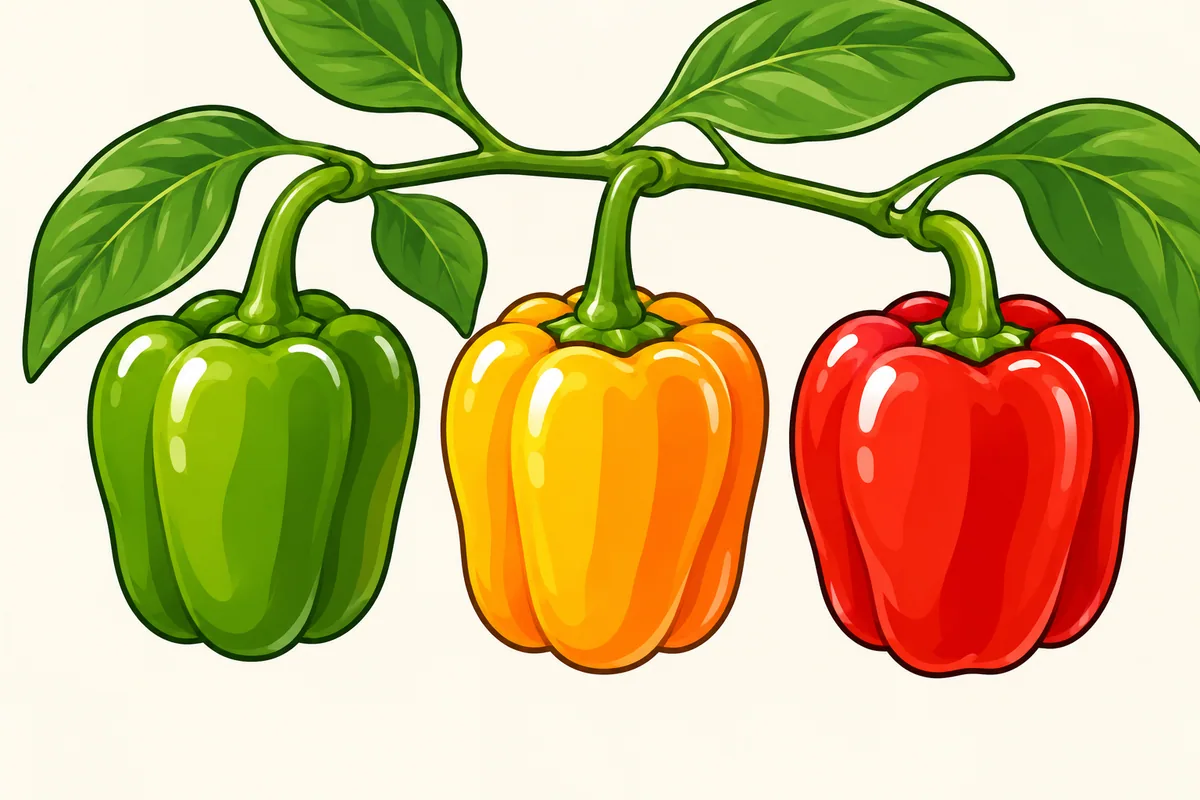
Green bell
Red bell
So a green bell can stand in for red where texture matters and sugar does not, like a stir-fry. In a roasted red pepper dip it falls flat, because the dip lives on sweetness. UC Master Gardeners also note that yellow and orange bells have thinner skin, and black or purple ones can taste slightly spicy4.
Which bell swap holds its shape when you stuff it?
The poblano, then the pimento. Iowa State's table marks bell, pimiento and the ancho type, which you buy fresh as poblano, as thick-walled, and the cubanelle and Anaheim as thin-walled2. A thick wall keeps its shape through an hour in the oven; a thin one slumps and tears.
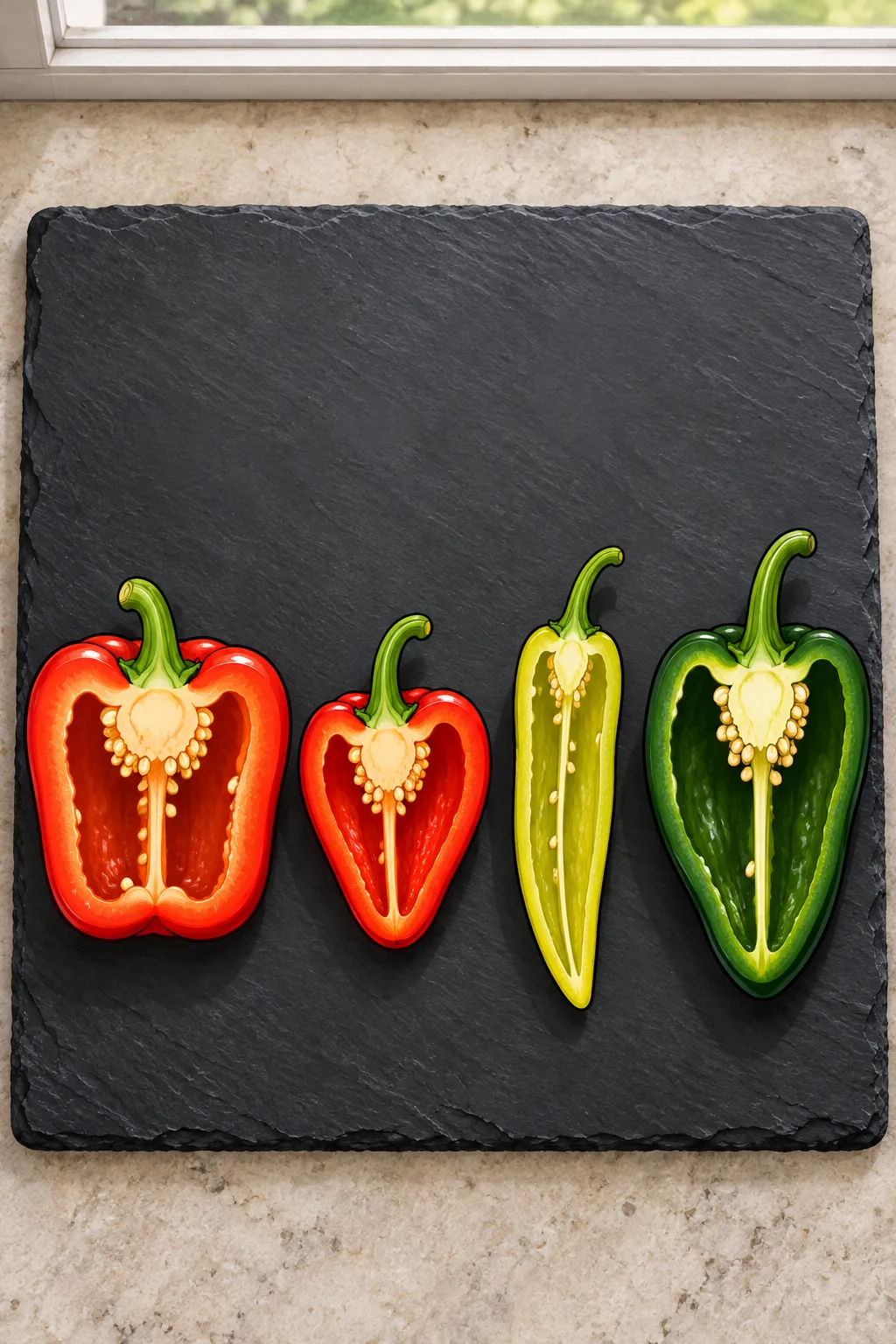
Fresh pimientos are hard to find outside a garden, so for a stuffed pepper dinner your real choice is between bell and poblano. A poblano gives you a flatter, longer boat with a warm edge; slit it down one side instead of cutting off a lid. The chiles rellenos recipe uses exactly that shape.
Which swap should you buy for your recipe?
Ask what the bell does in your recipe: crunch, body, a container for filling, or color. Each job points to a different pepper.
- crunchRaw crunch in a saladSweet banana pepper, 0–500 SHU
- bodyStir-fry, sauté, sofritoCubanelle or sweet Italian, by weight
- shapeA shell for a fillingPoblano, thick wall, 1,000–2,000 SHU
- sweetnessSweet red in a sauce or chiliJarred pimentos, 66 g each
- colorOnly the red colorSweet paprika, 1–2 tsp
Sources for this line1. University of Florida IFAS Extension3. USDA Agricultural Research Service, FoodData Central (SR Legacy)8. USDA Agricultural Research Service, FoodData Central (SR Legacy)
You can combine two branches. A pot of chili that lost its red bell takes jarred pimentos for sweetness and a teaspoon of paprika for color; a stir-fry takes cubanelle strips with a few pimento pieces for red.
How much heat does a mild swap add to a pot?
Less than you might fear, because the bell is a small share of most dishes. Take a 1 kg pot of stew with one medium bell in it. Swap in 119 g of poblano at its 1,500 SHU midpoint1, and the whole pot averages about 119 × 1,500 ÷ 1,000 = about 180 SHU, an estimate that assumes nothing else in the pot is hot.
That is far below the 2,000 SHU where UF/IFAS starts the jalapeño's range5. Your kids will taste a pepper, not a burn.
If you do want real heat in place of the bell, a jalapeño makes your point with very little weight. USDA puts one at 14 g13, so one pod plus about 105 g of a sweet swap keeps your total at the bell's 119 g while the jalapeño does all the warming.
Can you leave the bell pepper out?
Often, yes. In a blended or long-cooked dish the bell adds water, a little sugar and some color, and you can live without all three. NMSU's own definition of chili names chile powder, beans, tomato and ground beef and no bell at all7, so your pot still counts as chili without it.
Leaving it out changes three things you can plan for. Your pot holds about 119 g less food, so it cooks down a little faster. You lose the 2.9 to 5.0 g of sugar from the table above, which you rarely notice next to tomato. And you lose the red flecks, which a teaspoon of paprika puts back.
The bell matters more where you see or bite it: a stir-fry, a fajita plate, a salad, a stuffed pepper. There you want a real swap from the table, chosen by the job, because your eye and your teeth notice what your tongue would miss.
Why did your bell pepper swap go watery or split?
Each swap has one weak spot. These four cover most of what goes wrong in your pan or your oven.
- The cubanelle strips went limp. Their thinner flesh1 cooks faster than bell. Cut them wider than you would cut a bell, and add them a few minutes later.
- The stuffed Anaheim split open. Anaheims have thin walls2. Roast and peel them first, fill them gently, and lay them seam side down.
- The sauce turned watery after you added pimentos. Canned pimentos hold 93.1 % water3. Drain them well, pat them dry, and cook the sauce a few minutes longer.
- The chili came out browner than red. You swapped red bell for green or for poblano. A teaspoon of sweet paprika restores the red without heat7.
What should you check before you buy a bell swap?
Three checks at the shop save you a second trip. Take the table's amounts with you, and weigh at the scale in the produce aisle.
At the produce shelf
If the bell was standing in for a hotter pepper in your recipe, the poblano swaps pick up the heat side of the story. Everything else your recipe might call for sits on the swap chart, from cubanelle to dried ancho, with the amount for each.