On this page
- 1What can you use instead of a cubanelle pepper?
- 2Which cubanelle swap fits the dish you are cooking?
- 3Is a cubanelle the same as an Italian frying pepper?
- 4How much bell pepper replaces cubanelle in sofrito?
- 5Which long pale pepper at the shop will surprise you with heat?
- 6Why do thick-walled swaps steam instead of fry?
- 7What spoils a pan of fried cubanelle swaps?
- 8How do you pan-fry any cubanelle swap?
- 9Sources
What can you use instead of a cubanelle pepper?
Reach for a sweet Italian frying pepper first. UC Master Gardeners give Italian frying pepper as another name for the cubanelle1, so you get the same long shape, thin wall and sweet taste. After that, any mild pepper you can slice into strips will do, as long as you match its heat and cut its walls to size.
| Swap | Heat vs cubanelle | How much for 200 g cubanelle | Best for | Flavor note |
|---|---|---|---|---|
| Sweet Italian frying pepper2 | Milder: listed in the 0 SHU band | 200 g, in strips | Frying, sandwiches, anything | Sweet, the same pod type1 |
| Anaheim3 | Same to 5 × warmer: 1,000–5,000 SHU | 200 g, in strips | Grilling and roasting | Mild, sweet, slightly smoky1 |
| Sweet banana pepper4 | Milder: 0–500 SHU | 200 g, about 4 medium pods5 | Frying in rings, sandwiches | Mild, tangy, slightly sweet1 |
| Bell pepper4 | No heat: 0 SHU | 200 g, about 1.7 medium bells6 | Sofrito, stews, stir-fries | Sweet; red ones sweeter than green |
| Poblano4 | Same to 2 × warmer: 1,000–2,000 SHU | 200 g, in thin strips | Stuffing, roasting | Rich melon flavor |
| Pepperoncini, fresh2 | Milder: 100–500 SHU band | 200 g, sliced | Sandwiches and salads | Not described by the source |
Match the weight and the cut, and every swap in the first four rows tastes close to the dish you planned. The last two change the texture more than the flavor, so read their notes before you shop.
Sweet Italian frying pepper, the same pod type
Iowa State's heat table puts sweet Italian peppers in the 0 SHU group with bells and sweet banana peppers2. Kentucky's crop profile lumps Italian and cubanelle types together as long, somewhat flattened peppers that run from sweet to mildly hot7. Use the same 200 g and the same strips, and nobody at your table will notice.
Anaheim, when a little warmth is welcome
An Anaheim is long and thin-walled like a cubanelle, but UF/IFAS gives it 1,000–5,000 SHU3. Most pods sit near the low end, about 1,000 SHU4, so your dish usually tastes the same. Taste a sliver from each pod before it goes into a dish for kids.
Sweet banana pepper, for rings and sandwiches
A banana pepper of the sweet kind rates 0–500 SHU4. USDA weighs a medium one at 46 g5, so 200 g of cubanelle is about four medium pods. Its flesh is crisp and thicker, with a waxy skin1, so cut rings a little thinner than you would cut a cubanelle.
Bell pepper, the supermarket swap
A bell pepper has zero heat and a thick wall4. A medium green one weighs 119 g6, so you need about 1.7 bells for 200 g. Cooks in the Caribbean already treat the two as a pair: a Puerto Rican sofrito recipe from UIC lists green bells or cubanelles as the same ingredient8.
Poblano, for stuffing and roasting
A poblano rates 1,000–2,000 SHU and has thick walls with a rich melon flavor4. That extra wall makes it the better pick for a stuffed pepper, where a cubanelle can tear. For frying, slice it thin, or the strips stay firm while the pan smokes.
Fresh pepperoncini, for the sandwich board
Iowa State groups pepperoncini with the 100–500 SHU peppers2, milder than a cubanelle. Fresh ones are rare in shops, though, and the jarred kind brings vinegar and salt with it. If that is all you have, rinse them and use them where a cubanelle would have gone raw, in a sandwich or a salad.
Which cubanelle swap fits the dish you are cooking?
Pick by the dish, because the dish decides whether you need the cubanelle's shape, its thin wall or only its mild sweetness. Follow the branch that matches your recipe card.
- fryingFried strips or peppers and onionsSweet Italian frying pepper, 0 SHU band
- blendedSofrito or a stew baseGreen bell, about 1.7 medium bells per 200 g
- filledStuffed peppersPoblano, 1,000–2,000 SHU, thicker wall
- over a flameGrilled or roasted wholeAnaheim, 1,000–5,000 SHU
- rawSandwich or salad, rawSweet banana pepper rings, 0–500 SHU
Sources for this line2. Iowa State University Extension3. UF/IFAS Gardening Solutions4. University of Florida IFAS Extension6. USDA Agricultural Research Service, FoodData Central (SR Legacy)
Most of your cooking lands on the first two branches. For blended dishes the shape stops mattering, so a bell does the job; for frying you want the thin wall, so hunt down the Italian pepper or settle for an Anaheim.
If your recipe sits on two branches at once, say peppers and onions that you then fold into a sofrito, pick for the step you see on your plate. You taste the texture of fried strips; you never see a pepper you blended.
Is a cubanelle the same as an Italian frying pepper?
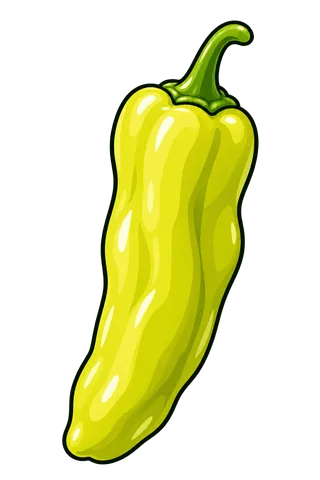
Close enough to swap, and some sources use one name for both. UC Master Gardeners call the cubanelle a mild, sweet pepper also known as the Cuban pepper or the Italian frying pepper1. Kentucky keeps "Italian or Cubanelle types" as one group7.
Cubanelle
Sweet Italian frying pepper
- About 1,000 SHU4HeatListed in the 0 SHU band2
- Longer than a bell, thinner flesh, slightly wrinkled4ShapeLong and somewhat flattened, grouped with cubanelle types7
- Light yellowish-green, turning bright red4ColorYellow-green to orange, then red7
- Frying and cooking; Cuban, Dominican and Puerto Rican dishes34CookingFrying, as the name says1
The one gap is the number. UF/IFAS gives the cubanelle about 1,000 SHU4, while Iowa State files sweet Italian peppers with the bells at zero2. In a pan that difference barely registers, because 1,000 SHU sits at the bottom of what most people call mild. Your cubanelle and its Italian cousin cook the same way.
How much bell pepper replaces cubanelle in sofrito?
About 240 g of bell for the two cubanelles a sofrito asks for. The UIC Heritage Garden recipe blends 2 medium green bell peppers or cubanelles with 2 onions, a head of garlic, a bunch of culantro and 6 ajíes dulces8. USDA weighs a medium green bell at 119 g6, so two of them give you 238 g of pepper.
A worked sofrito for each swap
Here is the same pepper share of that sofrito, about 238 g, from each swap. Counts come from USDA average pod weights; where USDA has no weight, you weigh.
| Swap | Grams | Pods | What changes |
|---|---|---|---|
| Green bell pepper68 | 238 g | 2 medium, 119 g each | Nothing; the recipe allows it |
| Red bell pepper68 | 238 g | 2 medium | Sweeter, and the sofrito turns orange |
| Sweet banana pepper15 | 238 g | 238 ÷ 46 = about 5 medium | Tangier |
| Sweet Italian frying pepper2 | 238 g | No USDA pod weight | Thinner, sweeter, closest to cubanelle |
| Anaheim3 | 238 g | No USDA pod weight | A little warmer if a pod runs hot |
Sofrito goes into the pan a tablespoon at a time as the base of a dish8, so a small shift in sweetness spreads thin. If your sofrito tastes flat with bell, the ají dulce carries more of the pepper flavor than the bell does; the ají dulce swaps cover that one.
Which long pale pepper at the shop will surprise you with heat?
The Hungarian wax. It looks like a sweet banana pepper and sits in the same bin, but UF/IFAS puts it at 5,000–10,000 SHU against 0–500 for the banana4. Kentucky adds that some hot banana varieties go by the name Hungarian Wax7, so the bin label alone does not protect you.
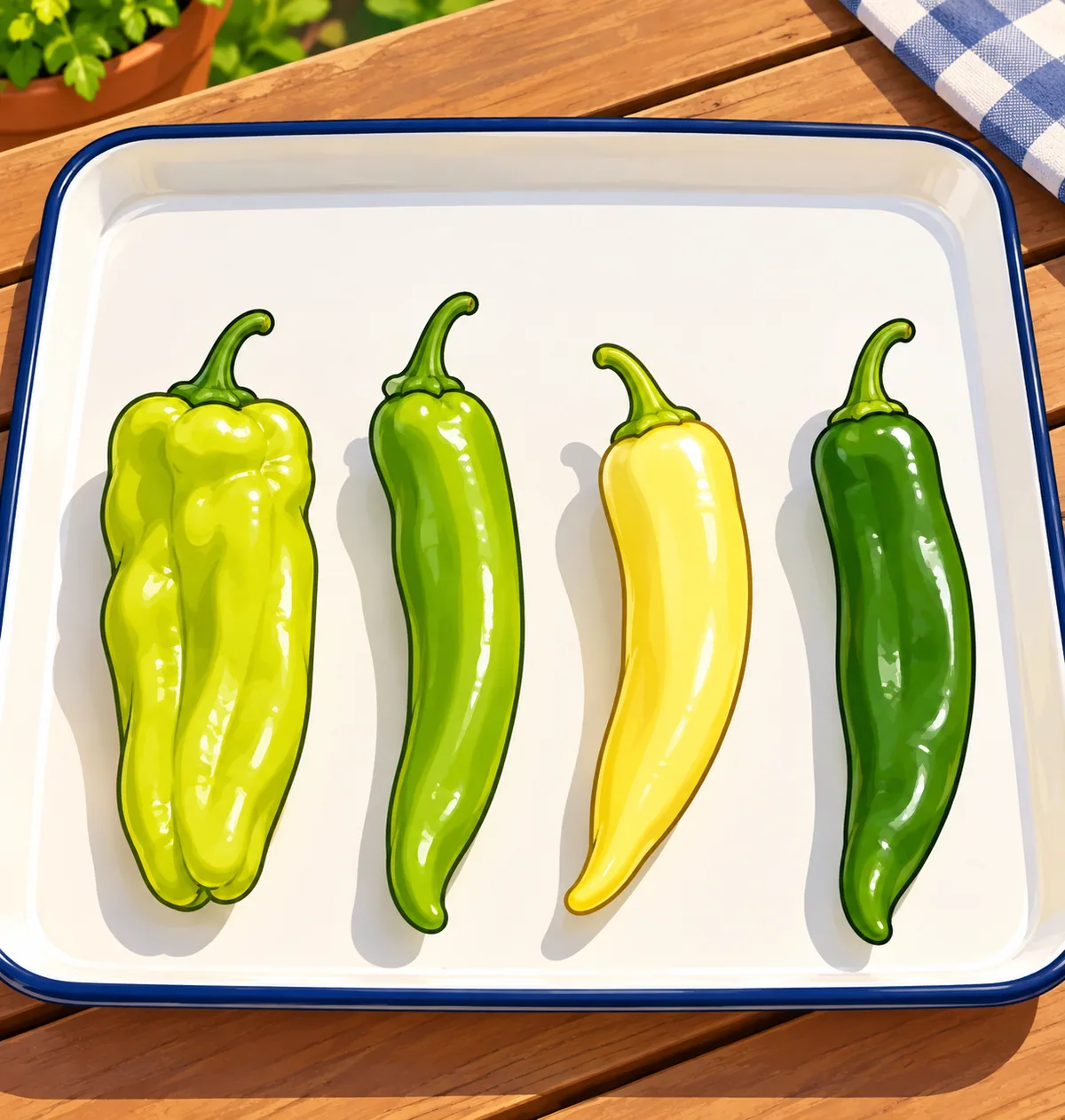
The same goes for jalapeños, which UF/IFAS rates at 2,000–8,000 SHU4. Nobody mistakes one for a cubanelle, but people grab them when the mild bin is empty. At up to eight times the heat, they belong in a salsa, not in a pan of fried peppers you eat by the forkful.
Why do thick-walled swaps steam instead of fry?
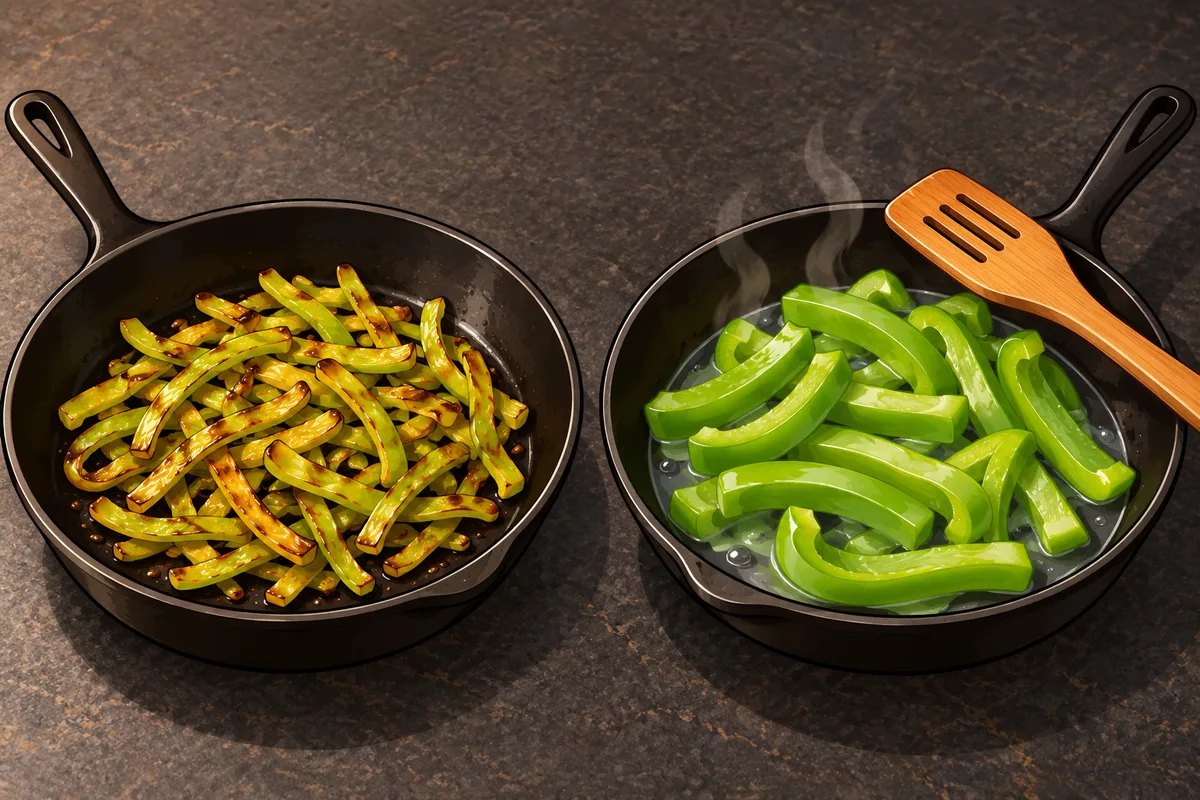
Because water leaves a thick wall slowly. Iowa State's chile table marks the cubanelle and the Anaheim as thin-walled and the bell, the pimiento and the ancho type as thick-walled2. A thin strip browns before it goes limp; a thick one gives up its water first, so it sits in a puddle and steams.
UF/IFAS describes the cubanelle the same way: thinner flesh than a bell, longer, a little wrinkled, and grown for frying and cooking4. That is the texture you are trying to copy.
What spoils a pan of fried cubanelle swaps?
Four things go wrong more than the rest, and each traces back to the table above. Run through these before your pan heats up.
Before the swap goes in the pan
If your dish still comes out sweeter than you planned, your swap was probably a red bell. Use green bells for the cubanelle's milder, greener taste, and keep your red ones for roasting, where you want that sweetness.
How do you pan-fry any cubanelle swap?
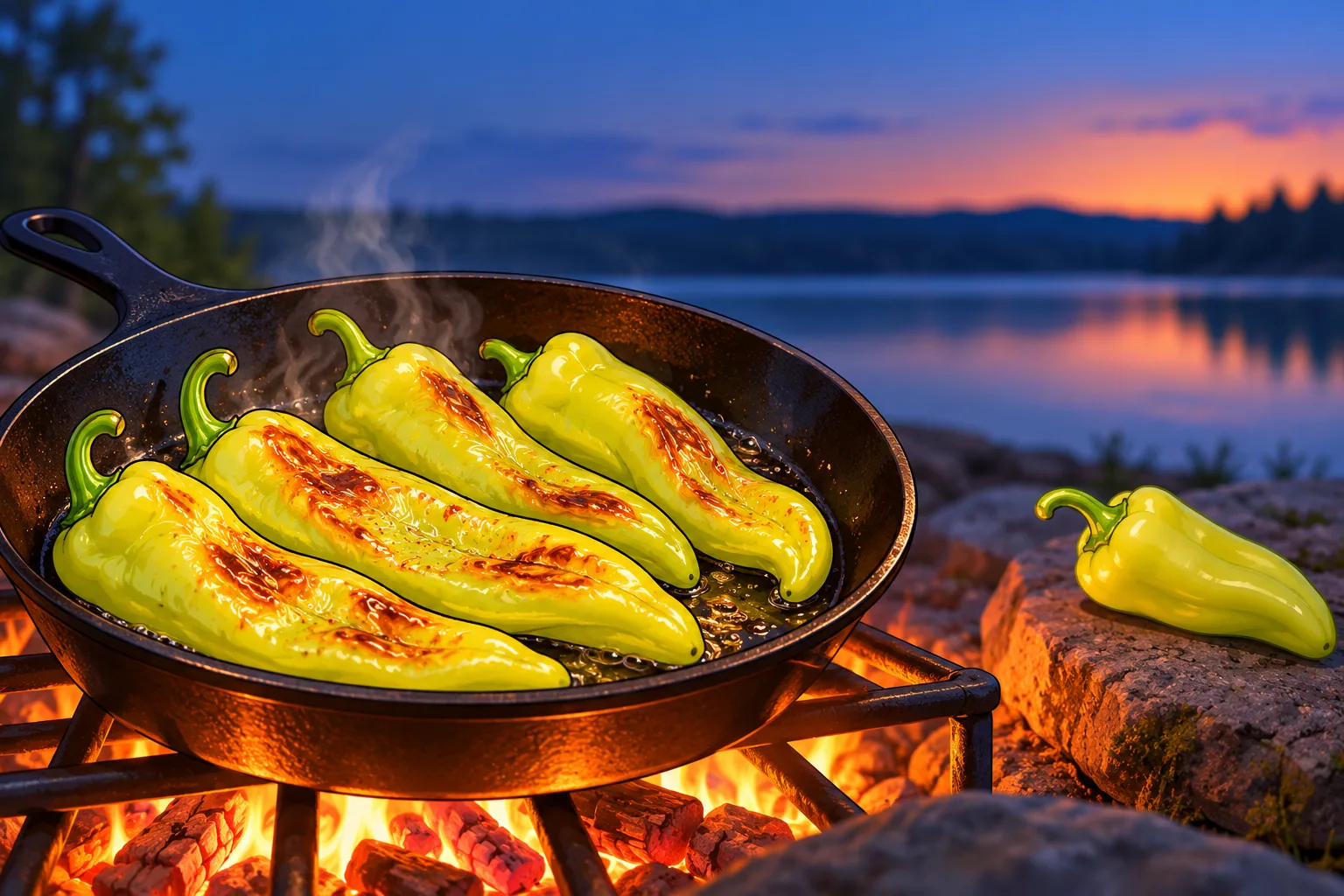
Fry it the way you would fry a cubanelle: hot pan, thin strips, little stirring. The steps below work for every swap in the table.
- 1
Cut to one width
Halve each pepper, take out the stem, seeds and pale ribs, and cut strips about a finger wide; cut bells and poblanos thinner.
- 2
Dry the strips
Pat them dry so they brown in the oil instead of spitting and steaming.
- 3
Heat the oil first
Get a heavy pan hot with a thin film of oil before the strips go in.
- 4
Lay them flat
Spread the strips in one layer, skin side down, and leave them until the skin blisters in spots.
- 5
Turn once and add onion
Turn the strips, add sliced onion if your recipe has it, and cook until both are soft and browned at the edges.
- 6
Salt at the end
Salt just before serving, so the strips stay crisp at the edges.
Your next step depends on what else your shop is out of. If the bell bin is empty too, the bell pepper swaps work from the same USDA weights, and if your recipe really wanted a little more warmth, the Anaheim swaps start one step up the heat scale.
Every other missing pepper, from a fresh ají to a dried ancho, sits on the swap chart, where you pick the pepper your recipe calls for and read across to your swap and its amount.