On this page
- 1What can you use instead of ají dulce?
- 2How do you tell an ají dulce from a habanero at the market?
- 3How much habanero brings a bell pepper up to ají dulce heat?
- 4What replaces ají dulce in Puerto Rican sofrito?
- 5Why are Caribbean seasoning peppers so hard to buy?
- 6Which ají dulce swap suits your pot?
- 7What goes wrong when sofrito is made without ají dulce?
- 8Where can you take your sofrito from here?
- 9Sources
What can you use instead of ají dulce?
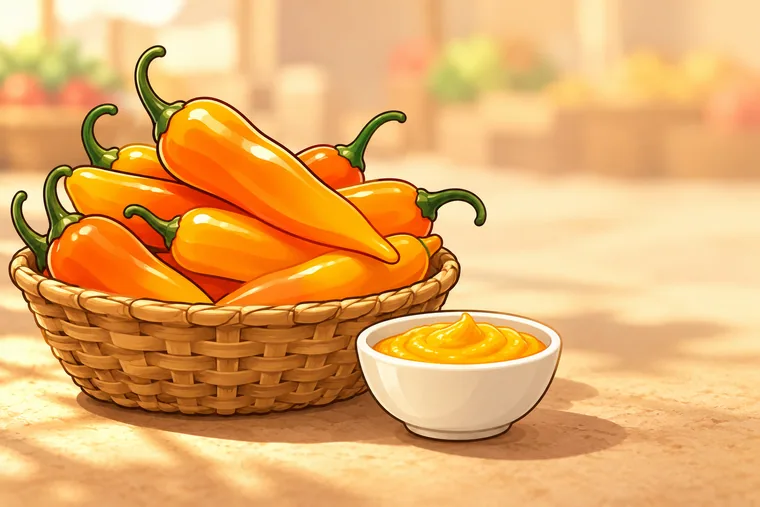
Another sweet Caribbean seasoning pepper, if you can find one. An East New York Farms! grower sheet describes seasoning peppers, also called pimentos, as Capsicum chinense cultivars selected for sweetness and aroma without the heat of habaneros or Scotch bonnets, and names ají dulce as the Puerto Rican one used in sofrito1. Outside a Caribbean market you will more likely end up with a red bell or a cubanelle, plus a sliver of habanero for the perfume.
| Swap | Heat vs ají dulce | How much for 60 g ají dulce | Best for | Flavor note |
|---|---|---|---|---|
| Caribbean seasoning pepper1 | Same idea: selected without the heat | 60 g | Sofrito, stews, beans | Sweet and aromatic, the same species |
| NuMex Suave Orange or Red2 | Milder: 335 and 774 SHU | 60 g | Sofrito, salsas, raw | Habanero pod type; flavor not described |
| Habanada3 | No heat | 60 g | Raw dishes, garnish | Bright, tropical, floral |
| Red bell plus a sliver of habanero4 | Matched to about 1,000 SHU | 59.7 g bell + 0.27 g habanero | Sofrito when nothing else is around | Sweet bell, with habanero's fruity, floral note |
| Cubanelle4 | About the same: about 1,000 SHU | 60 g | Sofrito body, stews | Sweet, very mild, rich |
| Red bell alone4 | No heat: 0 SHU | 60 g | Mild sofrito for kids | Sweeter than green bell |
Ají dulce's job is aroma, not heat; pick the swap that smells most like a habanero and burns least. That is why the first three rows are all Capsicum chinense, the habanero's species, bred or chosen to lose the burn, and why your nose is the best tool you have at the market.
Caribbean seasoning peppers, the natural swap
The SARE sheet notes that most Caribbean islands have their own distinctive seasoning pepper1, so a Trinidadian or Dominican grocer may sell one under another name. Use it gram for gram. Ask for the sweet seasoning pepper, and sniff before you buy: it should smell fruity like a habanero.
NuMex Suave, a mild habanero you can grow
NMSU released NuMex Suave Orange and Suave Red in 2004 and measured them at 335 and 774 SHU, milder than any other C. chinense cultivar2. That puts them right in ají dulce's range. You will rarely see them in a shop, but if you grow peppers, they are the swap to plant.
Habanada, the heatless habanero
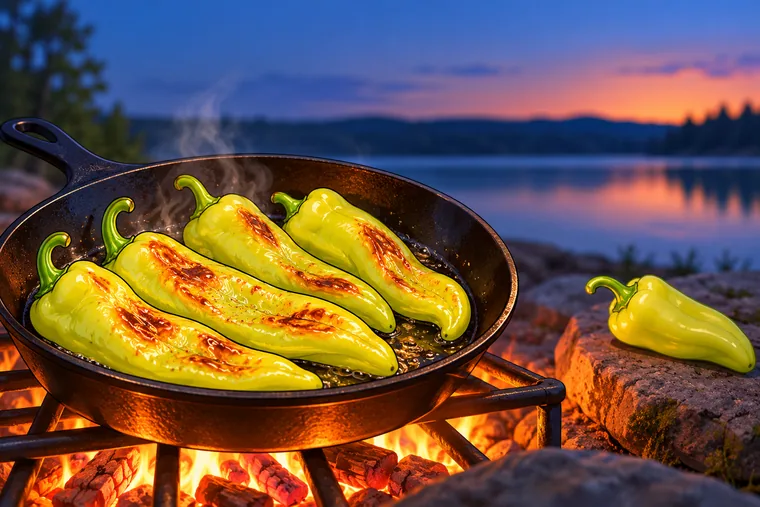
Cornell breeder Michael Mazourek developed Habanada as the first truly heatless habanero, harvested bright tangerine orange at two to three inches long, with a bright, tropical, floral flavor3. It has no heat at all, so it suits raw dishes where you want the perfume and nothing else. You will mostly find it as seed, so it is a swap you plan a season ahead.
Red bell with a sliver of habanero
This is the supermarket fix. A bell pepper brings sweetness and body at zero heat4; a tiny piece of habanero brings the fruity, citrus-like flavor and floral aroma UF/IFAS describes4, plus a little warmth. The worked section below gives you the grams.
Cubanelle, for body
A cubanelle has sweet, very mild flesh at about 1,000 SHU4, right inside ají dulce's band. It has none of the habanero perfume, so on its own it gives you a sofrito that tastes of bell more than of the islands. Pair it with a seasoning pepper if you have even one in your fridge.
Red bell alone, for a mild pot
A red bell carries more sugar than a green one, because peppers sweeten as they ripen5, and USDA weighs a medium one at 119 g6. Without habanero it gives you a mild, sweet sofrito with no perfume, a fair choice when you cook for small children or for anyone at your table who avoids heat.
How do you tell an ají dulce from a habanero at the market?
Look at the shape and ask the seller, because the color will not save you. UF/IFAS describes ají dulce as looking like a habanero, with a spinning-top shape and semi-wrinkled skin4; both ripen through yellow and orange to red. The difference is the heat: 500–1,500 SHU against 100,000–350,0004.
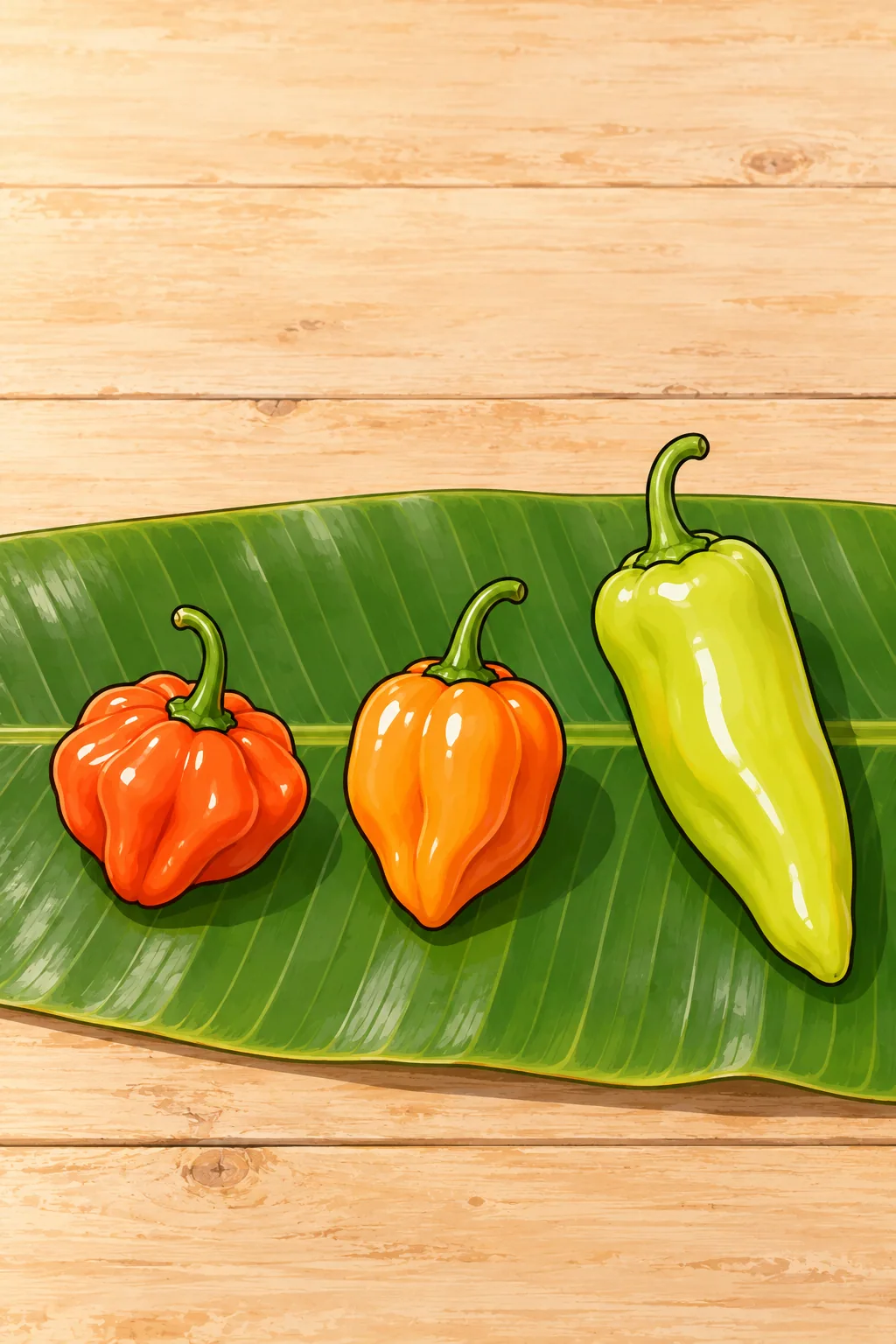
The ají dulce you buy tends to look a little flatter and more wrinkled, while a habanero looks smoother and lantern-shaped, but plants vary, so do not trust your eyes alone. The SARE growers add a reason to stay careful: heat genes are dominant in peppers, so seed saved from an ají dulce grown near a hot variety can give hot pods1.
How much habanero brings a bell pepper up to ají dulce heat?
Very little: about 0.44 % of the weight. With ají dulce at its 1,000 SHU midpoint, red bell at zero and habanero at its 225,000 midpoint4, the habanero share is 1,000 ÷ 225,000 = 0.44 %.
| Ají dulce in the recipe | Red bell | Habanero | What that looks like |
|---|---|---|---|
| 30 g4 | 29.9 g | 0.13 g | A sliver the size of a grain of rice |
| 60 g4 | 59.7 g | 0.27 g | Two thin slivers of wall, no seeds |
| 120 g46 | 119.5 g, one medium bell | 0.53 g | A strip about the width of a pencil |
Most kitchen scales cannot weigh a quarter gram, so cut by eye and taste. Take the habanero sliver from the wall, away from the seeds and pale cross walls where Kentucky's crop profile says the capsaicin concentrates7, and blend it with the bell before it meets the rest of the sofrito. If the blend tastes flat, add one more sliver; if it stings, add more bell.
What replaces ají dulce in Puerto Rican sofrito?
A seasoning pepper first, a red bell with a habanero sliver second. UIC's Heritage Garden recipe blends 6 ajíes dulces with 2 medium green bells or cubanelles, 2 onions, a head of garlic and a bunch of culantro8. The ajíes dulces are the smallest share by count and the biggest share of the aroma.
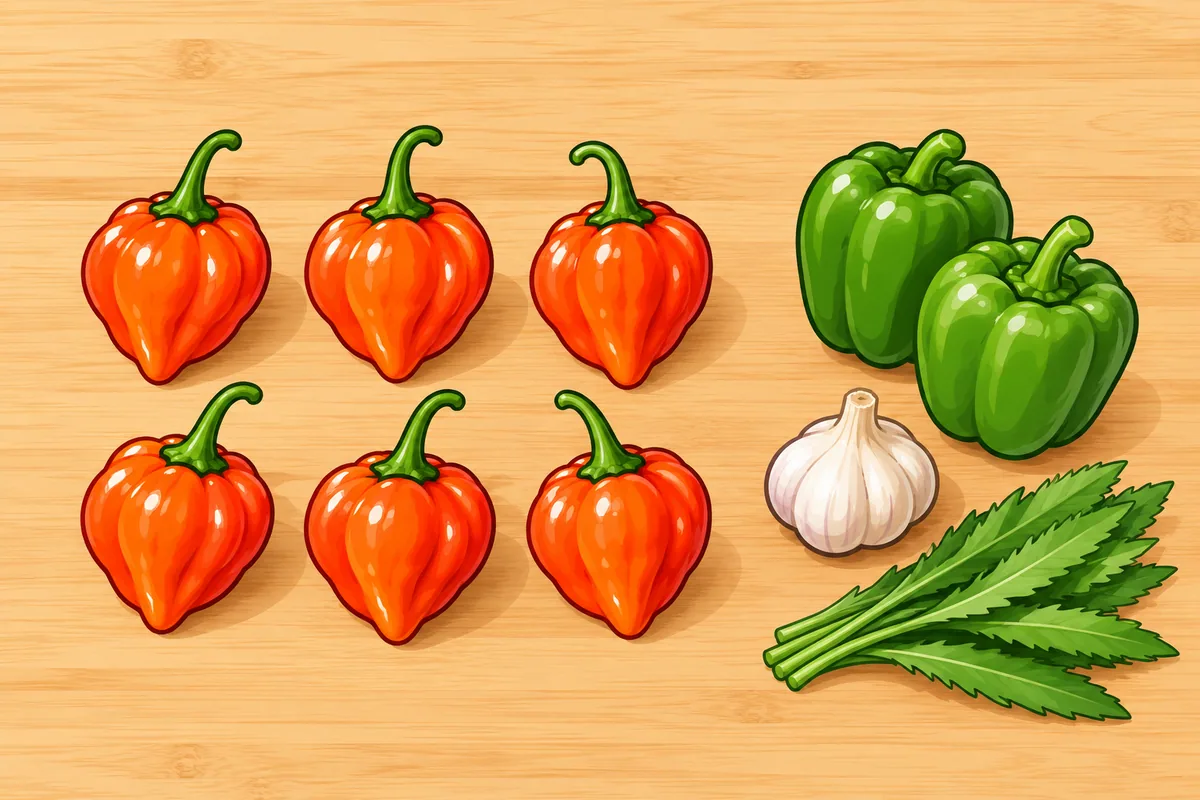
A worked sofrito without ají dulce
Here is UIC's recipe with the six ajíes dulces rebuilt from each swap. USDA has no weight for an ají dulce, so the table works in pods and slivers.
| Swap | In place of 6 ajíes dulces | What your sofrito tastes like |
|---|---|---|
| Seasoning peppers18 | 6 pods | Almost the same |
| NuMex Suave Orange2 | 6 pods | Close, slightly different perfume |
| Half a red bell plus a habanero sliver46 | Half a medium bell + one rice-grain sliver | Sweet, fruity, a little warmth |
| One extra cubanelle48 | 1 cubanelle | Milder and greener, no perfume |
Culantro carries much of sofrito's herb flavor, and UIC allows cilantro or recao in its place8. If you are already short of ají dulce, do not also skip the culantro, or your sofrito loses both of its signature notes at once. The recipe uses a tablespoon of the mix as the base of a dish8, so a whole batch goes a long way.
Why are Caribbean seasoning peppers so hard to buy?
Because few farms grow them for market. The East New York Farms! sheet calls seasoning peppers comparatively rare in fresh markets, with good marketing potential1, which tells you most of the supply still comes from home gardens. UF/IFAS adds that cachucha acreage is growing fast in Miami-Dade County4, so South Florida markets are your best bet in the United States.
UF/IFAS also notes that some Caribbean islands grow completely sweet Scotch bonnet varieties4. If your Caribbean grocer offers a sweet Scotch bonnet, you have another good swap, used gram for gram. Ask before you buy, though, because the hot kind looks the same.
Which ají dulce swap suits your pot?
Ask whether you need the perfume, the body or neither. The tree below sends each dish to its swap.
- blended baseSofrito or recaítoSeasoning pepper; else red bell plus 0.44 % habanero
- long simmerRice and beans, stewsCubanelle plus a habanero sliver
- uncookedSalsa or a raw garnishHabanada or NuMex Suave, 0–774 SHU
- no heat at allA pot for small childrenRed bell alone, 0 SHU
- plantingNext season's gardenNuMex Suave Orange, 335 SHU
Sources for this line1. East New York Farms! (United Community Centers), Northeast SARE-funded project2. New Mexico State University, Agricultural Experiment Station3. Cornell Small Farms Program (Cornell University)4. University of Florida IFAS Extension
In a long-simmered pot the perfume fades anyway, so your cubanelle with a sliver of habanero does the job. In a raw salsa you taste every note, which is where a heatless habanero earns its keep in your garden.
What goes wrong when sofrito is made without ají dulce?
Run through these before you blend. Each one comes from a swap in the table.
Before you blend the sofrito
- Taste each orange pod; a habanero look-alike runs 100,000–350,000 SHU4
- Use the habanero wall, not the seeds or ribs, and start at about 0.44 % of the pepper weight4
- Keep the culantro, or use cilantro or recao, so the herb note stays8
- Choose red bells over green for sweetness; peppers sweeten as they ripen5
If your sofrito comes out flat, the missing note is almost always the habanero perfume. Blend one more sliver with a spoonful of your sofrito, taste it, and stir it back into the batch. If it comes out too hot, you can stretch it with more blended bell and onion until it tastes right to you.
Is ají dulce the same as a sweet pepper?
Not the bell kind. UF/IFAS lists ají dulce, also called cachucha, as Capsicum chinense, the habanero's species, with a mild 500–1,500 SHU and a sweet flavor. A bell is Capsicum annuum at 0 SHU.49
Can you use a habanero instead of ají dulce if you remove the seeds?
Not one for one. Seeding takes out some heat, but the wall still carries far more than an ají dulce. Use a sliver of habanero inside a sweet pepper instead, at about 0.44 % of the weight.4
Is cachucha the same as ají dulce?
Yes. UF/IFAS gives cachucha pepper and ají dulce as names for the same Caribbean pepper.4
Where can you take your sofrito from here?
Freeze it in small portions and cook with it, a tablespoon at a time as UIC's recipe suggests8. If the cubanelles or bells for the base ran out too, the cubanelle swaps cover that half of the recipe.
For what the real pepper looks like, how it grows and where it comes from, the ají dulce entry has the details, and every other missing pepper sits on the swap chart.