
Mild Peppers Under 2,500 SHU, Listed by Heat
The bottom band of the index: 0 to 2,499 Scoville heat units.
A mild pepper rates 0 to 2,499 SHU; a bell pepper sits at zero and a poblano at 1,000–2,000.
- Sweet peppers carry a broken pungency gene, so they make no capsaicin at all
- Most mild types ripen 70–85 days from transplanting
Every mild pepper, 0 to 2,500 SHU
A plain scale, not a log one, so the small gaps you can taste show up. Each bar is a published figure.
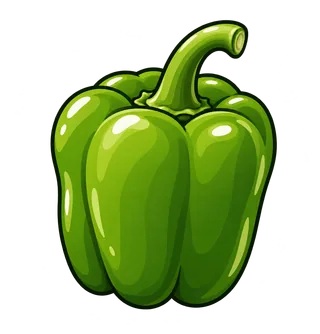
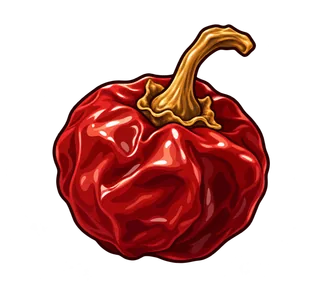
The jalapeño starts at 2,000 SHU, but its midpoint sits at 5,000, past the line.1
-
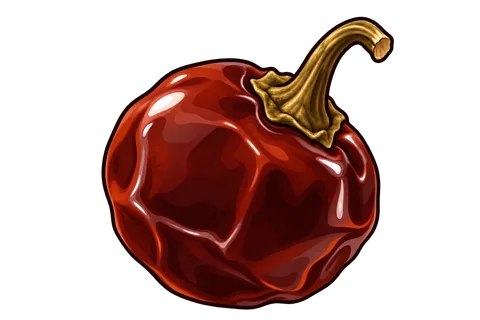
Cascabel
Mild1,500–2,500 SHU Capsicum annuum -
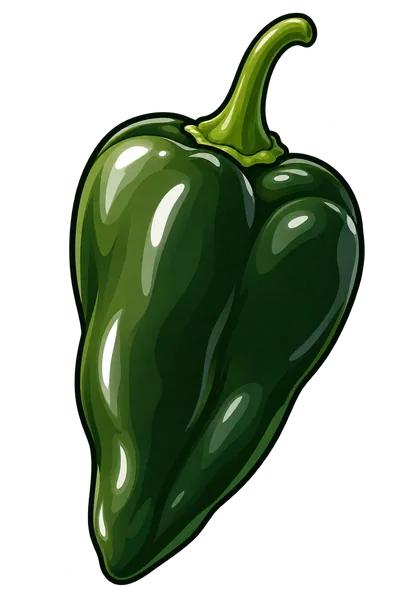
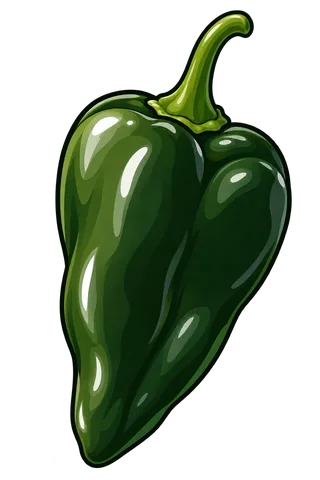
Poblano
Mild1,000–2,000 SHU Capsicum annuum -
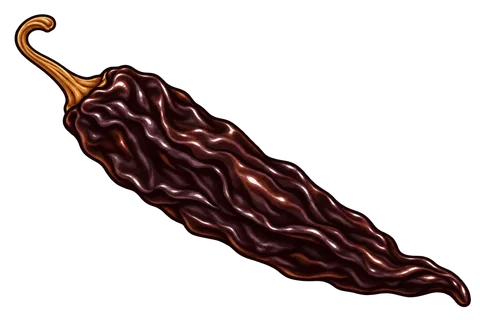
Pasilla
Mild1,000–2,000 SHU Capsicum annuum -
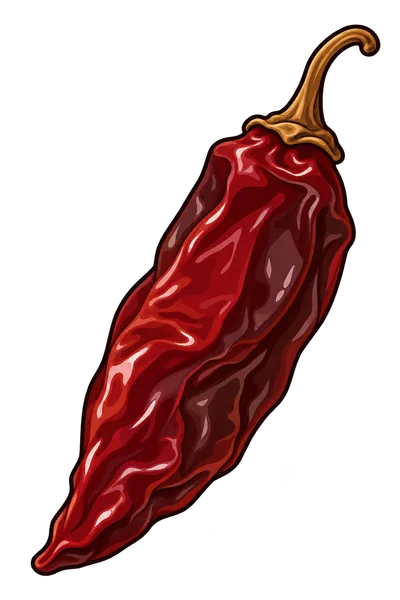
Aji panca
Mild500–1,500 SHU Capsicum chinense -
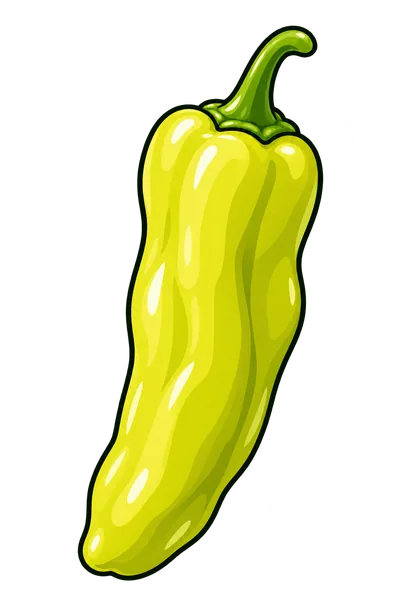
Cubanelle
Mild1,000 SHU Capsicum annuum -
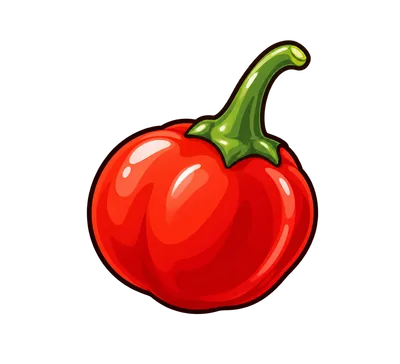
Peppadew
Mild650 SHU Capsicum baccatum -
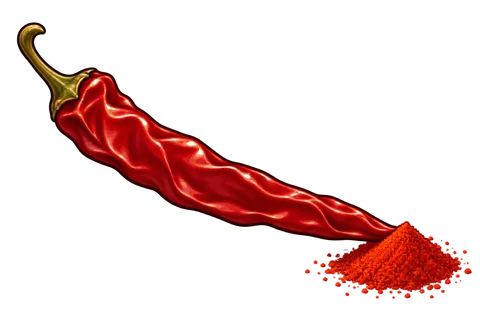
Paprika
Mild500 SHU Capsicum annuum -
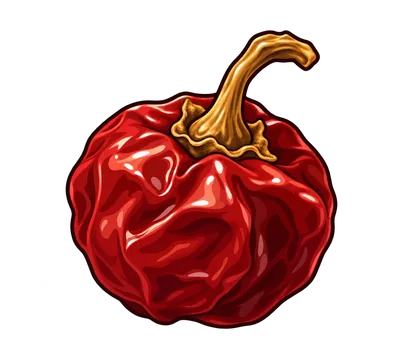
Nora
Mild480 SHU Capsicum annuum -
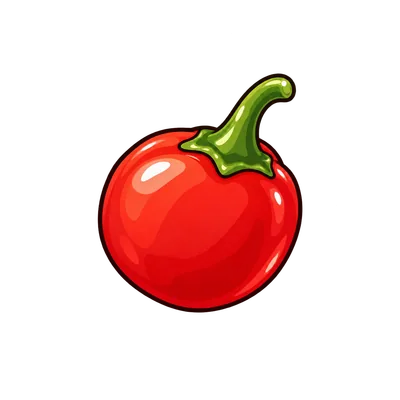
Cherry
Mild0 SHU average Capsicum annuum -
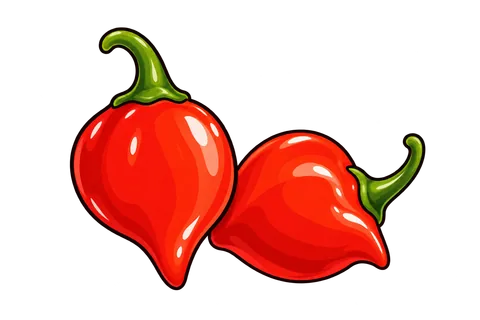
Biquinho
Mild0 SHU average Capsicum chinense
Nothing matches this filter yet.
Published heat ranges. Sources on each entry page.
How soon each one ripens
Days from transplanting to the first pods you can pick, as the source of each entry gives them.
Habanero types take 90 to 120 days, for scale.7
On this page
- 1What counts as a mild pepper?
- 2Which peppers are mild?
- 3What is the difference between sweet and hot peppers?
- 4Which peppers are mild enough for cautious eaters?
- 5Which mild peppers are easiest to grow?
- 6Which mild peppers are easiest to find?
- 7Can a mild pepper be hot?
- 8What goes wrong with mild peppers?
- 9Which mild pepper should you pick?
What counts as a mild pepper?
In this index, any pepper whose range midpoint sits below 2,500 Scoville heat units. That's half of an average jalapeño at about 5,000 SHU1, and it's the first of the five bands on the Scoville scale we use.
Log scale; bars are published ranges.1
A bell pepper anchors the bottom at zero, and the poblano tops out the common mild peppers at 2,000 SHU1. The jalapeño sits in the chart to show you where mild ends: its range starts at 2,000 but its middle sits well past the line.
Which peppers are mild?
These are the mild peppers with a published heat figure we could read on a primary source, mildest first, so you can compare them on one scale.
| Pepper | Species | Heat | What people do with it |
|---|---|---|---|
| Bell pepper1 | C. annuum | 0 SHU | Fresh salads, sandwiches, cooked vegetable |
| Banana pepper12 | C. annuum | 0–500 SHU | Often pickled |
| Ají dulce (cachucha)1 | C. chinense | 500–1,500 SHU | Sweet flavor; native to the Caribbean |
| Cubanelle1 | C. annuum | about 1,000 SHU | Frying |
| Poblano13 | C. annuum | 1,000–2,000 SHU | Eaten green or red; dried as ancho |
| Sandia (New Mexican)34 | C. annuum | 1,500–2,000 SHU | A New Mexican long green chile |
Every mild pepper on the list except ají dulce is C. annuum, the same species as the jalapeño. So mild comes from the pod type and its genes. You don't need a separate kind of plant to get a pepper with no burn.
What is the difference between sweet and hot peppers?
One gene. A Cornell-led study traced pungency to the Pun1 locus and found that every non-pungent pepper tested carries the same broken copy, a deletion across the start of the gene5. Without a working copy, the pod you buy makes no capsaicinoids.
- Broken copyNo capsaicinoids: bell, banana, pimento, sweet cherryMild
- Working copyCapsaicinoids at some level, from poblano up to habanero
Sources for this line1. University of Florida IFAS Extension5. The Plant Journal 42(5):675-688 (Wiley)6. Clemson Cooperative Extension, Home and Garden Information Center
Sweet pepper
Hot pepper
That's why a sweet pepper isn't "a little bit hot". It's either off, like a bell, or on at some level, like the mild hot peppers below. It also means your garden can't turn a sweet pepper hot: University of Maryland Extension says planting sweet types next to hot types will not make the sweet ones hot7.
Why does a red bell taste sweeter than a green one?
Because you let it ripen longer. Clemson's Home and Garden Information Center says fully colored peppers are sweeter than green ones6. A green bell is a full-size pod picked before it changes color, so if you want the sweetest bell, leave it on the plant until it turns, then pick it once it reaches the color you want.
Which peppers are mild enough for cautious eaters?
The ones bred to be. New Mexico State University has released several chile cultivars measured well under 1,000 SHU, and its circular gives a lab figure for each; the strip at the top of the page plots all six, from NuMex Garnet at 160 SHU to Joe E. Parker at 9004.
They let you cook New Mexican dishes with almost none of the heat. For your child's plate, a bell pepper at 0 SHU is still the safest pick1.
Which mild peppers are easiest to grow?
The sweet types, mostly because they give you a crop quickly. University of Maryland Extension puts most sweet and hot peppers at 70 to 85 days from transplanting, against 90 to 120 for habanero types7. Clemson gives the same 70 to 85 days from a transplant, and 100 to 120 days if you count from seed6.
- Bell peppers: a mature green pod 70–80 days after transplanting, and you can pick at that stage.7
- Banana, sweet cherry and Italian frying peppers: listed as sweet varieties in the same 70–85 day window.7
- Pimento: the UC Master Gardeners call it good for containers. Give it more room in a bed, 18 to 24 inches between plants.26
- Poblano: eaten green or ripe red, so you can pick before it fully ripens.1
Your peppers like it warm. Clemson says they grow best at 70 to 85 °F by day and 60 to 70 °F at night, spaced 12 inches apart in rows 3 feet apart6. On a balcony, University of Maryland Extension sets the floor at a 5-gallon container7.
If you're starting for the first time, a sweet type you can harvest green gets you a crop weeks before a habanero type would ripen7.
Which mild peppers are easiest to find?
Bell peppers, by a long way. UF/IFAS calls the bell a common type of pepper you can use fresh in salads and sandwiches or cook1. The NMSU Chile Pepper Institute notes that the poblano is the name US produce markets use for a green ancho3, which is why you'll see it next to the jalapeños.
You will find cubanelles wherever Caribbean cooking turns up, since UF/IFAS ties them to Cuban, Dominican and Puerto Rican kitchens1.
Can a mild pepper be hot?
Yes, at the edges of a pod type. UF/IFAS puts the Anaheim at usually about 1,000 SHU but says some varieties reach 5,0001, which crosses into the medium band. NMSU's Big Jim, a long green chile of the same New Mexican kind, measured 6,500 SHU4.
So "mild" on a label tells you the pod type, not the pod. When it matters to you, pick a named cultivar with a published figure from the table above.
What goes wrong with mild peppers?
Two kinds of trouble: a pod that bites when you expected none, and a plant that won't give you pods. Here's what usually causes each.
Problem and likely cause
- A shishito burns: about 1 in 10 shishitos carries a spicy kick, so taste before you serve the plate.2
- A dark bell tastes warm: the UC Master Gardeners note that black and purple bells can be slightly spicy.2
- The plant flowers but sets few pods in midsummer: very hot weather, especially nights above 75 °F, slows or stops pod production.7
- Flowers drop and the pods stay small: the soil ran dry. Dry spells also bring blossom end rot.7
- Slow growth after planting: cool weather, or an overgrown, stressed transplant from the shop.7
Which mild pepper should you pick?
Pick by what you want on your plate:
- Zero heat, guaranteed: a green, red or yellow bell. Skip the black and purple ones if you're cooking for someone who avoids all heat2.
- A little warmth with flavor: a poblano at 1,000 to 2,000 SHU, roasted or stuffed1.
- Something for the frying pan: a cubanelle, the Caribbean frying pepper at about 1,000 SHU1.
- A pickle jar: a banana pepper, at 0 to 500 SHU and often pickled12.
Quick answers
Are bell peppers sweet peppers?
Yes. UF/IFAS rates the bell pepper at zero Scoville units, and University of Maryland Extension lists bell first among the sweet varieties, with banana, sweet cherry and Italian frying peppers.17
More in Pepper Index
The newest from Pepper Index
-
Carolina Reaper Scoville, 1.64 Million SHU
A fruity, sweet superhot from South Carolina, bred from a habanero and a Naga Viper.Oct 18, 2026 · Pepper -
Ghost Pepper Scoville, About 1 Million SHU
The Bhut Jolokia of Assam, India: the first pepper measured at a million SHU.Oct 18, 2026 · Pepper -
Ñora Pepper, Sweet Pimentón Pod Under 480 SHU
The small round sweet pepper behind Murcia's pimentón.Oct 18, 2026 · Pepper -
Pepper X Scoville, 2.69 Million SHU and Record
Ed Currie's record pepper from South Carolina, at an average of 2.69 million SHU.Oct 18, 2026 · Pepper -
Aleppo Pepper, the Halaby Flake Cured With Oil and Salt
A burgundy flake from the old Silk Road city of Aleppo, sweet and fruity first, with a moderate heat behind it.Oct 18, 2026 · Pepper -
Calabrian Chili Heat, 5,000–70,000 SHU by EU Rule
Peperoncino di Calabria: the protected chili of Italy's toe, sold fresh, on strings, as flakes and as powder.Oct 18, 2026 · Pepper
Sources
· 13
- 1University of Florida IFAS Extension HS-859/TR010: Pepper Production in Miami-Dade County, Florida
- 2University of California Agriculture and Natural Resources, UC Master Gardeners of Ventura County Ventura Garden to Table Series: Peppers
- 3New Mexico State University, Chile Pepper Institute Chile Terminology
- 4New Mexico State University Circular 706: The Chile Cultivars of New Mexico State University, 1913–2022 (Coon, Walker, Lozada, Guzman, Bosland)
- 5The Plant Journal 42(5):675-688 (Wiley) The Pun1 gene for pungency in pepper encodes a putative acyltransferase (Stewart, Kang, Liu, Mazourek, Moore, Yoo, Kim, Paran, Jahn)
- 6Clemson Cooperative Extension, Home and Garden Information Center HGIC 1316: Pepper (Dufault, Doubrava; revised by Ballew; updated by Davenport)
- 7University of Maryland Extension Growing Peppers in a Home Garden
- 8Ministerio de Agricultura, Pesca y Alimentación (Spain) Pliego de condiciones de la Denominación de Origen "Pimentón de Murcia"
- 9All-America Selections (award body, its own winner record) Pepper Gypsy hybrid
- 10Sección Hortofloricultura SIMA (Basque Government), in the Spanish Ministry of Agriculture library Selección de Guindilla de Ibarra (M. Mancho, E. Aguirre)
- 11New Mexico State University, Chile Pepper Institute (seed shop) Red Cherry Sweet Pepper
- 12Embrapa, Agência de Informação Tecnológica (Ribeiro, Amaro, Carvalho, Reifschneider) BRS Moema
- 13Instituto Nacional de Innovación Agraria (INIA) and MIDAGRI, Peru Catálogo de ajíes nativos del banco de germoplasma del INIA (ISBN 978-9972-44-199-8)
Your pocket pepper index.
Built from the same index as this site.
- Every entry offline
- Compare any two peppers
- Keep a list of peppers you have tried