
Guindilla Pepper, the Mild Basque Pickle Picked at 5–12 cm
The pale green, barely hot pickling pepper of Gipuzkoa, sold in jars under the Eusko Label.
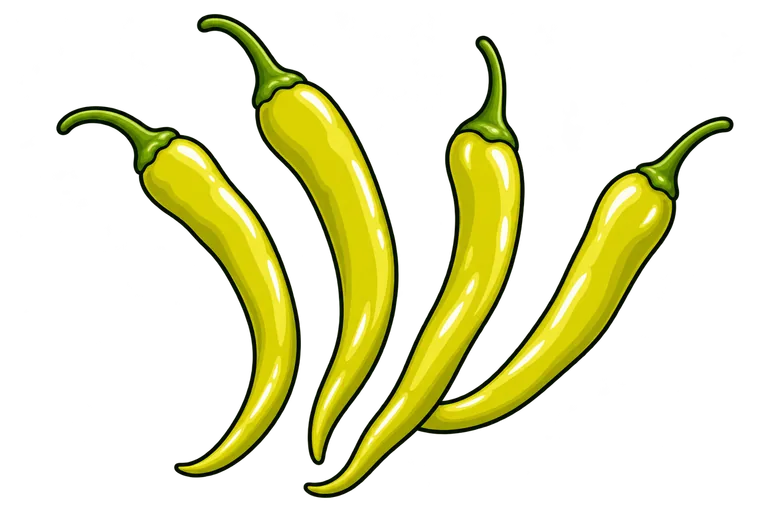 Mild
Mild, barely hot
- Picked young, 5–12 cm long, every 2 to 3 days from July to the first cold October nights
- Pickled in wine vinegar at pH 3.3–3.6 and labelled only after at least 20 days
- Days to harvest
- ≈ 70 days2
On this page
- 1What is a guindilla de Ibarra?
- 2How hot is a guindilla?
- 3Why do growers pick guindillas so young and so often?
- 4What do the rules for a jar of guindillas say?
- 5What is the guindilla's year in the Basque Country?
- 6How do you pickle guindillas at home?
- 7Can you save guindilla seed from your own plants?
- 8How do Basques eat guindillas?
- 9What goes wrong with guindillas in the jar and the garden?
What is a guindilla de Ibarra?
A long, thin, pale green Basque pepper, picked young and almost always met in a jar. ICEX describes the pod as about 10 cm long, with an edible part of 5 to 12 cm, an even yellowish green with a slight shine, tender flesh and a fine skin1. Basques call it Ibarrako piparrak, after the Ibarra valley in Gipuzkoa where its plant nurseries sit.
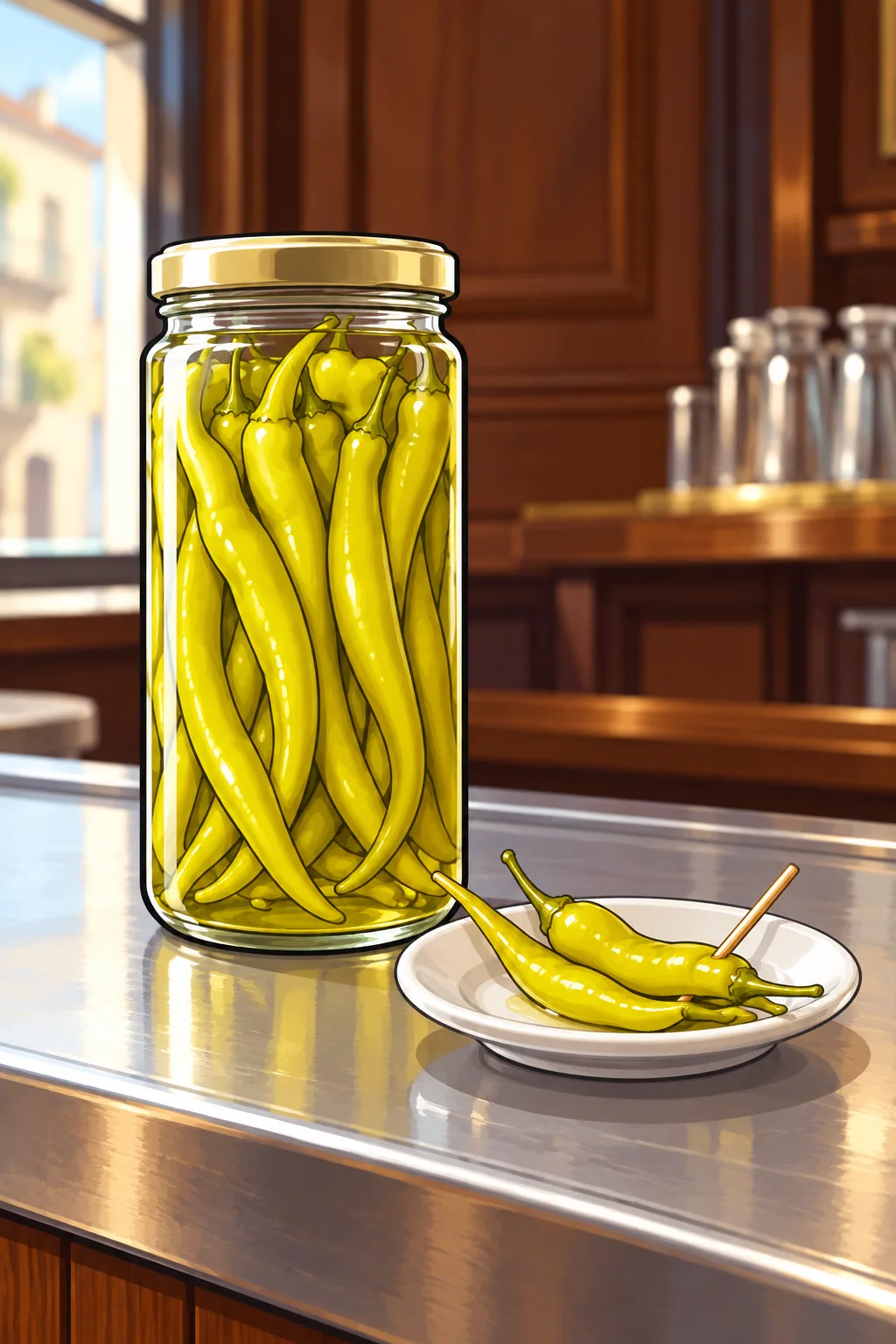
Locally the jars carry a nickname you won't guess. The Basque government's 1996 selection report says the pickled peppers, sold in glass jars, earned such a reputation that people know them as "Langostinos de Ibarra", Ibarra prawns2. It's a joke about the curved shape and about how much people like them, not a hint of seafood. The same report notes you can find the jars in specialist shops across Spain2.
How hot is a guindilla?
Barely hot at all. ICEX calls it mild, not excessively hot1, and the 1996 report describes a yellow guindilla that's slightly hot when grown in its home valley and picked very tender2. No primary source we found prints a Scoville figure for it, so we don't invent one.
The two descriptions fit together once you know the trick. Growers pick the pods while they're still young and pale, long before they would ripen and build heat, so the jar you buy holds a pepper that's crunchy and tangy first. Think of a guindilla as a pickle that happens to be a pepper: you'll notice the vinegar long before you notice any burn.
If you want a sense of scale, the familiar green serrano runs 10,000 to 25,000 SHU3; a pickled guindilla sits far below that, closer to the sweet end of the shelf than the hot one.
On your shelf, its closest cousin is the pale Italian pepperoncini, another slim mild pepper you mostly buy pickled. The other famous Basque pepper, the red Espelette from the French side of the border, is a different story: you buy it dried and ground, and it carries real warmth.
Why do growers pick guindillas so young and so often?
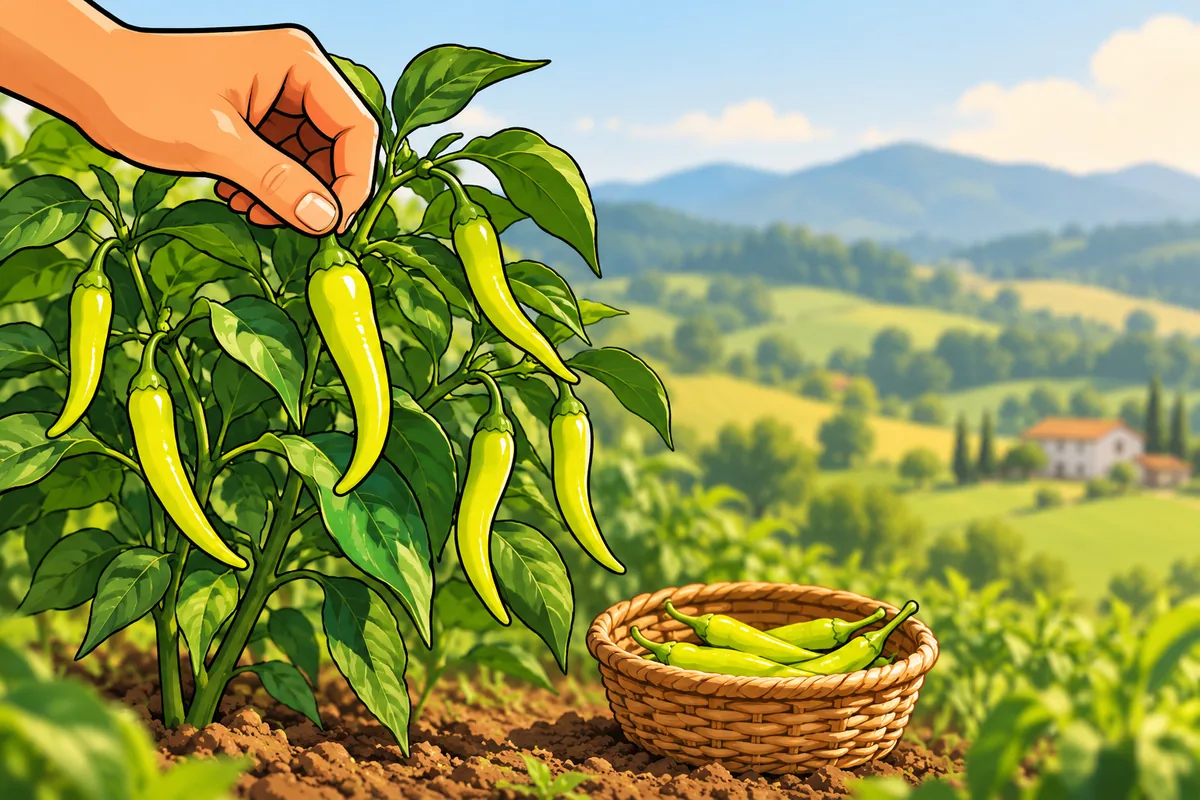
Because the market wants them tender, and a tender guindilla only stays that way for a day or two. The selection report says growers harvest every two or three days, in small open-air plots, since picking at the right moment takes a lot of hand labor2.
That's a lot of fruit per plant. In the 1995 trial, all 2,000 plants set fruit; the best one gave 399 pods, and 35 plants passed 3002. Every one of those pods came off by hand, which is part of why a small jar of Ibarra guindillas costs more than a big jar of generic pickled peppers.
If you grow your own, copy the rhythm. Walk the row every second or third day and pick everything that has reached a finger's length; a pod you miss for a week turns tough and loses the tender bite you planted it for.
What do the rules for a jar of guindillas say?
The Eusko Label, the Basque food quality stamp, sets the numbers for the jar1. They tell you what's in the brine and how fresh your jar is.
| Rule | Value |
|---|---|
| Brine | Diluted wine vinegar and salt |
| Acidity (pH) | 3.3–3.6 |
| Salt | At most 10 g per liter |
| Sugar reading | 3.5–4.5 °Brix |
| Before labelling | At least 20 days in the jar |
| Leaving the packing plant | Within 30 days of packing |
| Best-before | At most 2 years from packing |
| Packing | Hermetically sealed and tamper-proof, at registered Basque plants |
Two of those numbers matter at your shelf. The 20-day minimum means the peppers have cured before you open them, and the 2-year limit gives you the outside edge for an unopened jar. Shops sometimes call the product a PDO, but the stamp is the regional Eusko Label, not an EU designation.
What is the guindilla's year in the Basque Country?
A short, busy summer bracketed by a cold seedbed and the first cold nights. The 1996 report gives the traditional calendar, and ICEX adds the planting and harvest months12.
- Late February to mid-March: sowCold seedbed under glass
- May to June: transplantTwo plants per hole, about six holes per square meter
- Late June: first flowersMost plants in flower by early July
- July onward: pick every 2–3 daysYoung, pale and tender
- First cold October nights: season endsPicking stops
- October: ripe seed pods dry on stringsSeed for next year
- Back to Late February to mid-March: sow
You can work out the days to harvest from the 1995 trial: plants went in on 10 May and gave their first harvest on 20 July2, about 70 days from transplant. ICEX gives a slightly earlier window, planted in April and May and harvested from June to October1, so an early warm year can bring the first pickings forward.
The climate explains the low ground. ICEX says the crop grows below 450 m, in mild temperatures with high humidity and rain1, which is close to a damp coastal summer anywhere in northern Europe. If your summers run cool and wet, this is one of the friendlier peppers you can try.
How do you pickle guindillas at home?
Use a tested recipe for hot peppers rather than guessing the brine; a jar that looks fine can still be unsafe if the acid is too low, and you can't taste that. If you have never canned before, our wider guide to pickling peppers at home walks you through the canner itself. The National Center for Home Food Preservation's method below works for long, slim peppers like these; it's for a boiling-water canner and makes about 9 pints4.
- 1
Prepare the peppers
Wash them, and if you leave small peppers whole, slash 2 to 4 slits in each so the brine gets in. Wear rubber gloves.4
- 2
Blanch or blister
Blanch them in boiling water, or blister and peel them; the recipe gives both options.4
- 3
Make the brine
Boil 5 cups of 5 % vinegar, 1 cup of water, 4 teaspoons of canning salt, 2 tablespoons of sugar and 2 garlic cloves for 10 minutes, then take out the garlic.4
- 4
Fill the jars
Pack half-pint or pint jars with peppers, pour the hot brine over them and leave 1/2-inch headspace.4
- 5
Process
Process for 10 minutes up to 1,000 ft, 15 minutes from 1,001 to 6,000 ft, and 20 minutes above 6,000 ft.4
That brine is sharper than a Basque jar. Five cups of 5 % vinegar in six cups of liquid works out to a little over 4 % acidity, which is why your homemade guindillas will taste more sour than the wine-vinegar pickles from Ibarra. Keep the vinegar ratio as written for safety, and soften the taste at the table with a drizzle of olive oil instead.
Can you save guindilla seed from your own plants?
Yes, but only if nothing else flowers nearby. The 1996 report found that bees cross guindilla plants with others so readily that natural crosses in the open reached up to 35 %, and it sets a planting distance of more than 350 m to avoid them2.
In a home garden you can't get 350 m from your neighbor's chilies, so do what the researchers did: they moved their seed plants into a greenhouse with insect mesh, which stopped cross-pollination almost entirely2. A cage of fine netting over one plant does the same job for you. Leave a few pods to ripen fully, then dry them on a string, the way the Ibarra growers dry their seed pods outdoors2.
How do Basques eat guindillas?
Straight from the jar, and on sticks. ICEX lists them as a pickle and as part of banderillas, cocktail sticks that thread pickles together1. You'll also find guindillas sold fresh, as the 1996 report notes the valley grows them for pickling and for fresh eating2.
At home, drain a few and serve them with anything salty or rich: grilled fish, a plate of cured meat, a bowl of white beans. Their acidity cuts through fat the way a cornichon does. Once you open a jar, keep it in the fridge with the peppers under the brine, and fish them out with a clean fork so you don't carry crumbs or oil back into it.
What goes wrong with guindillas in the jar and the garden?
Most trouble comes from picking late, from the brine, or from bees.
Guindilla problems and their fixes
- Your homegrown pods turned tough and hot: you picked them too late. Harvest every 2–3 days while they're young and pale.2
- Your homemade pickles taste much sharper than the Basque ones: the tested brine uses 5 % vinegar at a higher ratio. Keep it for safety and add oil when you serve.4
- Saved seed gave odd-shaped pods: bees crossed your plant with another. Net one plant or keep others more than 350 m away.2
- Your plants stopped cropping in October: that's the season's end; the first cold nights stop the harvest.2
- An old unopened jar in the pantry: check the date; the label allows at most 2 years from packing.1
Your next step: if you like the idea of a pepper you pick young, look at the Padrón, another Spanish green pepper eaten before it ripens, or browse the mild peppers hub for more that never bite.
If your pantry is the goal, the peppers for pickling list ranks the ones that stay crisp in a jar, so you can plan a whole shelf of them next summer and pick each one at the stage it pickles best.
Related peppers
Related in Peppers
-
Espelette Pepper, 10 Basque Communes and 15 Days on the Wall
A conical red pepper from the French Basque Country whose powder the AOP rules call strong but not burning.7 min read -
Biquinho Pepper, the 2.6 cm Brazilian Pod With No Heat
A crunchy little red pod Brazil eats pickled, often with no burn at all.6 min read -
Peter Pepper, the Heirloom That Gets Hotter for 90 Days
A red heirloom chile with an odd shape, a seed-bank record and heat that builds right up to harvest.5 min read -
Cayenne Pepper Scoville, 25,000–50,000 SHU
The long red chile behind most ground red pepper and a lot of vinegar hot sauce.6 min read -
Habanero Pepper Scoville, 100,000–350,000 SHU
A fruity, floral chile in the extra-hot band.7 min read -
Jalapeño Scoville, 2,000–8,000 SHU and Chipotle
The medium-heat chile most heat comparisons start from.6 min read
Sources
· 5
- 1ICEX España Exportación e Inversiones (Foods & Wines from Spain) Guindilla de Ibarra / Ibarrako Piparrak
- 2Sección Hortofloricultura SIMA (Basque Government), in the Spanish Ministry of Agriculture library Selección de Guindilla de Ibarra (M. Mancho, E. Aguirre)
- 3University of Florida IFAS Extension HS-859/TR010: Pepper Production in Miami-Dade County, Florida
- 4National Center for Home Food Preservation (University of Georgia) Pickled Hot Peppers
- 5New Mexico State University, Chile Pepper Institute (seed shop) Red Cherry Sweet Pepper