
Biquinho Pepper, the 2.6 cm Brazilian Pod With No Heat
A crunchy little red pod Brazil eats pickled, often with no burn at all.
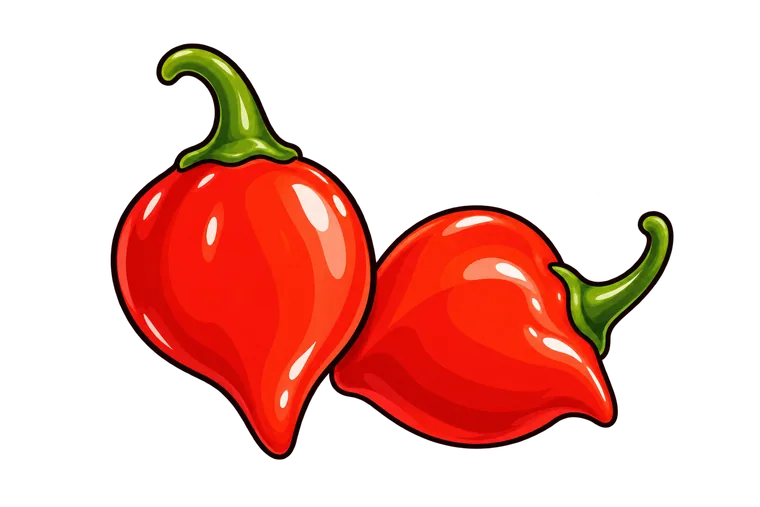 Mild
Sweet to mild; BRS Moema has no heat
- About 2.6 cm long and 1.5 cm wide, with a pointed beak tip
- Ripe fruit starts about 90 days after transplanting in central Brazil
On this page
- 1How hot is a biquinho pepper?
- 2Why do they call it the little beak?
- 3Where did the biquinho come from?
- 4How do Brazilians eat biquinho?
- 5What do pH and sugar tell you before you pickle biquinhos?
- 6How long until a biquinho plant gives you fruit?
- 7Why did my biquinhos come out hot or sparse?
- 8What can you use instead of biquinho, and how much?
- 9How does a biquinho compare with a Peppadew or an ají dulce?
How hot is a biquinho pepper?
It depends on whose seed grew it. Embrapa, Brazil's farm research agency, bred its biquinho cultivar BRS Moema to have no heat at all: no burn, no pungency1. The wider biquinho group is less predictable, and Embrapa's own magazine says the small pickling types run from mild pungency to hotter3.
No primary source we could read prints a Scoville range for the group, so the index shows BRS Moema's zero and flags it as one cultivar. If your jar says "sweet", you can expect a BRS Moema-type pod; if it says nothing, taste one before you eat a handful.
The heat comes back through the bees. Embrapa tells the story of a heatless biquinho found in the early 2000s that started turning hot: farmers grew several peppers in the same field, insects crossed them, and the saved seed segregated into hot plants3. Here is that path:
- Mixed fieldBiquinho grown beside hot peppers
- Insects cross themPollen moves between plants
- Saved seedCarries genes from both parents
- Next crop bitesSome plants now give hot podsHot
Embrapa says the no-heat trait is still not stable in some biquinho populations grown in Brazil1, which is why it bred and tested a line that holds it. The species also explains the surprise: biquinho is a Capsicum chinense1, the same species as the habanero, so a hot cross can carry real heat.
Why do they call it the little beak?
The fruit ends in a pointed tip, and biquinho means little beak in Portuguese. Embrapa describes a pointed triangular fruit that gives the group its common name1. You can hold three or four in your palm, and a pint jar takes a good handful more than you'd guess.
The pods turn green, then orange, then red as they ripen1, so you can watch your plant change color over a few weeks and pick at full red for the sweetest jar. That thick, 3 mm wall is what keeps them crunchy in a jar, and the crunch is a big part of why Brazilians pickle them; a 2019 study cites earlier work praising pickled biquinho for its aroma and crunch2.
Where did the biquinho come from?
Brazil, where it is a grocery staple rather than a novelty. Embrapa developed BRS Moema from a population it keeps as CNPH 3870, and molecular markers show the cultivar differs from other biquinho populations1. The heatless find that sparked the breeding work came from the Triângulo Mineiro in Minas Gerais3.
Because seed lines differ, "biquinho" on a packet in your country tells you the shape, not the exact plant. If you want the wider map of where chinense peppers spread from, the peppers by country hub traces the routes.
How do Brazilians eat biquinho?
Mostly from a jar, as a snack. Embrapa sees the fruit going to the fresh market and into pickled appetizers and jellies1, and its researchers pitch BRS Moema to people who like pepper aroma but skip the burn3.
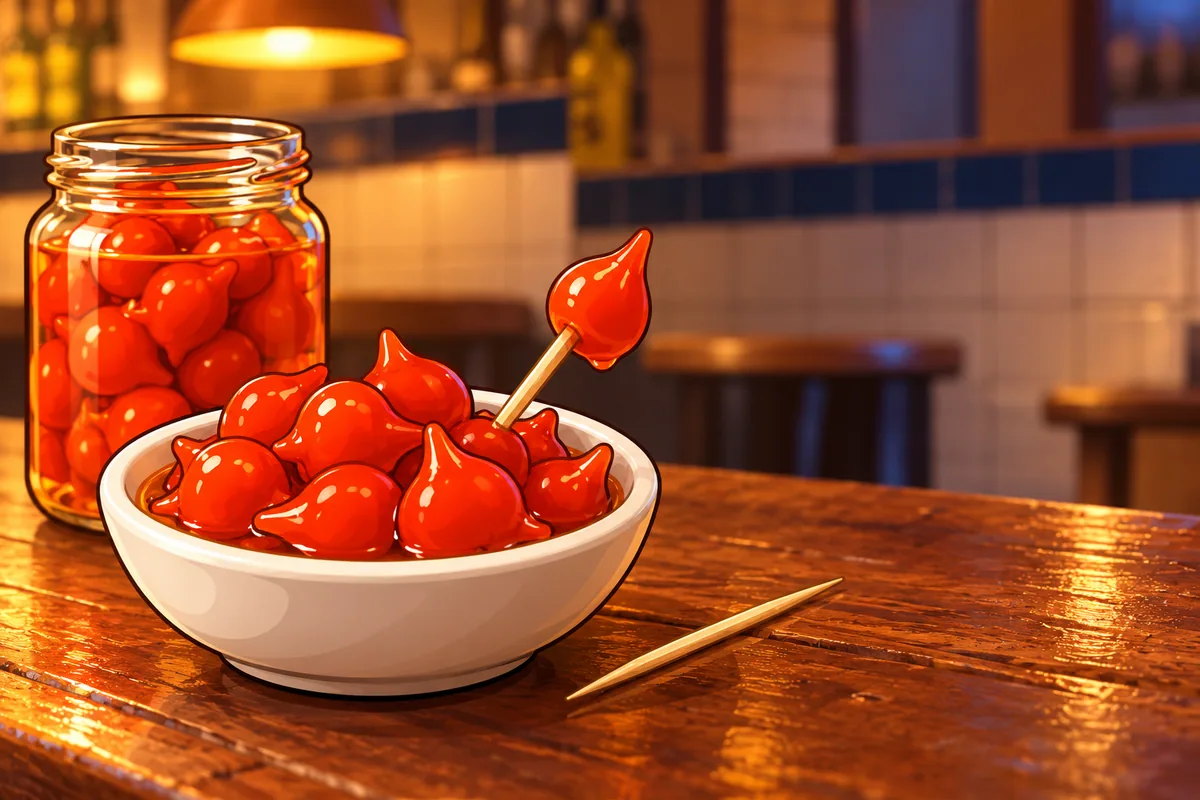
- Pickled whole: the classic. Picklers use biquinho and bode types because the fruit is small3.
- Jelly: Embrapa names jellies beside pickles1; the red pods keep their color in a sweet set.
- Fresh: whole on a salad or a cheese board, where the crunch shows. Because a BRS Moema pod has no burn, you can leave the seeds in and serve it to children or guests who avoid chile, which is exactly the market Embrapa had in mind when it bred the line.
- On the windowsill: Embrapa notes BRS Moema also works as an ornamental pepper1.
If you know the cherry pepper, the job is similar: a small round-ish pod you stuff, pickle or eat whole. The biquinho is smaller and fruitier.
What do pH and sugar tell you before you pickle biquinhos?
That they are a low-acid vegetable, like every pepper, so the vinegar does the safety work. A 2019 Embrapa-hosted study measured three biquinho lines grown organically:
| Measure | BRS Moema | Line 37701 | Line 313605 |
|---|---|---|---|
| pH | 4.96 | 5.20 | 5.01 |
| Soluble solids (sugar), °Brix | 9.25 | 8.07 | 9.10 |
| Acidity, mg citric acid per 100 g | 329 | 263 | 335 |
| Vitamin C, µg/g | 28.95 | 12.77 | 17.10 |
A pH near 5 means the pod brings almost no acid of its own to the jar, which is why you cannot simply drop biquinhos into any brine you like. Penn State calls peppers a low-acid food and says you may cut the peppers in a tested pickle recipe but never add more in relation to the pickling solution4. The 9 °Brix sugar is the sweetness you taste.
- 1
Pick a tested pepper pickle recipe
Use one built for small whole peppers and keep its vinegar, water and pepper amounts exactly; the acid has to reach every part of the jar.5
- 2
Use 5 % vinegar
White distilled or cider vinegar of 5 percent acidity (50 grain).5
- 3
- 4
Wait before you open
Colorado State suggests five to six weeks on the shelf for the best flavor.6
Our full ranking of jar-friendly peppers is in the peppers for pickling list, and the step-by-step canning method lives in the pickling guide.
How long until a biquinho plant gives you fruit?
About three months from transplant in a warm climate. Embrapa's numbers for BRS Moema in central Brazil:
| Measure | Figure |
|---|---|
| First ripe fruit | About 90 days after transplanting |
| Plant size | About 60 cm tall and 1 m across |
| Spacing | 1.20 m between rows, 0.80 m between plants (about 10,000 plants per hectare) |
| Yield | About 20 t of ripe fruit per hectare over 6 months of picking |
| Climate | Needs heat, sensitive to cold; grow it in the hottest months |
| Resistance | Root-knot nematode (Meloidogyne javanica) and pepper yellow mosaic virus |
Those two farm numbers turn into a home figure: 20 t per hectare spread over about 10,000 plants is roughly 2 kg of ripe fruit per plant across six months of picking, our arithmetic on Embrapa's data1. That's a lot of tiny pods, enough for several pint jars from one healthy plant if your season is long and hot. A plant a metre across needs room, so give yours a big pot or a wide bed. Picking runs for months once it starts, so one or two plants keep a small household in pickles. In cooler, subtropical southern Brazil, a field trial found the Airetama biquinho out-yielded BRS Moema at every planting date, while the two came into fruit just as early7; in a short northern summer, start plants early indoors and look for the line that suits your season.
Why did my biquinhos come out hot or sparse?
Most problems you'll meet trace back to the seed or the cold:
Problems and their fixes
- Pods that burn: you grew seed from a line where the no-heat trait isn't stable, or saved seed from plants that crossed with hot neighbors. Buy seed of a tested no-heat cultivar such as BRS Moema.13
- Saved seed turned hot next year: insects crossed your plants with other peppers. Grow your biquinho well apart from hot peppers, or buy fresh seed each year.3
- Slow plants, few pods: biquinho needs heat and suffers in the cold. Plant out only after nights warm up and pick a sunny, sheltered spot.1
- Soft, floating pickles: the pods were not slit, so air stayed inside and brine stayed out. Slit each pod twice before it goes in the jar.46
What can you use instead of biquinho, and how much?
Swap by job, since a heatless biquinho brings crunch and sweetness rather than burn. These are gram-for-gram starting points we worked out from the published heat, so taste as you go:
- Red bell pepper, cut small: 0 SHU8, so it swaps 1:1 by weight. You lose the fruity chinense smell but keep the sweet crunch in a salad.
- Sweet cherry pepper: NMSU's red cherry is round, red and grown for pickling and stuffing, with no heat9. Use it 1:1 in a jar; it is bigger, so quarter it.
- Banana pepper rings: 0 to 500 SHU8. Close to heat-free, and the thin rings pickle fast; use the same weight.
- Habanero, only if you want heat: the same species, but 100,000 to 350,000 SHU8. One thin slice per jar gives you the fruit smell; more than that changes the dish.
For a party plate, buy twice the weight you think you need: a pod weighs so little that a handful disappears fast, and the toothpick snack goes quicker than you expect.
How does a biquinho compare with a Peppadew or an ají dulce?
All three are small, sweet-leaning pods you eat whole, but only the biquinho has the beak tip and the thick crunchy wall; you can set it beside either one in the compare tool. For a heat-free pod with the same job on a pizza or a cheese board, the Peppadew is the one you're likely to find in a Western store.
If you want to try biquinho at home, your next step is seed of a tested no-heat line in late winter and a slit-and-brine jar in late summer, using the pickling list above for the recipe and the ratios.
Related peppers
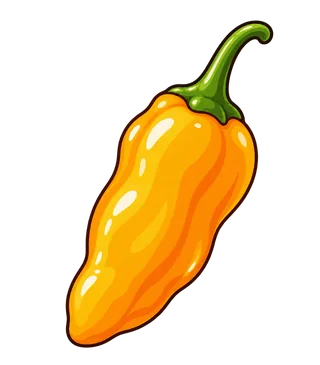
Published ranges.Sources for this line8. University of Florida IFAS Extension9. New Mexico State University, Chile Pepper Institute (seed shop)10. UF/IFAS Extension St. Johns County (Hort-3)
Related in Peppers
-
Aji Charapita, the Pea-Sized Amazon Chile at 30K–50K SHU
A tiny yellow chile from Iquitos and Pucallpa with a citrus aroma and a heat seed sellers compare to cayenne.6 min read -
Peppadew Pepper Heat, Under 650 SHU in a Sweet Brine
The small round red pepper from South Africa, hand-cored, pickled sweet and sold under one trademark.6 min read -
Guindilla Pepper, the Mild Basque Pickle Picked at 5–12 cm
The pale green, barely hot pickling pepper of Gipuzkoa, sold in jars under the Eusko Label.6 min read -
Peter Pepper, the Heirloom That Gets Hotter for 90 Days
A red heirloom chile with an odd shape, a seed-bank record and heat that builds right up to harvest.5 min read -
Carolina Reaper Scoville, 1.64 Million SHU
A fruity, sweet superhot from South Carolina, bred from a habanero and a Naga Viper.7 min read -
Cayenne Pepper Scoville, 25,000–50,000 SHU
The long red chile behind most ground red pepper and a lot of vinegar hot sauce.6 min read
Sources
· 10
- 1Embrapa, Agência de Informação Tecnológica (Ribeiro, Amaro, Carvalho, Reifschneider) BRS Moema
- 2SIAGRO 2019, Simpósio Nacional de Instrumentação Agropecuária (Embrapa Instrumentação) Avaliação físico-química e sensorial de cultivares de pimenta biquinho produzidos em sistema orgânico (Santos et al.)
- 3Embrapa Hortaliças, Hortaliças em Revista (year IV, no. 16) Pimentas: pesquisa e desenvolvimento
- 4Penn State Extension Preserving Those Colorful Garden Peppers (Martha Zepp)
- 5National Center for Home Food Preservation (University of Georgia) General Information on Pickling
- 6Colorado State University Extension (Fact Sheet 9.314) Making Pickled Peppers (M. Hill and P. Kendall)
- 7Ciência Rural 50(4) Production of biquinho pepper in different growing seasons characterized by the logistic model and its critical points (Diel et al.)
- 8University of Florida IFAS Extension HS-859/TR010: Pepper Production in Miami-Dade County, Florida
- 9New Mexico State University, Chile Pepper Institute (seed shop) Red Cherry Sweet Pepper
- 10UF/IFAS Extension St. Johns County (Hort-3) Gardening with Datil Peppers (Terra Freeman)