
Datil Pepper Scoville, 100,000–300,000 SHU
St. Augustine's own small, sweet-tangy chinense.
 Extra-hot
Short answer
100,000–300,000 SHU
- Habanero heat, with a sweeter, fruitier taste
- Needs about 5 months of frost-free weather to mature
On this page
- 1How hot is a datil pepper?
- 2Where did the datil come from, Minorca or Cuba?
- 3What does a datil look like as it ripens?
- 4What does a datil taste like?
- 5How do St. Augustine cooks use datils?
- 6How long do fresh datils keep in the fridge?
- 7Can you grow datils outside St. Augustine?
- 8What trips people up with datils?
- 9Is a datil hotter than a habanero?
- 10Where should you go next with datils?
How hot is a datil pepper?
About as hot as a habanero. UF/IFAS Extension in St. Johns County, the county around St. Augustine, puts the datil at 100,000 to 300,000 Scoville units1, and UF/IFAS gives the habanero 100,000 to 350,0006. That puts both in the extra-hot band of the index.
One datil carries 20 to 60 times the heat of an average jalapeño, so you season a pot with it, not a plate. That ratio is our arithmetic on the UF/IFAS figures: the average jalapeño sits near 5,000 SHU6, and 100,000 ÷ 5,000 = 20, 300,000 ÷ 5,000 = 60.
Why does the one lab test read lower than the range?
Because nobody has published a datil range from a lab, only from extension sheets, and the single lab study measured something else. A 2019 HortTechnology trial on the 'Wanda' datil found 1,810 to 4,440 µg of capsaicinoids per gram7. One µg per gram is one part per million, and labs multiply parts per million by 16 to get SHU8:
- 1,810 × 16 = about 29,000 SHU
- 4,440 × 16 = about 71,000 SHU
If those are fresh-weight figures, that greenhouse crop ran well under the extension range. The abstract does not say whether it reports fresh or dry weight, and dry figures would read several times higher, so we print the extension range and show the lab result as a check you can weigh yourself. The trial also found slightly more heat in pods picked orange than in pods picked yellow7.
Where did the datil come from, Minorca or Cuba?
St. Augustine grew it first, and the rest is an argument you can judge yourself. The 1990 paper that named the datil calls it the only C. chinense variety grown commercially in the United States at the time2, and every source agrees on the town. The deeper origin splits the sources.
- 1768
Minorcans arrive
The British bring Minorcan indentured workers to Florida's indigo plantations; local legend credits them with the pepper.2
- 1962
Seed in the US gene bank
USDA's seed bank receives a datil sample, now accession PI 281435.3
- 1990
A named variety
Botanist Jean Andrews describes 'Datil' as a variety of C. chinense, grown for at least 100 years around St. Augustine.2
- 1994
UF/IFAS fact sheet
Extension notes the Minorcan community there particularly prefers it.4
- 2009
New products
UF/IFAS develops datil salami, kielbasa and a summer sausage.5
Andrews calls the Minorcan story a legend without factual basis. She thinks the datil almost certainly grew from habanero-like seed brought from Cuba, a big trading partner of early Florida2. UF/IFAS writers in 2009 lean the same way, calling a Caribbean trade route the more plausible story5, while the St. Johns County sheet simply says the origin is unknown1.
The name is the one thing the legend explains well. Datil means date in Minorcan Spanish, and Andrews notes the wrinkled fruit has the shape, and sometimes the color, of a dried date2. If you want the wider family, the Caribbean peppers list covers the island chinenses the datil most likely came from.
What does a datil look like as it ripens?
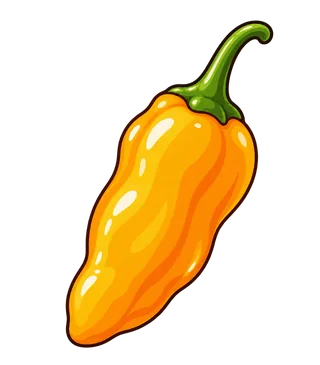
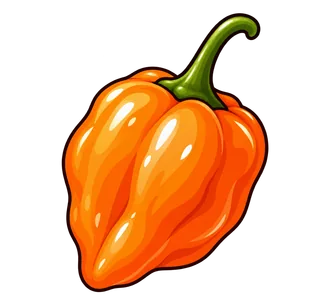
Small, wrinkled and narrow, turning from green to golden yellow while you wait. Andrews describes fruit 2.5 to 6 cm long and 1 to 1.5 cm wide that start nearly white, turn purplish in full sun, then lime green and finally golden yellow2. The St. Johns sheet adds a purple stripe on the lime green stage and says you can pick there or wait for yellow or orange, when the flavor peaks1.
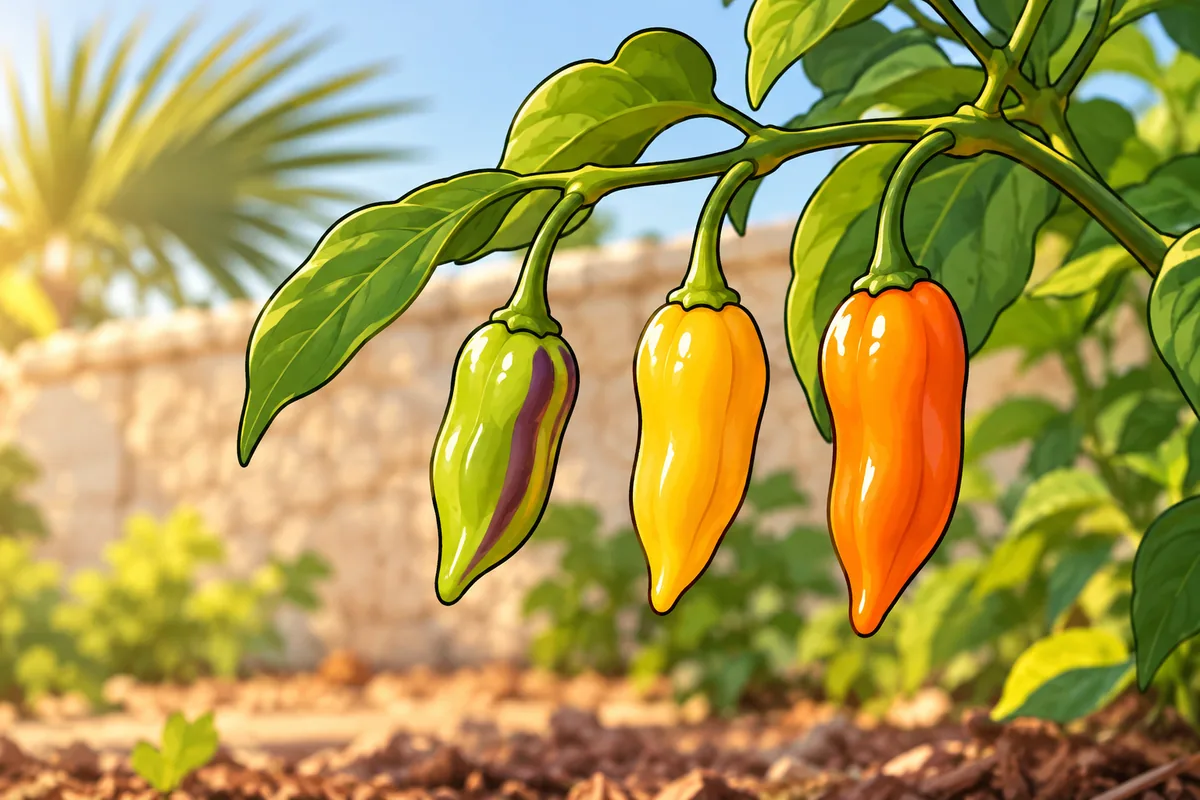
Next to a habanero, the shape gives it away, so you can tell them apart at a market stall. Andrews set the two side by side in her description:
Datil
Habanero
The plant itself stays compact, 1½ to 2½ feet tall1, and the botanist counts two or more flowers at each node with purple anthers2.
What does a datil taste like?
Sweet and fruity first, then the burn reaches you. UF/IFAS describes a unique sweet, fruity tang on top of the heat1, and the 2009 sausage researchers call it sweeter and fruitier than a habanero5. That sweetness is why St. Augustine puts it in jelly as readily as in sauce. If you know the habanero's flavor, expect a similar fruit with more sweetness, as those UF/IFAS writers put it; if you only know jalapeños, expect your first bite to hit far harder than the bright yellow color suggests. Your best first taste is a thin slice on a cracker with cream cheese, where the fat softens the burn and lets you notice the fruit.
- Sweet
- Fruity
- Tangy
How do St. Augustine cooks use datils?
Mostly in a bottle, and you'll find it on every St. Augustine shelf. UF/IFAS said in 1994 that most datils become hot sauce, with families keeping their own recipes close4. The list of local uses runs wider now:
- Hot sauce: the main job. One of the better-known commercial sauces at the time mixed brown sugar, ketchup, tomato paste and honey with datil sauce4; you can try your own with the datil hot sauce recipe.
- Jelly, relish and mustard: the St. Johns County sheet lists all three, plus barbecue sauce1.
- Flakes: UF/IFAS names dried datil flakes among the traditional uses5.
- Sausage: UF/IFAS made a datil summer sausage, salami and kielbasa; tasters marked the version with seeds lower because the seeds added extra heat5.
When you cook with datils, take that sausage panel's hint and scrape out the seeds and pale ribs if your family runs mild. A half pod in a pot of chowder is a good first test before you commit a whole one.
Courtney Cox posted this short local segment on the St. Augustine datil, so you can see the pods and how the town puts them on its menus, though the production is simple and it adds no heat figures.
How long do fresh datils keep in the fridge?
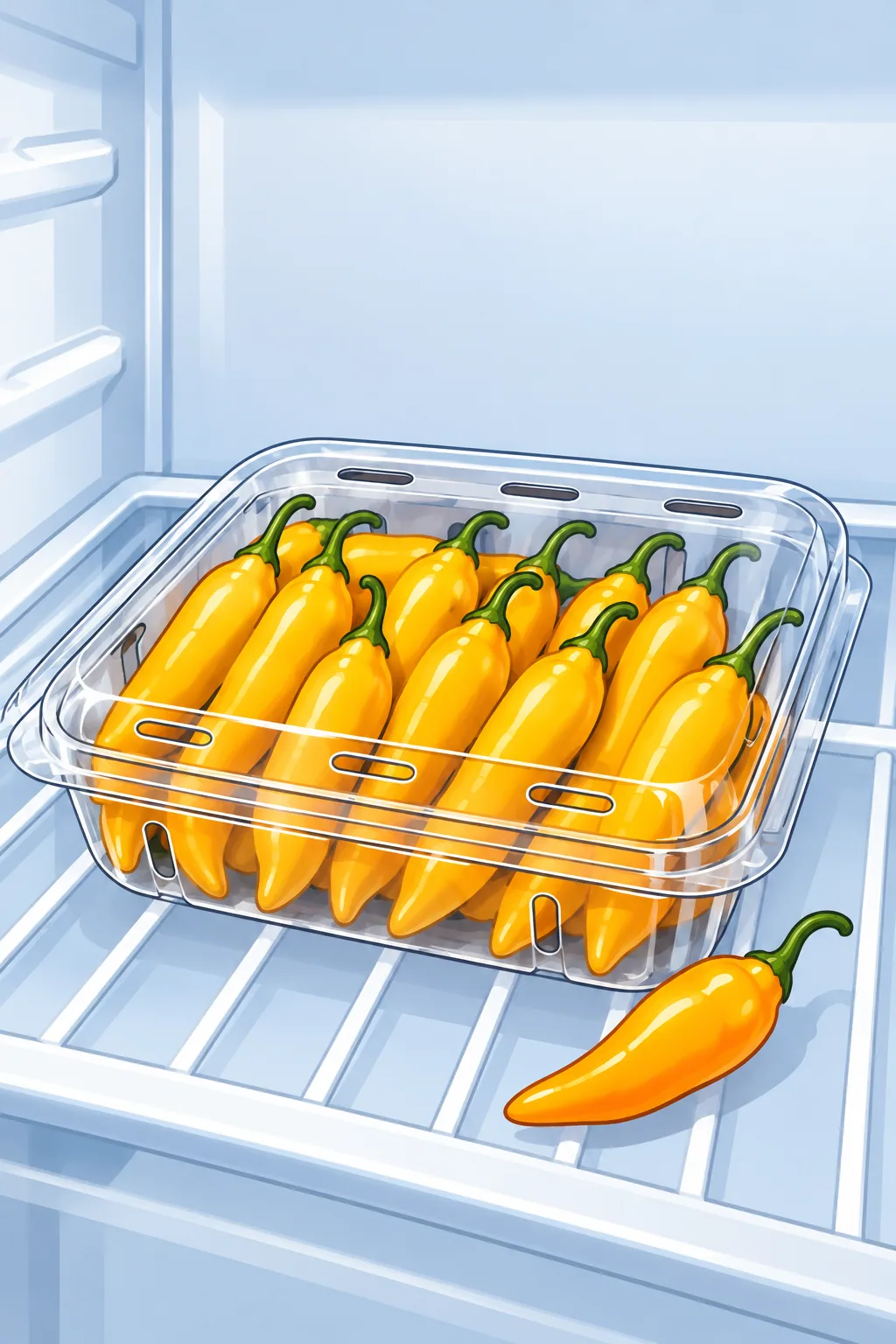
Three weeks, if you pick them yellow. The 2019 HortTechnology trial stored datils in vented clamshells for 21 days at three temperatures and counted the fruit still fit to sell7:
| Picked at | 2 °C (36 °F) | 7 °C (45 °F) | 10 °C (50 °F) |
|---|---|---|---|
| Yellow stage | 94 % | 88 % | 91 % |
| Orange stage | 68 % | 74 % | 82 % |
The yellow pods held up better at every temperature, and the researchers saw no chilling injury even at 2 °C7. Orange pods carried more sugar (9.5 % soluble solids against 7.8 %) and about twice the carotenoids, so the choice is yours: pick yellow if you want them to last, orange if you'll cook them this week.
Can you grow datils outside St. Augustine?
Yes, anywhere you can give a plant about five months without frost1; the datil has spread across the United States and beyond since its Florida start5. The St. Johns County sheet gives the numbers that start a crop:
- 1
Warm the seed tray
Sow ¼ inch deep in sterile mix in late winter, keep it at 75–80 °F and wait 10 to 20 days for germination.1
- 2
Pot up and feed lightly
Move seedlings into 2 to 4 inch pots at the first true leaves and start half-strength fertilizer.1
- 3
Plant out after frost
Set plants 12 to 24 inches apart in full sun to light afternoon shade, at a pH near 6.5.1
- 4
Florida gardeners can also sow a second crop in midsummer for fall1. The full season, with containers and cold-climate timing, is in the guide to growing datil plants.
What trips people up with datils?
Four things come up again and again in the Florida sources, and each has a fix you can use:
Problems and their fixes
- Small fruit falling off: the pepper weevil lays an egg at the base of the fruit and the maggot makes it drop. Pick up fallen fruit so the next generation doesn't hatch in your bed.4
- No seed for sale: UF/IFAS notes datil seed can be hard to find outside gardeners' swaps. Save your own from a ripe pod, dried a few days somewhere warm and stored cool and dry.14
- A dish hotter than you planned: seeds and ribs add heat, which is what marked down the seeded sausage. Scrape them out.5
- Burning eyes after picking or cutting: the capsaicin irritates eyes and skin. Wear gloves to cut pods and save seed.1
Is a datil hotter than a habanero?
Only at the very top, by the extension ranges: the habanero's ceiling of 350,000 SHU sits above the datil's 300,00016. You can set any two peppers side by side in the compare tool, which draws both published ranges on one axis.
How much datil replaces a habanero, or the other way round?
Work it from the midpoints. The datil range averages 200,000 SHU and the habanero range 225,000, so by weight you swap them almost one for one: 10 g of habanero carries about the heat of 11 g of datil (10 × 225,000 ÷ 200,000 = 11.25). Our arithmetic, so taste as you go.
Pod for pod, the sizes matter more than the numbers. Andrews measured habaneros at 3 to 4 cm and datils at up to 6 cm2, so a big datil can outweigh the habanero it replaces. Weigh your pods once and you'll know how many your recipe needs.
If you swap toward milder peppers, the gap gets large fast. An average jalapeño at 5,000 SHU6 needs 20 to 60 times the weight of datil to match it, which turns a sauce into a jalapeño sauce. A Scotch bonnet, same species and 100,000 to 350,000 SHU6, keeps both the heat and the fruit.
Where should you go next with datils?
If your store has no datils, the swap finder ranks the closest options by heat and sweetness, and it starts you with the Scotch bonnet and the habanero. If you'd rather have your own supply, start seed in late winter so your plants get their five warm months1.
Related peppers
Related in Peppers
-
Jalapeño Scoville, 2,000–8,000 SHU and Chipotle
The medium-heat chile most heat comparisons start from.6 min read -
Trinidad Moruga Scorpion, 1.2–2 Million SHU
A lumpy, tailed superhot from Trinidad that topped NMSU's 2012 heat study.6 min read -
Carolina Reaper Scoville, 1.64 Million SHU
A fruity, sweet superhot from South Carolina, bred from a habanero and a Naga Viper.7 min read -
Cherry Pepper Scoville, 0 SHU Sweet to Hot
A small round pepper, sweet or hot, grown for jars and stuffing.6 min read -
Pepper X Scoville, 2.69 Million SHU and Record
Ed Currie's record pepper from South Carolina, at an average of 2.69 million SHU.5 min read -
Serrano Pepper Scoville, 10,000–25,000 SHU
A slim, fleshy chile one clear step above the jalapeño.5 min read
Sources
· 10
- 1UF/IFAS Extension St. Johns County (Hort-3) Gardening with Datil Peppers (Terra Freeman)
- 2Phytologia 69(6):413-415 A newly recognized variety of chili-pepper (Capsicum: Solanaceae) developed in the United States (Jean Andrews)
- 3USDA Agricultural Research Service, GRIN-Global PI 281435, Capsicum chinense Jacq., Datil Pepper
- 4University of Florida IFAS Extension, EDIS HS646/MV113 Pepper, Datil: Capsicum sinense Jacques (J. M. Stephens)
- 5University of Florida IFAS Extension, EDIS AN220 Datil Pepper Summer Sausage: An Innovative Product Using Florida Datil Peppers (Williams, Djeri, Redden, Dinkins, Bearl)
- 6University of Florida IFAS Extension HS-859/TR010: Pepper Production in Miami-Dade County, Florida
- 7HortTechnology 29(4) Harvest Maturity and Storage Temperature Affect Postharvest Quality of 'Wanda' Datil Hot Pepper Grown under Protected Culture
- 8HortScience 42(2):222-224 'Bhut Jolokia', the world's hottest known chile pepper, is a putative naturally occurring interspecific hybrid
- 9Courtney Cox The St. Augustine Datil Pepper
- 10UF/IFAS Gardening Solutions Peppers by Scoville Units