
Hot Sauce Scoville Scale, 600 to 49,000 SHU by Maker
Every bottle on one heat axis, each number with its source.
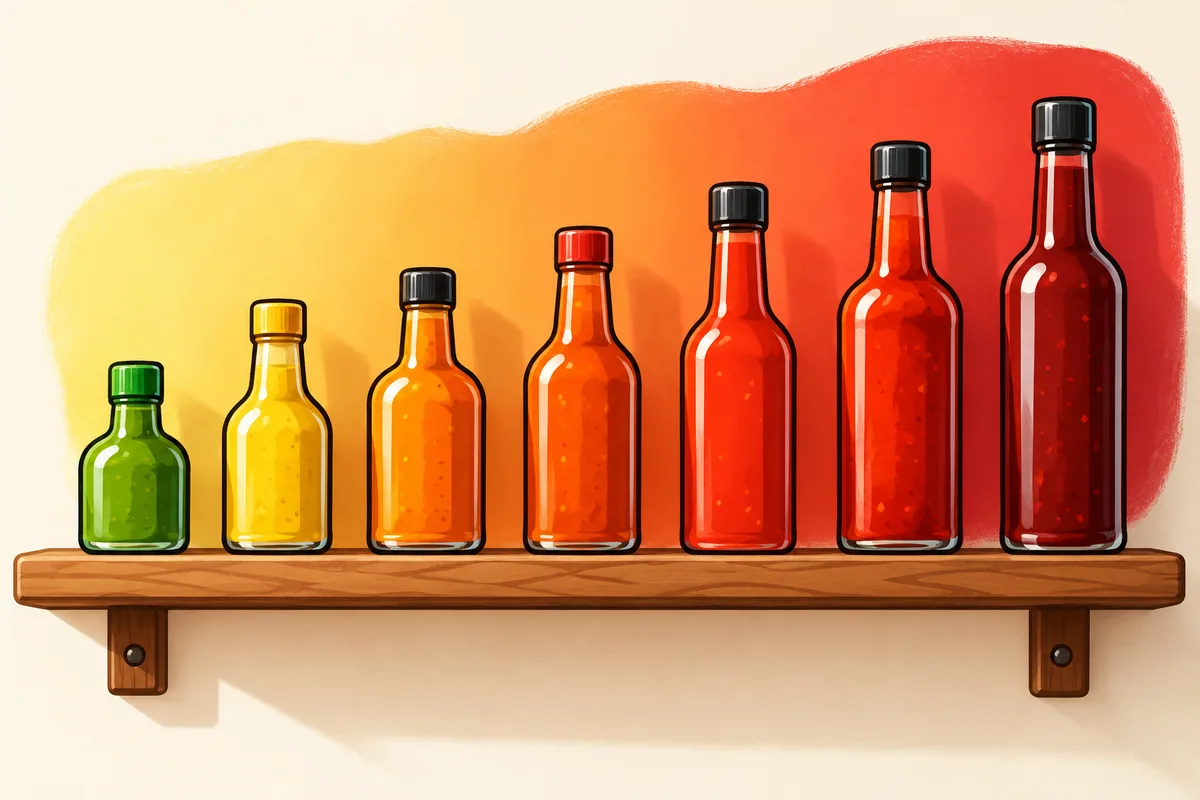
Bottled hot sauces with a published rating run from about 600 SHU to 49,000 SHU, far below the peppers inside them.
- TABASCO's own chart runs from 600–1,200 SHU (Green Jalapeño) to 23,000–33,000 SHU (Scorpion)
- Cholula Original rates 1,000–2,000 SHU, by its maker
- A lab gets SHU by multiplying capsaicinoid parts per million by 16
How hot are popular hot sauces in Scoville?
TABASCO's own line spans a 50-fold spread, from 600 SHU at the bottom of Green Jalapeño to 33,000 SHU at the top of Scorpion.4 We leave a bottle off when its maker publishes no number.
- 1
 Hot Ones Los Calientes Rojo49,000 SHU9Hot
- 2
 TABASCO Scorpion23,000–33,000 SHU4Medium
- 3
 TABASCO Habanero Pepperover 7,000 SHU4Medium
- 4
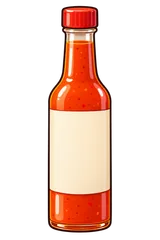 TABASCO Original Red2,500–5,000 SHU4Medium
- 5
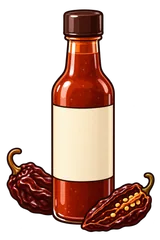 TABASCO Chipotle Pepper1,500–2,500 SHU4Mild
- 6
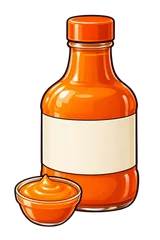 TABASCO Buffalo Style1,200–2,400 SHU4Mild
- 7TABASCO Cayenne Garlic1,200–2,400 SHU4Mild
- 8
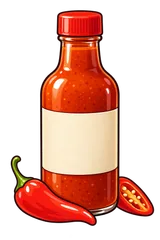 Cholula Original1,000–2,000 SHU5Mild
- 9TABASCO Salsa Picante1,000–1,800 SHU4Mild
- 10
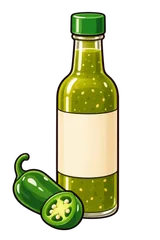 TABASCO Green Jalapeño600–1,200 SHU4Mild
Peppers for scale
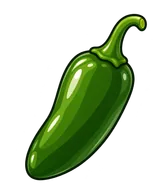 Jalapeño pepper2,000–8,000 SHU8Medium
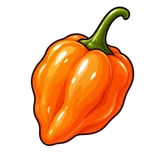 Habanero pepper100,000–350,000 SHU8Extra-hot
Log scale: each step right is ten times hotter. A bar is the maker's published range; an open bar has no stated top.
How do you read a heat number on a label?
A range is the most honest of the four: peppers vary from plant to plant, and a sauce made from them varies too.
- A rangeTABASCO Original Red, 2,500–5,000 SHU4The spread the maker expects across batches.
- An open-ended figureTABASCO Habanero Pepper, over 7,000 SHU4A floor, with no stated top.
- One numberHot Ones Los Calientes Rojo, 49,000 SHU9A single reading or an average, with no spread shown.
- A 1–10 scaleHEATONIST rates Los Calientes Rojo 5 / 109The seller's own ranking, which does not convert to SHU.
Why is a hot sauce so much milder than its pepper?
Because most of the bottle is not pepper: water, vinegar and salt dilute the chiles. The hot sauce pillar walks through the pepper-to-bottle arithmetic.
On this page
Where do hot sauce Scoville numbers come from?
From the maker, on every bottle you see charted here. We know of no shared registry of sauce heat, so each figure is one company's own claim, and this page names the source beside every bar you see.
The dilution test
Wilbur Scoville built the scale in 1912 around human tasters, and you can still see his idea in every number. A pepper rated 100,000 SHU needs 1 part chili extract in 100,000 parts water before the heat disappears1. The scale tops out at 16 million SHU, the rating of pure capsaicin1.
The weak spot is the tasters. New Mexico State University notes that the result depends on each taster's palate, and that a taster can only handle so many samples before the next one stops telling you much2.
The lab test
Labs today measure capsaicinoids by HPLC and convert parts per million to SHU by multiplying by 163. NMSU's lab dries and grinds the fruit, extracts the heat compounds and injects the extract into the machine, which reads each of the more than 22 known capsaicinoids on its own2.
Worked through, if your sauce reads 300 ppm it comes out at 300 × 16 = 4,800 SHU, inside the 2,500–5,000 SHU that TABASCO prints for its Original Red4. That 300 ppm is our example figure, chosen to show the math. The method costs more than a tasting panel, NMSU says, but it gives an objective number and can run many samples in a short time2.
Does a higher number always taste hotter?
Not when the ranges overlap, and on this chart many of them do. Two bottles can share most of their span, so the one that tastes hotter to you on a given night may be the one with the lower printed top.
Cholula Original
The pods behind each bottle move too. NMSU found that any kind of stress in the field pushes a mild chile cultivar hotter, while ideal conditions keep a hot one only moderately hot2. A maker's range covers that spread, which is why you see so few single numbers on these labels.
So use the chart to sort your bottles into rough bands rather than to rank neighbors. A sauce at 23,000–33,000 SHU is clearly in a different class from one at 1,000–2,000; two bottles both near 2,000 are, for your tongue, the same class.
How hot is a dash once it is in your food?
Far milder than your bottle, because your food dilutes it the way the vinegar diluted the pepper. SHU follows concentration, parts per million times 163, so spreading the same capsaicin through ten times the weight cuts the number by ten.
- 1
Weigh your dash
USDA weighs a teaspoon of hot pepper sauce at 4.7 g.7
- 2
Weigh the dish
Say you stir that teaspoon into 470 g of chili, 100 times its 4.7 g. The 470 g is our example amount.7
- 3
Divide the bottle's rating
TABASCO Original Red at 2,500–5,000 SHU, divided by 100, leaves the bowl averaging 25–50 SHU.4
- 4
Compare with a pepper you know
That average sits far below a jalapeño's 2,000–8,000 SHU, which is why a few dashes season a pot without making it hot.8
The catch is that nobody eats an average. A dash on one spoonful hits that bite at close to the bottle's full strength, so you feel a sauce on top of a dish more than one stirred through it.
That gives you two ways to use one bottle. Stir it into the pot when you want the whole dish warm and even, and shake it on at the table when you want each person to set their own heat. A pot that came out too hot follows the same math in reverse: add more of the unspiced base and you divide the heat again.
Which hot sauce is the hottest?
The published numbers cannot settle it for you. Of the bottles above, Los Calientes Rojo carries the highest maker figure at 49,000 SHU9, but many sauces built on super-hot peppers publish no SHU at all.
HEATONIST's Season 31 Hot Ones pack shows how rare a number is: of its ten sauces, only Los Calientes Rojo prints an SHU, and the other nine carry just a 2 to 11 rating on the seller's 10-point scale9.
The Last Dab Thermageddon is one: its mash holds Pepper X, Carolina Reaper, Red Scorpion and Pepper Y, and HEATONIST rates it 11 on a 10-point scale10. Pepper X itself averages 2,693,000 SHU per Guinness World Records11; the sauce has no published number, so it stays off the chart.
A super-hot pepper on a label tells you its class, not the bottle's figure. The Carolina Reaper in that blend sits in the same record class as Pepper X, yet vinegar and other ingredients dilute both before the sauce reaches you.
Find a bottle at your heat level
Start from a pepper you already eat. A jalapeño runs 2,000–8,000 SHU8, and TABASCO Original Red at 2,500–5,000 SHU sits inside that band, so a jalapeño eater can pour it without surprises.
Want more? Step up one band at a time, and give your palate a few meals at each step. TABASCO's own line climbs from its Habanero Pepper at over 7,000 SHU to its Scorpion at 23,000–33,000 SHU4, and each step is a few times hotter than the last.
Happy at that level and curious about more? Habanero pods run 100,000–350,000 SHU8, and the full Scoville scale shows where every pepper in the index sits on the same log axis as this chart.
More in Hot Sauce
The newest from Hot Sauce
-
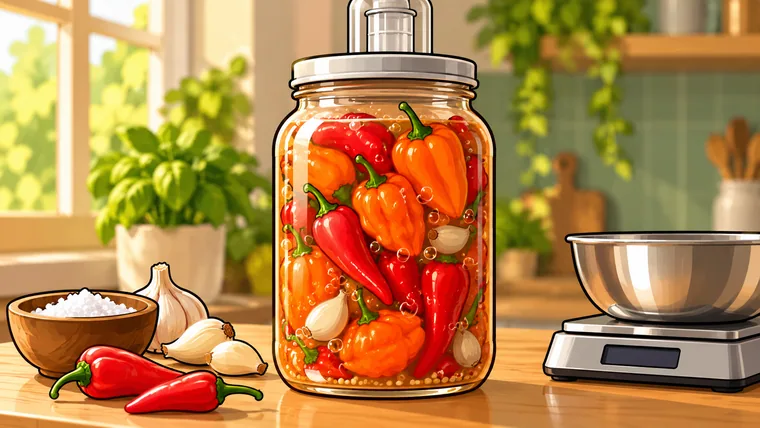
Fermented Hot Sauce in 7 Steps, With a 3 % Salt Brine
Salt ratio, timing and the signs it is done.Oct 18, 2026 · Guide -
Louisiana-Style Hot Sauce, 3 Ingredients
Three ingredients, a long wait and a thin, sharp pour.Oct 18, 2026 · Guide -
Mexican Hot Sauce, 5 Bottles by Chile and Heat
The bottle on every taquería table, read off its makers' own pages.Oct 18, 2026 · Guide -
Peri Peri Sauce, What It Is and a 10-Chilli Base Recipe
Bird's eye chillies, lemon and garlic, brushed on over the coals.Oct 18, 2026 · Guide -
Does Hot Sauce Go Bad? Shelf Life for 7 Kinds of Sauce
What changes in the bottle, how fast, and when to let it go.Oct 18, 2026 · Guide -
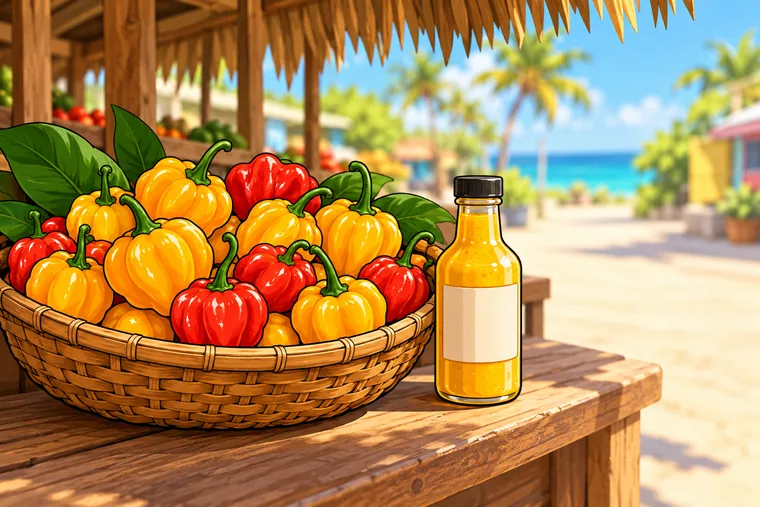
Caribbean Hot Sauce and the 350,000 SHU Scotch Bonnet
Scotch bonnet heat, softened with vinegar, onion and island herbs.Oct 18, 2026 · Guide
Sources
· 11
- 1Heliyon (Cell Press, peer-reviewed review) A comprehensive review of capsaicin: Biosynthesis, industrial productions, processing to applications, and clinical uses
- 2New Mexico State University, College of ACES Cooperative Extension Service Guide H-237: Measuring Chile Pepper Heat
- 3HortScience 42(2):222-224 (American Society for Horticultural Science) 'Bhut Jolokia', the world's hottest known chile pepper, is a putative naturally occurring interspecific hybrid (Bosland and Baral)
- 4McIlhenny Company (manufacturer, own products) TABASCO Original Red Sauce (includes the TABASCO Scoville Chart)
- 5Cholula (manufacturer, own product) FAQ
- 6Cholula (manufacturer, own product; Singapore product page) Cholula Original
- 7USDA Agricultural Research Service, FoodData Central (SR Legacy) Sauce, ready-to-serve, pepper or hot (FDC ID 174527)
- 8University of Florida IFAS Extension HS-859/TR010: Pepper Production in Miami-Dade County, Florida
- 9HEATONIST (official Hot Ones sauce partner, own product listing) Hot Ones Hot Sauce 10 Pack, Season 31
- 10HEATONIST (official Hot Ones sauce partner, own product listing) The Last Dab Thermageddon
- 11Guinness World Records Pepper X dethrones Carolina Reaper as world's hottest chilli pepper
Your pocket pepper index.
Built from the same index as this site.
- Every entry offline
- Compare any two peppers
- Keep a list of peppers you have tried