On this page
- 1What is Louisiana-style hot sauce?
- 2What goes into a bottle of Louisiana hot sauce?
- 3How is Louisiana hot sauce made?
- 4Which peppers go into Louisiana hot sauce?
- 5How hot is Louisiana hot sauce?
- 6Where Buffalo, wing sauce and peppered vinegar fit
- 7Which Louisiana bottle should you pick?
- 8Can you make Louisiana-style hot sauce at home?
- 9What goes wrong with a homemade pepper mash?
- 10Does Louisiana hot sauce go bad?
- 11Reading a Louisiana label at the store
- 12Sources
What is Louisiana-style hot sauce?
It is ripe red peppers mashed with salt, left to age, then blended with vinegar and strained. The result pours thin and tastes of vinegar first, pepper second, which is why a few shakes go a long way on eggs, oysters or a bowl of red beans.
Of all the hot sauce styles, this one has the shortest ingredient list. You get no garlic, no sugar, no thickener: the sourness of the vinegar and the salt carry the flavor, and the pepper adds a clean, short burn.
That makes it the bottle you reach for when you want a dish brighter without changing what it tastes like. TABASCO's own recipe pages pair its Original Red with oysters on the half shell, a Bloody Mary and jambalaya1, and Crystal's recipes put it into gumbo, remoulade and a Bloody Mary too2.
What goes into a bottle of Louisiana hot sauce?
Three words, on every label we read: peppers, vinegar, salt. What changes from bottle to bottle is which pepper the maker names and whether it gives you a heat figure.
| Bottle | Ingredients as the maker lists them | Pepper named | Maker's heat figure |
|---|---|---|---|
| TABASCO Original Red1 | Aged red peppers, salt from Avery Island, distilled vinegar | Red peppers, picked by hand | 2,500–5,000 SHU |
| Crystal Hot Sauce3 | Aged red cayenne peppers, distilled vinegar, salt | Cayenne | Not published |
| Louisiana Hot Sauce Original4 | Aged peppers, distilled vinegar, salt | Not named beyond aged hot peppers | Not published |
Every one of the three lists aged peppers, distilled vinegar and salt, with nothing else. Crystal has made its sauce in New Orleans since Alvin Baumer started it in 19232; TABASCO makes its mash on Avery Island, Louisiana, from a recipe Edmund McIlhenny mixed in 18681.
The order on the label tells you something too. Crystal lists its cayenne first and calls it fresh ground3, while TABASCO puts the peppers first and the vinegar last1. Federal rules make makers list ingredients from most to least by weight5, so you can read the balance of a bottle before you open it.
You may wonder why Frank's RedHot is missing. Its maker's site shows no ingredient list we could read, so we leave it out of the table instead of filling the row from a store listing.
How is Louisiana hot sauce made?
Slowly. TABASCO is the one maker that shows you its whole process, and each step has a length of time attached.
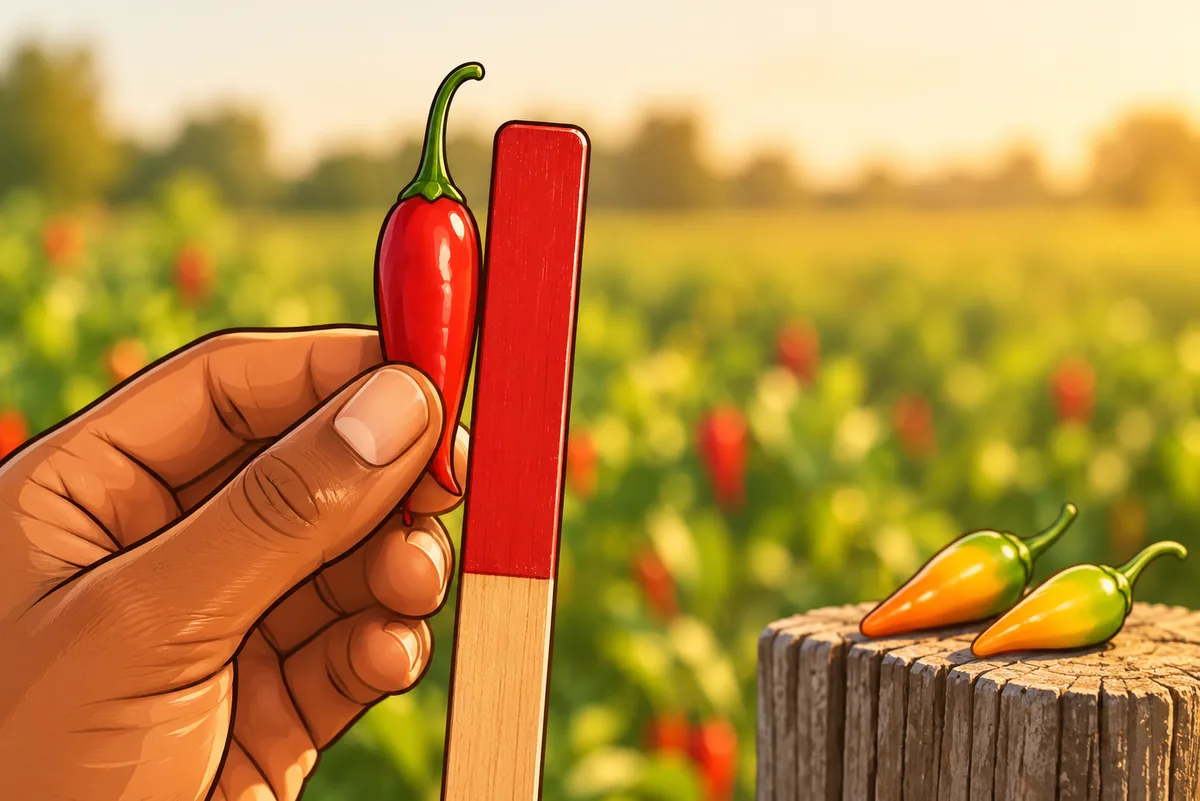
- Picking day
- Into the barrel
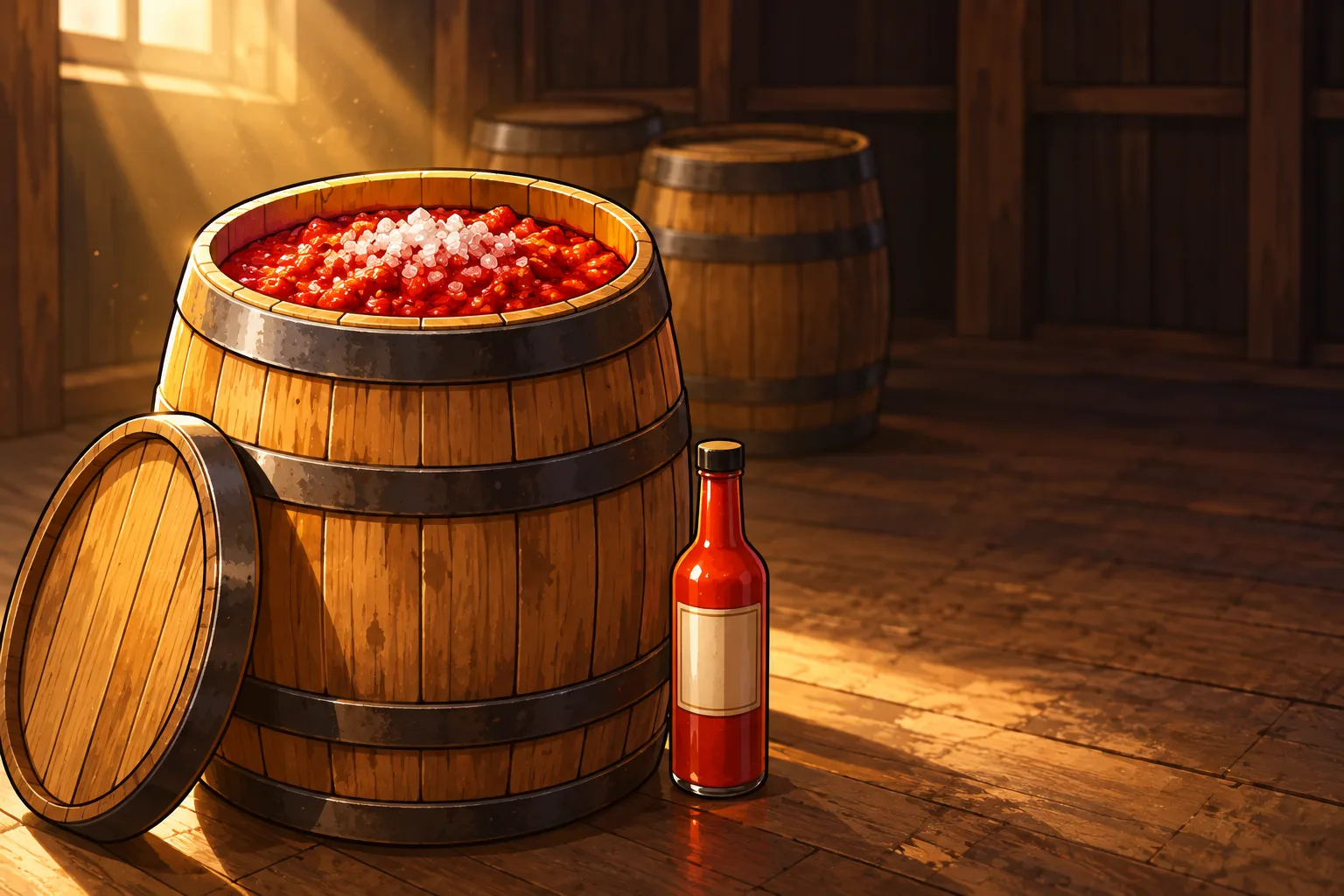
The mash goes into decommissioned white oak bourbon barrels; a layer of salt seals the top while fermentation gases escape.6
- Up to 3 years
- 28 days
The maker blends the aged mash with distilled vinegar.6
- Bottling
The maker strains the blend and bottles it.6
The salt cap is the clever part. It keeps air and pests off the mash while letting the gas from fermentation out6, the same job an airlock does on a fermented hot sauce jar at home.
The scale is hard to picture until you see the barrel counts. McIlhenny says its warehouse holds about 73,000 barrels and that 20,000 to 22,000 of them go into production each year6.
Before each refill, the crew opens the barrel, removes the old char, washes it and fits stainless steel hoops6. You will not copy that in a kitchen, and you do not need to: the barrel is a slow, salted container, and a glass jar does the same work in weeks.
Which peppers go into Louisiana hot sauce?
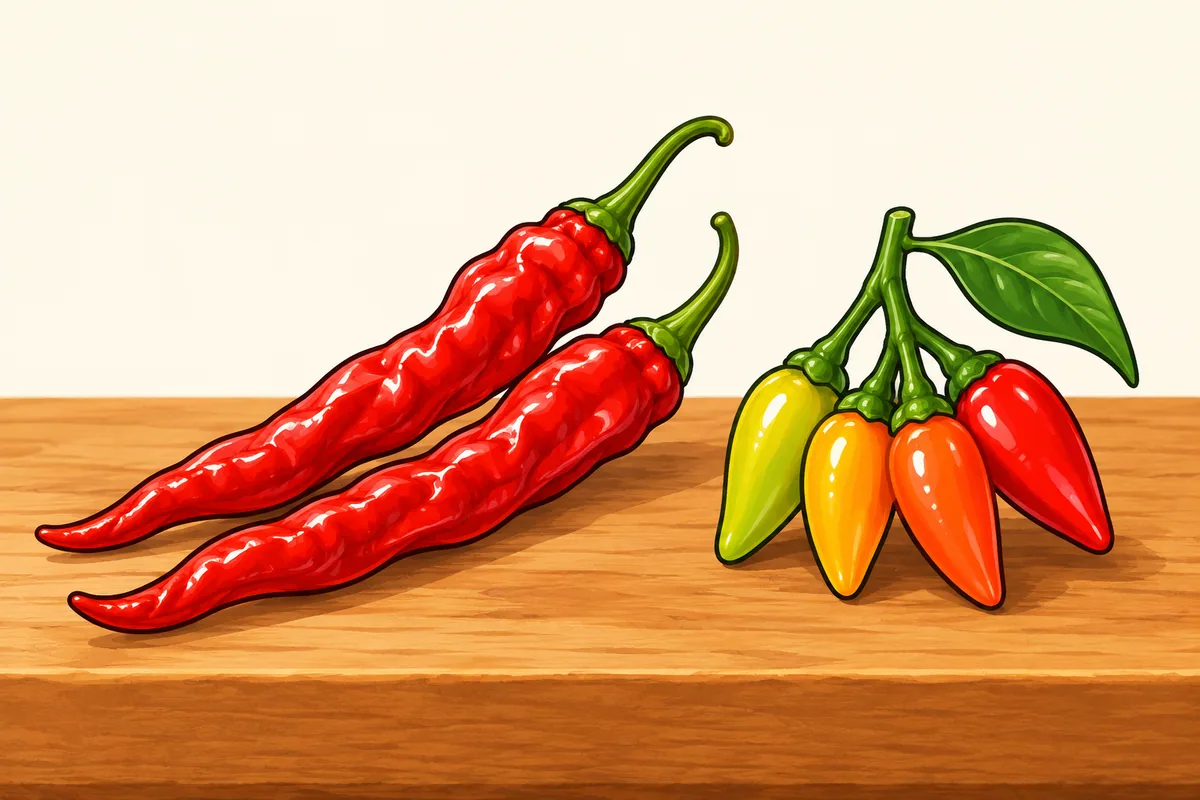
Two names come up: cayenne, which you will find on the Crystal label3, and the tabasco pepper, which gave TABASCO sauce its name. They come from different species.
Cayenne
Tabasco pepper
- Capsicum annuum, related to bell peppers7SpeciesCapsicum frutescens7
- 25,000–50,000 SHU7Heat30,000–50,000 SHU7
- Red when ripe; mostly dried and ground as powder or flakes7FruitAbout 1.5 inches, tapered, upright, yellow-green to orange to bright red7
- Crystal Hot Sauce3In a Louisiana bottleKnown for Tabasco sauce and peppered vinegar7
The cayenne entry and the tabasco pepper entry hold each pod's full data. TABASCO's own page says only "red peppers"1, so we do not print a variety for its mash.
For your own batch, the two pods behave alike in a mash. Their heat ranges overlap almost completely at 25,000–50,000 and 30,000–50,000 SHU7, so pick whichever you can buy or grow in quantity.
How hot is Louisiana hot sauce?
Mild, once the vinegar does its work. The pods you start with are hot, and TABASCO's bottle ends up at about a tenth of a pod's heat17.
Here is the arithmetic. A tabasco pod tops out at 50,000 SHU7 and the sauce tops out at 5,0001, so the vinegar and salt dilute the heat about tenfold. If a single pod in your mouth feels like too much, one drop of sauce usually feels like a warm sting that fades in seconds.
TABASCO is the only one of the three makers that prints a number. Its Original Red sits at 2,500–5,000 SHU, above its own Chipotle at 1,500–2,500 and Green Jalapeño at 600–1,2001. Every rated bottle sits side by side on the hot sauce Scoville chart.
Where Buffalo, wing sauce and peppered vinegar fit
The pepper, salt and vinegar base is the root of a small family, and you probably have one of its cousins in your fridge. Keep the vinegar and change one thing, and you get a sauce you already know by another name.
- age the mash, strainAged mash sauceTABASCO, Crystal, Louisiana Hot Sauce; TABASCO rates 2,500–5,000 SHU
- add butter or bodyWing and Buffalo sauceButter or thickeners join the vinegar; TABASCO Buffalo Style rates 1,200–2,400 SHU
- skip the mashPeppered vinegarWhole tabasco pods steeped in vinegar, no mash
One base, three branches: what each Louisiana cousin adds or changes
Both Louisiana makers sell the wing branch themselves: Crystal lists a Wing sauce and an Extra Hot Wing beside its original2, and TABASCO rates its Buffalo Style at 1,200–2,400 SHU1. UF/IFAS names peppered vinegar as one of the two things the tabasco pepper is known for7. When butter joins the vinegar, you have crossed into Buffalo sauce.
Which Louisiana bottle should you pick?
TABASCO, Crystal and Louisiana Hot Sauce follow the same recipe, so you choose by what you want from your bottle:
- You want a known heat number: TABASCO, the only one that prints it, at 2,500–5,000 SHU1.
- You want to know the pepper: Crystal, which names cayenne on the label3.
- You want to know how long it aged: TABASCO again, with up to 3 years in oak6.
- You want a big bottle for the table: Crystal sells sizes up to a gallon3, and Louisiana Hot Sauce does too4.
If you only keep one, keep the one whose pour you like. The ingredient lists match, so the difference you notice comes from the pepper, the aging and the share of vinegar.
Can you make Louisiana-style hot sauce at home?
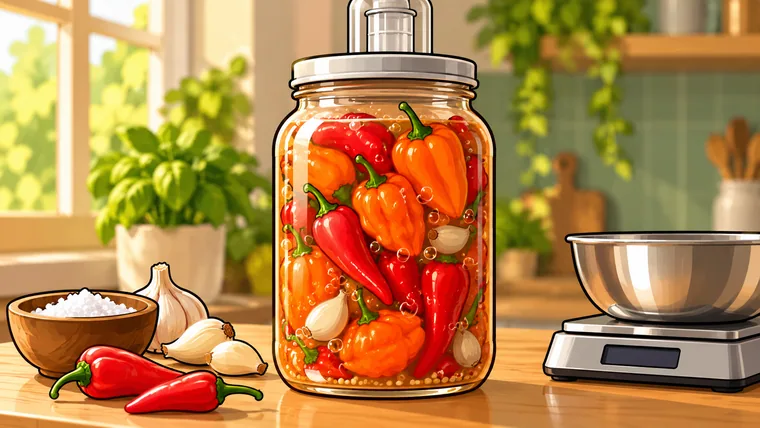
Yes, and your formula is the same three ingredients. The part that matters for your safety is the vinegar: the finished sauce has to sit below pH 4.68, the line federal rules use for acidified foods9.
- 1
Mash ripe red peppers with salt
Pick fully red pods, stem them and grind them with canning or pickling salt into a mash. The pepper mash page has the salt ratio, and NCHFP warns against cutting back the salt in any ferment.1011
- 2
Let the mash ferment
Weeks in a jar under an airlock stand in for years in a barrel; the fermented sauce steps cover the timing and the signs to watch.
- 3
- 4
Strain, check and bottle
SDSU Extension says to use only tested recipes and to keep the sauce below pH 4.6; a sauce you plan to sell also needs a pH test.8
If you want a vinegar sauce that keeps on the shelf, start from a tested canning recipe instead of your own ratio. Ohio State's hot sauce uses 1½ cups chopped serrano, 8 cups canned tomatoes, 4 cups 5 % vinegar and 2 teaspoons canning salt for 7 to 8 half-pint jars, with ¼-inch headspace and 10 minutes in a boiling-water canner up to 1,000 feet12. That is a different sauce from a cayenne mash, but it shows you the numbers a tested recipe gives.
Jack's Pepper Patch shows its own fermented Louisiana-style hot sauce recipe, so you can watch one maker's way through a batch, while the pH 4.6 rule and the mash steps above stay the tested ones.
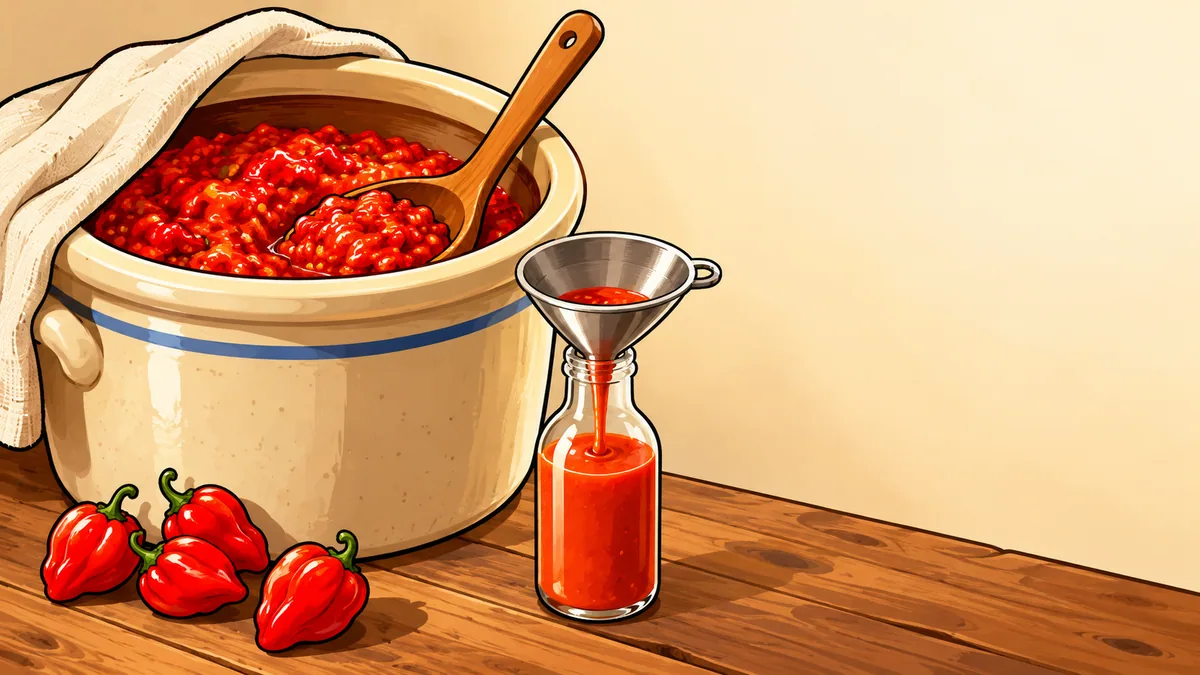
The hot sauce making hub has the full recipes, from fresh blends to canned ones.
What goes wrong with a homemade pepper mash?
Most changes you see in a mash jar are harmless; a few mean you start over. Read the surface and the smell of your mash before you add any vinegar.
| What you see or smell | What it means | What to do |
|---|---|---|
| A flat white film, not fuzzy, not in round patches14 | Kahm yeast, common and safe | Skim it off and keep the mash under its brine |
| Fuzzy or raised spots of mold15 | Microorganisms growing in the wrong way | Discard the batch |
| Soft, slimy mash or a spoiled, rotten smell1415 | Slime-forming microorganisms | Discard the batch |
| Cloudy brine and nothing else wrong1114 | Often the anticaking agent in table salt | Use canning or pickling salt next time |
Air is the usual cause. Yeast and mold grow where your mash meets oxygen, so the TABASCO salt cap and your airlock do the same job: they keep the top covered while the gas gets out6.
Does Louisiana hot sauce go bad?
A sealed bottle you buy at the store is a shelf-stable acidified food, made to sit at pH 4.6 or below9, so the acid is what keeps it. Your homemade bottle is different: Ohio State says a sauce you did not can belongs in your fridge or freezer12.
Time still shows on an open bottle: it slowly turns from red to brick, and the page on why an open bottle darkens tells you when to throw one out.
Reading a Louisiana label at the store
Turn the bottle around and run down the list:
- Three ingredients and nothing more: peppers, vinegar, salt. That is the classic style.Sources for this line1. McIlhenny Company (manufacturer, own products)3. Baumer Foods (manufacturer, own product)4. Summit Hill Foods (manufacturer, own product)
- The pepper named first. Cayenne, like Crystal, or simply red peppers, like TABASCO.13
- A heat figure, if the maker prints one. Of these three, only TABASCO does.1
A longer list with water, garlic or thickeners is a cousin of the style, often closer to a wing sauce. You can still enjoy it; just expect a thicker pour and a softer bite than the three-word bottle beside it.