scovidex Get the app

How to Prepare Hot Peppers and 6 Ways to Keep Them

Handle them, tame them, keep them.

A cutting board with halved red and green chiles, a spoon scraping out pale ribs, a pair of thin gloves, a freezer bag and a jar of pickled peppers nearby.
Short answer

Glove up, cut out the white ribs if you want less heat, and pick a keeping method by how you will cook them later.

  • About 89 % of a chile's capsaicin sits in the white placenta
  • Hot peppers freeze raw, whole, with no blanching
  • Dried peppers keep 6–12 months; canned jars are best within a year
Techniques at a glance

What do you want at the end?

Pick the result you want from your peppers; the card shows the method, its key number and how long it keeps.

  1. Powder or flakesDry
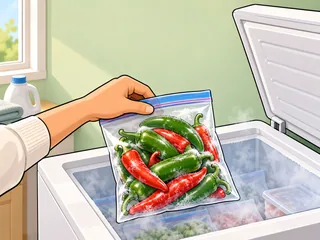
  2. Close to freshFreeze
  3. Ready to eat from the jarPickle and can
  4. Plain peppers on the shelfCan without pickling
  5. Peeled, roasted fleshRoast
  6. Smoky dried podsSmoke-dry
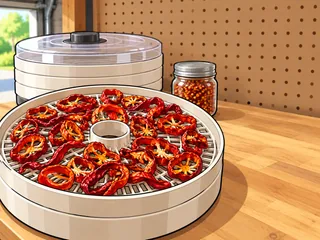
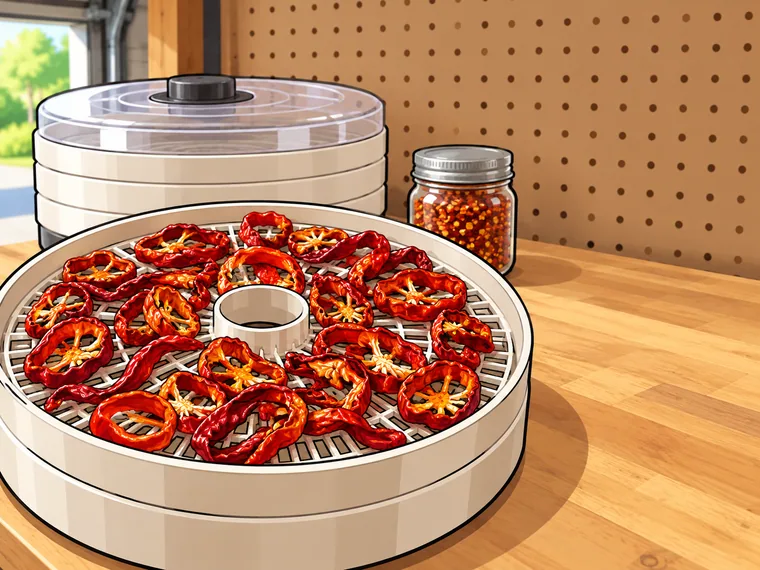
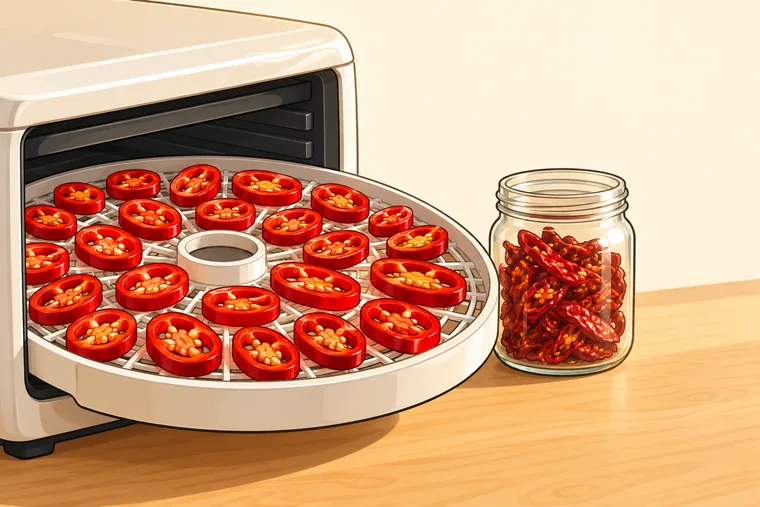
A dehydrator tray of brittle dried red pepper rings on a garage workbench, with a small jar of flakes.
Powder or flakes

Dry

Work
Cut, then dehydrate until tough to brittle14
Time
8–12 hours in a dehydrator4
Key number
140°F for 2 hours, then 130°F
Keeps
6–12 months, airtight and dark
Read the dry guide
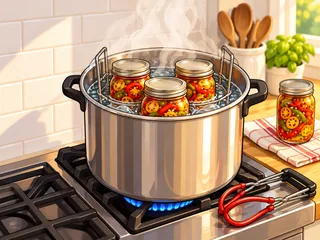
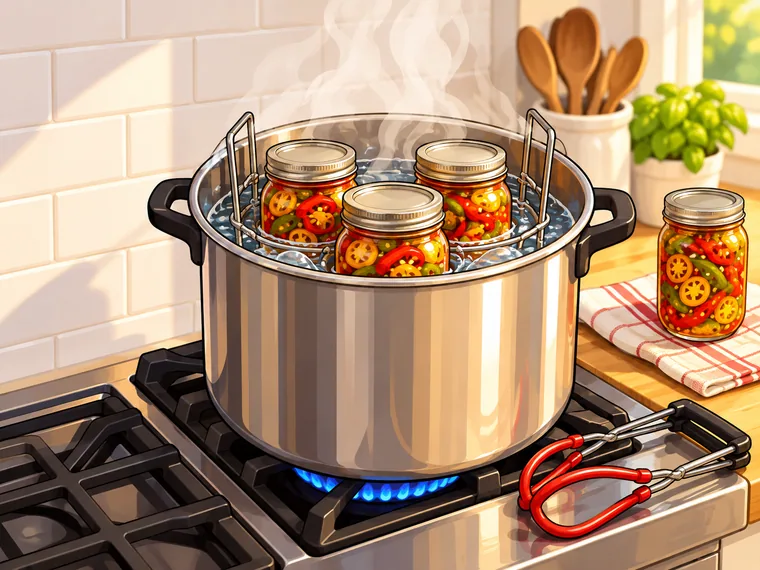
Jars of pickled pepper rings in a rack inside a boiling water canner on a gas stove.
Ready to eat from the jar

Pickle and can

Work
Pack in a vinegar brine from a tested recipe, process in a boiling water or steam canner3
Time
10 minutes in the canner up to 1,000 ft (NCHFP pickled hot peppers)8
Key number
Vinegar at 5 % acidity in Penn State's recipes
Keeps
Best within a year, safe while the lid stays sealed
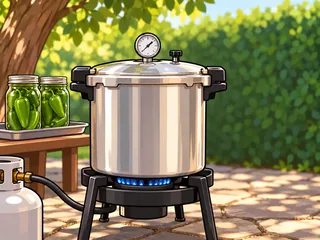
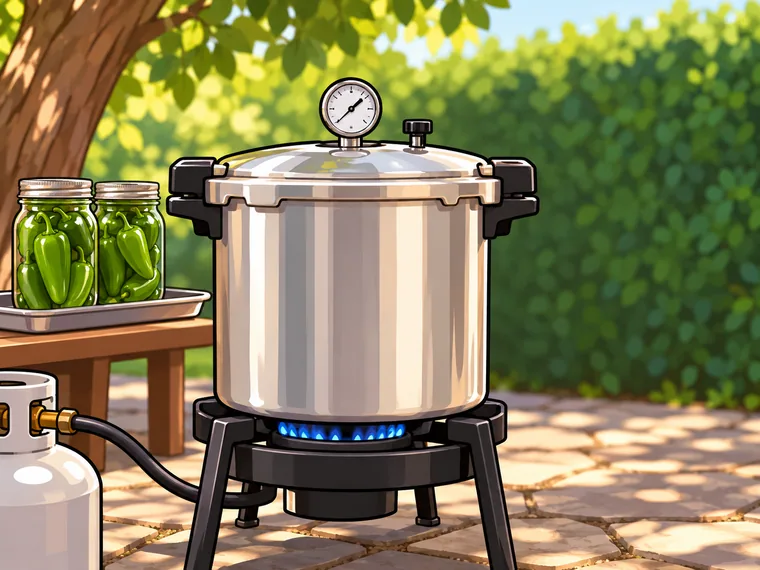
A pressure canner with a dial gauge on an outdoor burner, two jars of whole green peppers beside it.
Plain peppers on the shelf

Can without pickling

Work
Process in a pressure canner3
Time
Not given by the sources
Key number
Pressure canner only
Keeps
Best within a year
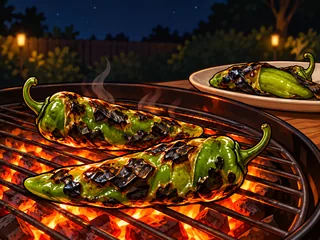
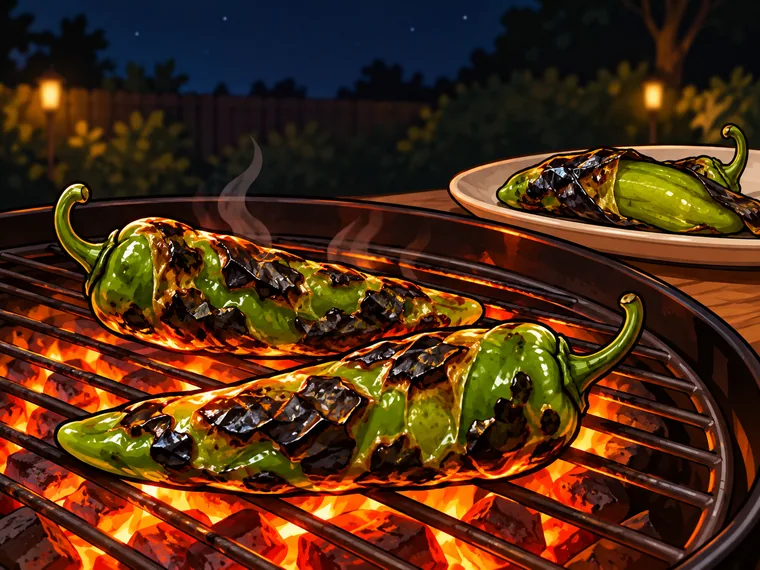
Two long green chiles with blistered black skin on a charcoal grill at night, one peeled on a plate.
Peeled, roasted flesh

Roast

Work
Slash, blister, cool in water and slip off the skins3
Time
6–8 minutes3
Key number
400°F (204°C) oven or broiler, 6–8 minutes
Keeps
Not given by the sources
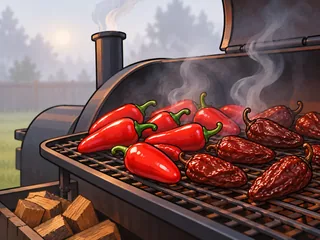
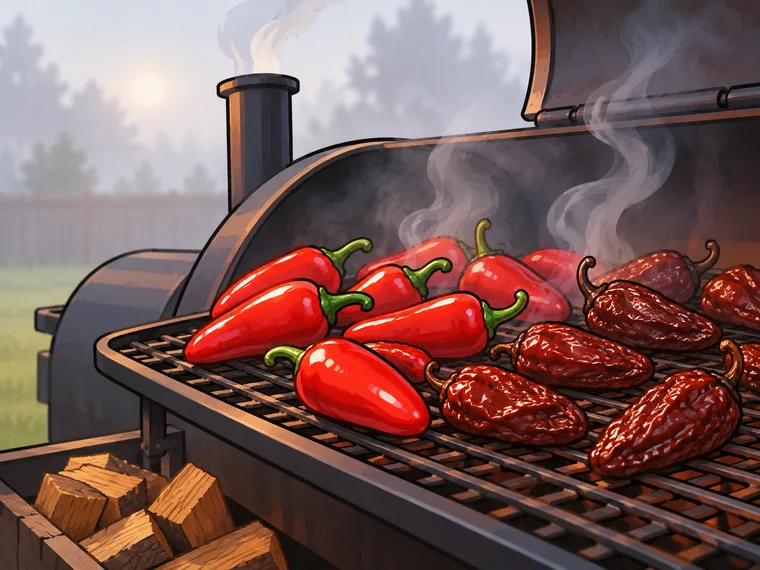
Red jalapeños on a smoker rack, half of them shrunk dark and wrinkled, in morning fog.
Smoky dried pods

Smoke-dry

Work
Smoke ripe red jalapeños until dry67
Time
Not given by the sources
Key number
Makes chipotle
Keeps
Not given by the sources
Keeping time

How long each method keeps

Best quality, as the extension services publish it. Roasted and smoked peppers have no keeping time in our sources, so they are left off.

Which peppers suit which method?

Fresh pod in, a new name out

Growers and cooks have already paired these peppers with one method, and the dried versions often get a new name.

  • CayenneDriedGround powder or flakes7
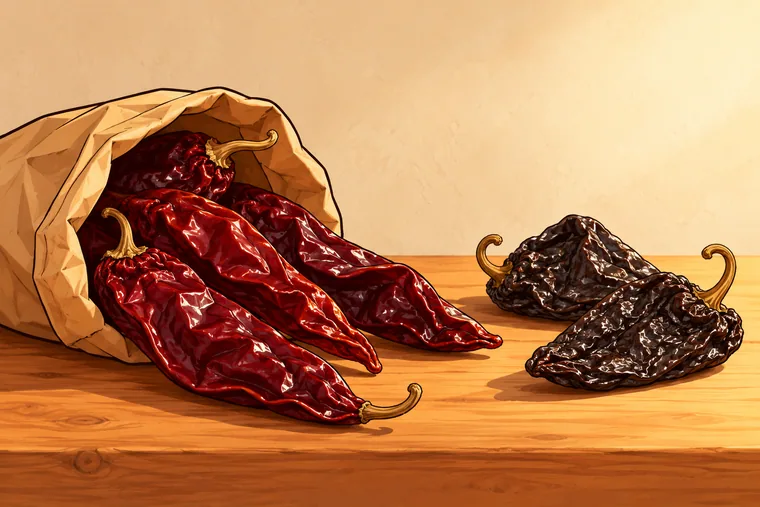
  • PoblanoDriedAncho67
  • Ripe red jalapeñoSmoke-driedChipotle67
  • New Mexican red (NuMex Big Jim)DriedDry red chile products; ristras of red pods15
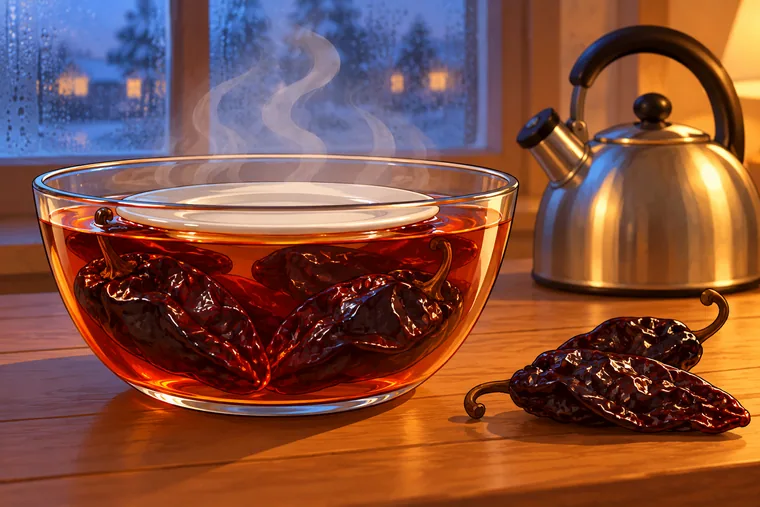
  • New Mexican greenDehydratedChile pasado, reconstituted for cooking6
  • Aji amarilloDriedAjí mirasol16
  • Aji pancaDriedUsually sold and cooked dried16

For your own harvest, Penn State picks firm, thick-walled peppers to cut and dehydrate, and keeps strings for small hot peppers.1

On this page
  1. 1How do you handle hot peppers without burning your hands?
  2. 2How do you preserve hot peppers?
  3. 3What is the best way to preserve hot peppers?
  4. 4Can you freeze chili peppers whole?
  5. 5Should you freeze or dry hot peppers?
  6. 6How do you work through a big harvest in one weekend?
  7. 7What goes wrong when you keep peppers, and how do you fix it?
  8. 8What if the dish came out too hot?

How do you handle hot peppers without burning your hands?

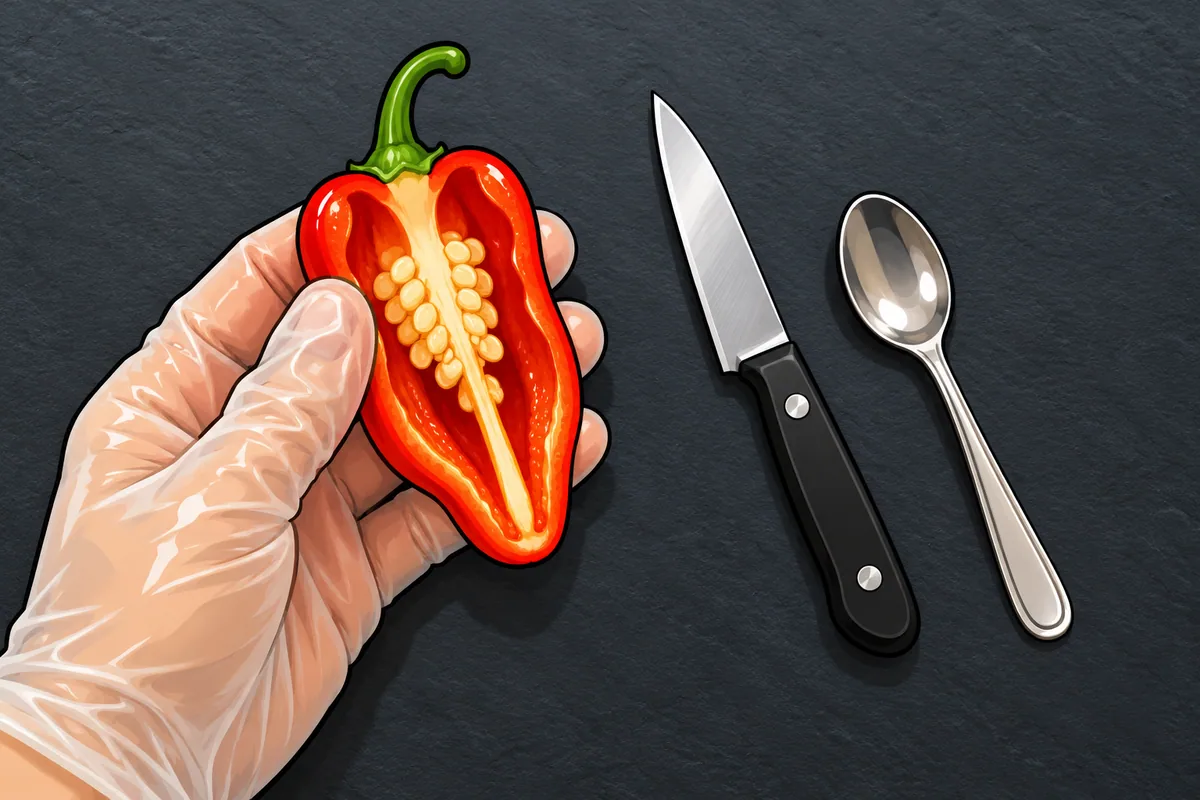
Wear thin plastic gloves while you cut them, and wash your hands with soap and water before you touch your face1. To take heat out of a pepper, cut away the pale ribs: about 89 % of the capsaicin sits in the placenta and only 5–6 % in the outer flesh2.

The soap matters more than the water. Capsaicin is fat-soluble and does not dissolve in water2, so a quick rinse under the tap spreads it around your fingers and leaves most of it there. Soap lifts the oily film off; that is why every extension page you read pairs the two.

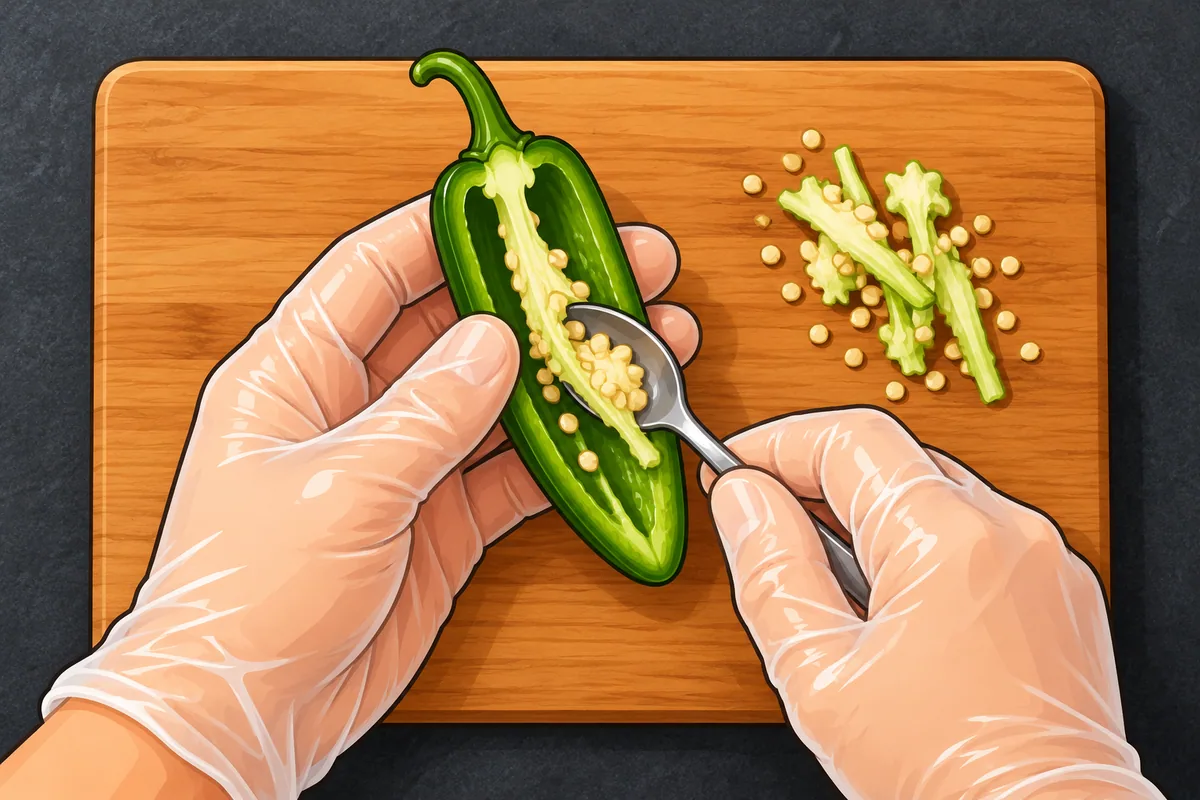
A gloved hand holding a halved green jalapeño while a teaspoon scrapes the pale ribs and seeds onto a cutting board.
The pale ribs hold most of the heat; a teaspoon lifts them out cleanly.2
  1. 1

    Glove up

    Put on plastic gloves before you touch a cut hot pepper.1

  2. 2

    Halve it lengthwise

    Cut from stem to tip so both halves show the ribs.

  3. 3

    Scrape out the ribs and seeds

    Lift out the white placenta with a teaspoon; that tissue holds about 89 % of the capsaicin.2

  4. 4

    Wash up

    Wash your hands, even after gloves, with soap and water before you touch your eyes or face.1

Keep the knife and board for the peppers until you wash them too. The same oil that stings your fingers sits on the blade, and the next thing you slice for a fruit salad picks it up.

How do you preserve hot peppers?

Dry them if you want powder or flakes, freeze them if you want them close to fresh, and pickle them if you want them ready to eat from the jar. Plain peppers that are not pickled need a pressure canner, not a water bath3.

Ways to keep hot peppers, with the key number for each
MethodWhat you doKey numberHow long it keeps
Dry14Cut, then dehydrate until tough to brittle140°F for 2 hours, then 130°F6–12 months, airtight and dark
FreezeSources for this line1. Penn State Extension3. Penn State Extension5. Nebraska Extension (University of Nebraska–Lincoln)Wash, stem, pack raw and whole with no headspaceNo blanching for hot peppersAbout 8 months for best quality
Pickle and can3Pack in a vinegar brine from a tested recipe, process in a boiling water or steam cannerVinegar at 5 % acidity in Penn State's recipesBest within a year, safe while the lid stays sealed
Can without pickling3Process in a pressure cannerPressure canner onlyBest within a year
Roast3Slash, blister, cool in water and slip off the skins400°F (204°C) oven or broiler, 6–8 minutesNot given by the source
Smoke-dry67Smoke ripe red jalapeños until dryMakes chipotleNot given by the source

Freezing is the least work: wash, stem, bag and freeze, with no blanching for hot peppers.3

Canning times grow with altitude. The National Center for Home Food Preservation processes its pickled hot pepper jars for 10 minutes up to 1,000 ft, 15 minutes from 1,001 to 6,000 ft and 20 minutes above that8. If you live in Denver, you add five minutes to every batch; if you live at the coast, you can follow the shortest line.

What is the best way to preserve hot peppers?

The best method is the one that matches how you will cook the peppers in February. Start from the dish, not from the harvest, and the choice usually makes itself.

How will you use them later?Pick the end of the line first
  • Chopped into cooked foodChili, stews, eggs
    • least work
      Freeze wholeAbout 8 months
  • Crumbled or groundFlakes, powder, rubs
    • least space
      Dry, then grind6 to 12 months
  • Eaten from the jarOn sandwiches and nachos
    • tested recipe
      Pickle and canBest within a year
  • Peeled and stuffedRellenos, green chile
    • blister first
      Roast and peel400°F for 6 to 8 minutes, then the skins slip off

Sources for this line3. Penn State Extension4. Colorado State University Extension, PreserveSmart5. Nebraska Extension (University of Nebraska–Lincoln)

Space is the second question. 100 g of fresh red chiles dries down to about 13 g, because the fresh pod is 88 % water and the dried one is about 7 %910. A freezer drawer full of whole pods fits in a few jars once you dry it.

Your climate decides the string. Penn State gives strings of small hot peppers 3 to 4 weeks to dry in a room with moving air, and warns that high humidity can spoil them before they finish1. In a dry Southwest autumn that works; in a muggy Gulf Coast September, use the dehydrator.

Can you freeze chili peppers whole?

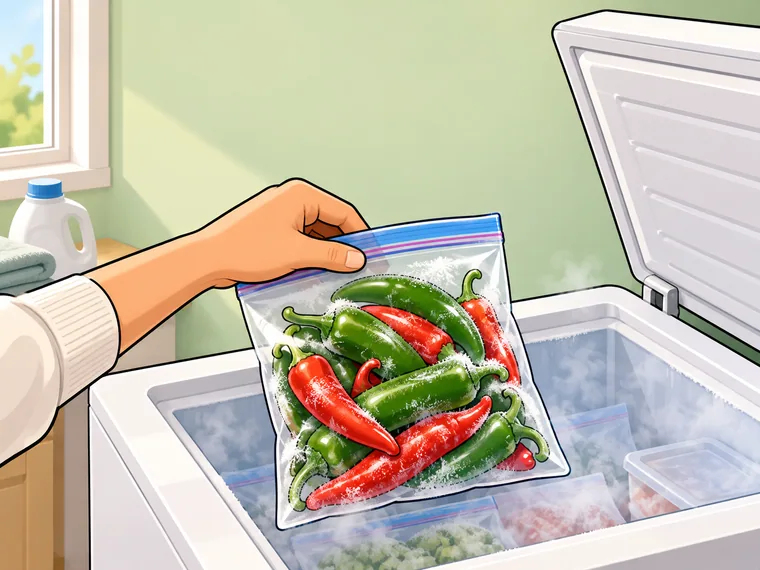
Yes. Nebraska Extension says you do not need to cut or chop hot peppers before freezing: rub them under cold running water, pull the stems, and pack them with no headspace5. Hot peppers skip the blanching step that sweet pepper halves get1.

Before the bag goes in the freezer

  • Pick firm pods with no decay or insect damage3
  • Wash under cold running water and remove the stems5
  • Leave them whole; cutting is optional for hot peppers5
  • Press the air out and seal with no headspace5
  • Write the pepper and the date on the bag, and plan to use it within about 8 months5

Frozen pods come out softer but still useful. Penn State notes that peppers frozen without blanching keep a crisper texture, which suits uncooked foods1, and Nebraska adds that thawed peppers work in casseroles or even raw5. So use frozen pods where they cook down or get chopped fine, and keep the fresh ones for the dishes where you want a snap.

Should you freeze or dry hot peppers?

Freeze the ones you will chop into cooking, dry the ones you will grind or crumble. Frozen peppers keep some crunch and go into cooked dishes or even raw5; dried ones turn into flakes and powder and take up a fraction of the space.

Freeze

Dry

  • Wash, stem, bag whole; no cutting or blanching5WorkCut, then 8–12 hours in a dehydrator14
  • Thawed peppers keep some crispness5TextureTough to brittle; crush or grind it1
  • About 8 months for best quality5Keeps6–12 months, airtight and dark4
  • The full fresh weight, in the freezer5SpaceAbout 13 g left from 100 g fresh red chiles910

With a big basket you can do both. Penn State picks firm, thick-walled peppers to cut and dehydrate and keeps strings for small hot peppers1, so thin cayennes can hang on a string while the jalapeños go in a bag. Split the harvest by the dish each pepper will end up in, and you rarely regret the choice.

How do you work through a big harvest in one weekend?

Sort first, then run the slow job while you do the quick ones. A dehydrator needs 8 to 12 hours4, so load it first and freeze and pickle while it runs.

  1. Hour 0

    Sort by use

    Set aside soft or moldy pods; Colorado State says to skip any with decay, mold or bruising.4

  2. Hour 1

    Load the dehydrator

    Gloves on, stems and seeds out, 1/4–3/8 inch rings, 140°F (60°C).4

  3. Hour 2

    Bag the freezer peppers

    Whole, washed and stemmed, no headspace.5

  4. Hour 3

    Pickle a canner load

    NCHFP's recipe takes 4 lb hot peppers and 3 lb sweet peppers for about 9 pints, in 5 cups of 5 % vinegar with 1 cup water.8

  5. Hours 8–12

    Take the trays off

    Pieces should feel tough to brittle; watch the last hour, since vegetables scorch easily near the end.4

  6. Days 1–10

    Condition the dried pieces

    Keep them lightly covered in a dry, airy place for 4 to 10 days and shake the container daily.4

Label every jar and bag with the pepper and the date. Colorado State asks for the name, date and drying method on dried packages4, and you will thank yourself when two bags of green pods look the same in January.

What goes wrong when you keep peppers, and how do you fix it?

Most failures come from water left in, light let in, or a recipe changed. The table pairs each sign you might see with its cause and the fix the sources give.

Trouble with stored peppers: what you see, why, and what to do
What you seeWhy it happensWhat to do
Beads of moisture inside the drying jar4The pieces still hold waterPut them back on the trays, dry longer, then condition again
Off smell or mold on dried peppers4SpoilageThrow them out
Dried red pods fading to brown1LightStore them dark; the fridge or freezer keeps color best
A string of peppers rotting before it dries1High humidityDry indoors with moving air, or use a dehydrator
Soft or slippery pickles11Weak vinegar, too little brine, or jars not processedUse vinegar of at least 5 % acidity and process the jars; if spoilage shows, do not eat them
Shriveled pickles11Brine or vinegar too strong, or overprocessingFollow the recipe's salt and vinegar amounts and times exactly
Dark pickles or white sediment11Hard water, iodized salt, or salt with anti-caking agentsUse soft water and canning or pickling salt
A ristra sprayed with shellac or plastic12Made for decorationDo not cook with those pods

What if the dish came out too hot?

A finished pot needs a different fix than a raw pepper. The fixes for food that is too spicy cover the pot; for the next batch, cut out the ribs before the pepper goes in, since they hold most of the heat2.

You can also size the pepper before it goes in. A jalapeño averages about 5,000 SHU and a serrano runs 10,000–25,00014, so if last week's salsa was too sharp with serranos, the same weight of jalapeño cuts the heat to roughly a third. The swap chart does that math for the common peppers.

Sources

· 16
  1. 1Penn State Extension Preserving Those Colorful Garden Peppers (Martha Zepp)2026 · checked Oct 18, 2026
  2. 2Heliyon (Cell Press) A comprehensive review of capsaicin: Biosynthesis, industrial productions, processing to applications, and clinical uses2024 · checked Oct 18, 2026
  3. 3Penn State Extension Let's Preserve: Peppers (Hirneisen, Zepp, LaBorde)2023 · checked Oct 18, 2026
  4. 4Colorado State University Extension, PreserveSmart Drying Peppers-Hotchecked Oct 18, 2026
  5. 5Nebraska Extension (University of Nebraska–Lincoln) Freezing Sweet, Bell and Hot Peppers (Alice Henneman; reviewed by Kayla Colgrove)2026 · checked Oct 18, 2026
  6. 6New Mexico State University, Chile Pepper Institute Chile Terminologychecked Oct 18, 2026
  7. 7UF/IFAS Gardening Solutions Peppers by Scoville Unitschecked Oct 18, 2026
  8. 8National Center for Home Food Preservation (University of Georgia) Pickled Hot Pepperschecked Oct 18, 2026
  9. 9USDA Agricultural Research Service, FoodData Central (SR Legacy) Peppers, hot chili, red, raw (FDC ID 170106)2018 · checked Oct 18, 2026
  10. 10USDA Agricultural Research Service, FoodData Central (SR Legacy) Peppers, hot chile, sun-dried (FDC ID 168570)2018 · checked Oct 18, 2026
  11. 11National Center for Home Food Preservation (University of Georgia) Causes and Possible Solutions for Problems with Pickled Foodschecked Oct 18, 2026
  12. 12New Mexico State University, College of Agricultural, Consumer and Environmental Sciences Guide E-327: Using Chile to Make Ristras and Chile Sauce (Coon, Walker; revised 2015)2015 · checked Oct 18, 2026
  13. 13Food Protection Trends 31(6):336-342 (International Association for Food Protection) Current Food Safety Issues of Home-prepared Vegetables and Herbs Stored in Oil (Nummer, Schaffner, Fraser, Andress)2011 · checked Oct 18, 2026
  14. 14University of Florida IFAS Extension HS-859/TR010: Pepper Production in Miami-Dade County, Floridachecked Oct 18, 2026
  15. 15New Mexico State University Circular 706: The Chile Cultivars of New Mexico State University, 1913–2022 (Coon, Walker, Lozada, Guzman, Bosland)2023 · checked Oct 18, 2026
  16. 16Bioversity International, with INIA and Peru's Ministry of Agriculture and Irrigation Guía de oportunidades de mercado para los ajíes nativos de Perú (Jäger, Jiménez, Amaya, compilers)2013 · checked Oct 18, 2026
Coming soon

Your pocket pepper index.

Built from the same index as this site.

  • Every entry offline
  • Compare any two peppers
  • Keep a list of peppers you have tried

One email at launch. No spam.