On this page
- 1How should you store fresh peppers?
- 2Do peppers need to be refrigerated?
- 3How long do jalapeños last in the fridge?
- 4How do you freeze peppers so they don't clump?
- 5Do you have to roast poblanos before freezing them?
- 6How long do dried peppers keep?
- 7Which storage method should you use for the peppers on your counter?
- 8How can you tell a stored pepper has gone bad?
- 9What ruins stored peppers?
- 10What should you do with your peppers today?
- 11Sources
How should you store fresh peppers?
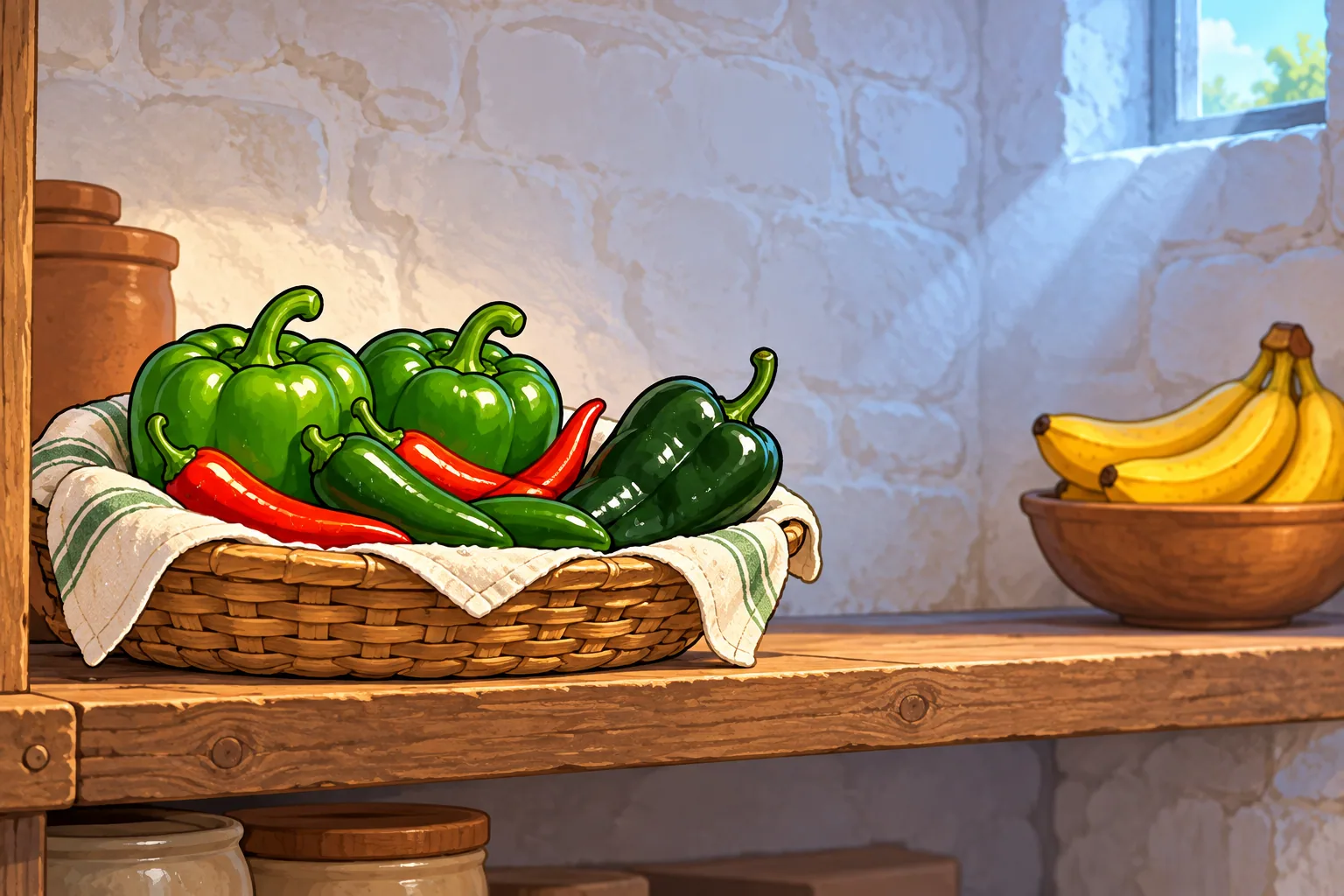
Cool, humid and away from ripening fruit. The USDA storage handbook says fresh peppers keep 2 to 3 weeks at 45 °F with 90–95 % relative humidity, and another week if you wrap them in a moisture-holding film at 45–50 °F1. Purdue's vegetable team gives the same window, 45 to 55 °F2. Your job is to get as close to that as your kitchen allows.
Every way to keep peppers trades time for texture. The table lines them up so you can pick by when you plan to cook.
| Method | Where and how cold | How long | Texture afterwards | Best for |
|---|---|---|---|---|
| Fresh, whole12 | 45–55 °F, 90–95 % humidity | 2–3 weeks at 45 °F | Crisp | Everything |
| Fresh, wrapped in film1 | 45–50 °F | About 1 week longer | Crisp | A big batch you will use soon |
| Cut pieces1 | 32–41 °F | Short; use soon | Crisp at first | Prepped for the week |
| Frozen raw3 | 0 °F or below | About 8 months for best quality | Some crispness left | Cooking, salsas |
| Frozen after blanching (sweet peppers)4 | 0 °F, ½ inch headspace | The longest shelf life | Soft | Soups and stews |
| Roasted, then frozen (green chile, poblano)5 | 0 °F or below | 12 months | Soft, roasted | Rellenos, sauces, stews |
| Dried6 | Cool, dry, dark | 4 months to 1 year | Leathery or brittle | Sauces, flakes, powder |
If you will cook your peppers within a week, keep them whole and cool; if not, freeze them before they soften, not after. A pepper that has started to wrinkle freezes into a wrinkled pepper.
Do peppers need to be refrigerated?
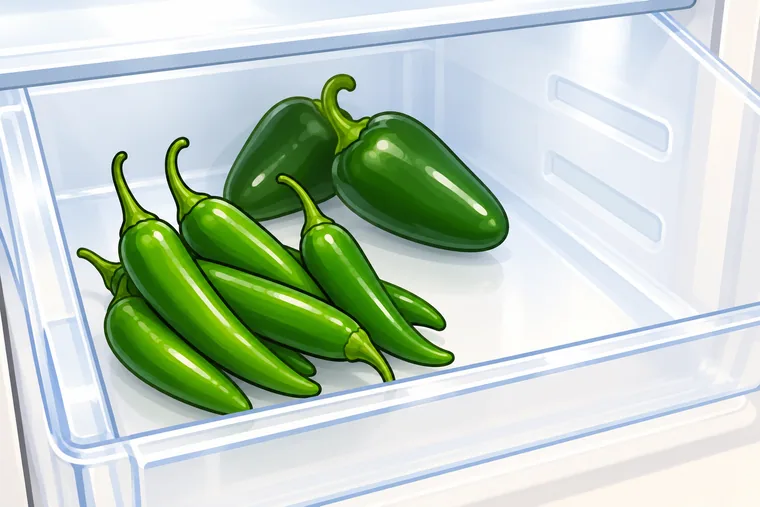
Yes, for more than a few days, but not in the coldest spot. The USDA handbook warns that peppers suffer chilling injury below 45 °F, and that at 41 °F the damage shows after about 2 weeks1. Most home fridges run colder than that, so whichever shelf runs warmest in yours is the better place; a fridge thermometer tells you which one in a day.
Above 55 °F you get the opposite problem: faster ripening and bacterial soft rot1. A cool cellar or an unheated pantry in autumn can sit right in the window; a kitchen counter in summer does not. The East New York Farms! growers found that hot peppers hold well in storage at 45–50 °F7, which matches the handbook.
Keep them away from the fruit bowl. Purdue notes that peppers are sensitive to ethylene and should sit away from ethylene-producing fruit such as ripening tomatoes and cantaloupes2, and UC Master Gardeners name apples and bananas8.
Signs your peppers got too cold
Green peppers chill more easily than ripe ones. The handbook notes that ripe or colored peppers are less chilling sensitive than green1, so if your fridge runs cold, use the green bells and jalapeños first and let the red ones wait.
How long do jalapeños last in the fridge?
Up to 2 to 3 weeks in ideal conditions, and less in a cold home fridge. The handbook's figures cover chili peppers too: freshly picked hot peppers go under the same temperature and humidity as sweet ones1. In practice, that means you plan to use a bag of jalapeños within about two weeks, before chilling damage at fridge temperatures can show.
To keep them fresh longer, control moisture. High humidity keeps them from shriveling, but water sitting on the skin invites rot, and the handbook warns that wet or washed peppers can develop soft rot if the water was not clean1.
- 1
Sort the bag
Take out any pod with soft spots, cracks or mold; one bad pod spreads rot to its neighbors.
- 2
Keep them dry
Leave them unwashed until you cook, or wash and dry them completely before they go back in.
- 3
Bag them loosely
Put them in a perforated or loosely closed bag so they stay humid without collecting drips.1
- 4
Pick the warmest shelf
Store them in the least cold part of the fridge, aiming for 45 °F if your fridge lets you set zones.1
- 5
Use the green ones first
Green pods chill more easily than red, so cook those first.1
If you cut more jalapeños than you need, keep the pieces colder than whole pods: the handbook gives 32–41 °F for fresh-cut peppers1. Cut pieces lose their edge fast, so use them within a few days, or freeze them. For jalapeños you want to keep on a shelf for months instead, pickled jalapeños are the classic route, processed in jars so they no longer need the fridge until you open them.
How do you freeze peppers so they don't clump?
Freeze them on a tray first. Nebraska Extension spreads cut peppers in a single layer on a rimmed cookie sheet, freezes them for about an hour or longer until firm, then moves them into a freezer bag with the air pressed out3. Each piece stays separate, so you can shake out a handful later.
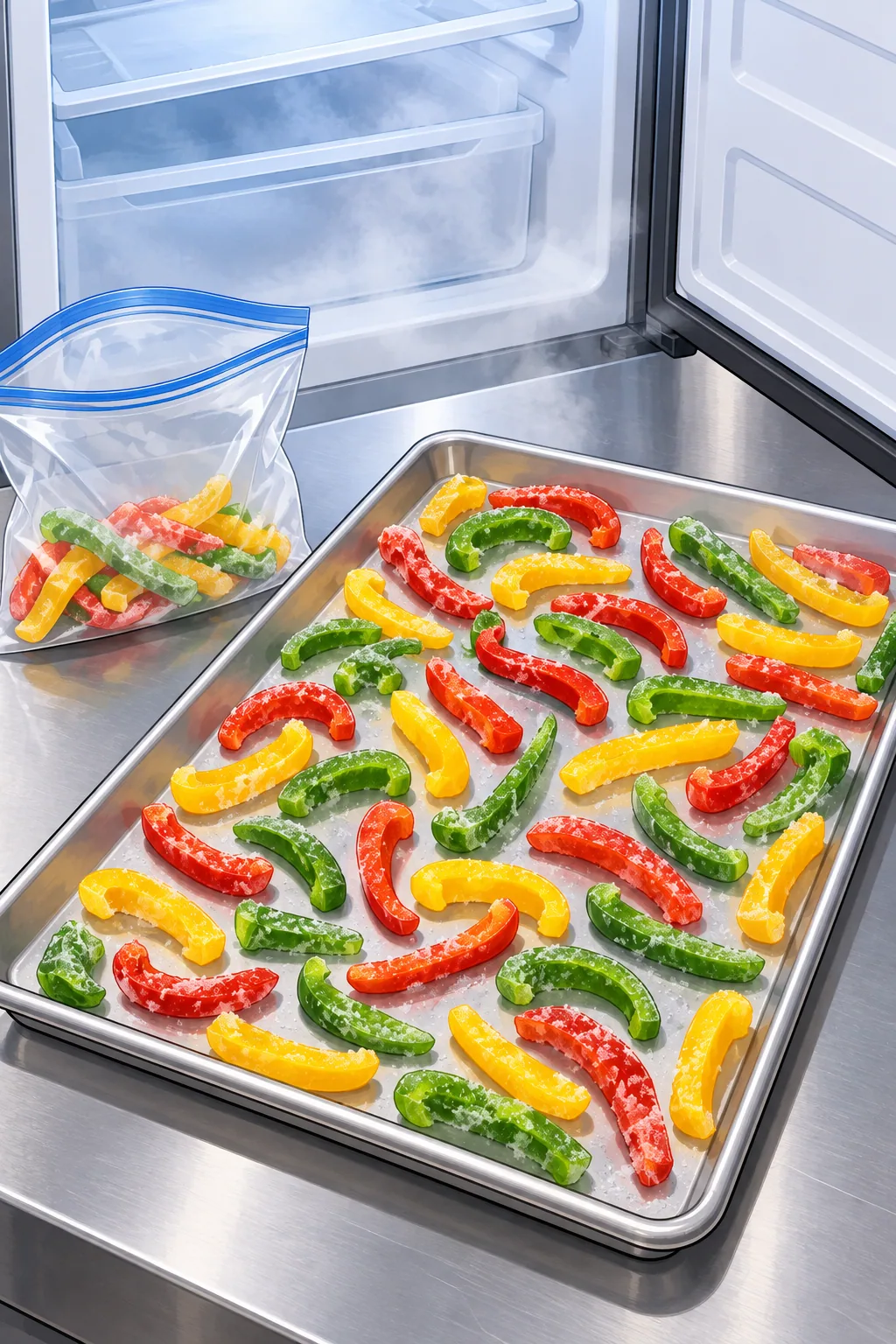
Hot peppers need even less work. NCHFP's whole method for hot peppers is to wash and stem them, pack them with no headspace, seal and freeze9. Nebraska adds that you do not need to cut or chop hot peppers first, and to wear plastic or rubber gloves while you handle them3; the guide to cutting hot peppers covers why the gloves matter.
For sweet peppers you have a choice. Penn State gives two methods: blanch halves for 3 minutes or strips for 2, then cool and pack with ½ inch headspace for the longest shelf life; or pack them raw with no headspace for a crisper result4.
Frozen raw
Blanched, then frozen
Keep your freezer at 0 °F or below, and plan to eat frozen vegetables within about 8 months for best quality3. Label the bag with the date so you know which one to open first. The freezing guide covers bags, containers and thawing in more depth.
Do you have to roast poblanos before freezing them?
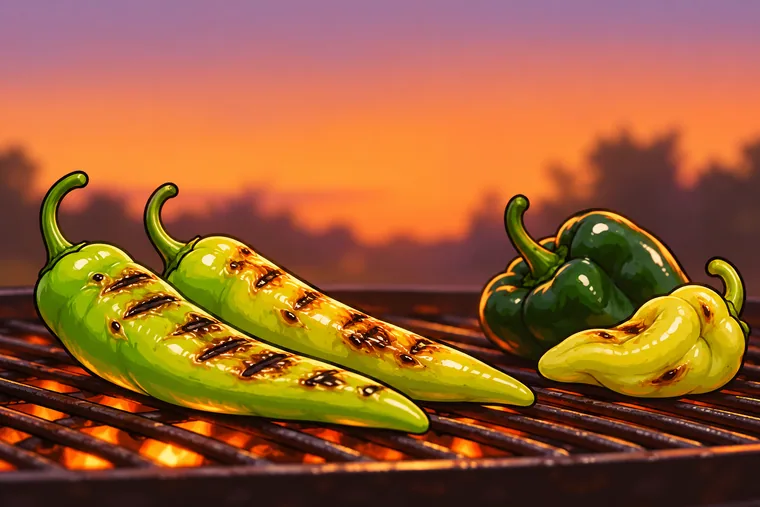
No, but roasting first saves you work later and gives you a softer, ready-to-use pepper. NMSU's guide to freezing green chile, the method most cooks also use for a poblano, roasts the pods, cools them, and then freezes them peeled or unpeeled; it notes that the skins come off more easily after freezing5.
- 6–8 minutes
Blister the skins
Roast slit pods at 400–450 °F in the oven or broiler, turning often, until the skin blisters.5
- Within 2 hours
Cool and chill
Cool the roasted pods in one layer and get them into the refrigerator within 2 hours of roasting.5
- Packing day
Pack and freeze
Freeze whole unpeeled pods in bags with the air pressed out; peeled pods go in bags or rigid containers with ½ inch headspace.5
- Up to 12 months
Use them
Keep them at 0 °F or below and use them within 12 months.5
If you freeze a big harvest, freeze it in rounds. NMSU says to load only as much as freezes within 24 hours, about 2 to 3 pounds per cubic foot of freezer space5. For stuffed dishes, leave the stems on; NMSU notes you can keep them for rellenos5. The roasting guide has the full roast.
How long do dried peppers keep?
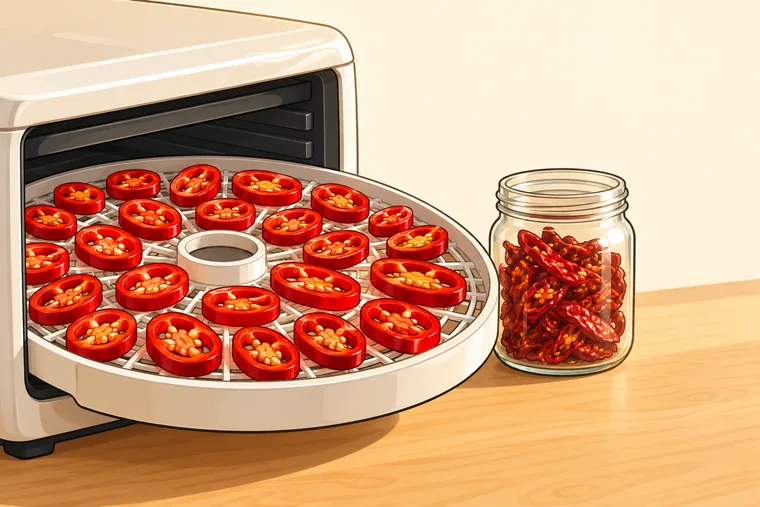
Four months to a year. NCHFP gives that range for home-dried foods, shorter in warm rooms, and notes that vegetables keep about half as long as fruits6. Store dried chiles in clean, dry glass jars or tight containers in a cool, dry, dark place, packed in amounts you will use at once6.
The USDA handbook adds that dried chiles stored cold, at 32–50 °F, hold their red color longer and attract fewer insects1. So a jar of dried pods in the fridge or freezer keeps its color through a second winter better than one on a shelf above the stove.
Three containers do the job for dried pods, and each one suits a different kitchen.
Containers for dried peppers
NCHFP gives home-dried foods 4 months to 1 year, shorter in warm rooms, so the container matters.
- Best overall
Glass home canning jar with a lid
Galssmagic Mason Jars 32 oz,12 Pack Quart Wide Mouth Mason Jar With Airtight Lids,Glass Canning Jars for Fermenting, Pickling,Meal Prep,Overnight Oats & Centerpieces
$39.98View on Amazon: Glass home canning jar with a lidWhere: Cool, dry, dark place
How long: 4 months to 1 year for home-dried foods; vegetables keep about half as long as fruit
Plastic freezer container with a tight-fitting lid
Stock Your Home 32oz Plastic Containers with Twist Top Lids (6 Pack), Quart Freezer Containers with Lids for Leftover Food, Airtight Reusable Soup Containers, Microwave and Dishwasher Safe
$12.99View on Amazon: Plastic freezer container with a tight-fitting lidWhere: Cool, dry, dark place, or the fridge or freezer
How long: 4 months to 1 year for home-dried foods; vegetables keep about half as long as fruit
Vacuum sealer with bags, for dried peppers only
Bonsenkitchen Vacuum Sealer Machine, Multiple Modes For Meal Prep,Silver | Compact Vacuum Sealer for Kitchen Storage & Sous-Vide,External Vacuum System,6x Longer Freshness,5 Vacuum Bags
$27.99View on Amazon: Vacuum sealer with bags, for dried peppers onlyWhere: Cool, dry, dark place
How long: 4 months to 1 year for home-dried foods; vegetables keep about half as long as fruit


As an Amazon Associate we earn from qualifying purchases. We choose product types from what their labels and extension sources say; the commission does not change what we recommend. Our affiliate disclosure
The drying guide covers getting them dry enough in the first place.
Which storage method should you use for the peppers on your counter?
Ask when you will cook them. The tree below gives one method per answer.
- a few daysThis weekWhole, dry, 45–55 °F, away from fruit
- weeksWithin a monthFreeze raw on a tray, then bag
- monthsThrough winterRoast and freeze, up to 12 months
- longerNext yearDry them, 4 months to 1 year
- as a condimentCovered in oilUse within 4 days, or freeze
Sources for this line1. USDA Agriculture Handbook 66 chapter, hosted by University of California ANR5. New Mexico State University, College of ACES6. National Center for Home Food Preservation (University of Georgia)10. Oregon State University Extension
The oil branch needs a warning of its own. Oregon State Extension says fresh vegetables in oil can carry Clostridium botulinum and must be used within 4 days or frozen10. Do not keep a jar of peppers in oil on the counter.
How can you tell a stored pepper has gone bad?
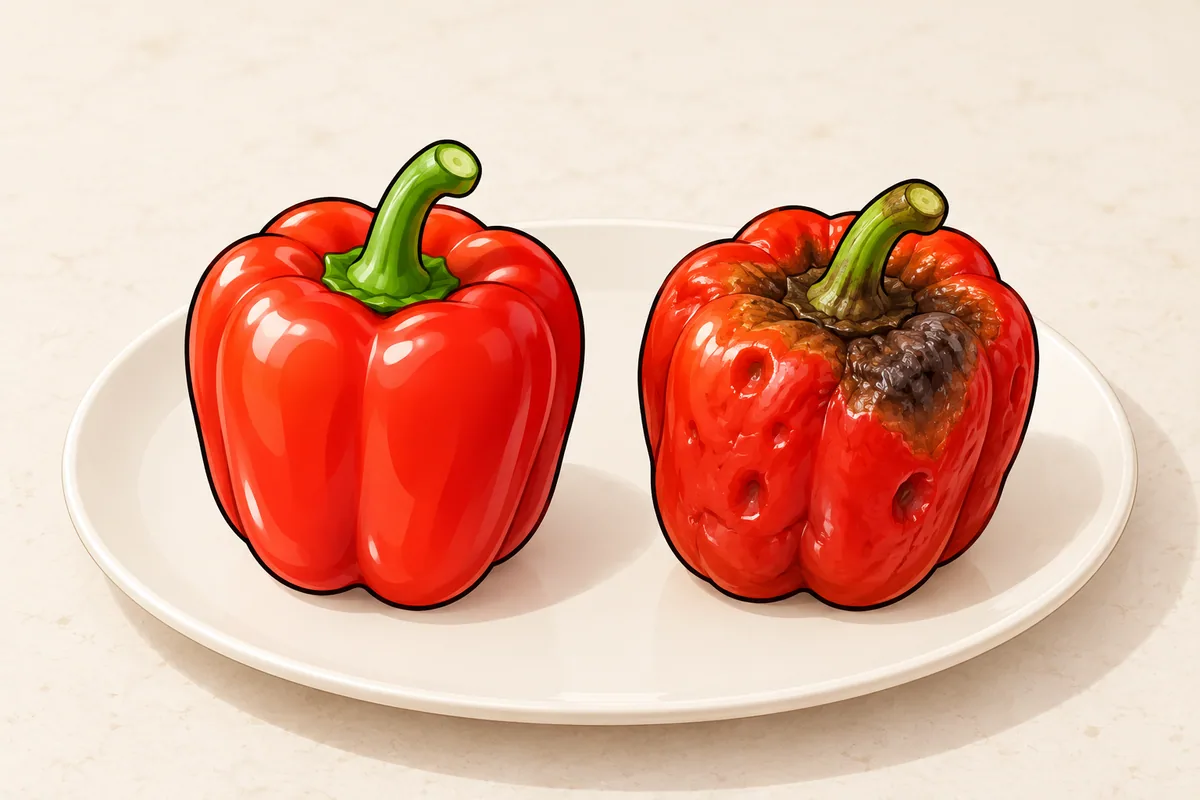
Look at the skin, the stem end and the inside. Fresh peppers should look bright and firm; the USDA handbook calls shriveled, dull or pitted peppers poor quality, and names grey mold (Botrytis) as a common decay that grows well at the recommended storage temperatures1. Cool storage slows peppers down; it does not stop mold, so you still check your bag every few days.
Throw out any pepper with fuzzy grey or black mold, slimy patches or a sour smell. A pepper that has only gone soft and wrinkled is still safe to cook in a stew or sauce, though it will not crisp in a pan. Black rot at the stem end is a sign of chilling injury, the handbook adds1, so if you see it on several pods, move the rest to a warmer shelf.
Can you freeze jalapeños whole?
Yes. NCHFP's method is to wash and stem hot peppers, pack them with no headspace and freeze them; Nebraska Extension says you do not need to cut or chop them first.39
Do frozen peppers stay crisp?
Partly. Nebraska Extension says thawed peppers keep some crispness, enough for cooked dishes or even raw use; blanched ones come out softer.34
How should you store fresh poblanos?
Like any fresh pepper: whole, dry, at 45–55 °F and high humidity, for up to 2–3 weeks. For longer, roast and freeze them as NMSU does with green chile.15
Should you wash peppers before storing them?
Only if you dry them completely. The USDA handbook links washing with unclean water to bacterial soft rot, so most cooks store peppers dry and wash them just before use.1
What ruins stored peppers?
Most losses come from four mistakes. Each one has an easy fix.
- The coldest shelf. Below 45 °F peppers pit and rot from the stem end1. Move them to the warmest part of your fridge.
- The fruit bowl. Ripening tomatoes, apples and bananas give off ethylene, which peppers are sensitive to28. Store them on a different shelf.
- Wet bags. Water on the skin and dirty wash water lead to soft rot1. Dry peppers before storing.
- Freezing too late. Freeze peppers while they are firm; Nebraska Extension starts with crisp, tender pods for a reason3.
What should you do with your peppers today?
Sort them on the counter now. Put the ones you will cook this week in a dry, loose bag on the warmest fridge shelf, and get the rest onto a tray in the freezer before they soften.
If you have more than your freezer holds, pickling and drying turn a big harvest into jars that keep on a shelf, and the techniques hub lists every method with its time and what it does to the heat.