On this page
- 1What do you need for blistered shishito peppers?
- 2How do you blister shishito peppers in a pan?
- 3How can you tell when shishitos are done?
- 4Which shishito on the plate will be the hot one?
- 5Can you cook Padrón peppers the same way?
- 6How hot does the plate get if you swap the pepper?
- 7Should you grill, broil or pan-fry shishitos?
- 8Why did your shishitos steam instead of blister?
- 9How many shishitos should you cook per person?
- 10What goes with blistered shishitos?
- 11Sources
What do you need for blistered shishito peppers?
A bag of shishito peppers, a spoon of oil, salt, a lemon and a heavy pan. UC Master Gardeners describe the shishito as mild, slightly sweet and smoky, roasted, grilled or eaten raw1, and blistering is the quickest of those. This makes a side for two, or a snack for four with drinks.
Plan on 12 minutes from bag to plate: 4 to wash and dry the peppers, 8 to cook them. That is this recipe's own timing on a home burner, and it holds for 2 servings; a double batch adds about 6 minutes for the second round.
| Ingredient | Amount | Grams | Note |
|---|---|---|---|
| Shishito peppers | About 8 oz, one bag | 225 g | Firm and glossy, stems on |
| Olive oil12 | 1 tbsp | 13.5 g | Any oil works; olive oil is the Spanish way |
| Coarse or flaky salt3 | ½ tsp | About 3 g | USDA weighs table salt at 6 g per tsp; flaky salt weighs less per spoon |
| Lemon4 | 1 wedge | About 6 g of juice | Squeezed over at the end |
That is the whole list. Everything else is heat and timing, and the pan you choose matters more than any ingredient you could add.
How do you blister shishito peppers in a pan?
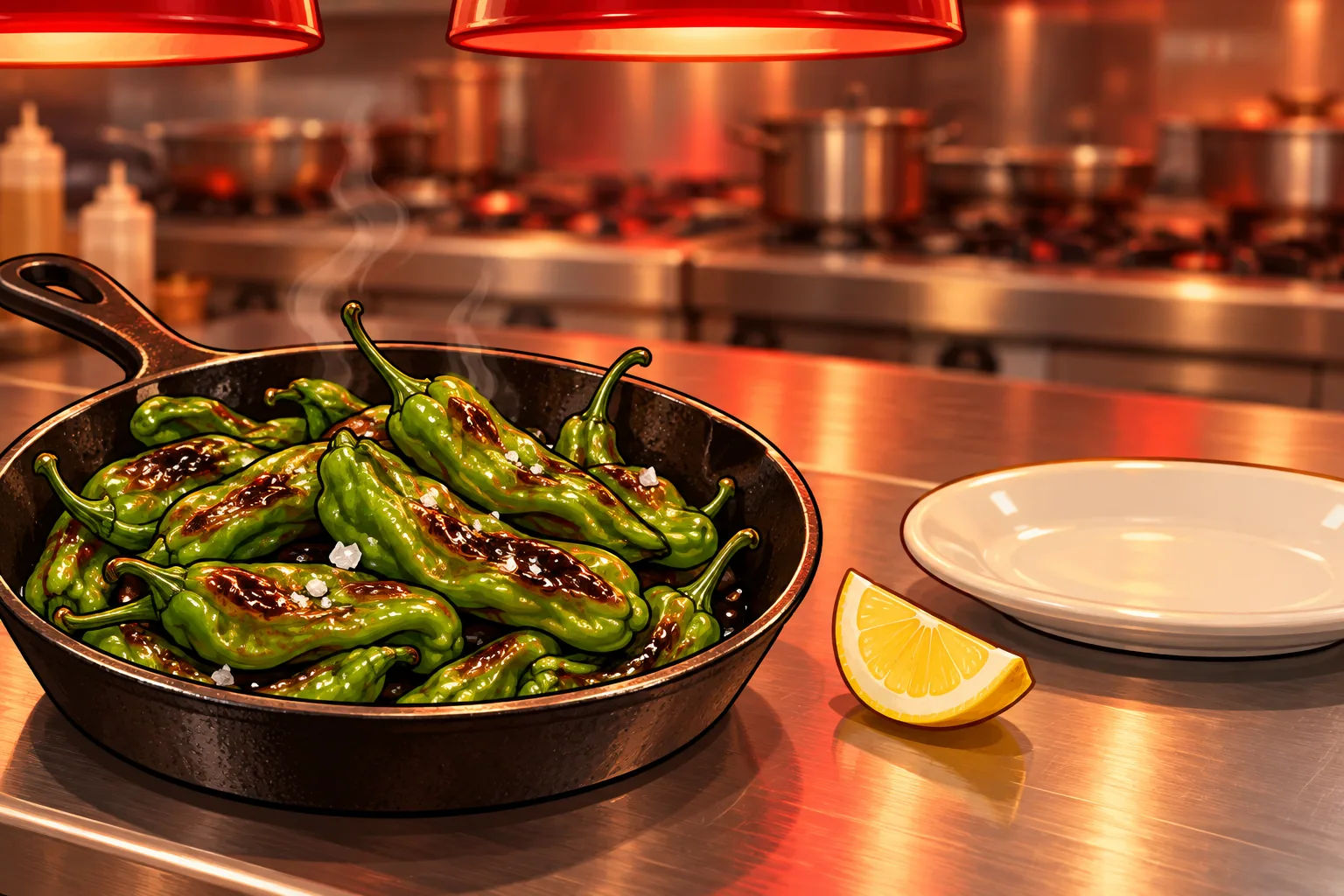
Dry peppers, a very hot pan, one layer, and patience. The minutes below are our own timing for a 26–30 cm cast-iron or carbon-steel skillet on a home gas or electric burner. Your stove may run hotter or cooler, so let the brown spots, not the clock, tell you when to move on.
- Wash and dry, 4 minutes. Rinse your shishitos, then pat every one dry with a towel. Water on the skin spits in the oil and steams the peppers instead of blistering them. Leave the stems on; they are your handles.
- Heat the pan, 2 minutes. Set your empty skillet over high heat until a drop of water skitters and vanishes in a second or two.
- Oil and lay out, a few seconds. Add the 13.5 g of oil2, swirl it, and drop your peppers in one layer. If they do not fit flat, you cook them in two rounds.
- Blister the first side, 3 minutes. Leave them alone. If you shake the pan early, you cool it and stop the blisters. You want the side touching the pan puffed and spotted dark brown.
- Toss and blister again, 2½ minutes. Toss or turn the peppers once or twice and let the other sides spot. Pull your pan off the heat when most pods have puffed and some have slumped a little.
- Salt, squeeze and serve, 30 seconds. Sprinkle the salt over them in the pan, squeeze your lemon wedge on top, and slide them onto a plate while they still hiss.
Add it up and you get 4 minutes of prep and 8 of cooking: 2 to heat, 3 plus 2½ to blister, and half a minute to finish. A second batch in the same hot pan takes only about 6 minutes, because the pan is already hot.
How can you tell when shishitos are done?
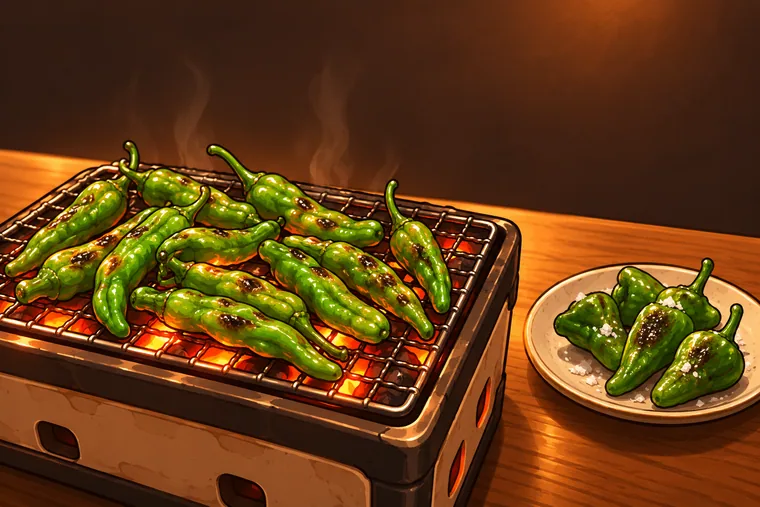
When the skin has puffed into blisters with dark brown spots, and the pods still look green and glossy. Stop before they collapse and turn black all over; by then the flesh has gone mushy and the skin tastes burnt.
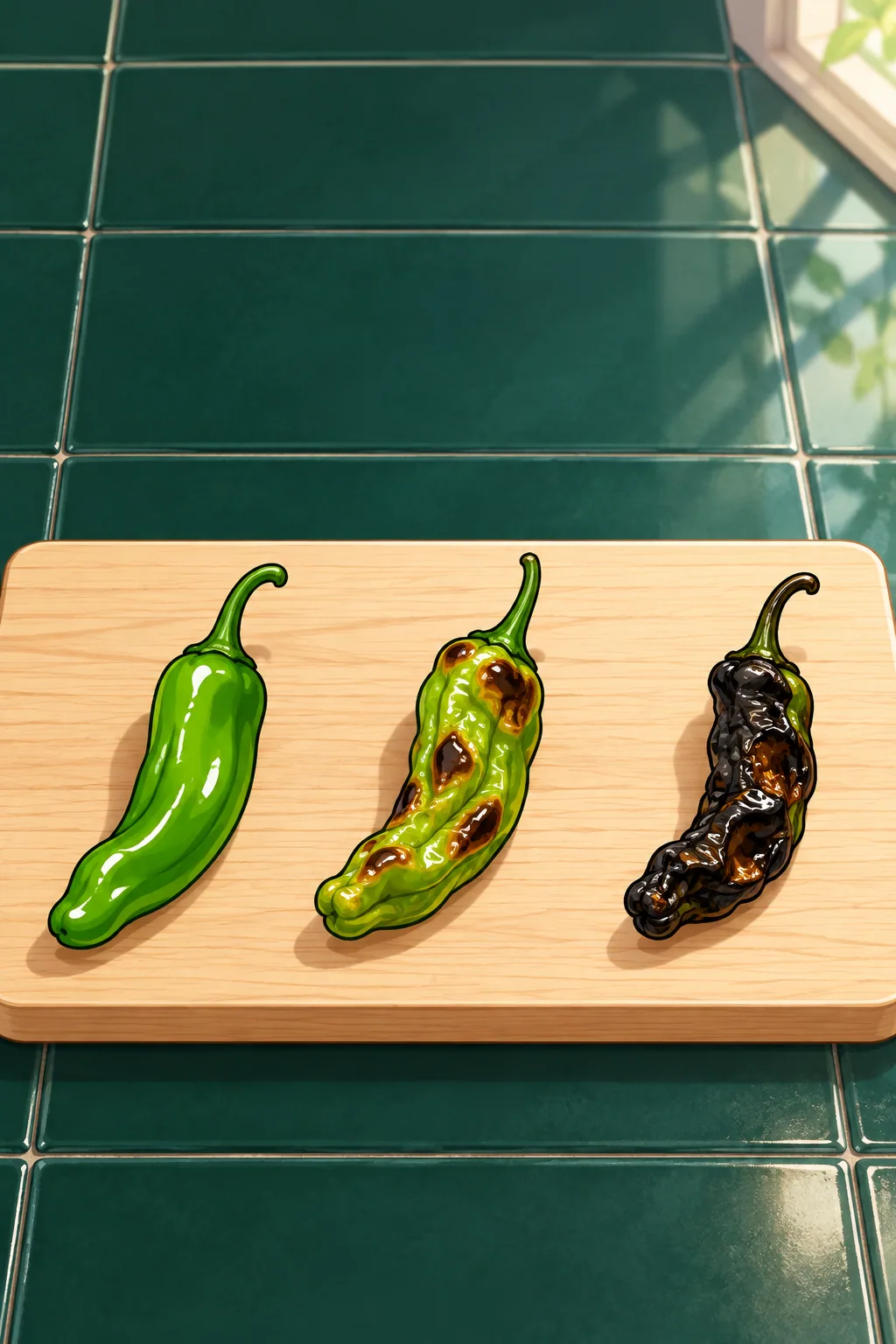 Raw: smooth, glossy, no spots yetDone: puffed, brown-spotted, still greenToo far: collapsed and black all over
- Raw: smooth, glossy, no spots yet
- Done: puffed, brown-spotted, still green
- Too far: collapsed and black all over
Listen too. A pan of shishitos at the right heat hisses and pops steadily; if it goes quiet, your pan has cooled and the peppers are steaming. Turn the heat back up or cook the next round in a smaller batch.
Which shishito on the plate will be the hot one?
You cannot tell by looking. UC Master Gardeners put it at about 1 in 10 shishitos with a spicy kick1, and researchers at Shinshu University found that fruits with few seeds swing much more in heat than seed-filled ones5. So every plate is a small lottery, which is half the fun at the table.
If someone at your table cannot take any heat, give them the plate of sweet mini peppers instead; the shishito swaps page explains the random hot pod in detail and lists six other peppers that blister the same way.
Can you cook Padrón peppers the same way?
Yes, and the Spanish tapas version is exactly this recipe with olive oil. UC Master Gardeners describe Padrón peppers as harvested young, mild, slightly sweet and grassy, and often sautéed in olive oil and served as tapas1. Pick green ones: a 2020 Spanish study notes Padróns are usually eaten green after cooking, while red ones are not eaten because of their strong pungency6.
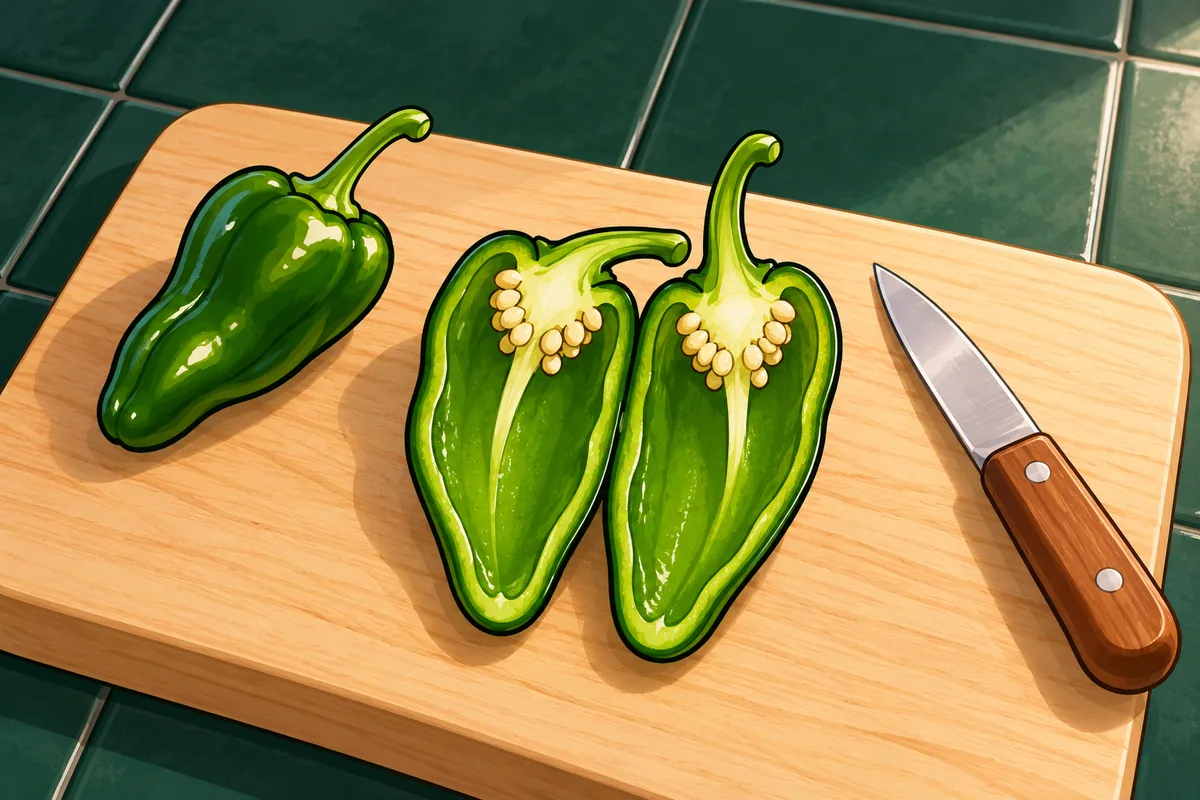
Shishito
Padrón
Padróns are a little stubbier, so they need a minute longer to blister through. Hold each by the stem when you eat it: in the same study the green Padrón's pale placenta near the stem held 277 µg/g of capsaicinoids against 2.1 in the flesh6, so any bite sits at the top. If you cannot find Padróns, the Padrón swaps list the alternatives.
How hot does the plate get if you swap the pepper?
Here is the same recipe with other peppers from the index. Shishito has no published Scoville range, so the table gives each swap's own heat; the amounts keep the 225 g plate.
| Pepper | Heat | How to cut it | What changes on the plate |
|---|---|---|---|
| Padrón, green6 | Flesh 2.1 µg/g capsaicinoids | Whole | Almost nothing; a minute longer in the pan |
| Cubanelle7 | About 1,000 SHU | 5 cm strips | Sweeter and longer; skin side down first |
| Sweet banana pepper7 | 0–500 SHU | 5 cm pieces | No gamble at all |
| Anaheim8 | 1,000–5,000 SHU | 5 cm pieces | Some pods bite |
| One jalapeño among the shishitos89 | 2,000–8,000 SHU for that pod | Whole, 14 g | One guaranteed hot pod for the brave |
The last row puts the lottery back on purpose: one 14 g jalapeño9 hidden among the shishitos gives your table one pod that is certain to burn. Tell people it is there.
Should you grill, broil or pan-fry shishitos?
Pan-fry for speed and control; grill when the grill is already lit. Whatever you choose, the rules stay the same: dry peppers, high heat, one layer.
Do
- Use a heavy pan that holds its heat, such as cast iron or carbon steel
- Thread shishitos on two parallel skewers for the grill, so they do not fall through and turn as one
- Under a broiler, spread them on a sheet pan in one layer close to the element and turn them once
Don't
- Crowd the pan; piled peppers steam and go limp
- Add salt before cooking; it draws out water and stops the blisters
- Walk away; the gap between spotted and burnt is a minute or two
On a grill, skewers do the work a pan does at home: they keep every pepper flat against the heat. In a home kitchen the skillet is easier and needs no special gear, which is why the recipe above uses one.
Why did your shishitos steam instead of blister?
Almost always water, crowding or a pan that was not hot enough. These four fixes cover it.
- The peppers were wet. Water on the skin turns to steam before the skin can blister. Dry them completely next time, even if it takes the full 4 minutes.
- The pan was crowded. A pile of peppers cools the pan and traps steam. Cook in two rounds of one layer each.
- The pan was not hot enough. Heat the empty pan for the full 2 minutes before the oil goes in, and keep the burner on high.
- You salted too early. Salt in the pan before the blisters form pulls water out of the skin. Salt in the last 30 seconds.
Bought more shishitos than you can cook tonight? They keep like any fresh pepper, best at 45–55 °F with high humidity, so the warmest shelf of your fridge is the place for the bag10, and the storage guide tells you how long the bag lasts there.
How many shishitos should you cook per person?
About 110 g each as a side, or half that as a snack with drinks. This recipe's 225 g bag feeds two people who treat it as a vegetable, or four who pick at it before dinner. Scale by weight, not by count, because pods vary in size.
If you double the recipe, do not double the pan load. Cook two rounds of one layer each, and keep the first round warm on a plate while the second blisters. Your oil and salt double; your lemon can stay at one wedge per round, squeezed over each batch as it comes out.
Do you eat the whole shishito?
Yes, everything but the stem. Hold it by the stem, eat the pod with its seeds, and leave the stem on your plate.
Do you need to remove the seeds before cooking?
No. Shishitos cook whole. Shinshu University researchers found that pods with few seeds swing more in heat than pods full of seeds, so the seeds themselves are not the problem.5
Can you eat shishitos raw?
Yes. UC Master Gardeners list them as roasted, grilled or eaten raw. Raw, they taste greener and crunchier, and you can slice them into a salad.1
What goes with blistered shishitos?
Drinks, mostly: they are a snack you eat with your fingers while the rest of your dinner cooks. They also sit well beside your grilled fish, steak or a rice bowl.
Three ways to change the finish, all added in the last 30 seconds:
- Soy and lemon. Swap the salt for ½ tbsp of soy sauce, about 8 g by USDA's spoon weight11, and keep the lemon.
- Garlic. Add one thinly sliced clove, about 3 g12, for the final minute only, so it browns without burning.
- Padrón style. Use green Padróns and olive oil, and finish with coarse salt only, as tapas bars do1.
Once this plate is on your table, the rest of the recipe collection pairs each dish with the pepper that does the work, from fresh salsas to pickles.