On this page
- 1What can you use instead of shishito peppers?
- 2Which shishito swap should you pick?
- 3Why is the odd shishito hot?
- 4Is a Padrón the same as a shishito?
- 5Can you use a bell pepper instead of shishitos?
- 6How much of each swap fills one plate?
- 7Why does a shishito stand-in bite harder than you planned?
- 8Which peppers should you keep out of the pan?
- 9How do you cook the swap so it eats like a shishito?
- 10Sources
What can you use instead of shishito peppers?
Grab Padrón peppers if your shop has them. They cook the same way, whole in a hot pan, and they stay mild while green1. After that, any thin, mild pepper you can blister works, and the sweet ones swap gram for gram.
| Swap | Heat vs shishito | How much for a 200 g plate | Best for | Flavor note |
|---|---|---|---|---|
| Padrón, green1 | As mild while green: 2.1 µg/g capsaicinoids in the flesh; red pods about 12 × more | 200 g, whole | Blistering whole, eaten by the stem | Not described by the source |
| Sweet mini pepper2 | Milder: 0 SHU, a sweet bell type3 | 200 g, halve any over 2 inches | Blistering for kids or a crowd | Sweet |
| Cubanelle3 | About as mild: about 1,000 SHU | 200 g, in 5 cm strips | Pan-frying in strips | Sweet, very mild, rich |
| Sweet banana pepper3 | About as mild: 0–500 SHU | 200 g, about 6 small pods4 in 5 cm pieces | Pan-frying or grilling in pieces | Not described by the source |
| Anaheim5 | Warmer: 1,000–5,000 SHU, some pods bite | 200 g, in 5 cm pieces | Grilling, when a little heat is welcome | Not described by the source |
| Poblano3 | Warmer: 1,000–2,000 SHU | 200 g, in thin strips | Roasting or a longer pan time | Rich melon flavor |
| Green bell pepper3 | No heat: 0 SHU | 200 g, about 2.7 small bells6 in strips | Body and crunch when heat does not matter | Not described by the source |
If you want the dish to taste the way it would with shishitos, a green Padrón is the only swap that keeps both the size and the cooking method. The rest change the shape on your plate, so you cut them to bite size and pan them a little longer.
Padrón peppers, the closest match
A green Padrón gives you the same species, the same size and the same pan job. In a 2020 Spanish study its green flesh held about 2.1 µg/g of capsaicinoids, while red flesh held about 12 times that1. Buy firm green pods, use the same 200 g, and cook them whole.
Sweet mini peppers, for zero heat
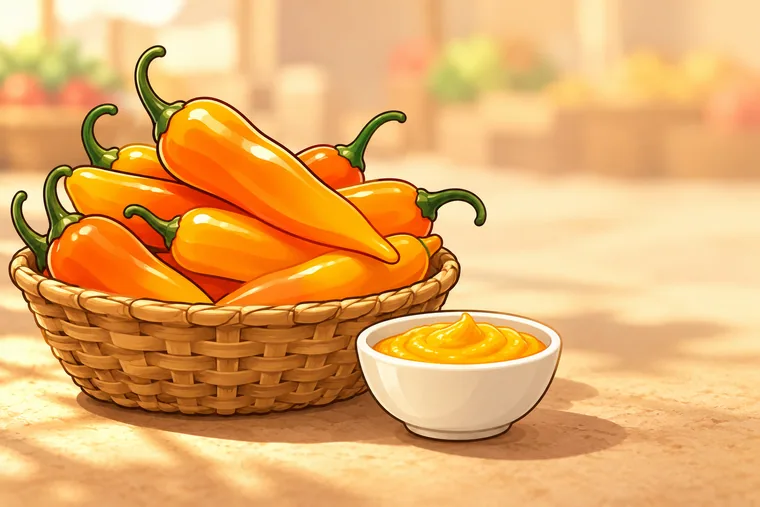
Sweet mini peppers are bell types, so they bring no heat to your plate at all3. University of Kentucky growers describe them as small and sweet2. Blister the small ones whole and halve the big ones, and you lose the shishito's odd hot pod along with the heat.
Cubanelle, for frying strips
A cubanelle rates about 1,000 SHU, and UF/IFAS calls its flesh sweet, very mild and rich, grown for frying3. It is longer than a shishito, so you cut it into 5 cm strips and fry them skin side down first. You keep the mild warmth and lose the whole-pod look.
Sweet banana peppers, cut to size
A sweet banana pepper runs 0–500 SHU3, close enough to swap gram for gram. USDA weighs a small one at 33 g4, so 200 g is about six pods. Cut them into 5 cm pieces, and read the label first, because hot banana types look the same.
Anaheim, if your table likes some heat
An Anaheim covers 1,000–5,000 SHU5, so one pod can be five times hotter than the next. Grill it in pieces and serve it to your friends who like a little bite. No source we read describes its flavor, so we do not guess.
Poblano, for roasting
A poblano rates 1,000–2,000 SHU with a rich melon flavor3. Its walls are thick, so thin strips need more time in the pan than a shishito would. Roast or pan it longer, and you get a softer, meatier bite.
Green bell pepper, for body without heat
A bell pepper rates zero SHU3, and a small green one weighs 74 g6. Use about 2.7 small bells for a 200 g plate, cut into strips. You get crunch and color, with none of the shishito's heat or shape.
Which shishito swap should you pick?
Start with what you care about most: the look of whole pods, zero heat, or simply what your supermarket stocks. Each answer points to one pepper, and the tree below follows the same order as the table.
- shape firstWhole pods you eat by the stemPadrón, green; red ones run much hotter
- heat firstNo heat at all, for kids or a crowdSweet mini peppers, halved if over 2 inches
- frying firstLong strips that fry wellCubanelle, about 1,000 SHU, grown for frying
- add the gamble backThe odd hot pod, on purposeCubanelle plate plus one jalapeño
- add the gamble back
- some heat wantedA plate with some biteAnaheim, 1,000–5,000 SHU, in pieces
- what is on the shelfOnly a plain supermarket nearbyGreen bell pepper in strips, 0 SHU
Sources for this line1. Antioxidants (MDPI)2. University of Kentucky, Center for Crop Diversification3. University of Florida IFAS Extension5. UF/IFAS Gardening Solutions7. USDA Agricultural Research Service, FoodData Central (SR Legacy)
Most of the time you end up at the second or third branch, because Padróns are hard to find outside Spanish and specialty shops. That is fine. A cubanelle gives you the mildest real pepper warmth, and a sweet mini pepper gives you none, so your choice comes down to who is eating.
Why is the odd shishito hot?
Because a shishito's low heat is not fixed from pod to pod. Researchers at Shinshu University found that fruits with few seeds swing much more in heat than fruits full of seeds8, and seedless fruits they made with a plant hormone tended to carry more capsaicinoids than normal ones9.
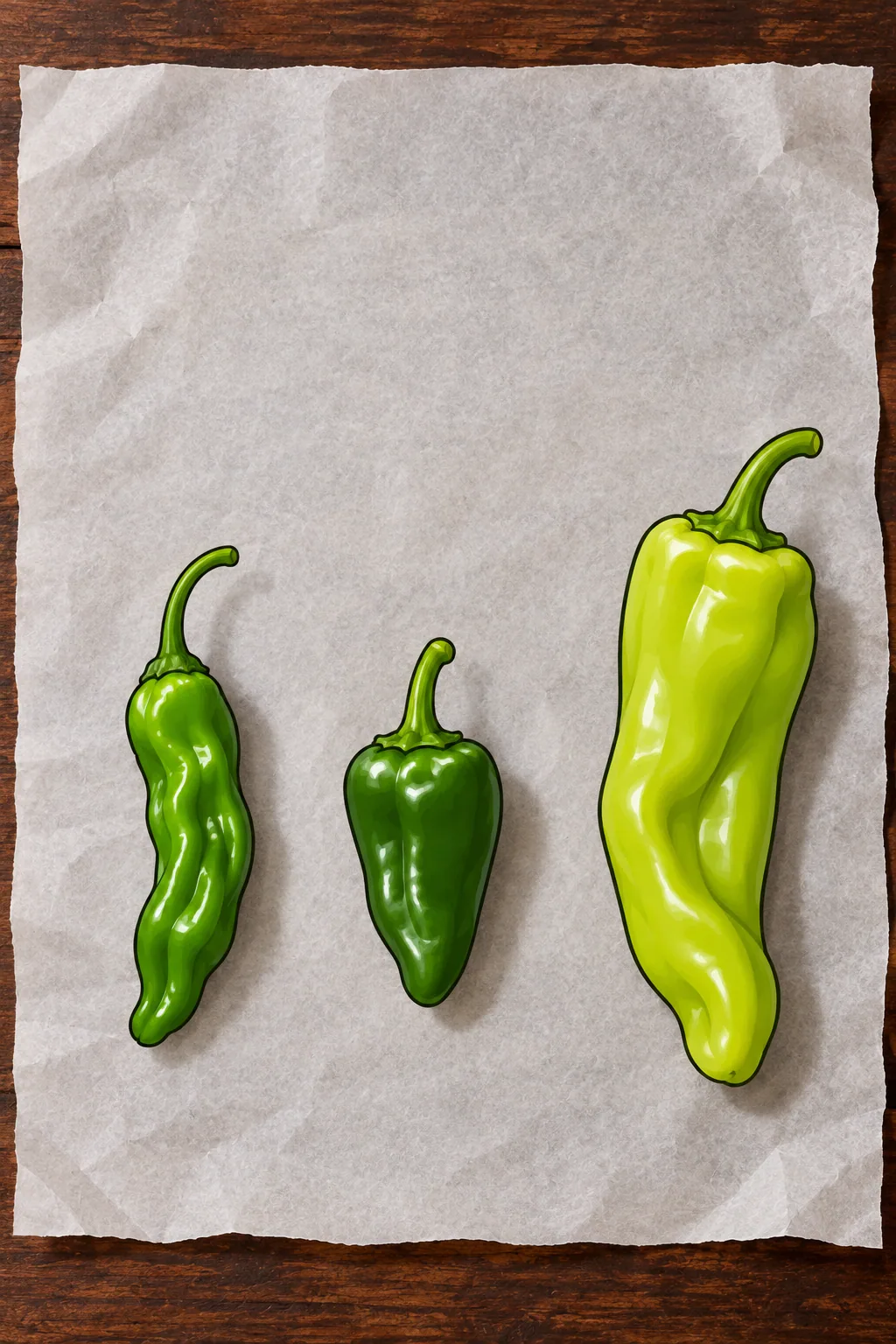
The low heat itself sits in the genes. A 2023 cross between shishito and the hot Takanotsume chile traced it to at least two regions of the genome, which explained 39.8 % and 19.7 % of the genetic variance10. Growing conditions push it around too: the same team calls shishito a pepper that sometimes turns highly pungent depending on how it grew9.
So a good swap copies two things: mostly mild, cooked whole. A Padrón does both; a sweet mini pepper copies the first and drops the gamble.
Is a Padrón the same as a shishito?
No, but it is the nearest thing. Both are Capsicum annuum, both get blistered whole, and both have a heat that depends on the pod in your hand.
Shishito
Padrón
- Capsicum annuum8SpeciesCapsicum annuum1
- Quite low pungency; no SHU range published by the researchers10Heat dataGreen flesh 2.1 µg/g, green placenta 277 µg/g capsaicinoids1
- Few seeds, and the conditions it grew in89What makes one hotRipening: red flesh 25.5 µg/g, red placenta 720 µg/g1
- Green, as a vegetable9Cook itGreen, before the heat climbs1
The Padrón numbers show where its heat hides. The pale placenta held over 100 times more capsaicinoids than the green flesh1, so a Padrón that bites usually bites near the stem. That is why you eat it by the stem end and leave the stem on the plate.
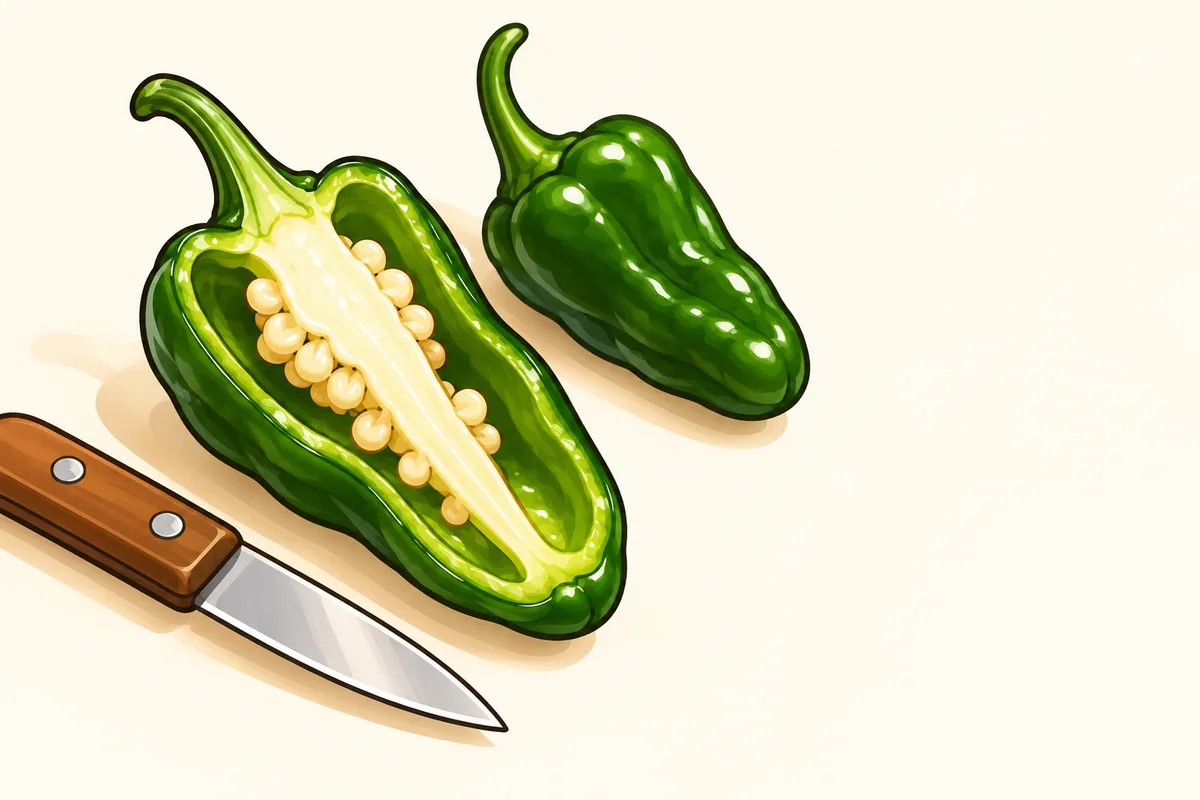
The same Spanish study says people in northwestern Spain usually eat Padróns green after cooking, and do not eat them red because of their strong pungency1. Pick green, firm pods and leave the red ones for a sauce.
Already bought a batch that bites? Slit each Padrón and scrape out the pale ribs and core before you cook it. In the green pods of that study, the placenta held 277 µg/g of capsaicinoids against 2.1 µg/g in the flesh1, so you take out nearly all of the heat. You lose the whole-pod look, so you cook your Padróns as halves, cut side up first.
Can you use a bell pepper instead of shishitos?
Yes, if heat is not the point. A bell pepper rates zero Scoville units3, and the sweet California-type pepper in the 2020 Spanish study held no capsaicinoids in its flesh or placenta, green or red1. You lose the whole-pod look, though, so you cut it.
USDA gives you the numbers to plan with. One small green bell weighs 74 g, and ten strips weigh 27 g6. A 200 g plate is about 2.7 small bells, or roughly 74 strips: 200 ÷ 27 × 10, an estimate from USDA averages.
Only red bells at the shop? USDA lists the same 74 g for a small red one11, so your counts stay the same, and you get a sweeter plate with the same zero heat.
How much of each swap fills one plate?
The same weight. Every swap in the top five rows of the table is mild or sweet, so you match the grams, not the heat. Sort out the shape: cut long peppers into 5 cm pieces so they blister in the time a shishito does.
A worked example for a 200 g plate
Say you planned 200 g of shishitos for two people. USDA weighs one small banana pepper, about 4 inches long, at 33 g4 and one jalapeño at 14 g7. Here is the same plate from each swap.
| Swap | Grams | Pods | How to cut |
|---|---|---|---|
| Padrón, green1 | 200 g | No USDA pod weight | Whole |
| Sweet mini pepper2 | 200 g | No USDA pod weight | Halve the big ones |
| Sweet banana pepper4 | 200 g | 200 ÷ 33 = about 6 small pods | 5 cm pieces |
| Green bell pepper6 | 200 g | 200 ÷ 74 = about 2.7 small bells | Strips, about 74 of them |
| Cubanelle3 | 200 g | No USDA pod weight | 5 cm strips |
| Cubanelle plus one jalapeño37 | 186 g + 14 g | 1 jalapeño | Jalapeño whole or halved |
That last row brings back the gamble on purpose. Its heat works out to (186 × 1,000 + 14 × 5,000) ÷ 200 = about 1,280 SHU across the plate, an estimate from the midpoints3, but all of the extra sits in one pod. Whoever gets it will know.
Why does a shishito stand-in bite harder than you planned?
Four mistakes come straight out of the data, and each has an easy fix. None of them needs a new recipe, only a better pick at the shop or a different cut.
- You grab hot banana peppers by mistake. Some hot banana varieties go by the name Hungarian wax2, and Hungarian wax rates 5,000–10,000 SHU against 0–500 for a sweet banana3. Check the label, or taste a sliver before you cook the whole bag.
- Your Padróns have turned red. Red Padrón flesh carried about 12 times the capsaicinoids of green flesh in the 2020 study1, so a red batch eats like a different dish. Use them in a sauce instead and buy green ones for the pan.
- Poblano strips stay pale while the pan smokes. Poblano walls run thick3, so your strips need more time than a shishito. Cut them thinner, or pick a cubanelle, which growers list for frying.
- Your Anaheims bite harder than you planned. UF/IFAS gives Anaheim a range of 1,000–5,000 SHU5, so one pod can run five times hotter than another. Keep Anaheims for a plate where a little heat is welcome.
Which peppers should you keep out of the pan?
Anything from the medium band up, swapped one for one. People eat a plate of shishitos by the handful, and a hotter pepper changes that.
Hungarian wax peppers belong on this list too, even though they look like the sweet banana peppers higher up the table. At 5,000–10,000 SHU3 they sit with the jalapeño, not with the cubanelle. If someone at your table wants heat, put chili flakes on the side so each person adds their own.
How do you cook the swap so it eats like a shishito?
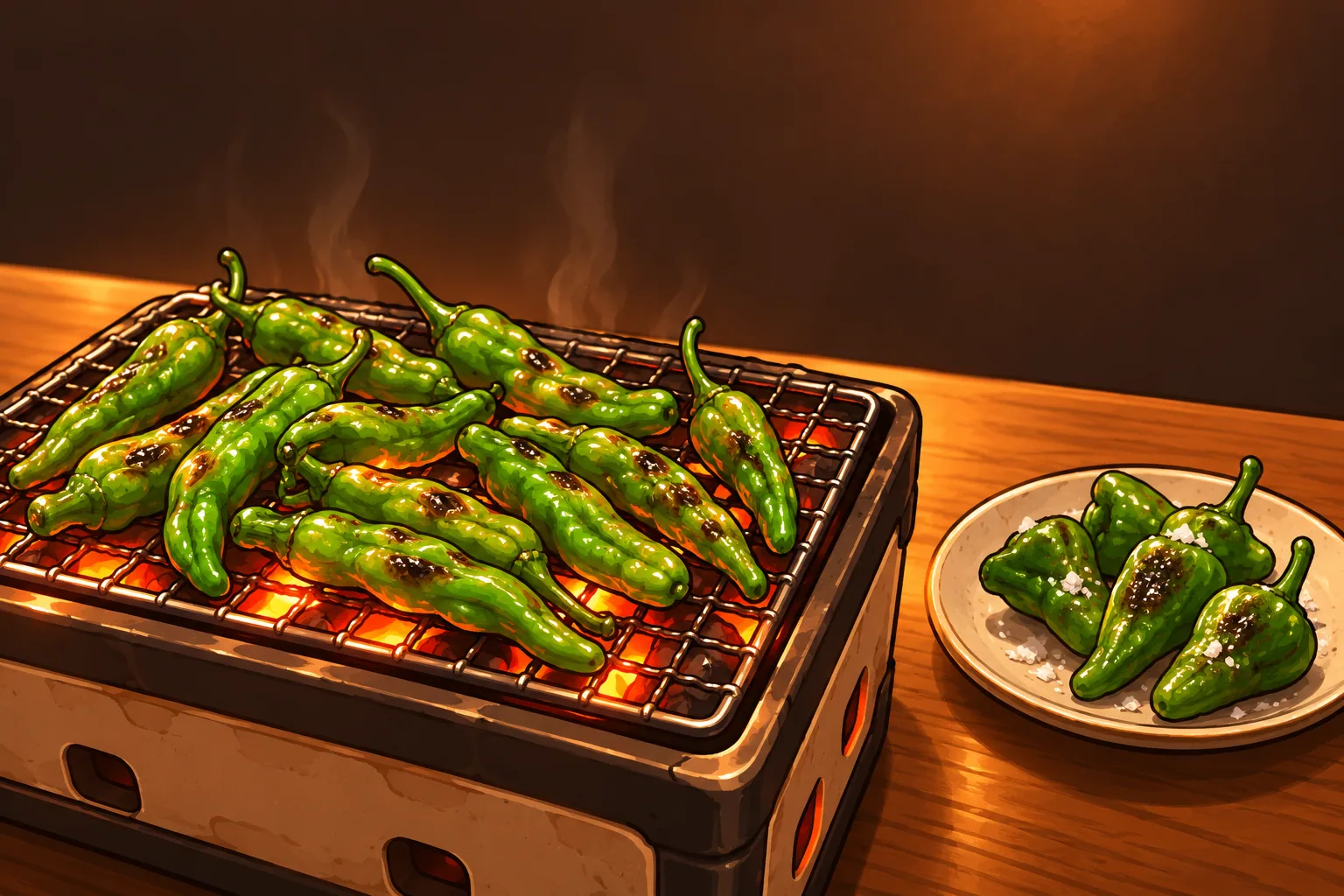
Treat every swap the way you would treat shishitos: dry, hot, and fast, with salt at the end. The order below works for whole Padróns and for cut strips alike.
- 1
Dry the peppers
Pat them completely dry after washing, because water on the skin spits in hot oil and steams instead of blistering.
- 2
Cut to one size
Leave Padróns and small mini peppers whole; cut cubanelles, banana peppers and bells into pieces about the size of a shishito.
- 3
Heat the pan first
Get a heavy pan very hot with a thin film of oil before the peppers go in.
- 4
Lay them in one layer
Skin side down for cut pieces, with space between them so each one touches the pan.
- 5
Turn on the blisters
Turn each piece only when the side touching the pan has blistered and browned in spots.
- 6
Salt and serve hot
Sprinkle coarse salt over them in the pan or on the plate, and eat them while they are still hot.
The blistered shishito recipe has the full timing, and the shishito entry tells you what the pepper itself is like, from species to season.
If it is the Padrón you cannot find, the Padrón swaps work the other way round, and every other missing pepper sits on the swap chart.