On this page
- 1What can you use instead of a poblano pepper?
- 2Can you use a poblano instead of a jalapeño?
- 3Which poblano swap holds a stuffing?
- 4Which poblano swap should you pick for your dish?
- 5How do you roast a poblano swap for rellenos?
- 6Can you use dried ancho in place of fresh poblano?
- 7How much hotter does a pan of rajas get with each swap?
- 8Why did your swapped rellenos come out hotter or flatter?
- 9Where should you go after you pick your swap?
- 10Sources
What can you use instead of a poblano pepper?
A long green New Mexico chile, such as an Anaheim. It roasts, peels and stuffs the way a poblano does, and it sits in almost the same heat band: UF/IFAS gives the poblano 1,000–2,000 SHU1, and Arizona Extension puts New Mexico chiles such as Big Jim and Sandia at 500–2,5002.
| Swap | Heat vs poblano | How much per poblano | Best for | Flavor note |
|---|---|---|---|---|
| Anaheim3 | Same to 2.5 × warmer: 1,000–5,000 SHU | 1 pod per pod; 2 for a small poblano's filling | Rellenos, roasting, green chile stew | Mild, sweet, slightly smoky4 |
| NuMex Big Jim or another New Mexico green chile5 | Close: 500–2,000 SHU | 1 pod per pod, by weight for stews | Rellenos; Big Jim pods run large | Not described by the source |
| Cubanelle1 | A little milder: about 1,000 SHU | Same weight, in strips | Rajas, sautés, fajitas | Sweet, very mild, rich |
| Green bell pepper1 | No heat: 0 SHU | 1 bell per poblano; 119 g by weight6 | Stuffed peppers for kids | Sweet; no warmth |
| Jalapeño, for heat only3 | About 3.3 × hotter by midpoints | About one third of the weight | Salsas, where the poblano adds warmth | Vibrant, grassy4 |
| Dried ancho, for sauces3 | The same pepper, dried | 1 g ancho per 10.7 g fresh poblano7 | Red sauces, mole, chili | Earthy, smoky, fruity4 |
For anything you roast or stuff, start with a New Mexico green chile; for anything you slice and sauté, a cubanelle works as well and costs less work. The last two rows are partial swaps: one brings the heat without the body, the other the flavor without the texture.
Anaheim, the everyday swap
NMSU calls the Anaheim a cultivar of the New Mexican pod type9, and UF/IFAS says the heirloom kind can reach 7 inches long and 1.5 inches wide1. A poblano runs about 4 by 2 inches1, so an Anaheim is longer and slimmer. For rellenos, use one Anaheim per poblano and expect to fill it with a little less.
NuMex Big Jim, if you find New Mexico chiles by name
NMSU released Big Jim in 1975 and lists it at 500–2,000 SHU, with some plants giving mild pods and others hot ones5. NuMex Joe E. Parker sits even lower, at 800–9005. If your market sells green chile by cultivar name, these two match a poblano's warmth most reliably.
Cubanelle, for rajas and sautés
A cubanelle has sweet, very mild flesh at about 1,000 SHU1. Its walls are thinner, so it cooks faster and falls apart sooner. That makes it a good fit for strips of rajas or fajitas and a poor one for a stuffed pepper.
Green bell pepper, for zero heat
A bell has thick walls and zero heat1. It holds a filling as well as a poblano, so a stuffed-pepper dinner for kids works fine with it. USDA weighs a medium green one at 119 g6, a handy number if your recipe gives the poblano by weight.
Jalapeño, when you only miss the warmth
In a salsa or a pot of beans the poblano's job is a gentle warmth, and a jalapeño at 2,000–8,000 SHU3 does that in a third of the weight. Use it for flavor and heat; make up the missing bulk with bell or onion.
Dried ancho, for sauces
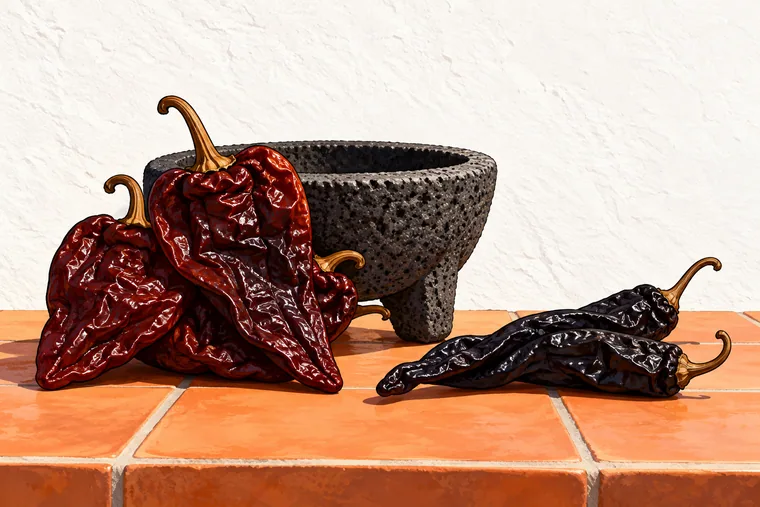
A poblano ripened red and dried becomes an ancho3, so for a red sauce it is the same pepper, just without the water. Soak it, blend it, and use the amounts in the worked table below. The ancho swaps cover the reverse problem, when the dried one is missing.
Can you use a poblano instead of a jalapeño?
Yes, if you want your dish milder. By midpoints, a jalapeño at 5,000 SHU runs about 3.3 times a poblano at 1,50013.
Size works against you, though. USDA weighs a jalapeño at 14 g10, and a poblano is about 4 inches by 21, several times bigger. If your salsa calls for two jalapeños, 28 g, use about 28 g of poblano, a slice from one pod, not two whole poblanos. Swap by weight, and your salsa ends up about a third as hot, with a deeper, greener flavor.
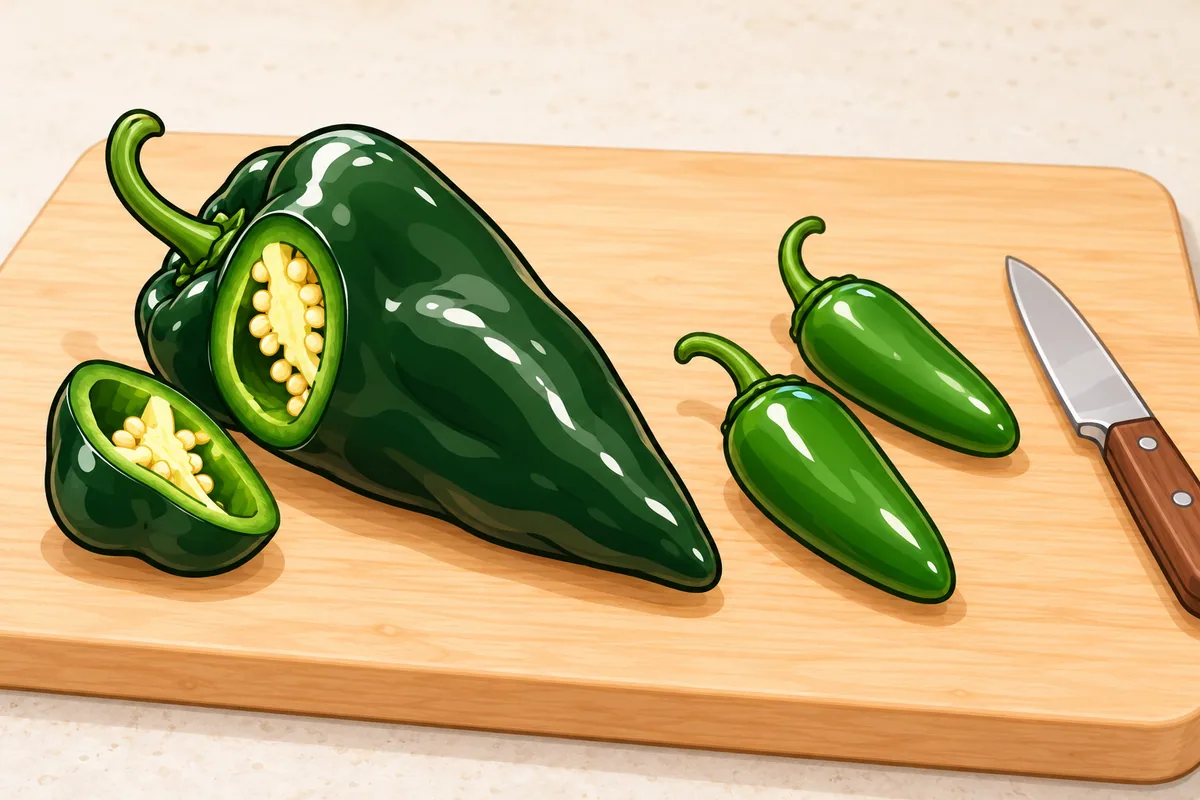
Going the other way, a poblano in place of jalapeños in poppers works well. You get a bigger shell, fewer pieces and far less burn per bite.
Which poblano swap holds a stuffing?
The thick-walled ones: a bell, or the poblano's own cousins. Iowa State's table lists the ancho pod type, which you buy fresh as poblano, and the bell as thick-walled, and the Anaheim as thin-walled11.
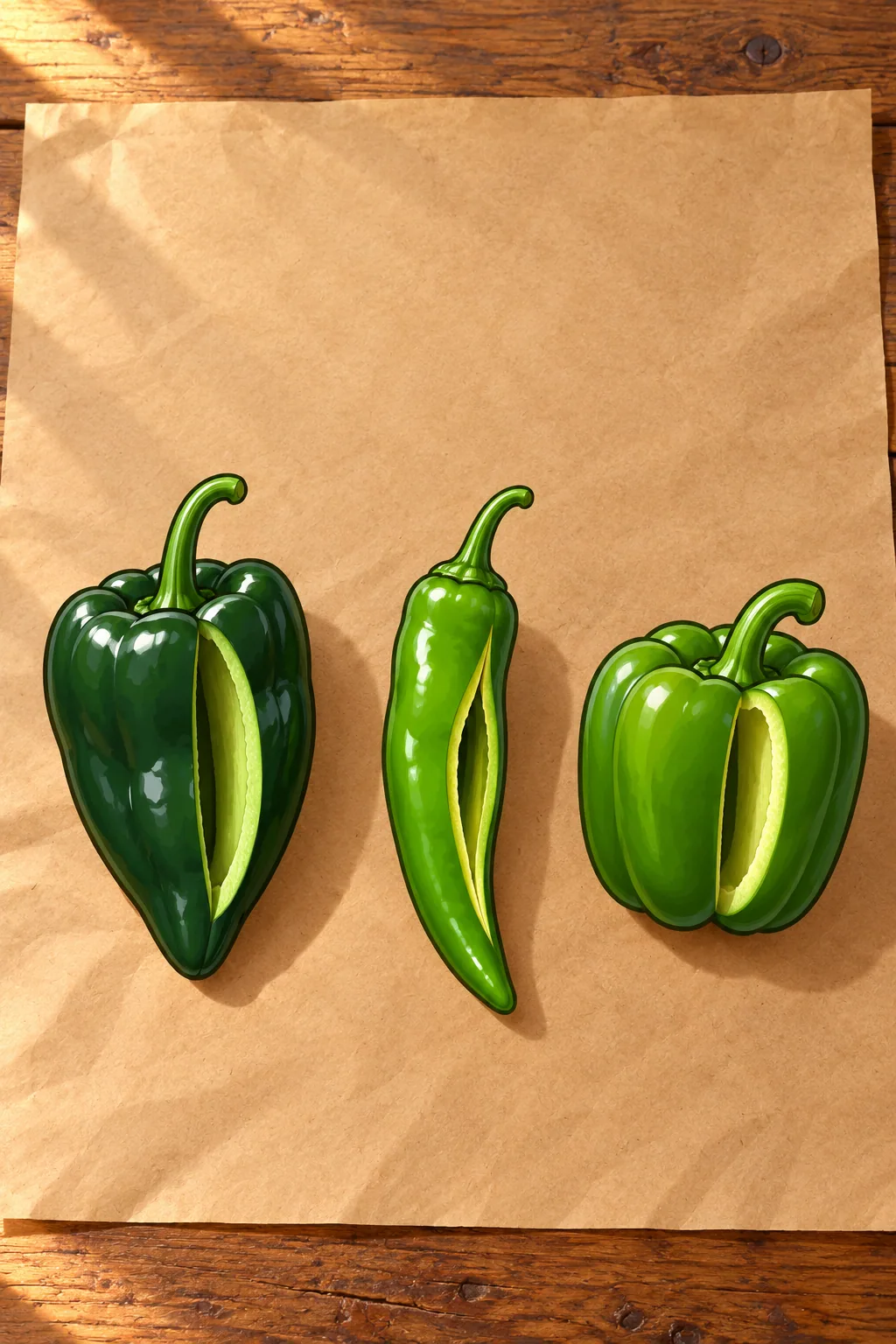
A thin wall still stuffs; it just needs gentler hands. NMSU's own definition of rellenos is stuffed fresh New Mexican chiles9, so the thin-walled Anaheim is the traditional pepper for the dish in New Mexico. Roast it, peel it, slit one side, and fill it with less than you would put in a poblano. Your roasting steps come two sections down.
Which poblano swap should you pick for your dish?
Let the dish choose. The tree below sends each common poblano dish to the swap that does its job best.
- stuffed and friedChiles rellenosAnaheim or Big Jim, roasted and peeled
- bakedBaked stuffed peppersGreen bell, thick wall, 0 SHU
- slicedRajas, fajitas, sautésCubanelle strips, about 1,000 SHU
- for warmthSalsa or beansJalapeño at a third of the weight
- blended redRed sauce or moleDried ancho, 1 g per 10.7 g fresh
Sources for this line1. University of Florida IFAS Extension3. UF/IFAS Gardening Solutions5. New Mexico State University, Agricultural Experiment Station7. USDA Agricultural Research Service, FoodData Central (SR Legacy)8. USDA Agricultural Research Service, FoodData Central (Foundation)
If two branches fit, follow the one about shape. Heat is easy to adjust in a sauce, and impossible to fix in a pepper that tore open in the oven.
How do you roast a poblano swap for rellenos?
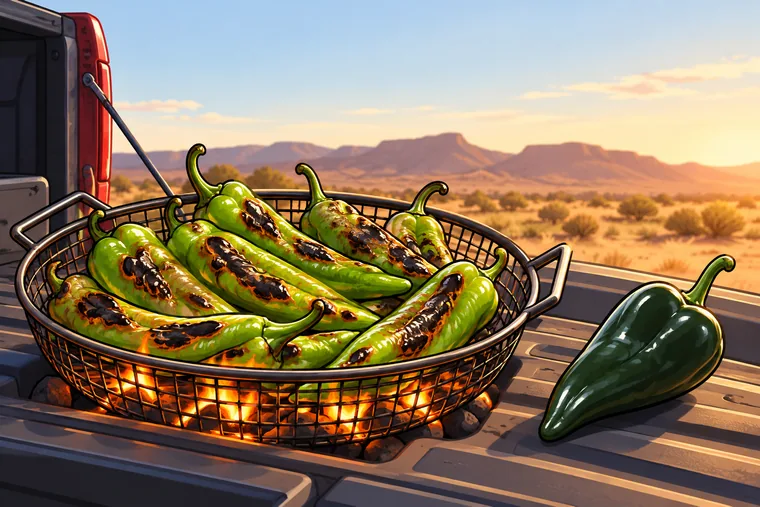
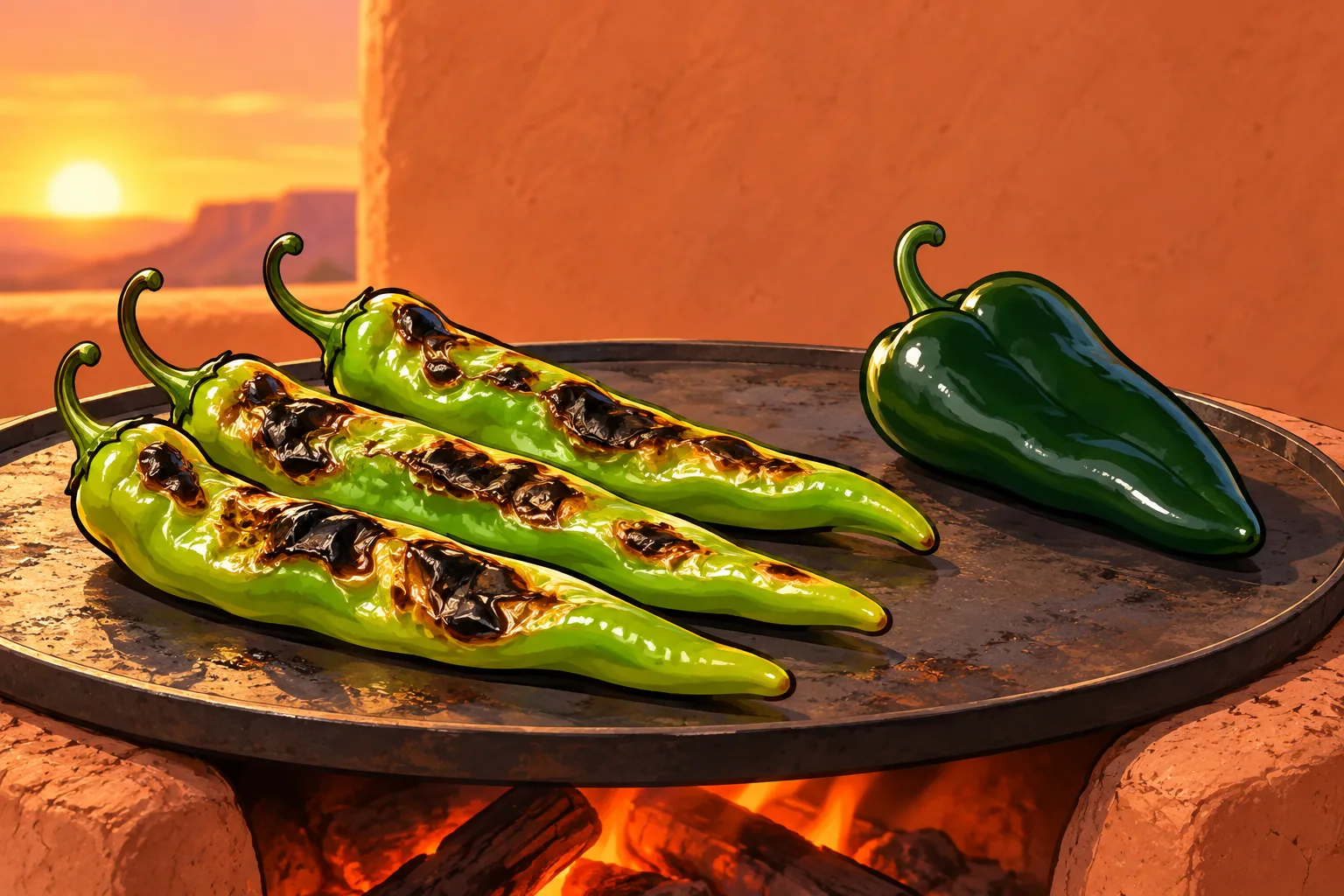
Roast it hot and fast, then peel it. NMSU's guide to green chile gives the routine, and your Anaheim or Big Jim swap is exactly the pepper it was written for.
- 1
Pick firm pods
Choose heavy, bright green, firm chiles with no soft spots, bruises or shriveled skin.12
- 2
Slit each pod
Cut a small slit in one side so steam can escape while the skin blisters.12
- 3
Blister the skin
Roast in the oven or under the broiler at 400–450 °F for 6–8 minutes, or on a grill about 5–6 inches above glowing coals, turning often.12
- 4
Cool and steam
Cool the pods in one layer; cover them with a damp towel for more thorough cooking, or dip them in ice water for a crisper result.12
- 5
Peel and seed
Slip off the skin, slit the side and pull out the seeds and veins; leave the stem on for rellenos.12
- 6
Freeze the extras
Freeze unpeeled pods in bags with the air pressed out; peeling gets easier after freezing, and NMSU says to use them within 12 months.12
The same method suits a poblano, but NMSU wrote it for green chile, so watch the first poblano batch and pull the pods when the skin has blistered all over. The roasting guide covers stovetop and grill set-ups in more detail.
Can you use dried ancho in place of fresh poblano?
In a sauce, yes, by dry matter. USDA lists seeded raw poblano at 92.8 % water8 and dried ancho at 22.63 %7. So 1 g of ancho holds the solids of (100 − 22.63) ÷ (100 − 92.8) = about 10.7 g of fresh poblano.
Worked amounts for a red sauce
USDA weighs one dried ancho at 17 g7, which carries the dry matter of about 180 g of fresh poblano. Here is what common sauce amounts turn into.
| Fresh poblano in the recipe | Dried ancho | About how many anchos | What changes |
|---|---|---|---|
| 100 g78 | 9 g | Half an ancho | Red-brown color, earthier taste |
| 250 g78 | 23 g | About 1.4 | The same |
| 500 g78 | 47 g | About 2.8 | Add 450 ml more liquid to the sauce |
The liquid line matters. Fresh poblano brings its own water, about 464 g of it in 500 g of pods8, so when you switch to ancho, add roughly that much stock or soaking water, or your sauce comes out paste-thick. UC Master Gardeners describe the ancho's flavor as earthy, smoky and fruity4, darker than the fresh pod's rich melon note1.
How much hotter does a pan of rajas get with each swap?
Only the Anaheim and the jalapeño move your dish much. Take a pan of rajas built on 500 g of poblano strips and swap the whole weight. By midpoints, here is how warm your pepper share of the pan runs, an estimate that ignores the cream and onion around it.
| Swap | Midpoint | Against poblano |
|---|---|---|
| Poblano (the original)1 | 1,500 SHU | 1 × |
| NuMex Big Jim5 | 1,250 SHU | About 0.8 × |
| Cubanelle1 | About 1,000 SHU | About 0.7 × |
| Anaheim3 | 3,000 SHU | 2 × |
| Green bell1 | 0 SHU | None |
So a Big Jim or a cubanelle leaves your rajas a touch milder, and you will hardly notice. An Anaheim can double the warmth if your pods sit at the middle of their range; if your family likes rajas mild, mix half Anaheim and half cubanelle and you land back near the poblano.
A jalapeño swap at full weight would put your pan at about 5,000 SHU3, more than three times the poblano dish. That is why the table keeps the jalapeño to a third of the weight.
Why did your swapped rellenos come out hotter or flatter?
Most surprises come from the range on the label or the wall of the pod. Run these checks before your next batch.
Before you stuff the swap
- Taste a strip of each Anaheim; its range runs from 1,000 up to 5,000 SHU3
- Check the cultivar: NuMex Heritage Big Jim reaches 7,000–9,000 SHU, far above the original Big Jim5
- Fill thin-walled Anaheims lightly and lay them seam side down11
- For a bell swap, add a little chile powder or a sliced jalapeño to the filling, since the bell adds no warmth1
A flat-tasting dish usually means a bell went in. Fold some roasted green chile or a pinch of ground ancho into the filling, and you get the warm, earthy note back without changing the shell.
Is a pasilla the same as a poblano?
Not in the sources we read. Arizona Extension describes pasilla as a dark brown dried chile, also called chile negro, at 1,000–1,500 SHU, while UF/IFAS names ancho as the dried poblano. If your US store labels fresh poblanos as pasilla, you can still use them as poblanos.23
Can you use a red poblano instead of a green one?
Yes. UF/IFAS says you can eat poblanos green or ripened red, so a red pod is the same pepper further along. Use it the same way; a ripe pod usually tastes a little sweeter.1
Do you have to roast a poblano swap before you stuff it?
For rellenos, yes, because roasting loosens the skin and softens the wall so you can fill it. For baked stuffed bells, you can skip it and let the oven do the work.12
Where should you go after you pick your swap?
If you are making rellenos, go straight to the chiles rellenos recipe and use the roasting steps above for your swap.
If your shop is out of more than one pepper, the swap chart lists every pepper with its closest swap and the amount, and the Anaheim swaps work the problem from the other side, for the week the poblanos are in and the Anaheims are not.