On this page
- 1Which way should you rehydrate your chiles?
- 2How do you rehydrate dried chiles in hot water?
- 3How do you know a soaked chile is ready?
- 4How many dried chiles replace fresh ones in a recipe?
- 5Should you use the soaking water?
- 6Is it safe to soak chiles overnight?
- 7Which dried chiles need more or less soaking?
- 8Why did your chile purée turn bitter, gritty or thin?
- 9Store the purée and plan the next batch
- 10Sources
Which way should you rehydrate your chiles?
For most recipes, pour boiling water over them and wait about 30 minutes. That is what NMSU's guide to red chile sauce does with New Mexico pods: you cover the washed pods with boiling water until the pulp separates easily from the skin1. Three other methods fit other dishes, and the table shows when each one is your best pick.
| Method | Time | Best for | Safety rule |
|---|---|---|---|
| Hot soak: cover with boiling water12 | About 30 minutes | Sauces, purées, adobos, enchilada sauce | Boiling water kills bacteria on the pod |
| Simmer in the cooking liquid2 | Until soft and plump | Soups, stews, a pot of chili | Boiling also handles bacteria here |
| Cold soak in water23 | 1½–2 hours | Pods you want firmer, for stuffing or slicing | Over 2 hours, soak in the fridge |
| Straight into the pot, no soak3 | The dish's own cooking time | Long-simmered soups and stews | Simmering does the job |
If the chiles end up blended, soak them hot; if they end up whole on a plate, soak them cold in the fridge. Everything else follows from that choice.
The fourth row surprises some cooks. Arizona Extension notes that you do not need to rehydrate dried vegetables for a soup, stew or sauce: you add them to the pot and simmer3. A dried pod dropped into a pot of beans or chili softens as the pot cooks, and you fish it out or blend it at the end.
How do you rehydrate dried chiles in hot water?
Follow the five steps from NMSU's red chile guide, which work for ancho, guajillo, pasilla and New Mexico pods alike. You need a heatproof bowl, a kettle and something to hold the pods under water.
- 1
Check the pods
Throw out any pod with mold, insect damage, disease or decay. Pods sprayed with shellac, plastic or insecticide for decoration are not food.1
- 2
Stem and seed
Snap off the stems and shake or cut out the seeds.1
- 3
Wash in warm water
Rinse the pods in warm water, lifting them out and changing the water several times to take off dust.1
- 4
Soak in boiling water
Cover with boiling water for 30 minutes, until the pulp separates easily from the skin.1
- 5
Blend, sieve and simmer
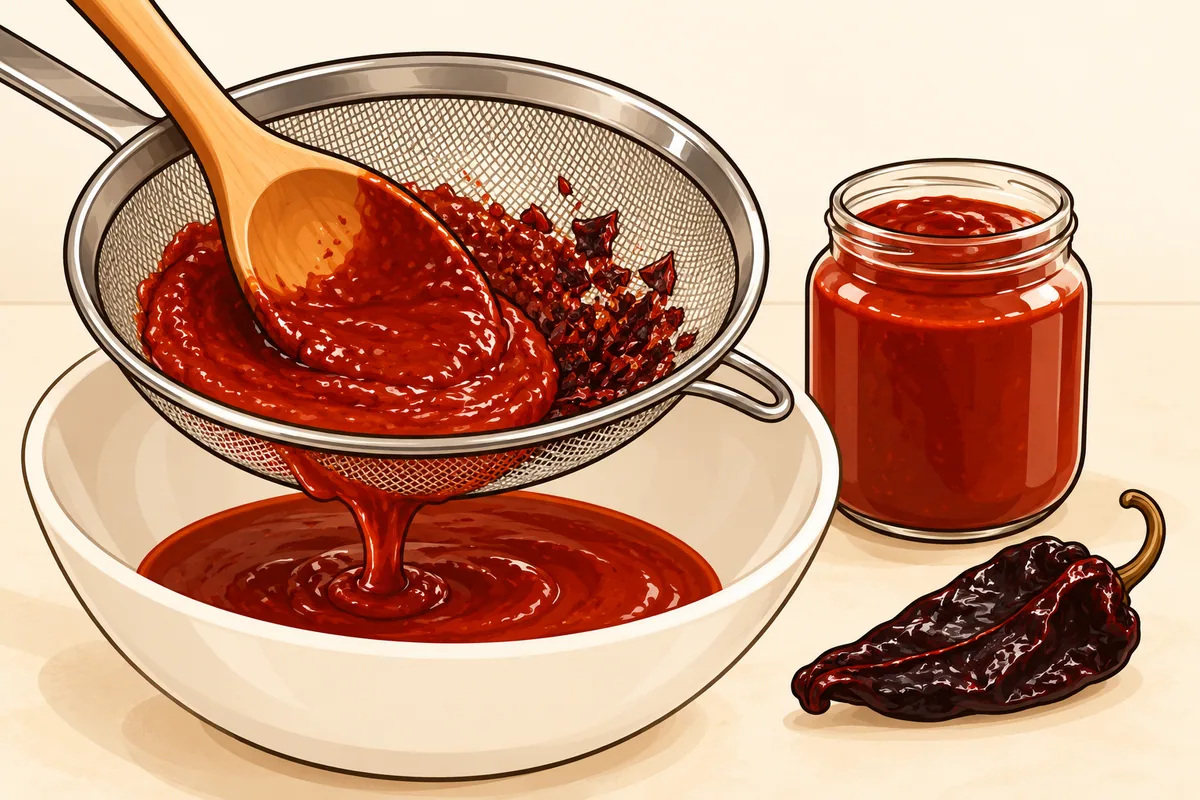
Blend with fresh hot water to a smooth purée, push it through a sieve to catch the peel, then simmer 10 minutes.1
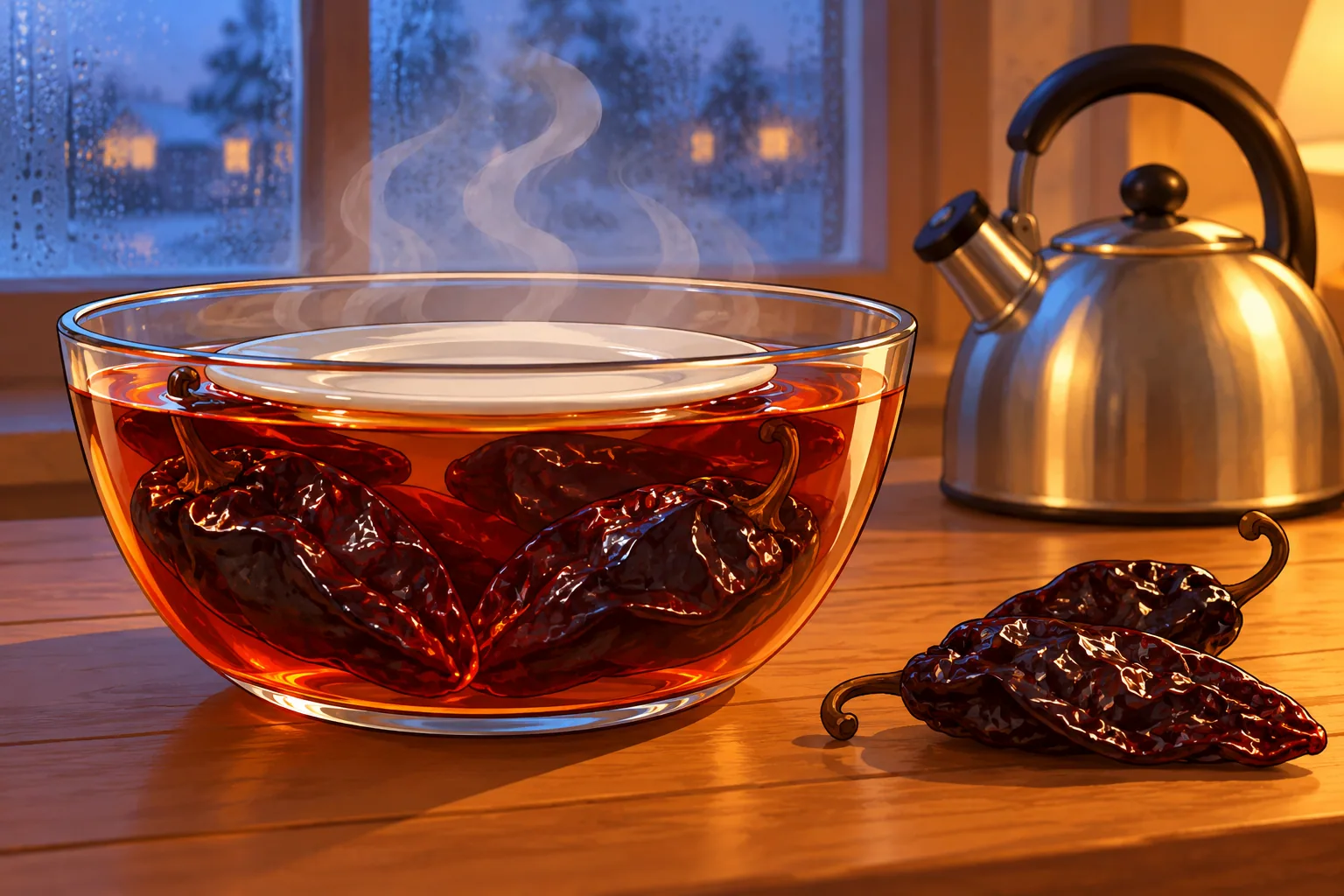
Dried pods float, so set a small plate or saucer on top to keep them under. For a deep red curry, the Kashmiri chili swaps use this same soak for whole pods. Turn them once halfway through if you see dry patches poking above the water, so every part of each pod softens at the same pace.
Chili Pepper Madness has a short video on how to rehydrate dried chili peppers, which helps if you want to watch a soak once before you try one, while the 30-minute timing above stays the one from NMSU.
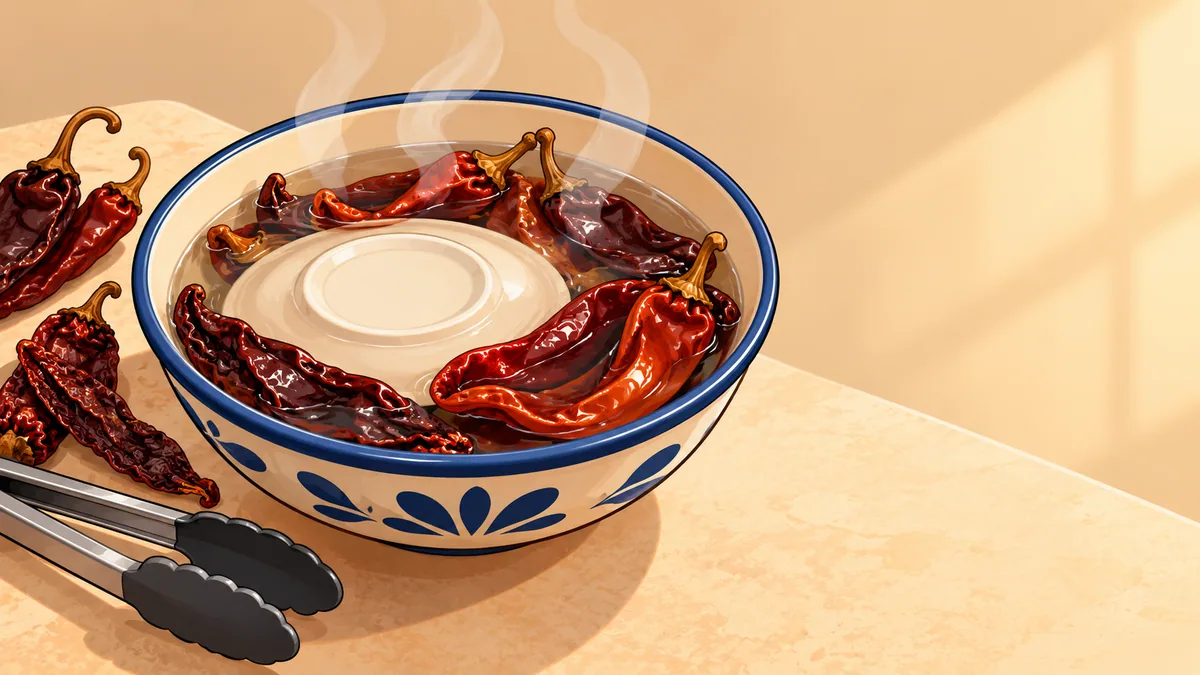
NMSU's guide gets about a pint of purée from 12 to 14 large pods1. That gives you a quick way to plan: a pint covers a big pan of enchilada sauce, so you rarely need to soak more than one bowlful. If your store is out of the pod your recipe names, the Hatch chile swaps list red pods that soak the same way.
How do you know a soaked chile is ready?
It turns soft, limp and plump, and its color goes from dull to deep and glossy. NMSU's cue is the clearest: the pulp separates easily from the skin1. Scrape a bit of the inside with a spoon; if it comes away cleanly, you are done.
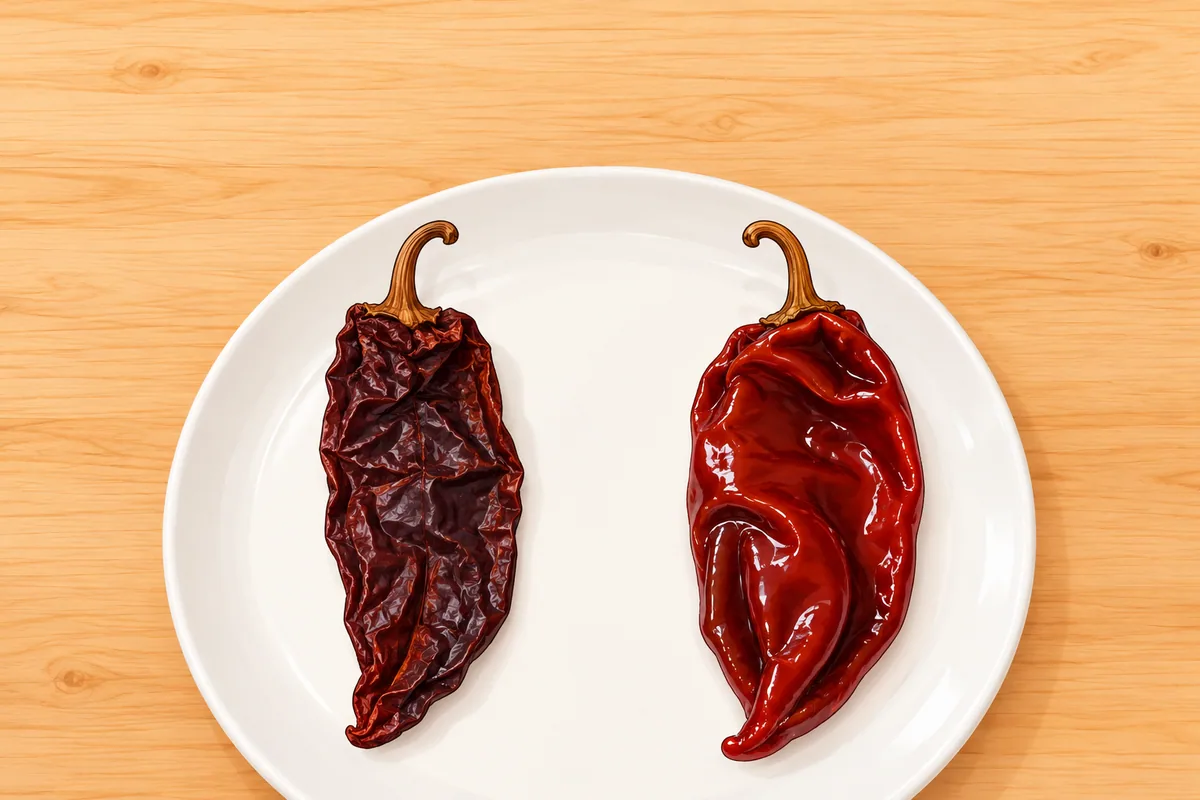
The pod also gets heavier, and USDA's water data shows how far it could go. A dried ancho weighs 17 g and is 22.6 % water5, so it holds about 13 g of pepper solids. A fresh poblano, the pepper an ancho starts as6, is 92.8 % water7. If the ancho took back every drop, it would weigh about 13 ÷ 0.072 = 180 g.
In your bowl it will not get that far, since a soaked pod stays chewier than a fresh one. Treat the 180 g as a ceiling and weigh one pod before and after if you want to know your own number; it tells you how much liquid your sauce will carry.
How many dried chiles replace fresh ones in a recipe?
Fewer than you would think by volume, and the weight math explains why. Arizona Extension gives a rule of thumb for dried vegetables in general: one cup of dried equals about two cups of fresh3. Chiles shrink more than most, because a fresh pod is mostly water.
Use the ancho numbers from the figure section to see it. One 17 g dried ancho holds the pepper solids of up to about 180 g of fresh poblano, by USDA's water figures57. So if your recipe calls for two fresh poblanos and you only have anchos, one or two soaked pods carry a similar amount of pepper, with the deeper, darker taste of a dried pod in place of the fresh green one.
Going the other way, if a recipe asks for soaked dried pods and you only have fresh ones, roast the fresh peppers first. You will need several times the weight, and the dish will taste brighter and greener than the dried version your recipe meant.
Should you use the soaking water?
Taste it first, then decide. Arizona Extension advises against tossing soaking liquid, since it holds nutrients and flavor and you can use it right away in cooking3. With chiles, a sip tells you whether you want it.
Washing the pods well before you soak them makes the water much more usable. Dust and grit from the drying sit on the skin, and the warm-water rinses in step three take them off.
Is it safe to soak chiles overnight?
Only in the fridge. Oregon State Extension explains that bacteria present before drying rehydrate along with the food and start multiplying faster, so a cold soak should stay at about 1½ to 2 hours at room temperature2.
Arizona Extension adds a kitchen reason to keep soaks short: over-soaking gives you less flavor and a softer, mushier texture3. So even in the fridge, you rarely gain anything by going past a few hours.
Which dried chiles need more or less soaking?
Thick, leathery pods take longer; thin, brittle ones soften fast. If you are short of anchos, the ancho swaps give you pods of a similar thickness. USDA's records show how much water the common dried pods still carry, which helps explain why an ancho feels supple in the bag and a small sun-dried chile snaps.
| Dried chile | One pod weighs | Water in the dried pod | How it soaks |
|---|---|---|---|
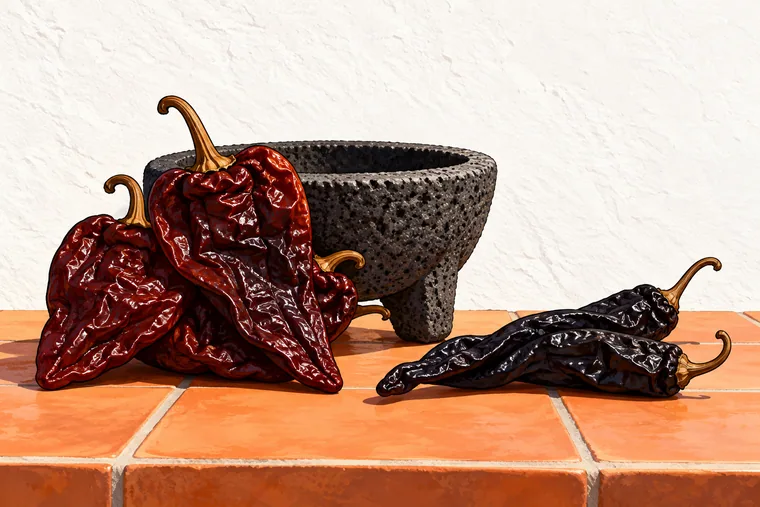
| Ancho (dried poblano) | 17 g | 22.6 % | Thick and supple; often the full 30 minutes |
| Pasilla | 7 g | 14.8 % | Thinner; check it before the 30 minutes are up |
| Small hot sun-dried chile | 0.5 g | 7.15 % | Brittle; softens quickly, or crumble it dry |
Small hot pods such as árbol or Thai chilies often skip soaking altogether, and the árbol swaps cover what to use when you have none. You can toast and crumble them, steep them in oil, or drop them into a simmering pot. If you do toast pods before soaking, as some cooks do, keep the pan moderate and pull them the moment they smell nutty, because a scorched pod turns your whole sauce bitter.
For dried green chile, NMSU calls the product chile pasado: dehydrated green chiles that you reconstitute for cooking6. The same hot soak works, and the strips go straight into a stew afterwards, or onto the grill if you want the char back that roasting peppers gives them.
Why did your chile purée turn bitter, gritty or thin?
Each of these has a cause you can fix in the next batch.
- Bitter. A pod scorched during toasting, or you left the seeds in. Toast gently or skip it, and seed every pod as NMSU's guide does1.
- Gritty or full of skin. You skipped the sieve. Push the purée through a fine sieve or colander; NMSU uses one to catch the bits of peel1.
- Thin and watery. Too much water in the blender. Add the fresh hot water a little at a time, just enough to blend smooth, then simmer the purée to thicken it.
- Flat and dull. The pods were old, or soaked far too long. Arizona Extension notes that over-soaking costs flavor3; buy pods that still bend and soak them only until ready.
- Muddy color. Dust from unwashed pods. Rinse them several times in warm water before soaking.
Store the purée and plan the next batch
A chile purée is a fresh food once you make it, so treat it like one. NMSU says to refrigerate leftover sauce or purée promptly and use or freeze it within 3 days1.
After you blend
- Cool the purée and refrigerate it right away
- Use it within 3 days, or freeze it
- Freeze in recipe-sized portions, such as a cup per bag
- Label each bag with the pod and the date
- Keep unsoaked pods in an airtight jar, away from light and heat
Next, soak one pod tonight as a test and time it against the cue in the figure, then scale up. If you grew and dried your own chiles, the guide on drying peppers shows how to get them shelf-ready, and the steps for freezing peppers cover the purée you make from them.