On this page
- 1What gives you Kashmiri chili's color without its source?
- 2Why is Kashmiri chili so red but so mild?
- 3What ratio of paprika to cayenne matches Kashmiri chili?
- 4Which swap replaces whole dried Kashmiri chilies?
- 5Will your curry taste different with a swap?
- 6Can you use plain chili powder or cayenne alone in a Kashmiri recipe?
- 7Bloom the swap for a deep red curry
- 8Sources
What gives you Kashmiri chili's color without its source?
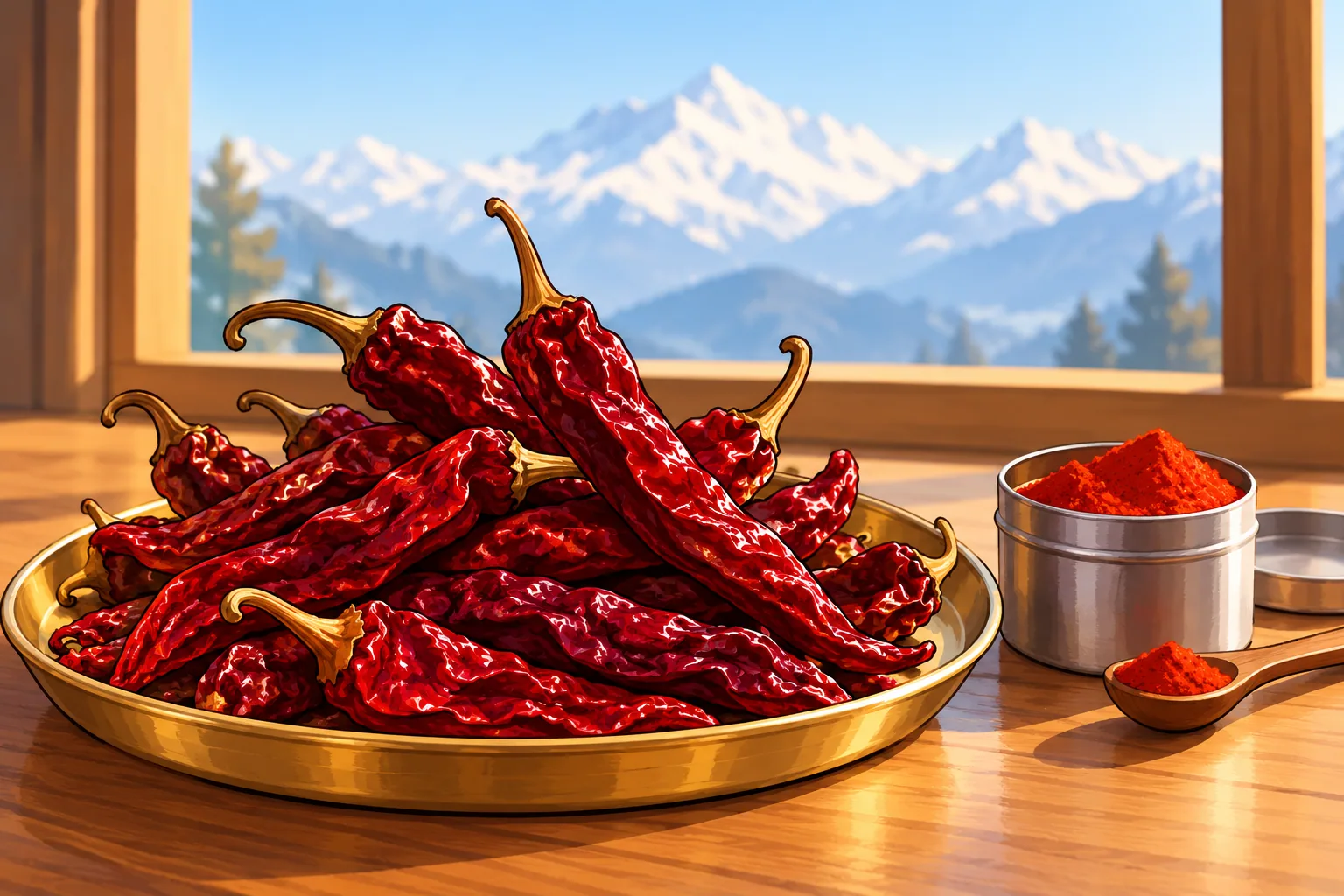
A red, mild powder with a little heat added. Researchers at ICAR's temperate horticulture institute in Srinagar describe Kashmiri chili as a group of cultivars with low pungency and high oleoresins that gives local dishes a bright red hue without too much heat1. So you want color first and heat second, and these six swaps rank by how well they do both.
| Swap | Color | Heat | Amount for 1 tsp | Best for | Note |
|---|---|---|---|---|---|
| Sweet paprika 4 : cayenne 12 | Bright red | Mild to medium, tunable | 1 tsp of the blend | Curries, tandoori marinades | The closest all-round copy |
| Sweet paprika alone2 | Bright red | Under 500 SHU | 1 tsp | Kids, mild cooks, color only | Add heat at the table |
| Mild New Mexico red chile powder3 | Brick red | 500–1,000 SHU for Anaheim types | 1 tsp | Rogan josh, stews | Earthier than paprika |
| Ground ancho3 | Dark red-brown | 1,000–1,500 SHU | 1 tsp | Dark gravies | Browner, raisin-like color |
| Guajillo, ground or soaked4 | Deep red | Mild to medium | 1 tsp, or 1 pod per 2 Kashmiri pods | Whole-pod recipes | Sweet, fruity, slightly smoky |
| Cayenne at a quarter, plus paprika to fill5 | Orange-red | 25,000–50,000 SHU on its own | ¼ tsp cayenne + ¾ tsp paprika | When cayenne is all you have | The same as the top row, measured by the teaspoon |
Color comes from the paprika, heat comes from the cayenne, and you set the heat by how much cayenne you add. Every row in the table plays with that one split.
Paprika plus cayenne, the copy most cooks make
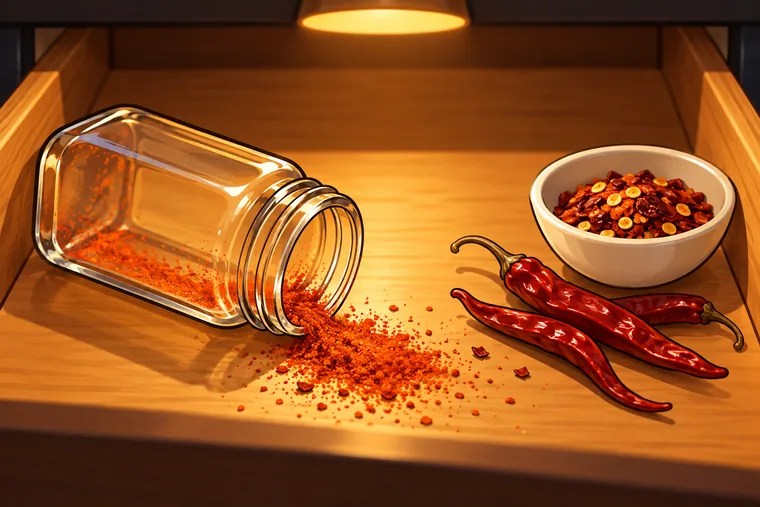
Paprika brings the red and almost no heat: NMSU notes the paprika industry's 500 SHU maximum for paprika-type peppers2. Cayenne brings 25,000–50,000 SHU5. A 4 to 1 mix by volume gives you a deep red spoon with mild-to-medium heat, worked out in the ratio table below.
Sweet paprika alone, when nobody wants heat
If your family eats mild, paprika on its own copies the color and leaves the heat out. Several NMSU cultivars exist mostly for color: NuMex Garnet suits use as a natural red colorant, and NuMex R. Vince Hernandez is a high-ASTA red paprika2. Put a bowl of cayenne or chili flakes on the table for anyone who wants more.
Mild New Mexico red, for earthier stews
Iowa State puts Anaheim, Big Jim and New Mexico types at 500–1,000 SHU3, a gentle heat close to what a Kashmiri recipe expects. The powder looks brick red rather than bright red, and tastes earthier. It works well in a slow lamb stew, where you cook the color down anyway.
Ground ancho, for a darker gravy
Ancho lands at 1,000–1,500 SHU in Iowa State's chart3, so its heat sits close to a mild Kashmiri. Its color runs darker and browner, so your curry comes out mahogany instead of scarlet. That is a fine trade in a rich gravy and a poor one in a tandoori marinade, where the red is the point.
Guajillo, for whole-pod recipes
The UC Master Gardeners describe guajillo as a dried chile with a sweet, fruity, slightly smoky flavor and mild to medium heat4. It is long, smooth-skinned and deep red, so it stands in well when your recipe soaks whole dried Kashmiri pods. The whole-pod section below gives the soak.
Cayenne alone, measured small
Cayenne by itself carries far more heat per spoon than a Kashmiri powder and far less color. If it is all you have, use a quarter of the amount and fill the spoon with paprika, which is the top row by another route. Never swap cayenne for Kashmiri spoon for spoon, because your curry would carry many times the heat and only a pale orange color to show for it.
Why is Kashmiri chili so red but so mild?
Because growers and breeders chose both the Kashmiri type and the paprika cultivars for color, and kept the heat low. The ICAR team calls out the "high oleoresin (but low pungency)" of Kashmiri mirch as the trait breeders work with1, and NMSU breeds paprika cultivars for high color with heat under 500 SHU2.
Kashmiri chili
Paprika cultivars
- Bright red hue without much heat, from Kashmir valley cultivarsBred or chosen forRed color in powder or oleoresin form
- Low for the classic type; ICAR breeding lines from the same region ran 16,000–64,160 SHUHeatBelow the paprika industry's 500 SHU maximum
- High in oleoresins, the extract that carries the redColorHigh-ASTA (extractable color) cultivars such as NuMex R. Vince Hernandez
- Curries, rogan josh, tandoori colorIn the kitchenColor and sweetness, with cayenne for heat
That breeding-line number is worth a second look. The ICAR paper notes highly pungent genotypes also grow in the region1, so a powder sold as Kashmiri can run hotter than you expect. Taste a pinch from a new bag before you measure out a full recipe. If it bites harder than you expected, cut it with paprika at 1 to 1, and you keep the color while you halve the heat in every spoon you use.
How the maker dries the powder also matters. In a 2021 Turkish study, quickly dried red pepper flakes kept the most carotenoids and the best ASTA color of the methods tested6. For your swap that means a fresh, bright red jar of paprika beats an old brown one every time.
What ratio of paprika to cayenne matches Kashmiri chili?
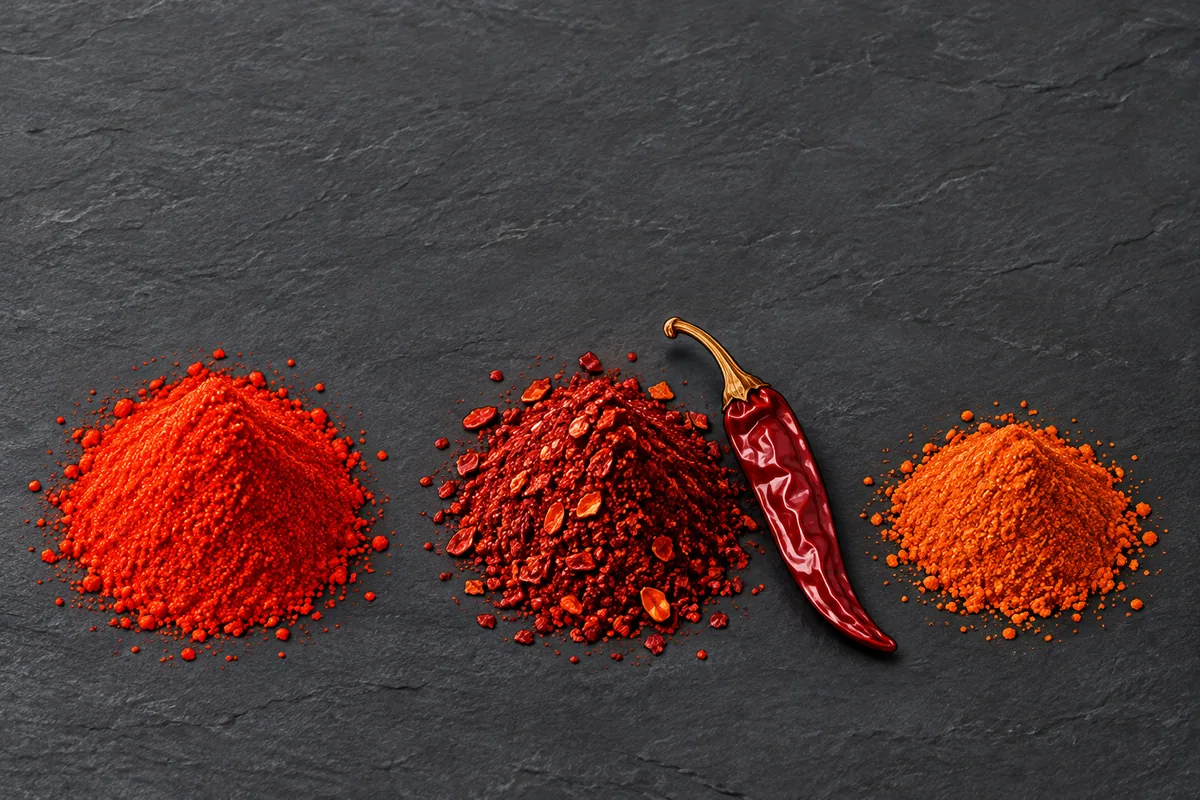
About 4 to 1 for a typical restaurant-style heat, and 9 to 1 if your family runs mild. The table works out the heat of each blend from USDA's spoon weights, taking paprika at its 500 SHU ceiling and cayenne at its 37,500 SHU midpoint.
| [object Object] | Spoons for a small jar | Worked heat of the blend | Use it for |
|---|---|---|---|
| 9 : 1 | 9 tsp paprika + 1 tsp cayenne | About 3,500 SHU | Family cooking, butter chicken |
| 4 : 1 | 4 tsp paprika + 1 tsp cayenne | About 6,600 SHU | Most curries, tandoori |
| 2 : 1 | 2 tsp paprika + 1 tsp cayenne | About 10,900 SHU | When you like it hot |
Here is the 4 to 1 row worked out, so you can redo it for any jar. Four teaspoons of paprika weigh 9.2 g and carry at most 9.2 × 500 = 4,600 SHU-grams; one teaspoon of cayenne weighs 1.8 g and carries 1.8 × 37,500 = 67,500. Together that is about 72,100 over 11 g, roughly 6,600 SHU, and that is with paprika taken at the top of its range, so your real blend may run a little milder.
Which swap replaces whole dried Kashmiri chilies?
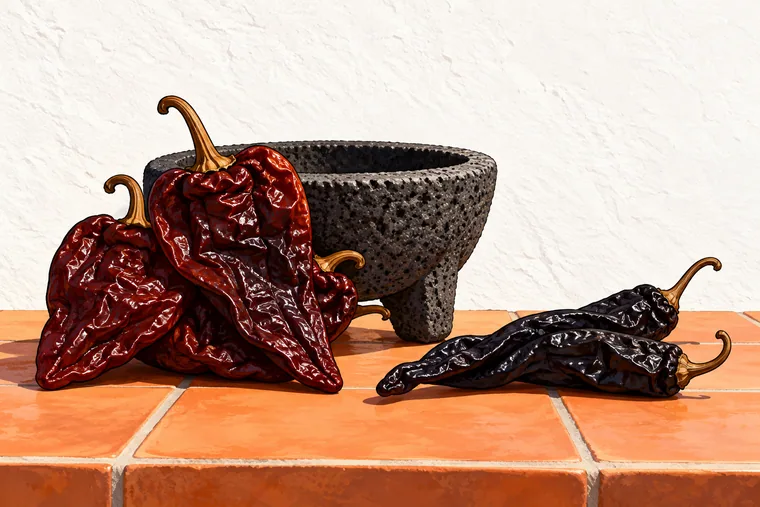
Guajillo or ancho pods, or mild New Mexico red pods, soaked and blended. Many Kashmiri recipes soak whole pods and grind them into a paste, and the same method works for each of these.
USDA weighs one dried ancho at 17 g9, which is heavier than most long, thin chilies. So weigh rather than count: if your recipe uses 30 g of whole Kashmiri pods, use 30 g of your swap, which with anchos is under two pods.
- 1
Weigh the pods
Use the same weight of guajillo, ancho or mild New Mexico red pods as the Kashmiri pods in your recipe.
- 2
Stem and seed
Snap off the stems and shake out the seeds; NMSU's red chile sauce guide removes both before cooking.10
- 3
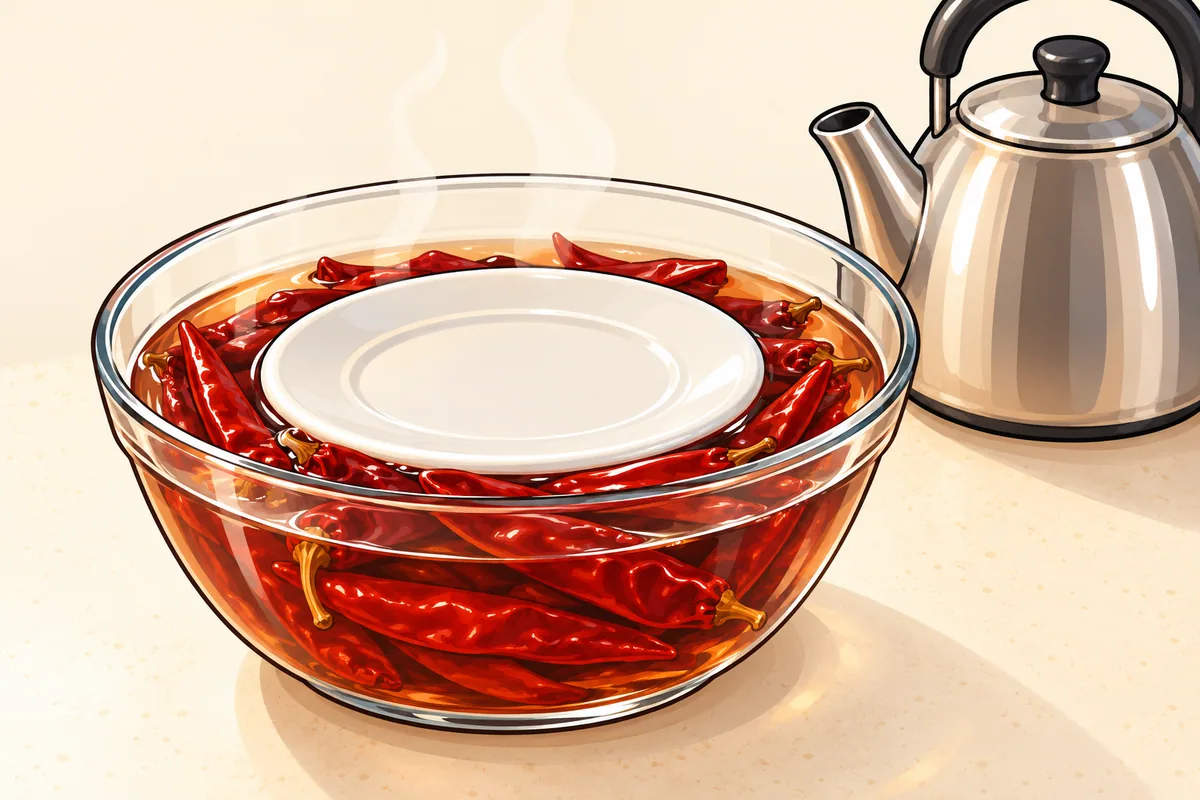
Soak in boiling water
Cover the pods with boiling water for 30 minutes, until the flesh separates easily from the skin.10
- 4
Blend to a paste
Blend the soft pods with a little fresh hot water until smooth, and sieve out any bits of peel.10
- 5
Add heat if you want it
Stir in cayenne a pinch at a time; these pods are mild, so the heat is up to you.
If your pods are thick or leathery, the steps for rehydrating dried chiles show how to tell when they have soaked long enough.
Will your curry taste different with a swap?
A little, and you can steer it. Kashmiri chili is mostly there for color and a soft warmth, so the swap you pick changes the background flavor of your curry more than its heat.
Paprika keeps the taste neutral and slightly sweet, which is why the blend is the safest choice for a butter chicken or a tandoori marinade, where yogurt, garlic and ginger lead. You will hardly notice it.
The Mexican and New Mexican pods pull your dish in their own direction. The UC Master Gardeners describe poblano, the fresh pepper that becomes ancho, as earthy, smoky and fruity, the Anaheim as mild, sweet and slightly smoky, and guajillo as sweet, fruity and slightly smoky4. That smoky thread suits a slow lamb rogan josh, and it can feel out of place in a light vegetable curry.
If you notice the smoke and do not like it, cut the pod swap in half and make up the color with paprika. If you want more depth instead, keep the pods and add a pinch of garam masala at the end, so your spices, not the chili, carry the dish.
One more check before you cook: your swap's color shows best in fat. A curry with little oil or ghee looks paler with any swap, Kashmiri chili included, so do not judge the color until you have bloomed the powder as the last section explains.
Can you use plain chili powder or cayenne alone in a Kashmiri recipe?
You can, but each shortcut changes the dish in a way you should know about first. These are the two cooks reach for most often.
- Plain chili powder in the United States is a seasoning blend for the dish called chili, often with cumin and herbs. It turns your curry toward Tex-Mex, and its color runs browner than Kashmiri's red. Use it only if you like that direction.
- Cayenne alone at the same spoon is the risky one. At 25,000–50,000 SHU5, a full teaspoon brings many times the heat of a mild Kashmiri powder and only an orange tint. Use a quarter and fill with paprika, as the table says.
Bloom the swap for a deep red curry
The color in paprika and Kashmiri chili dissolves in fat, which is why recipes fry the powder in oil or ghee before the liquid goes in. Your swap behaves the same way.
Next, mix a small jar of the 4 to 1 blend, taste a pinch, and adjust it toward 9 to 1 or 2 to 1 for your table. If your recipe also calls for Aleppo flakes, the Aleppo swaps use the same paprika base, and the cayenne swaps help when the cayenne jar itself is empty.