On this page
- 1What tastes closest to Aleppo pepper?
- 2Why do Aleppo-style flakes, Urfa and paprika look so different?
- 3How do you build an Aleppo-style flake at home?
- 4Is Aleppo pepper hot, and how much heat should a swap bring?
- 5Which swaps work in muhammara, and which ones fight it?
- 6Is Aleppo pepper the same as the red pepper flakes on a pizza table?
- 7Can you use smoked paprika instead of Aleppo pepper?
- 8What about gochugaru?
- 9Keep your flakes red
- 10Sources
What tastes closest to Aleppo pepper?
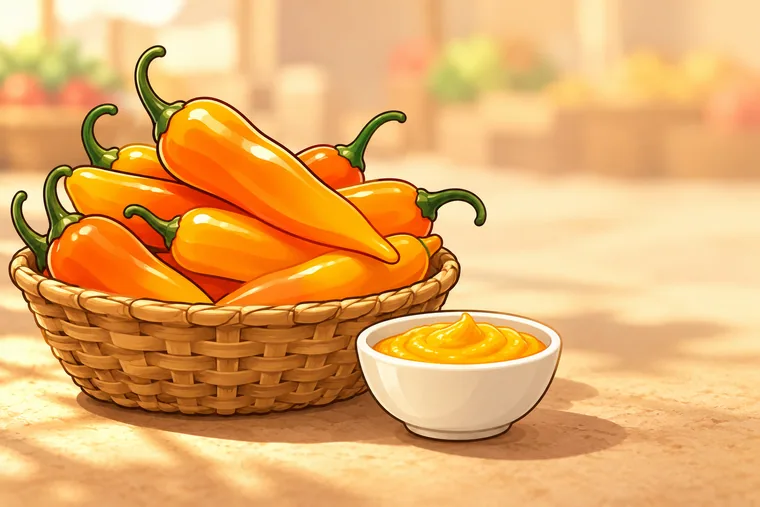
Bright red Turkish-style pepper flakes, the pul biber you find in Middle Eastern and Turkish shops. Aleppo pepper, also called Halaby, is a dried, crushed red pepper that the UC Master Gardeners describe as sweet, fruity and slightly tangy1. Your swap needs to copy three things: a coarse flake, a deep red color and a gentle heat.
| Swap | Texture | Color | Heat note | Amount for 1 tbsp Aleppo | Best for |
|---|---|---|---|---|---|
| Red pepper flakes, pul biber style2 | Coarse flakes | Bright red, the best color of the methods tested | Gentle to medium; varies by maker | 1 tbsp | Hummus, eggs, salads |
| Sweet paprika 3 : crushed red pepper 13 | Powder with some flakes | Red | Set by the flakes | 2¼ tsp paprika + ¾ tsp flakes | Everyday cooking |
| Urfa biber2 | Moist, dark flakes | Purple-black to brown | Traditional isot gained capsaicinoids | 1 tbsp, or 2 tsp if it bites | Meat, kebabs, roasted vegetables |
| Kashmiri chili powder4 | Fine powder | Bright red | Low pungency | 2 tsp | Color in stews and dips |
| Mild New Mexico red flakes5 | Flakes | Brick red | 500–1,000 SHU (Anaheim types) | 1 tbsp | Southwestern-leaning dishes |
| Ground ancho5 | Fine powder | Dark red-brown | 1,000–1,500 SHU | 2 tsp | Braises and dark sauces |
If the flakes sit on top of the dish, choose by texture and color; if they cook in, any red mild swap will do. That one rule covers nearly every Aleppo recipe you will meet.
Pul biber style flakes, your nearest match
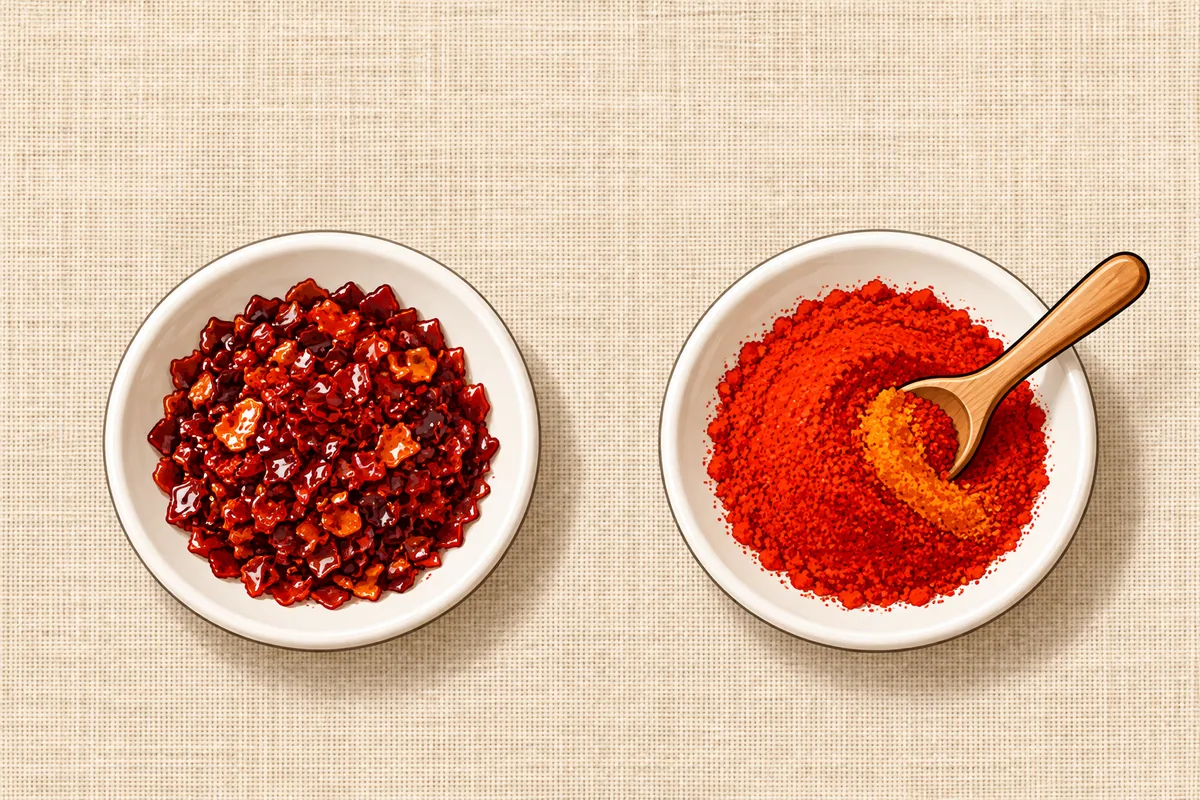
A 2021 Food Chemistry study compared red pepper flakes with two ways of making isot from the same fresh red peppers. The flakes kept the most carotenoids, the highest ASTA color and the least browning2. That bright, coarse flake is the closest thing on the shelf to Aleppo, so you swap it spoon for spoon.
Paprika with crushed red pepper, from your own rack
Paprika gives you the red and very little heat, since NMSU puts paprika types under 500 SHU3. Crushed red pepper adds a few flakes for texture and the heat. Three parts paprika to one part flakes gives you a sprinkle that looks right on hummus.
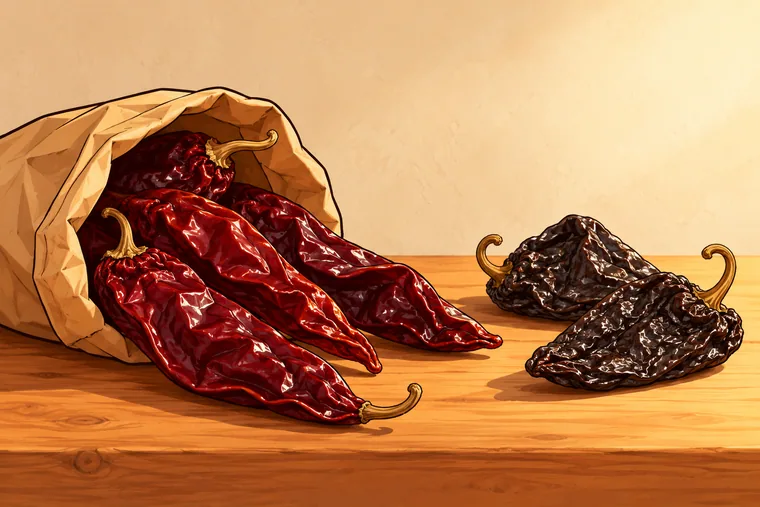
Urfa biber, darker and deeper
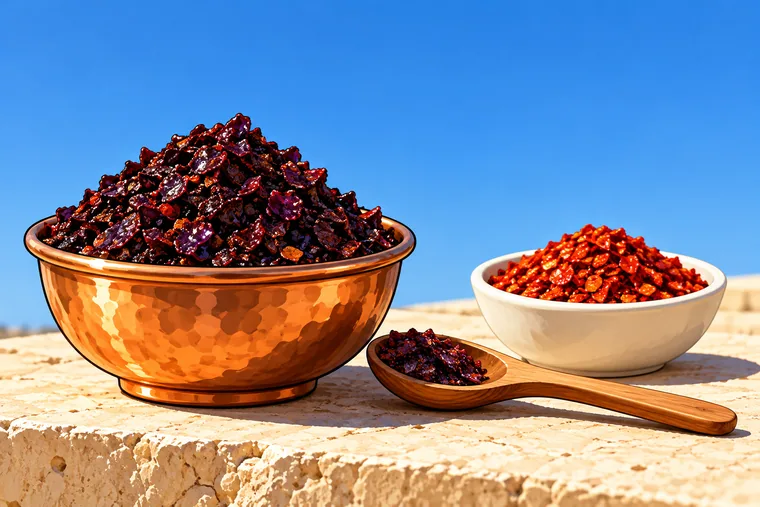
Urfa biber is the traditional isot from the study, and it browns on purpose while its capsaicinoids rise2. Use it where a dark flake looks fine, such as on grilled meat. If yours tastes hotter than your Aleppo, cut it to two teaspoons per tablespoon; the Urfa biber swaps cover the reverse trade.
Kashmiri chili powder, for color without bite
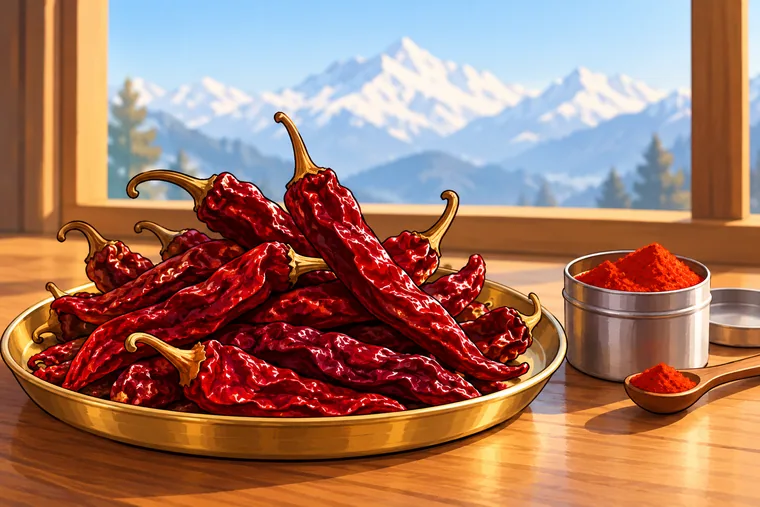
ICAR researchers describe Kashmiri chili as low in pungency and high in oleoresins, with a bright red hue4. It copies Aleppo's color well, but it is a fine powder. Use about two thirds of the amount, since powder packs tighter in your spoon than coarse flakes do.
Mild New Mexico red flakes, a Southwestern cousin
Iowa State puts Anaheim and New Mexico types at 500–1,000 SHU5, gentle like Aleppo. NMSU bred cultivars such as Española Improved for dry red products3. The flakes taste earthier than Aleppo, so you notice them more in a light salad than in a stew.
Ground ancho, for dark braises
Ancho sits at 1,000–1,500 SHU in Iowa State's chart5 and brings a dark, raisin-brown color. In a braise or a lentil soup, it gives you the warmth and depth Aleppo would. On top of a white dip it looks muddy, so keep it for the pot.
Why do Aleppo-style flakes, Urfa and paprika look so different?
Because the drying route decides the color and even the heat. The 2021 study started with the same fresh red Capsicum and made three spices from it; the flow below shows what each route did2.
- Fresh red pepperThe same starting peppers in the study
- Red pepper flakesMost carotenoids, best ASTA color, least browning; capsaicinoids fell
- Traditional isotBrowned on purpose; capsaicinoids rose
- Industrial isotPoorest color, most browning; capsaicinoids fell
Aleppo sits on the bright side of that chart: sweet, fruity and red. So when you shop, look for flakes that are still red, not brown, and for a jar packed recently. Old flakes lose color before they lose heat.
How do you build an Aleppo-style flake at home?
Start with paprika for color, then add a coarse element for texture and a hot one for heat. The builder below gives you a mix for the four places Aleppo shows up most, measured to replace 1 tablespoon.
| Dish | Paprika | Texture and heat | Extra |
|---|---|---|---|
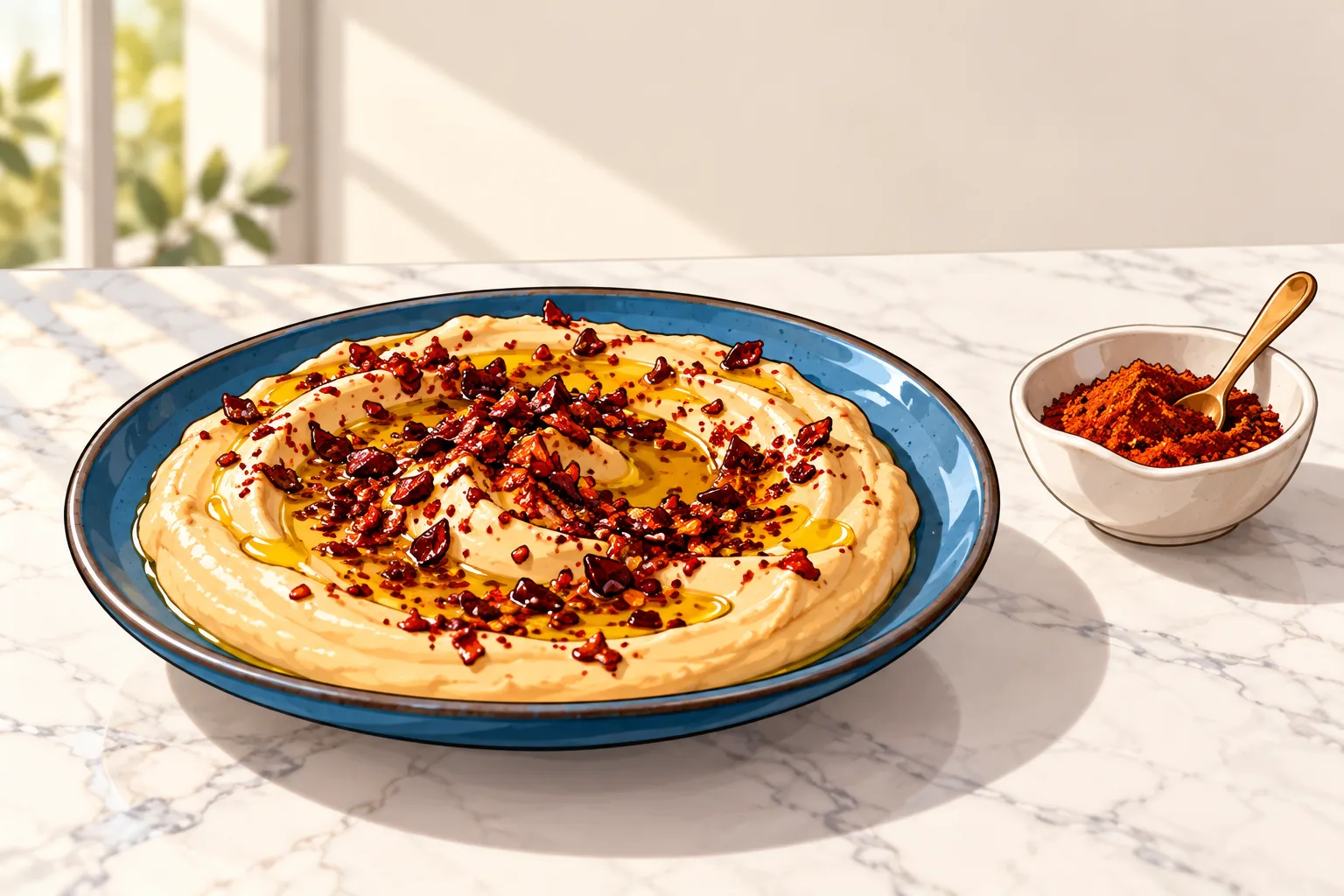
| Hummus or labneh topping | 2¼ tsp sweet paprika | ¾ tsp crushed red pepper flakes | Drizzle with olive oil after |
| Muhammara | 2½ tsp sweet paprika | ½ tsp crushed red pepper flakes | A squeeze of lemon for the tang |
| Fried eggs | 2 tsp sweet paprika | 1 tsp crushed red pepper flakes | Sprinkle on the hot oil, then the eggs |
| Kebab or meat rub | 2¾ tsp sweet paprika | A pinch (about 0.2 g) of cayenne | Mix into the meat, not on top |
Why lemon in some rows? The UC Master Gardeners call Aleppo slightly tangy1, and plain paprika is not. A few drops of lemon in the dish, not in the jar, brings that note back without making your mix damp.
Texture matters more than people expect. Aleppo is a crushed flake, so a powder-only swap disappears into hummus instead of sitting on top. If you have only powders, rub them with a few drops of olive oil between your fingers to make small clumps; they sit on a dip the way flakes do.
Make a small jar rather than a big one. A mix of 3 tablespoons of paprika and 1 tablespoon of flakes fills a little spice jar, lasts you through several dinners, and lets you adjust the next batch: more flakes if your family wants it hotter, more paprika if the kids push the plate away.
Is Aleppo pepper hot, and how much heat should a swap bring?
Gently hot at most, by the way cooks use it, but we found no primary source that rates Aleppo in SHU. That is why the table describes heat instead of giving you a ratio, and why the blends lean on paprika.
You can still reason about your mix. Paprika types stay under 500 SHU3 and cayenne runs 25,000–50,0008, so a pinch of cayenne in a spoon of paprika adds noticeable warmth while the paprika keeps the color. The kebab row's 0.2 g of cayenne in about 6.3 g of paprika works out near 1,600 SHU for the mix, a mild level and an estimate.
If your crushed red pepper is hot, start your hummus blend at half a teaspoon instead of three quarters. Makers blend different peppers into crushed red pepper, so one jar can run much hotter than another; taste a flake first.
Which swaps work in muhammara, and which ones fight it?
Muhammara, the walnut and red pepper dip, needs red color, a little heat and some sweetness. Swaps that bring smoke or a dark color pull it off course.
Swaps that work
- Red pepper flakes
- Same texture and a bright red; use one for one
- Paprika plus a few flakes
- The builder's muhammara row: color first, a little heat
- Kashmiri chili powder
- Bright red and low in heat; use two thirds
Swaps that fight it
- Smoked paprika or chipotle
- Smoke takes over the dip's sweet pepper taste
- Ground ancho
- The dark color turns the dip brown
- Cayenne on its own
- Heat without color; a spoonful is far too hot
If you are making muhammara for a crowd, mix the paprika and flakes first and taste a pinch on a cracker. It is much easier to add heat to a finished dip than to take it out.
Is Aleppo pepper the same as the red pepper flakes on a pizza table?
No, even though both are crushed red pepper. The shaker at a pizza place usually holds a hotter, drier flake with lots of pale seeds, and makers often build it from hot types such as cayenne, which UF/IFAS describes as dried and sold as powder or flakes at 25,000–50,000 SHU8. Aleppo is a sweeter, redder, fruitier flake by comparison.
So you can use pizza flakes, but treat them as a heat source, not a one-for-one swap. Use about a quarter of the Aleppo amount and make up the rest with sweet paprika, which is the builder's idea with a hotter flake. If you shake out the loose seeds first, you also lose some of the bitter crunch they bring.
The reverse holds too. If your recipe asks for crushed red pepper and you only have Aleppo, use about twice as much and expect more color and less fire.
Can you use smoked paprika instead of Aleppo pepper?
Only where a smoky taste belongs. Smoked paprika copies Aleppo's red color and its low heat, but it adds a strong smoke that Aleppo does not have, so it changes your dish more than its color suggests.
On grilled lamb or a bean stew, that smoke is welcome, and you can use it one for one. On hummus, labneh, a tomato salad or muhammara, it takes over. In those dishes you are better off with plain sweet paprika and a few crushed flakes, as the builder shows, and saving the smoked tin for the grill.
What about gochugaru?
Korean chili flakes look a lot like Aleppo: coarse, red and fairly mild in the jars most shops sell. We found no primary source that rates gochugaru's heat or describes how it is made, so we leave it out of the ranked table rather than guess.
If you already have a bag, you can try it in a cooked dish. Taste a few flakes first, start at two thirds of the Aleppo amount, and add a drop of lemon where the recipe wants Aleppo's slight tang.
Keep your flakes red
Whatever you use, light, air and heat dull red pepper over time, the kind of browning the 2021 study measured as a sign of poor color2. These habits keep your jar closer to the red you paid for.
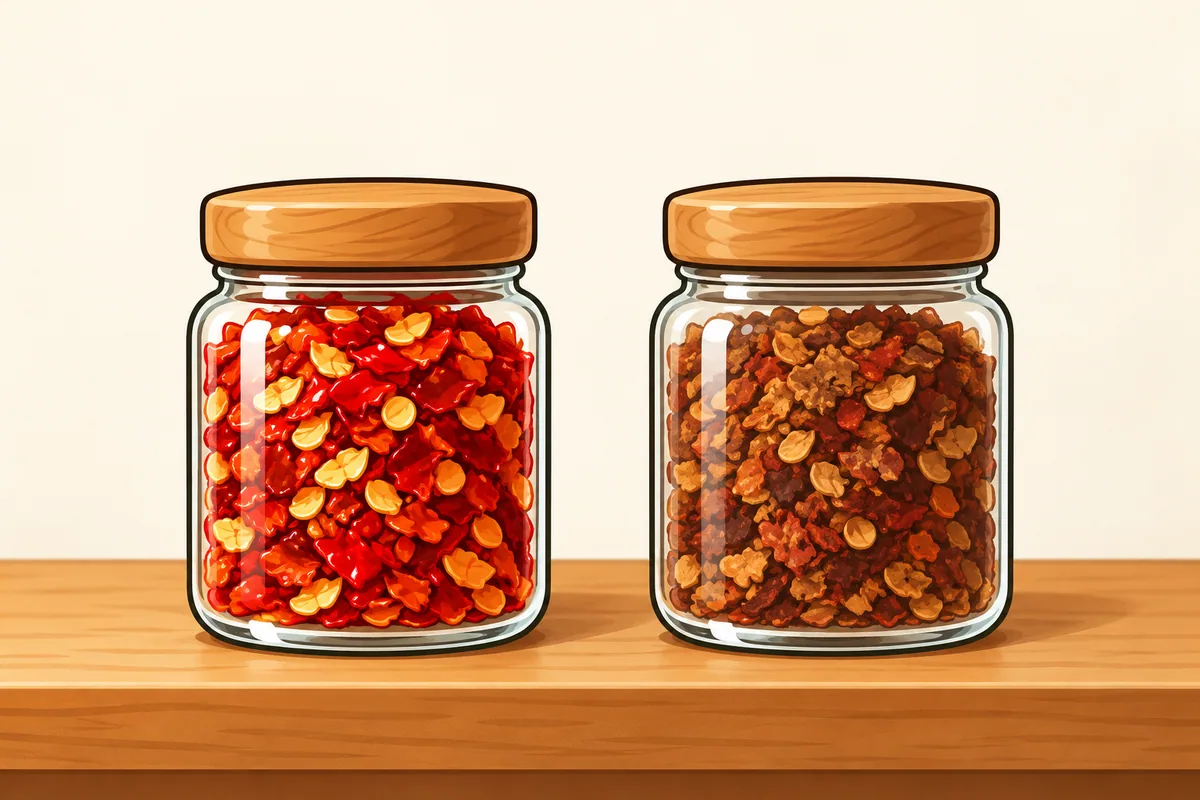
Habits that keep a red pepper jar red
- Buy small jars and use them within a few months
- Store the jar in a dark cupboard, away from the stove
- Close the lid right after you spoon some out
- Smell and look before you cook: brown flakes taste flat
- Toast or bloom flakes in oil only briefly, so they do not scorch
Next, open your spice drawer, pick the closest row from the table and try the builder mix on tonight's hummus or eggs. If you are short of Kashmiri chili as well, the Kashmiri swaps start from the same paprika, and the swap chart covers every other flake.