On this page
- 1What can you use instead of gochugaru?
- 2How mild does a gochugaru swap need to be for kimchi?
- 3Which red flakes in your cupboard look like gochugaru?
- 4How much paprika and cayenne replace gochugaru in a kimchi batch?
- 5Can gochujang stand in for gochugaru?
- 6Which gochugaru swap fits your Korean dish?
- 7Why did your gochugaru-swap kimchi turn out too hot or too dull?
- 8How long does a homemade gochugaru blend keep?
- 9What do you make once your stand-in is mixed?
- 10Sources
What can you use instead of gochugaru?
Aleppo-style red flakes, or sweet paprika with a tiny pinch of cayenne. Both give you a bright red, mild flake you can rub into cabbage. The catch is heat: Korea Food Research Institute researchers write that the gochugaru gochu that goes into kimchi and gochujang should be mild, under 1,000 SHU1, so most chili flakes on your shelf run far too hot to swap one for one.
| Swap | Heat vs gochugaru | How much for 10 g gochugaru | Best for | Flavor note |
|---|---|---|---|---|
| Aleppo-style flakes2 | No published SHU; taste first | 10 g | Kimchi, garnish, dipping sauce | Sweet, fruity, slightly tangy |
| Sweet paprika plus cayenne3 | Set to 1,000 SHU or less | 9.7 g paprika + 0.27 g cayenne | Kimchi, stews, marinades | Red and sweet; a powder, not flakes |
| New Mexico red chile powder4 | Close: 500–2,500 SHU | 10 g | Stews and braises | Not described by the source |
| Ancho powder5 | Close: 1,000–1,500 SHU | 10 g | Stews where a darker red is fine | Earthy, smoky, fruity2 |
| Gochujang, for cooked dishes6 | The same chile, as a salty paste | About 25 g; cut the salt | Stews, stir-fries, sauces | Fermented, sweet and salty |
| Crushed red pepper (cayenne) plus paprika7 | Flakes alone 25,000–50,000 SHU | 0.25 g flakes + 9.75 g paprika | Only when nothing else is in the house | Hot; seeds show |
Every good gochugaru swap is mostly a mild red pepper; any hot chile goes in by the pinch, never by the spoon. That rule matters more than which jar you pick, and it is the one you can check in your own kitchen with a single taste.
Aleppo-style flakes, the closest texture
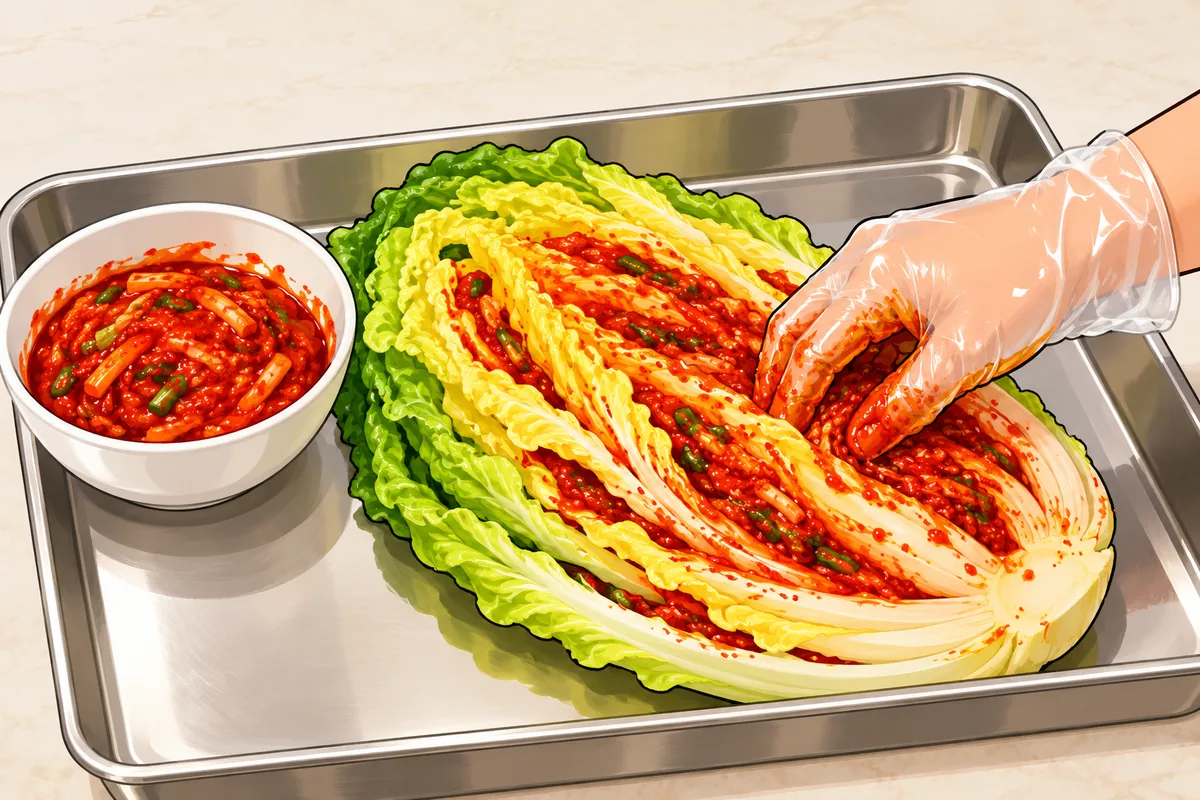
UC Master Gardeners describe Aleppo pepper, also called Halaby, as sweet, fruity and slightly tangy, used dried and crushed2. That is a flake, not a powder, which means it clings to cabbage the way gochugaru does. No primary source we read publishes its heat, so taste a few flakes before you commit a whole batch. The Aleppo pepper entry has what we know about it.
Sweet paprika plus cayenne, the pantry blend
Paprika is any non-pungent chile ripened red and used for color3, and Kentucky's crop profile notes that dried, ground pimientos sell as sweet paprika10. On its own it brings color and sweetness without heat. A pinch of cayenne adds the mild warmth gochugaru has; the kimchi section below works out exactly how much.
New Mexico red chile powder, for stews
Arizona Extension rates New Mexico chiles at 500–2,500 SHU and says the red pods get ground into chile powder4. That range straddles gochugaru's, so it swaps by weight in a stew or braise. It is a fine powder, so in kimchi it makes a smoother paste than flakes do.
Ancho powder, when a darker red works
Iowa State lists ancho at 1,000–1,500 SHU5, a touch above kimchi gochu, and UC Master Gardeners call it earthy, smoky and fruity2. It turns a dish darker red-brown than gochugaru does. Use it in a stew or a braise; in kimchi the color comes out muddy.
Gochujang, for cooked dishes only
A traditional gochujang from Cheongju, analyzed in a 2024 study, held 40 % chile powder by weight, alongside meju, glutinous rice, malt and salt6. So 25 g of paste carries about 10 g of chile. It also carries salt and sweetness, which suits a stew and does not suit kimchi.
Crushed red pepper, as a last resort
The jar on a pizza counter is usually cayenne flakes, and UF/IFAS puts cayenne at 25,000–50,000 SHU7. At its 37,500 midpoint that is at least 37 times kimchi gochu. Use a quarter gram, a few pinches, in 10 g of paprika, and expect pale seeds in your paste.
How mild does a gochugaru swap need to be for kimchi?
Under 1,000 SHU, by the Korean researchers' own figure1. They go further and say kimchi does not work even with cheongyang chile, a hotter Korean hybrid at about 3,000 SHU.
So a swap at three times gochugaru's heat already makes a different kimchi, and plain crushed red pepper at 25 to 50 times makes one most people cannot eat. Kimchi uses a lot of chile by weight, which is why the heat ceiling matters more here than in a dish where you add a pinch.
Which red flakes in your cupboard look like gochugaru?
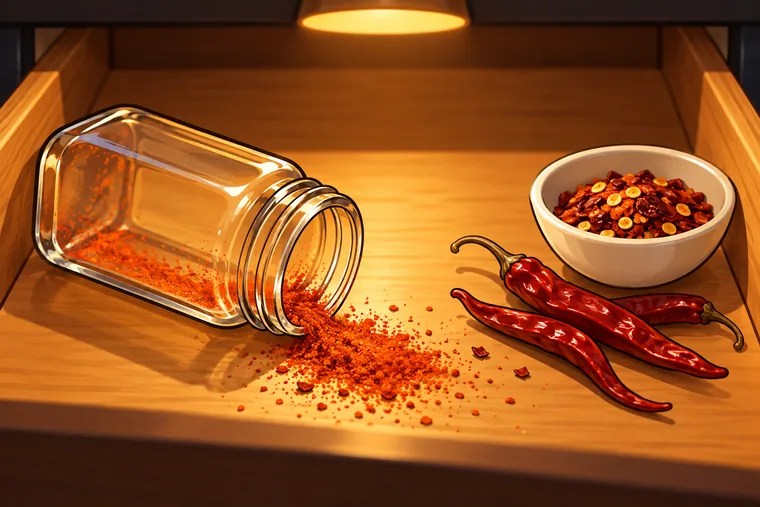
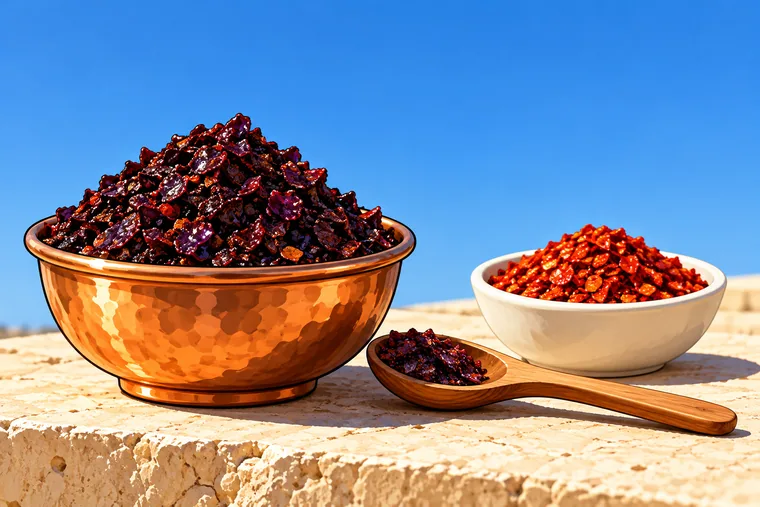
Several, and they behave very differently. The spoons below line up four red products that sit side by side on a spice shelf.
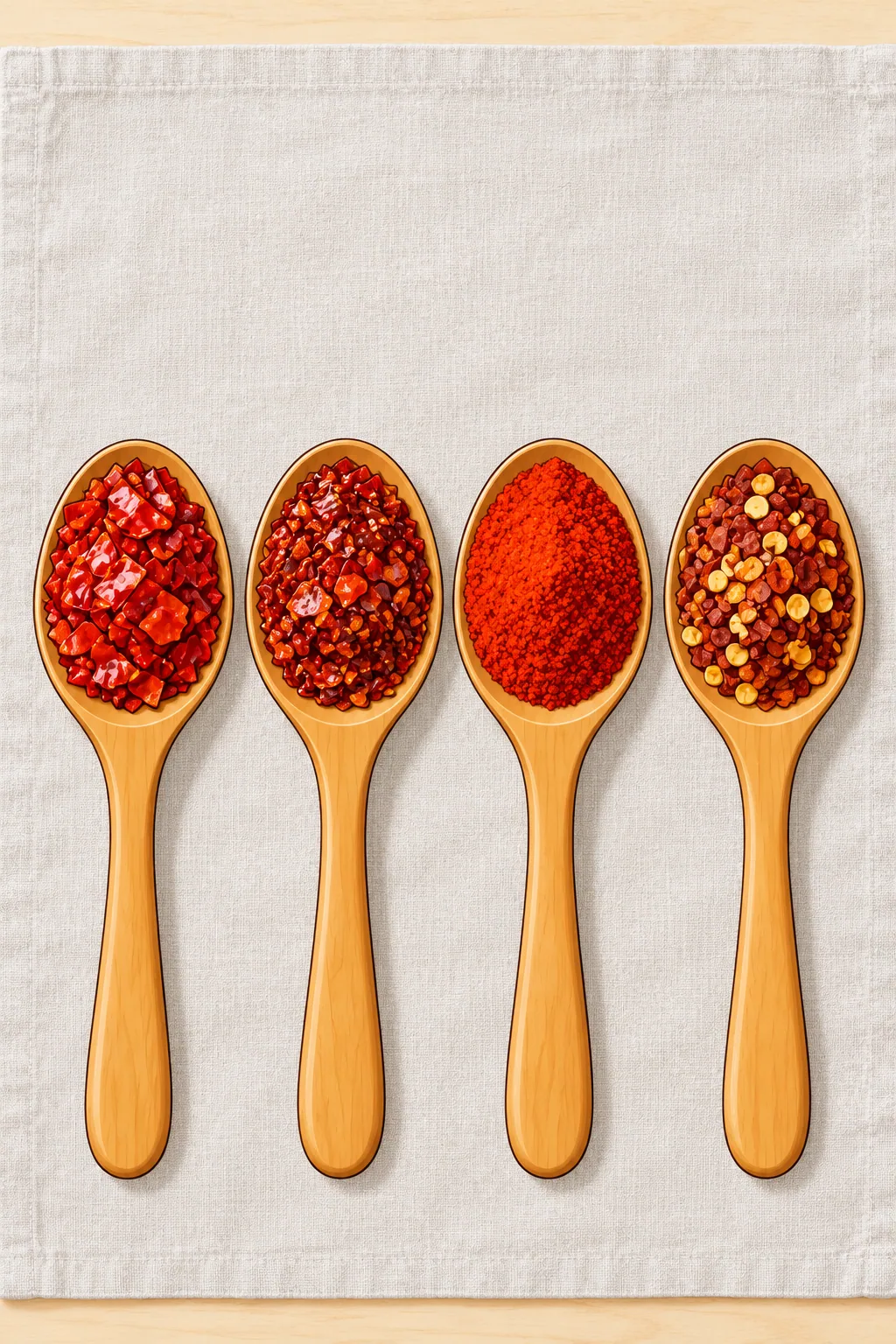
The seeds give crushed red pepper away. If your jar shows plenty of pale yellow seeds, treat it as the hot one. The red flake that shows few seeds and smells sweet is the one to try first.
When you are not sure, put a few flakes from each jar on your tongue, one jar at a time, with a sip of water in between. You will know within seconds which one is the cayenne, and you will have spent a pinch instead of a whole batch of cabbage finding out.
How much paprika and cayenne replace gochugaru in a kimchi batch?
Use 97.3 % sweet paprika and 2.7 % cayenne by weight. With paprika at zero heat3 and cayenne at its 37,500 SHU midpoint7, that share lands the blend at 1,000 SHU, the top of gochugaru's range. For a gentler kimchi, halve the cayenne.
A worked batch: 50 g of gochugaru
Say your kimchi recipe calls for 50 g of gochugaru, a round example. Here is the same chile share rebuilt from each swap.
| Swap | Grams | In teaspoons | Heat of the mix |
|---|---|---|---|
| Paprika plus cayenneSources for this line7. UF/IFAS Gardening Solutions8. USDA Agricultural Research Service, FoodData Central (SR Legacy)9. USDA Agricultural Research Service, FoodData Central (SR Legacy) | 48.6 g + 1.4 g | About 21 tsp paprika + 3/4 tsp cayenne | About 1,000 SHU |
| Paprika plus half the cayenne89 | 49.3 g + 0.7 g | About 21 tsp + 3/8 tsp | About 500 SHU |
| Aleppo-style flakes2 | 50 g | Weigh them | No published figure |
| Half Aleppo, half paprika28 | 25 g + 25 g | About 11 tsp paprika | Milder than Aleppo alone |
The teaspoon column uses USDA's weights, 2.3 g per teaspoon of paprika and 1.8 g per teaspoon of cayenne89. Twenty-one teaspoons is a lot of spooning, so weigh the paprika on a kitchen scale and measure only the cayenne by the spoon.
Mix the blend dry before it meets the wet paste. That spreads the cayenne evenly, so no single leaf of cabbage gets a hot patch. Then taste a fingertip of the finished paste before you rub it in; if it already stings, you can still add paprika, but you cannot take the cayenne back out.
Can gochujang stand in for gochugaru?
In a stew or a stir-fry, yes; in kimchi, not really. Both start from the same Korean chile, but gochujang is a fermented paste with grain, soybean and salt in it.
Gochugaru
At 40 % chile6, 25 g of gochujang delivers the chile of 10 g of gochugaru. Cut the soy sauce or salt in your recipe when you add it, and expect a sweeter, rounder dish. The gochujang swaps cover the opposite problem, when the paste is the thing you lack.
Which gochugaru swap fits your Korean dish?
The dish decides how much the flake's texture and the dish's salt matter. Follow the branch for what you are cooking.
- raw pasteKimchiAleppo-style flakes, or 97.3 % paprika with 2.7 % cayenne
- long cookingStew or braiseGochujang at 2.5 times the weight, less salt
- seen in the bowlDipping sauceAleppo-style flakes, for the texture
- on topGarnish on noodles or eggsAleppo-style flakes, a pinch
- rubbed inMarinadeNew Mexico red powder, 500–2,500 SHU
Sources for this line4. University of Arizona Cooperative Extension6. Heliyon (Elsevier)7. UF/IFAS Gardening Solutions
If you make kimchi often, buy a bag of gochugaru when you next pass a Korean grocer. Every swap here gets close, and none quite matches the real flake in a raw paste.
Why did your gochugaru-swap kimchi turn out too hot or too dull?
Most problems trace back to heat or to texture. Here is what usually went wrong and how you fix it next time.
- It burns. You used crushed red pepper or chili flakes by the spoon. At 25,000–50,000 SHU7, cayenne needs to stay under 3 % of your chile weight.
- It tastes flat and sweet. You used paprika alone, which carries no heat3. Add cayenne at 2.7 % next time, or mix in some Aleppo-style flakes.
- The paste is smooth and pasty, not flaky. Powders such as paprika and New Mexico red make a smoother paste than flakes. Mix in Aleppo-style flakes for texture.
- It came out salty. You used gochujang, which carries salt6. Keep the paste for stews and use dry flakes in kimchi.
How long does a homemade gochugaru blend keep?
Several months, if you keep it dry. NCHFP's guidance for home-dried foods gives 4 months to 1 year of storage, with shorter times in a warm room, and says to store them in a cool, dry, dark place in clean jars or tight containers11. Your blend is a dried food, so the same rules apply.
Mix only what you need for the next few batches. Pack it into a small glass jar, which lets you spot any moisture inside, and keep it away from the stove. NCHFP also warns that food packed bone dry can still spoil if it picks up moisture later11, so never dip a wet spoon into your jar while you make kimchi.
Is gochugaru the same as paprika?
No. Both are dried red chiles, but paprika is non-pungent by NMSU's definition, while kimchi gochu carries a mild heat under 1,000 SHU. That is why the paprika swap needs a pinch of cayenne.13
Can you use chili powder instead of gochugaru?
Only in a pinch, and not in kimchi. The USDA purchase spec describes chili powder as a blend with cumin, oregano, salt and garlic powder, so your kimchi would taste of a taco seasoning.12
What do you make once your stand-in is mixed?
Kimchi, most likely. Take your blend to the gochugaru kimchi recipe and weigh it in place of the flakes, gram for gram.
If your shelf is also out of the Aleppo flakes that top this list, the Aleppo swaps start from the same paprika base, and every other chile your recipes call for sits on the swap chart.