On this page
- 1What is Caribbean hot sauce?
- 2What goes into a Caribbean hot sauce?
- 3How hot is Caribbean hot sauce?
- 4Is a scotch bonnet the same as a habanero?
- 5Jamaican, Belizean or Trinidad pepper sauce?
- 6Can you make Caribbean hot sauce at home?
- 7What goes wrong with a homemade scotch bonnet sauce?
- 8How do you use Caribbean hot sauce?
- 9Which bottle should you start with?
- 10Sources
What is Caribbean hot sauce?
It is a sauce built on the scotch bonnet, a small pepper that ripens red or yellow and takes its name from a Scottish tam o' shanter hat. UF/IFAS describes it as popular in Caribbean cooking, especially in jerk sauce and marinades, and grown mainly in the Caribbean, Guyana and the Maldives1.
The pepper belongs to Capsicum chinense, the habanero species. USDA's GRIN database lists "bonnet pepper" among that species' English common names and records a possible first home in the Amazon basin2. So the Caribbean bottle in your cupboard and a Yucatán habanero sauce start from close cousins.
Caribbean makers tend to build around the pepper with onion, herbs, fruit or carrot, as the labels below show, rather than leaving it to vinegar alone. That is the quickest way you can tell one from a Louisiana bottle: a Louisiana hot sauce is aged pepper mash, salt and vinegar, while yours from Jamaica or Belize reads like a short vegetable list. The scotch bonnet entry holds the pod's full data.
What goes into a Caribbean hot sauce?
Scotch bonnet or habanero, vinegar and water, then whatever the island cooks with. Four bottles from two makers show the range.
| Bottle | Ingredients as the maker lists them | Pepper | Heat as the maker describes it |
|---|---|---|---|
| Walkerswood Scotch Bonnet Pepper Sauce (Jamaica)3 | Water, scotch bonnet peppers, vinegar, modified corn starch, salt, citric acid, scallion, onions, garlic powder, xanthan gum, potassium sorbate, thyme | Jamaica's yellow scotch bonnet | The perfect balance of heat with flavour |
| Walkerswood Jonkanoo Pepper Sauce (Jamaica)3 | Water, hot peppers, vinegar, salt, sugar, modified corn starch, scallion, onions, garlic powder, citric acid, potassium sorbate, thyme, xanthan gum | Jamaican hot peppers | Use with caution, very hot |
| Walkerswood Firestick Hot Sauce (Jamaica)3 | Hot peppers, vinegar, water, brown sugar, salt, modified corn starch, garlic powder, onion powder, ascorbic acid, potassium sorbate | Hot peppers | Sweet, tangy and spicy; go easy |
| Marie Sharp's Original Hot (Belize)45 | Built on fresh carrots, onions and garlic; no full list on the page | Habanero | Level: Medium |
Look down the Walkerswood rows and the island signature shows up near the end of each list: scallion, onion and thyme3. Marie Sharp's, made in Belize's Stann Creek Valley, goes the other way. Its makers say they hand-chop fresh carrots, onions and garlic for every batch, and its Hot sauce adds more habanero to that carrot base45.
The rest of a commercial label does quiet work. You can read it once, know what each part is for, and then ignore it:
- Vinegar and citric acid sour the sauce and keep it acidic; SDSU Extension puts the line for any hot sauce at pH 4.66.
- Modified corn starch and xanthan gum thicken it, so the sauce clings to a piece of chicken instead of running off.
- Potassium sorbate is the preservative Walkerswood names in brackets on all three of its bottles3.
- Sugar shows up in Jonkanoo and, as brown sugar, in Firestick, which is why those two read sweeter than the plain scotch bonnet bottle.
The vinegar in a Caribbean sauce carries the pepper; the onion, herbs or carrot are what make it taste Caribbean.
How hot is Caribbean hot sauce?
The pepper is hot: up to 350,000 SHU, against 8,000 for the top of the jalapeño range1. None of the makers above prints a Scoville number, so the pod's figure is the honest yardstick.
A bottle is always milder than its pod, because water, vinegar and vegetables dilute it. Walkerswood lists water first on its Scotch Bonnet sauce3, so a few drops go further than a fresh slice of the pepper would. Its Jonkanoo sauce, where the maker tells you to use it with caution, adds sugar to round it out.
Marie Sharp's gives you the clearest heat ladder of any Caribbean-basin maker we read, in its own words:
- Mild: the base recipe that the Hot sauce builds on5.
- Original Hot, "Level: Medium": the same base with more habanero5.
- Beware, "Level: Extra Hot": extra capsicum on top of the habanero base, which the maker sells as "only for connoisseurs of EXTREME heat"7.
So "Hot" on a Belizean bottle means medium for that maker. Read the level line, not the product name.
Is a scotch bonnet the same as a habanero?
Nearly. They are the same species and the same heat range, and UF/IFAS calls the scotch bonnet a close relative of the habanero varieties1. The easiest way you tell them apart at a market is the shape.
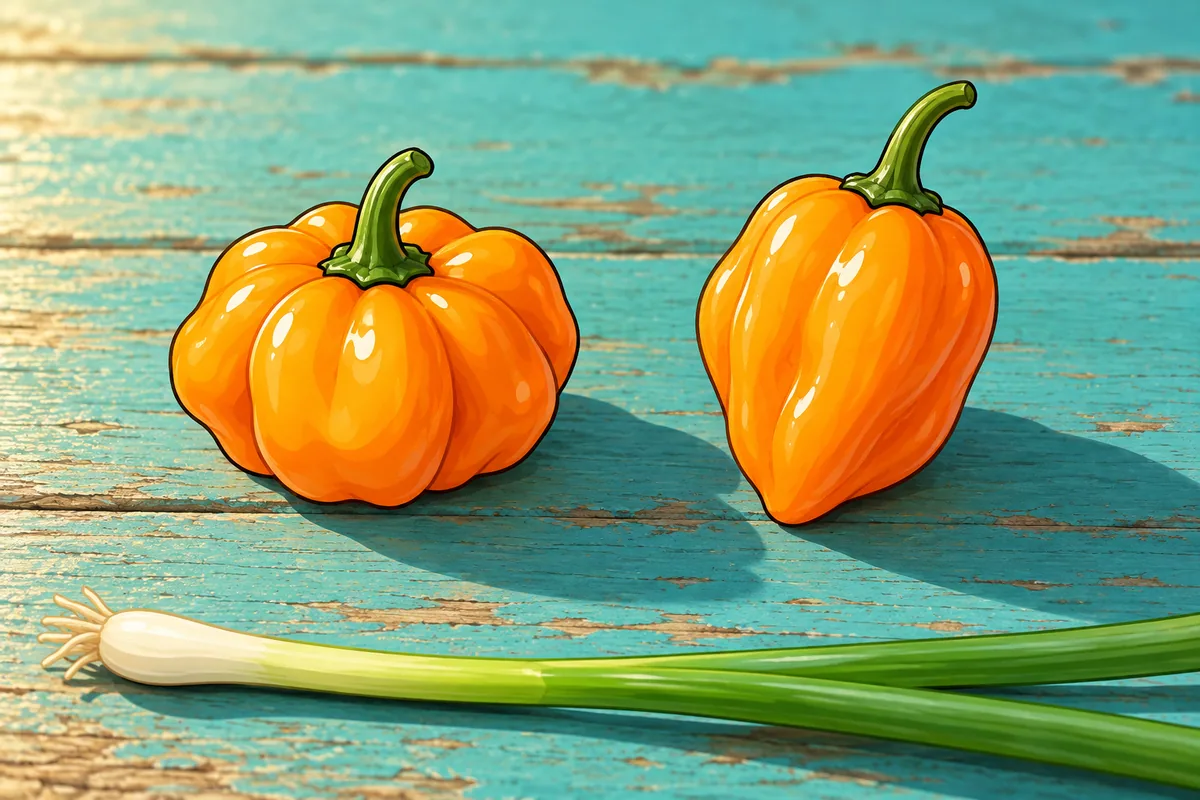
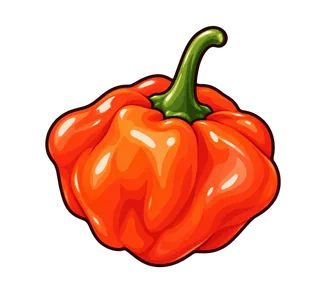
Scotch bonnet
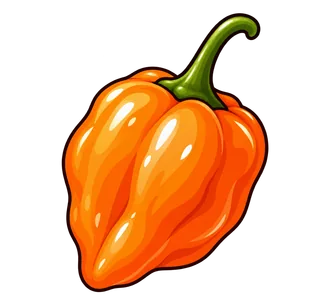
So a habanero is the usual swap when you cannot find bonnets, and Marie Sharp's shows a habanero sauce can still taste Caribbean. One catch: UF/IFAS notes that some Caribbean islands grow completely sweet scotch bonnet varieties1, so a bag of bonnets with no heat is not a fluke. Taste a sliver before you build a batch on it.
Jamaican, Belizean or Trinidad pepper sauce?
Each island bottles its own version, and the evidence we could check differs a lot between them:
- Jamaica: Walkerswood pairs Jamaica's yellow scotch bonnet with scallion, onion, garlic and thyme, the same herbs you find in jerk seasoning3. Its Scotch Bonnet sauce is the one to start with.
- Belize: Marie Sharp's started in a small Stann Creek kitchen in 1980, became a company in 1981 and now ships to over 40 countries8. Its sauces lean on carrot and habanero.
- Trinidad: we cannot show you a label yet.
The best-known Trinidad maker's website still redirects to a domain sale page, and the recipes we found for the island's pepper sauce come from home cooks, not from a maker or a university. We would rather leave that line short than print a recipe we could not check. If you buy a Trinidad bottle, its own back label is your best guide: read the first three ingredients the way you would on any bottle in the table above, and you will know what you have.
Can you make Caribbean hot sauce at home?
Yes, and the Walkerswood list is a good outline. Gather:
- Scotch bonnets, or habaneros if you cannot find them.13
- Vinegar with at least 5% acetic acid, and a little water.39
- Salt.3
- Scallion, onion, garlic and a few sprigs of thyme for the Jamaican flavor, or carrot and onion for the Belizean one.34
- Gloves for chopping the pods, and a pot to bring the sauce to a boil.69
The vinegar is the safety part, because onion, carrot and garlic are low-acid. SDSU Extension says the finished sauce must sit below pH 4.6, that it should come to a full boil, and that home cooks should use tested recipes6. The order matters, so here is the chain:
- Chop podsWear gloves; keep hands off your eyes
- Blend with aromaticsOnion, scallion, garlic, thyme or carrot
- Add vinegarAt least 5% acetic acid; target below pH 4.6
- Bring to a boil212 °F kills salmonella and E. coli; spores survive
- Fridge or freezerUse it fairly soon
- Water-bath canTested recipe only; 10 min up to 1,000 ft
From pods to a safe bottle: each link has a job, and skipping one breaks the chain. 69
Ohio State says a sauce you do not can goes in the fridge to use fairly soon, or into the freezer; a canned one needs 10 minutes in a boiling-water canner up to 1,000 feet, 15 minutes up to 6,000 feet and 20 above that9. The scotch bonnet hot sauce recipe gives tested amounts, and the hot sauce shelf life guide covers how long an opened bottle lasts.
What goes wrong with a homemade scotch bonnet sauce?
Most problems come from the pepper's oils on your skin or from changing a recipe after you have it working. Here is the one rule to keep first:
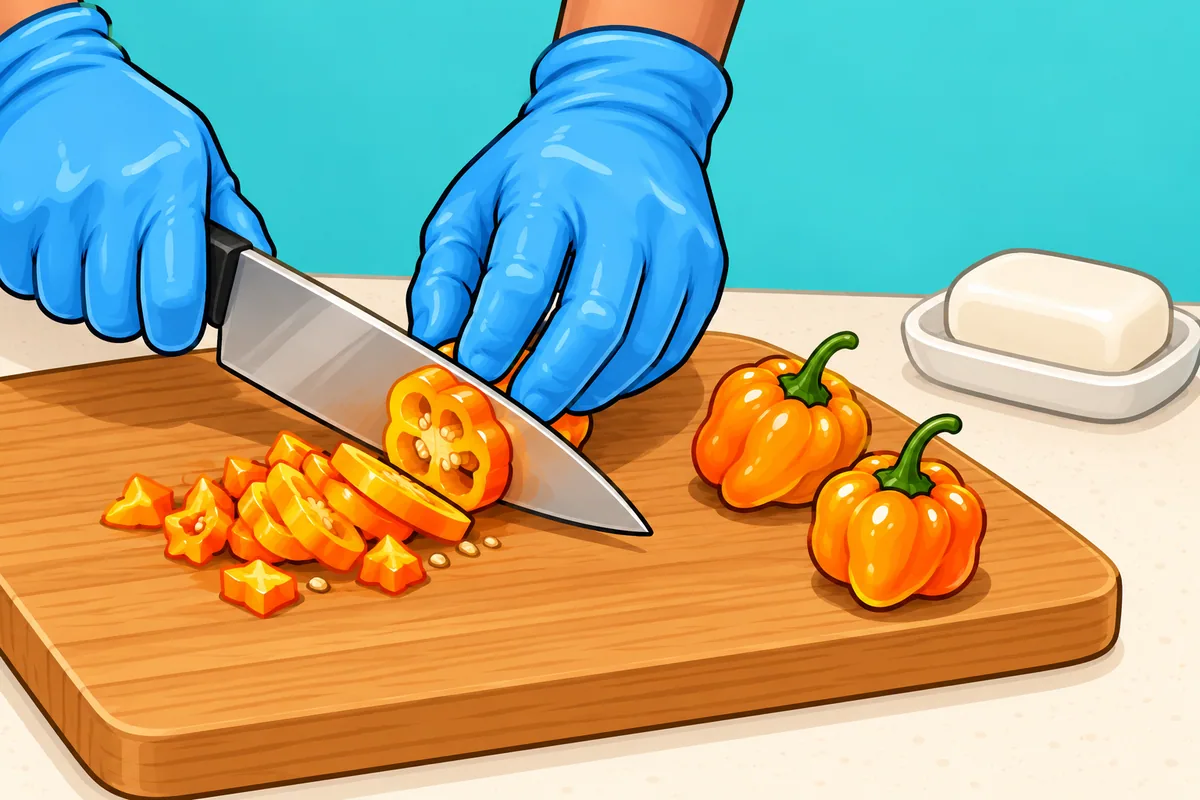
The everyday problems, and what to do about each:
- Your fingers burn hours later. Capsaicin oil stays on bare skin. Ohio State suggests gloves, then soap and water, and keeping your hands away from your eyes9.
- The sauce settles into a watery layer. Walkerswood thickens its bottles with corn starch and xanthan gum3; a homemade sauce without them separates in the fridge. Shake it before you pour.
- The batch is far hotter than you planned. Cut the next batch's pods, or blend in more carrot the way Marie Sharp's does4, and keep that changed batch cold.
- The pods have no heat at all. You may have a sweet bonnet variety, which some islands grow1. Swap in habaneros.
How do you use Caribbean hot sauce?
UF/IFAS names the pepper's two big jobs in the region: jerk sauce and marinades1. Marie Sharp's sells its Hot sauce as a table sauce and suggests adding it to soups and stews5, and Walkerswood says its scotch bonnet bottle works with almost any savoury dish3.
If you cook jerk at home, your hot sauce and your marinade overlap: the scallion, thyme and onion on a Walkerswood label are the same flavors you would rub into the meat3. That makes a spoon of the sauce stirred into your marinade an easy shortcut when you have no fresh bonnets.
Start with a few drops on rice and peas or a plate of eggs, not a spoonful. You can always add a second shake; you cannot take one back out of a stew. For a pot of soup that feeds four, add the sauce a few drops at a time at the end, taste, and stop when you feel the warmth at the back of your throat.
Which bottle should you start with?
Pick by what you want the sauce to do, then check the label for the clue that proves it:
| You want | Look for | A bottle that fits |
|---|---|---|
| The classic Jamaican taste3 | Scotch bonnet named; scallion and thyme on the list | Walkerswood Scotch Bonnet Pepper Sauce |
| Something sweeter and milder3 | Sugar or brown sugar in the first four ingredients | Walkerswood Firestick |
| A thick, carrot-based table sauce5 | Carrot in the description; a printed heat level | Marie Sharp's Original Hot (Level: Medium) |
| Real heat37 | A warning on the label, an Extra Hot level | Walkerswood Jonkanoo or Marie Sharp's Beware |
Read the first three ingredients wherever you shop. Pepper or water with pepper right behind it means a hot, thin sauce; sugar or fruit high on the list means a milder, sweeter one. A pod at up to 350,000 SHU1 is worth respecting even after the vinegar, so your first bottle can be the mild one.