
Peppadew Pepper Heat, Under 650 SHU in a Sweet Brine
The small round red pepper from South Africa, hand-cored, pickled sweet and sold under one trademark.
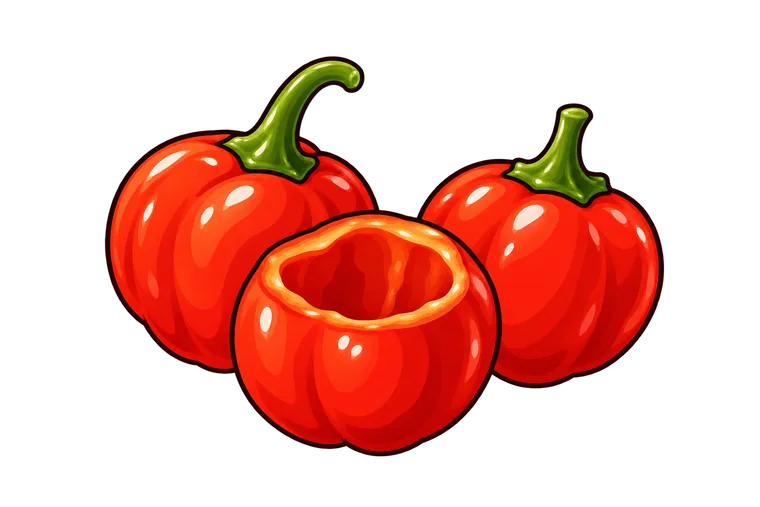 Mild
Under 650 SHU, sweet and tangy
- The maker gives 280 SHU from capsaicin and under 650 SHU from all capsaicinoids
- Hand-picked and hand-cored in Limpopo, then pickled in a sweet brine: 18.9 g sugar per 100 g
- Heat
- 650 SHU1
- Species
- C. baccatum1
- Origin
- Limpopo, South AfricaSources for this line2. PEPPADEW International (Pty) Ltd, maker's page3. Brand South Africa (government agency)4. Peppadew USA (maker's US site)
- Flavor
- Sweet, tangy5
- Swap with
- Sweet cherry pepper1
- Uses
- Stuffing, snacking5
On this page
- 1Is Peppadew a pepper or a brand?
- 2How much heat does a Peppadew carry?
- 3What do you get in a jar of Peppadew?
- 4Where did the Peppadew come from?
- 5How does a piquante pepper become a Peppadew?
- 6Why isn't a pickled cherry pepper a Peppadew?
- 7How do you serve and stuff Peppadews?
- 8Should you buy the mild jar or the hot jar?
- 9Can you grow your own Peppadew peppers?
- 10What goes wrong with an open jar of Peppadews?
Is Peppadew a pepper or a brand?
A brand. PEPPADEW is a registered trademark of Peppadew International (Pty) Ltd, and the pepper inside the jar is what the company calls the piquante pepper1. The maker identifies it scientifically as Capsicum baccatum1, the species of the Peruvian ajíes, not the C. annuum of most sweet peppers.
On a US shelf you'll also see the name "Juanita" on the label: Peppadew USA sells its mild jar as Sweet & Spicy Juanita Piquante Peppers6. The company doesn't explain the name on the pages we read, so treat it as a US product name, not a separate variety.
Why does that matter to you? Because "Peppadew" on a menu or in a recipe means this branded, hand-cored, sweet-pickled pepper. Another company's jar of sweet pickled round peppers may be close, but it isn't the same product, and the maker says plainly that some cherry peppers get called "peppadews" by mistake1.
How much heat does a Peppadew carry?
Very little. The maker gives capsaicin at 280 SHU and total capsaicinoids under 650 SHU, and says the peppers have a mild heat but aren't hot peppers1.
Against UF/IFAS's average jalapeño of about 5,000 SHU7, 650 SHU is roughly an eighth, and 280 SHU about an eighteenth. A whole Peppadew carries less heat than a thin slice of jalapeño, so you can serve a bowl of them to almost anyone. A poblano, at 1,000 to 2,000 SHU7, sits above it.
If you want more bite, the hot jar exists for that. The maker's hot whole peppers list the same ingredients plus chilli extract, and describe a moderate heat instead of a mild one8. Its heat comes from that added extract, not from a hotter pepper.
What do you get in a jar of Peppadew?
Mostly brine, with a lot of sugar. The maker's 400 g mild jar lists piquante peppers at 41 %, then water, sugar, spirit vinegar, salt, citric and ascorbic acid as antioxidants, and calcium chloride as a firming agent5.
| Per 100 g | Mild whole | Hot whole |
|---|---|---|
| Energy | 381 kJ / 91 kcal | Same as mild |
| Carbohydrate | 18.9 g | Same as mild |
| of which sugars | 18.9 g | Same as mild |
| Fat | 0.3 g | Same as mild |
| Protein | 2.1 g | Same as mild |
| Fibre | 1.6 g | Same as mild |
| Salt | 0.6 g | Same as mild |
| Added for heat | None | Chilli extract |
All of the carbohydrate is sugar: 18.9 g in every 100 g of drained peppers5, close to a fifth of the weight. That's what makes them taste like candy next to an olive. If you're counting sugar, a 50 g serving of about a handful gives you roughly 9.5 g.
What does a handful add to your plate?
Here's the label worked out for the amounts you'd actually eat, from the maker's figures per 100 g drained5:
| Drained peppers | Energy | Sugar | Salt |
|---|---|---|---|
| 25 g, a few on a cheese board | About 23 kcal | About 4.7 g | About 0.15 g |
| 50 g, a handful | About 46 kcal | About 9.5 g | About 0.3 g |
| 100 g, a party bowl | 91 kcal | 18.9 g | 0.6 g |
So they're light on calories and salt for a pickle, but the sugar adds up fast if you snack from the jar. Treat them like a sweet relish rather than a vegetable side, and you'll judge the portion right.
The calcium chloride is why they stay crunchy. The maker calls the result a firm and crunchy pickled pepper9, and the firming agent is the reason a Peppadew holds its shape when you stuff it, where a soft roasted pepper would split.
Where did the Peppadew come from?
From South Africa in the 1990s, though the sources disagree on the exact year. Here's the story as each source tells it:
- 1993
The plant turns up
Brand South Africa reports that farmer Johan Steenkamp found the plant on holiday in the Western Cape.3
- Mid-1990s
- Early years
A small factory in Limpopo
Production started in a modest facility in the hills of Limpopo province.2
- 2009
The US push
Brand South Africa describes growing around Tzaneen, a factory employing more than 200 people and a US marketing partner.3
- Today
The company's own sites don't agree with each other on its age either: the South African site says it started over 25 years ago, the US site over 3024. Either way, it's a young pepper as peppers go, and every jar you buy still comes from the same corner of Limpopo.
How does a piquante pepper become a Peppadew?
By hand, mostly. The maker describes the steps on its own pages15:
- 1
Pick by hand
Workers pick the ripe red piquante peppers by hand.1
- 2
- 3
- 4
That hand coring is the detail worth paying for. It means the pepper you take from the jar is already empty, with no seeds to scrape and no core to cut, so filling a tray of them takes you minutes.
Why isn't a pickled cherry pepper a Peppadew?
Because it's a different pepper, often a different species, and nobody cored it for you. The maker says cherry peppers are more widely available and grow in more places than piquante peppers, and that some people wrongly call certain cherry peppers "peppadews"1.
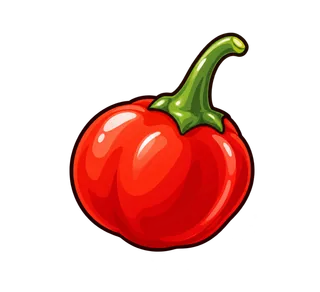
Peppadew
Pickled cherry pepper
Sweet cherry peppers make the closest swap by shape, but they need sugar to taste right. The Peppadew swap list works out how much to add for each alternative, and the cherry pepper has its own entry with the sweet and hot types.
How do you serve and stuff Peppadews?
Straight from the jar, or filled. The maker says each pepper is cored by hand, which makes them perfect for stuffing5.
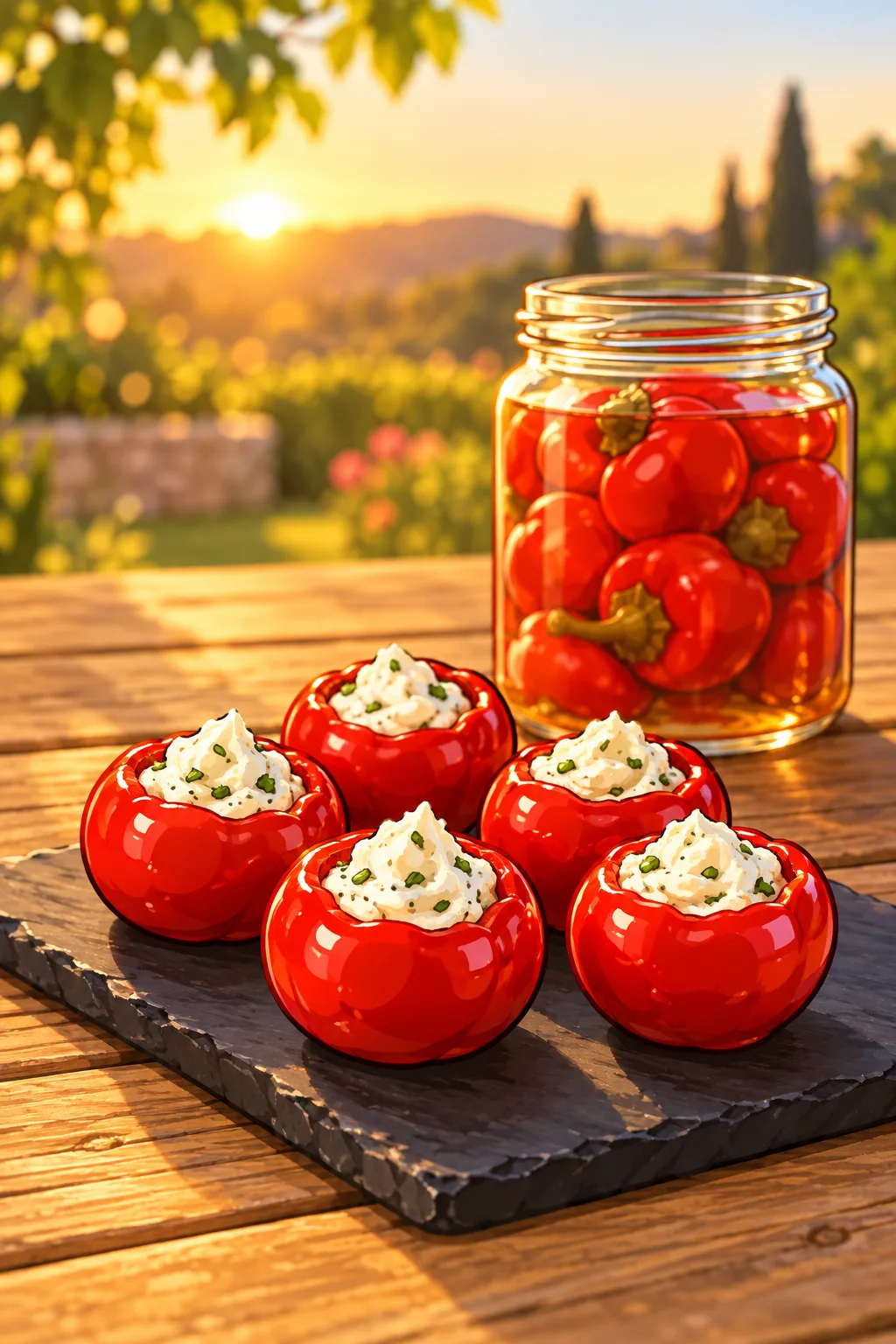
- Stuffed with soft cheese. Drain the peppers on paper towels first, then pipe or spoon in cream cheese or goat's cheese; a dry pepper holds the filling better.
- On a pizza or flatbread. Halve them and scatter them on after baking, so the sugar doesn't scorch.
- In a salad or grain bowl. Slice them into rings for sweet, sharp bites against bitter leaves.
- Chopped into a sauce. The maker sells a chopped jar9; a spoonful lifts a cream sauce or a dressing.
Keep the brine when the jar is empty. It's sweet, sharp and pepper-flavored, and a spoonful in a vinaigrette or a marinade does the job of sugar and vinegar at once.
Should you buy the mild jar or the hot jar?
Buy mild for stuffing and for anyone wary of heat; buy hot when the peppers are the only spicy thing on the plate. Both jars carry the same sugar, salt and calories per 100 g; the hot one simply adds chilli extract for a moderate heat8.
That added extract changes how you use them. A mild Peppadew stuffed with soft cheese reads as sweet and creamy, so it suits a children's table or a buffet. A hot one stuffed the same way gives you a sweet bite with a kick at the end, which works with salty cured meat or a cold beer. If you can only keep one jar in the fridge, the mild one covers more dishes, and you can add heat with a few flakes of chili on top.
Can you grow your own Peppadew peppers?
Not as Peppadews: the name is a trademark and the company sells peppers, not plants, on the pages we read1. What you can grow is the same species. C. baccatum also gives you the Peruvian ají amarillo, so a seed catalog's baccatum section is where you'd look for a round, mild-to-medium pod to pickle yourself.
If you try, pick your pods fully red, core them, and pickle them in a tested sweet brine. You won't match the maker's recipe, and the heat of your homegrown pods may run higher, so taste one before you fill a tray. Still, a homemade jar of round red peppers with sugar in the brine gives you the same sweet, sharp bite on a cheese board.
What goes wrong with an open jar of Peppadews?
Most problems come from the fridge, the brine or the heat you expected.
Peppadew problems and their fixes
- You opened a jar weeks ago: once open, keep it in the fridge and use it within 4 weeks, as the maker's US label says.6
- Stuffed peppers turned soggy: you didn't drain them. Pat them dry before filling, and fill shortly before serving.
- Your guests wanted heat: the mild jar is under 650 SHU. Buy the hot jar, which adds chilli extract.18
- Your 'Peppadews' tasted sour and seedy: they were cherry peppers sold under the wrong name. Look for the PEPPADEW trademark.1
- The dish came out too sweet: each 100 g holds 18.9 g sugar. Cut the sugar elsewhere in the recipe.5
Your next step: if you want a pepper in the same spirit that you can grow yourself, browse the mild peppers in the index, every one of them under 2,500 SHU and many sweet enough to stuff. For tapas, the Spanish piquillo is the other jarred red pepper worth keeping next to your Peppadews.
Related peppers
Published ranges.10
Related in Peppers
-
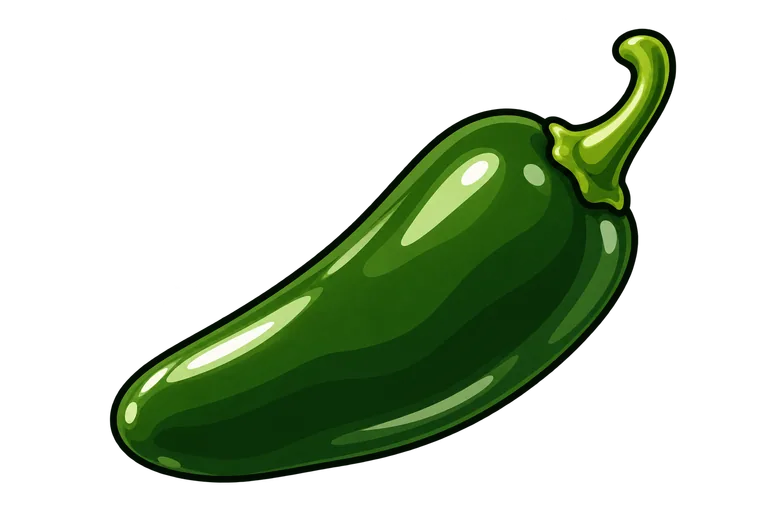
Jalapeño Scoville, 2,000–8,000 SHU and Chipotle
The medium-heat chile most heat comparisons start from.6 min read -
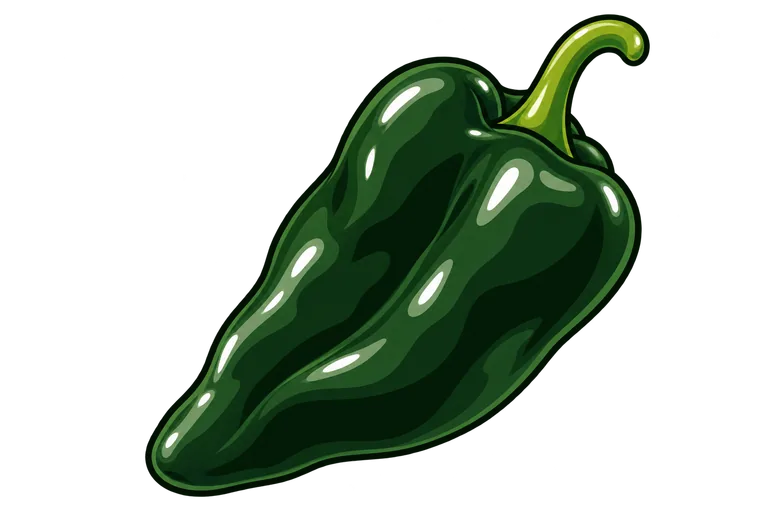
Poblano Pepper Scoville, 1,000–2,000 SHU
A big, thick-walled, mild chile from the valley of Puebla.5 min read -
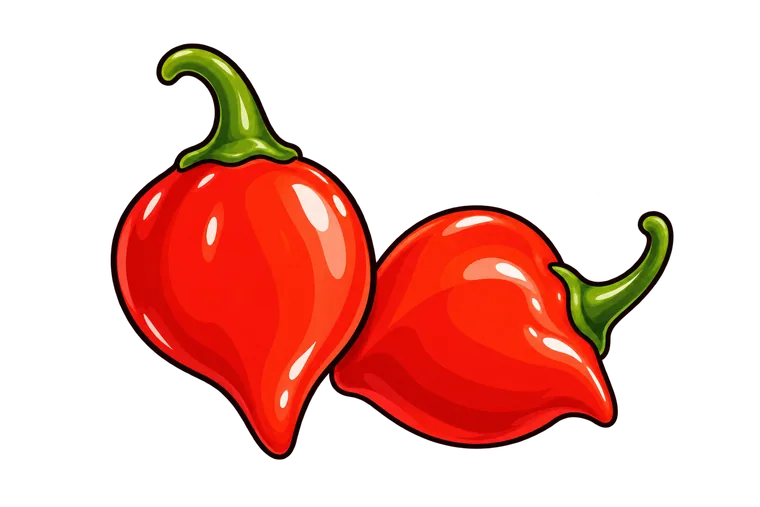
Biquinho Pepper, the 2.6 cm Brazilian Pod With No Heat
A crunchy little red pod Brazil eats pickled, often with no burn at all.6 min read -
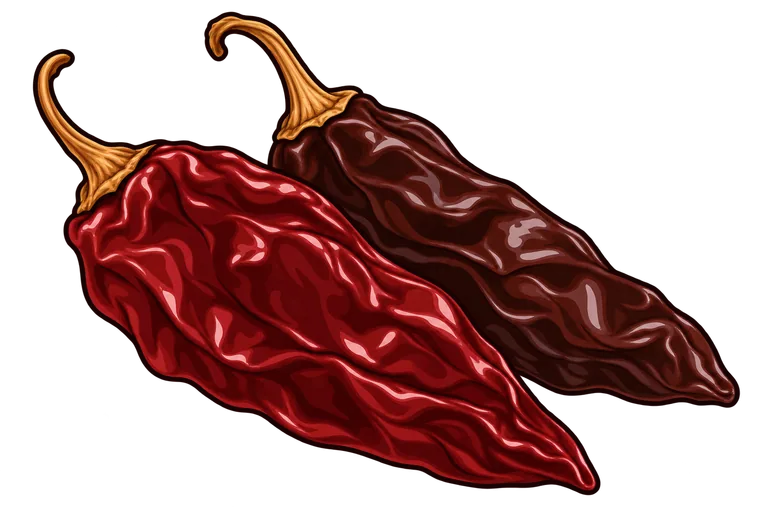
Aji Panca Heat, 500–1,500 SHU, Peru's Great Dried Ají
Peru's dark, mild, berry-scented dried pepper: almost never eaten fresh, always there for color.6 min read -
Cubanelle Pepper Scoville, About 1,000 SHU
A long, thin-walled sweet pepper made for the frying pan.5 min read -
Mirasol Chile, 2,500–5,000 SHU Before It Dries to Guajillo
The fresh name of the chile that Mexico dries into guajillo, and two namesakes from Peru and New Mexico.5 min read
Sources
· 10
- 1PEPPADEW International (Pty) Ltd, maker's page FAQs
- 2PEPPADEW International (Pty) Ltd, maker's page About
- 3Brand South Africa (government agency) SA's Peppadew to take bite of US (Janine Erasmus)
- 4Peppadew USA (maker's US site) Our Story
- 5PEPPADEW International (Pty) Ltd, maker's page for its own product Sweet Piquanté Peppers Mild Whole 400g
- 6Peppadew USA (maker's US site), own product Sweet & Spicy Juanita Piquante Peppers Mild Whole 14 oz
- 7University of Florida IFAS Extension HS-859/TR010: Pepper Production in Miami-Dade County, Florida (Wang, Zhang, Li, Seal, Klassen, Olczyk)
- 8PEPPADEW International (Pty) Ltd, maker's page for its own product Sweet Piquanté Peppers Hot Whole 400g
- 9PEPPADEW International (Pty) Ltd, maker's page Piquante Peppers concept
- 10New Mexico State University, Chile Pepper Institute (seed shop) Red Cherry Sweet Pepper