
Aji Panca Heat, 500–1,500 SHU, Peru's Great Dried Ají
Peru's dark, mild, berry-scented dried pepper: almost never eaten fresh, always there for color.
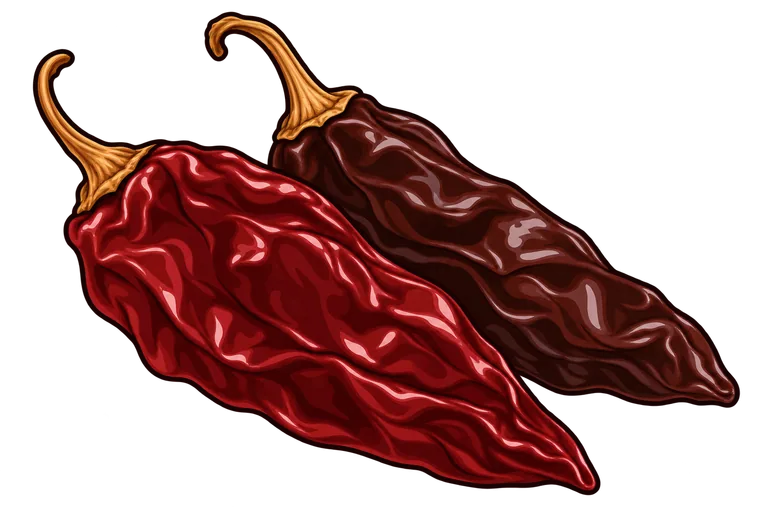 Mild
500–1,500 SHU, mild and dark
- Dried on the plant; Peruvians eat almost none of it fresh
- Peru's gene bank lists 12 panca accessions, 149–189 days in the field
On this page
- 1How hot is aji panca?
- 2What does aji panca look and taste like?
- 3Which species is aji panca?
- 4Why do Peruvians use aji panca dried?
- 5Which Peruvian dishes depend on aji panca?
- 6What did Peru's gene bank record about aji panca?
- 7Can you grow aji panca in your own garden?
- 8How long does dried aji panca keep?
- 9What goes wrong when you cook with aji panca?
How hot is aji panca?
Mild: the ingredient supplier PRODERNA rates its panca at 500 to 1,500 SHU, with a mild lingering heat1. Peru's own sources say the same in words. The state news agency Andina calls it one of the least hot ajíes and one of the most intense in color5, and Bioversity's market guide calls its pungency low4.
That puts it at or below a poblano, which runs 1,000 to 2,000 SHU6, and far below an average jalapeño at about 5,000. Aji panca is in your pot for color and a dark, fruity depth, not for heat, so you can use it by the spoonful.
It's a surprise for a pepper that Peru's gene bank files under C. chinense, the species of the habanero at 100,000–350,000 SHU6. Panca shows how wide one species can run, from among the hottest pods you can buy to one you could almost eat like a sweet pepper.
Does the gene bank's capsaicin figure agree?
Roughly, with a margin worth knowing about. INIA's 2025 catalog gives 17.12 mg of capsaicin per 100 g for two panca accessions2. That's 171.2 parts per million, and labs turn parts per million into SHU by multiplying by 167: 171.2 × 16 ≈ 2,700 SHU.
So the gene bank's pods may run a bit hotter than the supplier's range, perhaps because the catalog doesn't say whether it measured fresh or dried weight. Read 500 to 1,500 SHU as a typical dried pod, and allow that an individual lot might reach toward 3,000.
What does aji panca look and taste like?
Long, broad and dark, with a fruity smell when you open the bag. INIA records the fruit as elongated and brown, with a ring-shaped constriction near the top, on an upright plant2; Andina says the ripe pod runs from dark red to chocolate5.
Both suppliers agree on a pod roughly the length of your hand and a few centimeters wide. PRODERNA's flavor note, fruity and berry-like with a smoky edge1, is what you'll smell when you crush a dried pod, even though no one smoked it: the smokiness comes from the pod itself.
- Fruity
- Smoky
- Dark red
Which species is aji panca?
It depends on whom you ask, and we go with the botanists. Here's what each source we read says:
What the sources say about panca's species
- Peru's INIA germplasm catalog (2025): Capsicum chinense, for all 12 panca accessions.2
- The genus monograph: lists Aji Panca among the Peruvian common names of C. chinense.3
- Bioversity's 2013 market guide: C. chinense in its table, but C. baccatum in a photo caption.4
- Ingredient suppliers: PRODERNA labels it C. baccatum, Spices, Inc. C. annuum.18
The gene bank keeps living seed of the pepper and the monograph is the reference work for the genus, so we print C. chinense. For your cooking it changes nothing; for your garden it does, because a chinense plant wants the long, hot season you'd give a habanero. It also explains the flowers: the gene bank records two flowers per node with greenish-yellow petals and purple anthers2, so if your seedlings flower white with single blooms, the seed you bought may not be panca at all. That's a check you can make months before the first pod, and it saves you a whole season.
Why do Peruvians use aji panca dried?
Because that's how the pepper reaches its best. Andina calls it "the great dried ají of Peru" and says people eat very little of it fresh5. PRODERNA adds that the pods dry on the plant and sell dried, whole or ground1.
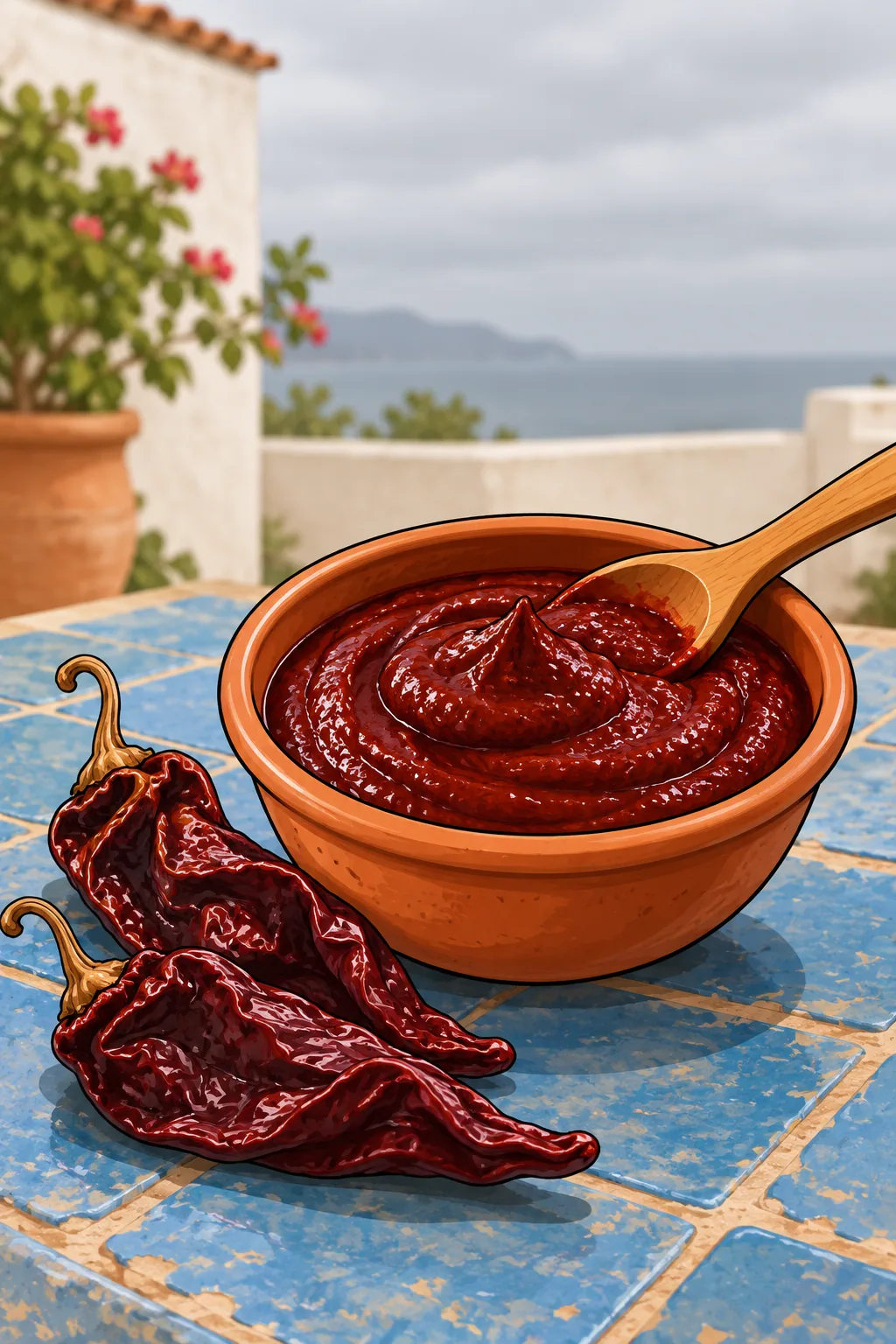
Bioversity's guide says the same: consumers use panca mainly dehydrated, in sauces, and the snack industry buys it largely for its color4. In your kitchen that means a jar of paste or a bag of whole dried pods, not fresh peppers.
If you buy whole pods, soften them in hot water before you blend them into a paste, the same way you'd treat any dried chile. If you buy paste, a spoonful goes a long way for color, and you'll rarely make a dish too hot with it.
Which Peruvian dishes depend on aji panca?
Bioversity's guide lists the dishes where cooks use it as a seasoning4. Each one leans on panca for its deep red color more than for heat.
- Adobo, the marinated pork stew, where panca gives the sauce its color.
- Chupe, the hearty soup of the south.
- Escabeche, fish or chicken with vinegar and onions.
- Patita con maní, pork trotters with peanuts.
- Carapulcra con sopa seca, dried potato stew served with noodles.
- Pachamanca, meat and vegetables cooked in an earth oven.
- Parihuela, a seafood soup from the coast.
Peruvians clearly buy it: in a survey in the same guide, 75 % of respondents named aji panca among the ajíes they use, second only to aji amarillo at 89 %4. The two often go together in one pot, and the panca and amarillo pair page shows how their heat and color differ.
How much heat does a spoonful of panca add?
Very little, which is the point. Take the middle of the supplier range, 1,000 SHU1, against an average 5,000 SHU jalapeño6: you need about 5 g of panca to bring the heat of 1 g of jalapeño.
| Aji panca | Heat like this much jalapeño |
|---|---|
| 5 g | About 1 g |
| 10 g | About 2 g |
| 25 g, a generous spoonful of paste for a family pot | About 5 g |
So you can season with your eyes. Add panca until the sauce turns the deep brick red you want, and only reach for a hotter chili if your family wants more bite than the color brings.
What did Peru's gene bank record about aji panca?
The INIA catalog, published in August 2025, describes 12 panca accessions kept as living seed, most of them collected at Barranca in Lima, with single samples from Cajamarca, Loreto and Puno2.
| Trait | Recorded value |
|---|---|
| Accessions | 12 |
| Plant habit | Upright |
| Flowers | Greenish-yellow corolla, purple anthers, 2 per node |
| Fruit | Elongated, brown, with a ring constriction |
| Field season (vegetative period) | 149–189 days |
| Yield | About 3,700 to 21,000 kg per hectare across accessions |
| Capsaicin, one page of two accessions | 17.12 mg per 100 g |
That season length matters if you grow it. At 149 to 189 days in the field, a panca plant needs about five to six months of warm weather, so in a temperate garden you'd start seed indoors very early and still harvest late. The yield spread, almost sixfold, shows how much the accessions differ.
- Grow 149–189 daysUpright plants, mostly on the coast
- Ripen dark redYellowish green to burgundy
- Dry on the plantSold whole or ground
- Paste or powderSauces and snack color
- Into the potAdobo, chupe, escabeche
Sources for this line1. PRODERNA (J.H. Lüttge GmbH), ingredient supplier, spec for its own product2. Instituto Nacional de Innovación Agraria (INIA) and MIDAGRI, Peru4. Bioversity International, with INIA and Peru's Ministry of Agriculture and Irrigation
The trade has grown with it. INIA's catalog quotes PromPerú: Peru exported US$86,132,689 of Capsicum products from January to June 2025, with aji panca named among them2.
Can you grow aji panca in your own garden?
Yes, if you can give it a long, warm season. With 149 to 189 days in the field recorded by Peru's gene bank2, your plants need five to six warm months, longer than most garden chiles. Iowa State's guide has you sow chiles indoors 6 to 8 weeks before planting out and set them 18 inches apart once frost has passed9; for panca, start at the early end of that window or earlier.
Plan for an upright plant, the habit INIA records2, that you can grow in a big pot and carry into a greenhouse or sunroom when autumn cools. Red color builds best at 65 to 75 °F and stops below 55 °F9, so a pot you can move indoors on cold nights gives your pods the extra weeks they need to turn burgundy.
Once the pods turn deep red, you can follow the Peruvian habit and let them dry on the plant1, then finish them indoors in a warm, airy spot until they snap. A single plant won't fill your pantry, but it gives you enough pods for a paste or two from your own garden.
How long does dried aji panca keep?
At least a year, if you keep it cool and dry. Spices, Inc. gives a minimum shelf life of 12 months under good conditions, stored cool, dry and away from direct light, with moisture at 15 % or less8.
Keeping your aji panca
- Cool, dry and dark: away from the stove and the window.8
- Clean dry jars or tight freezer containers, filled in small amounts so each opening lets in less air.10
- Check the jar for condensation; damp pods go into a dish soon or back in the dryer, and moldy ones go in the bin.10
- Paste: follow the jar's own label once opened, and keep it in the fridge.
A whole pod keeps its aroma longer than powder, so buy whole when you can and grind or soak only what you need for the week. If you cook Peruvian food often, a sealed bag of whole pods in a dark cupboard and one small jar of paste in the fridge cover you for months, and you'll never stand at the stove with an empty jar halfway through an adobo.
What goes wrong when you cook with aji panca?
Most problems come from expecting heat it doesn't have, or from the dried form.
Aji panca problems and their fixes
- Your adobo has color but no kick: panca runs only 500–1,500 SHU. Add a little aji amarillo or a pinch of hotter chili.1
- Your sauce is gritty: whole dried pods need softening. Soak them in hot water before you blend, then sieve.
- Your bag smells musty: the pods took on moisture above the 15 % spec. Throw out anything moldy and keep the rest sealed and dry.8
- Your homegrown plants never ripened: panca needs 149–189 days in the field. Start seed indoors early and give it your warmest spot.2
Can't find it at all? The aji panca swap list builds a close paste from ancho and paprika, with gram amounts, so you can cook tonight's adobo with what your spice rack already holds.
Your next step is the rest of the family: Peru's other famous pepper, the aji amarillo, is the one panca most often shares a pot with.
Related peppers
Published ranges.6
Related in Peppers
-
Jalapeño Scoville, 2,000–8,000 SHU and Chipotle
The medium-heat chile most heat comparisons start from.6 min read -
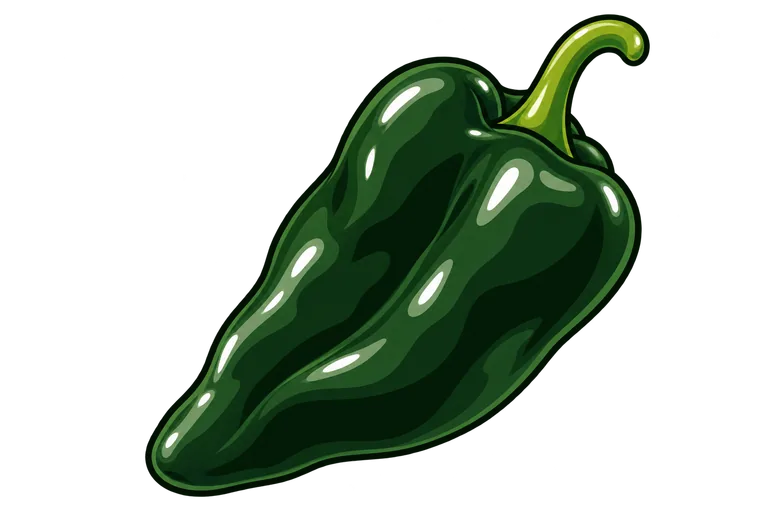
Poblano Pepper Scoville, 1,000–2,000 SHU
A big, thick-walled, mild chile from the valley of Puebla.5 min read -
Aji Charapita, the Pea-Sized Amazon Chile at 30K–50K SHU
A tiny yellow chile from Iquitos and Pucallpa with a citrus aroma and a heat seed sellers compare to cayenne.6 min read -
Paprika Scoville Heat, Sweet Under 500 SHU or Hot Over 8,000
A ground red pepper sold for color first and heat second.7 min read -
Serrano Pepper Scoville, 10,000–25,000 SHU
A slim, fleshy chile one clear step above the jalapeño.5 min read -
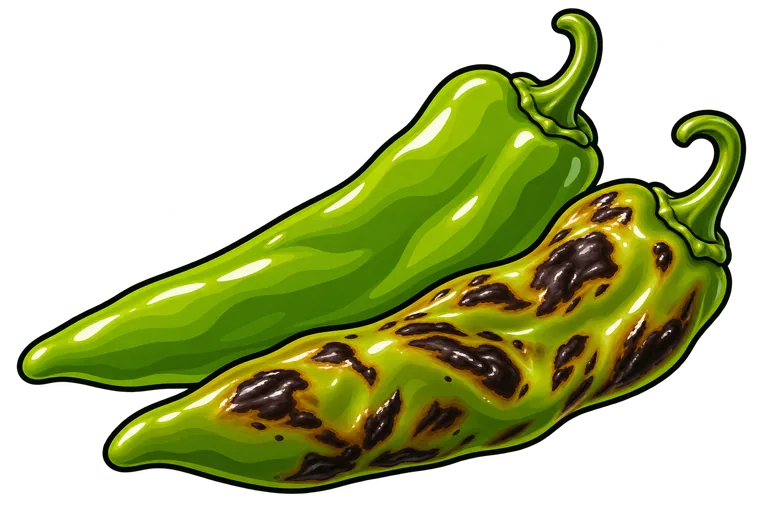
Hatch Chile Heat, 300–9,000 SHU Across NuMex Types
The long green chile of southern New Mexico, named after the town where it first grew for market.6 min read
Sources
· 10
- 1PRODERNA (J.H. Lüttge GmbH), ingredient supplier, spec for its own product Panca (whole and powder)
- 2Instituto Nacional de Innovación Agraria (INIA) and MIDAGRI, Peru Catálogo de ajíes nativos del banco de germoplasma del INIA (ISBN 978-9972-44-199-8)
- 3PhytoKeys 200:1-423 (Pensoft) Monograph of wild and cultivated chili peppers (Capsicum L., Solanaceae)
- 4Bioversity International, with INIA and Peru's Ministry of Agriculture and Irrigation Guía de oportunidades de mercado para los ajíes nativos de Perú (Jäger, Jiménez, Amaya, compilers)
- 5Andina, Agencia Peruana de Noticias (Peru's state news agency) Día de los Ajíes Peruanos: conoce a los embajadores de las cocinas regionales
- 6University of Florida IFAS Extension HS-859/TR010: Pepper Production in Miami-Dade County, Florida
- 7HortScience 42(2):222-224 'Bhut Jolokia', the world's hottest known chile pepper, is a putative naturally occurring interspecific hybrid
- 8Spices, Inc. (supplier, specification for its own product) Product Specification: Aji Panca Chile 100635, rev. 3/28/2024
- 9Iowa State University Extension PM 1888(S): Guía de Horticultura, El huerto doméstico, Chiles (Everhart, Haynes, Jauron)
- 10National Center for Home Food Preservation (University of Georgia) Packaging and Storing Dried Foods