
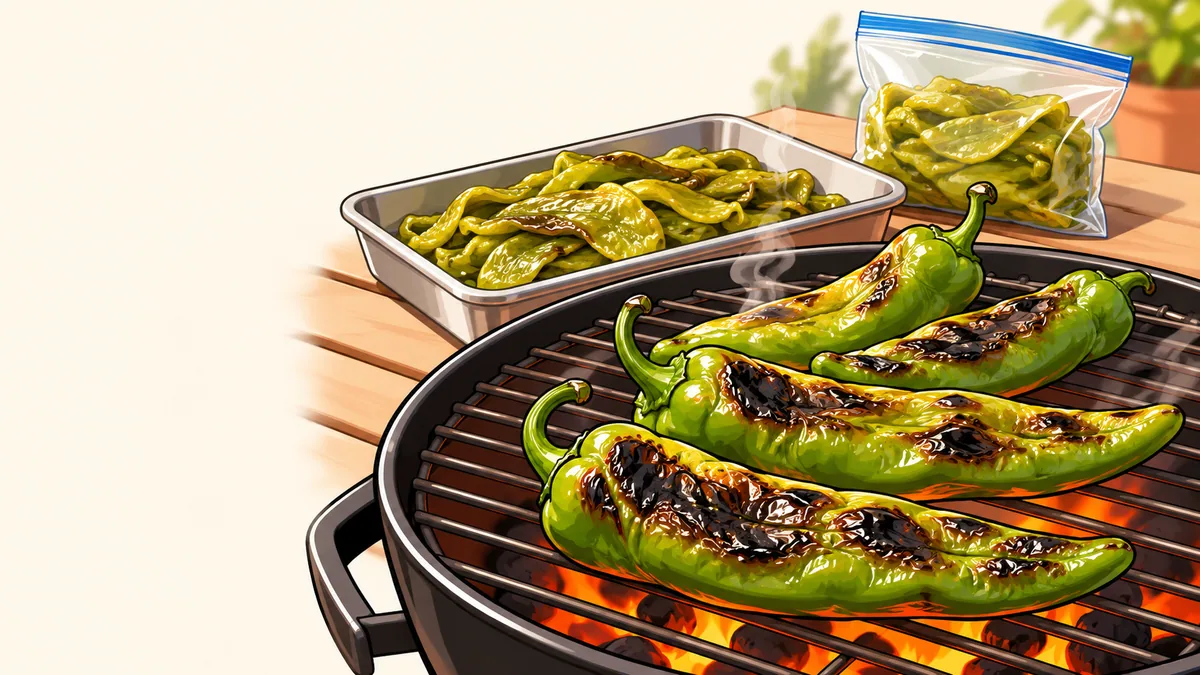
Hatch Chile Heat, 300–9,000 SHU Across NuMex Types
The long green chile of southern New Mexico, named after the town where it first grew for market.
 Medium
Short answer
No variety is called Hatch: the name means New Mexican chile from the Hatch Valley.
- Named NuMex types run from 300 SHU to 7,000–9,000 SHU
- New Mexico harvested 8,000 acres of chile in 2024
On this page
- 1Is Hatch chile a variety or a place?
- 2How hot is a Hatch chile?
- 3Is Hatch chile the same as New Mexico chile?
- 4Who bred the first New Mexican chile?
- 5Should you pick your Hatch chiles green or red?
- 6How do you cook with Hatch chiles?
- 7How much chile does New Mexico grow?
- 8How do you roast and peel Hatch chiles at home?
- 9How long do roasted Hatch chiles keep?
- 10What are the NuMex ornamentals doing in the Hatch list?
- 11What goes wrong when you buy or cook Hatch chiles?
- 12Where to go from here with Hatch chiles
Is Hatch chile a variety or a place?
A place. New Mexico State University's Chile Pepper Institute puts it plainly: there is no chile variety named Hatch3. The name comes from the town of Hatch, about 40 miles north of the university, where the long green New Mexican pod type was first grown for market before it spread across the state3.
So when you buy a box labeled Hatch, you're buying a growing area. The chile inside can be any of several New Mexican cultivars, and the CPI lists NuMex Big Jim, NuMex Joe E. Parker, NuMex Conquistador, Española Improved, Sandia, Anaheim and New Mexico 6-4 as types you may find with a Hatch label3.
Ask which cultivar is in the box, because that decides the heat, not the word Hatch.
How hot is a Hatch chile?
Anywhere from barely warm to a solid medium, depending on the cultivar. NMSU's cultivar report gives 300–500 SHU for New Mexico 6-4 at the low end and 7,000–9,000 SHU for NuMex Heritage Big Jim at the top1. Most named types sit between 500 and 2,000 SHU.
Log scale; bars are published ranges.Sources for this line1. New Mexico State University, Agricultural Experiment Station (Research Report 792)5. UF/IFAS Gardening Solutions6. University of Florida IFAS Extension
The chart draws the whole spread of the NuMex types. If you're used to an Anaheim, which belongs to the same pod type, most Hatch cultivars will feel familiar; the Heritage Big Jim is the one that can match a mild jalapeño.
Which NuMex chile runs how hot?
NMSU released these New Mexican cultivars and printed their heat in its 2018 cultivar report1. The table lists every one that has a published figure.
| Cultivar | Released | Heat | Bred for |
|---|---|---|---|
| New Mexico 6-4 | 1957 | 300–500 SHU | Canning green chile; earlier than No. 9 |
| NuMex R Naky | 1985 | 260–760 SHU | Low heat and red color for paprika |
| NuMex Joe E. Parker | 1990 | about 800 SHU | Green and red chile in southern New Mexico |
| NuMex Big Jim | 1975 | 500–2,000 SHU | Green chile, dry red, mechanical harvest; a relleno favorite |
| Sandia | 1956 (as Sandia A) | 1,500–2,000 SHU | High green pod yield; home gardens |
| Española Improved | 1984 | 1,500–2,000 SHU | Early red chile for the short northern season |
| NuMex Heritage 6-4 | described 2012 | 1,500 SHU | Uniform heat, yield, the old 6-4 flavor |
| NuMex Heritage Big Jim | described 2013 | 7,000–9,000 SHU | Thick walls and consistent heat |
Two cultivars carry the same name with very different heat, and that catches out a lot of cooks. The original Big Jim tops out at 2,000 SHU, while Heritage Big Jim starts at 7,0001. If your recipe calls for Big Jim and your guests are heat-shy, check which one the farm grew.
Which one should you buy for your dish?
| If you want | Pick | Why |
|---|---|---|
| Big pods to stuff for rellenos | NuMex Big Jim | Pods about 7.7 inches long; NMSU calls it a relleno favorite 1 |
| The mildest green chile for a crowd | New Mexico 6-4 | 300–500 SHU 1 |
| A green chile with real bite | NuMex Heritage Big Jim | 7,000–9,000 SHU 1 |
| Red chile in a short season | Española Improved | Bred to ripen red early in north-central New Mexico 1 |
Is Hatch chile the same as New Mexico chile?
"New Mexico chile" is a legal claim about the state; "Hatch" is a place name inside it. The New Mexico Chile Advertising Act makes it unlawful to sell a product in a way that leads you to believe its chile came from New Mexico when it didn't, and a violation can bring a stop-sale2. The CPI adds that a chile labeled Hatch must come from New Mexico3.
New Mexican pod typeBig Jim, Sandia, 6-4 and others
- Grown in the Hatch ValleySold as Hatch chileMedium
- Grown elsewhere in New MexicoSold as New Mexico chile
- Grown outside New MexicoCannot carry the New Mexico chile name
The Act's own definition of chile pepper covers all Capsicum annuum fruit, so it reaches jalapeños and bell peppers too2. Growers under 20,000 pounds a year skip the record-keeping, though they still file the forms that prove where the chile grew2. For you as a shopper, the practical rule is short: a Hatch or New Mexico label tells you the state, and the cultivar tells you the heat.
Who bred the first New Mexican chile?
Fabián García did, at the college that became NMSU. He was one of five students in its first graduating class in 1894, and his work produced the first long green New Mexican pod type; his New Mexico No. 9 of 1921 stayed the standard chile for the next 30 years3. Every cultivar in the table above descends from that program.
- 1921
New Mexico No. 9
García's chile, the standard for three decades.3
- 1956
Sandia
Released as Sandia A; a home-garden favorite for its green yield.1
- 1957
New Mexico 6-4
The mild canning chile behind many green chile jars.1
- 1975
NuMex Big Jim
Long pods for rellenos, green chile and dry red.1
- 1984
Española Improved
An early red chile for the short northern season.1
- 1990
NuMex Joe E. Parker
Bred for green and red in the south of the state.1
That history explains why the same farm can sell you three or four different "Hatch" chiles in one season. Growers pick the cultivar that suits their buyers, and the town name goes on every box.
Should you pick your Hatch chiles green or red?
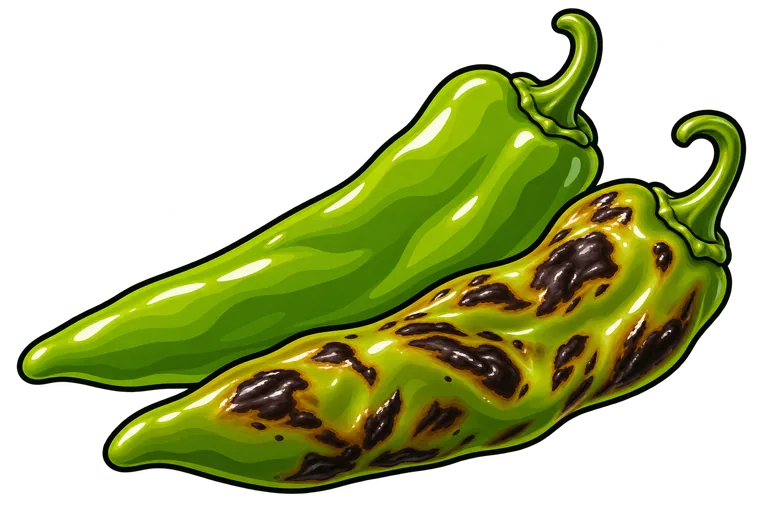
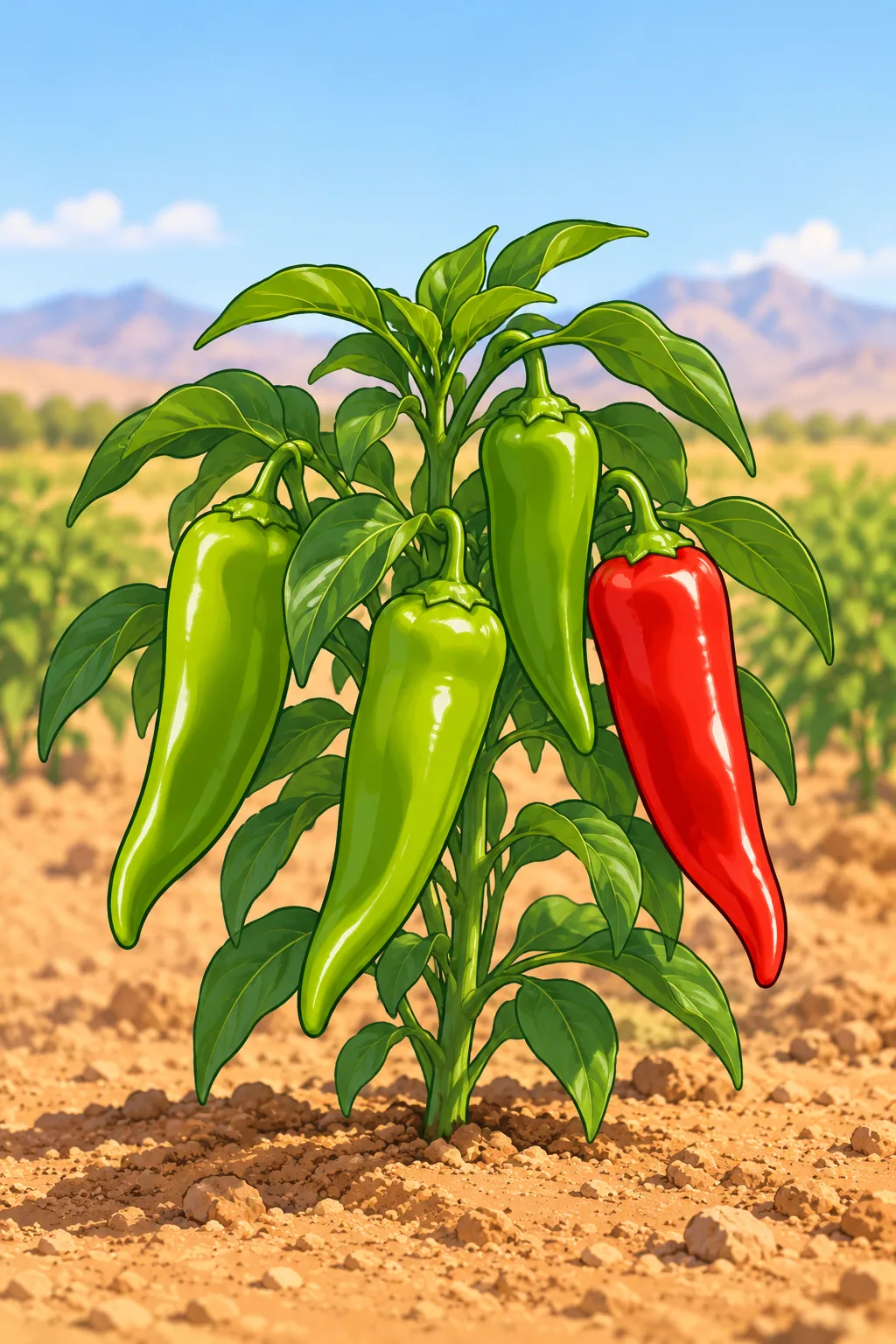
The same pod gives you both. You pick it green for roasting, or leave it on the plant until it turns red for drying and red chile sauce. UF/IFAS gives the timing for the Anaheim, a New Mexican type: about 80 days to a mature green pod and more than 120 days to a ripe red one6.
NMSU bred some cultivars with one color in mind. Española Improved ripens red early enough for a short northern season, NuMex R Naky carries strong red color with little heat for paprika, and NuMex Joe E. Parker was selected for its yield of red chile after the green harvest1. If you grow your own, leave a few plants unpicked in September and you'll have both colors from one row.
How do you cook with Hatch chiles?
Roast first, then use the peeled flesh almost anywhere you'd use a mild vegetable with a kick. These are kitchen starting points, so adjust to your batch's heat.
- Green chile stew: chop four to six roasted, peeled pods per pot and simmer them with pork or potatoes; add the chile in the last half hour so it keeps its shape.
- Rellenos: NMSU calls Big Jim a favorite for chile rellenos1. Roast and peel carefully so the pod stays whole, then stuff it with cheese.
- Burgers and eggs: a spoonful of chopped roasted chile from a freezer bag goes straight onto the plate.
- Red chile sauce: soak dried red pods, blend them with garlic and stock, and simmer until it coats your spoon; the enchilada sauce recipe gives you the ratios.
Because heat varies so much between cultivars, taste one roasted pod before you chop a whole bag into a dish for guests.
How much chile does New Mexico grow?
Less land than you might think for a chile you see in every Southwest grocery each August. USDA's 2024 report counts 8,000 acres harvested statewide, producing 52,000 tons7.
8,000 acreschile harvested in New Mexico, 20247
43,400 tonsgreen chile of the 52,000 total7
$52.2 millionvalue of the 2024 crop7
79.9%sold for processing, not fresh7
Most of the harvest goes to processors, so the frozen or canned green chile in your store is the usual way the crop reaches you. Doña Ana County, home of Hatch, keeps its 2024 acreage confidential in the report; Luna County next door harvested 2,490 acres7. NASS's green chile figures also include Anaheim and jalapeño, so the totals cover more than the classic long green pod7.
How do you roast and peel Hatch chiles at home?
Blister the skin over high heat, steam the pods, then pull the skin off. NMSU Extension's guide gives the method, and the drum roasters you see at a late-summer stand do the same job in bulk4.
- 1
Pick and prep
Choose heavy, smooth, bright green pods. Wash, dry and cut a small slit in each so steam can escape.4
- 2
Blister them
Use a broiler or grill at 400–450°F, or coals 5–6 inches below the grate, for 6–8 minutes, turning often until the skin puffs and chars.4
- 3
Steam
Put the hot pods in a covered heat-safe container or food-grade bag so the trapped steam loosens the skin.4
- 4
Peel
Once cool, tug the skin off; scrape stubborn spots with a knife or peeler.4
- 5
Chill fast
Refrigerate within 2 hours of roasting, then use or freeze within 3 days.4
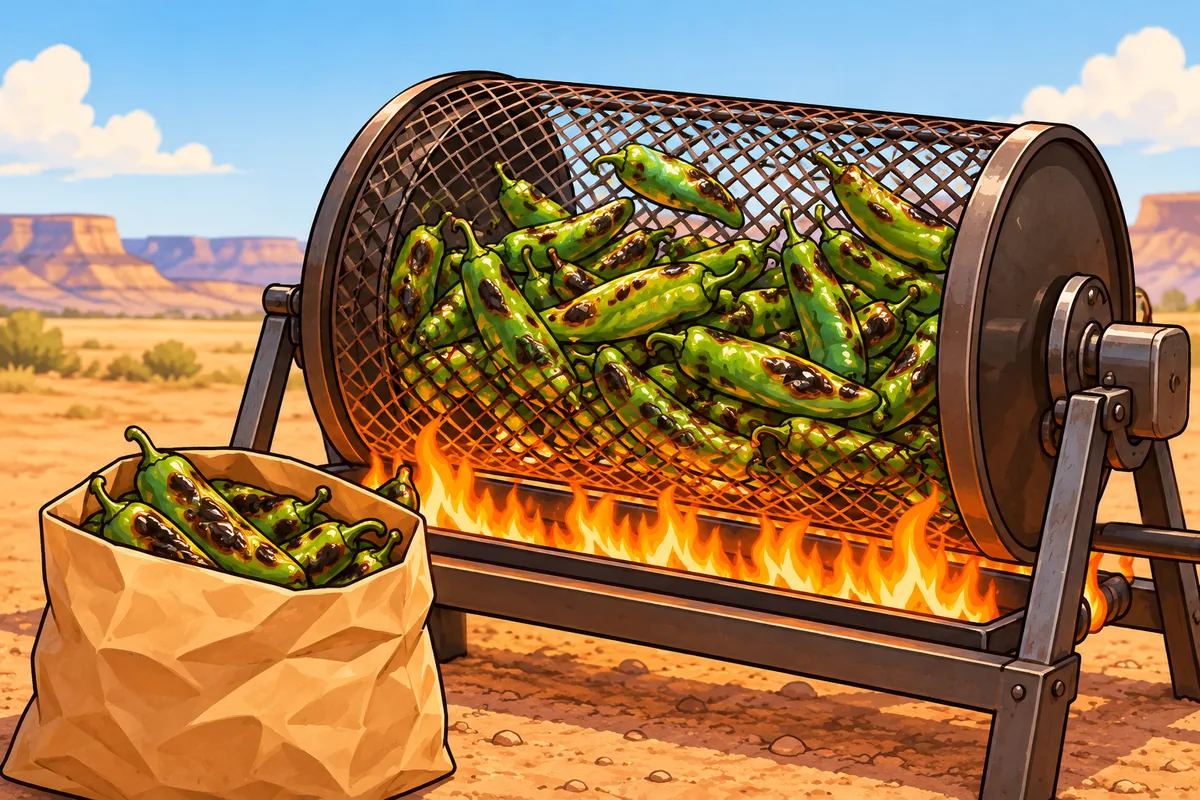
The guide also says you can freeze pods unpeeled and peel them after thawing, which saves you an evening of peeling on harvest day4. If you want a crisper chile for salsa, NMSU suggests a dip in ice water as the pods come off the heat. The general method for other peppers sits on the pepper roasting page.
Chiles and Smoke made this video on roasting and prepping Hatch chiles on a grill and in an oven, so you can watch the blistering, steaming and peeling before you try it, and remember that Hatch names where the pods grew, not one variety.
How long do roasted Hatch chiles keep?
Up to a year in the freezer if you pack them right, and only days in the fridge. These are NMSU's rules4:
Storage rules for roasted green chile
The 2-inch limit matters more than it looks. A home freezer can't pull heat out of a deeper pack fast enough, so ice crystals form in the flesh and you get mushy chile in March4. A bushel split into flat bags of one meal each solves that and lets you thaw only what you need.
What are the NuMex ornamentals doing in the Hatch list?
They show up in your search results beside Big Jim because NMSU bred them too, but you won't roast them. NuMex Centennial (1988), NuMex Twilight (1993) and NuMex Easter (2010) are small potted plants with purple pods that ripen through yellow and orange; NMSU never measured their heat1. If you want a Twilight for a windowsill, it makes a good gift; if you want green chile for stew, it's the wrong plant.
What goes wrong when you buy or cook Hatch chiles?
Most problems you'll meet come from the label, the gloves or your freezer.
Problems and fixes
- The batch is far hotter than last year's: you may have Heritage Big Jim at 7,000–9,000 SHU instead of Big Jim at 500–2,000. Ask the grower for the cultivar.1
- Your hands burn after peeling a bushel: NMSU suggests rubber gloves or a thin layer of solid fat on your hands, and plain vinegar to ease the sting.4
- Frozen chile turned mushy: the packs were deeper than 2 inches or went in warm.4
- A box says New Mexico chile but the farm is out of state: report it to the New Mexico Department of Agriculture, which enforces the Act.2
Peeling a big batch puts a lot of capsaicin on your skin. Poison Control advises rinsing an eye with plenty of warm water for 15 minutes, and calling 911 for any trouble breathing9.
Where to go from here with Hatch chiles
If you're deciding between Hatch and a poblano for rellenos, the Hatch chile and poblano comparison puts their heat, size and uses side by side.
Out of season, the Hatch chile swap list gives other green chiles with amounts. And if you'd rather plant your own Big Jim, the Hatch chile grow guide covers the long, hot season these cultivars want, so you can roast your first batch next August.
Related peppers
Related in Peppers
-
Paprika Scoville Heat, Sweet Under 500 SHU or Hot Over 8,000
A ground red pepper sold for color first and heat second.7 min read -
Aji Panca Heat, 500–1,500 SHU, Peru's Great Dried Ají
Peru's dark, mild, berry-scented dried pepper: almost never eaten fresh, always there for color.6 min read -
Cubanelle Pepper Scoville, About 1,000 SHU
A long, thin-walled sweet pepper made for the frying pan.5 min read -
Ñora Pepper, Sweet Pimentón Pod Under 480 SHU
The small round sweet pepper behind Murcia's pimentón.5 min read -
Serrano Pepper Scoville, 10,000–25,000 SHU
A slim, fleshy chile one clear step above the jalapeño.5 min read -
Aleppo Pepper, the Halaby Flake Cured With Oil and Salt
A burgundy flake from the old Silk Road city of Aleppo, sweet and fruity first, with a moderate heat behind it.6 min read
Sources
· 9
- 1New Mexico State University, Agricultural Experiment Station (Research Report 792) The Chile Cultivars of New Mexico State University Released from 1913 to 2016 (Coon and Bosland)
- 2New Mexico Department of Agriculture New Mexico Chile Advertising Act FAQ
- 3New Mexico State University, Chile Pepper Institute Then and Now
- 4New Mexico State University Cooperative Extension (Guide E-324) Processing Fresh Chile Peppers (revised by Nancy C. Flores and Cindy Schlenker Davies)
- 5UF/IFAS Gardening Solutions Peppers by Scoville Units
- 6University of Florida IFAS Extension HS-859/TR010: Pepper Production in Miami-Dade County, Florida
- 7USDA National Agricultural Statistics Service with the New Mexico Department of Agriculture 2024 New Mexico Chile Production
- 8Chiles and Smoke Guide to HATCH CHILES: How to Roast & Prep
- 9National Capital Poison Center (Poison Control) Capsaicin: when the chili is too hot