
Anaheim Pepper vs Jalapeño, the 5× Heat Gap
Two Capsicum annuum pod types whose heat ranges overlap.
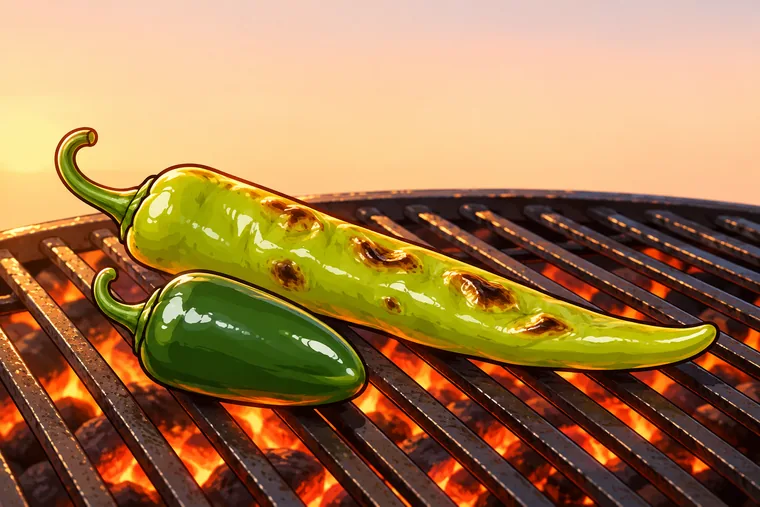
The jalapeño is usually hotter: about 5 times a typical Anaheim, though the two ranges share 2,000–5,000 SHU.
- Anaheim 1,000–5,000 SHU, usually about 1,000; jalapeño 2,000–8,000 SHU, about 5,000 on average
- Anaheim pods reach 7 inches; jalapeños run 2–3 inches
- Different pod types of the same species, Capsicum annuum
On this page
- 1Is an Anaheim pepper hotter than a jalapeño?
- 2Why does the heat vary so much?
- 3How do you tell them apart at the store?
- 4Can an Anaheim ever be as hot as a jalapeño?
- 5Are Anaheim peppers and jalapeños the same?
- 6How do they cook differently?
- 7How do you swap an Anaheim and a jalapeño?
- 8Can you pickle Anaheims the way you pickle jalapeños?
- 9Which plant gives you peppers sooner?
- 10What goes wrong when you mix them up?
Is an Anaheim pepper hotter than a jalapeño?
No, the jalapeño usually wins. UF/IFAS says the Anaheim is mild, usually about 1,000 SHU, with some varieties reaching 5,0002. The jalapeño ranges from 2,000 to 8,000 SHU and averages about 5,0002.
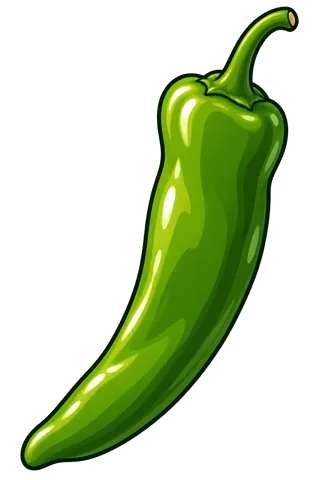
Anaheim
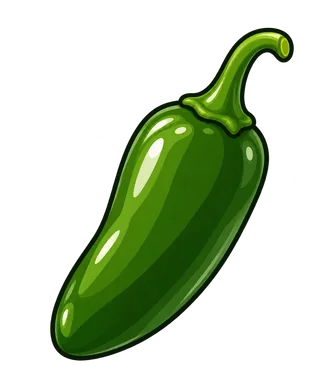
Jalapeño
Hotter- 1,000–5,000 SHU1Heat2,000–8,000 SHU2
- About 1,000 SHU2Typical podAbout 5,000 SHU on average2
- Heirloom fruits up to 7 inches long, 1.5 inches across2PodAbout 2–3 inches long2
- Green to deep red2RipensGreen, turning red after maturity2
- Rellenos, the stuffed fresh New Mexican chile3Best known asChipotle, once smoke-dried red3
A typical Anaheim has about a fifth of a jalapeño's heat, but a hot Anaheim can outrun a mild jalapeño.
Where do the two ranges overlap?
From 2,000 to 5,000 SHU, either pepper in your hand can land anywhere. Here are the three cases worked from the UF/IFAS figures1.
| Case | Anaheim | Jalapeño | Result |
|---|---|---|---|
| Typical pods | 1,000 SHU | 5,000 SHU | jalapeño about 5 times hotter |
| Hot Anaheim, mild jalapeño | 5,000 SHU | 2,000 SHU | Anaheim 2.5 times hotter |
| Mild Anaheim, hot jalapeño | 1,000 SHU | 8,000 SHU | jalapeño 8 times hotter |
That middle row is why a batch of roasted Anaheims sometimes bites harder than you expect. NMSU's garden guide adds a cause you can see in your own yard: water stress, temperature extremes, disease and insects all change a pepper's heat4, so a dry, hot August can push a mild Anaheim up its range.
Why does the heat vary so much?
Because the cultivar you buy decides it. New Mexico State University measured each chile it released, and its own Anaheim-type and jalapeño lines spread far apart5:
| Cultivar | Pod type | Released | Heat | Pod |
|---|---|---|---|---|
| NuMex Joe E. Parker | New Mexican (Anaheim type) | 1990 | About 800 SHU | Not given |
| NuMex Big Jim | New Mexican (Anaheim type) | 1975 | 500–2,000 SHU | 7.68 × 1.89 inches, green |
| NuMex Heritage Big Jim | New Mexican (Anaheim type) | 2008 | 7,000–9,000 SHU | Large, flattened, thick-walled |
| Sandia | New Mexican (Anaheim type) | 1956 | 1,500–2,000 SHU | Not given |
| NuMex Primavera | Jalapeño | 1998 | 8,500–9,000 SHU | 2 × 1 inches |
| NuMex Jalmundo | Jalapeño | 2010 | 17,000 SHU, dry weight | 3.7 × 1.4 inches |
| NuMex Vaquero | Jalapeño | 1997 | 25,000–30,000 SHU | 2.5 × almost 1 inch |
Most Anaheim-type lines here stay far under every jalapeño line; the one exception gets its own section below. So if you know the cultivar on the seed packet or the farm stand sign, you know far more than the generic ranges tell you.
How do you tell them apart at the store?
Length settles it for you. An Anaheim can run to 7 inches, more than twice the longest jalapeño, and it tapers slightly toward the tip with a wrinkled or folded stem end2. A jalapeño you pick up stops at 2 to 3 inches.
| Anaheim | Jalapeño | |
|---|---|---|
| Length | Up to 7 inches in heirloom types | 2–3 inches |
| Stem end | Often wrinkled or folded | No fold described |
| Labels you may see | Anaheim, Hatch, long green, New Mexican | Jalapeño |
Skin can help you with jalapeños. NMSU describes corky skin, or epidermal reticulation, as a jalapeño trait that its newer Spice lines were bred to lack5, so a pod with corky lines is very likely a jalapeño. Color will not help you. Both start green and turn red as they ripen2, and NMSU notes some New Mexican cultivars ripen yellow, orange or brown4. If you see "Hatch" on the sign, you are looking at New Mexican pods, the same type your recipe calls Anaheim.
Can an Anaheim ever be as hot as a jalapeño?
Yes, if it is the right cultivar. NMSU bred NuMex Heritage Big Jim in 2008 as a more flavorful Big Jim, and it tests at 7,000 to 9,000 SHU5. That matches NuMex Primavera, a jalapeño NMSU bred for uniformly mild heat at 8,500 to 9,000 SHU.
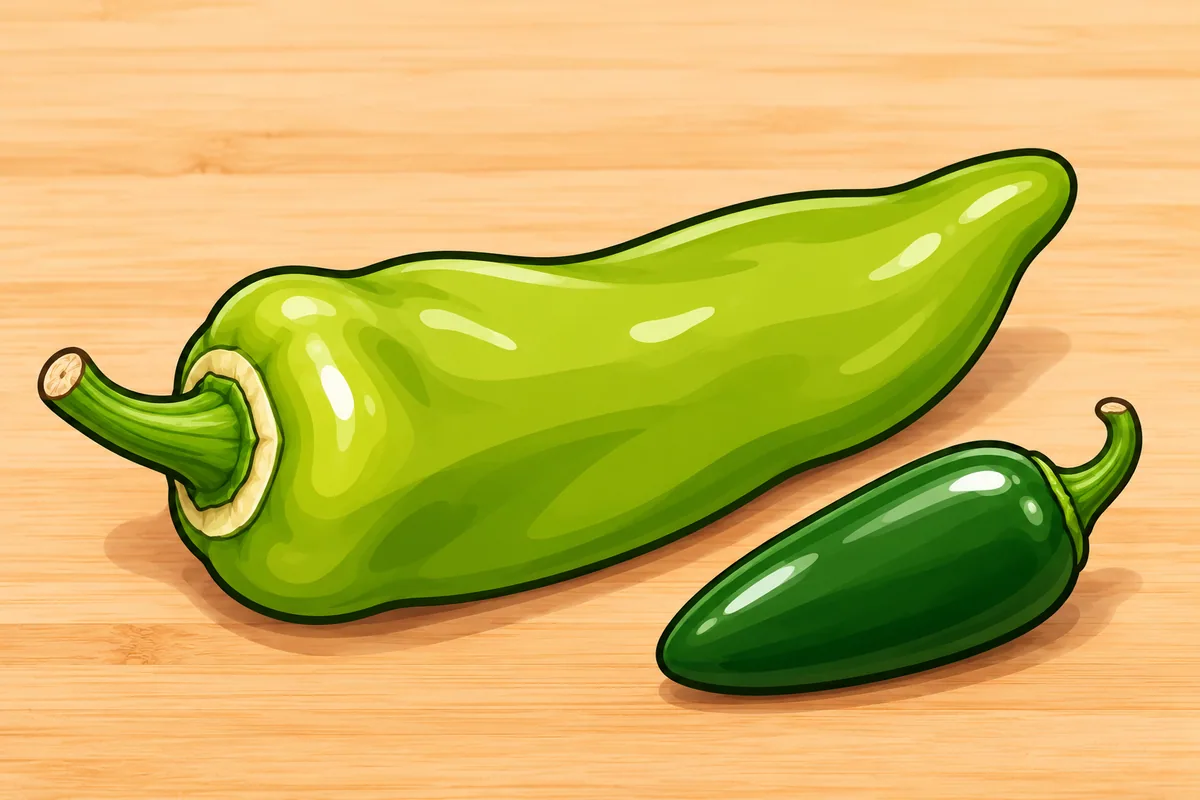
The plain Big Jim behaves differently: NMSU notes its heat varies from plant to plant5, so two roasted pods from one bag can taste mild and medium. Your season adds to that. NMSU's heat guide says temperature and water change heat, and that a hot cultivar grown in ideal conditions comes out only moderately hot6. A stressed plant in your dry, hot summer pushes the other way.
The practical answer for you is the oldest test there is. NMSU calls tasting quick and cheap, if subjective6: cut a thin strip from each batch, taste it, and then decide how many pods go in.
Are Anaheim peppers and jalapeños the same?
No. Both belong to Capsicum annuum, but they are different pod types, the horticultural groups inside a species3. The Anaheim is a cultivar of the New Mexican pod type, and NMSU notes its seed came from New Mexico before it was taken to Anaheim, California5.
That history explains the names you see in stores. NMSU's Chile Pepper Institute uses "long green" for the New Mexican pod type also called Anaheim, with Big Jim, Joe E. Parker and Sandia among its cultivars3. If what you need is a mild chile big enough to stuff, the Anaheim against the poblano is the closer match.
How do they cook differently?
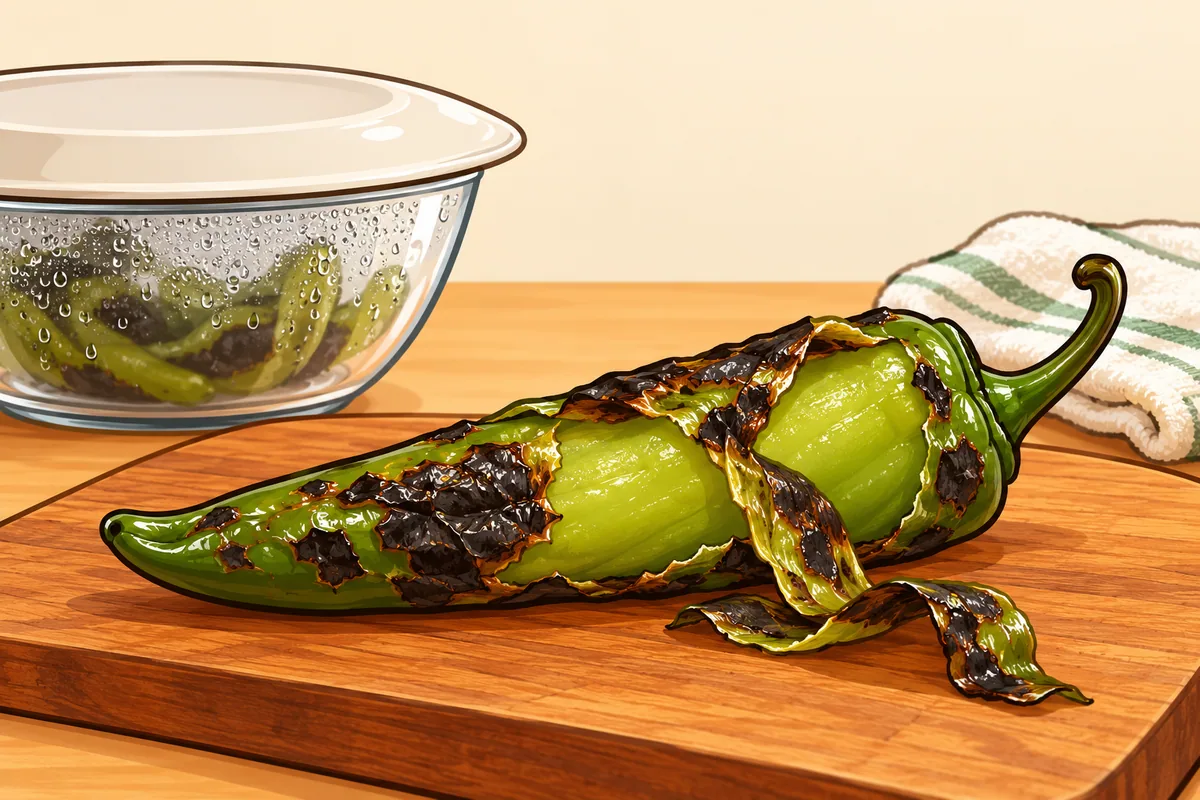
You roast an Anaheim and chop a jalapeño. The long green pod goes under the broiler or onto the grill for 6 to 8 minutes at 400–450°F, then you steam and peel it7 for rellenos, stews and green chile sauce. The jalapeño stays raw or goes into a jar: NMSU lists salsas, canning and pickling as its common uses4.
- Anaheim (New Mexican)Picked green or left to ripen redMedium
- greenRoasted greenPeeled, then stuffed for rellenos or diced into stews
- redRed and driedStrung into ristras or ground into powder
- green
- JalapeñoPicked dark green or ripe redMedium
- greenFresh or pickledSalsa, salads, canned or pickled rings
- redChipotleRipe red pods, smoke-dried
- green
Bars show published heat ranges. Sources for this line1. UF/IFAS Gardening Solutions2. University of Florida IFAS Extension3. New Mexico State University, Chile Pepper Institute4. New Mexico State University Cooperative Extension Service7. New Mexico State University Cooperative Extension Service (Guide E-324)
The red side of each plant tells the same story. A ripe red Anaheim goes into chile powder or a ristra, while a ripe red jalapeño becomes a smoky chipotle, so you get two very different pantry staples from the same color of pod.
How do you swap an Anaheim and a jalapeño?
Two swap rules
If your jalapeño swap comes out too hot, split the pods first. About 89 % of a chili's capsaicin sits in the placenta that holds the seeds8, so scraping it out brings a jalapeño closer to Anaheim territory. For more bite instead, cayenne runs about 7.5 times a jalapeño by midpoint2.
When you need a long green and can't find one, our Anaheim swaps list each stand-in with its heat worked out.
Can you pickle Anaheims the way you pickle jalapeños?
Yes, if you follow a tested jalapeño recipe and only change the kind of pepper. Penn State Extension says you can reduce the low-acid vegetables in a pickle recipe but never increase them9, and it allows a milder pepper in place of a hot one at the same total amount.
- 1
Start from the tested recipe
The National Center for Home Food Preservation's pickled jalapeño rings use 3 pounds of peppers, 7½ cups of 5 % cider vinegar, 1¾ cups of water and 2½ tablespoons of canning salt for about 6 pints.10
- 2
- 3
Wear gloves while you slice
The center says to wear plastic or rubber gloves and keep your hands away from your face.10
- 4
Process for the full time
Pints take 10 minutes in a boiling-water canner up to 1,000 feet, 15 minutes up to 6,000 feet and 20 minutes above that.10
You will get milder, softer rings with Anaheims, since the pod is skinnier and far less hot. Keep the vinegar amount exactly as written; the acid is what makes the jar safe.
Which plant gives you peppers sooner?
The jalapeño, by a small margin. Texas AgriLife puts jalapeño transplants at 75 to 85 days to harvest11, and UF/IFAS gives the Anaheim about 80 days to green fruit and more than 120 days to red2.
- 75–85 days
First jalapeños
Pick firm, fully grown green pods of 2 to 2.5 inches.11
- About 80 days
- 120+ days
If your season is short, you can count on green pods of both and treat red Anaheims as a bonus. Our harvest timing pages give the ripe colors for each pepper.
What goes wrong when you mix them up?
The other mistake you can make runs the opposite way. Swap Anaheims into a jalapeño salsa pod for pod and you get a mild, bulky bowl, because each Anaheim brings more flesh and less heat. Chop a smaller amount, then taste and adjust.
Related in Compare
-
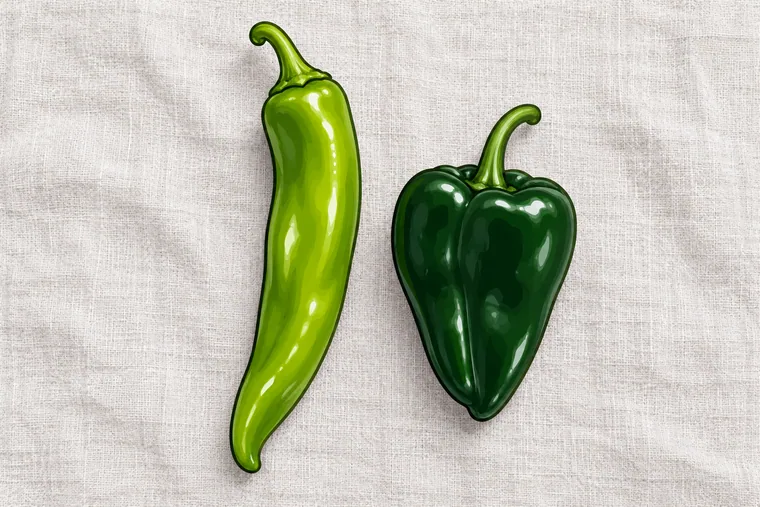
Poblano vs Anaheim Pepper, Up to 2× the Heat
Two mild green chiles that cooks mix up all the time.6 min read -
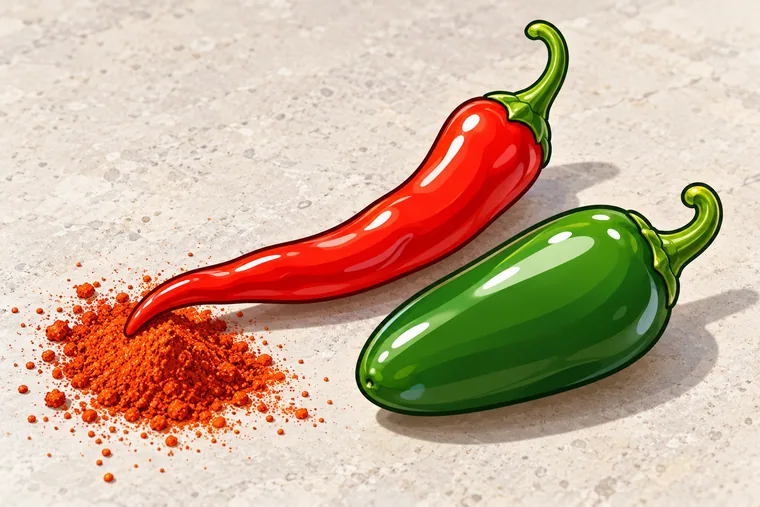
Cayenne vs Jalapeño, 7.5× the Heat and Swaps
One usually ends up in a jar of powder, the other in a fresh salsa.6 min read -
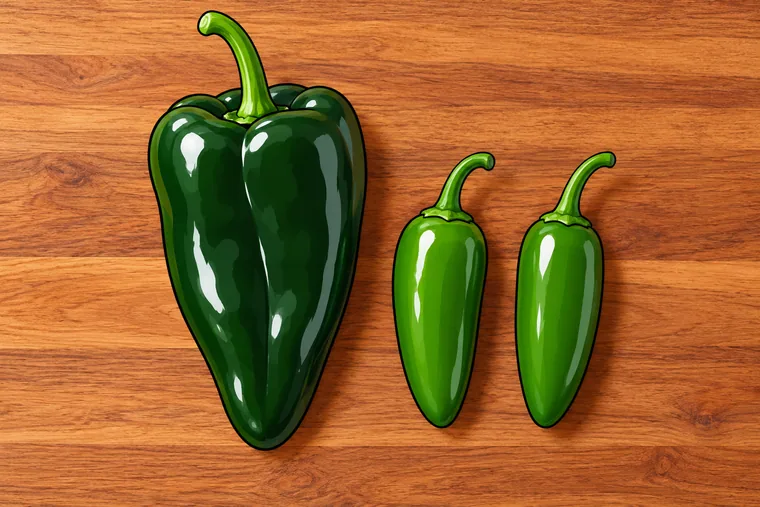
Poblano vs Jalapeño, 3.3× the Heat and When to Use Each
The big mild one and the small hot one.5 min read -
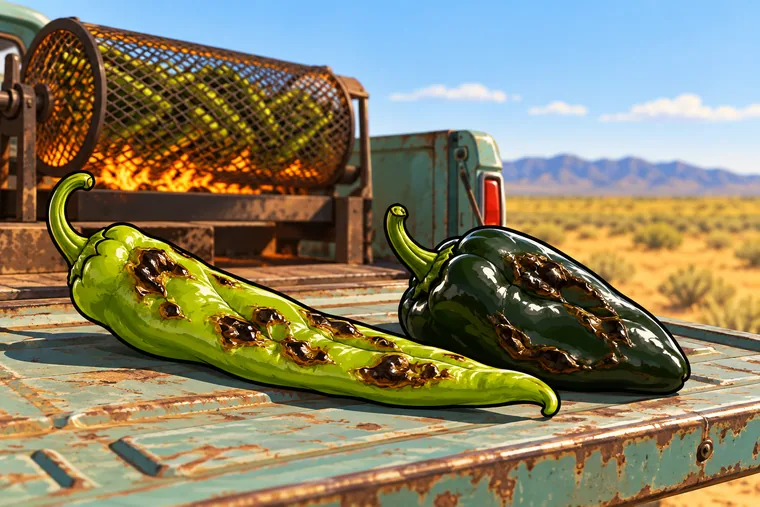
Hatch Chile vs Poblano, 10 NMSU Lines From 0 to 9,000 SHU
New Mexico's long green against Mexico's short, dark stuffing chile.7 min read -
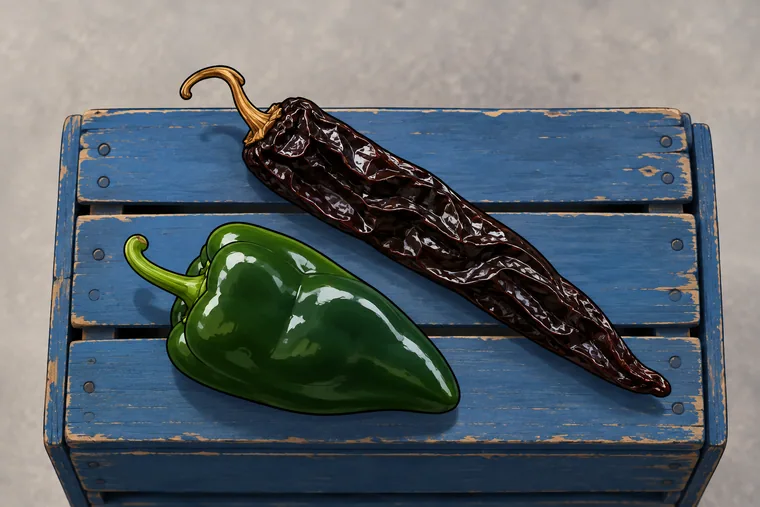
Pasilla vs Poblano, 2 Different Chiles and 1 Mixed-Up Label
One long black dried chile, one broad green fresh one, and a label that blurs them.6 min read -
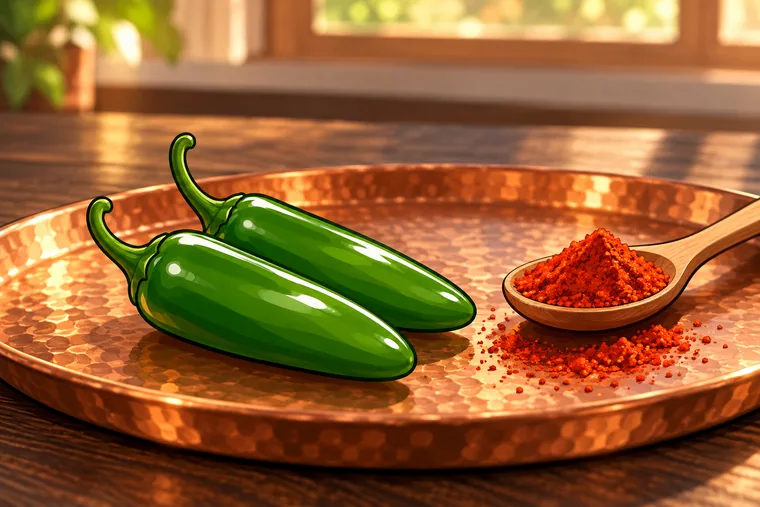
Serrano vs Cayenne Pepper, Cayenne Runs About 2× Hotter
One you chop fresh, one you shake from a jar.6 min read
Sources
· 11
- 1UF/IFAS Gardening Solutions Peppers by Scoville Units
- 2University of Florida IFAS Extension HS-859/TR010: Pepper Production in Miami-Dade County, Florida
- 3New Mexico State University, Chile Pepper Institute Chile Terminology
- 4New Mexico State University Cooperative Extension Service Guide H-240: Growing Chile Peppers in New Mexico Gardens (Walker, Bosland)
- 5New Mexico State University, Agricultural Experiment Station (Research Report 792) The Chile Cultivars of New Mexico State University Released from 1913 to 2016 (Coon and Bosland)
- 6New Mexico State University Cooperative Extension Service (Guide H-237) Measuring Chile Pepper Heat (Bosland, Walker)
- 7New Mexico State University Cooperative Extension Service (Guide E-324) Processing Fresh Chile Peppers (revised by Nancy C. Flores)
- 8Heliyon (Cell Press) A comprehensive review of capsaicin: Biosynthesis, industrial productions, processing to applications, and clinical uses
- 9Penn State Extension Preserving Those Colorful Garden Peppers (Martha Zepp)
- 10National Center for Home Food Preservation (University of Georgia) Pickled Jalapeño Rings
- 11Texas AgriLife Extension Service (Joe Masabni) Jalapeño & Other Hot Peppers