
Pasilla vs Poblano, 2 Different Chiles and 1 Mixed-Up Label
One long black dried chile, one broad green fresh one, and a label that blurs them.
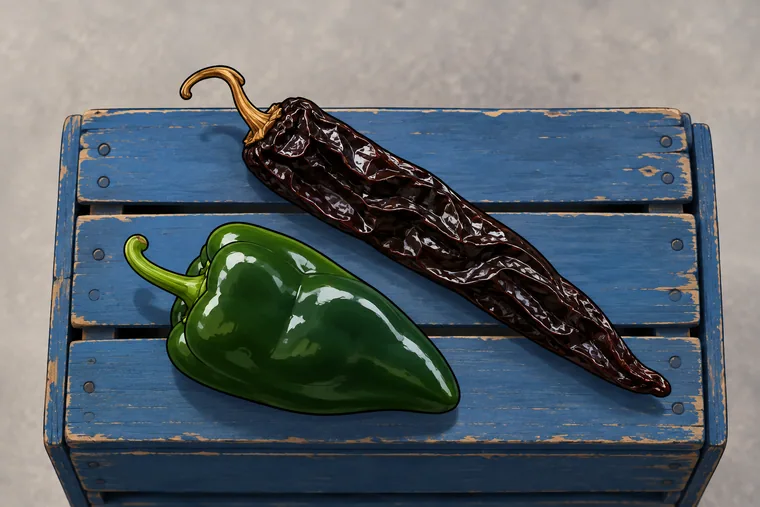
They are different chiles: pasilla is the dried chilaca, while the poblano is a fresh pepper that dries into ancho; some sellers call that ancho a 'pasilla', which causes the mix-up.
- Pasilla about 2,500 SHU (reference level); poblano 1,000–2,000 SHU (UF/IFAS)
- Dried pasilla: long, black, wrinkly, about 7 g; fresh poblano: about 4 by 2 inches
- In a sauce, swap pasilla for ancho by weight; a fresh poblano has no dried stand-in
On this page
- 1Are pasilla peppers the same as poblano?
- 2Which is hotter, pasilla or poblano?
- 3Why does a bag labeled pasilla hold wide anchos?
- 4How do you tell a pasilla from a poblano or an ancho in the store?
- 5What do pasilla and poblano taste like?
- 6What goes wrong when the label points you to the wrong chile?
- 7Which of the three chiles fits the dish you are making?
- 8Can you swap pasilla and poblano in a recipe?
- 9How do pasilla and ancho behave differently in the same pot?
- 10What does a dried pasilla give you per pod?
- 11Where the pasilla trail leads next
Are pasilla peppers the same as poblano?
No. A pasilla is a dried chile: El Guapo's pack says pasilla is the dried form of the chilaca chile3. A poblano is a fresh chile, and UF/IFAS says that once it ripens red and dries, it becomes the ancho2. Two plants, four names.
- long and thinPasillaThe dried chilaca: long, black, wrinklyMild
- fresh formFresh chilacaThe fresh form of the pasilla
- fresh form
- wide and flatAnchoThe red-ripe poblano, dried: wide and heart-shaped
- same pod, other nameSold as 'pasilla-ancho' or 'pasilla rojo'A trade name for the ancho, not a pasilla
- fresh formFresh poblanoAbout 4 by 2 inches, thick wallsMild
- same pod, other name
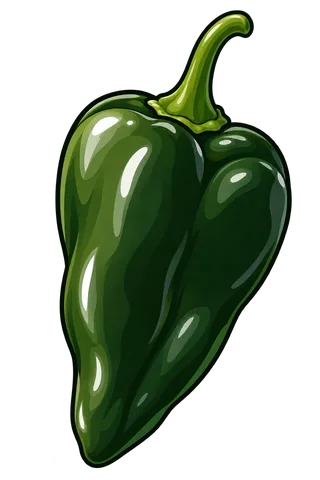
Bars show published heat ranges. Sources for this line1. Botanical Interests (seed company's product page for its own seed)2. University of Florida IFAS Extension3. McCormick & Company (El Guapo), manufacturer page for its own product4. McCormick & Company (El Guapo), manufacturer page for its own product
A pasilla never started life as a poblano; it started as a chilaca.
If someone tells you "pasilla is just a dried poblano", they are probably thinking of a bag labeled pasilla-ancho. The next sections show you where that name comes from and how to spot each chile.
Which is hotter, pasilla or poblano?
Neither by much; both are mild. A 2008 study of Puebla chiles quoted a reference level of about 2,500 SHU for pasilla and 2,500 to 3,000 SHU for poblano5, while UF/IFAS lists the poblano at 1,000 to 2,000 SHU6. El Guapo calls its ground pasilla mild3.
Pasilla
In practice the heat question matters less than the form, and that is good news for your cooking: neither chile will blow the roof off a dish. You compare a dried chile with a fresh one, so a pasilla in a sauce and a poblano on a grill never compete for the same job. The fair heat match for a pasilla is the ancho, the dried poblano, and the reference levels in the same paper put the ancho at about 1,000 SHU5, a bit below the pasilla.
Why does a bag labeled pasilla hold wide anchos?
Because the trade uses "pasilla" for more than one chile. El Guapo sells its dried poblanos as "Pasilla-Ancho Chile, also known as Chile Pasilla Rojo or simply Ancho Chile", and says the pod is a poblano left on the plant to ripen red before drying4. Put that label next to a bag of true pasillas, and the two names start to blur.
The fresh side has its own blur. NMSU's Chile Pepper Institute says that in US produce markets, a "poblano" can be a green ancho or a green mulato, a relative that ripens brown8. So you can buy a "poblano" that is really a mulato, dry it, and end up with neither a pasilla nor an ancho.
You do not need to memorize every name. Go by shape: long and thin means pasilla; wide and heart-shaped means ancho or mulato. If you shop online and cannot see the pod, read the product text for the fresh chile's name: "dried chilaca" means a true pasilla, and "dried poblano" means an ancho, whatever the title says. The ancho and poblano pair walks through that wide, dried side in full.
How do you tell a pasilla from a poblano or an ancho in the store?
Shape, color and whether it is fresh. The table puts all three side by side so you can check the chile in your hand.
| Mark | Pasilla | Ancho | Fresh poblano |
|---|---|---|---|
| Fresh or dried | Dried | Dried | Fresh |
| Color | Dark brown to black | Dried red-brown | Glossy dark green |
| Skin | Wrinkly ('little raisin') | Wrinkled | Smooth, thick-walled |
| Pod | About 7 g dried | About 17 g dried | About 4 × 2 inches |
| Labels you may see | Pasilla, chile pasilla | Ancho, pasilla-ancho, pasilla rojo | Poblano (sometimes a green mulato) |
The weight row helps more than it seems. A true pasilla weighs about 7 g and an ancho about 17 g in USDA's portions79, so if a dried pod feels heavy and wide, you have an ancho, whatever the bag says.
What do pasilla and poblano taste like?
Different enough that a recipe cares which one you use. El Guapo describes the pasilla as deep and smoky with a dried-fruit flavor, and explains that its name means "little raisin", after its wrinkly black skin and dried-fruit taste3. UF/IFAS describes the fresh poblano as thick-walled with a rich melon flavor2.
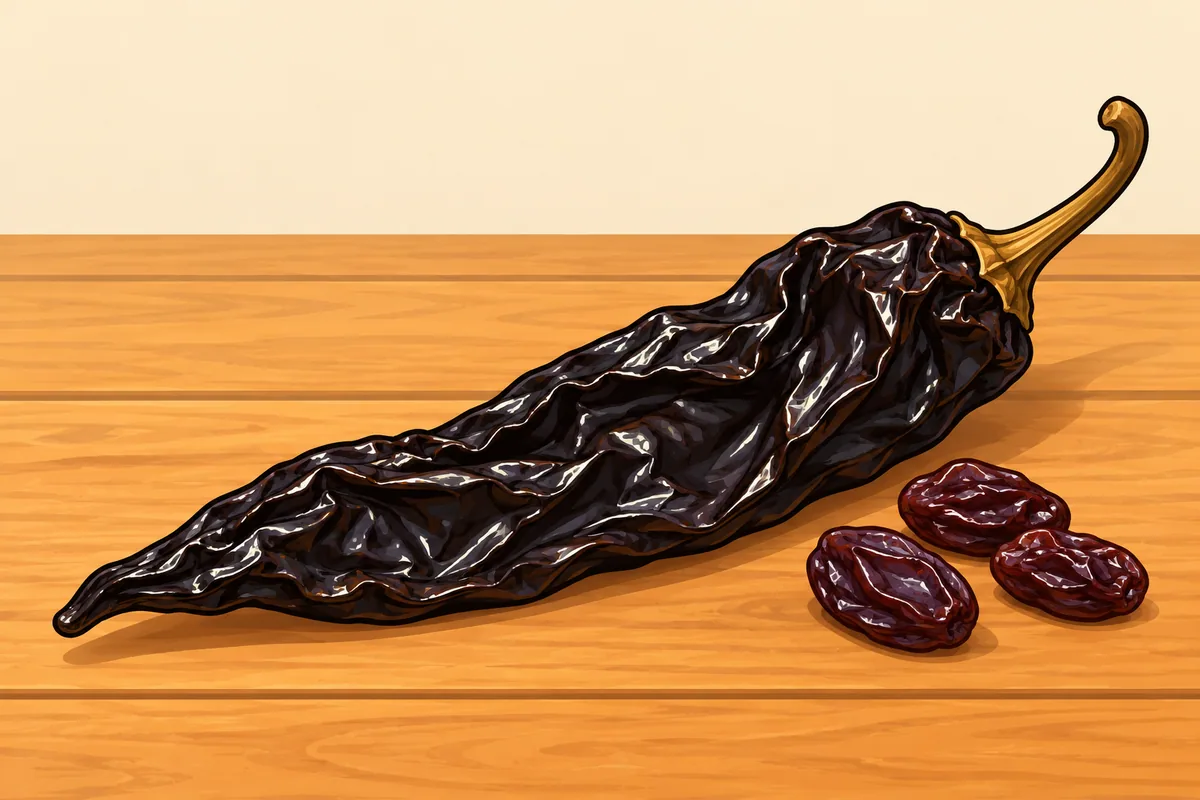
So the pasilla brings dark, raisin-like depth to a sauce, and the poblano brings fresh, green sweetness to a roasted strip or a stuffed pod. El Guapo lists moles, salsas, adobo sauces, chili, stews, tortilla soup and spice rubs for the pasilla3; the poblano's thick walls and 4-by-2-inch size make it the pod you stuff2.
What goes wrong when the label points you to the wrong chile?
Three mix-ups cover most of it, and each one shows up in your pot in a way you can spot.
You bought "pasilla-ancho" for a recipe that wanted pasilla. Your sauce comes out redder and sweeter, with less of the raisin-dark note, because you used dried poblanos4. The heat stays mild either way. Next time, look for long, thin, black pods, or weigh one: a true pasilla runs about 7 g7.
You bought "poblanos" to dry into anchos and they turned brown. NMSU says a US-market poblano can be a green mulato, which ripens brown8. You have dried mulatos, not anchos. They still work in a mole; they just shift the color toward brown.
You swapped anchos for pasillas by count. A recipe that says four pasillas means about 28 g of chile; four anchos weigh about 68 g79. You just used about two and a half times the chile the cook planned, and your sauce turns thick and sweet. Swap by weight and the sauce lands where the recipe meant it to.
Which of the three chiles fits the dish you are making?
Start from whether your recipe wants a dried chile for a sauce or a fresh one to cook whole. That one question settles most cases before heat even comes up.
| You are making | Buy | Why |
|---|---|---|
| Mole negro or a dark adobo | Pasilla | Deep, smoky, dried-fruit flavor |
| Chiles rellenos | Fresh poblano | Thick walls, about 4 × 2 inches |
| Red enchilada sauce | Ancho (often sold as pasilla-ancho) | Smoky-sweet, red |
| Tortilla soup or a spice rub | Pasilla | Listed uses on the pasilla pack |
| Rajas or roasted strips | Fresh poblano | Rich melon flavor, mild heat |
If your recipe names both pasilla and ancho, you are meant to use both, and the table above shows why: one brings the dark, raisin-like depth and the other the red sweetness. Buying one bag of "pasilla-ancho" gives you only the ancho half of that pair.
Can you swap pasilla and poblano in a recipe?
Not directly, since one is dried and one is fresh. What you can swap is the pasilla for the ancho, its dried neighbor, and the fresh poblano for another fresh mild chile.
| Recipe calls for | Swap in | Arithmetic | Result |
|---|---|---|---|
| 3 pasillas in a mole (about 21 g) | Ancho | 21 g ÷ 17 g per ancho | about 1¼ anchos |
| 2 anchos in a red sauce (about 34 g) | Pasilla | 34 g ÷ 7 g per pasilla | about 5 pasillas |
| 1 fresh poblano to stuff | Pasilla | No match | A dried pod cannot hold a filling; use a fresh mild chile |
If you need a fresh stand-in for a poblano, the Anaheim and poblano pair shows you how the long green Anaheim compares in wall, size and heat.
How do pasilla and ancho behave differently in the same pot?
They give you different color, texture and weight even at the same mild heat. The pasilla's pack describes it as dark brown with a deep, smoky, dried-fruit flavor3; the ancho's pack describes a dried red chile with a smoky-sweet taste of prunes and chocolate4. Blend one of each into the same broth and you can see the difference before you taste it: the pasilla pulls the sauce toward black-brown, the ancho toward brick red.
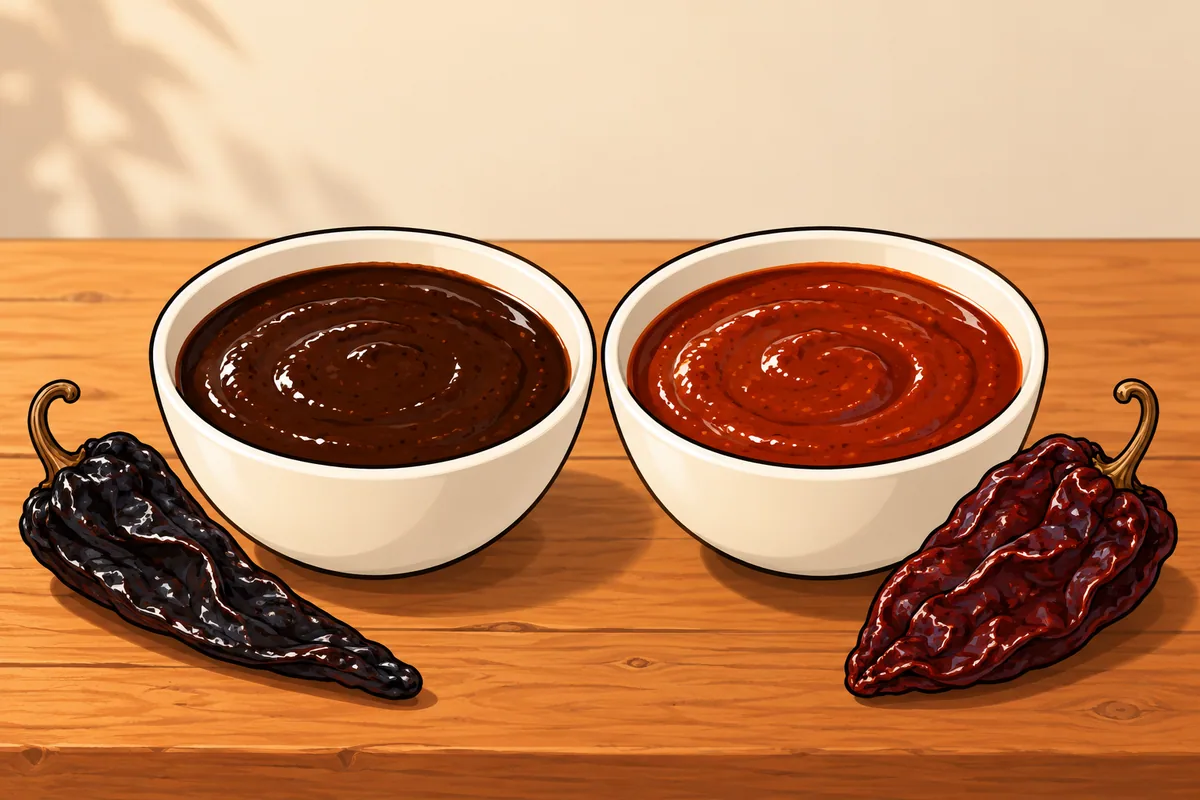
The numbers explain part of the texture. USDA lists dried pasilla at 14.84 g of water and 26.8 g of fiber per 100 g, against 22.63 g of water and 21.6 g of fiber for ancho79. The pasilla is the drier, more fibrous pod of the two, so you get more body per gram from it once you soak and blend it.
What does a dried pasilla give you per pod?
A small, concentrated dose. USDA lists dried pasilla at 14.84 g of water per 100 g, drier than the ancho79, so each 7 g pod is mostly solids.
| Nutrient | Per 100 g | Per 7 g pod |
|---|---|---|
| Energy | 345 kcal | about 24 kcal |
| Fiber | 26.8 g | about 1.9 g |
| Potassium | 2,222 mg | about 156 mg |
| Vitamin A | 1,788 µg RAE | about 125 µg RAE |
| Iron | 9.83 mg | about 0.7 mg |
Per 100 g, the pasilla carries more vitamin A than the ancho, 1,788 against 1,022 µg RAE79. In a pot of mole made with several of each, both chiles add real fiber and potassium for very little weight. Four pasillas, about 28 g, give your pot roughly 7.5 g of fiber and 620 mg of potassium by those same USDA values7.
Where the pasilla trail leads next
If you are building a mole, line the pasilla up against the other dried chiles it usually shares a pot with: the ancho beside the pasilla and the guajillo beside the pasilla give you the heat and flavor side by side.
If you came for the fresh poblano, the next step up in heat is the jalapeño and poblano side by side, which shows how much more bite a jalapeño adds to the same dish.
Related in Compare
-
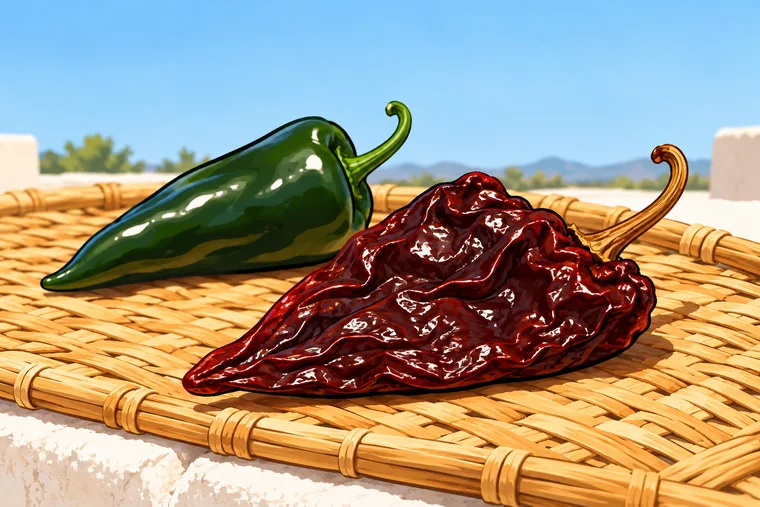
Ancho vs Poblano, One Pepper Picked Green or Dried Red
Fresh green, ripe red, then dried: one plant, three stages, two names.6 min read -
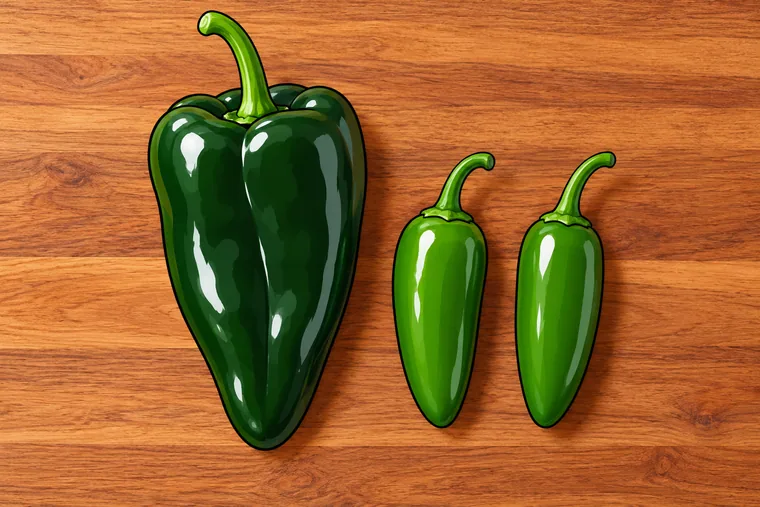
Poblano vs Jalapeño, 3.3× the Heat and When to Use Each
The big mild one and the small hot one.5 min read -
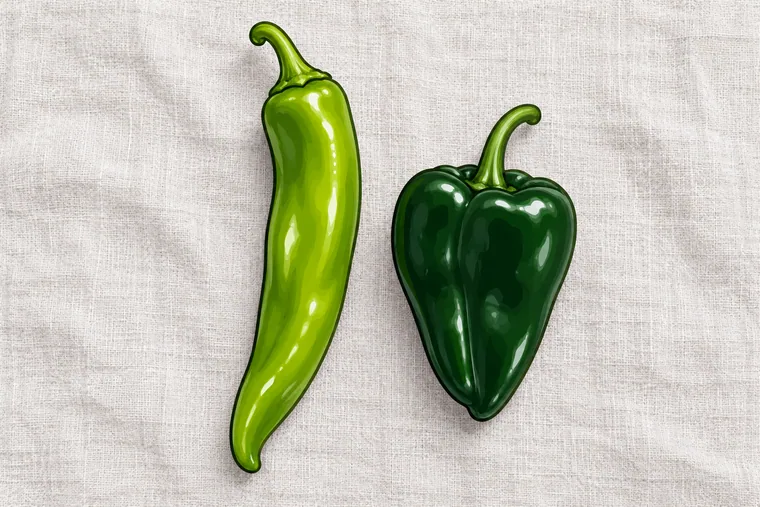
Poblano vs Anaheim Pepper, Up to 2× the Heat
Two mild green chiles that cooks mix up all the time.6 min read -
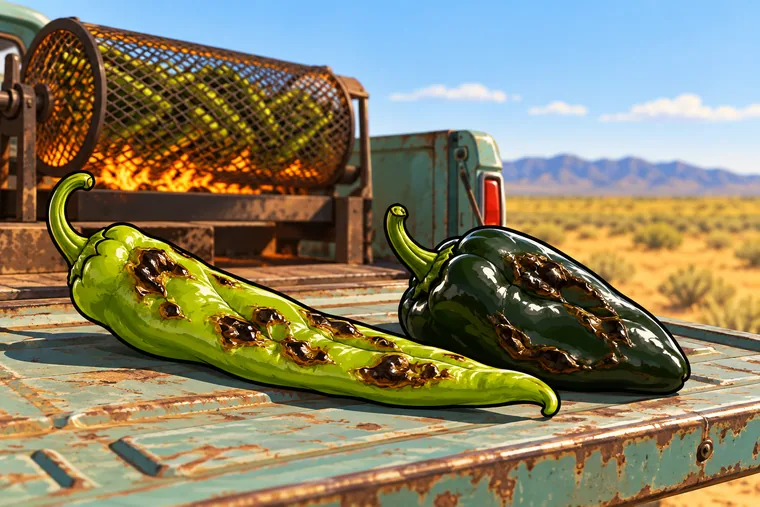
Hatch Chile vs Poblano, 10 NMSU Lines From 0 to 9,000 SHU
New Mexico's long green against Mexico's short, dark stuffing chile.7 min read -
Poblano vs Bell Pepper, 2,000 SHU Against Zero
One stuffing pepper with a little heat, one with none at all.6 min read -
Anaheim Pepper vs Jalapeño, the 5× Heat Gap
Two Capsicum annuum pod types whose heat ranges overlap.5 min read
Sources
· 9
- 1Botanical Interests (seed company's product page for its own seed) Pasilla Bajio Chile Pepper Seeds
- 2University of Florida IFAS Extension HS-859/TR010: Pepper Production in Miami-Dade County, Florida
- 3McCormick & Company (El Guapo), manufacturer page for its own product El Guapo Ground Pasilla Chili (Chile Pasilla Molido), 1 oz
- 4McCormick & Company (El Guapo), manufacturer page for its own product El Guapo Whole Premium Pasilla Ancho Chili Pods (Chile Pasilla Ancho Entero), 7.5 oz
- 5Agrociencia 42(7):807-816 (Colegio de Postgraduados, Mexico) Capsaicinoids in chile pepper landraces of Puebla, Mexico (Morán-Bañuelos et al.)
- 6UF/IFAS Gardening Solutions Peppers by Scoville Units
- 7USDA Agricultural Research Service, FoodData Central (SR Legacy) Peppers, pasilla, dried (FDC ID 168579)
- 8New Mexico State University, Chile Pepper Institute Chile Terminology
- 9USDA Agricultural Research Service, FoodData Central (SR Legacy) Peppers, ancho, dried (FDC ID 169396)