
Ancho vs Poblano, One Pepper Picked Green or Dried Red
Fresh green, ripe red, then dried: one plant, three stages, two names.
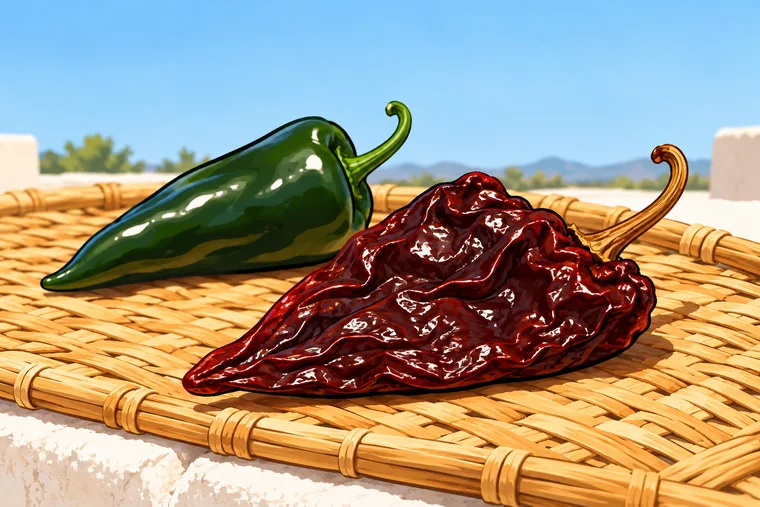
Yes, they are the same pepper: the poblano is the fresh pod, and the ancho is that pod ripened to red and dried.
- Poblano 1,000–2,000 SHU, thick-walled, about 4 by 2 inches, ready in about 75–80 days
- Ancho: the red-ripe poblano, dried; USDA weighs one dried pod at 17 g
- Fresh poblano for roasting and stuffing; ancho for sauces, mole and chili
On this page
- 1Are poblano and ancho the same pepper?
- 2Is ancho hotter than poblano?
- 3Why does a gram of ancho taste stronger than a gram of poblano?
- 4How do the fresh and dried pods taste?
- 5Why do some stores call the ancho a pasilla?
- 6How is a mulato different from an ancho?
- 7Can you use ancho instead of poblano?
- 8What does one dried ancho give you nutritionally?
- 9How do you turn your own poblanos into anchos?
- 10Your next step with poblanos and anchos
Are poblano and ancho the same pepper?
Yes. UF/IFAS says you can eat the poblano unripe and green or let it ripen red, and that once it ripens red and dries, people call it ancho1. So the ancho in a cellophane bag and the glossy green pod in the produce bin came off the same kind of plant, at different points in its life.
- Green poblanoReady in about 75–80 days; about 4 by 2 inches
- Red-ripe poblanoLeft on the plant until it turns red
- AnchoThe red pod, dried; about 17 g per pod
- MulatoA close type that ripens brown, not red
Sources for this line1. University of Florida IFAS Extension2. USDA Agricultural Research Service, FoodData Central (SR Legacy)3. New Mexico State University, Chile Pepper Institute
NMSU's Chile Pepper Institute adds one wrinkle you will meet in stores. It defines the ancho as a pre-Columbian pod type from Mexico that matures to red, and says that in US produce markets a "poblano" can be a green ancho or a green mulato, a relative that turns brown at maturity3. Both look the same when green.
Poblano is the fresh name, ancho is the dried name, and the pepper underneath is one pod type.
Is ancho hotter than poblano?
Not by much, and the sources disagree on which way. UF/IFAS gives the poblano 1,000 to 2,000 SHU and calls it mildly hot4. A 2008 study of Puebla chiles quoted reference levels of 2,500 to 3,000 SHU for poblano and about 1,000 SHU for ancho, and measured one poblano-mulato collection from dry, mature fruit at 1,183 SHU5.
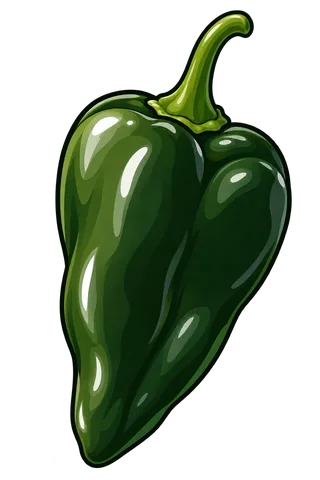
Poblano (fresh)
Ancho (dried)
So the honest answer for your cooking: both sit in the mild band, and any single bag you buy can land on either side of the other. El Guapo describes its anchos as mild to medium6, and McCormick calls its ground ancho mild7.
One more data point shows how steady this pepper type is. In a 2013 Mexican field trial, the ancho type barely moved when a hot greenhouse stressed the plants, from 19,336 to 20,275 SHU on a dry-weight basis, while guajillo and serrano jumped several-fold8. Those figures run high because the lab measured dried powder, but the steadiness is the point: a hot summer is less likely to turn your poblanos fierce.
Why does a gram of ancho taste stronger than a gram of poblano?
Because drying takes most of the water out and leaves everything else. USDA lists dried ancho at 22.63 g of water per 100 g2, while a fresh red hot chili runs 88.02 g9. The flavor, color and heat that stay behind now sit in far less weight.
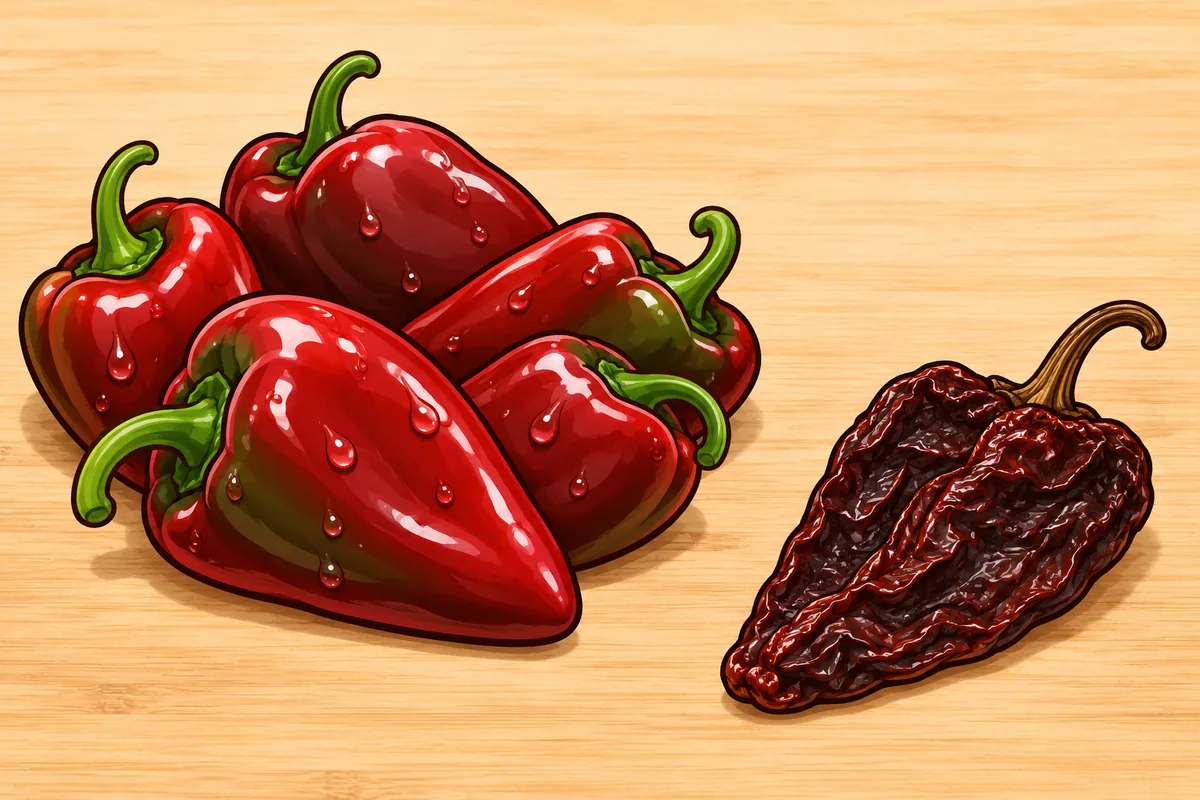
That is why recipes count anchos by the pod and poblanos by the pod too, but never trade them gram for gram. One 17 g ancho started life as a much heavier fresh pod, so a spoonful of ground ancho carries the flavor of a lot more pepper than a spoonful of diced poblano.
Here is the arithmetic you can use. If the ancho kept all its solids and dropped from 88 g of water per 100 g to about 23 g, then each 100 g of fresh pod leaves roughly 15 g of dried ancho (12 g of solids plus a little water), so the fresh pod weighed about six to seven times the dried one. This is an estimate built on a generic red chili's water content29, but it tells you why two tablespoons of ground ancho can flavor a whole pot of chili for six.
How do the fresh and dried pods taste?
Like two different ingredients, and you will notice it the first time you taste them side by side. UF/IFAS describes the fresh poblano as thick-walled with a rich melon flavor1, which you taste in a roasted strip or a stuffed pod. The dried ancho tastes deeper: El Guapo calls it smoky-sweet, with notes of prunes and chocolate6, and McCormick describes its ground ancho as fruity with hints of earthiness7.
That shift tells you where each one goes in your kitchen. The poblano behaves like a vegetable you roast, peel and fill. The ancho behaves like a seasoning you toast, soak and blend into a sauce, and El Guapo names mole, tamales, enchilada sauce and chili as its home6.
Why do some stores call the ancho a pasilla?
Because the names travel. You may see the same dried poblano sold under several labels, and one of them belongs to a different chile altogether.
- Ancho. The standard name for the dried red poblano1.
- Pasilla-ancho or pasilla rojo. El Guapo sells its dried poblanos as "Pasilla-Ancho Chile, also known as Chile Pasilla Rojo or simply Ancho Chile"6.
- Mulato. Similar to the ancho, but the pod ripens brown3. Sellers treat it as its own chile.
- Pasilla (plain). A different chile: the pasilla is the dried chilaca. The pasilla and poblano pair shows you how to tell the long, black pasilla from a wide ancho.
If the dried pod in your hand is wide, wrinkled and heart-shaped, it is an ancho whatever the sign says. A long, thin, nearly black pod is the pasilla.
How is a mulato different from an ancho?
By the color it ripens to, and that changes the sauce. NMSU defines the mulato as similar to the ancho but brown at maturity3, so a dried mulato comes out darker and browner than a red-dried ancho. Both start as green pods you could sell as poblanos.
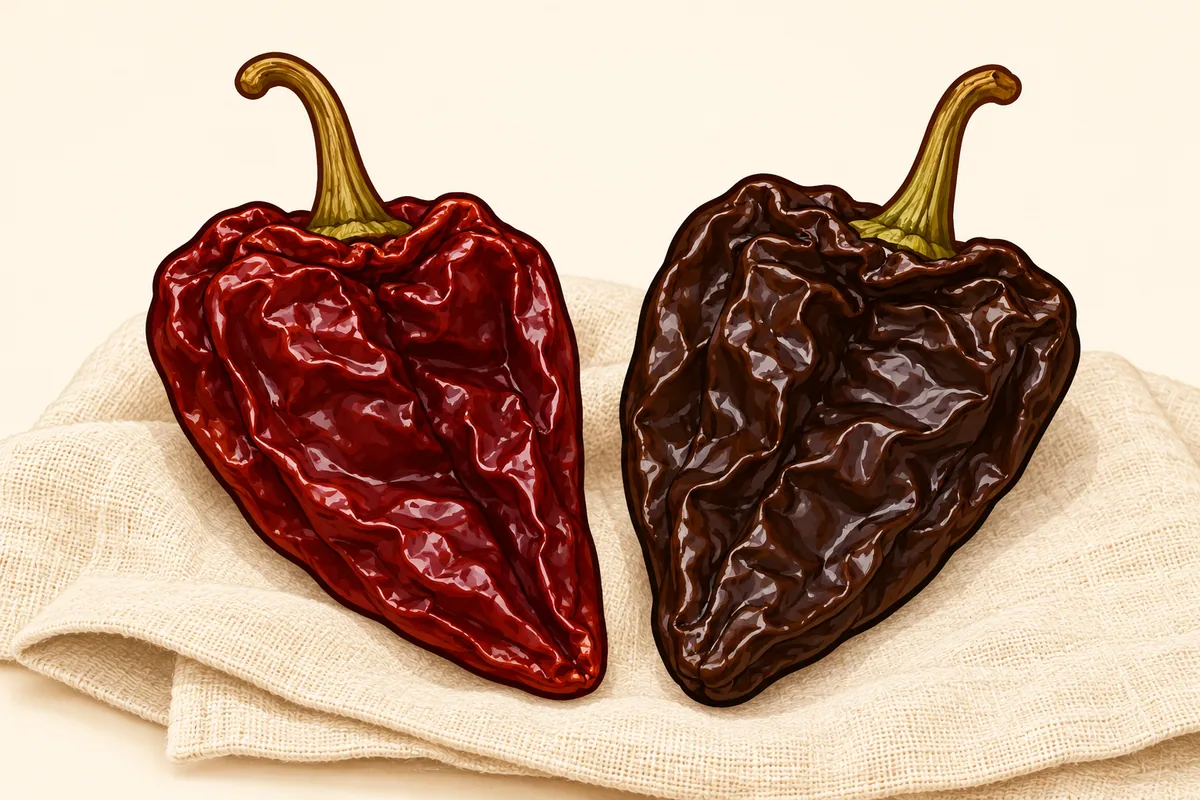
The Puebla study gives you a peek at its heat. Its one poblano-mulato collection, tested from dry, mature fruit, came out at 1,183 SHU, with more dihydrocapsaicin than capsaicin (a ratio of 1 to 1.68), unlike most of the other local chiles in the study5. In your pot that means the mulato lands in the same mild band as the ancho.
If your mole recipe names ancho and mulato together, you are meant to use both: the ancho for its red sweetness and the mulato for the darker brown. If you can only find one, use it for the full amount and expect a slightly different color, not a different heat.
Can you use ancho instead of poblano?
Only where the poblano's job is flavor in a sauce. A dried ancho cannot give you a pod to stuff or strips to fold into tacos, and a fresh poblano cannot give you the dark, sweet depth of a mole.
| You are making | Use | Why |
|---|---|---|
| Chiles rellenos or stuffed peppers | Fresh poblano | Thick walls, about 4 by 2 inches |
| Rajas, strips or a green chile stew | Fresh poblano, roasted | Rich melon flavor, mild heat |
| Mole, enchilada sauce or a red chile sauce | Ancho | Smoky-sweet, prune and chocolate notes |
| A chili con carne or a dry rub | Ground ancho | Fruity, earthy, mild heat |
If you have neither, the poblano swaps cover the fresh side and the ancho swaps cover the dried side, each with amounts.
What does one dried ancho give you nutritionally?
A lot for a 17 g pod. USDA's values per 100 g of dried ancho scale down like this, so you can see what one pod in a sauce adds2.
| Nutrient | Per 100 g | Per 17 g pod |
|---|---|---|
| Energy | 281 kcal | about 48 kcal |
| Fiber | 21.6 g | about 3.7 g |
| Potassium | 2,411 mg | about 410 mg |
| Vitamin A | 1,022 µg RAE | about 174 µg RAE |
| Iron | 10.93 mg | about 1.9 mg |
| Vitamin C | 2 mg | about 0.3 mg |
The last row shows what drying costs you. A fresh red hot chili carries 143.7 mg of vitamin C per 100 g9; the dried ancho keeps about 2 mg2. If vitamin C is the reason you eat peppers, the fresh poblano wins; if you want fiber and potassium in a pot of sauce, a couple of anchos add a real amount.
How do you turn your own poblanos into anchos?
Grow them, wait for red, then dry them. You need patience more than skill, and the timeline below uses UF/IFAS and Maryland Extension numbers so you can plan your season.
- 1
Transplant into warm soil
Maryland Extension warns that plants set out before the soil reaches 65°F can stall.10
- 2
Pick a few green, leave the rest
Poblanos mature in about 75–80 days and keep producing through most of the summer, so you can pick green pods and still leave others to ripen.1
- 3
- 4
Dry them whole
Dry the red pods until they are leathery and wrinkled; the result should look like the 17 g pods USDA describes.2
The drying methods cover air, oven and dehydrator in detail, with the dryness test that tells you when to stop. A plant that keeps producing all summer gives you both forms from one row: green poblanos for July dinners and red pods for a winter jar of anchos.
Your next step with poblanos and anchos
If you plan a mole, the next useful pair is the ancho beside the guajillo, the two dried chiles most red sauces lean on. If you are choosing a fresh green chile for roasting, the Anaheim and poblano pair compares the two most common roasting pods by heat, wall and size.
Related in Compare
-
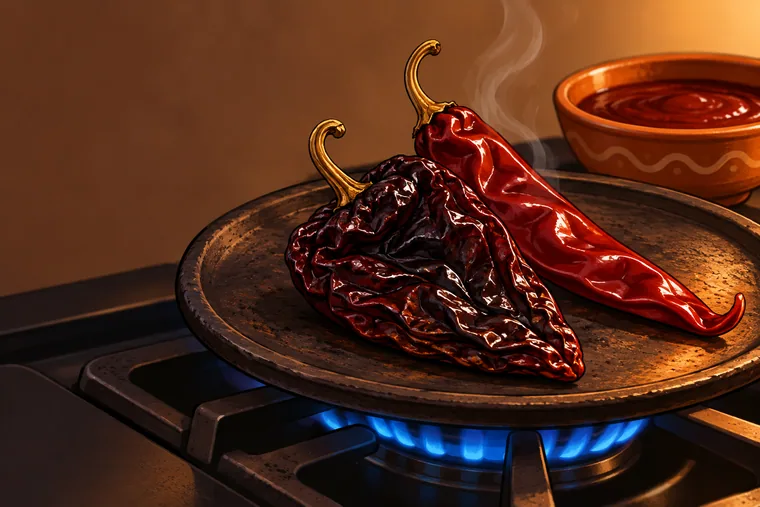
Ancho Pepper vs Guajillo, Heat That Flips With the Summer
The two dried chiles most red sauces start with, and the weather that decides their heat.6 min read -
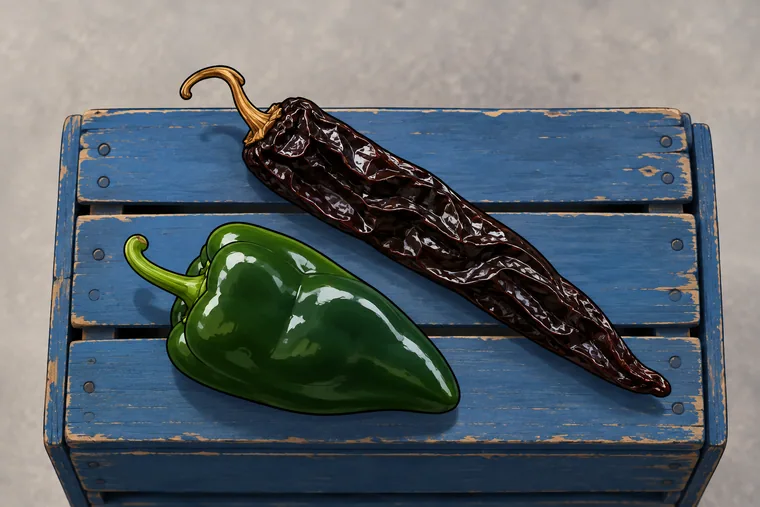
Pasilla vs Poblano, 2 Different Chiles and 1 Mixed-Up Label
One long black dried chile, one broad green fresh one, and a label that blurs them.6 min read -
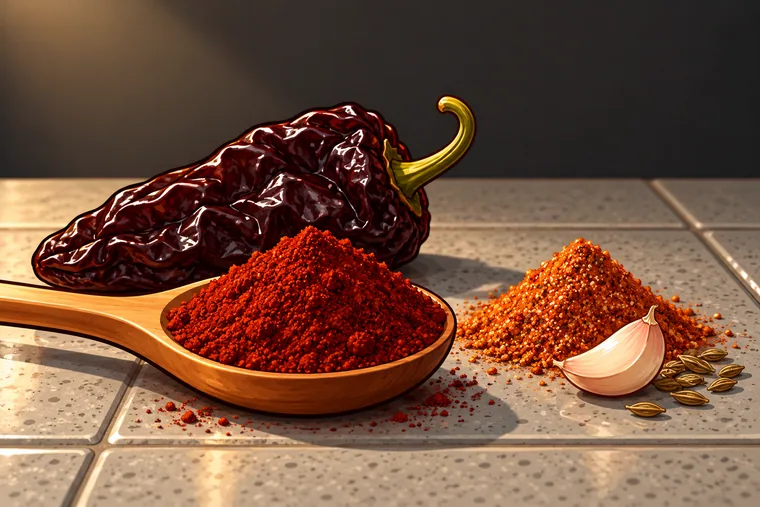
Ancho Chili Powder vs Chili Powder, One Chile or a Blend
Two red powders on the same shelf: a single chile and a seasoning mix.6 min read -
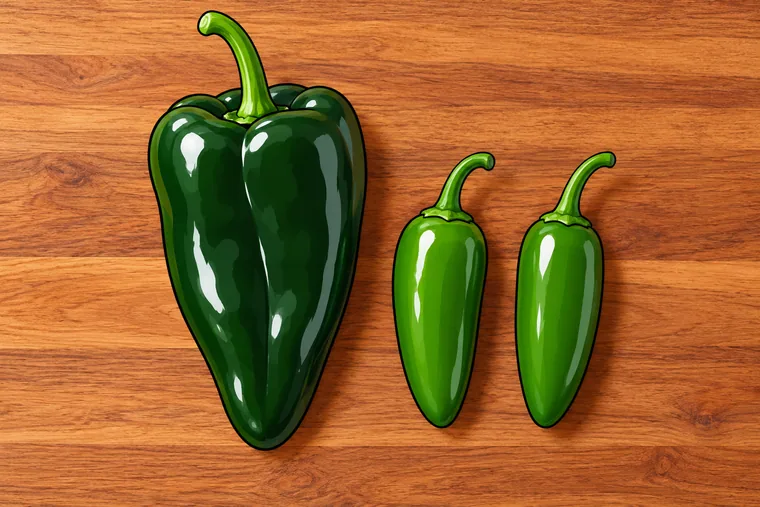
Poblano vs Jalapeño, 3.3× the Heat and When to Use Each
The big mild one and the small hot one.5 min read -
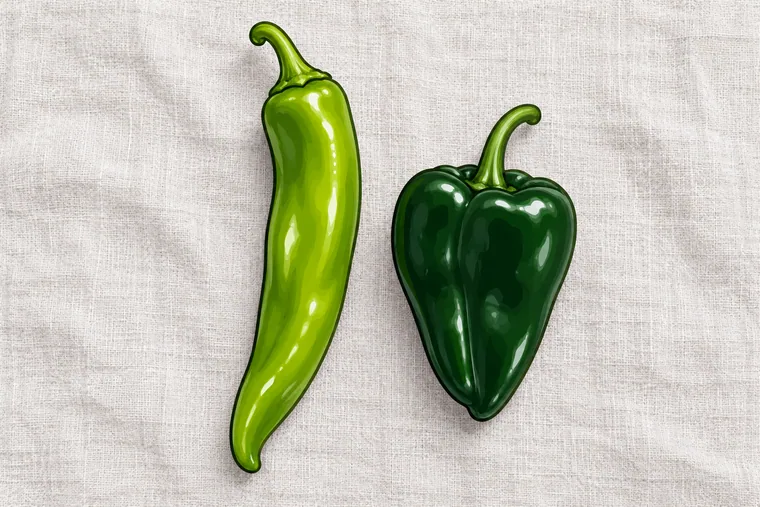
Poblano vs Anaheim Pepper, Up to 2× the Heat
Two mild green chiles that cooks mix up all the time.6 min read -
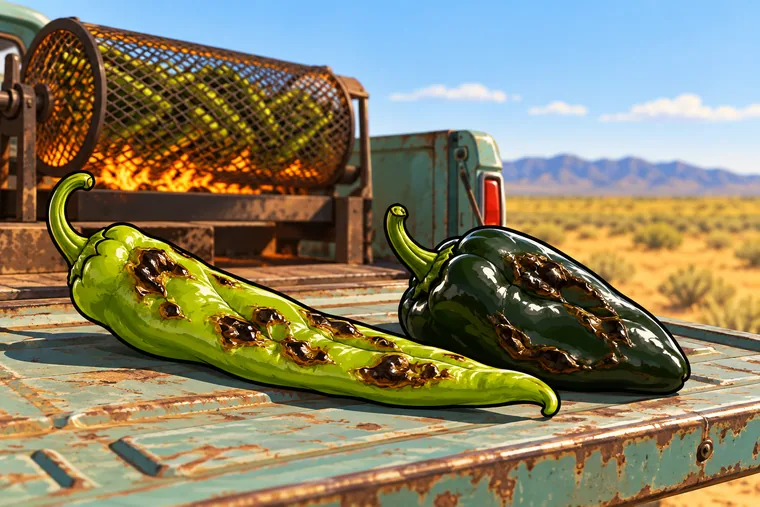
Hatch Chile vs Poblano, 10 NMSU Lines From 0 to 9,000 SHU
New Mexico's long green against Mexico's short, dark stuffing chile.7 min read
Sources
· 10
- 1University of Florida IFAS Extension HS-859/TR010: Pepper Production in Miami-Dade County, Florida
- 2USDA Agricultural Research Service, FoodData Central (SR Legacy) Peppers, ancho, dried (FDC ID 169396)
- 3New Mexico State University, Chile Pepper Institute Chile Terminology
- 4UF/IFAS Gardening Solutions Peppers by Scoville Units
- 5Agrociencia 42(7):807-816 (Colegio de Postgraduados, Mexico) Capsaicinoids in chile pepper landraces of Puebla, Mexico (Morán-Bañuelos et al.)
- 6McCormick & Company (El Guapo), manufacturer page for its own product El Guapo Whole Premium Pasilla Ancho Chili Pods (Chile Pasilla Ancho Entero), 7.5 oz
- 7McCormick & Company, manufacturer page for its own product McCormick Culinary Ground Ancho Chile Pepper, 16 oz
- 8Molecules 18(11):13471-13486 Characterization of Different Capsicum Varieties by Evaluation of Their Capsaicinoids Content by High Performance Liquid Chromatography, Determination of Pungency and Effect of High Temperature (González-Zamora et al.)
- 9USDA Agricultural Research Service, FoodData Central (SR Legacy) Peppers, hot chili, red, raw (FDC ID 170106)
- 10University of Maryland Extension Growing Peppers in a Home Garden