
Ancho Chili Powder vs Chili Powder, One Chile or a Blend
Two red powders on the same shelf: a single chile and a seasoning mix.
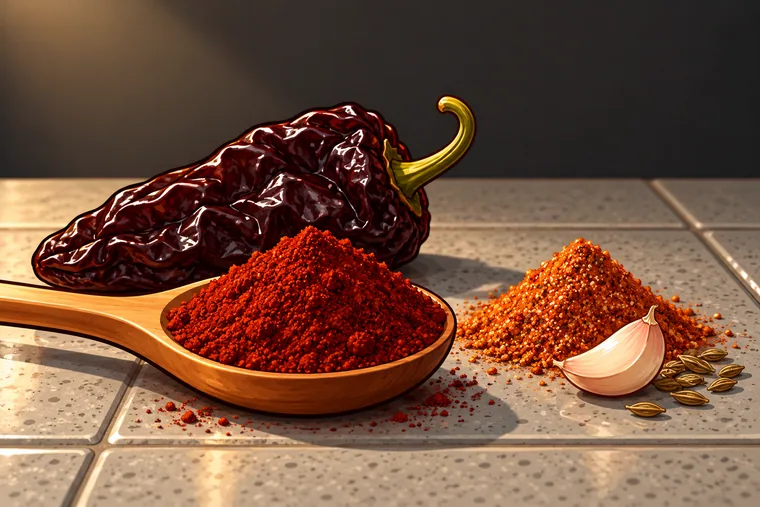
No, they are different products: ancho chili powder is ground ancho chile, while chili powder is a seasoning blend of chile with spices such as cumin and oregano, salt and garlic.
- McCormick ground ancho lists ancho chile peppers and an anti-caking agent; its chili powder lists chili pepper, spices, salt, silicon dioxide and garlic
- USDA: chili powder blend 2,867 mg sodium per 100 g, dried ancho 43 mg
- Swap blend for ancho by adding cumin, oregano, garlic and salt yourself; swap ancho for blend by leaving them out
On this page
- 1Is ancho chili powder the same as chili powder?
- 2What does the order on a chili powder label tell you?
- 3Which one has more salt?
- 4Why does the blend show more fiber and vitamin A than the ancho?
- 5How long does each powder keep?
- 6Is ancho chili powder hotter than chili powder?
- 7How do you turn ancho powder into a chili powder?
- 8Can you use chili powder instead of ancho chili powder?
- 9Which one should go in your pot of chili?
- 10Where your spice shelf goes next
Is ancho chili powder the same as chili powder?
No. Ancho chili powder is one chile, ground: McCormick's ground ancho lists ancho chile peppers and silicon dioxide, an anti-caking agent, and nothing else1. Its chili powder is a blend: chili pepper, spices, salt, silicon dioxide and garlic, with cumin and oregano named among the spices2.
Ground ancho
Chili powder (blend)
- Ancho chile peppers, silicon dioxide1LabelChili pepper, spices, salt, silicon dioxide, garlic2
- Ancho chiles, dried and ground into a fine powder1What it isA seasoning blend; spices include cumin and oregano2
- Fruity with hints of earthiness; mild heat1FlavorDeep, rich heat, red color and aroma2
- 43 mg per 100 g (dried ancho)3Sodium2,867 mg per 100 g4
Ancho powder is an ingredient; chili powder is a recipe in a jar.
The word "chili" adds to the mix-up. NMSU's Chile Pepper Institute uses "chile" for the plant and its fruit, and "chili" for the dish made from chile powder, beans, tomato and ground beef5. A jar of chili powder was built to season that dish, which is why it comes with the cumin and garlic already in.
What does the order on a chili powder label tell you?
How much of each thing is inside, roughly. US labeling rules require ingredients to be listed in descending order of predominance by weight6, so on McCormick's label the chili pepper outweighs the spices, the spices outweigh the salt, and garlic comes last2.
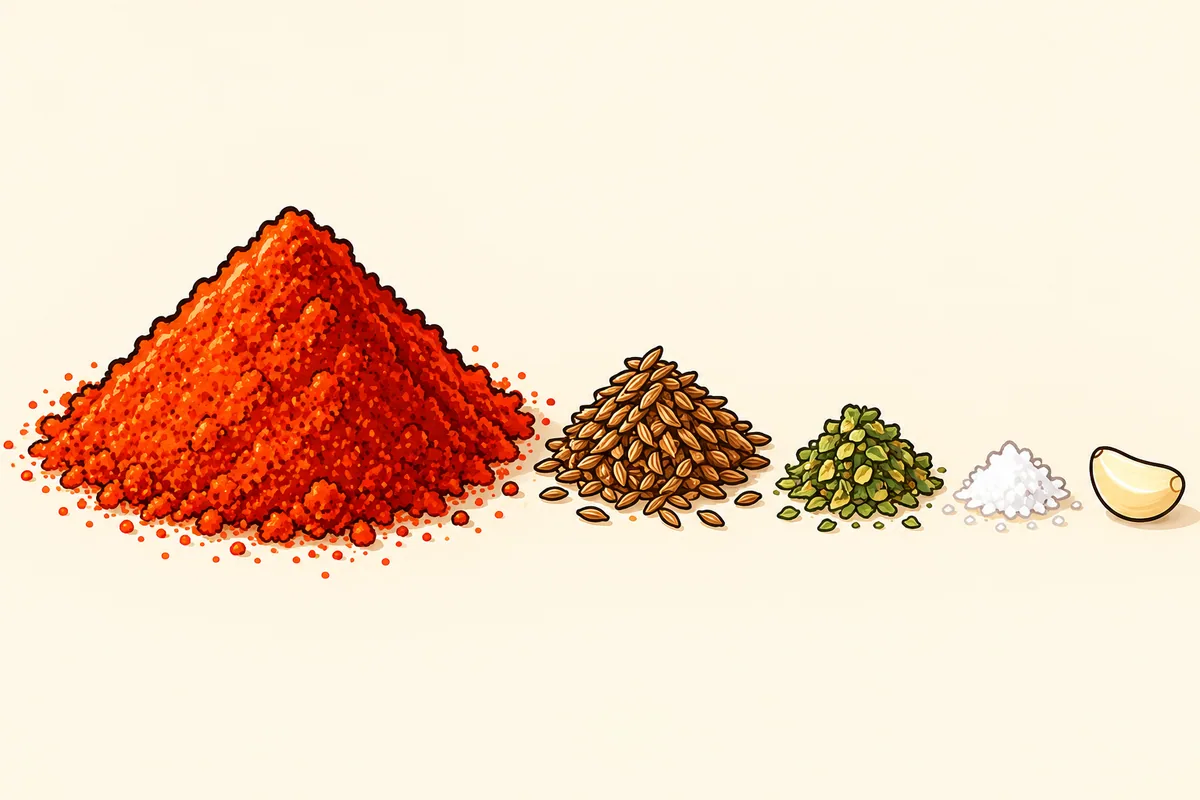
The word "spices" hides detail on purpose. Federal rules let a maker declare spices together as "spice"7, so you will not see how much cumin or oregano went in. McCormick's product text is where you learn that cumin and oregano are among them2.
One more rule helps you read a red jar. The same regulation says paprika, turmeric, saffron and other spices that are also colors must appear as "spice and coloring" unless the label names them7. So a blend that leans on paprika for color has to tell you, one way or the other.
Which one has more salt?
The blend, by a wide margin. USDA lists chili powder at 2,867 mg of sodium per 100 g against 43 mg for dried ancho34, which makes the blend about 67 times saltier, because salt is one of its listed ingredients.
| Nutrient | Chili powder, per 100 g | Dried ancho, per 100 g |
|---|---|---|
| Sodium | 2,867 mg | 43 mg |
| Fiber | 34.8 g | 21.6 g |
| Potassium | 1,950 mg | 2,411 mg |
| Vitamin A | 1,483 µg RAE | 1,022 µg RAE |
| Iron | 17.3 mg | 10.93 mg |
| Water | 10.75 g | 22.63 g |
USDA weighs a teaspoon of chili powder at 2.7 g and a tablespoon at 8 g4. A chili recipe that calls for 3 tablespoons of chili powder adds about 690 mg of sodium from the powder alone (24 g × 28.67 mg per gram). Make the same pot with ground ancho and the powder adds roughly 10 mg, and you salt the pot to taste. The ancho estimate uses USDA's whole dried ancho, since ground ancho is the same chile with an anti-caking agent1.
Why does the blend show more fiber and vitamin A than the ancho?
Mostly because it is drier and mixed with other spices. USDA's chili powder holds 10.75 g of water per 100 g, against 22.63 g for dried ancho pods34, so every gram of blend carries more solids. That alone lifts its fiber, 34.8 g against 21.6 g, and its iron, 17.3 mg against 10.93 mg.
Color plays a part too. The blend lists 1,483 µg RAE of vitamin A per 100 g against 1,022 for the ancho, and USDA also records 15,000 µg of beta-carotene per 100 g of chili powder34. Part of that gap may come from the spices and any coloring the maker adds, which the label groups together. Federal rules make a maker that adds paprika for color say so as "spice and coloring" or by name7, so a quick look at the label tells you whether a coloring spice is helping the red.
None of this makes one powder a health food. You use a teaspoon or two at a time, so the salt in the blend matters far more to your dish than the fiber difference. At 2.7 g per teaspoon, the gap in fiber between the two powders is under half a gram per spoon, while the sodium gap is about 76 mg.
How long does each powder keep?
Both are dry spices, and both lose aroma long before they spoil. McCormick gives its culinary dark chili powder a shelf life of 720 days when handled properly, and asks you to seal the container tightly and keep it away from heat, humidity, fluorescent light and direct sunlight8. The same habits suit a jar of ground ancho.
Use dry spoons, too. The same McCormick page warns against wet cups and spoons in the jar8, because moisture clumps a fine powder fast. The chili powder shelf life guide covers how to tell when an old jar has gone flat.
Is ancho chili powder hotter than chili powder?
We cannot give you a ratio here, and we would rather say so than guess. The ancho side has numbers: UF/IFAS puts its fresh form, the poblano, at 1,000 to 2,000 SHU9, a 2008 Mexican study quotes a reference level of about 1,000 SHU for ancho10, and McCormick calls its ground ancho mild1. The blend side has none: McCormick does not name the chili in its chili powder or print a heat rating, only "deep rich, flavorful heat"2.
What the label does tell you is that every spoon of blend is part chili and part something else. Spices, salt and garlic take up some of the weight26, so a spoon of blend holds less chile than a spoon of pure ancho. Whether that makes it milder depends on which chili the maker used, and the jar does not say. A blend built on a hot chile could still out-heat pure ancho, spoon for spoon.
So taste both before you swap, and judge your own two jars, not a brand you read about. Put a pinch of each on your tongue, or warm a quarter teaspoon of each in a spoonful of oil; your tongue settles the heat question for your two jars faster than any chart.
How do you turn ancho powder into a chili powder?
Follow the blend's own label order. McCormick's list tells you which parts weigh most, so a homemade version keeps the chile as the biggest share and the garlic as the smallest26. The amounts are yours to set; these steps give you the order.
- 1
- 2
Add the spices
Cumin and oregano, the spices McCormick names, come next and stay well below the chile by weight.2
- 3
- 4
Finish with garlic
Garlic comes last on the label, so a little goes a long way.2
McCormick itself suggests mixing its ground ancho with spices such as paprika, cumin and cinnamon for a rub on grilled meats or roasted vegetables1. That is the same idea from the other side: the chile first, then you choose the spices.
Can you use chili powder instead of ancho chili powder?
Yes, if your dish can take the cumin, garlic and salt the blend brings. The worked rows below keep the chile amount close and adjust the rest.
| Recipe calls for | Swap in | How much | Then |
|---|---|---|---|
| 1 tbsp ground ancho in a mole or rub | Chili powder | 1 tbsp | Cut back the recipe's own cumin, garlic and salt |
| 2 tbsp chili powder in a pot of chili | Ground ancho | 2 tbsp | Add cumin, oregano and garlic to taste; salt the pot (the blend would have added about 460 mg of sodium) |
| 1 tsp chili powder on popcorn or fries | Ground ancho | 1 tsp plus a pinch of salt | Ancho alone tastes fruitier and less salty |
The sodium figure in the second row is 16 g × 28.67 mg per gram, from USDA's 8 g tablespoon4.
Which one should go in your pot of chili?
Start from how much control you want. If you like a recipe to work out of the jar, use the blend; if you want to set the cumin, garlic and salt yourself, use ground ancho and build around it.
- Chili con carne, quickChili powder: the blend already holds cumin, oregano, garlic and salt
- Chili you season yourselfGround ancho, then add your own spices and salt
- Mole, adobo-style rub or tacosGround ancho: fruity, earthy, mild
- A low-sodium dishGround ancho: 43 mg sodium per 100 g against 2,867
Sources for this line1. McCormick & Company, manufacturer page for its own product2. McCormick & Company, manufacturer page for its own product3. USDA Agricultural Research Service, FoodData Central (SR Legacy)4. USDA Agricultural Research Service, FoodData Central (SR Legacy)
If you want to go further than ancho, the peppers for chili list shows which other dried chiles people use for the pot and how hot each one runs.
Where your spice shelf goes next
If your jar says "dark chili powder", the dark and regular chili powder pair shows what changes in that version. If you like what ground ancho does, see where the chile comes from in the ancho and poblano pair.
Building a red sauce from whole pods instead of powder? The ancho and guajillo pair compares the two dried chiles most sauces start with, and the ancho entry gathers its heat and flavor data in one place.
Related in Compare
-
Dark Chili Powder vs Chili Powder, Same 5 Ingredients
Two jars of the same blend, roasted and weighted differently.5 min read -
Ancho Pepper vs Guajillo, Heat That Flips With the Summer
The two dried chiles most red sauces start with, and the weather that decides their heat.6 min read -
Ancho vs Poblano, One Pepper Picked Green or Dried Red
Fresh green, ripe red, then dried: one plant, three stages, two names.6 min read -
Hatch Chile vs Poblano, 10 NMSU Lines From 0 to 9,000 SHU
New Mexico's long green against Mexico's short, dark stuffing chile.7 min read -
Poblano vs Bell Pepper, 2,000 SHU Against Zero
One stuffing pepper with a little heat, one with none at all.6 min read -
Poblano vs Jalapeño, 3.3× the Heat and When to Use Each
The big mild one and the small hot one.5 min read
Sources
· 10
- 1McCormick & Company, manufacturer page for its own product McCormick Culinary Ground Ancho Chile Pepper, 16 oz
- 2McCormick & Company, manufacturer page for its own product McCormick Chili Powder, 2.5 oz
- 3USDA Agricultural Research Service, FoodData Central (SR Legacy) Peppers, ancho, dried (FDC ID 169396)
- 4USDA Agricultural Research Service, FoodData Central (SR Legacy) Spices, chili powder (FDC ID 171319)
- 5New Mexico State University, Chile Pepper Institute Chile Terminology
- 6US Code of Federal Regulations, 21 CFR 101.4 (Legal Information Institute, Cornell Law School) Food; designation of ingredients
- 7US Code of Federal Regulations, 21 CFR 101.22 (Legal Information Institute, Cornell Law School) Foods; labeling of spices, flavorings, colorings and chemical preservatives
- 8McCormick & Company, manufacturer page for its own product McCormick Culinary Dark Chili Powder, 20 oz
- 9UF/IFAS Gardening Solutions Peppers by Scoville Units
- 10Agrociencia 42(7):807-816 (Colegio de Postgraduados, Mexico) Capsaicinoids in chile pepper landraces of Puebla, Mexico (Morán-Bañuelos et al.)