
Ancho Pepper vs Guajillo, Heat That Flips With the Summer
The two dried chiles most red sauces start with, and the weather that decides their heat.
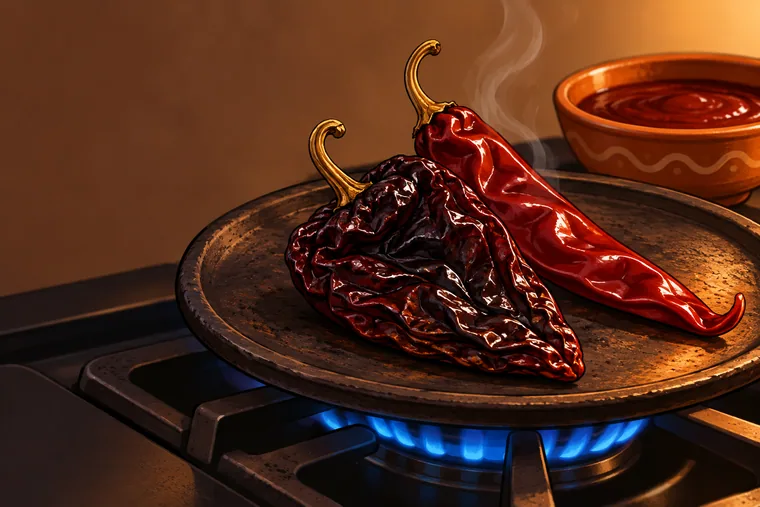
Both are mild dried chiles, and which is hotter depends on how they grew: ancho led 1.4 to 1 in an open field, guajillo led 3.4 to 1 in a hot greenhouse.
- Field: ancho 19,336 SHU, guajillo 13,705; greenhouse: ancho 20,275, guajillo 69,211 (dried pods, one lab)
- Ancho: smoky-sweet with prune and chocolate notes; guajillo: smoky-sweet with berry and tea notes
- Ancho for dark, sweet sauces such as mole and enchilada sauce; guajillo for brighter red chile sauces, stews and rubs
On this page
- 1Which is hotter, ancho or guajillo?
- 2Why did the guajillo heat up under glass while the ancho stayed put?
- 3Which is sweeter, ancho or guajillo?
- 4Which works better in mole and which in adobo?
- 5Where do anchos and guajillos come from?
- 6Can you grow your own anchos and guajillos at home?
- 7How do you tell an ancho from a guajillo in the bag?
- 8Can you use guajillo instead of ancho?
- 9Why does your guajillo sauce taste sharp one month and flat the next?
- 10Your next pair for a red chile sauce
Which is hotter, ancho or guajillo?
It depends on the summer they grew in. A 2013 Mexican study grew both chiles side by side, dried the pods and tested them in one lab. In the open field the ancho came out ahead, 19,336 SHU against 13,705; in an unheated greenhouse the guajillo jumped to 69,211 SHU while the ancho stayed near 20,2751.
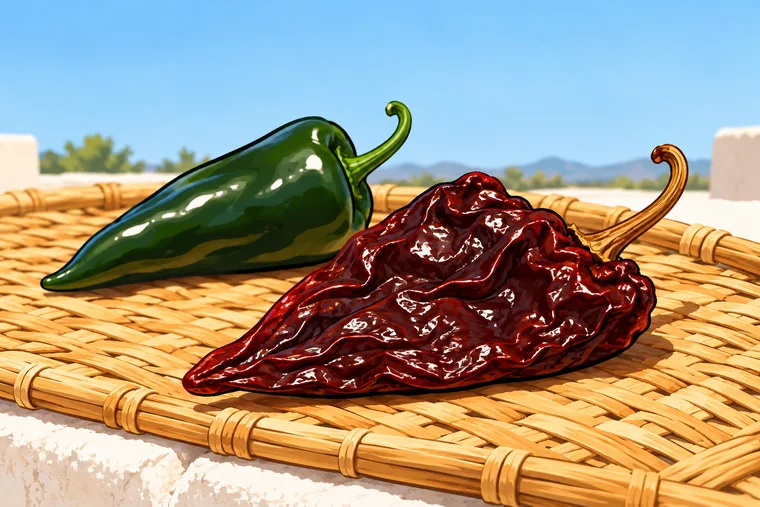
Ancho
| Where they grew | Ancho | Guajillo | Hotter one |
|---|---|---|---|
| Field, 33–40 °C | 19,336 SHU | 13,705 SHU | ancho, about 1.4× (19,336 ÷ 13,705) |
| Greenhouse, 40–48 °C | 20,275 SHU | 69,211 SHU | guajillo, about 3.4× (69,211 ÷ 20,275) |
In a normal field the ancho edges ahead; in a scorching season the guajillo can run three times hotter.
Two cautions help you read those numbers. The lab measured dried, powdered pods at the mature green stage and converted capsaicinoids at 16.1 SHU per part per million1, so the figures run far above what a cookbook chart prints. And both packs in the store call these chiles mild35. Use the trial for the ratio, and the packs for what to expect in your pot.
Why did the guajillo heat up under glass while the ancho stayed put?
Because heat stress pushes some chiles much harder than others. The greenhouse in the study ran 40 to 48 °C with no climate control, against 33 to 40 °C in the field, and the authors found total capsaicinoids rose with high temperature in guajillo, serrano, puya and ancho, but by very different amounts1. The guajillo roughly quintupled; the ancho moved by about 5 %.
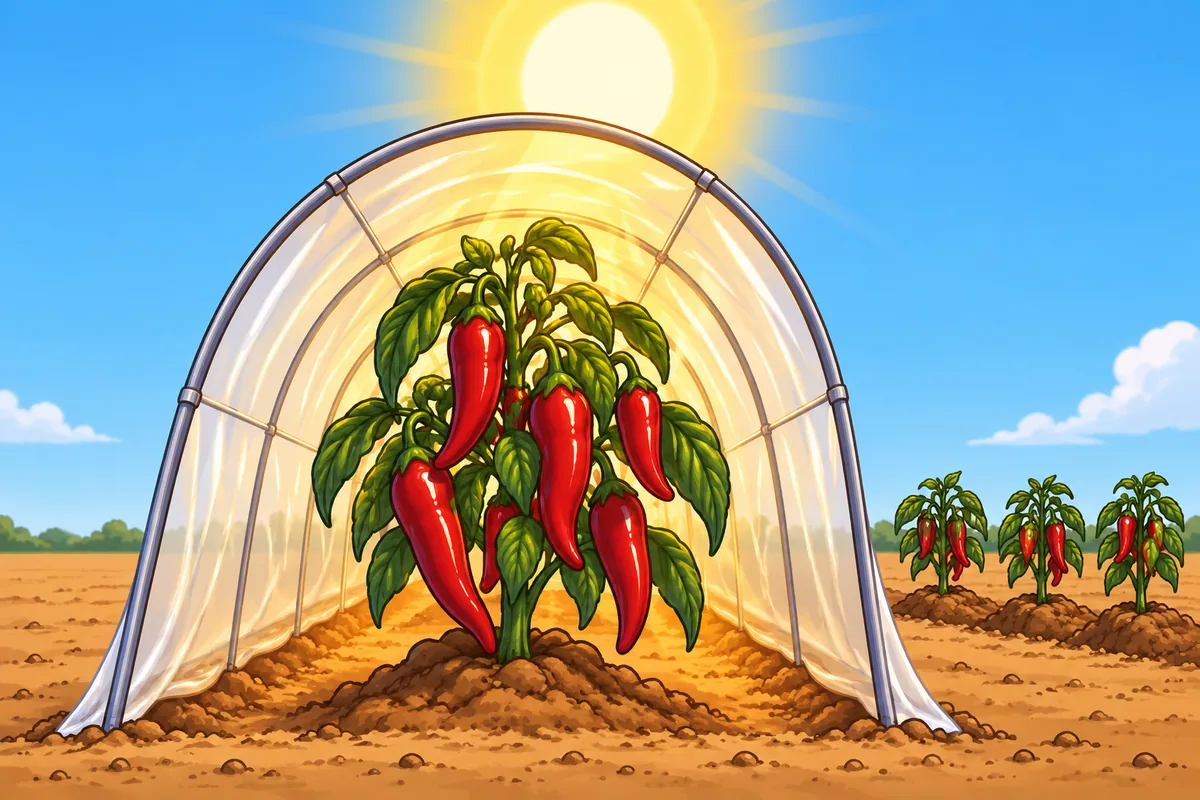
NMSU's heat guide puts the general rule in plain words: stress in the field, from temperature and water, can make a mild cultivar hotter, and a hot cultivar grown under ideal conditions may turn out only moderately hot6. So the ancho is the steadier chile from year to year, and the guajillo is the one whose heat swings with the weather.
That has a practical edge for you. If you cook the same guajillo sauce every month, a new bag from a hot harvest can surprise you, so taste a soaked strip before you blend the batch. An ancho sauce tends to land where it did last time.
Which is sweeter, ancho or guajillo?
Both packs call their chile smoky-sweet, but the sweetness tastes different. The ancho leans toward dried fruit and cocoa; the guajillo leans toward berries and tea35.
| Ancho | Guajillo | |
|---|---|---|
| Flavor | Smoky-sweet; prunes and chocolate | Smoky-sweet; hints of berries and tea |
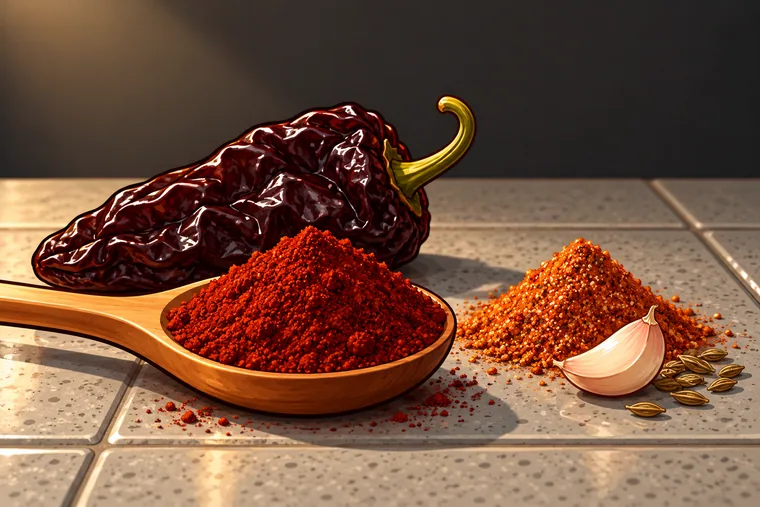
| Ground form | Fruity with hints of earthiness, mild heat | Not described on this pack |
| Look | Dried red chile, a red-ripe poblano | Reddish-brown, leathery, smooth skin |
If you want a deeper, rounder sweetness, like raisins in a stew, the ancho gives you that. If you want a brighter, tangier red sauce, the guajillo's berry note suits it better. Neither chile is sugary on its own; the sweetness you taste comes forward once you toast, soak and blend the pods.
There is also a body difference. One dried ancho weighs about 17 g4 and turns into a thick purée, while a guajillo's skin is leathery and smooth5, so a guajillo sauce usually needs straining to come out silky.
Which works better in mole and which in adobo?
Go by what each chile's maker says it does best. El Guapo calls the ancho essential in mole, tamales, enchilada sauce and chili3, and says the guajillo goes into salsas, chile sauce, stews, soups and rubs and pastes for meat, and into tamales and moles combined with other chiles5.
- MoleAncho as the backbone; guajillo alongside other chiles
- Enchilada sauce or chiliAncho, named for both by its maker
- Red chile sauce, stew or soupGuajillo, the maker's first list
- Rub, paste or adobo-style marinadeGuajillo for rubs and pastes; the pasilla pack names adobo
Sources for this line3. McCormick & Company (El Guapo), manufacturer page for its own product5. McCormick & Company (El Guapo), manufacturer page for its own product8. McCormick & Company (El Guapo), manufacturer page for its own product
For adobo, the honest answer is that neither the ancho nor the guajillo pack names it; the pack that does is the pasilla's, which lists adobo sauces among its uses8. The guajillo's rubs-and-pastes job sits closest to a meat marinade, so if your adobo is a chile paste you rub on pork, a guajillo base fits that job, and you can add an ancho for depth.
For mole, you rarely choose one. Many moles call for several dried chiles together, and both packs point that way: ancho as essential, guajillo combined with others. If your mole recipe lists both, keep both.
Where do anchos and guajillos come from?
Both are Mexican chiles sold dried, each from a different fresh pod. The ancho starts as a poblano, a pepper named for the valley of Puebla, south of Mexico City, which you let ripen to red and dry2. The guajillo starts as a mirasol chile; El Guapo's pack calls the guajillo its dried form and one of the more versatile dried chiles in Mexico5.
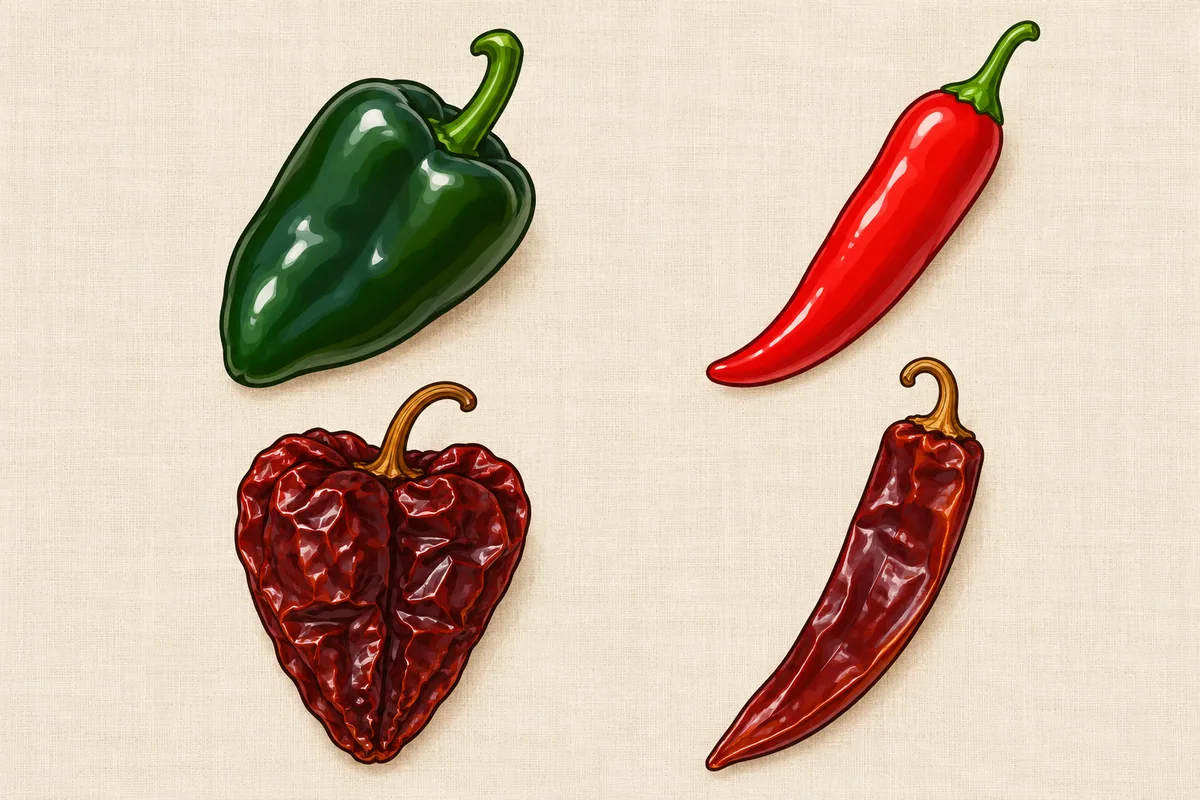
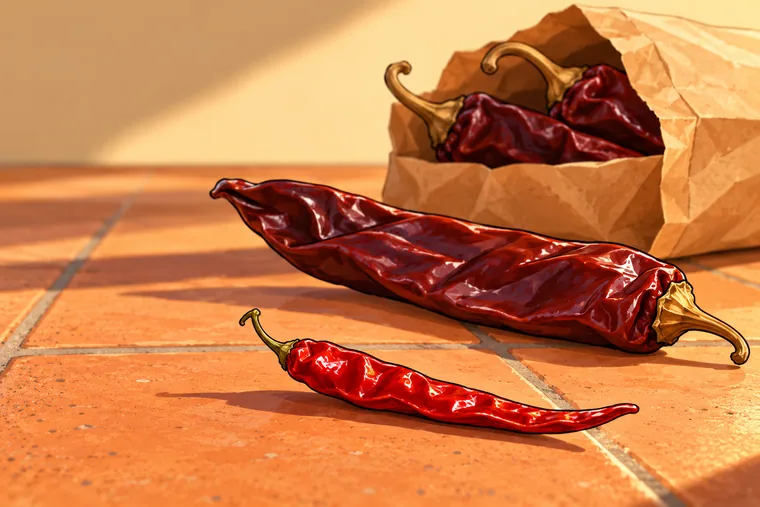
That origin explains the size gap you see in the bag. A poblano is a broad pod about 4 inches long and 2 wide2, so it dries into a wide, heavy ancho. The mirasol dries into a long, slim guajillo of 4 to 6 inches5. You get many more guajillos than anchos in the same weight, which is why recipes that count pods can mislead you.
Can you grow your own anchos and guajillos at home?
The ancho side is easy to plan. UF/IFAS says poblanos mature in about 75 to 80 days and keep producing through most of the summer2, so you can pick some green and leave the rest to ripen red for drying into anchos.
Your watering and your summer decide the heat. The trial showed the ancho type barely changed under heat stress, while the guajillo type rose about five times1. So if you grow mirasol plants for your own guajillos, a heat wave in a dry spell can give you pods far hotter than the bag at the store, and NMSU notes that water stress counts as much as temperature6. Water evenly if you want a mild guajillo; expect a steady, mild ancho almost whatever the weather does.
How do you tell an ancho from a guajillo in the bag?
By shape before color. Both are dried and dark red, so check these:
- Shape. The ancho is a dried poblano, so it stays wide and broad-shouldered2. The guajillo runs long and slim, 4 to 6 inches5.
- Skin. Guajillo skin feels leathery and smooth5; an ancho is a wrinkled, dried red pod.
- Weight. One ancho weighs about 17 g4; a bag of anchos holds far fewer pods per ounce than a bag of guajillos.
- Label. Some packs sell the ancho as "pasilla-ancho" or "pasilla rojo"3. That is still the ancho, not a pasilla.
Can you use guajillo instead of ancho?
Yes, in most red sauces, as long as you accept a brighter, less raisin-like result. Swap by weight, because the pods differ a lot in size. The heat usually stays close in a normal year, but taste first in case your guajillos came from a hot harvest.
| Recipe calls for | Swap in | How much | What changes |
|---|---|---|---|
| 2 anchos in enchilada sauce (about 34 g) | Guajillo | about 34 g of guajillo | Brighter red, berry note, thinner sauce; strain it |
| 30 g of guajillo in a red chile sauce | Ancho | about 30 g, under 2 anchos | Darker, sweeter, thicker sauce |
| Ancho and guajillo together in a mole | Only one of them | the full combined weight | Loses either the depth or the brightness; keep both if you can |
If you have neither, the ancho swaps and the guajillo swaps each rank stand-ins with amounts.
Why does your guajillo sauce taste sharp one month and flat the next?
Usually because of how the pods went in, not which chile you chose. Two things to check.
The bag ran hotter or milder than last time. The guajillo's heat swings with the growing season, from 13,705 to 69,211 SHU between the two conditions in the trial1. If a sauce suddenly tastes sharp, you may have a hot-harvest bag. Cut it with an extra ancho, which barely changed under the same stress, and you soften the edge without losing color.
The sauce lacks depth. The guajillo's flavor notes are berries and tea5, bright rather than deep. If your sauce tastes thin, add one 17 g ancho per batch for the prune-and-chocolate note its maker describes3. That is the reason so many red sauces pair these two chiles in the first place.
Your next pair for a red chile sauce
Want more heat in that sauce without losing the guajillo's color? The árbol and guajillo pair shows how a few small árbol pods add burn at about 14 times the guajillo's field heat. If the ancho is your base, the ancho and poblano pair explains where it comes from and how it changes as it dries.
Related in Compare
-
Ancho vs Poblano, One Pepper Picked Green or Dried Red
Fresh green, ripe red, then dried: one plant, three stages, two names.6 min read -
Arbol vs Guajillo Chiles, 14× Apart in One Field Trial
Two red dried chiles from the same bag aisle, one for heat and one for body.6 min read -
Ancho Chili Powder vs Chili Powder, One Chile or a Blend
Two red powders on the same shelf: a single chile and a seasoning mix.6 min read -
Chile Cascabel vs Guajillo, a Rattle at Half the Heat
A small round rattle chile and a long smooth red one, both dried, both from Mexican kitchens.5 min read -
Guajillo vs Chipotle, Same Chart Band, 22× Apart in the Lab
One dried in the sun, one dried in smoke.6 min read -
Pasilla vs Poblano, 2 Different Chiles and 1 Mixed-Up Label
One long black dried chile, one broad green fresh one, and a label that blurs them.6 min read
Sources
· 8
- 1Molecules 18(11):13471-13486 Characterization of Different Capsicum Varieties by Evaluation of Their Capsaicinoids Content by High Performance Liquid Chromatography, Determination of Pungency and Effect of High Temperature (González-Zamora et al.)
- 2University of Florida IFAS Extension HS-859/TR010: Pepper Production in Miami-Dade County, Florida
- 3McCormick & Company (El Guapo), manufacturer page for its own product El Guapo Whole Premium Pasilla Ancho Chili Pods (Chile Pasilla Ancho Entero), 7.5 oz
- 4USDA Agricultural Research Service, FoodData Central (SR Legacy) Peppers, ancho, dried (FDC ID 169396)
- 5McCormick & Company (El Guapo), manufacturer page for its own product El Guapo Whole Premium Guajillo Chili Pods (Chile Guajillo Entero), 5.5 oz
- 6New Mexico State University Cooperative Extension Service (Guide H-237) Measuring Chile Pepper Heat (Bosland, Walker)
- 7McCormick & Company, manufacturer page for its own product McCormick Culinary Ground Ancho Chile Pepper, 16 oz
- 8McCormick & Company (El Guapo), manufacturer page for its own product El Guapo Ground Pasilla Chili (Chile Pasilla Molido), 1 oz