
Chile Cascabel vs Guajillo, a Rattle at Half the Heat
A small round rattle chile and a long smooth red one, both dried, both from Mexican kitchens.
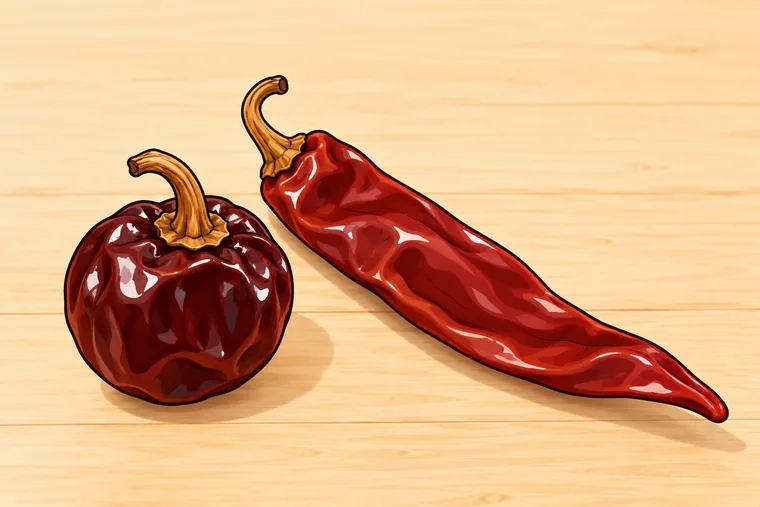
Guajillo is the warmer one: Iowa State gives its fresh form, mirasol, 2,500–5,000 SHU against 1,500–2,500 for cascabel, about 1.9 times apart by midpoint.
- They are different chiles: cascabel is small, round and rattles; guajillo is the long dried mirasol
- Cascabel tastes nutty and woody, guajillo smoky-sweet with berry and tea notes
- Swap by weight for flavor and accept the heat change, or use the blend table to hit a target
On this page
- 1Is cascabel hotter than guajillo?
- 2Is chile cascabel the same as guajillo?
- 3How do you soften cascabels and guajillos for a sauce?
- 4How much cascabel replaces guajillo in a pot of red sauce?
- 5What heat do you get when you blend the two chiles?
- 6Which dish wants the cascabel and which the guajillo?
- 7What spoils a cascabel or guajillo sauce before it starts?
Is cascabel hotter than guajillo?
No, the guajillo runs warmer. Iowa State's heat thermometer puts cascabel at 1,500 to 2,500 SHU and mirasol, the fresh chile that dries into guajillo, at 2,500 to 5,00013. The two bands touch at 2,500: the top of the cascabel is the bottom of the guajillo.
| Chile | Iowa State band | Midpoint | Shares its band with |
|---|---|---|---|
| Cascabel | 1,500–2,500 SHU | 2,000 SHU | Rocotillo, Sandia |
| Guajillo (mirasol) | 2,500–5,000 SHU | 3,750 SHU | Jalapeño |
| Ratio | 1.9 × (3,750 ÷ 2,000) |
So a guajillo carries a little under twice the heat of a cascabel, about as hot as a jalapeño in the same band. Both makers' own pages describe their pods as mild34, which fits: neither will scare anyone at your table.
One lab figure for guajillo runs much higher, 13,705 SHU for dried, field-grown pods2. That number counts dried, powdered chile, and the árbol and guajillo pair explains why dried lab figures run above the fresh charts. Read the bands as a ratio: guajillo about twice the cascabel, both mild.
Is chile cascabel the same as guajillo?
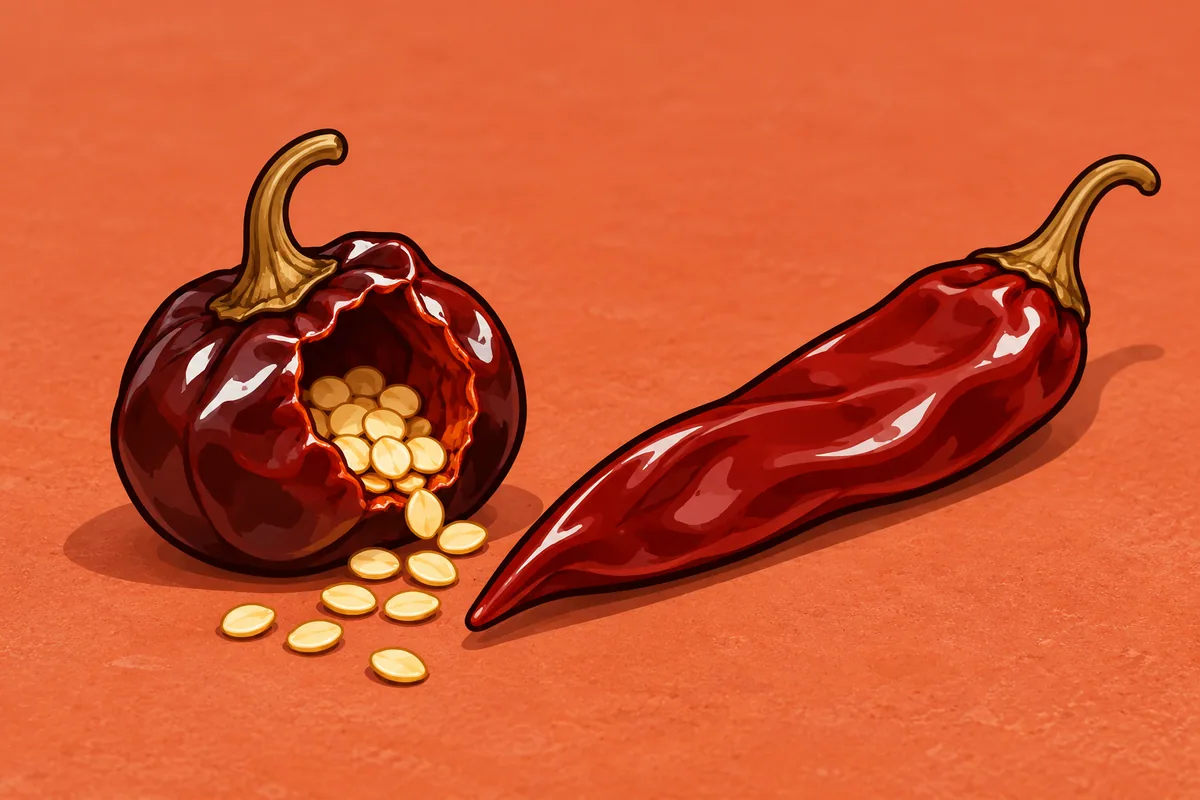
No, they are two different chiles that often share a shelf. A cascabel is small, round and deep red, and its loose seeds rattle inside the dried pod, which gives it its name, "small bell" or "rattle"4. A guajillo is the dried form of the mirasol chile35.
Cascabel
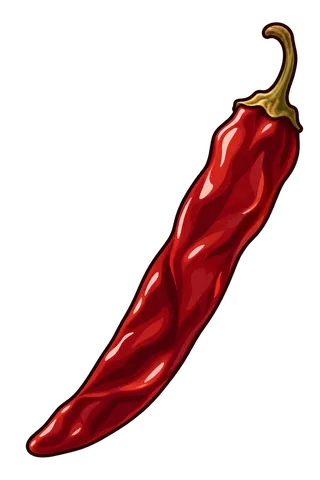
The flavors pull your dish in different directions. A cascabel adds a toasted-nut, woody depth, while a guajillo adds fruit and a light smoke. If your recipe names one, the swap changes the taste more than it changes the heat.
Iowa State's chart also groups cascabel with rocotillo and Sandia, and mirasol with jalapeño1. If you have cooked with any of those fresh pods, you already know roughly how warm each dried chile in your bag will taste.
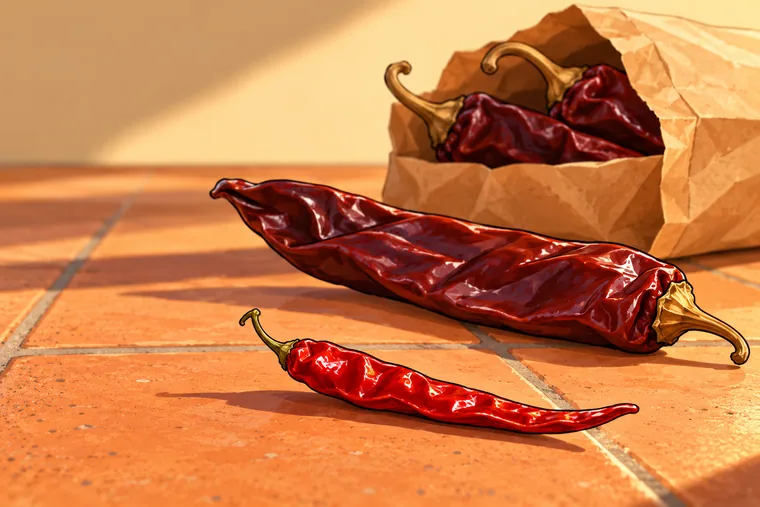
Shape tells them apart in a second. Pick up a bag: if the pods are round and rattle, you have cascabels; if they are long and smooth, you have guajillos. The dried chile names guide sorts out the other dried reds that turn up in the same aisle.
How do you soften cascabels and guajillos for a sauce?
Soak them in boiling water for half an hour, then blend. New Mexico State's purée method for dried red pods works for both of these chiles6:
- 1
Check every pod
Throw out any pod with mold, insect damage or decay, and never cook pods sprayed with plastic, shellac or insecticide, such as decorative ones.6
- 2
- 3
Rinse
Wash the pods in warm water, lift them out and change the water several times.6
- 4
Soak for 30 minutes
Cover the pods with boiling water in a large pan until the pulp is soft and slips from the skin.6
- 5
Blend, strain and simmer
Blend with fresh hot water until smooth, press through a sieve to catch the skins, then simmer for 10 minutes.6
NMSU's yield gives you a starting count: 12 to 14 large pods make about a pint of purée6. Guajillos are the large pods here. Cascabels are small and round, so you will need more of them for the same pint; weigh your pods instead of counting them.
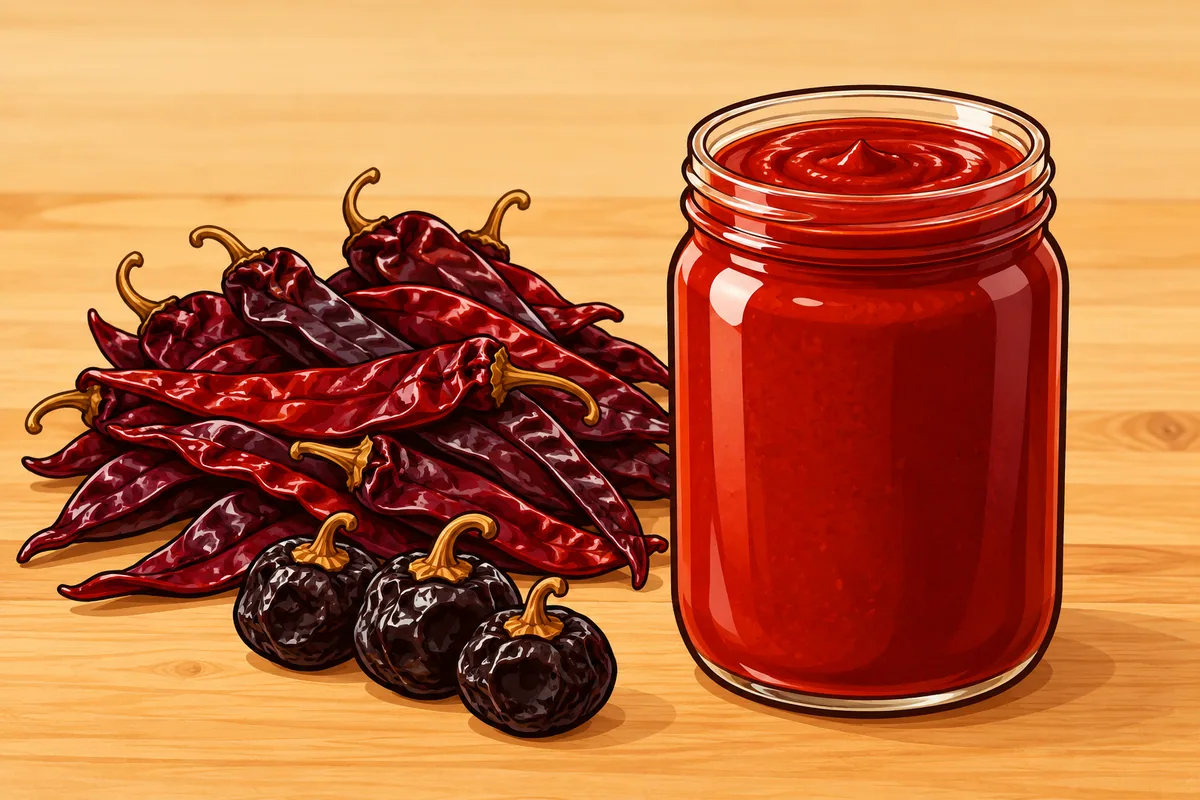
For your timing, plan about an hour from bag to finished purée, with most of it spent waiting on the soak. The rehydrating guide covers toasting and other dried chiles if you want to push the flavor further.
How much cascabel replaces guajillo in a pot of red sauce?
The same weight keeps the flavor balance close, and roughly halves the heat. If you want the heat to match instead, use about 1.9 times the weight of cascabel, from the midpoints in the first table1:
| Recipe asks for | Same weight swap | Same heat swap | How we got it |
|---|---|---|---|
| 30 g guajillo, a small pot of salsa | 30 g cascabel, about half the heat | 56 g cascabel | 30 × 3,750 ÷ 2,000 |
| 60 g guajillo, a batch of red sauce | 60 g cascabel | 113 g cascabel | 60 × 1.875 |
| 30 g cascabel, a pot of stew | 30 g guajillo, about twice the heat | 16 g guajillo | 30 × 2,000 ÷ 3,750 |
The same-heat column almost doubles your chile, which also doubles the nutty, woody flavor in the pot. For most recipes the same-weight swap is the better trade: you keep the sauce's body and accept a gentler bite. If your family wants the heat back, a pinch of a hotter dried chile does it with less bulk than an extra 50 g of cascabels.
A worked pot: swapping a third of the guajillo for cascabel
Say your enchilada sauce uses 60 g of dried guajillo for about a litre of finished sauce, and you have a bag of cascabels to use up. Replace 20 g of the guajillo with 20 g of cascabel and your chile mix drops from 3,750 SHU to about 3,170: (40 × 3,750 + 20 × 2,000) ÷ 601. That is about 85 % of the original heat, a change most people will not notice.
The sauce itself sits far below either figure, because the chiles make up only a small share of the pot. Sixty grams of chile in a litre of sauce is about 6 % by weight, so a sauce built on 3,750 SHU chiles lands near 225 SHU per spoonful (3,750 × 0.06), before any other ingredient. You can use that same arithmetic for any dried chile on this page: multiply the chile's heat by its share of the pot.
What you will notice is the color and the flavor. A third of the chile now comes from a browner, nuttier pod, so your sauce turns a shade darker and tastes a little toastier. If you like that, push the cascabel share to a half; if you miss the bright red, keep it to a quarter.
You can run the swap the other way too. A cascabel stew that came out flat gains fruit and a touch of warmth when you replace a quarter of its cascabels with guajillos, and its heat rises by only a fifth, from 2,000 to about 2,440 SHU by the midpoints1.
What heat do you get when you blend the two chiles?
Somewhere between 2,000 and 3,750 SHU, set by the share of each. Many red sauces use two or three dried chiles at once, and the maker of these cascabels suggests combining them with other chiles for birria4. If both chiles sit at their midpoints, the blend's heat is the weighted average:
| Guajillo | Cascabel | Estimated heat | How we got it |
|---|---|---|---|
| 100 % | 0 % | about 3,750 SHU | 1.00 × 3,750 |
| 75 % | 25 % | about 3,310 SHU | 0.75 × 3,750 + 0.25 × 2,000 |
| 50 % | 50 % | about 2,880 SHU | 0.5 × 3,750 + 0.5 × 2,000 |
| 25 % | 75 % | about 2,440 SHU | 0.25 × 3,750 + 0.75 × 2,000 |
| 0 % | 100 % | about 2,000 SHU | 1.00 × 2,000 |
The heat moves gently across the table, from 3,750 to 2,000, so you can let flavor decide your mix. More guajillo gives you a redder, fruitier sauce; more cascabel gives you a browner, nuttier one.
Which dish wants the cascabel and which the guajillo?
Follow what each maker cooks with its pods. McCormick's guajillo page names salsas, chile sauce, stews, soups, rubs, tamales and moles; its cascabel page names soups, salsas, enchiladas, chili, tacos and stews34:
- A red chile sauce, tamales or a moleColor and fruit lead
- Use guajilloMild
- A soup, stew or pot of chiliDepth leads, heat stays low
- Use cascabelMild
- Birria or a mixed-chile adoboThe cascabel maker suggests a blend
- Use both; set the mix with the blend table
A mole is the clearest case for guajillo. NMSU defines mole as a spicy sauce of chiles and unsweetened chocolate8, and a guajillo's fruit and red color carry through the chocolate better than a cascabel's brown, woody notes.
For a weeknight pot of chili, the cascabel earns its place. It adds depth without heat, so you can use a generous handful and keep the pot family-friendly. If your recipe asks for guajillo and you also have anchos, the ancho against the guajillo covers the other common pairing.
What spoils a cascabel or guajillo sauce before it starts?
Most problems start with the pods or the storage, not the recipe. Run these checks:
Before and after you soak your dried chiles
- Smell and look inside the pods: mold or insect damage means the pod goes in the bin.6
- Skip decorative pods from a wreath or string; sprayed pods are not food.6
- Shake the cascabels out after you crack them; the loose seeds stay hard and gritty after soaking.4
- Strain the purée so the skins stay out of the sauce.6
- Refrigerate leftover purée at once and use or freeze it within 3 days.6
- Wear gloves if you seed a big batch, and keep your hands away from your eyes.9
The three-day rule matters most when you make purée in bulk. Freeze it in small portions, such as ice cube trays, and you can drop a cube of guajillo or cascabel into a pan whenever a recipe calls for it.
Your next step: weigh the guajillo or cascabel your recipe calls for, pick the row in the swap table or the blend table that fits your pot, and soak a test batch with the steps above. If you want a hotter dried red beside these two, the guajillo against the chipotle brings smoke into the comparison.
Related in Compare
-
Guajillo vs Chipotle, Same Chart Band, 22× Apart in the Lab
One dried in the sun, one dried in smoke.6 min read -
Arbol vs Guajillo Chiles, 14× Apart in One Field Trial
Two red dried chiles from the same bag aisle, one for heat and one for body.6 min read -
Ancho Pepper vs Guajillo, Heat That Flips With the Summer
The two dried chiles most red sauces start with, and the weather that decides their heat.6 min read -
Chile de Árbol vs Serrano, Árbol Leads by About 1.6×
A slim dried red against a fresh green, close in heat and far apart in the pan.7 min read -
Ancho vs Poblano, One Pepper Picked Green or Dried Red
Fresh green, ripe red, then dried: one plant, three stages, two names.6 min read -
Árbol vs Cayenne Pepper, Cayenne Is About 1.7× Hotter
Two skinny red Capsicum annuum chiles, one sold whole, one mostly ground.5 min read
Sources
· 9
- 1Iowa State University Extension PM 1888(S): Guía de Horticultura, El huerto doméstico, Chiles (Everhart, Haynes, Jauron)
- 2Molecules 18(11):13471-13486 (MDPI) Characterization of Different Capsicum Varieties by Evaluation of Their Capsaicinoids Content by High Performance Liquid Chromatography, Determination of Pungency and Effect of High Temperature (González-Zamora et al.)
- 3McCormick & Company (El Guapo), manufacturer page for its own product El Guapo Whole Premium Guajillo Chili Pods (Chile Guajillo Entero), 5.5 oz
- 4McCormick & Company (El Guapo), manufacturer page for its own product El Guapo Cascabel Chili Pod, 1.5 oz
- 5University of California Agriculture and Natural Resources, UC Master Gardeners of Ventura County Ventura Garden to Table Series: Peppers
- 6New Mexico State University Cooperative Extension Service (Guide E-327) Making Red Chile Purée and Sauce from Dried Pods
- 7New Mexico State University Cooperative Extension Service (Guide H-237) Measuring Chile Pepper Heat (Bosland, Walker)
- 8New Mexico State University, Chile Pepper Institute Chile Terminology
- 9New Mexico State University Cooperative Extension Service (Guide E-324) Processing Fresh Chile Peppers (revised by Nancy C. Flores)