
Chile de Árbol vs Serrano, Árbol Leads by About 1.6×
A slim dried red against a fresh green, close in heat and far apart in the pan.
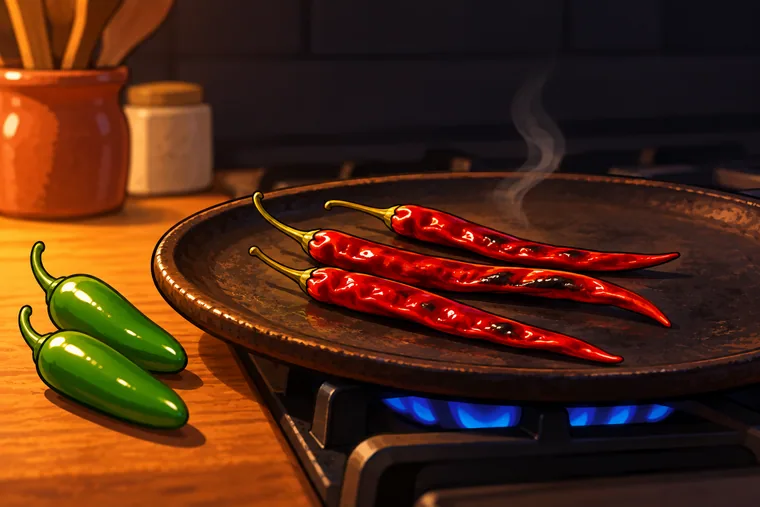
Chile de árbol is usually hotter, about 1.6 times a serrano on the same chart, but a hot summer can push the serrano past it.
- Árbol 15,000–30,000 SHU; serrano 5,000–23,000 SHU on Iowa State's chart
- In one HPLC trial, heat stress made the serrano about 1.9 times hotter than the árbol
- About 1 g of dried árbol stands in for 8–9 g of fresh serrano (estimate)
On this page
- 1Is chile de árbol hotter than a serrano?
- 2When does a serrano out-burn a chile de árbol?
- 3How do árbol and serrano taste in a salsa?
- 4How much dried árbol replaces fresh serrano, and back?
- 5Why does your árbol salsa taste bitter or flat?
- 6How do you tell a fresh árbol from a serrano?
- 7Can you grow árbol and serranos in the same bed?
- 8Árbol or serrano for tonight's cooking?
Is chile de árbol hotter than a serrano?
Usually, by a little more than half again. Iowa State's heat chart puts the chile de árbol at 15,000 to 30,000 SHU and the serrano at 5,000 to 23,0001. On that one chart, the árbol's midpoint of 22,500 SHU sits about 1.6 times above the serrano's 14,000.
Árbol from Iowa State's chart; serrano from its index entry (UF/IFAS). Log scale; bars are published ranges.12
The two bars overlap over most of the serrano's range. A hot serrano at 23,000 SHU already beats a mild árbol at 15,000, so the pod in your hand can break the rule.
Why does the ratio change with the chart?
Because each source measured its own peppers. UF/IFAS gives the serrano a higher range, 10,000 to 25,000 SHU2, and against that the gap shrinks. We show both so you can see how much a single headline ratio depends on whose chart it comes from.
| Serrano range | Serrano midpoint | Árbol is | Arithmetic |
|---|---|---|---|
| Iowa State, 5,000–23,000 SHU | 14,000 SHU | about 1.6× hotter | 22,500 ÷ 14,000 |
| UF/IFAS, 10,000–25,000 SHU | 17,500 SHU | about 1.3× hotter | 22,500 ÷ 17,500 |
On any chart, the árbol comes out ahead, but never by more than about two to one at the middles.
Our verdict uses the Iowa State pairing because both numbers come from the same chart, which keeps the comparison fair.
What does 1.6 times mean for your cooking? If 20 g of fresh serrano makes your pot of beans as hot as you like it, about 12.5 g of fresh árbol would do the same job (20 ÷ 1.6). That gap is small enough that you can swap the two in most cooked dishes and adjust by taste; it is the fresh-versus-dried difference, worked out further down, that catches people. If your serranos come from a hot, dry garden, expect the smaller gap or none at all, for the reason the next section shows.
When does a serrano out-burn a chile de árbol?
When the weather gets very hot. A 2013 HPLC study in Durango, Mexico, grew both peppers in an open field (33 to 40°C) and in a greenhouse that reached 40 to 48°C, then measured them by dry weight3. In the field the árbol tested about 2.3 times hotter. In the greenhouse heat, the ranking flipped.
- Open field, 33–40°CÁrbol 194,592 SHU; serrano 86,427 SHU (dry weight)
- Greenhouse heat, 40–48°CÁrbol lost 32.5 % of its capsaicinoids; the serrano's roughly tripled
- Ranking flipsSerrano 262,916 SHU; árbol 141,073 SHU
So the serrano finished about 1.9 times hotter than the árbol (262,916 ÷ 141,073). The authors name the jalapeño and de árbol as the varieties heat hit hardest, and say the heat favored capsaicinoid build-up in serrano3.
Those dry-weight numbers run far above the fresh ranges, and the authors themselves say their values came out higher than other studies for every variety. Read the direction, not the size. NMSU's garden guide says the same thing in kitchen terms: temperatures that run too cool or too hot change how hot a pod gets4. If you grow serranos through a brutal July, taste one before you assume your bag of árbol is the hotter chile.
How do árbol and serrano taste in a salsa?
Smoky and dry against bright and wet. The UC Master Gardeners describe chile de árbol as known for fiery heat and a smoky flavor, and the serrano as bright and biting, with a hint of sweetness and earthiness and particularly thick flesh5. UF/IFAS adds that serranos usually go into food raw, in pico de gallo and salsa2.
Chile de árbol
Serrano
- Fiery heat, smoky5FlavorBright and biting, a hint of sweetness and earthiness5
- A slim red pod, tested dried in the Durango trial3How you meet itA fresh green pod about 2 inches long2
- Toasted, soaked or ground into the sauceTexture in a salsaThick flesh that stays crisp when chopped raw25
- 15,000–30,000 SHU1Heat5,000–23,000 SHU (Iowa State); 10,000–25,000 SHU (UF/IFAS)12
That split decides most of your choice before heat even comes up. A red salsa built on toasted chiles wants the árbol's smoke. A pico de gallo wants the serrano's crunch, and no dried pod gives you that.
How much dried árbol replaces fresh serrano, and back?
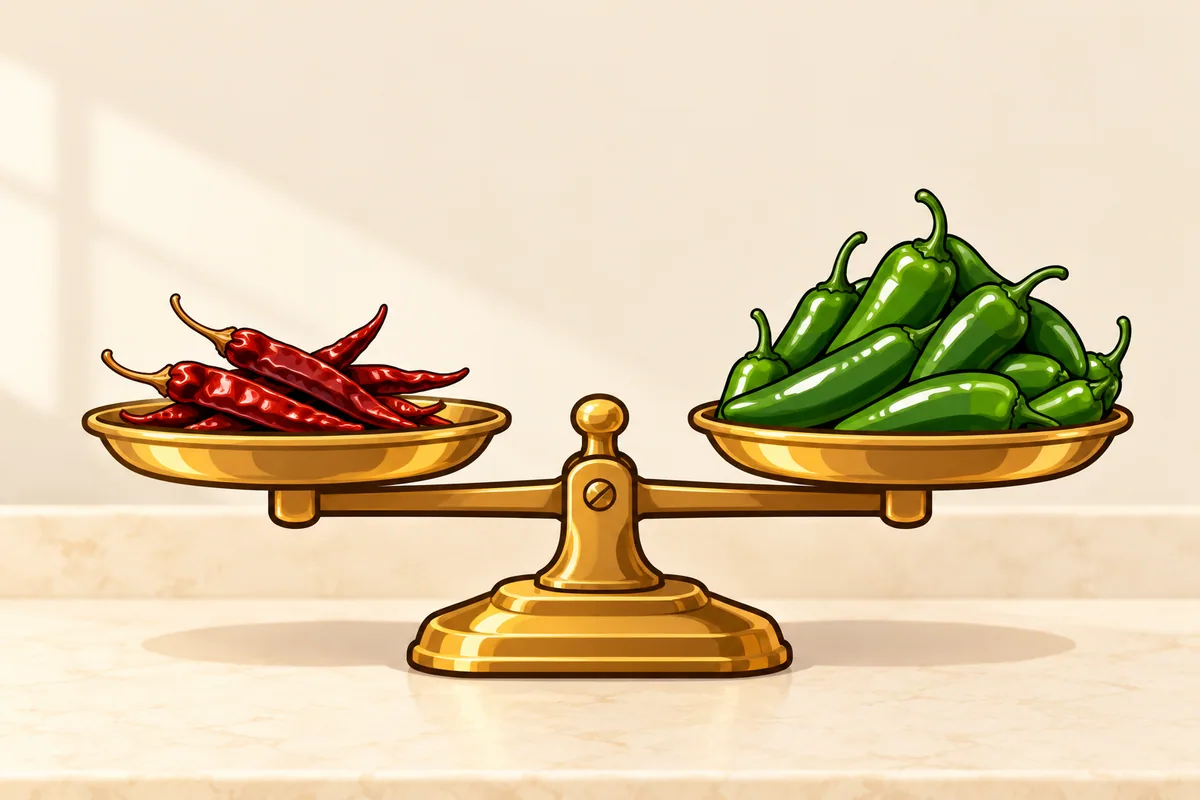
About 1 g of dried árbol for every 8 to 9 g of fresh serrano. Here is where the number comes from, so you can redo it with your own peppers.
The Durango lab dried its chiles at 65°C for 72 hours and recorded 85 % moisture loss3. So a gram of dried pod came from about 6.7 g of fresh fruit (1 ÷ 0.15). A gram of dried árbol at the Iowa State midpoint then carries about 6.7 × 22,500 = 150,000 fresh-gram equivalents. Fresh serrano carries 17,500 per gram at the UF/IFAS midpoint2. Divide, and 150,000 ÷ 17,500 is about 8.6.
| Your dish | It calls for | Use instead | Note |
|---|---|---|---|
| Red table salsa for 4 | 4 g dried árbol | about 35 g fresh serrano | Gives a green, fresh salsa instead of a smoky red one |
| Pot of beans for 8 | 20 g fresh serrano | 2–3 g dried árbol | Drop the pods in whole and fish them out before serving |
| Stir-fry for 2 | 10 g fresh serrano, sliced | about 1 g dried árbol, crumbled | Add the árbol to the hot oil first |
| Pico de gallo | fresh serrano | do not swap | A dried pod has no crunch to give |
If you have neither and need to fill the gap, a dried cayenne sits in the same heat band as a hot árbol, and the árbol and cayenne pair shows how close they run.
For the mild end of the dried-chile shelf, the árbol against the guajillo covers the chile that gives you color without much bite.
Why does your árbol salsa taste bitter or flat?
Most árbol trouble comes from the pan, not the pepper. You toast dried chiles to wake up their oils, and it takes seconds, not minutes, so stand at the stove while you do it.
- Your salsa tastes bitter. You toasted the árbol until it blackened. Pull the pods off the heat as soon as the color darkens and you can smell them, then start a fresh batch; a burnt note will not cook out.
- It tastes flat and dusty. The pods sat too long. Look for árbol that still shows a glossy red skin, and keep the bag sealed in a dark cupboard once you open it.
- It came out far hotter than last time. The crop changed, not your recipe. Heat moves with the growing season4, so soak and taste one pod from each new bag before you add the rest.
- Your fresh serrano salsa turned watery. Thick, juicy flesh gives up liquid once you salt it. Salt the chopped vegetables, let them sit 10 minutes in a sieve, and mix after they drain.
- Your hands burn after seeding. Capsaicin sits on bare skin. Wear rubber, latex or nitrile gloves, and if any reaches your eyes, rinse with plenty of warm water for 15 minutes6.
Toasted árbol also sends capsaicin into the air. Open a window or turn on the hood, since Poison Control notes that inhaled capsaicin can trigger an asthma attack in people who are prone to it6. Most cooks feel it as a cough the moment the pods hit a hot pan.
If you plan to soak the pods for a sauce, the rehydrating steps cover water temperature and timing.
How do you tell a fresh árbol from a serrano?
If you find fresh árbol at a market, the shape gives it away:
- Length and width. Árbol pods are long and thin, like the dried ones you know; a serrano runs about 2 inches long and much plumper2.
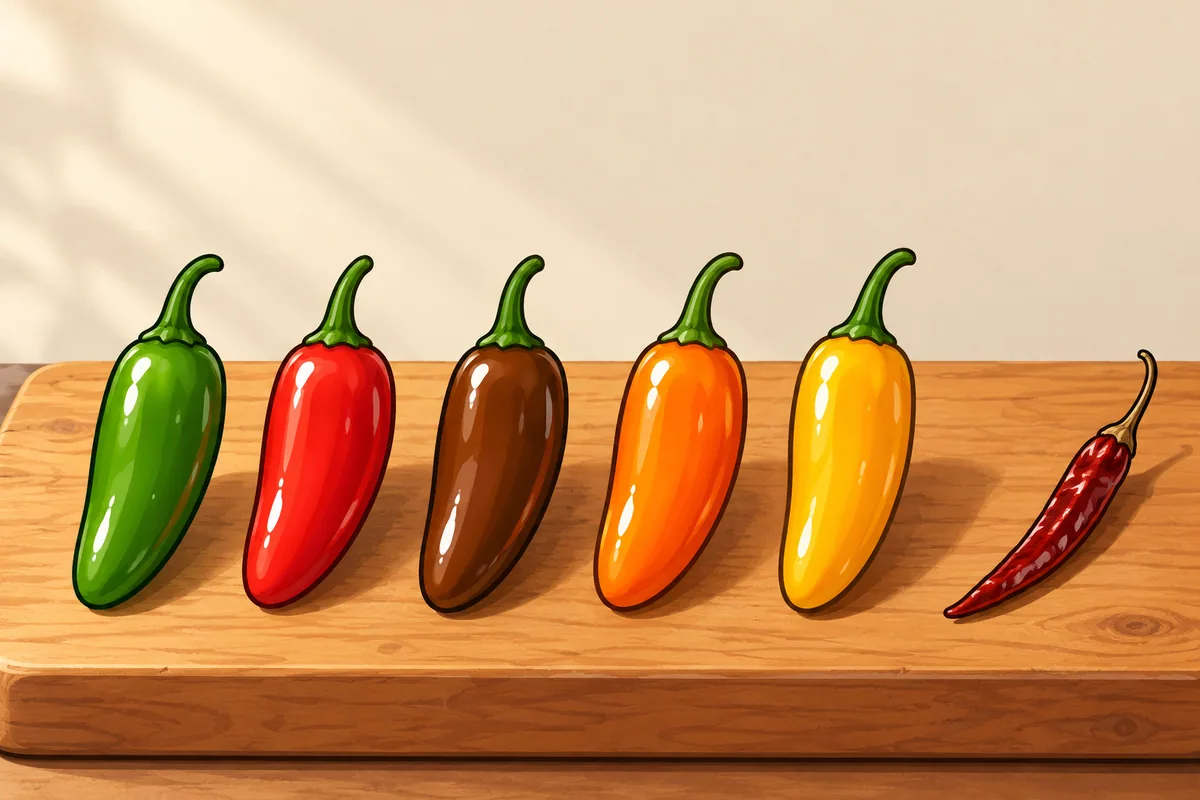
- Color. Serranos mature green, red, brown, orange or yellow2, so a green pod points to serrano; the árbol you know is red.
- Flesh. Squeeze gently: a serrano's flesh feels particularly thick and firm5, while an árbol feels thin.
- Form. If it is dry and brittle, it is not a serrano: UF/IFAS describes the serrano as a pepper you usually eat raw2.
NMSU groups the 2-inch serrano with the peppers you use for hot salsas4. If you see a slim red pod twice that length in the fresh bin, you are probably holding an árbol or a cayenne.
Can you grow árbol and serranos in the same bed?
Yes; both are warm-season chiles that follow the same garden rules. NMSU's guide for New Mexico gardens says to set transplants out after the last spring frost into warm soil, 8 to 14 inches apart in rows 24 to 30 inches wide, from seedlings started 6 to 8 weeks earlier4. Plants set fruit best with days of 65 to 85°F and nights of 60 to 70°F, and blossoms may drop below 60°F or above 90°F.
The serrano has a few needs of its own. UF/IFAS says it grows well in soil with a pH of 7.0 to 8.5, wants temperatures above 75°F, tolerates no frost and can reach 5 feet tall2. Give it the back of the bed so it does not shade your árbol.
Pick for the form you want. NMSU says green fruit is ready 45 to 55 days after pollination in good conditions, and that fully ripe red pods can dry on the plant or hang by their stems4. That gives you fresh green serranos through summer and red árbol pods to dry for winter from the same patch.
Árbol or serrano for tonight's cooking?
Reach for árbol when
- You want a smoky red salsa or a chile oil
- The dish simmers and the pod can soften in it
- You need heat from the pantry, with no fresh chiles in the house
Reach for serrano when
- The dish is raw: pico de gallo, ceviche, a green salsa
- You want crunch and juice as well as heat
- Your crowd wants heat a notch below árbol in a normal year
You can also use both in one pot. A fresh serrano gives you the green top note, and one crumbled árbol gives the slow, smoky heat underneath. Start with half of each amount from the swap table and build from there.
Your next step: if the serrano still feels too mild for you, the serrano and habanero side by side shows the next big jump. If you are standing in the spice aisle instead, the serrano against cayenne powder turns fresh grams into powder grams the same way this page does for árbol.
Related in Compare
-
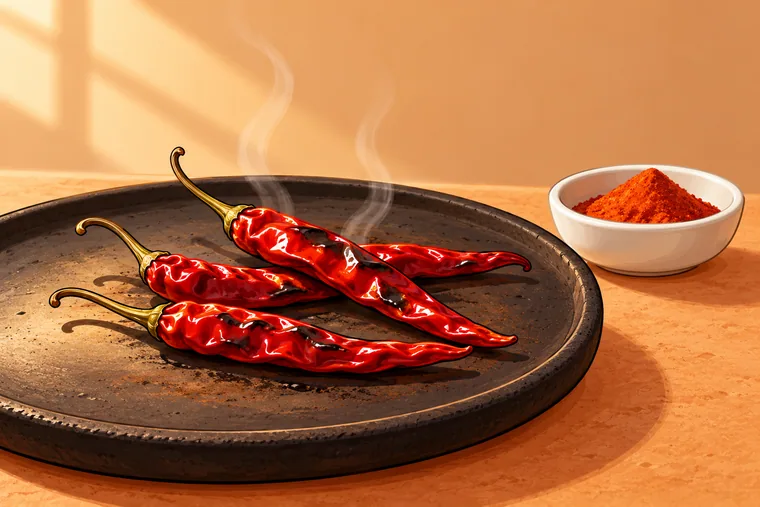
Árbol vs Cayenne Pepper, Cayenne Is About 1.7× Hotter
Two skinny red Capsicum annuum chiles, one sold whole, one mostly ground.5 min read -
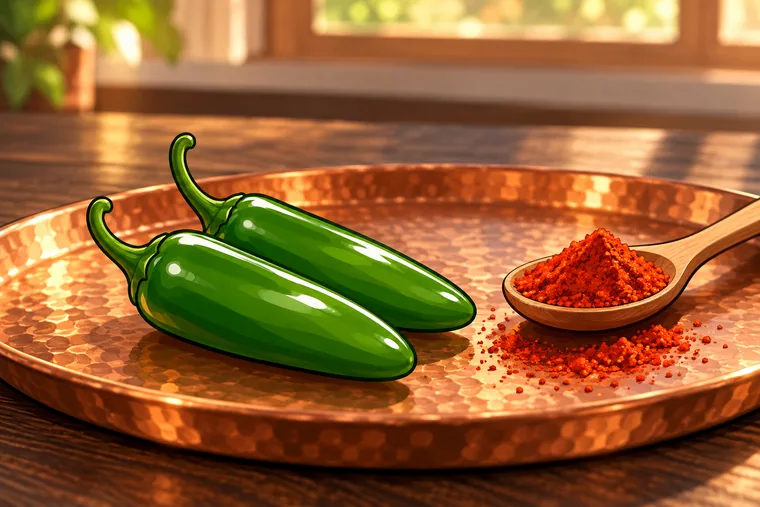
Serrano vs Cayenne Pepper, Cayenne Runs About 2× Hotter
One you chop fresh, one you shake from a jar.6 min read -
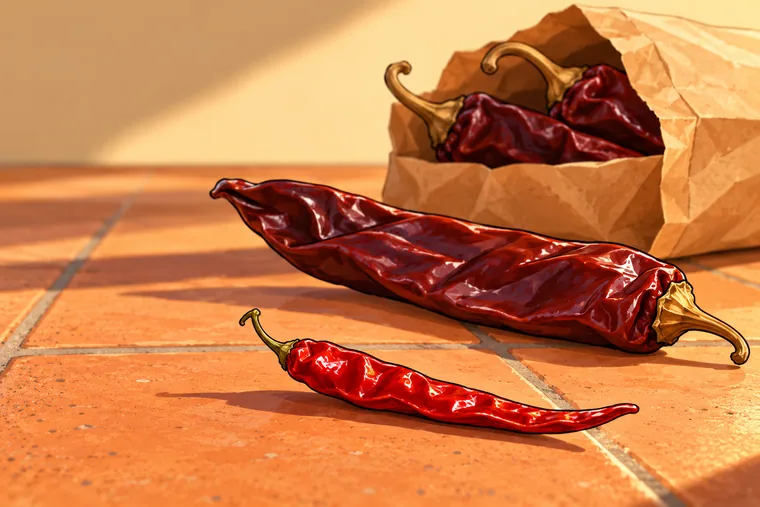
Arbol vs Guajillo Chiles, 14× Apart in One Field Trial
Two red dried chiles from the same bag aisle, one for heat and one for body.6 min read -
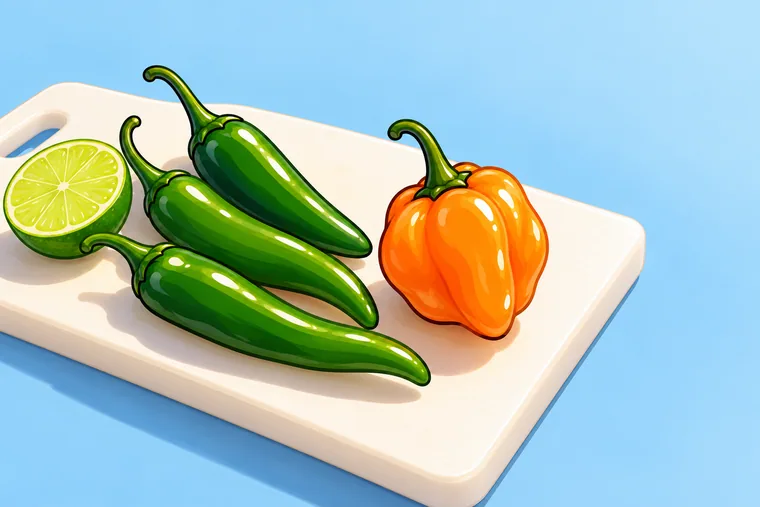
Serrano vs Habanero, the Habanero Is About 13× Hotter
A salsa chile against a hot sauce chile.6 min read -
Chile Cascabel vs Guajillo, a Rattle at Half the Heat
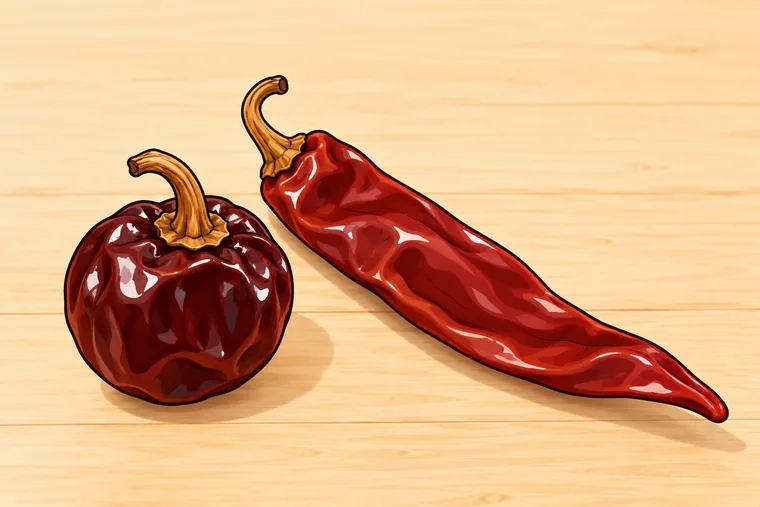
A small round rattle chile and a long smooth red one, both dried, both from Mexican kitchens.5 min read -
Guajillo vs Chipotle, Same Chart Band, 22× Apart in the Lab
One dried in the sun, one dried in smoke.6 min read
Sources
· 6
- 1Iowa State University Extension PM 1888(S): Guía de Horticultura, El huerto doméstico, Chiles (Everhart, Haynes, Jauron)
- 2University of Florida IFAS Extension HS-859/TR010: Pepper Production in Miami-Dade County, Florida
- 3Molecules 18(11):13471 (MDPI) Characterization of different Capsicum varieties by evaluation of their capsaicinoids content by high performance liquid chromatography, determination of pungency and effect of high temperature (González-Zamora et al.)
- 4New Mexico State University Cooperative Extension Service Guide H-240: Growing Chile Peppers in New Mexico Gardens (Walker, Bosland)
- 5University of California Agriculture and Natural Resources, UC Master Gardeners of Ventura County Ventura Garden to Table Series: Peppers
- 6National Capital Poison Center (poison.org) Capsaicin: When the Chili Is Too Hot (Amanda McDaniel-Price, RN)