
Serrano vs Habanero, the Habanero Is About 13× Hotter
A salsa chile against a hot sauce chile.
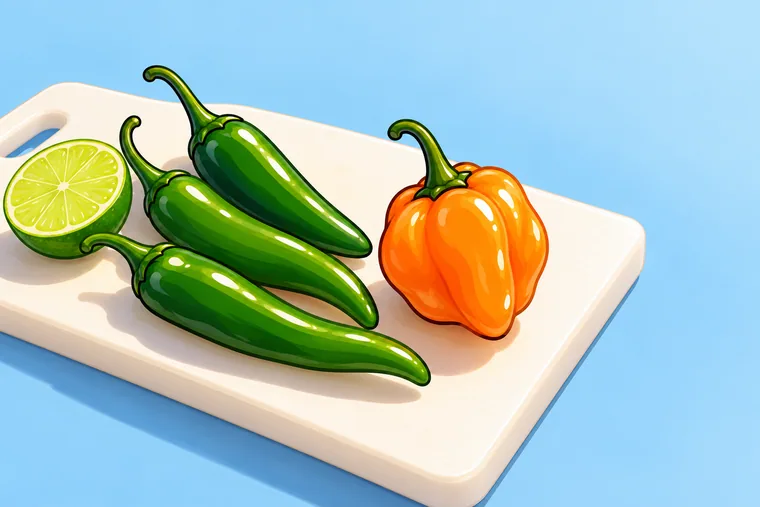
The habanero is hotter, about 13 times a serrano by midpoint.
- Serrano 10,000–25,000 SHU, habanero 100,000–350,000 SHU
- The ranges never touch: a mild habanero is still 4 times a hot serrano
- Serrano for raw salsa and pico de gallo; habanero for fruity hot sauce
Log scale; bars are published ranges.1
On this page
- 1Is a habanero hotter than a serrano?
- 2Does Texas AgriLife widen the serrano-to-habanero gap?
- 3How do serranos and habaneros taste?
- 4What if your habanero is a hotter variety?
- 5Is a serrano just a hotter jalapeño?
- 6How much goes into a bowl of salsa?
- 7How do you tell a serrano from a habanero?
- 8Which one belongs in a hot sauce?
- 9How do you keep a serrano harvest?
- 10Which one should you use?
- 11Which one grows in your soil?
- 12Can you swap a serrano for a habanero?
- 13Why can one habanero swamp a four-serrano salsa?
Is a habanero hotter than a serrano?
Yes, and by more than most people guess. UF/IFAS puts the serrano at 10,000 to 25,000 SHU and the habanero at 100,000 to 350,000 SHU1. That makes the serrano a medium pepper on our heat bands and the habanero an extra-hot one.
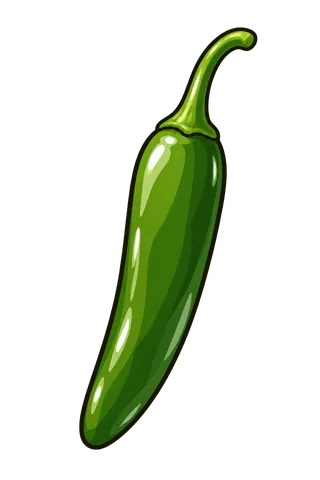
Serrano
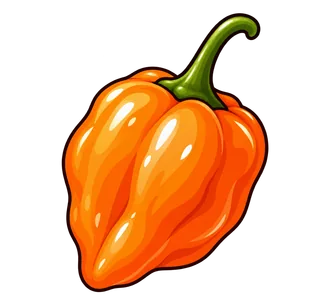
Habanero
HotterLog scale; bars are published ranges.1
The two ranges never meet, so no habanero is ever as mild as a serrano.
How many times hotter is a habanero than a serrano?
By midpoint, the habanero sits at 225,000 SHU and the serrano at 17,500, which works out to about 13 times hotter. Pick your pods from opposite ends and the gap runs anywhere from 4 to 35 times.
| Comparison | Habanero | Serrano | Habanero is |
|---|---|---|---|
| Midpoints | 225,000 SHU | 17,500 SHU | about 13 times hotter |
| Mild habanero, hot serrano | 100,000 SHU | 25,000 SHU | 4 times hotter |
| Hot habanero, mild serrano | 350,000 SHU | 10,000 SHU | 35 times hotter |
These ratios are heat per gram. A whole habanero and a whole serrano weigh different amounts, so weigh or eyeball by volume when you swap.
Does Texas AgriLife widen the serrano-to-habanero gap?
Yes, by a little. Texas AgriLife lists the serrano at 7,000 to 25,000 SHU and habanero and Scotch bonnet together at 200,000 to 300,0004. On those midpoints, 250,000 against 16,000, the habanero comes out about 15.6 times hotter, against 13 on the UF/IFAS ranges.
So plan on 13 to 16 times. The serrano's low end is where the two sources disagree most, and it is also where your own pods vary the most, so taste one before you build a whole bowl around it.
How do serranos and habaneros taste?
UF/IFAS calls the serrano's flavor bright and biting, and the habanero's fruity and citrus-like with a floral aroma1. In practice that means a serrano mostly adds heat and a green edge, while a habanero changes the taste of the whole dish.
If you like the serrano's heat but not its sharpness, the habanero will not fix that. It brings its own fruit, and a lot more fire.
Ripeness changes the serrano more than you might expect. UF/IFAS says growers pick it unripe or ripe1, so the same plant gives you sharp green pods first and red, brown, orange or yellow ones later, and you can choose the color your salsa needs.
What if your habanero is a hotter variety?
Then the gap widens fast. The NMSU Chile Pepper Institute's own heat list puts several habanero-type peppers well above the plain orange one5. Against a serrano midpoint of 17,500 SHU1, here is what each one means:
| Pepper | NMSU figure | Times a serrano |
|---|---|---|
| Orange Habanero | 250,000 SHU | about 14 |
| Scotch Bonnet | 350,000 SHU | about 20 |
| Red Savina Habanero | 500,000 SHU | about 29 |
| Chocolate Habanero | 700,000 SHU | about 40 |
So check the label before you swap. A brown pod sold as chocolate habanero needs almost three times the caution of an orange one, and a Scotch bonnet sits between the two. Texas AgriLife groups habanero and Scotch bonnet together at 200,000 to 300,000 SHU4, which is a fair working range for the orange pods you find in most stores.
A fancier name is no promise of more heat, though. In NMSU's 2005 field trial, Red Savina, then the record holder, tested 248,556 SHU, below an orange habanero grown beside it at 357,7296. Your own pods follow your season more than the label, so you taste a sliver of each new batch, whatever the variety name on the bag or the seed packet says.
Is a serrano just a hotter jalapeño?
Close to that, and it helps you place the habanero. UF/IFAS says the serrano looks like a jalapeño but is much hotter, at 10,000 to 25,000 SHU, and has particularly fleshy walls1. By midpoint that makes a serrano about 3.5 times a 5,000 SHU jalapeño, and a habanero about 13 times a serrano.
So the three peppers climb in big steps: jalapeño, then serrano at about three and a half times, then habanero at about 45 times the jalapeño. If your family handles jalapeños but balks at serranos, a habanero is a big jump for them: about the jalapeño-to-serrano step taken twice in a row.
How much goes into a bowl of salsa?
Far less habanero than you think. Say your pico de gallo uses 30 g of chopped serrano. At 13 times the heat by midpoint1, the same heat from habanero is about 2.3 g, a small piece of one pod.
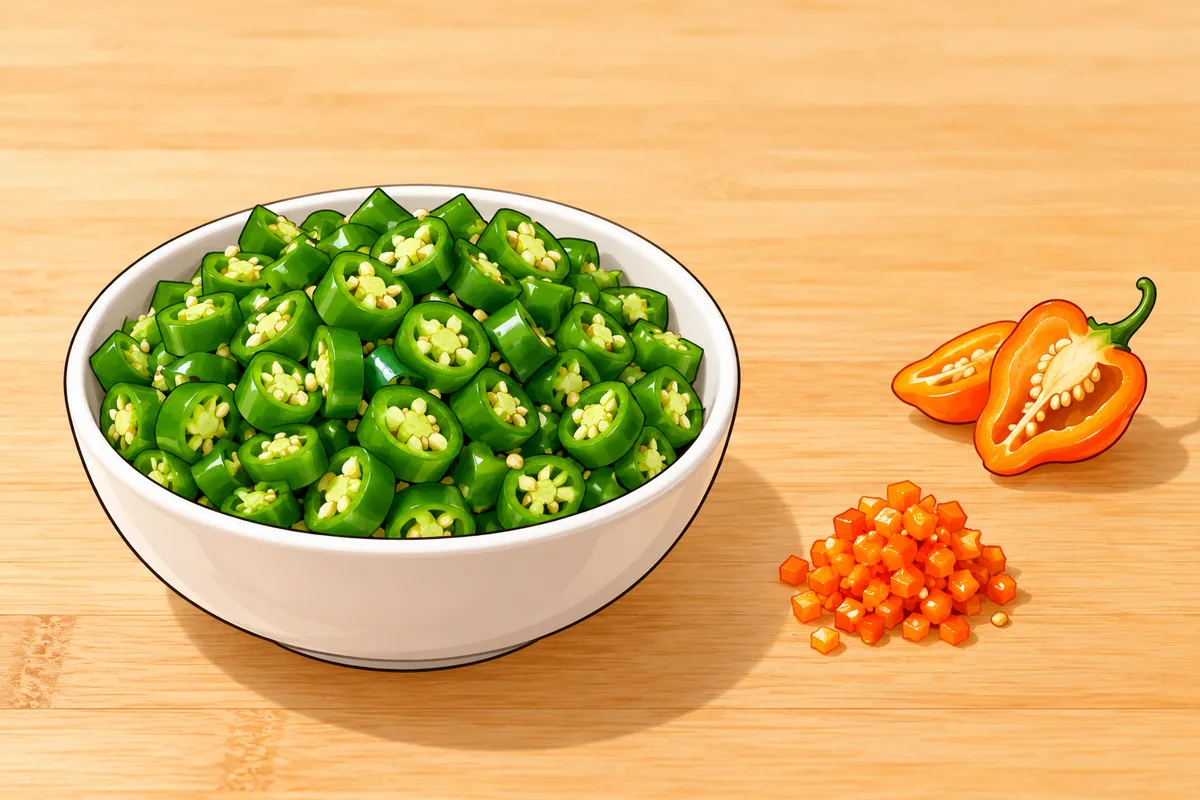
The habanero version will also taste different. The serrano's fleshy walls make it a good fit for pico de gallo and salsa1, where you want crunch, while 2.3 g of habanero adds heat and fruit but almost no body. If you swap, you make up the missing bulk with tomato, onion or a mild pepper.
How do you tell a serrano from a habanero?
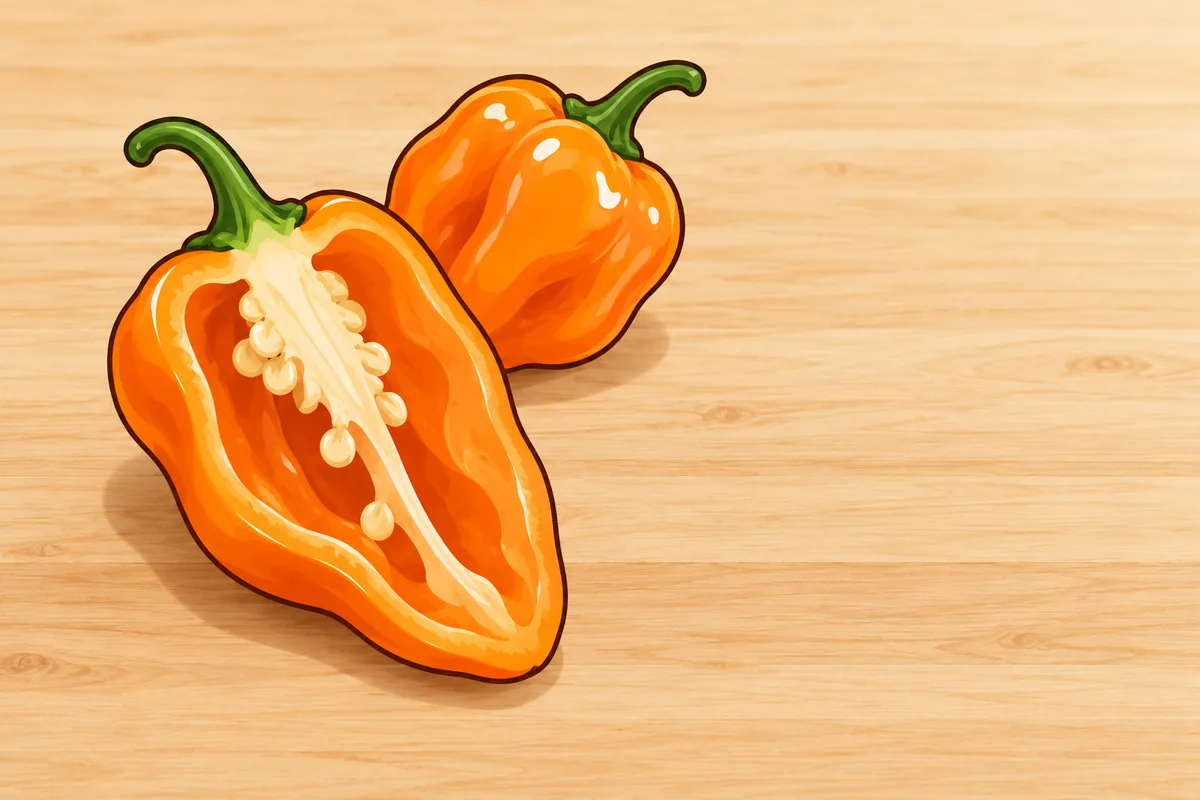
Shape and flesh. A serrano looks like a jalapeño and runs about 2 inches long with particularly fleshy walls; a habanero is 0.8 to 2.4 inches with thin, waxy flesh1. Both start green, so a green pod is the one case where you need to look twice.
| Serrano | Habanero | |
|---|---|---|
| Length | About 2 inches | 0.8–2.4 inches |
| Looks like | A jalapeño | Its own shape; not compared to another pepper |
| Flesh | Particularly fleshy | Thin and waxy |
| Ripe colors | Green, red, brown, orange or yellow | Yellow, orange or red; also white, brown and pink |
| Plant | Up to 5 feet tall | Height not given |
Which one belongs in a hot sauce?
Both do, in different bottles. The habanero's heat, fruity citrus flavor and floral aroma have made it a popular hot sauce pepper1, so you meet it in thick, orange, fruit-forward sauces where a few drops go a long way. The serrano's bright, biting flavor suits a fresh green sauce or a table salsa you make the same day.
You can see the split in Mexican hot sauces, which run from mild table salsas to habanero bottles. If you blend your own, a serrano sauce lets you use plenty of pods for body and color, while a habanero sauce needs fruit, carrot or vinegar to stretch a small amount of pepper. Pick by how much pepper you want to taste, then by how much heat you can take.
How do you keep a serrano harvest?
Freeze the extras whole. Penn State Extension says you can freeze whole hot peppers raw once you wash them and pull off the stems7, and you can chop a frozen serrano straight into a cooked salsa or a pot of beans. Keep fresh pods for pico de gallo, where you want the crunch.
Dry the rest if you have a lot. Penn State dries peppers at 140°F for 2 hours, then at 130°F until they are tough to brittle, and notes that light fades dried peppers quickly7. A habanero harvest keeps the same way, but you open a window while you grind it.
Which one should you use?
| You are making | Pick | Why |
|---|---|---|
| Pico de gallo or a fresh salsa | Serrano | It is usually eaten raw in both |
| A fruity hot sauce | Habanero | Fruity, floral, and a popular hot sauce pepper |
| A dish for a crowd with mixed tolerance | Serrano | Tops out at 25,000 SHU, a quarter of the mildest habanero |
| A jalapeño dish that needs more kick | Serrano | It looks like a jalapeño but is much hotter |
Which one grows in your soil?
They want opposite soils. UF/IFAS says the serrano grows well at pH 7.0 to 8.5 and the habanero prefers slightly acidic soil, about pH 6, calling high-pH ground an obstacle for it1. If your soil tests alkaline, the serrano is the easy one.
| Need | Serrano | Habanero |
|---|---|---|
| Soil pH | 7.0–8.5 | About 6, slightly acidic |
| Temperature | Above 75°F; no frost at all | Hot weather, as in south Florida |
| Plant | Up to 5 feet | Height not given |
| Days from transplanting | 70–85 for most hot types | 90–120 for habanero types |
Both like heat and both die in frost, so you set them out after your last frost date. A short summer favors the serrano, which gives ripe pods weeks sooner8. If you want both from one garden, start the habanero first and put it in the spot with the most sun.
Can you swap a serrano for a habanero?
You can, as long as you change the amount. Most of the heat sits in the white ribs inside the pod, about 89 % of the capsaicin9, so cutting the ribs out is your other control.
- 1
- 2
Serranos in place of a habanero
Expect less heat and none of the fruit. To match the heat at midpoint you would need about 13 times the weight, which overwhelms most dishes, so accept a milder result or add a fruity element of your own.1
If you only need a stand-in because the store is out of serranos, our serrano swaps rank the options by heat and amount.
Why can one habanero swamp a four-serrano salsa?
Mistakes and the fix
- Treating a habanero like a big serrano. At 13 times the heat by midpoint, one pod can overwhelm a bowl that took four serranos; start with a small piece.1
- Seeding the pod and leaving the ribs. About 89 % of the capsaicin sits in the pale placenta, so cut that out to tame either pepper.9
- Chopping habaneros bare-handed. Wear rubber, latex or nitrile gloves and keep your hands away from your eyes.10
- Reaching for water when the salsa burns. In a 2019 test of seven drinks, whole and skim milk cut capsaicin burn the most.11
One step further up, a ghost pepper tested about 2.8 times hotter than an orange habanero grown in the same New Mexico field6, and the ghost pepper against the habanero works through that gap. Somewhere in the middle, the Thai chili shows a small hot pod that sits much closer to the habanero.
Related in Compare
-
Habanero vs Thai Chili, Why the Habanero Is 3× Hotter
A tiny hot chili against a fruity extra-hot one.5 min read -
Ghost Pepper vs Habanero, Why the Ghost Is 2.8× Hotter
Same species, very different numbers.6 min read -
Scotch Bonnet vs Habanero, Same Range, 1.4× Lab Gap
Two Capsicum chinense pods, one heat band, two different kitchens.5 min read -
Thai Chili vs Serrano, About 4× the Heat at Half the Size
A tiny Southeast Asian chili and a slim Mexican green one that cooks swap all the time.6 min read -
Habanero vs Jalapeño, About 45× the Heat by Midpoint
The pepper you know against the one that scares people.7 min read -
Chile de Árbol vs Serrano, Árbol Leads by About 1.6×
A slim dried red against a fresh green, close in heat and far apart in the pan.7 min read
Sources
· 11
- 1University of Florida IFAS Extension HS-859/TR010: Pepper Production in Miami-Dade County, Florida
- 2UF/IFAS Gardening Solutions Peppers by Scoville Units
- 3PhytoKeys 200:1-423 (Pensoft) Monograph of wild and cultivated chili peppers (Capsicum L., Solanaceae)
- 4Texas AgriLife Extension Service (Joe Masabni) Jalapeño & Other Hot Peppers
- 5New Mexico State University, Chile Pepper Institute Heat
- 6HortScience 42(2):222-224 'Bhut Jolokia', the world's hottest known chile pepper, is a putative naturally occurring interspecific hybrid (Bosland and Baral)
- 7Penn State Extension Preserving Those Colorful Garden Peppers (Martha Zepp)
- 8University of Maryland Extension Growing Peppers in a Home Garden
- 9Heliyon (Cell Press) A comprehensive review of capsaicin: Biosynthesis, industrial productions, processing to applications, and clinical uses
- 10National Capital Poison Center (poison.org) Capsaicin: When the Chili Is Too Hot (Amanda McDaniel-Price, RN)
- 11Physiology & Behavior 208:112557 Putting out the fire: Efficacy of common beverages in reducing oral burn from capsaicin (Nolden, Lenart, Hayes)