
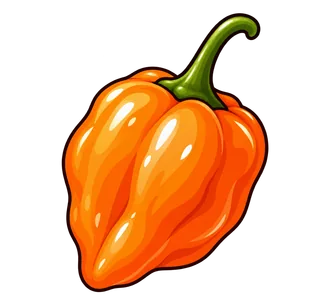
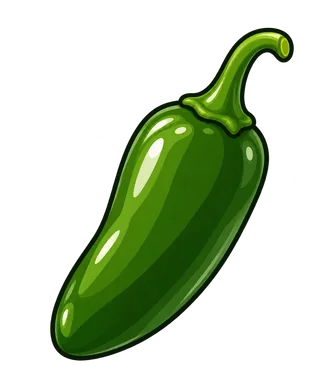
Habanero vs Jalapeño, About 45× the Heat by Midpoint
The pepper you know against the one that scares people.
Short answer
The habanero is far hotter: about 45 times a jalapeño by midpoint, and 12 to 175 times across the two ranges.
- Habanero 100,000–350,000 SHU; jalapeño 2,000–8,000 SHU
- The hottest NMSU jalapeño line, 79,000 SHU, still sits below the habanero's floor
- Swap about 1 g of habanero for every 45 g of jalapeño, then taste
Log scale; bars are published ranges.1
On this page
- 1How many times hotter is a habanero than a jalapeño?
- 2Can a hot jalapeño ever match a mild habanero?
- 3Why do habanero and jalapeño heat charts disagree?
- 4What does a habanero taste like next to a jalapeño?
- 5How do you spot a habanero and a jalapeño at the store?
- 6How much habanero replaces the jalapeños in your recipe?
- 7Can you take some heat out of a habanero before you cook it?
- 8What happens if a habanero lands in a jalapeño dish by mistake?
- 9Is a habanero harder to grow than a jalapeño?
- 10Which one belongs in your next salsa, sauce or popper?
How many times hotter is a habanero than a jalapeño?
About 45 times, if you compare the middle of each range. UF/IFAS puts the habanero at 100,000 to 350,000 SHU and the jalapeño at 2,000 to 8,000, with most jalapeños near 5,0001. The habanero's midpoint is 225,000 SHU and the jalapeño's is 5,000, and 225,000 ÷ 5,000 gives you 45.
Log scale; bars are published ranges.1
45×habanero over jalapeño, midpoint to midpoint1
12.5×mildest habanero over hottest jalapeño1
175×hottest habanero over mildest jalapeño1
Even the mildest habanero on the UF/IFAS range carries more than 12 times the heat of the hottest jalapeño.
Look at the chart and you will see two bars that never touch. On a log axis each step is ten times the last, so the gap between them is a full tier and then some.
How do you get from two ranges to one number?
You pick which ends to compare, and the answer moves a lot. The table shows the three pairings we use, with the division written out so you can check it.
| Pairing | Habanero | Jalapeño | Habanero is | Arithmetic |
|---|---|---|---|---|
| Midpoints | 225,000 SHU | 5,000 SHU | 45× hotter | 225,000 ÷ 5,000 |
| Closest ends | 100,000 SHU | 8,000 SHU | 12.5× hotter | 100,000 ÷ 8,000 |
| Farthest ends | 350,000 SHU | 2,000 SHU | 175× hotter | 350,000 ÷ 2,000 |
We lead with the midpoint figure because it describes the pods you are most likely to buy. The closest-ends row is the one to remember if you are nervous: it is the smallest gap the two ranges allow.
Can a hot jalapeño ever match a mild habanero?
Not with any jalapeño NMSU has released. The university breeds jalapeños at unusual heat levels, and its release report gives each line a measured figure2. The hottest one, NuMex Orange Spice, reaches 79,000 SHU, which still falls short of the habanero's 100,000 SHU floor1.
| Jalapeño line | Heat | Share of the habanero floor |
|---|---|---|
| NuMex Jalmundo | 17,000 SHU | 17 % |
| NuMex Lemon Spice | 25,000 SHU | 25 % |
| NuMex Vaquero | 25,000–30,000 SHU | 25–30 % |
| NuMex Piñata | 45,000–50,000 SHU | 45–50 % |
| NuMex Orange Spice | 79,000 SHU | 79 % |
So if your jalapeño plant came from one of these seed lines, your pods can run several times hotter than a grocery jalapeño. Even then, a habanero picked from the mild end of its range stays ahead.
Why do habanero and jalapeño heat charts disagree?
Because each chart comes from a different source, crop and year. Iowa State's chart gives a narrower jalapeño and a habanero that starts lower than the UF/IFAS range, while the NMSU Chile Pepper Institute lists one tested figure for an orange habanero34.
Habanero
HotterJalapeño
Run the Iowa State numbers and you get almost the same answer. Its midpoints are 182,500 and 3,750 SHU, so the habanero comes out about 49 times hotter. Different charts, same story: one habanero does the work of dozens of jalapeños.
Weather moves both peppers too. NMSU's garden guide says water stress, temperatures that are too cool or too hot, disease and insect pressure all change pungency5. A dry, hot August can push your jalapeños to the top of their range, which narrows the gap a little but never closes it.
What does a habanero taste like next to a jalapeño?
Fruitier and thinner-fleshed. The UC Master Gardeners describe the habanero as fruity with subtle smokiness, used in savory and sweet dishes, and the jalapeño as vibrant and grassy6. UF/IFAS adds that most people like the jalapeño because it is spicy without being overwhelming1.
Habanero
HotterJalapeño
That thick jalapeño wall is why you can stuff and grill one whole. A habanero's thin flesh disappears into a sauce, which suits it, since a little of it goes a long way.
Chef and food writer Matt Degen explains how the two pods differ and how he cooks with each, so you can watch a jalapeño and a habanero handled before you try the swap table below.
How do you spot a habanero and a jalapeño at the store?
By shape first. The two rarely get mixed up once you hold them, but here are the marks the sources give:
- Shape. Kentucky's crop profile calls the habanero small and lantern-shaped; NMSU describes the jalapeño as conical, about 3 inches long and 1 to 1.5 inches wide58.
- Length. A habanero runs 0.8 to 2.4 inches; a jalapeño 2 to 3 inches1.
- Color. Jalapeños sell mostly green and turn red; habaneros start green and ripen yellow, orange or red1.
- Skin. Some ripe jalapeño varieties show fine cracks called checking8; a habanero's skin stays waxy.
- Species. The habanero is Capsicum chinense; the jalapeño belongs to C. annuum, like most garden peppers8.
If you see a red jalapeño that has been smoked dry, that is a chipotle, the smoked form UF/IFAS names9. Its heat is still jalapeño heat.
How much habanero replaces the jalapeños in your recipe?
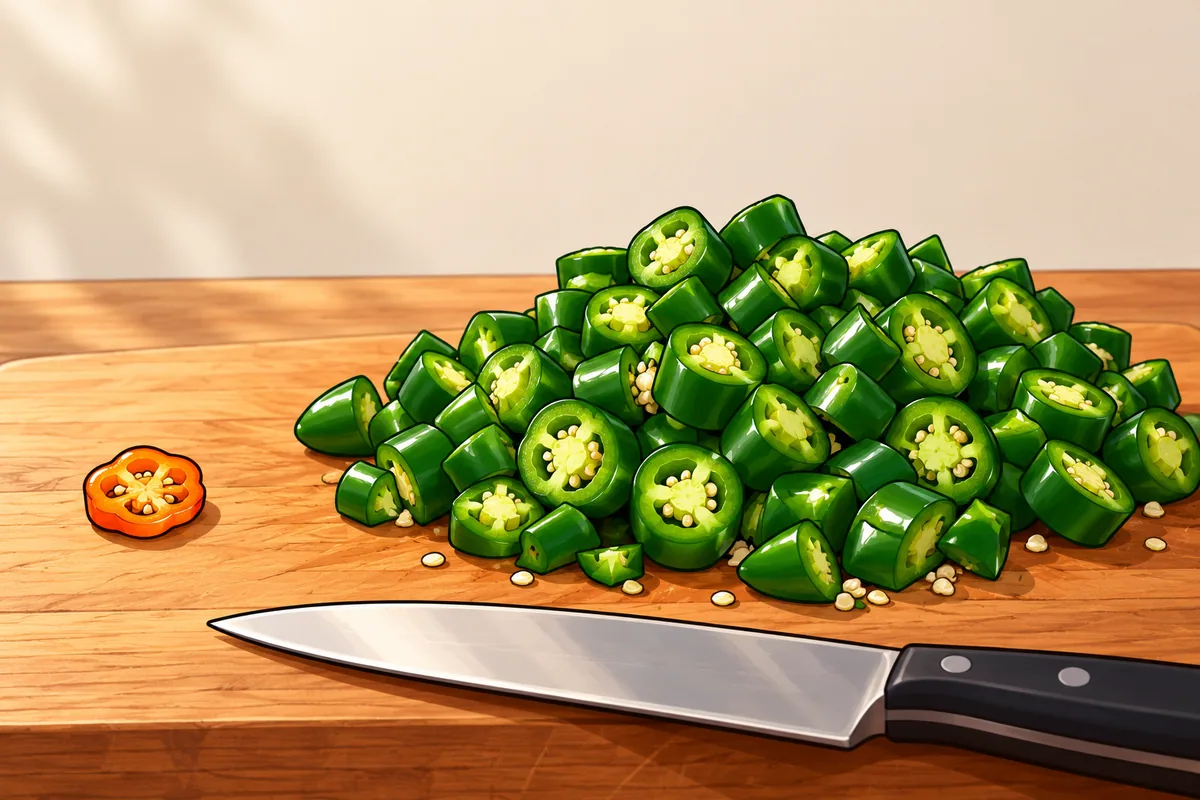
Use about one gram of habanero for every 45 grams of jalapeño. That comes straight from the 45-times midpoint ratio1, so treat every amount below as an estimate to taste against, not a measurement. Weigh by grams rather than by pods, since a habanero and a jalapeño differ in size.
| Your recipe | Jalapeño it calls for | Habanero instead | Note |
|---|---|---|---|
| Pico de gallo for 4 | 30 g, about two pods | under 1 g, a thin sliver | Mince it fine so no one bites a whole piece |
| Pot of chili for 8 | 90 g | about 2 g | Add early, stir well, taste after 20 minutes |
| Pickled jar of rings | 450 g | do not swap | Rings are the dish; habanero rings would be inedible for most people |
| Blended hot sauce | 200 g | about 4–5 g, then build up | Fruity flavor comes through even at low amounts |
Going the other way, a habanero recipe needs about 45 times the weight in jalapeño, which is usually more pepper than the dish can hold. For a sauce built on fruit and heat, the habanero swap list gives better stand-ins than a pile of jalapeños.
Can you take some heat out of a habanero before you cook it?
Yes, and you do it with a spoon, not with the seeds. NMSU's garden guide says capsaicinoids form in glands near the pod's center and that seeds are not the source of pungency5. The UC Master Gardeners point to the same place: the thin, pale flesh that ties the pepper's body to its seeds6.
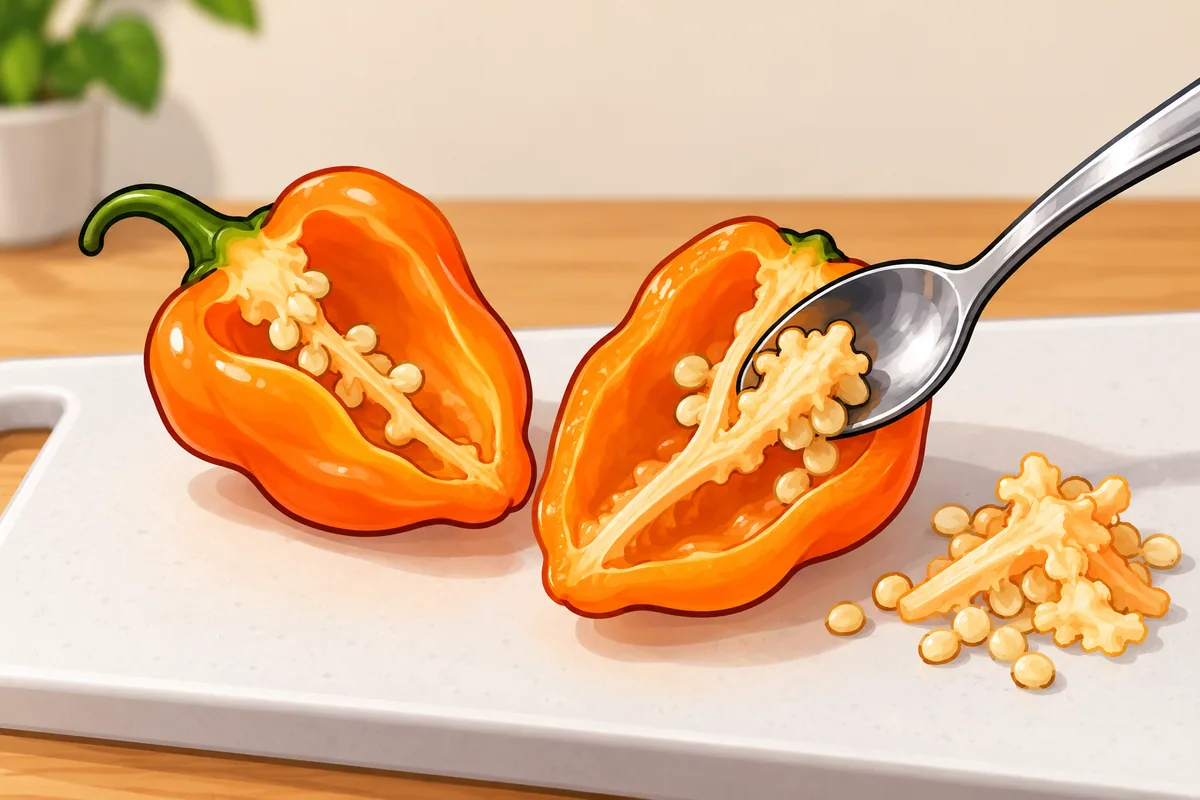
That pale rib is what you scrape out. Here is how the two peppers differ when you do it:
- Jalapeño. Halve it lengthwise and run a teaspoon down each half. The thick green wall you keep carries the flavor, and your poppers end up mild enough for most guests.
- Habanero. Its flesh is thin and waxy1, so the wall left after scraping is small. You lower the heat, but a scraped habanero still sits far above any jalapeño on the chart.
- Both. Wear gloves while you scrape, since the rib is where the capsaicin sits, and wash the board and knife right after10.
If you overshoot at the table, the Master Gardeners note that milk products help because their proteins bind to capsaicin, and that citrus can help too6. A squeeze of lime over a habanero salsa does double duty: it suits the fruit and it softens the edge a little.
What happens if a habanero lands in a jalapeño dish by mistake?
The dish turns into a dare. Poison Control lists nausea, vomiting, belly pain, diarrhea and a burning feeling from too much hot pepper, and says small sips of milk may help with the burn10. If your salsa already has a whole habanero in it, here is how you rescue it:
- 1
Fish out what you can
Pull any whole or large pieces of habanero out before you stir again; the longer they sit, the more heat moves into the dish.
- 2
Taste a small spoonful
Judge the heat with a tiny taste and a glass of milk ready, not a full bite.10
- 3
Dilute with more of everything else
Double the tomatoes, onion or beans so the same heat spreads through twice the food.
- 4
Serve dairy on the side
Sour cream, crema or a glass of milk beside the plate gives each guest a way to calm the burn.10
Doubling the base halves the heat per spoonful, but at 45 times the jalapeño's heat, one habanero in a two-jalapeño salsa still lands far hotter than you planned. Sometimes the best move is to call it hot sauce and start a fresh bowl.
Is a habanero harder to grow than a jalapeño?
It takes longer and wants more heat. Maryland Extension gives most hot types, jalapeño among them, 70 to 85 days from transplanting, and habanero types 90 to 120 days11. UF/IFAS says the habanero thrives where the weather runs hot, like south Florida1.
- Day 0
Transplant both
Wait for warm soil: below 65°F the plants just sit there.11
- Day 70–85
Jalapeños ready
Most hot types give mature pods in this window.11
- Day 90–120
Habaneros ripen
Habanero types need about three to five more weeks than the jalapeño.11
Texas A&M wants hot days of 85 to 95°F with cool nights of 65 to 70°F for jalapeños and other hot peppers, and warns that excessive heat cuts fruit size and causes bloom drop12. Maryland adds that nights above 75°F slow or stop pod set11. In a short northern summer, start your habanero seeds first, since you will wait longest for them. Maryland suggests starting seed indoors 8 to 10 weeks before your frost-free date and notes that some types need 1211; give your habanero the 12 and your jalapeño the 8, and both reach the garden at a useful size.
You can grow the two side by side without worry. Maryland says that planting sweet types next to hot ones will not make the sweet peppers hot11, and by the same logic your jalapeños beside a habanero keep their own heat: cross-pollination shows up in saved seed, not in this year's pods.
Which one belongs in your next salsa, sauce or popper?
Two questions decide it: how much heat your table can take, and whether you need the pepper's body or only its heat.
What are you making?
- The pepper is the foodPoppers, rings, stuffed or grilled halves
- JalapeñoThick wall, 2,000–8,000 SHUMedium
- The pepper is the heatSauces, marinades, a pot of chili
- mixed crowdJalapeño, more of itYour crowd likes it mild to medium
- heat loversHabanero, a littleFruity heat at 100,000–350,000 SHU
- mixed crowd
If you want a step between the two, the serrano runs 10,000 to 25,000 SHU, two to five times a jalapeño1. And if one habanero feels mild to you, the ghost pepper next to the habanero shows the next jump up.
Your next step: pick the dish from the swap table above, weigh out the habanero to the gram, and taste after ten minutes of cooking before you add more. If you are shopping for a milder green chile instead, the poblano and jalapeño side by side shows how far down the heat can go.
Related in Compare
-
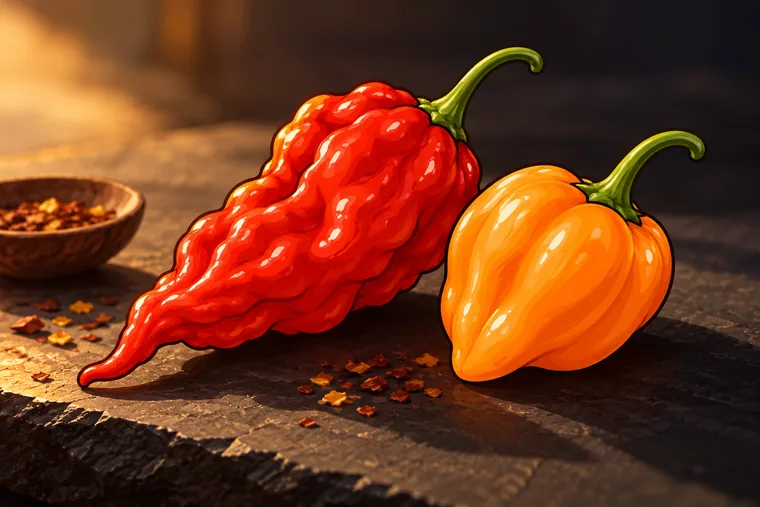
Ghost Pepper vs Habanero, Why the Ghost Is 2.8× Hotter
Same species, very different numbers.6 min read -
Serrano vs Habanero, the Habanero Is About 13× Hotter
A salsa chile against a hot sauce chile.6 min read -
Poblano vs Jalapeño, 3.3× the Heat and When to Use Each
The big mild one and the small hot one.5 min read -
Cherry Peppers vs Jalapeño, 12× Apart or Neck and Neck
The round jar pepper against the one on every nacho plate.5 min read -
Chile Manzano vs Habanero, Close in Heat at 175,000 SHU
An apple-shaped mountain chile and a lantern-shaped lowland one, about as hot as each other.6 min read -
Habanero vs Thai Chili, Why the Habanero Is 3× Hotter
A tiny hot chili against a fruity extra-hot one.5 min read
Sources
· 12
- 1University of Florida IFAS Extension HS-859/TR010: Pepper Production in Miami-Dade County, Florida
- 2New Mexico State University, Agricultural Experiment Station (Research Report 792) The Chile Cultivars of New Mexico State University Released from 1913 to 2016 (Coon and Bosland)
- 3Iowa State University Extension PM 1888(S): Guía de Horticultura, El huerto doméstico, Chiles (Everhart, Haynes, Jauron)
- 4New Mexico State University, Chile Pepper Institute Heat
- 5New Mexico State University Cooperative Extension Service Guide H-240: Growing Chile Peppers in New Mexico Gardens (Walker, Bosland)
- 6University of California Agriculture and Natural Resources, UC Master Gardeners of Ventura County Ventura Garden to Table Series: Peppers
- 7I Want To Cook Jalapeno vs Habanero | What You Need To Know
- 8University of Kentucky, Center for Crop Diversification Hot Peppers and Specialty Sweet Peppers, CCD-CP-101 (Kaiser, Ernst)
- 9UF/IFAS Gardening Solutions Peppers by Scoville Units
- 10National Capital Poison Center (poison.org) Capsaicin: When the Chili Is Too Hot (Amanda McDaniel-Price, RN)
- 11University of Maryland Extension Growing Peppers in a Home Garden
- 12Texas AgriLife Extension Service (Joe Masabni) Jalapeño & Other Hot Peppers