
Chile Manzano vs Habanero, Close in Heat at 175,000 SHU
An apple-shaped mountain chile and a lantern-shaped lowland one, about as hot as each other.
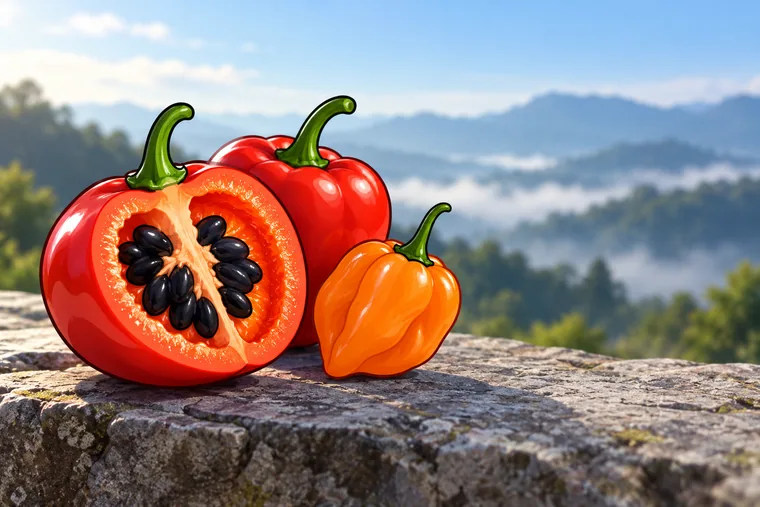
They run close: NMSU puts the rocoto, the manzano's species, at 175,000 SHU, inside the habanero's 100,000–350,000 range and a little below an orange habanero's 250,000.
- Manzano is Capsicum pubescens: purple flowers, fuzzy leaves and black seeds
- Habanero is Capsicum chinense: greenish-white flowers, 2–4 per node, thin waxy flesh
- Swap about one for one by weight in a salsa, then taste; expect bigger, juicier pieces from the large manzano
On this page
- 1Is a manzano hotter than a habanero?
- 2How do you tell a manzano from a habanero at a glance?
- 3Why does the manzano have three names?
- 4Where do manzanos and habaneros grow best?
- 5What do a manzano and a habanero taste like in a salsa?
- 6Are the manzano and the habanero related?
- 7Why does the habanero have so many heat figures and the manzano only one?
- 8What colors do manzanos and habaneros come in?
- 9How much manzano replaces a habanero in a salsa?
- 10Why do your manzano seeds matter when you save them?
- 11Your next step from the manzano
Is a manzano hotter than a habanero?
Close, with the habanero a little ahead on average. NMSU's Chile Pepper Institute lists the rocoto, the same species as the manzano, at 175,000 SHU, and the orange habanero at 250,0001. UF/IFAS gives the habanero a range of 100,000 to 350,000 SHU2, so the manzano sits right inside it.
Manzano
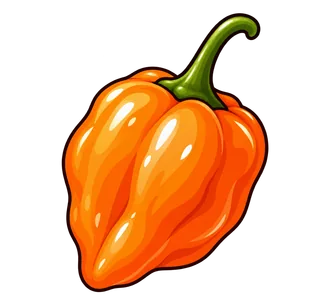
A manzano lands inside the habanero's range, so you treat it with the same respect.
How many times hotter is a habanero?
Not many. The answer depends on which habanero figure you use, so here are three, each against the manzano's 175,000 SHU.
| Habanero figure | Its heat | Habanero is | Arithmetic |
|---|---|---|---|
| Orange habanero, NMSU | 250,000 SHU | about 1.4× hotter | 250,000 ÷ 175,000 |
| Midpoint of the UF/IFAS range | 225,000 SHU | about 1.3× hotter | 225,000 ÷ 175,000 |
| Mild end of the UF/IFAS range | 100,000 SHU | manzano about 1.75× hotter | 175,000 ÷ 100,000 |
The last row is worth knowing. A mild habanero from a cool summer can be the weaker pod of the two, because UF/IFAS's range starts at 100,000 SHU2.
How do you tell a manzano from a habanero at a glance?
Look at the seeds, then the flowers, and you will rarely get it wrong. The 2022 monograph of the whole Capsicum genus calls C. pubescens very distinctive: deep purple flowers, a dense white fuzz on stems and leaves, and the largest seeds in the genus, brownish-black to black3. A habanero flower is dull white or greenish-white, with two to four flowers at a node3.
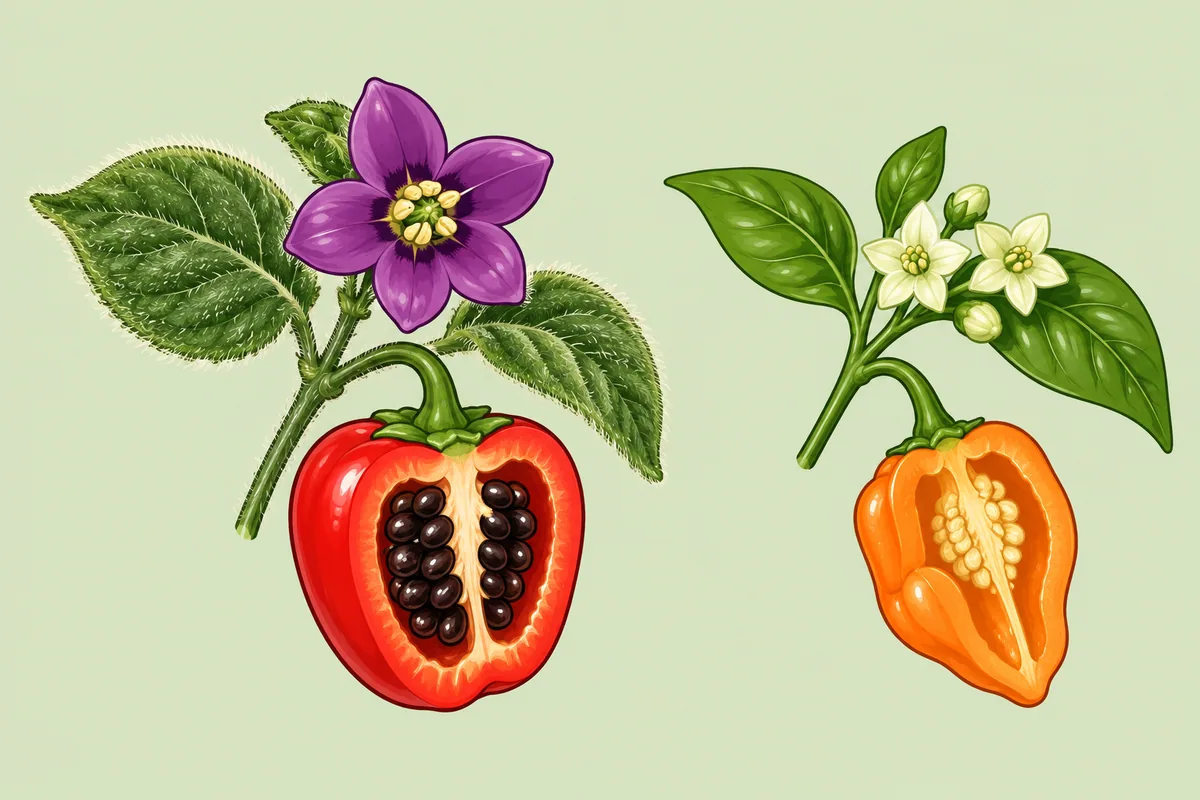
The pod shape helps too, though less reliably. Mexican growers name C. pubescens types by shape and color: the manzano is apple-shaped and red, the canario round and yellow, the perón large, pear-shaped and yellow3. Habaneros run 0.8 to 2.4 inches and ripen yellow, orange or red, with white, brown and pink types too2. A round red pod could be either, but cut it open: black seeds mean manzano.
Why does the manzano have three names?
Because it travelled from the Andes to Mexico, and each region named it its own way, so your recipe and your market may not agree. The monograph traces the names3:
- Locoto. From an Aymara word meaning "piquant", used in Bolivia and also in Argentina and Chile.
- Rocoto. From a Quechua word meaning "pepper very piquant", used mostly in Peru and Ecuador.
- Manzano. A Mexican name for the apple-shaped, red type; Mexico also calls C. pubescens "chile de cera", wax chile, for its soft, shiny skin.
So if you see rocoto in a Peruvian recipe and manzano at a Mexican market, you are looking at the same species. The rocoto entry covers the Andean side of the family. People in Peru have prized this pepper for about 4,000 years, while it reached Central America and Mexico only in the twentieth century3.
Where do manzanos and habaneros grow best?
At opposite ends of the climate, which decides which one you can grow well at home. The monograph places C. pubescens mostly at 1,200 to 3,500 m in the Andes, rarely below 500 m, and says Indonesian growers raise it above 1,400 m3. The habanero is a lowland heat lover: UF/IFAS says it thrives in hot areas such as Miami-Dade and south Florida2.
Manzano plant
For your garden, that means the habanero suits a long, hot summer, and Maryland Extension's 90 to 120 days from transplanting tells you to start it early4. The manzano's mountain home points to a plant that likes cooler conditions; the monograph also notes trial crops in Nagano, Japan, and talk of it as a potential crop in the United Kingdom3. If your summers run cool, the manzano is the more natural fit of the two, and a big shrub up to 4 m tall needs room or a large pot.
What do a manzano and a habanero taste like in a salsa?
If you want a flavor you can plan around, the habanero is the one with a documented profile: UF/IFAS describes its heat together with a fruity, citrus-like flavor and floral aroma, which made it popular in hot sauces and spicy foods2. Its thin, waxy flesh blends smoothly into a sauce.
The manzano's sources describe its body more than its taste. The monograph says Mexico calls the species chile de cera for its soft, shiny skin, and describes large fruit in bright colors3. Since the habanero's flesh is thin and waxy2, a large manzano gives you bigger, juicier pieces when you dice it for a fresh salsa.
Because the heat sits close, you choose by texture and flavor. Want a smooth, fruity sauce? The habanero suits it, and fruity habanero-type pods are what you taste in Caribbean-style sauces. Want chunky fresh salsa with big juicy pieces? The large manzano fits, as long as you pull out those large black seeds before you dice it.
Are the manzano and the habanero related?
Only distantly, for two cultivated chiles. The 2022 monograph places C. chinense, the habanero's species, in the Annuum clade, alongside the species of the jalapeño and cayenne you already know, while C. pubescens belongs to its own Pubescens clade3. That deep split is why the manzano looks so odd beside every other pepper you grow: purple flowers, fuzzy leaves, black seeds.
For you as a cook, the split matters less than the heat, which lands in the same band. For you as a grower, it matters a lot. The habanero behaves like the other warm-weather peppers in your garden; the manzano comes from cool Andean slopes and has its own needs.
Why does the habanero have so many heat figures and the manzano only one?
Because the habanero comes in many named types and the lab lists track them. NMSU's heat list gives 250,000 SHU for the orange habanero, 500,000 for Red Savina and 700,000 for the chocolate habanero, against one figure, 175,000, for the rocoto1. The habanero's 100,000 to 350,000 SHU range from UF/IFAS covers the common orange pods you buy2.
So when you compare a manzano with "a habanero", ask which one. Against an ordinary orange habanero, the gap is small, about 1.4 times. Against a chocolate habanero, at four times the manzano's figure, it is a different conversation, and your salsa swap would need to change with it.
What colors do manzanos and habaneros come in?
More than the names suggest. The monograph lists C. pubescens fruit as red, orange-red, orange, orange-yellow, yellow, light yellow and nearly black3; the manzano name belongs to the red, apple-shaped type, and the canario to the round yellow one. Habaneros start green and mature yellow, orange or red, with white, brown and pink types too2.
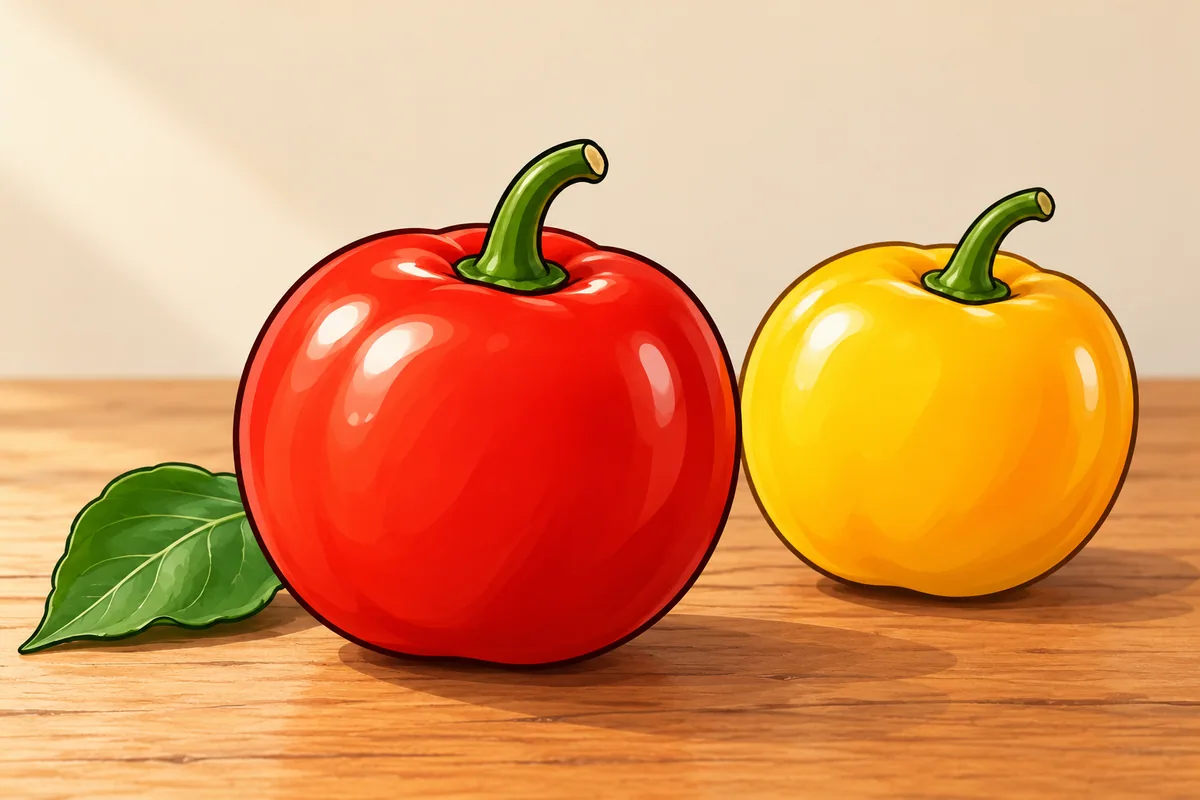
That overlap is why color will not settle which pepper you have. A yellow round pod at a market could be a canario-type C. pubescens or a yellow habanero, and only the seeds will tell you for sure.
How much manzano replaces a habanero in a salsa?
About the same weight, then adjust. The manzano's 175,000 SHU sits about 1.3 times below the habanero's 225,000 SHU midpoint12, so a little more manzano matches a habanero's heat. These numbers are estimates; taste a sliver from each pod.
| Recipe calls for | Arithmetic | Swap in |
|---|---|---|
| 10 g of habanero in a salsa | 10 g × 1.3 | about 13 g of manzano |
| 20 g of manzano in a salsa | 20 g ÷ 1.3 | about 15 g of habanero |
| 1 orange habanero (250,000 SHU) by heat | 250,000 ÷ 175,000 | about 1.4 times its weight in manzano |
In a cooked sauce, you can also trade by count when your pods are about the same size. A manzano is usually the bigger fruit, so count-for-count it adds more flesh and a bit more heat than a small habanero; weigh one of each the first time and you will know your ratio.
Why do your manzano seeds matter when you save them?
They tell you what you grew. C. pubescens has the largest seeds in the genus, 5.5 to 7 mm long and 4.8 to 6 mm wide, brownish-black to black3. If you save seed from a market manzano and it comes out black and large, you have the real species; if it is small and pale, the pod was something else.
The flowers give you a second check once the plant grows. A deep purple flower points to C. pubescens3; a greenish-white one points to a chinense such as the habanero. With three names in circulation, these two checks save you a season of guessing.
Your next step from the manzano
If the habanero is your baseline, see how it measures against the Caribbean pod that people mix it up with in the Scotch bonnet and habanero pair. If you want to know how far above both of them the super-hots climb, the ghost pepper and habanero pair shows the next step up.
Can't find either pepper this week? The habanero swaps rank the stand-ins with amounts.
Related in Compare
-
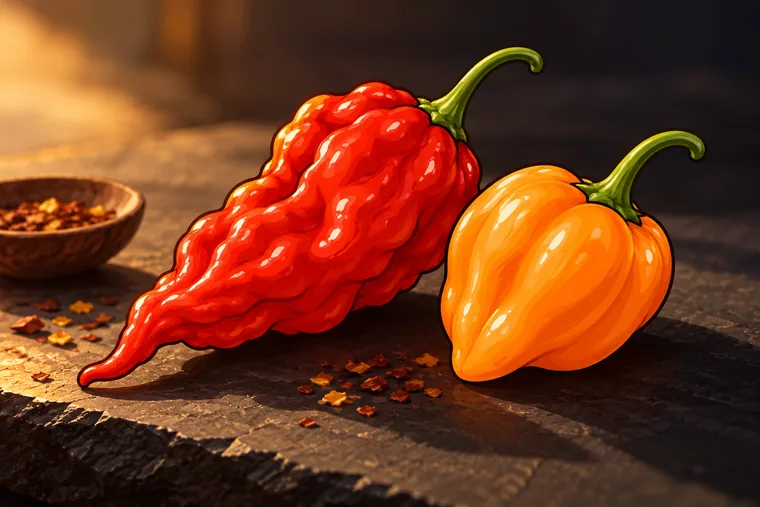
Ghost Pepper vs Habanero, Why the Ghost Is 2.8× Hotter
Same species, very different numbers.6 min read -
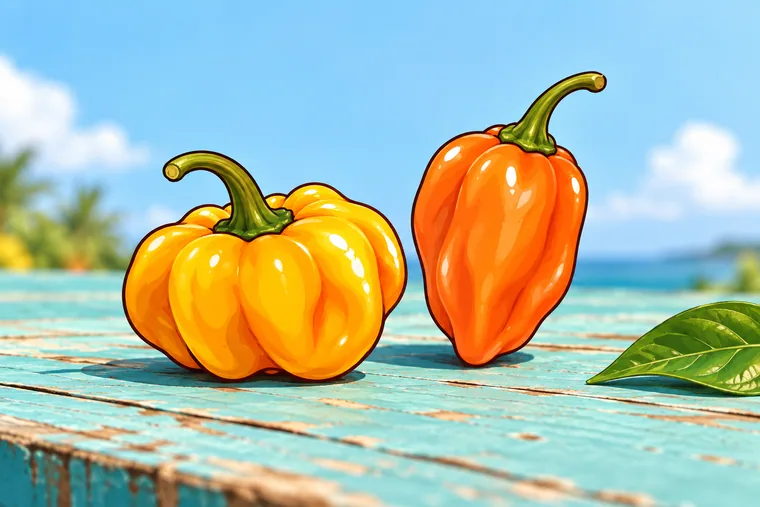
Scotch Bonnet vs Habanero, Same Range, 1.4× Lab Gap
Two Capsicum chinense pods, one heat band, two different kitchens.5 min read -
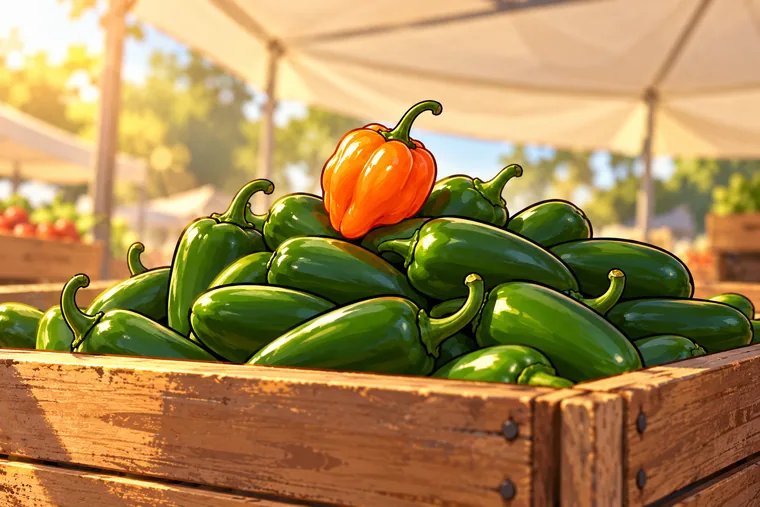
Habanero vs Jalapeño, About 45× the Heat by Midpoint
The pepper you know against the one that scares people.7 min read -
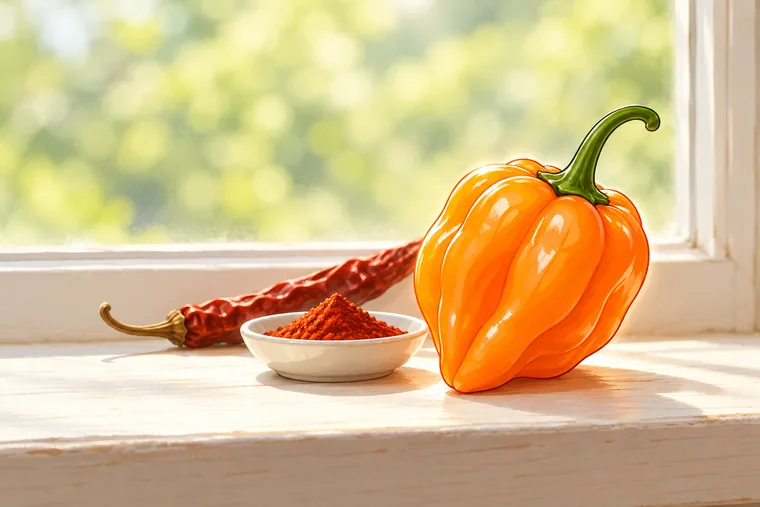
Habanero vs Cayenne Pepper, About 6× Hotter
Two different species, and a gap between their ranges.5 min read -
Scotch Bonnet vs Ghost Pepper, the Ghost Runs 2.9× Hotter
Two Capsicum chinense peppers, a Caribbean staple and an Indian record holder.6 min read -
Cayenne vs Jalapeño, 7.5× the Heat and Swaps
One usually ends up in a jar of powder, the other in a fresh salsa.6 min read
Sources
· 5
- 1New Mexico State University, Chile Pepper Institute Heat
- 2University of Florida IFAS Extension HS-859/TR010: Pepper Production in Miami-Dade County, Florida
- 3PhytoKeys 200:1-423 (Pensoft) Monograph of wild and cultivated chili peppers (Capsicum L., Solanaceae) (Barboza, Carrizo García, Bianchetti, Romero, Scaldaferro)
- 4University of Maryland Extension Growing Peppers in a Home Garden
- 5National Capital Poison Center (poison.org) Capsaicin: When the Chili Is Too Hot (Amanda McDaniel-Price, RN)