
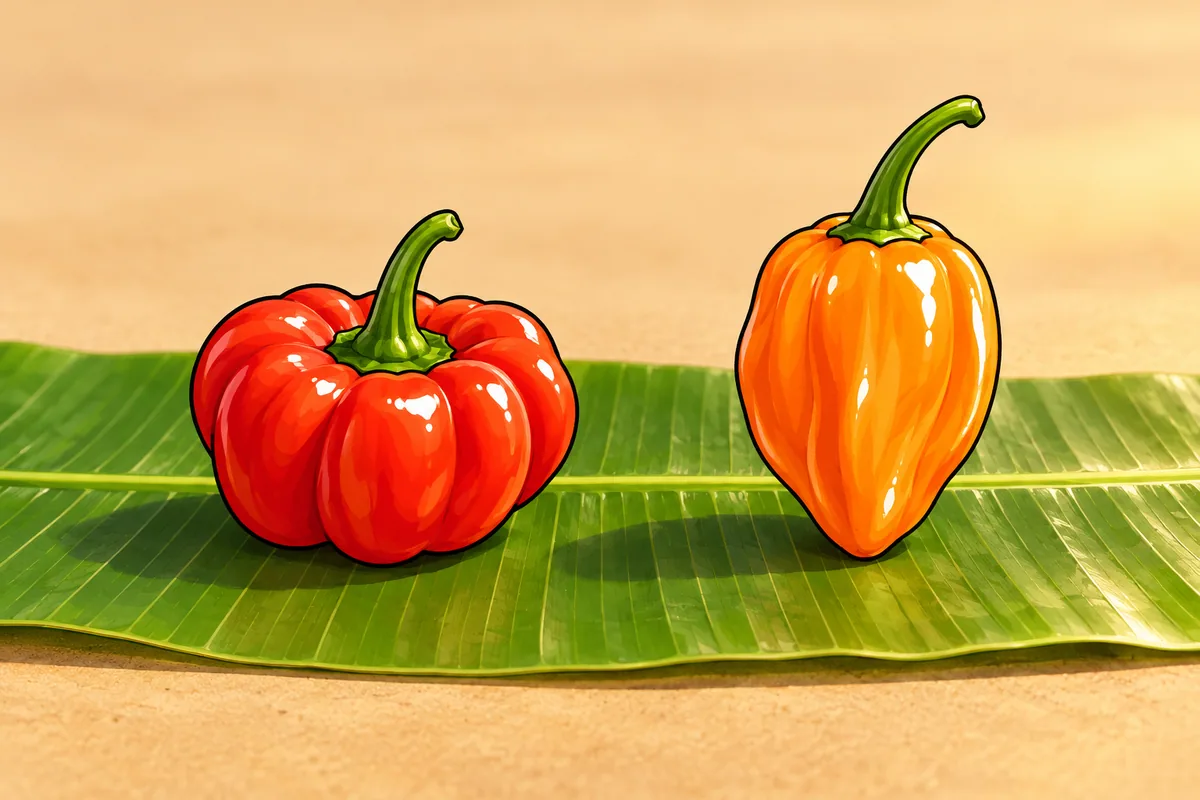
Scotch Bonnet vs Habanero, Same Range, 1.4× Lab Gap
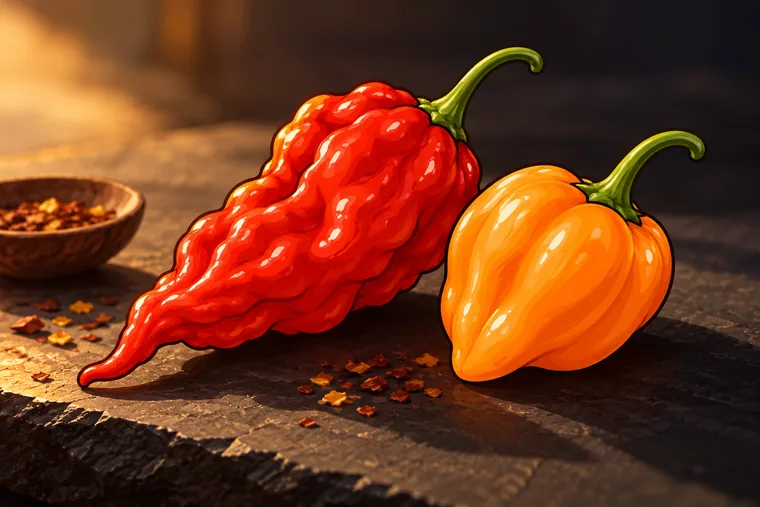
Two Capsicum chinense pods, one heat band, two different kitchens.
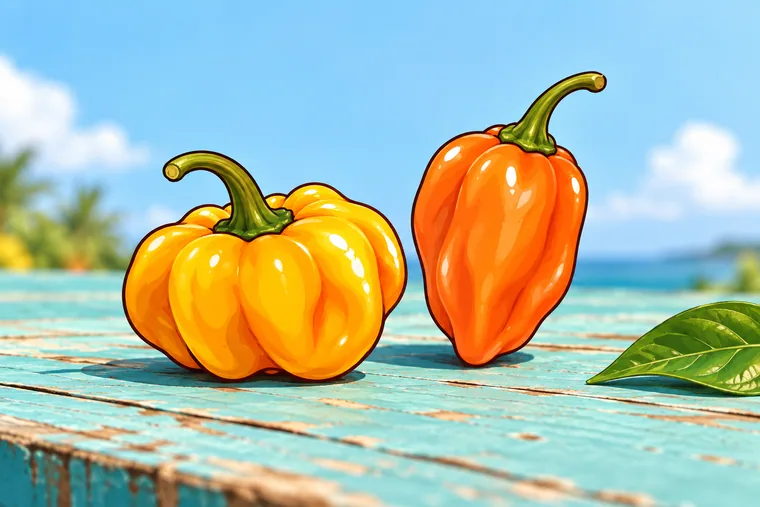
Short answer
A tie on paper: UF/IFAS gives both 100,000–350,000 SHU. In NMSU's tests the Scotch bonnet came out about 1.4 times hotter than an orange habanero.
- NMSU Chile Pepper Institute: Scotch bonnet 350,000 SHU, orange habanero 250,000 SHU
- Tell them apart by shape: a squat cup-and-saucer bonnet against a taller lantern
- Swap one for one by weight, then taste before you add more
On this page
- 1Which is hotter, a Scotch bonnet or a habanero?
- 2Why does one lab rate the bonnet higher when the ranges match?
- 3How can you tell a Scotch bonnet from a habanero at the market?
- 4Do Scotch bonnets and habaneros taste the same?
- 5Which pod does your recipe really want?
- 6How much Scotch bonnet replaces a habanero?
- 7Why do Jamaican farms pick Scotch bonnets green?
- 8Can you grow a Scotch bonnet wherever your habaneros do well?
- 9What catches cooks out when they switch between the two?
Which is hotter, a Scotch bonnet or a habanero?
Neither, if you go by the ranges. UF/IFAS gives the Scotch bonnet and the habanero the same 100,000 to 350,000 SHU1. The chart above shows two bars that cover exactly the same span.
The single lab figures tell a slightly different story. The NMSU Chile Pepper Institute lists the Scotch bonnet at 350,000 SHU and the orange habanero at 250,0003, so in that one set of tests the bonnet came out about 1.4 times hotter (350,000 ÷ 250,000).
| Scotch bonnet | Habanero | Kind of figure |
|---|---|---|
| 100,000–350,000 SHU1 | 100,000–350,000 SHU | Published range |
| 350,000 SHU3 | 250,000 SHU (orange) | One figure per pepper the institute tested |
| 80,000–260,000 SHU4 | 80,000–285,000 SHU (red) | Range on a heat thermometer |
| 200,000–300,000 SHU5 | 200,000–300,000 SHU | One average range for both |
Read the table across and you see the pattern: every source puts the two in one band, and the only gap comes from one lab's single numbers. Iowa State even prints its red habanero range a little higher than its Scotch bonnet range4, and Texas AgriLife does not bother to split them at all5. For cooking, treat them as the same heat and judge each pod you buy.
Why does one lab rate the bonnet higher when the ranges match?
Because a single figure describes the pods that lab tested, while a range describes the pepper. The same NMSU list shows how far one species can spread3:
250,000SHU, orange habanero, NMSU3
350,000SHU, Scotch bonnet, NMSU3
500,000SHU, Red Savina habanero, NMSU3
700,000SHU, chocolate habanero, NMSU3
A chocolate habanero on that list runs twice the Scotch bonnet's figure, and the Red Savina sits between them3. So the type of habanero you buy moves the heat more than the choice between bonnet and habanero does. A plain orange habanero and a Caribbean bonnet land close enough that you will not feel a clean 1.4× step from one pod to the next.
Iowa State's thermometer gives a Caribbean red habanero 100,000 to 445,000 SHU4. If your recipe was tested with orange habaneros, that is the type to watch, not the bonnet.
How can you tell a Scotch bonnet from a habanero at the market?
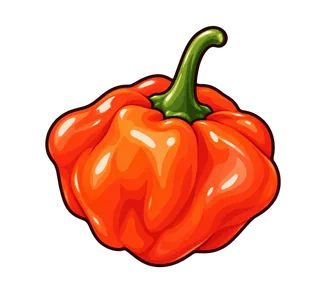
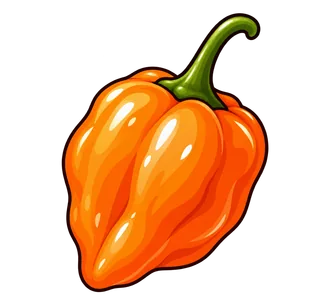
Look at the top of the pod. A Scotch bonnet has three or four lobes and a cup-and-saucer shape, and Jamaica's top export grade wants it at least 3.5 cm wide6. UF/IFAS says the name comes from its likeness to a tam o' shanter hat1. A habanero stands taller and smoother, 0.8 to 2.4 inches long, like a small lantern2.
Scotch bonnet
Habanero
- Squat, three or four lobes, cup and saucer6ShapeTaller lantern with thin, waxy flesh2
- Slightly smaller than a habanero2Size0.8 to 2.4 inches long2
- Usually red or yellow2ColorsYellow, orange or red; white, brown and pink types too2
- The Caribbean, Guyana and the Maldives1Grown mainly inMexico's Yucatán Peninsula; believed to come from Peru2
Both belong to Capsicum chinense2, so color will not separate them for you. A red, wrinkled pod could be either one; go by the squashed top first and the height second. If your market also sells Surinamese peppers, the Madame Jeanette against the bonnet adds a third look-alike to your list.
Do Scotch bonnets and habaneros taste the same?
Close, with a different lean. UC Master Gardeners describe the Scotch bonnet as fiery with a fruity flavor, and the habanero as fruity with a subtle smokiness that works in savory and sweet dishes7. UF/IFAS adds a citrus-like flavor and a floral aroma for the habanero2.
A home grower named Tim tastes his own habanero and Scotch bonnet side by side to settle which is hotter, and since that is one person's mouth on two pods, treat his verdict as a story and keep the sourced figures above as your numbers.
One trap matters more than flavor. UF/IFAS notes that some Caribbean Scotch bonnet varieties are completely sweet2. If a bag of bonnets from a Caribbean grocer tastes like a bell pepper, you may have bought a sweet type that looks the same, and your jerk marinade will come out mild.
Which pod does your recipe really want?
Start from the dish you are cooking, not the pepper. The sources tie each pod to its own kitchen: the bonnet to jerk sauce, marinades, Caribbean and West African cooking, the habanero to hot sauces and spicy foods17.
What are you making?
- Jerk sauce or a Caribbean marinadeThe sources tie this to the Scotch bonnet
- Use a Scotch bonnetExtra-hot
- A West African stew or pepper soupA staple pod in that cooking, per UC Master Gardeners
- Use a Scotch bonnetExtra-hot
- A bottled hot sauceEither pod; the habanero is the one the sources name
- Use a habaneroExtra-hot
- A Yucatán salsa or pickled onionsHabanero, the pod of the Yucatán
- Use a habaneroExtra-hot
Sources for this line1. UF/IFAS Gardening Solutions2. University of Florida IFAS Extension7. University of California Agriculture and Natural Resources, UC Master Gardeners of Ventura County
If your shop only stocks one, buy that one. The heat matches, so the dish stays in its band; what shifts is the fruity or smoky lean, and that matters most in a raw salsa, where nothing else covers the pepper.
How much Scotch bonnet replaces a habanero?
The same weight. With one published range for both1, the honest swap is one for one by weight, then a taste. If you want to allow for NMSU's figures, where the bonnet ran 1.4 times the orange habanero3, start at about 70 % of the weight and add the rest after tasting.
| Recipe says | Same-range swap | Cautious start (NMSU ratio) | How we got it |
|---|---|---|---|
| 5 g habanero, one small salsa | 5 g Scotch bonnet | 3.5 g | 5 × 250,000 ÷ 350,000 |
| 20 g habanero, a jar of sauce | 20 g Scotch bonnet | 14 g | 20 × 0.71 |
| 60 g habanero, a large batch | 60 g Scotch bonnet | 43 g | 60 × 0.71 |
Going the other way, habanero for bonnet, follows the same rule. Need a milder stand-in for either? The habanero against the serrano works out a pod with about a thirteenth of the heat.
Why do Jamaican farms pick Scotch bonnets green?
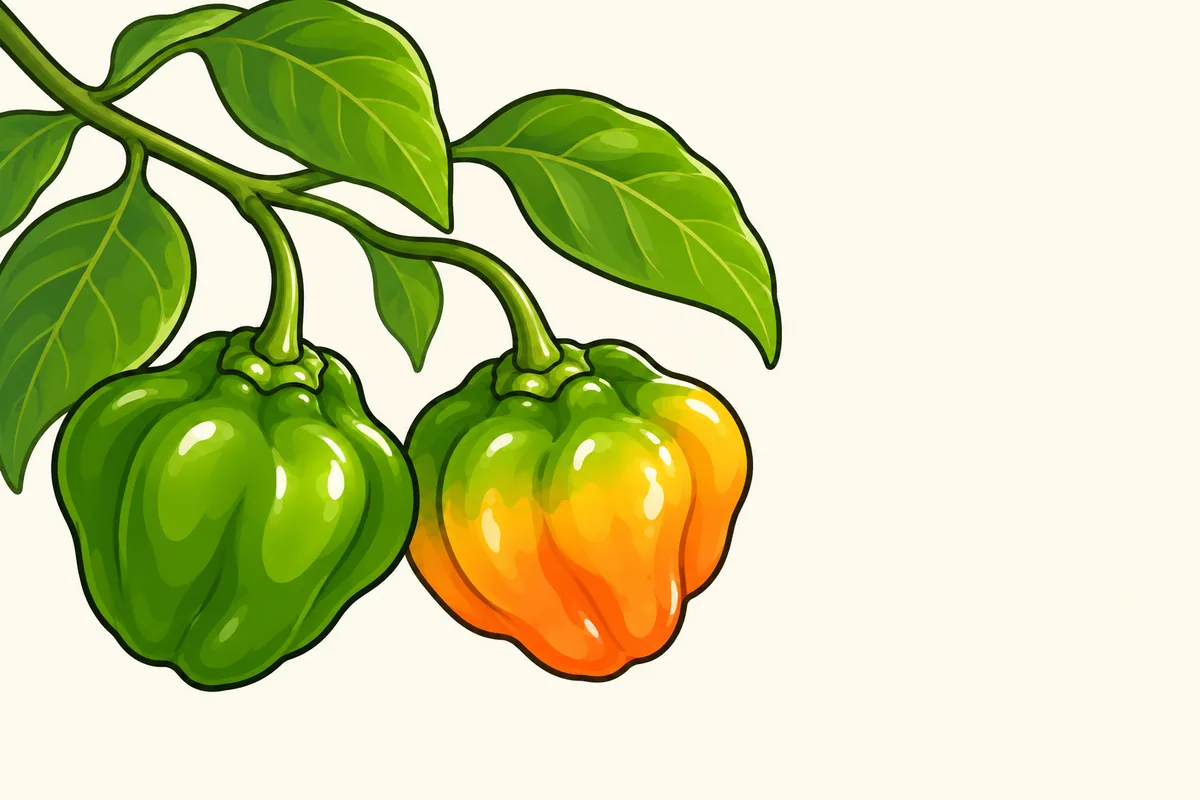
Because the export trade wants firm fruit that travels. Jamaica's growing handbook starts the harvest about 12 weeks after transplanting and picks pods at full green or with a blush of yellow or orange6. A habanero takes longer to reach color in a temperate garden: Maryland Extension gives habanero types 90 to 120 days from transplanting9.
- 1
Check the pod is mature
A mature pod is glossy and firm with a green stalk; dull pods lack the waxy layer and shrivel after picking.6
- 2
Snap it off cleanly
Hold the stalk between two fingers and snap upward; the break seals itself against rot.6
- 3
Pick when it's cool and dry
Reap in the morning or late afternoon, never in rain; spread wet pods out to dry in the air.6
- 4
Store cool, apart from fruit
At 25–27 °C pods last 2 to 5 days, and cooler storage stretches that to about 10. Keep them away from mangoes, papayas and tomatoes.6
That last step applies to habaneros from the store too. A bowl of pods on the counter next to ripening tomatoes softens fast; the fridge buys you about a week more.
Can you grow a Scotch bonnet wherever your habaneros do well?
Yes, if your summer is long enough for a habanero, it suits a bonnet too. Both are C. chinense2, and the Jamaican handbook's timeline reads like a habanero season in a warm garden6. You can plan your year from these dates:
- Day 0
Sow
One seed per cell, about 0.5 cm deep; seedlings come up in 7 to 12 days.6
- Weeks 5–6
Harden off and transplant
Plants of 12 to 15 cm go out after 5 to 7 days of less water and outdoor air, set about 90 cm apart.6
- About 40 days after transplanting
First flowers
The handbook feeds the plants again at this point.6
- About 12 weeks after transplanting
First picking
Pods at full green or with a blush of color; picking runs 4 to 5 months on healthy plants.6
Compare that with Maryland's 90 to 120 days from transplanting for habanero types9, and you see the two crops keep the same slow pace. In a short northern summer, give either one the sunniest, warmest spot you have and start your seeds early indoors. Your harvest window is what limits you, not the choice of pod.
One note if you save seed: Maryland Extension warns that insects cross pepper plants within and between species9. Grow a bonnet next to a habanero and the seed you save may give you something in between next year.
What catches cooks out when they switch between the two?
Most problems come from treating the name on the bag as a promise. Run these checks before the pod goes in the pot:
Before you swap one pod for the other
- Taste for sweetness: some Caribbean Scotch bonnet varieties carry no heat at all.2
- Ask which habanero it is: NMSU rates a chocolate habanero at 700,000 SHU, twice its Scotch bonnet figure.3
- Count the pods by weight, not by number: a habanero runs up to 2.4 inches long, a bonnet slightly smaller.2
- Wear rubber gloves or rub a thin layer of fat on your hands, and keep your hands away from your eyes.10
- If your hands burn after cutting, soak them in plain vinegar.10
Most of these come down to one habit: weigh, taste, then scale. A pot of jerk marinade gives you no way back once the heat is in, so you add the last third of your pepper only after the first taste.
If a dish does come out too hot, you have two honest fixes: make a second, pepper-free batch and mix the two, or serve it with something cool on the side. Doubling the batch halves the pepper per spoonful, which is plain arithmetic you can trust more than any rescue trick.
Your next step: pick the pod your dish needs from the tree above, weigh what the recipe asks for, and use the swap table to set your first amount. If you are weighing a bonnet against something far hotter, the ghost pepper against the habanero runs the same arithmetic one tier up.
Related in Compare
-
Serrano vs Habanero, the Habanero Is About 13× Hotter
A salsa chile against a hot sauce chile.6 min read -
Scotch Bonnet vs Ghost Pepper, the Ghost Runs 2.9× Hotter
Two Capsicum chinense peppers, a Caribbean staple and an Indian record holder.6 min read -
Ghost Pepper vs Habanero, Why the Ghost Is 2.8× Hotter
Same species, very different numbers.6 min read -
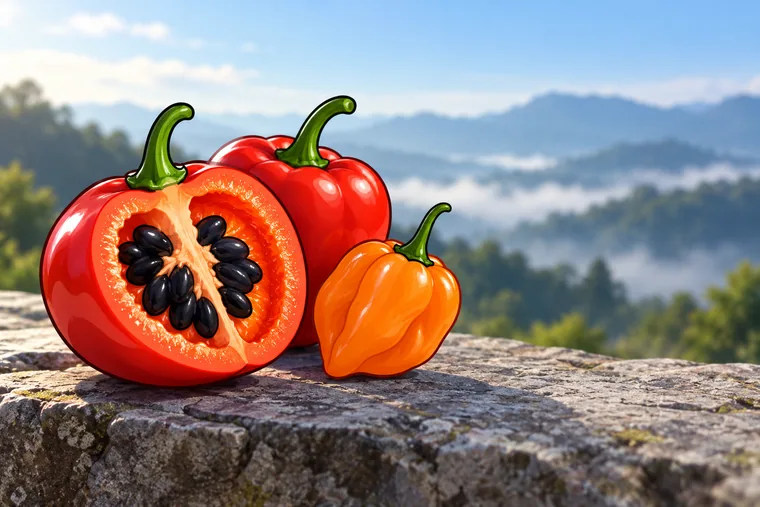
Chile Manzano vs Habanero, Close in Heat at 175,000 SHU
An apple-shaped mountain chile and a lantern-shaped lowland one, about as hot as each other.6 min read -
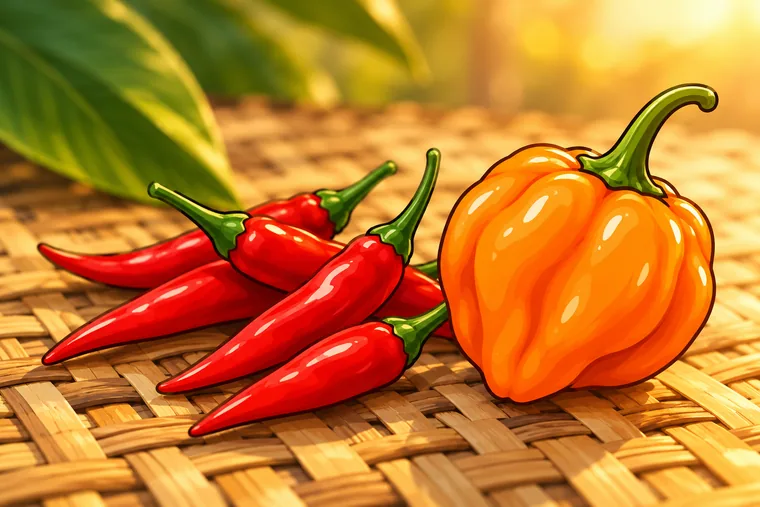
Habanero vs Thai Chili, Why the Habanero Is 3× Hotter
A tiny hot chili against a fruity extra-hot one.5 min read -
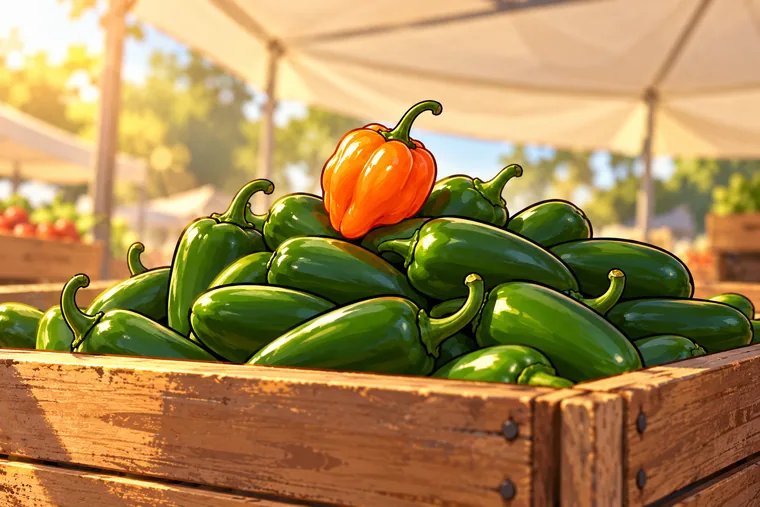
Habanero vs Jalapeño, About 45× the Heat by Midpoint
The pepper you know against the one that scares people.7 min read
Sources
· 10
- 1UF/IFAS Gardening Solutions Peppers by Scoville Units
- 2University of Florida IFAS Extension HS-859/TR010: Pepper Production in Miami-Dade County, Florida
- 3New Mexico State University, Chile Pepper Institute Heat
- 4Iowa State University Extension PM 1888(S): Guía de Horticultura, El huerto doméstico, Chiles (Everhart, Haynes, Jauron)
- 5Texas AgriLife Extension Service (Joe Masabni) Jalapeño & Other Hot Peppers
- 6Ministry of Agriculture, Jamaica, and the Food and Agriculture Organization of the United Nations Growing Scotch Bonnet Pepper in Jamaica (McGlashan, De Bac, Goldsmith, Williamson, Protz)
- 7University of California Agriculture and Natural Resources, UC Master Gardeners of Ventura County Ventura Garden to Table Series: Peppers
- 8HotSauceJunkie Tim WHATS HOTTER, HABANERO OR SCOTCH BONNE? LETS SETTLE THE DEBATE-
- 9University of Maryland Extension Growing Peppers in a Home Garden
- 10New Mexico State University Cooperative Extension Service (Guide E-324) Processing Fresh Chile Peppers (revised by Nancy C. Flores)