
Cherry Peppers vs Jalapeño, 12× Apart or Neck and Neck
The round jar pepper against the one on every nacho plate.
It depends on the cherry: a typical one is about 12 times milder than a jalapeño, a large hot one runs hotter.
- Typical cherry 100–500 SHU; jalapeño 2,500–5,000 SHU on the same Iowa State chart
- Large hot cherries sit between a jalapeño and a serrano
- Jalapeño: blunt cone about 3 inches long; cherry: a ball of ¾–1½ inches
On this page
- 1Are cherry peppers hotter than jalapeños?
- 2How many times milder is a typical cherry than a jalapeño?
- 3Which cherry is in your jar, and how do you find out?
- 4How do cherry and jalapeño shapes change what you cook?
- 5Can you pickle cherry peppers and jalapeños in the same jar?
- 6How much jalapeño replaces hot cherry peppers?
- 7Which cherry or jalapeño makes the biggest popper?
- 8Do cherry peppers and jalapeños grow the same way?
- 9Cherry or jalapeño for your sandwich, nachos or poppers?
Are cherry peppers hotter than jalapeños?
A typical cherry is much milder; a large hot cherry is hotter.
Iowa State's heat chart gives the cherry pepper 100 to 500 SHU and the jalapeño 2,500 to 5,0003.
Virginia Cooperative Extension adds the other half of the story: large cherry peppers are very hot, hotter than a jalapeño and milder than a serrano4.
Both bars from Iowa State's chart. Large hot cherries have no published range; Virginia places them above the jalapeño. Log scale; bars are published ranges.3
So "cherry pepper" names a shape more than a heat level. Kentucky's crop profile calls cherries small, sweet to hot peppers5, and the round pod in your hand could sit anywhere from barely warm to above a jalapeño. The hybrid Cherry Bomb, which Texas A&M lists with its hot hybrids6, is the one most gardeners grow for heat.
Ask which cherry before you ask how hot: the round shape tells you nothing about the burn.
How many times milder is a typical cherry than a jalapeño?
About 12½ times, when you compare midpoints on one chart. We use Iowa State for both peppers so that the same source sets both numbers.
| Pairing | Cherry | Jalapeño | Jalapeño is | Arithmetic |
|---|---|---|---|---|
| Midpoints | 300 SHU | 3,750 SHU | 12.5× hotter | 3,750 ÷ 300 |
| Closest ends | 500 SHU | 2,500 SHU | 5× hotter | 2,500 ÷ 500 |
| Farthest ends | 100 SHU | 5,000 SHU | 50× hotter | 5,000 ÷ 100 |
UF/IFAS gives the jalapeño a wider range, 2,000 to 8,000 SHU with an average near 5,0002. Against that average, a typical cherry comes out about 17 times milder (5,000 ÷ 300). Either way, if your jar of cherries tastes only warm, you are holding the typical kind.
For the hot cherry, no extension source prints a number, so we can't give you a ratio. What Virginia's placement does tell you is the band: above the jalapeño's 8,000 SHU top on the UF/IFAS range, and below the serrano, which UF/IFAS puts at 10,000 to 25,0002.
Which cherry is in your jar, and how do you find out?
You check the label, the plant tag and then your tongue, in that order. Because sweet, typical and hot cherries look alike, a few quick checks save you a surprise:
- 1
Read the label or seed packet
Words like hot or Cherry Bomb mean the hot type; sweet means no heat to speak of. Virginia files sweet cherry with the mild peppers and large cherry with the hot ones.4
- 2
- 3
Cut one and touch it to your tongue
Wait ten seconds. Faint warmth means a typical cherry; a real burn means you are above jalapeño heat.
- 4
Decide the dose
Use typical cherries freely, and treat hot cherries like a hot jalapeño: one per sandwich, not three.
Wear gloves when you cut hot cherries for a big batch. The National Center for Home Food Preservation tells you to wear rubber gloves with hot peppers or wash your hands with soap and water before you touch your face7.
How do cherry and jalapeño shapes change what you cook?
The jalapeño is a blunt cone; the cherry is a ball. NMSU describes the jalapeño as conical, about 3 inches long and 1 to 1½ inches wide, dark green turning red8. Iowa State's pepper table lists the cherry as small, round and slightly flattened, and both as thick-walled3.
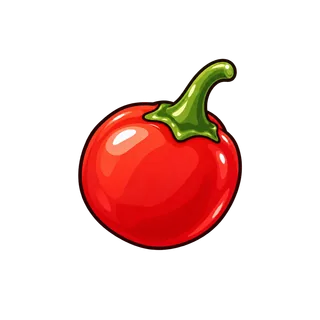
Cherry pepper
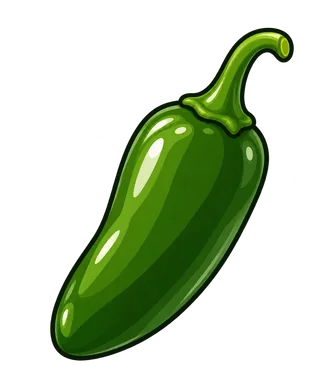
Jalapeño
Hotter- Round, slightly flattened, ¾–1½ inches35ShapeConical, about 3 × 1–1½ inches8
- Thick3WallThick3
- Mildly spicy, sweet and slightly tart9FlavorVibrant and grassy; spicy but not overwhelming29
- Usually orange to deep red4PickedUsually green, before it turns red25
- Pickling9Known forFresh salad, salsa and Mexican food2
Shape decides how each one holds a filling. You stuff a cherry whole through the top, so you get a bite-size, closed cup that holds cheese or tuna without spilling. A jalapeño splits lengthwise into two boats, which is why it rules popper trays.
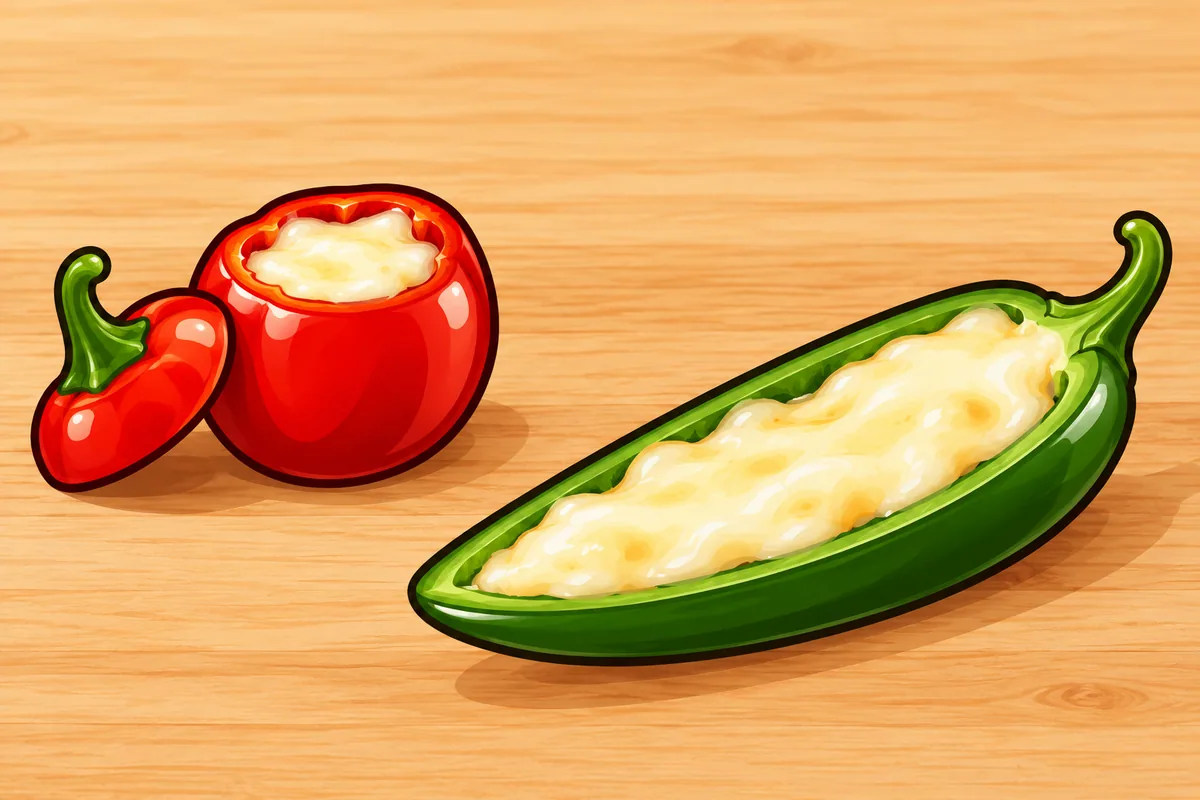
Color tells you about ripeness, not heat. Most jalapeños sell green, and Kentucky notes some ripe red ones show fine cracks called checking5. Cherries usually go to the jar orange to deep red4.
Can you pickle cherry peppers and jalapeños in the same jar?
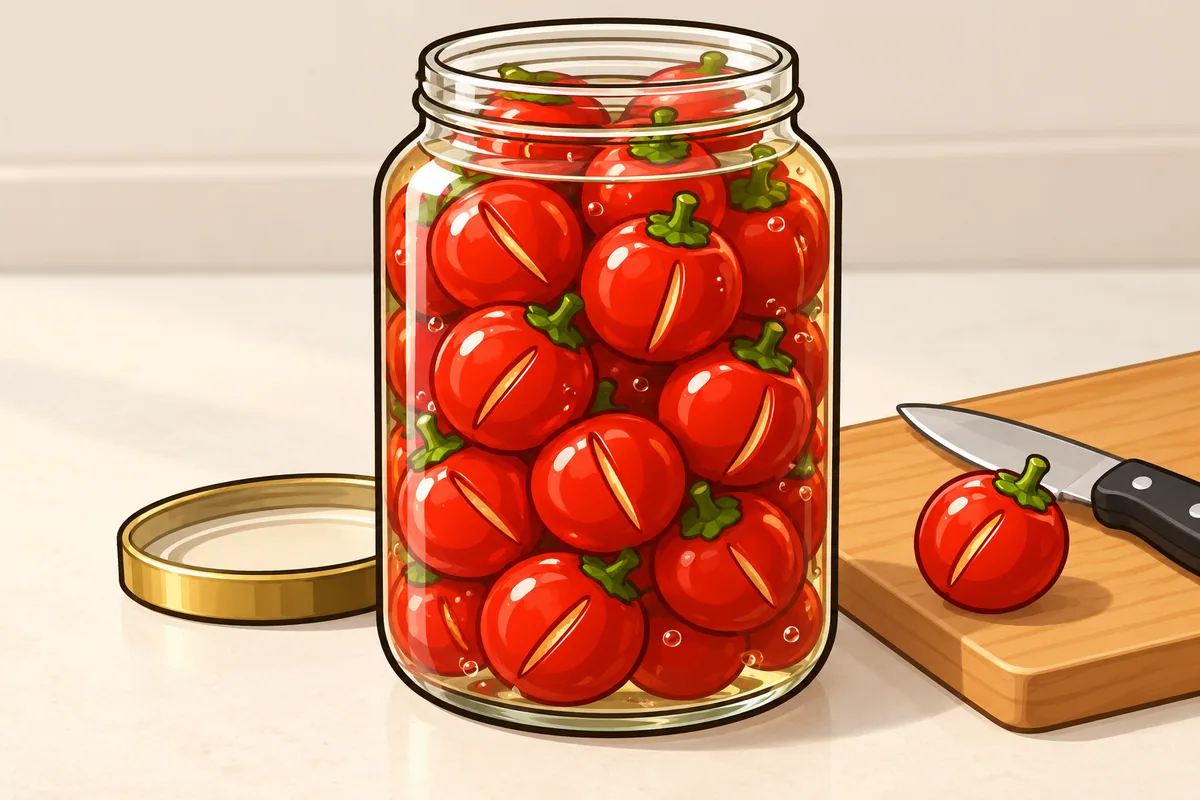
Yes, with a tested mixed-pepper recipe. The National Center for Home Food Preservation's pickled hot pepper recipe lists jalapeño among its hot peppers and calls for 4 pounds of hot peppers with 3 pounds of sweet red and green peppers for about nine pints7. It doesn't name cherries, so we read a hot cherry as one of its hot peppers and a sweet cherry as one of its sweet ones; the brine and times don't change with the shape.
- 1
Prepare the peppers
Wash them. Leave small peppers whole with 2 to 4 slits cut in each; quarter large ones.7
- 2
Blister and peel
Blister or blanch the peppers so the skins slip off, then flatten the small ones.7
- 3
Make the brine
Simmer 5 cups of 5 % vinegar, 1 cup of water, 4 teaspoons of canning salt, 2 tablespoons of sugar and 2 garlic cloves for 10 minutes, then take out the garlic.7
- 4
Fill and process
Pack the peppers and add hot brine, leaving ½ inch of headspace, then process in a boiling-water canner.7
| Your altitude | Minutes |
|---|---|
| 0–1,000 ft | 10 |
| 1,001–6,000 ft | 15 |
| Above 6,000 ft | 20 |
Those slits matter more for cherries than for jalapeño rings. A whole round pod traps air, and the cuts let the brine in so the pepper doesn't float. If you would rather keep jalapeños in rings and cherries whole in separate jars, the pickling guide covers other tested packs.
How much jalapeño replaces hot cherry peppers?
About the same weight, a little more if the dish needs to match a truly hot cherry. Since hot cherries run above a jalapeño4 and no lab number pins them down, these amounts are estimates to taste against.
| Your dish | Calls for | Use instead | What changes |
|---|---|---|---|
| Italian sub or hoagie | 2 pickled hot cherries, sliced | the same weight of pickled jalapeño rings, plus a few more | Greener, less sweet; slightly milder |
| Pork chops with hot cherries | 100 g hot cherries | 100–120 g jalapeño | Loses the round, sweet-tart bite |
| Stuffed whole appetizers | Hot cherries | Jalapeño halves | Boats instead of cups; fill more per piece |
| A dish with typical cherries | 100 g cherries | about 10 g jalapeño plus 90 g sweet red pepper | Matches the warmth of a typical cherry, about 12× below jalapeño |
The last row is the one people get wrong. A typical cherry is so much milder that a straight jalapeño swap makes the dish many times hotter. Mixing a little jalapeño with sweet pepper keeps the body and the warmth close. For more options, the cherry pepper stand-ins rank swaps for both kinds.
Which cherry or jalapeño makes the biggest popper?
A jumbo jalapeño, by a wide margin. NMSU bred NuMex Jalmundo as a jumbo jalapeño for poppers: its pods run 3.7 inches long and 1.4 inches wide at about 17,000 SHU10. Even the largest cherry tops out around 1½ inches across5, so one Jalmundo half holds more filling than a whole cherry.
That heat figure matters for your guests. At 17,000 SHU, Jalmundo runs well above the 2,000 to 8,000 of a store jalapeño2. If you grow it for poppers, scrape out the pale ribs, where most of the heat sits, and you bring it closer to a regular jalapeño.
For a milder tray, stuff typical cherries whole. At 100 to 500 SHU3, they give you a sweet, tangy bite that almost anyone at the table can eat, and their thick wall holds up in the oven.
Do cherry peppers and jalapeños grow the same way?
Close enough to share a bed. Maryland Extension gives most sweet and hot peppers 70 to 85 days from transplanting11, and both of these fit that window, the jalapeño on the early side since you pick it green.
Texas A&M wants jalapeños and other hot peppers in hot days of 85 to 95°F with cool nights of 65 to 70°F, and warns that excessive heat cuts fruit size and causes blossom drop6. Maryland adds that nights above 75°F slow or stop pod set11. If your summer runs that hot, you will see both plants pause in midsummer and pick up again as nights cool.
Want your cherries for the jar? Let them color to orange or red on the plant, as Virginia describes4, while you keep picking jalapeños green. That staggers your harvest: green jalapeños for weeks, then a final flush of red cherries for a pickling weekend.
Cherry or jalapeño for your sandwich, nachos or poppers?
Reach for a cherry pepper when
- You want a whole, round pickle on a sub or an antipasto plate
- You need a bite-size cup to stuff
- Your crowd likes sweet-tart over grassy
Reach for a jalapeño when
- You want rings on nachos or a fresh salsa
- You are making poppers from split halves
- You want predictable heat from a pepper with a published range
Your next step: if your cherry turned out sweet and you want to know what to pair it with, the pimento and cherry pepper side by side covers the sweet route. If the jalapeño feels too tame, the habanero against the jalapeño works out how big the next jump is.
Related in Compare
-
Pimento vs Cherry Pepper, 0 SHU Against Up to 500 or More
Two red peppers people mix up, one always sweet and one that can surprise you.6 min read -
Habanero vs Jalapeño, About 45× the Heat by Midpoint
The pepper you know against the one that scares people.7 min read -
Calabrian Chili vs Fresno, Up to 4× Hotter by EU Rules
A protected Italian name that covers a whole region's chiles, against one Californian cultivar.6 min read -
Árbol vs Cayenne Pepper, Cayenne Is About 1.7× Hotter
Two skinny red Capsicum annuum chiles, one sold whole, one mostly ground.5 min read -
Arbol vs Guajillo Chiles, 14× Apart in One Field Trial
Two red dried chiles from the same bag aisle, one for heat and one for body.6 min read -
Chile de Árbol vs Serrano, Árbol Leads by About 1.6×
A slim dried red against a fresh green, close in heat and far apart in the pan.7 min read
Sources
· 11
- 1New Mexico State University, Chile Pepper Institute (seed shop) Red Cherry Sweet Pepper
- 2University of Florida IFAS Extension HS-859/TR010: Pepper Production in Miami-Dade County, Florida
- 3Iowa State University Extension PM 1888(S): Guía de Horticultura, El huerto doméstico, Chiles (Everhart, Haynes, Jauron)
- 4Virginia Cooperative Extension (Relf, McDaniel; reviewed by Olsen) SPES-684: Peppers
- 5University of Kentucky, Center for Crop Diversification Hot Peppers and Specialty Sweet Peppers, CCD-CP-101 (Kaiser, Ernst)
- 6Texas AgriLife Extension Service (Joe Masabni) Jalapeño & Other Hot Peppers
- 7National Center for Home Food Preservation (University of Georgia) Pickled Hot Peppers
- 8New Mexico State University Cooperative Extension Service Guide H-240: Growing Chile Peppers in New Mexico Gardens (Walker, Bosland)
- 9University of California Agriculture and Natural Resources, UC Master Gardeners of Ventura County Ventura Garden to Table Series: Peppers
- 10New Mexico State University, Agricultural Experiment Station (Research Report 792) The Chile Cultivars of New Mexico State University Released from 1913 to 2016 (Coon and Bosland)
- 11University of Maryland Extension Growing Peppers in a Home Garden