
Dark Chili Powder vs Chili Powder, Same 5 Ingredients
Two jars of the same blend, roasted and weighted differently.
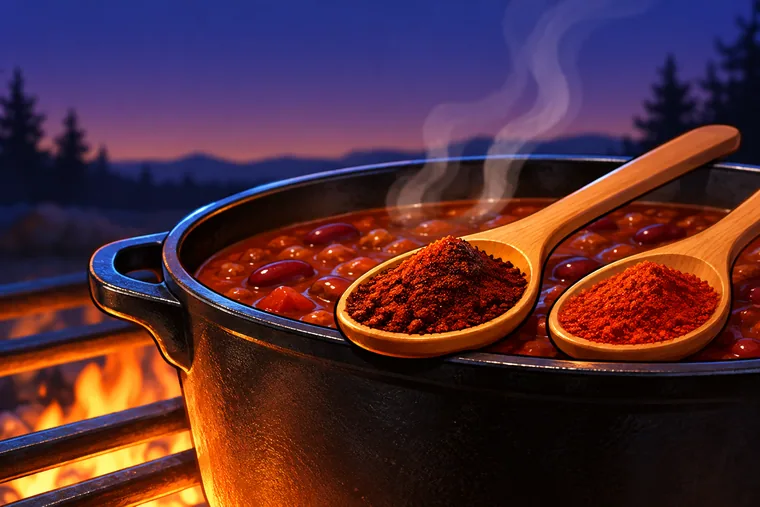
Dark chili powder is the same kind of blend as regular chili powder, made with spices roasted longer and a higher share of chili, so it tastes deeper, smokier and a little hotter.
- McCormick's dark and regular chili powders list the same five ingredients: chili pepper, spices, salt, silicon dioxide and garlic
- The maker calls its dark powder spicier, sweeter, smokier and earthier than its light powder, with moderate heat against mild
- Swap them one for one by volume and taste; neither jar prints a Scoville figure
On this page
- 1Is dark chili powder the same as chili powder?
- 2What makes dark chili powder darker?
- 3Is dark chili powder hotter than regular?
- 4Why does salt come second on the light chili powder label?
- 5How much salt does a spoon of chili powder add?
- 6Is dark chili powder the same as ancho or chipotle powder?
- 7Can you swap dark and regular chili powder?
- 8Which jar fits the dish on your stove?
- 9How long does a jar of dark chili powder last?
- 10Where your chili powder question goes next
Is dark chili powder the same as chili powder?
Nearly. Both are seasoning blends, and McCormick's labels list the same five ingredients: chili pepper, spices, salt, silicon dioxide and garlic12. The difference sits in how the maker roasts the spices and how much chili goes in, not in a new ingredient.
| Position | Dark (culinary) | Regular (retail) | Light (culinary) |
|---|---|---|---|
| 1st | Chili pepper | Chili pepper | Chili pepper |
| 2nd | Spices | Spices | Salt |
| 3rd | Salt | Salt | Spices |
| 4th | Silicon dioxide | Silicon dioxide | Garlic |
| 5th | Garlic | Garlic | Silicon dioxide |
Same five ingredients; the roast and the share of chili make a powder "dark".
The spices are the same family too. McCormick names cumin and oregano among the spices in its dark blend and in its regular retail blend12, and its light blend leans on oregano, cumin and salt to round out the flavor3.
What makes dark chili powder darker?
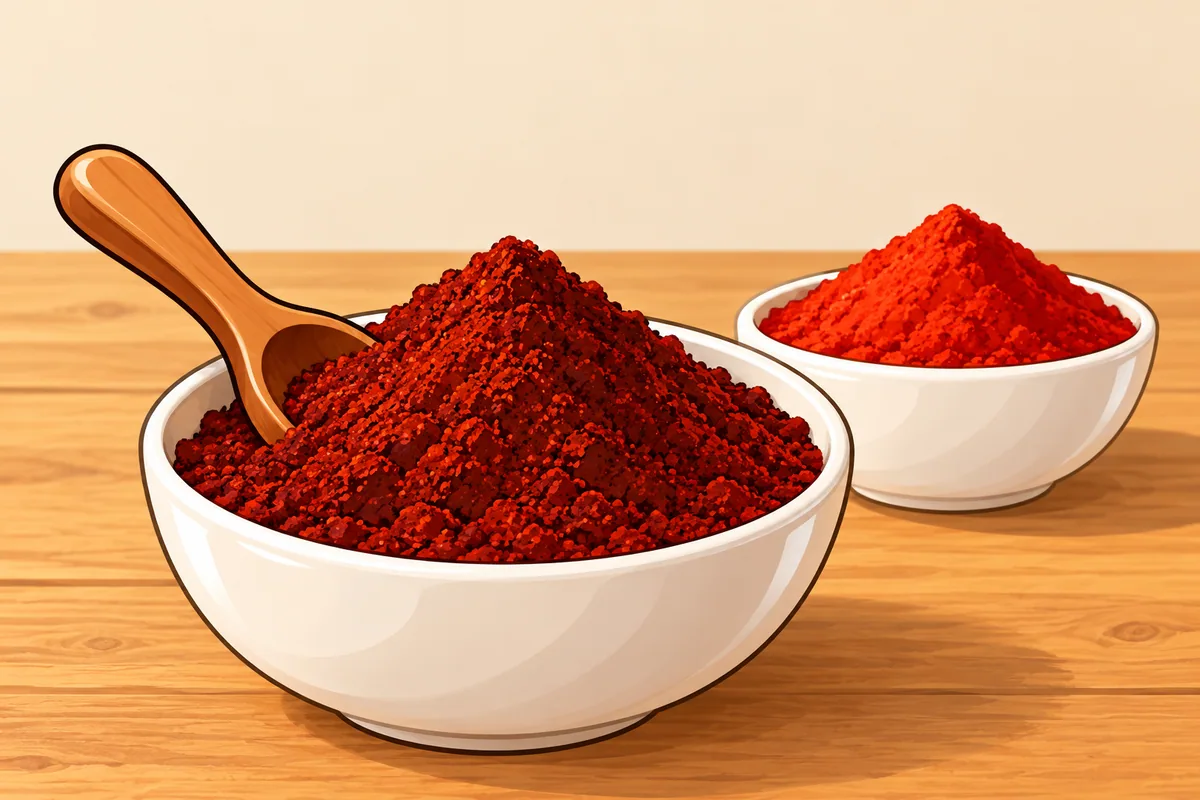
Two things, in the maker's own words. McCormick says its dark chili powder is spicier, sweeter, smokier and earthier than lighter chili powder because its spices are roasted for longer, and that it has a deeper flavor and a higher percentage of chili powder than the light version1.
Dark chili powder
Light chili powder
The roast explains the color. A longer roast browns the spices, and a darker spice mix pulls the whole powder toward mahogany. The bigger share of chili adds to the red-brown depth and to the heat, since chili is the only ingredient on the list that brings any.
McCormick describes both its dark and its regular retail powders with a red color: "rich red color" on the dark jar and "vibrant red color" on the regular one12. So "dark" describes a deeper shade of red-brown, not a black powder.
Is dark chili powder hotter than regular?
A little, by the maker's account, and no one prints a number. McCormick labels its dark powder "moderate heat" and its light powder "mild heat"13, and calls the dark version spicier than the light one. Neither page gives a Scoville figure, and neither names the chili inside.
So we cannot give you a ratio the way we do for two fresh peppers. What we can tell you is the direction: more chili in the mix and a hotter description on the label. For scale, the cayenne you may add to either blend sits at 25,000 to 50,000 SHU4, so a quarter teaspoon of cayenne changes your pot far more than the step from regular to dark.
If heat matters to you, taste both jars side by side. Warm a quarter teaspoon of each in a little oil, let it cool for a moment, and taste; you will know in ten seconds which of your two jars runs hotter.
Why does salt come second on the light chili powder label?
Because there is more salt than spice in it by weight. US rules require ingredients to be listed in descending order of predominance by weight5. On McCormick's light chili powder, salt comes right after chili pepper and before spices3; on the dark and regular blends, spices come before salt12.
That is the clearest difference you can read off the jars. The light blend carries more salt than spice; the dark and regular blends carry more spice than salt. If you watch your sodium, that order is worth a glance before you buy.
The word "spices" itself hides the detail. Federal rules let a maker declare spices together as "spice"6, so the label will not tell you how much cumin or oregano went in. If a coloring spice such as paprika is in the mix, the same rule requires "spice and coloring" or its name on the label6.
How much salt does a spoon of chili powder add?
USDA does not list dark and regular blends separately, but its general chili powder entry gives you a working number: 2,867 mg of sodium per 100 g, with a teaspoon weighing 2.7 g and a tablespoon 8 g7.
Here is how that plays out in a pot. A chili for six that uses 3 tablespoons of chili powder takes in about 690 mg of sodium from the powder alone (24 g × 28.67 mg per gram), or about 115 mg per bowl. Your own brand may differ, so check the sodium line on your jar's nutrition panel and scale from there. Salt the pot at the end, after the powder has done its part.
Is dark chili powder the same as ancho or chipotle powder?
No, and the label tells you in one glance. A single-chile powder lists one chile: McCormick's ground ancho, for example, lists only ancho chile peppers and an anti-caking agent8. Chipotle is a single chile too; UF/IFAS describes it as smoked ripe jalapeños4. Dark chili powder lists chili pepper plus spices, salt and garlic1, so it is a seasoning blend like the regular jar.
That difference changes how you cook with each. If you reach for dark chili powder because you want smoke, you get the maker's longer-roasted spices, cumin and garlic along with it. If you want only the smoky chile, a chipotle powder gives you that without the salt and cumin, and you season the pot your own way. Read the first line of your jar's ingredients and you will know which kind you are holding.
Can you swap dark and regular chili powder?
Yes, one for one by volume, and then taste. They share every ingredient, so the swap changes the depth and a little of the heat, not the character of the dish.
| Recipe calls for | You have | Use | Then |
|---|---|---|---|
| 2 tbsp dark chili powder | Regular | 2 tbsp | Add a pinch of cayenne if you want the dark version's extra heat |
| 2 tbsp regular chili powder | Dark | 2 tbsp | Expect a smokier, slightly hotter pot; taste before adding more |
| 2 tbsp dark chili powder | Light | 2 tbsp | Hold back the recipe's salt until you taste; salt sits second on the light label |
If your recipe names ground ancho rather than either blend, that is a different swap: ancho is one chile with no salt or cumin, and the ancho and chili powder pair shows how to adjust for it.
Which jar fits the dish on your stove?
McCormick suggests its dark powder for Southwestern beans, tacos, chili and Tex-Mex dishes, and for rubs, marinades, stews and soups1; its regular powder for beef, turkey or veggie chili, chili dogs, tacos and nachos2. The overlap is large, so choose by the depth you want.
- A long-simmered chili or beansDark: smoky, slightly sweet, moderate heat
- Tacos, nachos, chili dogsRegular: the maker's everyday blend
- A rub or marinade for grilled meatDark, which the maker lists for rubs and marinades
- A dish for people who avoid heatLight: mild heat by the maker's label
Sources for this line1. McCormick & Company, manufacturer page for its own product2. McCormick & Company, manufacturer page for its own product3. McCormick & Company, manufacturer page for its own product
NMSU's Chile Pepper Institute uses "chili" for the dish of chile powder, beans, tomato and ground beef9, and that pot is where both blends do their best work. For more chiles that go into it, the peppers for chili list ranks the dried pods by heat.
How long does a jar of dark chili powder last?
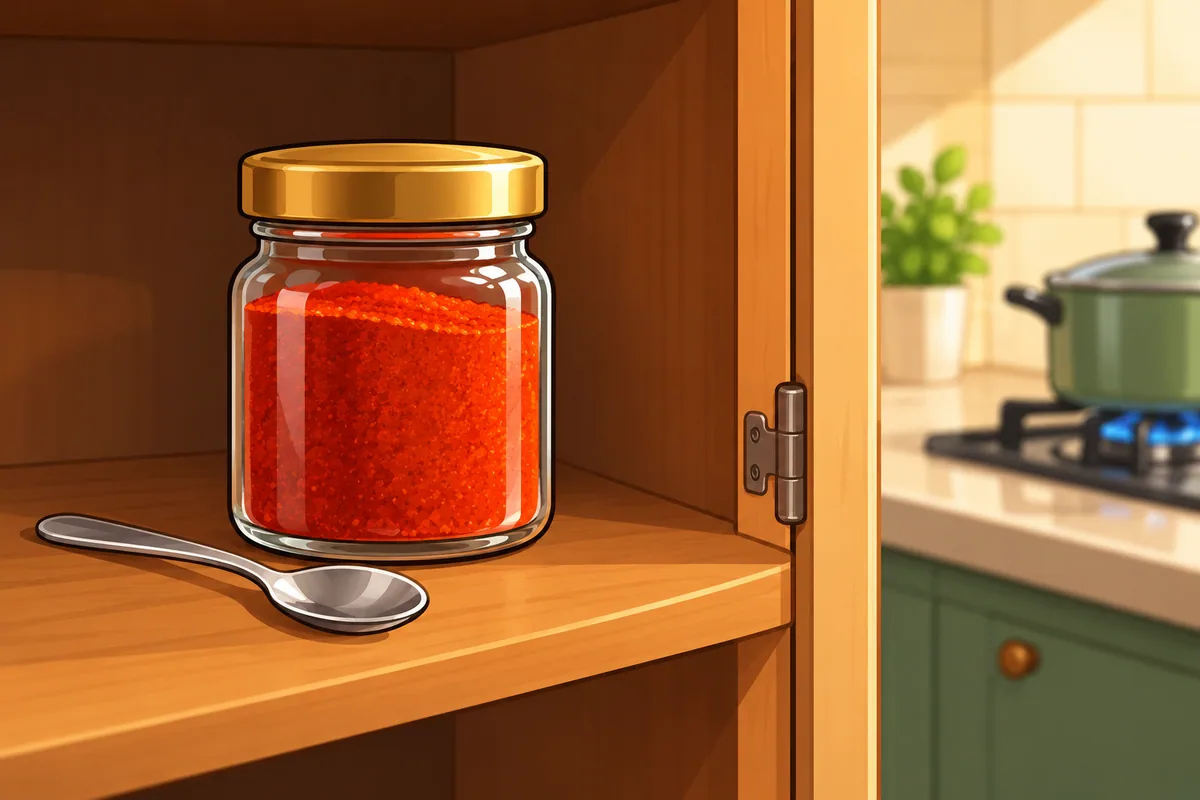
McCormick gives its culinary dark chili powder a shelf life of 720 days when handled properly1. Its handling advice works for any chili powder:
Keep a jar fresh
When a jar loses its smell, it has lost most of its flavor too, even if it is safe to eat. The chili powder shelf life guide shows you how to check an old jar.
Where your chili powder question goes next
If you want to build your own blend from a single chile instead of buying either jar, start with the ancho entry, a mild, fruity chile that makes a good base for a blend you season yourself. For the full range of ground chiles on the shelf, the chili powders guide lays out what each one is made from.
Related in Compare
-
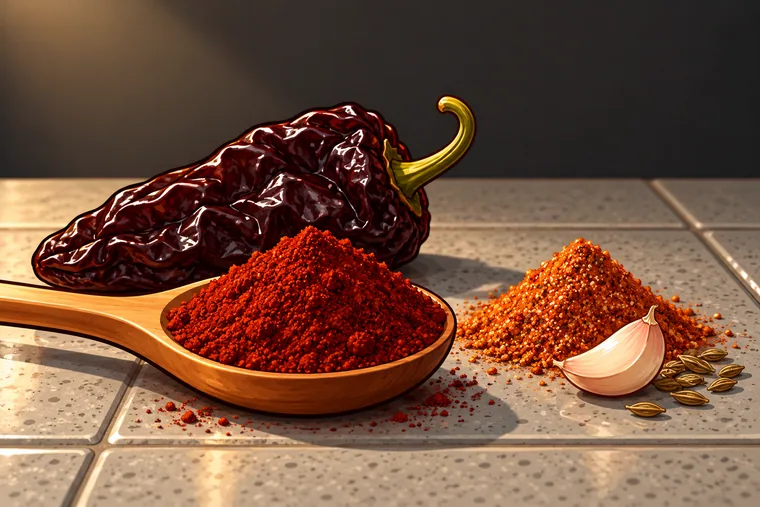
Ancho Chili Powder vs Chili Powder, One Chile or a Blend
Two red powders on the same shelf: a single chile and a seasoning mix.6 min read -
Cayenne vs Jalapeño, 7.5× the Heat and Swaps
One usually ends up in a jar of powder, the other in a fresh salsa.6 min read -
Hatch Chile vs Poblano, 10 NMSU Lines From 0 to 9,000 SHU
New Mexico's long green against Mexico's short, dark stuffing chile.7 min read -
Pimento vs Cherry Pepper, 0 SHU Against Up to 500 or More
Two red peppers people mix up, one always sweet and one that can surprise you.6 min read -
Poblano vs Bell Pepper, 2,000 SHU Against Zero
One stuffing pepper with a little heat, one with none at all.6 min read -
Anaheim Pepper vs Jalapeño, the 5× Heat Gap
Two Capsicum annuum pod types whose heat ranges overlap.5 min read
Sources
· 9
- 1McCormick & Company, manufacturer page for its own product McCormick Culinary Dark Chili Powder, 20 oz
- 2McCormick & Company, manufacturer page for its own product McCormick Chili Powder, 2.5 oz
- 3McCormick & Company, manufacturer page for its own product McCormick Culinary Light Chili Powder, 18 oz
- 4UF/IFAS Gardening Solutions Peppers by Scoville Units
- 5US Code of Federal Regulations, 21 CFR 101.4 (Legal Information Institute, Cornell Law School) Food; designation of ingredients
- 6US Code of Federal Regulations, 21 CFR 101.22 (Legal Information Institute, Cornell Law School) Foods; labeling of spices, flavorings, colorings and chemical preservatives
- 7USDA Agricultural Research Service, FoodData Central (SR Legacy) Spices, chili powder (FDC ID 171319)
- 8McCormick & Company, manufacturer page for its own product McCormick Culinary Ground Ancho Chile Pepper, 16 oz
- 9New Mexico State University, Chile Pepper Institute Chile Terminology