
Komodo Dragon Pepper, 1.4 Million SHU With a Slow Burn
A wrinkled red superhot from England whose burn arrives after you've already swallowed.
 Super-hot
1,400,000 SHU, the figure its seed seller prints
- Heat arrives about 10 seconds after the bite
- 110+ days to harvest, so start seeds early
On this page
- 1How hot is a Komodo Dragon pepper?
- 2Why does the Komodo Dragon's heat arrive late?
- 3Where did the Komodo Dragon come from?
- 4What does a Komodo Dragon look like?
- 5How do you cook with a Komodo Dragon without ruining dinner?
- 6How do you keep spare Komodo Dragon pods?
- 7Can you grow a Komodo Dragon at home?
- 8What should you do if a Komodo Dragon is too much?
- 9Where to take your Komodo Dragon next
How hot is a Komodo Dragon pepper?
Its seed seller lists it at 1,400,000 Scoville heat units and calls it extremely hot1. That puts it in the super-hot band, above the ghost pepper and inside the range of the Trinidad Moruga Scorpion.
Log scale; bars are published ranges.Sources for this line1. Reimer Seeds (seed seller's product page for its own seed)2. HortScience 42(2):222-2243. New Mexico State University News Center4. PhytoKeys 200:1-423 (Pensoft)
Treat 1.4 million SHU as a seller's label, not a lab result: no university or published trial for the Komodo Dragon turned up in our reading.
Where does each superhot figure come from?
The numbers on the chart aren't all the same kind of number. Read the source column before you compare them, because a seller figure and a field-trial mean answer different questions.
The Chile Pepper Institute's own tests show how far one family can spread: two 7 Pot types it measured sit more than a million SHU apart5. A cross between two superhots, like the Komodo Dragon, can swing just as widely from plant to plant. If you buy pods or seed, expect some to bite much harder than others.
Why does the Komodo Dragon's heat arrive late?
Because the burn builds after the flavor. The seller describes a delayed reaction that gives you a false sense of security, with the full heat landing about 10 seconds after the bite1. Those seconds are the trap: people take a second bite before the first one has hit.
- First biteFruit and a mild warmth
- The quiet secondsIt feels manageable
- Full heatAbout 10 seconds in
- It staysDo not take a second bite yet
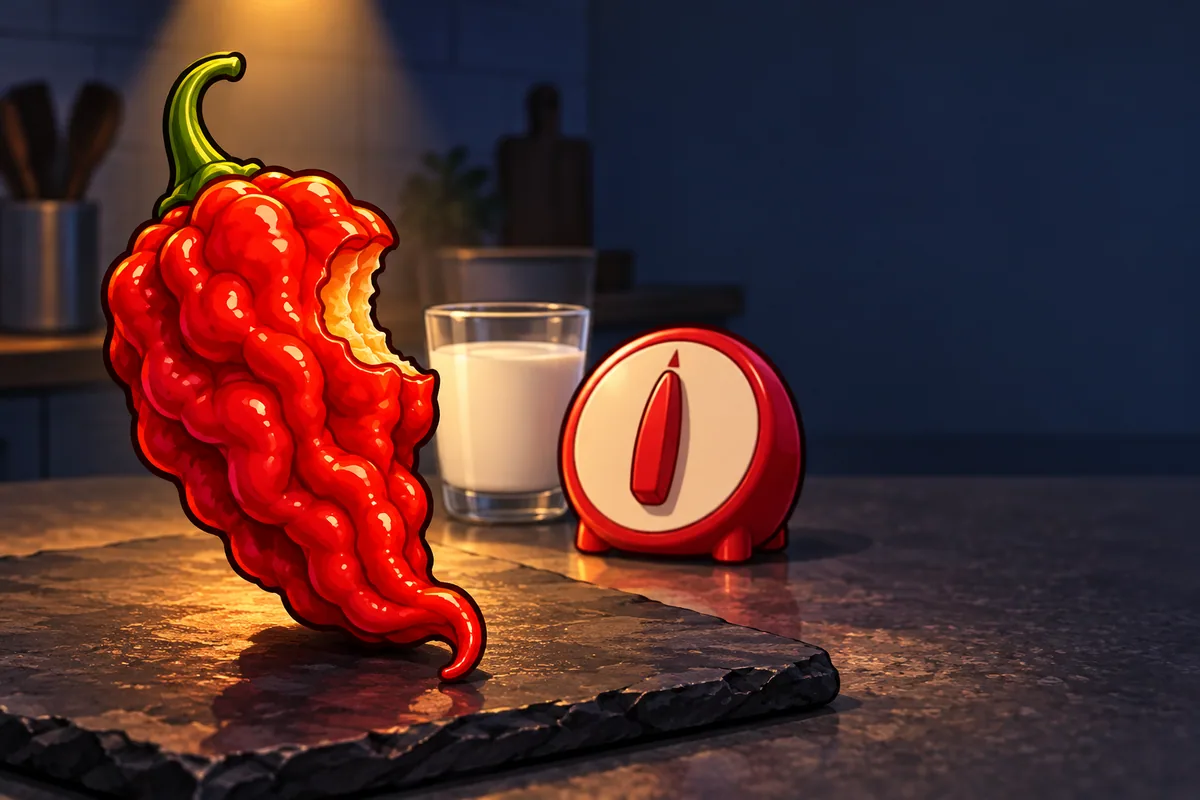
If you're tasting one, set a rule for yourself before you start, and tell anyone tasting with you the same rule: one small piece, then wait a full minute before you decide on anything else. Have your milk poured and within reach, not in the fridge.
Is the Komodo Dragon hotter than a Carolina Reaper?
On paper, no. The genus monograph gives the Carolina Reaper an average of 1,641,183 SHU, the figure Guinness used for its record4, which beats the seller's 1.4 million for the Komodo Dragon. Both numbers come from different kinds of tests, so you'd only know for sure by testing pods from the same garden side by side. For the current record holder, Pepper X has its own entry.
What you'll notice on your tongue is timing more than size. A Reaper's heat comes on fast; the Komodo Dragon's waits. A late burn can be harder to handle, because by the time it lands you may have eaten more than you meant to.
Where did the Komodo Dragon come from?
England. The seller credits Salvatore Genovese with developing it in 2015, and describes it as a cross between a Bhut Jolokia and a Trinidad Scorpion, with the United Kingdom as its origin1. That parentage explains the pod you get: the wrinkled skin and tail of the scorpion line, and a heat that lands in ghost-pepper territory and beyond.
We print these facts from the seller's page because it is the only source that gives them, so read them as the seller's account. If you want a superhot whose heat a university measured, the Moruga Scorpion and the Carolina Reaper both have published figures in the index.
What does a Komodo Dragon look like?
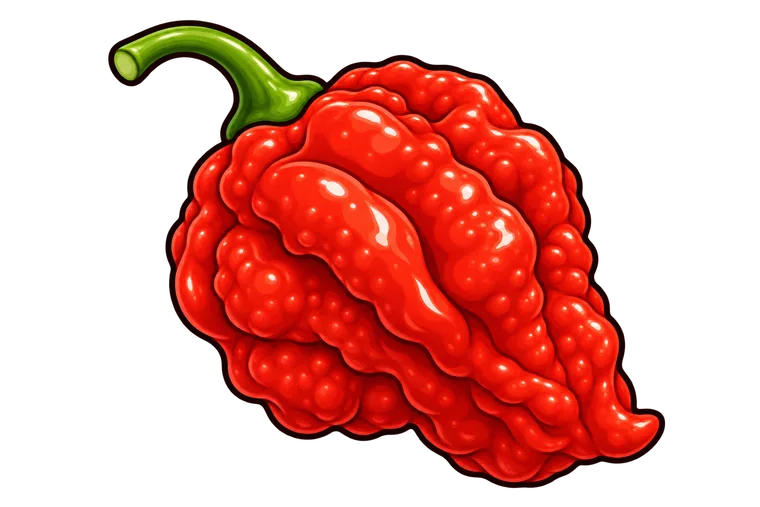
A short, wide, wrinkled pod that ripens from green to red. The seller describes pods about 2 inches long and 1¾ inches wide1:
You'll recognize the scorpion-style tail at the bottom and a skin as bumpy as the lizard it's named after. If your pod is long and smooth, you have something else.
Red is the usual color for its species. The genus monograph notes that C. chinense fruits come most often in red, then orange or yellow, and only rarely white, black or brown, and it singles the species out for its strong pungency and aroma4. So the bright red pod in the picture is what you should expect from a Komodo Dragon plant; a green pod is simply one you picked before it finished ripening, and it won't be any kinder to your mouth.
How do you cook with a Komodo Dragon without ruining dinner?
Use it the way the seller suggests, and keep each batch small until you know your pods, in foods that spread a little heat a long way: jerky, jerk sauces, pickles, salsa, hot sauce and seasoning powder1. The steps below keep the heat where you want it. Amounts are kitchen starting points.
- 1
Glove up
Wear rubber, latex or nitrile gloves before you touch a cut pod, as Poison Control advises.6
- 2
Start with a sliver
For a pot of sauce or a bowl of salsa for four, begin with a piece the size of your little fingernail.
- 3
Wait and taste
Stir, wait a minute for the delayed heat, then taste with a spoon, not your finger.
- 4
Scale in a sauce
For hot sauce, blend one pod into a whole batch with plenty of fruit, carrot or vinegar. A fermented mash softens the edge and gives you a sauce to keep.
- 5
Dry the rest
Dry spare pods and grind them for a seasoning powder; a pinch goes into a whole tray of jerky.
If you want a bottle that lasts, the fermented hot sauce method suits a superhot well, since a single pod can season the whole jar. Grind powder outdoors or with a window open. The fine dust reaches your eyes and throat before you notice it, and a superhot makes that unpleasant fast.
How do you keep spare Komodo Dragon pods?
Freeze them or dry them; a superhot loses nothing you care about either way. NMSU's chile guide says home freezers chill packs deeper than 2 inches too slowly, so pods turn mushy, and that chile keeps up to 12 months frozen7. Lay your whole pods flat in a small freezer bag, press the air out, and label it clearly so nobody mistakes it for sweet peppers.
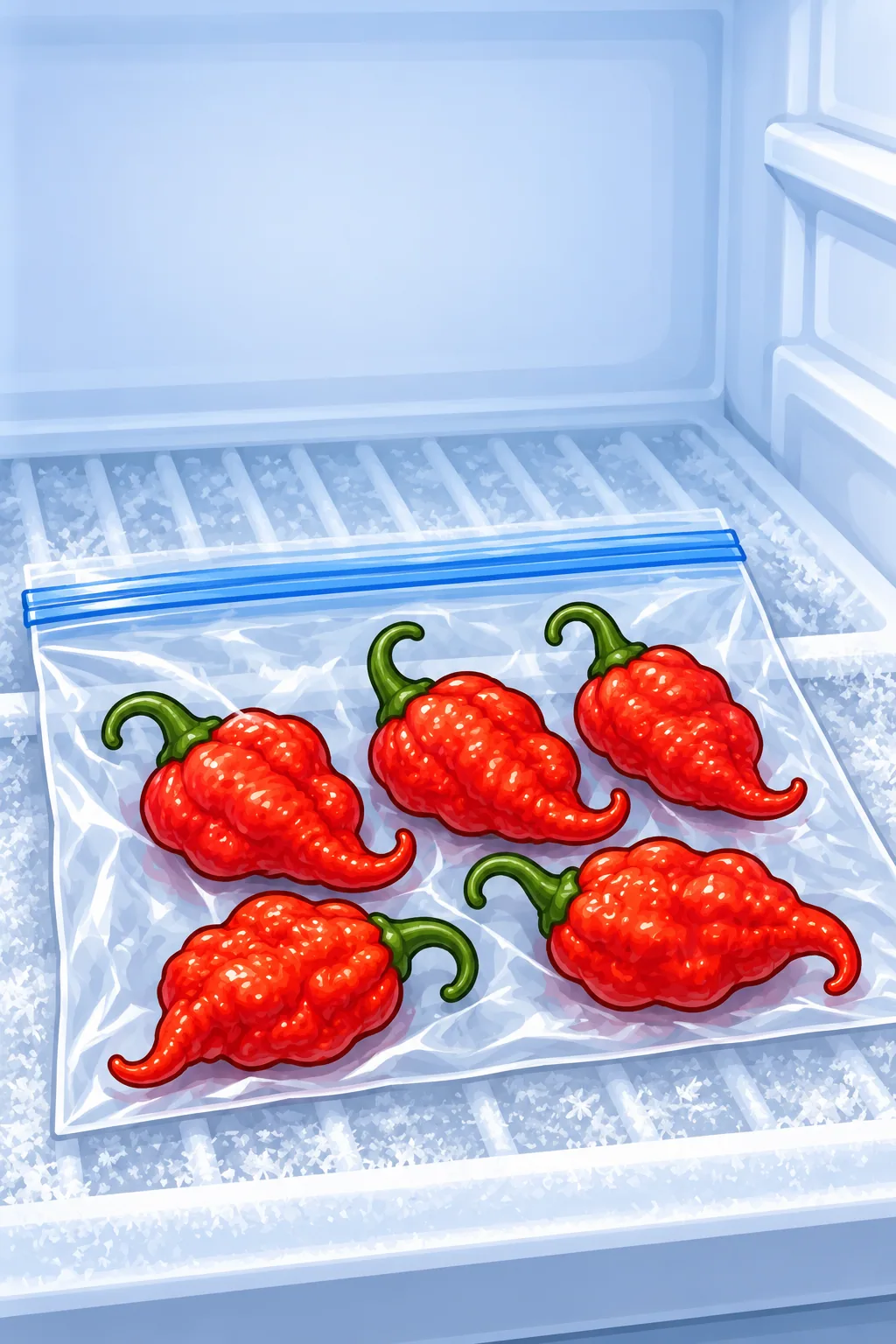
A frozen pod is easier to use than a fresh one. Shave a sliver off with a sharp knife while it's still hard, return the rest to the freezer, and you never have to handle a whole cut pod. If you'd rather keep a jar of powder, the pepper drying guide covers oven and dehydrator methods; dry superhots in a room you can air out.
Can you grow a Komodo Dragon at home?
Yes, if you plan for a long season. The seller lists 110+ days to harvest, and the plant stays a manageable 24 to 36 inches in its specs1. In a climate with a short summer, start your seeds indoors early in the year so the plant has time to set and ripen pods before the first cold night.
A pot on a sunny patio suits it well, and you can move it under cover if autumn turns cold before the pods go red. Birds don't feel capsaicin8, so a light net over a fruiting plant keeps your crop for you. Water deeply and let the top of the pot dry a little between waterings, and you'll keep the plant steady through the hot weeks when it sets fruit.
What should you do if a Komodo Dragon is too much?
Stop eating, sip milk or water, and wait. Most bad reactions to a superhot ease with time, but some need help.
Quick fixes
- Hands still burn hours later: warm water, vegetable oil or a diluted vinegar soak, as Poison Control lists.6
- A sauce came out far too hot: make the batch bigger with more of the base instead of adding sugar alone.
- A friend wants to try one on a dare: give them a sliver, a glass of milk and the ten-second warning first.1
Where to take your Komodo Dragon next
If you liked the slow build, set it beside its parents: the ghost pepper entry gives the measured heat of the Bhut Jolokia, and the Moruga Scorpion entry covers the scorpion side. To see every pepper in the same band at once, open the superhot list and sort it by heat.
Related peppers
 Ghost pepperSuper-hot1,001,304 SHU average
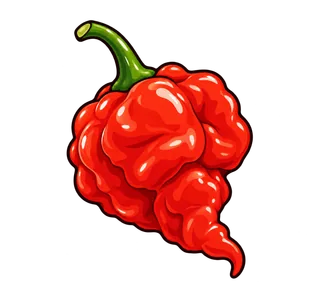 Trinidad Moruga ScorpionSuper-hot1,200,000–2,000,000 SHU
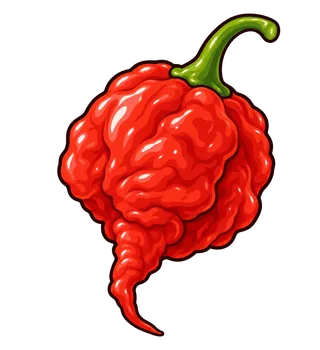 Carolina ReaperSuper-hot1,641,183 SHU average
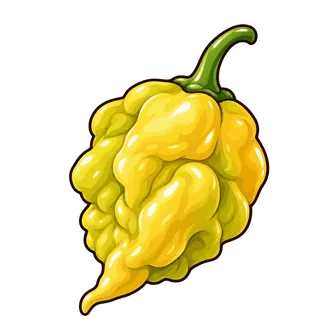 Pepper XSuper-hot2,693,000 SHU average
Published ranges.Sources for this line2. HortScience 42(2):222-2243. New Mexico State University News Center4. PhytoKeys 200:1-423 (Pensoft)9. Guinness World Records
Related in Peppers
-
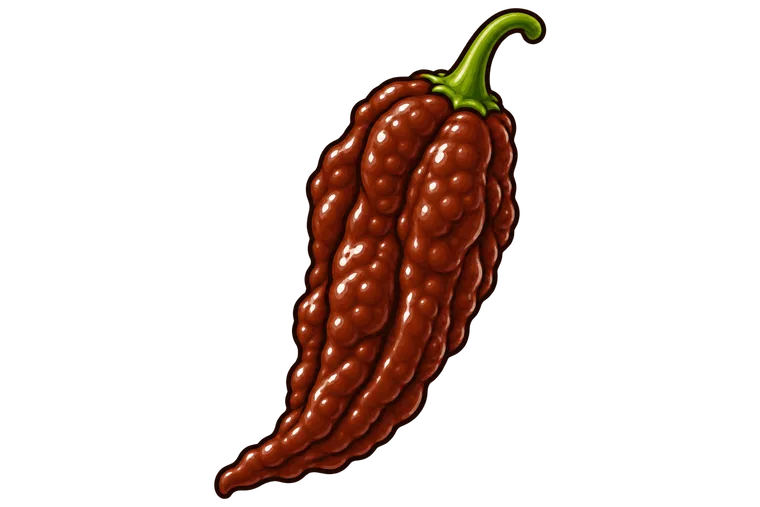
Chocolate Bhutlah Pepper, a Brown Superhot With No Lab Test
A lumpy chocolate-brown pod with smoky ghost-pepper flavor and a heat nobody has published a lab result for.6 min read -
Habanero Pepper Scoville, 100,000–350,000 SHU
A fruity, floral chile in the extra-hot band.7 min read -
Dragon's Breath Pepper, a 2.48M SHU Claim Never Verified
A small red superhot shown at the Chelsea Flower Show in 2017, whose famous number never came with a test report.6 min read -
Jalapeño Scoville, 2,000–8,000 SHU and Chipotle
The medium-heat chile most heat comparisons start from.6 min read -
Aji Charapita, the Pea-Sized Amazon Chile at 30K–50K SHU
A tiny yellow chile from Iquitos and Pucallpa with a citrus aroma and a heat seed sellers compare to cayenne.6 min read -
Ñora Pepper, Sweet Pimentón Pod Under 480 SHU
The small round sweet pepper behind Murcia's pimentón.5 min read
Sources
· 9
- 1Reimer Seeds (seed seller's product page for its own seed) Komodo Dragon Pepper Seeds
- 2HortScience 42(2):222-224 'Bhut Jolokia', the world's hottest known chile pepper, is a putative naturally occurring interspecific hybrid (Bosland and Baral)
- 3New Mexico State University News Center NMSU's Chile Pepper Institute names the Trinidad Moruga Scorpion hottest pepper on earth (Justin Bannister)
- 4PhytoKeys 200:1-423 (Pensoft) Monograph of wild and cultivated chili peppers (Capsicum L., Solanaceae)
- 5New Mexico State University, Chile Pepper Institute Heat
- 6National Capital Poison Center (Poison Control) Capsaicin: when the chili is too hot
- 7New Mexico State University Cooperative Extension (Guide E-324) Processing Fresh Chile Peppers (revised by Nancy C. Flores and Cindy Schlenker Davies)
- 8Cell 108(3):421-430 Molecular basis for species-specific sensitivity to "hot" chili peppers (Jordt and Julius)
- 9Guinness World Records Pepper X dethrones Carolina Reaper as world's hottest chilli pepper