
Dragon's Breath Pepper, a 2.48M SHU Claim Never Verified
A small red superhot shown at the Chelsea Flower Show in 2017, whose famous number never came with a test report.
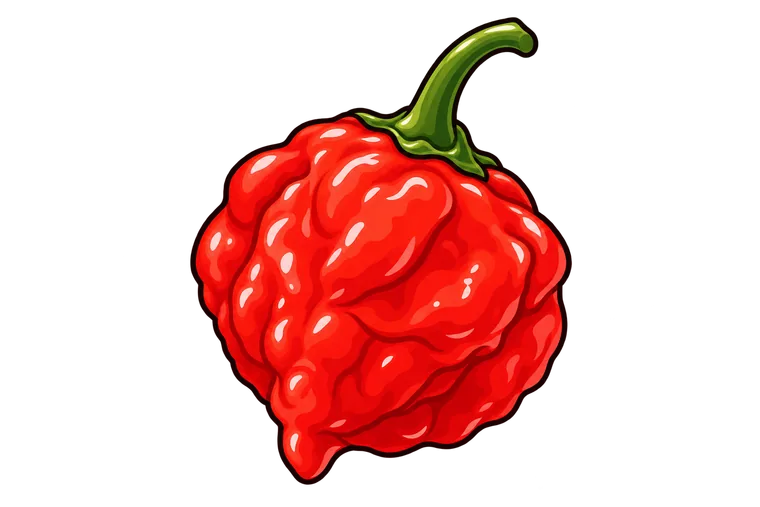
Reported at 2.4–2.48 million SHU in 2017; no tester named and no Guinness record followed
- Guinness's record went from the Carolina Reaper to Pepper X in 2023, at 2,693,000 SHU
- Seed sellers list 100 to 120+ days to harvest and a plant of 3–4 feet
- Origin
- Wales, United Kingdom3
On this page
- 1Is Dragon's Breath hotter than the Carolina Reaper?
- 2What would it take to confirm Dragon's Breath's heat?
- 3Who grew the first Dragon's Breath?
- 4Could a chili really numb skin like an anaesthetic?
- 5What does a Dragon's Breath pod look like?
- 6What does it taste like, and can you eat one?
- 7How do you grow Dragon's Breath from seed?
- 8Which record-claim pepper should you trust?
- 9Where to go after Dragon's Breath
Is Dragon's Breath hotter than the Carolina Reaper?
Nobody has shown it, and you should be wary of any page that says otherwise. In May 2017 the BBC reported a Scoville rating of 2.4 million for Dragon's Breath, and CBS News reported 2.48 million a few days later, but neither named who ran the test34. Both said the growers were still waiting for Guinness to confirm it.
| Pepper | Figure | Who gave it | Tester named? |
|---|---|---|---|
| Dragon's Breath | 2.4 million SHU | BBC News, May 2017, reporting the growers 3 | No |
| Dragon's Breath | 2.48 million SHU | CBS News, May 2017, quoting Mike Smith 4 | No |
| Dragon's Breath | 2,000,000+ SHU; 'reported peak' 2.48 million | Sandia Seed, its own seed page 1 | No |
| Carolina Reaper | 1,569,300 SHU average | Guinness World Records, 2013 5 | Confirmed record |
| Pepper X | 2,693,000 SHU average | Guinness World Records, 2023, tests at Winthrop University 6 | Yes |
A number without a tester is a claim; the only peppers with a confirmed hottest-chilli title on this table are the Carolina Reaper and Pepper X.
Even the people selling you the seed say so. Sandia Seed's page says nobody has proven Dragon's Breath to be the world's hottest pepper and that there isn't much solid information yet about its average heat range or stability1. Pepper Joe's writes that it hasn't officially dethroned the Carolina Reaper and that unofficial tests report above 2.4 million2.
- November 2013
Guinness confirms the Carolina Reaper as the hottest chilli, at an average of 1,569,300 SHU.5
- May 2017
- October 2023
Guinness names Pepper X the hottest chilli, at 2,693,000 SHU, after tests at Winthrop University.6
If the 2017 figure ever held up, it would still sit below today's record: 2,480,000 is about 92 % of Pepper X's 2,693,000. For how the title has moved from pepper to pepper, the record history covers each confirmed holder.
What would it take to confirm Dragon's Breath's heat?
A real test looks very different from a headline, and you can use it as a yardstick for any claim. Guinness's hottest-chilli rules ask for heat measured in Scoville heat units and in American Spice Trade Association pungency units7, and both its recent records name the lab behind them, such as Winthrop University for Pepper X6.
NMSU's test of the Bhut Jolokia shows the standard a serious result meets. The researchers grew the pepper in replicated field plots beside known control peppers, bulked 25 random ripe pods from at least 10 plants in each replication, ran the dried powder through HPLC, and sent samples to two commercial labs to check their numbers8. Both outside labs came back in the same range.
What a heat claim you can trust includes
Score Dragon's Breath against that list and the 2017 reports tick none of the boxes. You aren't calling anyone a liar by noticing that; you're just reading the evidence. The pepper may well be fiercely hot, and only a published test can tell you how hot.
Who grew the first Dragon's Breath?
A Welsh grower working with someone else's plant, which is why you'll see two names attached to it. The BBC reported that Mike Smith of St Asaph in Denbighshire was growing the Dragon's Breath, which belonged to Nottinghamshire chilli farmer Neal Price3. Smith had borrowed the plant about three months earlier.
Price, the BBC said, grew it using a new plant food developed with Nottingham Trent University, and the pepper was due to go on show at the Chelsea Flower Show3. That's the university's whole role in the reports we read: the plant food, not the heat test. We found no statement from the university about the pepper's Scoville rating.
Seed sellers tell it differently. Sandia Seed credits Mike Smith and says he developed the pepper with researchers at the University of Nottingham1, a different university from the one the BBC named. Pepper Joe's says breeders developed it in the UK and named it after the Welsh dragon2. When you read a story about this pepper, check whose version it repeats.
Could a chili really numb skin like an anaesthetic?
That was Mike Smith's idea, not a finding. He told the BBC the pepper's oil can numb the skin, so it might serve as an alternative to anaesthetic in poorer countries or for people allergic to anaesthetic drugs3. CBS repeated the same suggestion4.
No trial, paper or university statement we found tests Dragon's Breath as a medicine. The idea stays a grower's hope, and nothing you should try at home. Putting superhot oil on your skin causes burning, and Poison Control's advice for that is washing, not more pepper9.
If you're curious why capsaicin burns at all, the heat science guide explains the receptor behind it.
What does a Dragon's Breath pod look like?
Small, red and bumpy, and you'd struggle to pick it out of a tray of other superhots. Sandia Seed describes peppers 1 to 2 inches long that taper to a point, with red bumpy skin and a strong floral aroma; Pepper Joe's lists bright red 2-inch pods12.
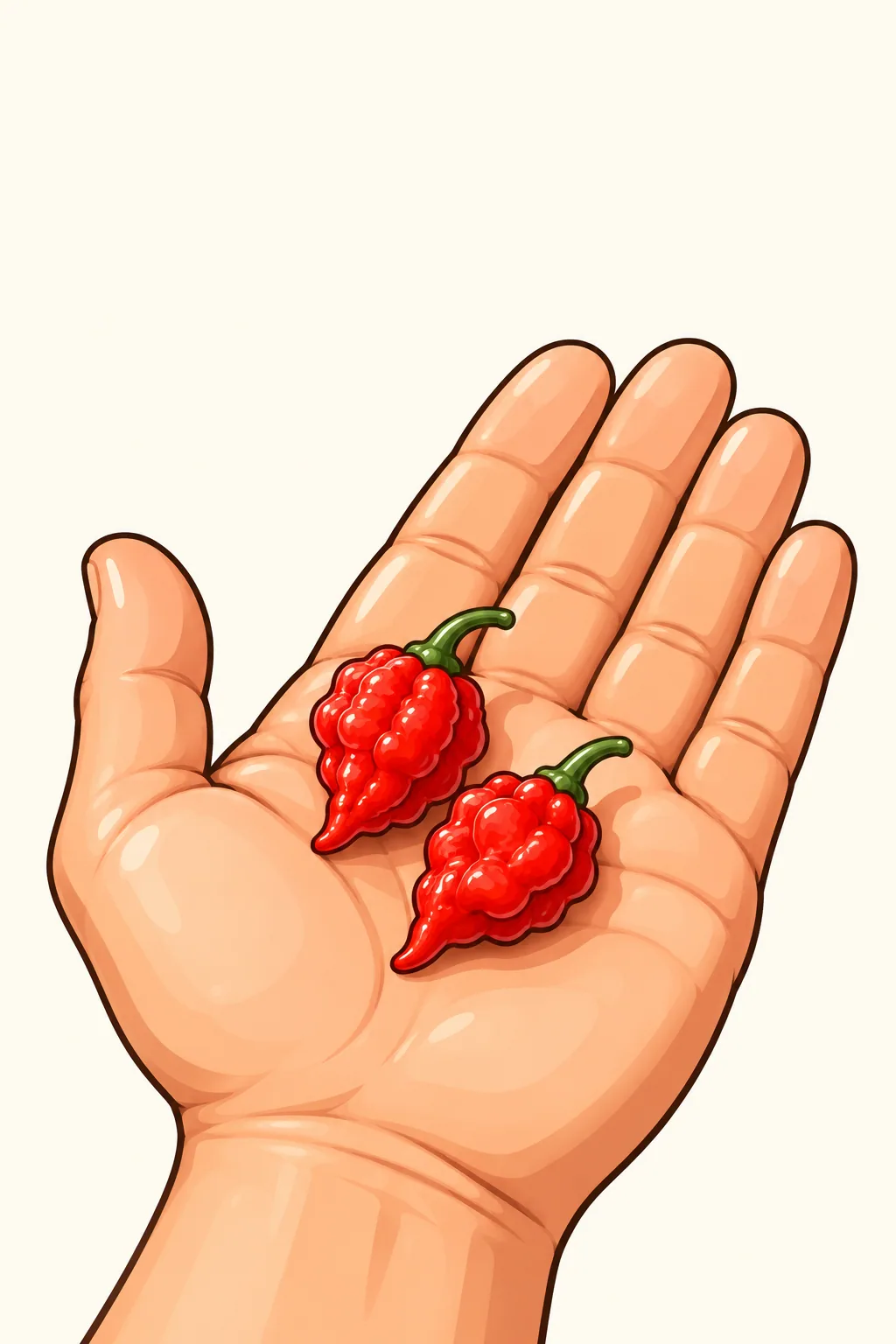
You won't tell it apart from a dozen other red superhots by eye. A small, pointed, bumpy red pod could just as well be a scorpion type or a red 7 Pot, so buy seed from a named seller and label your plants from the day you sow.
What does it taste like, and can you eat one?
Fruity for a moment, then very hot for a long time, if you believe the one person on record who tried it. Neal Price, who tasted it, told the BBC it had an initial fruity flavour, then stayed extremely hot for about half an hour; Mike Smith hadn't tasted it3. Pepper Joe's also describes a fruity, sweet taste that the heat overwhelms2.
The growers themselves called it too hot for human consumption, according to CBS4. Take that seriously. If you grow one, use it the way you'd use any superhot: a sliver in a big pot of sauce, never a whole pod on a dare.
Wear rubber, latex or nitrile gloves whenever you cut one, as Poison Control advises for any hot pepper9. Capsaicin oil clings to bare skin, and you'll find out the hard way the next time you touch your eyes.
- Fruity
- Floral aroma
- Superhot
How do you grow Dragon's Breath from seed?
Like any slow C. chinense: you'll need steady heat, bright light and patience. Sandia Seed's planting notes give you the numbers1:
- 1
Sow shallow
Place seeds in sterile seed-starting mix and cover them 1/4 inch deep.1
- 2
Give bottom heat
Keep the tray at 85 °F with bright light and the mix moist at all times.1
- 3
Wait for sprouts
Expect germination in 14–28 days; slow seed is normal for this species.1
- 4
- 5
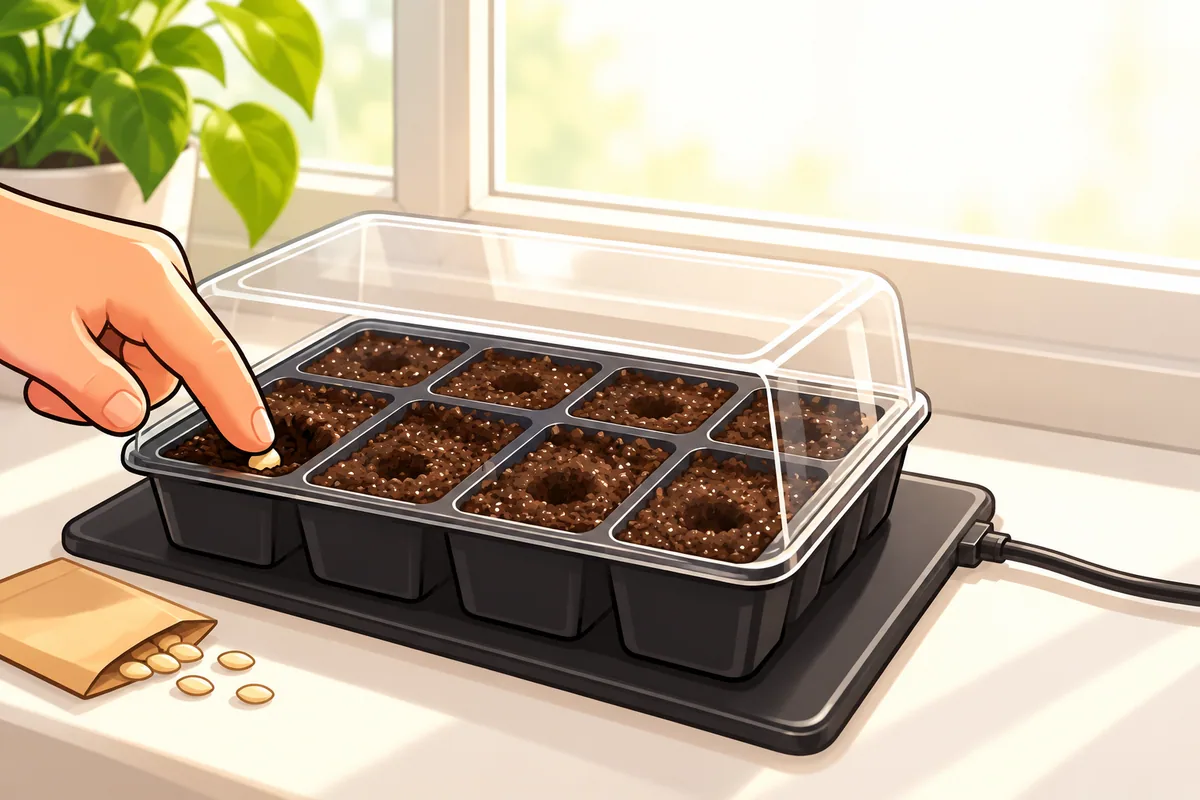
In a short summer, start your seed indoors in late winter so the plant has time to ripen pods before autumn cold. The Carolina Reaper growing guide covers the same long-season routine for superhots in more depth, from hardening off to the first ripe pod.
Your plant's heat will also depend on your garden. NMSU's Bhut Jolokia paper notes that the environment where a pepper grows affects how much capsaicin its pods build8, so a Dragon's Breath raised on a cool British windowsill and one grown in a hot, dry summer may taste very different.
Don't expect every plant to match. Sandia warns there's little solid information on this pepper's stability1, so pods from your plant may differ from the last grower's, in shape as well as heat.
Which record-claim pepper should you trust?
Trust the ones with a named tester. Here's what you actually know about each famous superhot claim, so you can choose your seed with your eyes open:
| Pepper | Claimed or confirmed heat | Tester or confirmer | What it means for you |
|---|---|---|---|
| Pepper X6 | 2,693,000 SHU average | Winthrop University tests; Guinness record 2023 | The confirmed hottest |
| Carolina Reaper5 | 1,569,300 SHU average | Guinness record 2013 | Confirmed, widely sold as seed |
| Dragon's Breath34 | 2.4–2.48 million SHU | None named | An untested claim from 2017 |
If you want a superhot you can grow from seed with a confirmed number behind it, the Reaper is the safer pick. If you want to grow Dragon's Breath for its story, go ahead; just label your sauce with the heat you can taste, not the heat the headlines promised.
Where to go after Dragon's Breath
Grow one plant if you're curious, and grow a Carolina Reaper beside it so you have a confirmed reference pod in the same soil and weather. To see every superhot in the index sorted by its measured heat, open the superhot list.
Related peppers
 Carolina ReaperSuper-hot1,641,183 SHU average
 Pepper XSuper-hot2,693,000 SHU averageKomodo Dragon pepperSuper-hot1,400,000 SHU
 Trinidad Moruga ScorpionSuper-hot1,200,000–2,000,000 SHU
Published ranges.Sources for this line6. Guinness World Records10. PhytoKeys 200:1-423 (Pensoft)11. Reimer Seeds (seed seller's product page for its own seed)12. New Mexico State University News Center
Related in Peppers
-
Chocolate Bhutlah Pepper, a Brown Superhot With No Lab Test
A lumpy chocolate-brown pod with smoky ghost-pepper flavor and a heat nobody has published a lab result for.6 min read -
Ghost Pepper Scoville, About 1 Million SHU
The Bhut Jolokia of Assam, India: the first pepper measured at a million SHU.6 min read -
Anaheim Pepper Scoville, 1,000–5,000 SHU
A long, mild green chile with a New Mexican family tree.6 min read -
Cayenne Pepper Scoville, 25,000–50,000 SHU
The long red chile behind most ground red pepper and a lot of vinegar hot sauce.6 min read -
Cherry Pepper Scoville, 0 SHU Sweet to Hot
A small round pepper, sweet or hot, grown for jars and stuffing.6 min read -
Habanero Pepper Scoville, 100,000–350,000 SHU
A fruity, floral chile in the extra-hot band.7 min read
Sources
· 12
- 1Sandia Seed Company (seed seller's product page for its own seed) Dragon's Breath Pepper
- 2Pepper Joe's (seed seller's product page for its own seed) Dragon's Breath Chili Pepper Seeds
- 3BBC News (reporting the growers' claims) 'World's hottest' chilli pepper grown in St Asaph
- 4CBS News (reporting the growers' claims) The hottest pepper in the world? Dragon's Breath
- 5Guinness World Records Confirmed: Smokin Ed's Carolina Reaper sets new record for hottest chilli
- 6Guinness World Records Pepper X dethrones Carolina Reaper as world's hottest chilli pepper
- 7Guinness World Records Hottest chilli (record rules)
- 8HortScience 42(2):222-224 'Bhut Jolokia', the world's hottest known chile pepper, is a putative naturally occurring interspecific hybrid (Bosland and Baral)
- 9National Capital Poison Center (Poison Control) Capsaicin: when the chili is too hot
- 10PhytoKeys 200:1-423 (Pensoft) Monograph of wild and cultivated chili peppers (Capsicum L., Solanaceae)
- 11Reimer Seeds (seed seller's product page for its own seed) Komodo Dragon Pepper Seeds
- 12New Mexico State University News Center NMSU's Chile Pepper Institute names the Trinidad Moruga Scorpion hottest pepper on earth (Justin Bannister)