On this page
- 1Which peppers have held the world record?
- 2What was the hottest pepper in the world in 2022?
- 3Where did the ghost pepper's million come from?
- 4Which pepper measured hottest but never held the record?
- 5Why does the same pepper have different numbers?
- 6How does a pepper earn the record?
- 7Has anyone questioned the Pepper X record?
- 8Which record figure should you quote?
- 9How to read the next record claim
- 10Sources
Which peppers have held the world record?
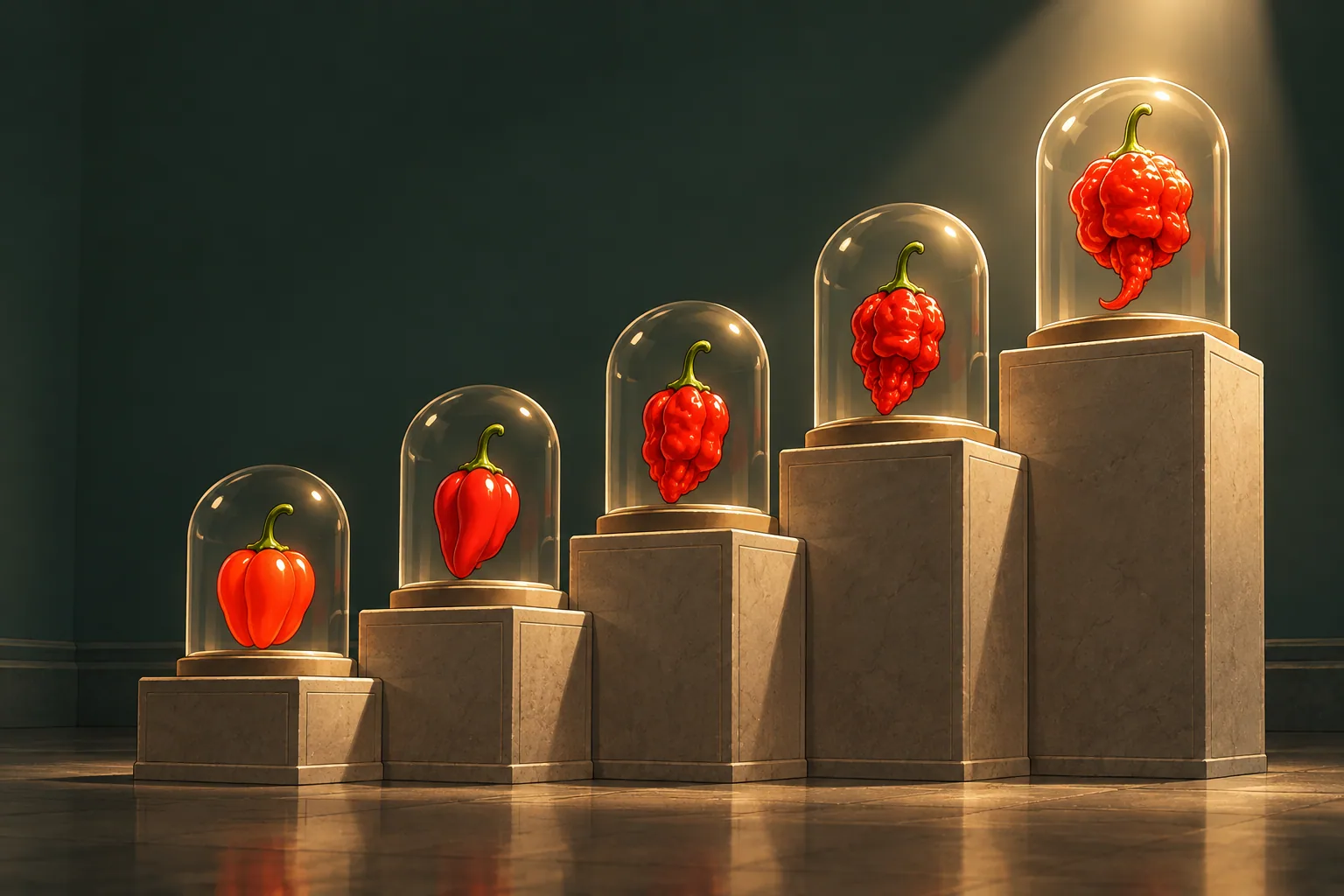
Five peppers in seventeen years, each one a big step past the last, and you can trace all of them to a source we read. Here you can see them in date order on the log heat axis we use across the site, where each tick means ten times the heat of the one before it.
Each bar is the figure Guinness certified or quoted for that holder, in date order. Log scale; bars are published ranges.Sources for this line1. HortScience 42(2):222-2242. University of Florida IFAS Extension3. Guinness World Records4. Guinness World Records
Our table adds who grew each one and how far it beat the record before it, so you can see the size of every jump.
| When | Pepper | Record figure | Grower | Beat the last record by |
|---|---|---|---|---|
| As of 20061 | Red Savina (habanero) | 577,000 SHU | Not named in the source | First record in this list |
| 200712 | Ghost pepper (Bhut Jolokia) | 1,041,427 SHU | Not named in the source | 1.8× |
| March 20113 | Trinidad Scorpion Butch T | 1,463,700 SHU | The Chilli Factory, Australia | 1.4× |
| November 20133 | Carolina Reaper | 1,569,300 SHU average | Ed Currie, PuckerButt Pepper Company | 1.07× |
| October 20234 | Pepper X | 2,693,000 SHU average | Ed Currie, PuckerButt Pepper Company | 1.7× the Reaper's 2013 figure |
How big was each jump?
Uneven, and the pattern surprises most of us. The ghost pepper nearly doubled Red Savina (1,041,427 ÷ 577,000 = 1.8), while the Carolina Reaper beat the Butch T by only 7 % (1,569,300 ÷ 1,463,700)Sources for this line1. HortScience 42(2):222-2242. University of Florida IFAS Extension3. Guinness World Records.
- Red Savina577,000 SHU, the record as of 2006
- Ghost pepper1,041,427 SHU, certified in 2007Super-hot
- Trinidad Scorpion Butch T1,463,700 SHU, March 2011
- Carolina Reaper1,569,300 SHU average, November 2013Super-hot
- Pepper X2,693,000 SHU average, October 2023Super-hot
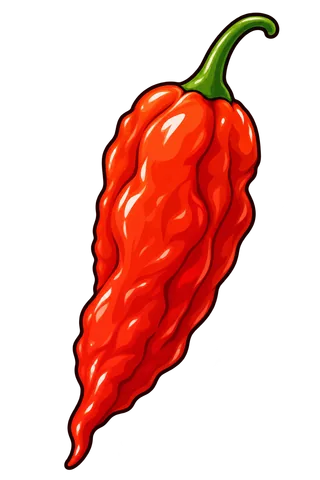
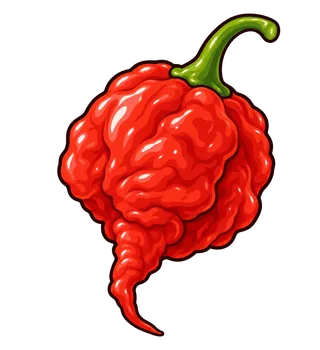
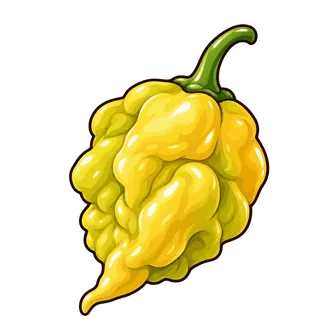
Bars show published heat ranges. Sources for this line1. HortScience 42(2):222-2242. University of Florida IFAS Extension3. Guinness World Records4. Guinness World Records5. PhytoKeys 200:1-423 (Pensoft)
Across the whole line the record grew about 4.7 times, from 577,000 to 2,693,000 SHU. Ed Currie bred the last two holders, so one grower has held the title since 201334.
What was the hottest pepper in the world in 2022?
The Carolina Reaper, if you go by Guinness. Guinness confirmed it in November 20133, and nothing replaced it until Pepper X in October 2023, ten years later4.
By then Guinness was quoting the Reaper at an average of about 1.64 million SHU, a little above its 2013 figure4. So if your 2022 chart shows the Reaper at either number, it reads Guinness correctly.
If you are checking a different year, this table gives you the holder for each stretch, from the sources we could read ourselves.
| Years | Record holder | Figure |
|---|---|---|
| Up to 20061 | Red Savina | 577,000 SHU |
| 2007 to early 20112 | Ghost pepper (Bhut Jolokia) | 1,041,427 SHU |
| March 2011 to November 20133 | Trinidad Scorpion Butch T | 1,463,700 SHU |
| November 2013 to October 202334 | Carolina Reaper | 1,569,300 SHU average, later about 1.64 million |
| October 2023 to today4 | Pepper X | 2,693,000 SHU average |
Early 2011 is the murky stretch, and you will see it told several ways. Blogs and encyclopedias name two short-lived holders before the Butch T, but we found no Guinness page for either, so our table goes straight from the ghost pepper to the record Guinness itself says the Reaper replaced3.
Where did the ghost pepper's million come from?
From a field trial in New Mexico, and you can follow every step of it. A member who had collected the pepper in India sent seed to NMSU's Chile Pepper Institute in 2001, and it took the team years to grow enough seed for a fair test1.
- 2000
An earlier study reports the Naga Jolokia at 855,000 SHU, already above the 577,000 of Red Savina's record.1
- 2001
Seed of Bhut Jolokia reaches the Chile Pepper Institute at NMSU from a member who collected it in India.1
- 2004
After poor fruit and seed set, the team grows the plants under insect-proof net cages to bulk up seed.1
- 2005
A replicated trial south of Las Cruces grows Bhut Jolokia beside Red Savina and an orange habanero. The team picks 25 random ripe fruits from at least 10 plants per plot, dries and grinds them, and runs HPLC.1
- 2005
Results: Bhut Jolokia 1,001,304 SHU, orange habanero 357,729, Red Savina 248,556. Two commercial labs confirm the ghost pepper at 927,199 and 879,953.1
- 2007
That design is why you can trust the result more than a single-pod claim. The habanero grown as a control came in at 357,729 SHU, which the authors call normal for that cultivar in Las Cruces, which gives you a yardstick: the field ran normal, and the ghost pepper still came in at nearly three times the habanero1.

Which pepper measured hottest but never held the record?
The Trinidad Moruga Scorpion, a name you may know from seed catalogs. In a 2012 NMSU trial at Las Cruces, two of its plants passed two million SHU, the first confirmation of any chile fruit above that mark, and it tested significantly hotter than the Bhut Jolokia6.
The same trial found that the Trinidad 7-pot Jonah, Douglah Trinidad Chocolate and Trinidad Scorpion did not differ significantly from the Bhut Jolokia6. So four of the five super-hots in that trial sat in one cluster, with the Moruga a step above.
The two Guinness pages we read for you go from the Butch T in 2011 straight to the Reaper in 2013, with no Moruga in between3. One extension publication later listed the Moruga at 2,200,000 SHU2, a figure we could not match to any Guinness page.
Why does the same pepper have different numbers?
Because a record is one certified test, and other labs test other pods. Heat changes from plant to plant, so the pepper you look up collects several published figures, and your chart may show any of them.
| Pepper | Record figure | Other published figure | Where the other figure comes from |
|---|---|---|---|
| Red Savina1 | 577,000 SHU | 248,556 SHU | Mean in a 2005 field trial in Las Cruces, New Mexico |
| Ghost pepper12 | 1,041,427 SHU | 1,001,304 SHU | Mean in the same 2005 trial |
| Ghost pepper3 | 1,041,427 SHU | just over 800,000 SHU | Guinness's own 2013 announcement |
| Carolina Reaper34 | 1,569,300 SHU average (2013) | about 1.64 million SHU average | Guinness, quoted in 2023 |
The Red Savina line is the one we would point you to first. In a trial grown side by side with the ghost pepper, Red Savina tested at 248,556 SHU, under half its record and below the orange habanero's 357,729 in the same field1.
Your charts can also drift from Guinness. One extension publication lists the Reaper at 2,009,000 SHU2, a figure that matches no Guinness page we read. The Scoville heat units page explains how you tell an average from a single pod.
How does a pepper earn the record?
With a lab average across years of pods, after a decade of breeding. Guinness says Winthrop University in South Carolina calculated Pepper X's score from specimens grown over the past four years4.
Currie started Pepper X from two peppers he liked for flavor that were not hot enough for him, and crossed them with his hottest lines4. He showed it to the world on an episode of Hot Ones, and the Pepper X entry holds what else you can read about the pod.

His first record pepper, the one you probably know best, followed the same road. Guinness describes the Carolina Reaper as a cross of a Sweet Habanero and a Naga Viper that took about ten years to develop, grown by a man who started with chillies as a hobby over 20 years before3.
Guinness's own rules page sets out the frame you are working inside. The record description speaks of the heat of a single chilli pepper grown, the attempt comes from an individual, team or company, Guinness measures it in SHU or in ASTA pungency units, and it accepts no seeds as an entry7.
Smokin' Ed Currie, who bred Pepper X, posted this 2023 video himself, so it is the breeder's own announcement of the record and not an independent check, and records change.

Has anyone questioned the Pepper X record?
Yes, and you should know about it before you quote the figure. In December 2023, Great Lakes Echo, a journalism project at Michigan State University, reported on a Winthrop lab report it had obtained that listed three Pepper X samples: two just under 2.2 million SHU and one near 2.7 million9.
An analytical chemist the reporters asked to review it said the method contained multiple errors and that calibration problems could make Pepper X milder or hotter than reported. The Winthrop chemist acknowledged one change from the standard extraction procedure, made for the small sample size9.
Guinness told the same reporters that a record needs independent third-party testing and record-specific guidelines9. As of our last check on 18 October 2026, we found no Guinness news page that replaces or withdraws Pepper X, so you can still treat it as the holder.
Which record figure should you quote?
It depends on what you need the number for. A record figure and a field-trial figure answer different questions, so pick the one that matches yours:
- For a fact about the title, quote the Guinness average with its date: Pepper X, 2,693,000 SHU, October 20234. Your reader then knows which record you mean if a new one arrives.
- For an older chart, check its year first. A chart from 2014 to 2023 that names the Reaper as the hottest was right for its time3.
- For cooking or growing, look for a trial mean grown beside a known control. Red Savina's 248,556 SHU in a Las Cruces field tells you more about the pods you might grow than its 577,000 record does1.
- For a comparison between two record holders, use averages for both. Mixing the Reaper's 1,569,300 average with a single hot Moruga plant above two million would compare a crop with one outlier36.
How to read the next record claim
Between Guinness announcements, "hottest pepper" claims still reach your news feed. You can sort a record from a rumor with these checks:
- Look for the Guinness announcement itself; Guinness published both the 2013 and 2023 records as news pages.34
- Check whether the figure is an average; both of Currie's records are averages, not one pod.34
- Find the lab: Winthrop University ran the Pepper X tests.4
- Ask whether a third party tested it; Guinness says a record needs independent testing.9
- Compare it with a field trial if one exists; Red Savina's trial mean came in under half its record.1
- Watch for a single plant dressed up as a variety; in the 2012 NMSU trial only two Moruga plants passed two million SHU.6
We review this page every quarter. The current standings, with the runner-up and the safety notes, stay on the hottest pepper in the world page, and the fight for second place has its own second hottest pepper page.