On this page
- 1What does SHU mean?
- 2How big is each step on the Scoville scale?
- 3Does a higher SHU mean the whole pepper is hotter?
- 4How do labs turn a measurement into SHU?
- 5How do SHU numbers turn into words like mild or hot?
- 6Is SHU the same as an ASTA pungency unit?
- 7Why is it called a Scoville heat unit?
- 8Why doesn't your pepper match its SHU number?
- 9Before you trust an SHU number
- 10Sources
What does SHU mean?
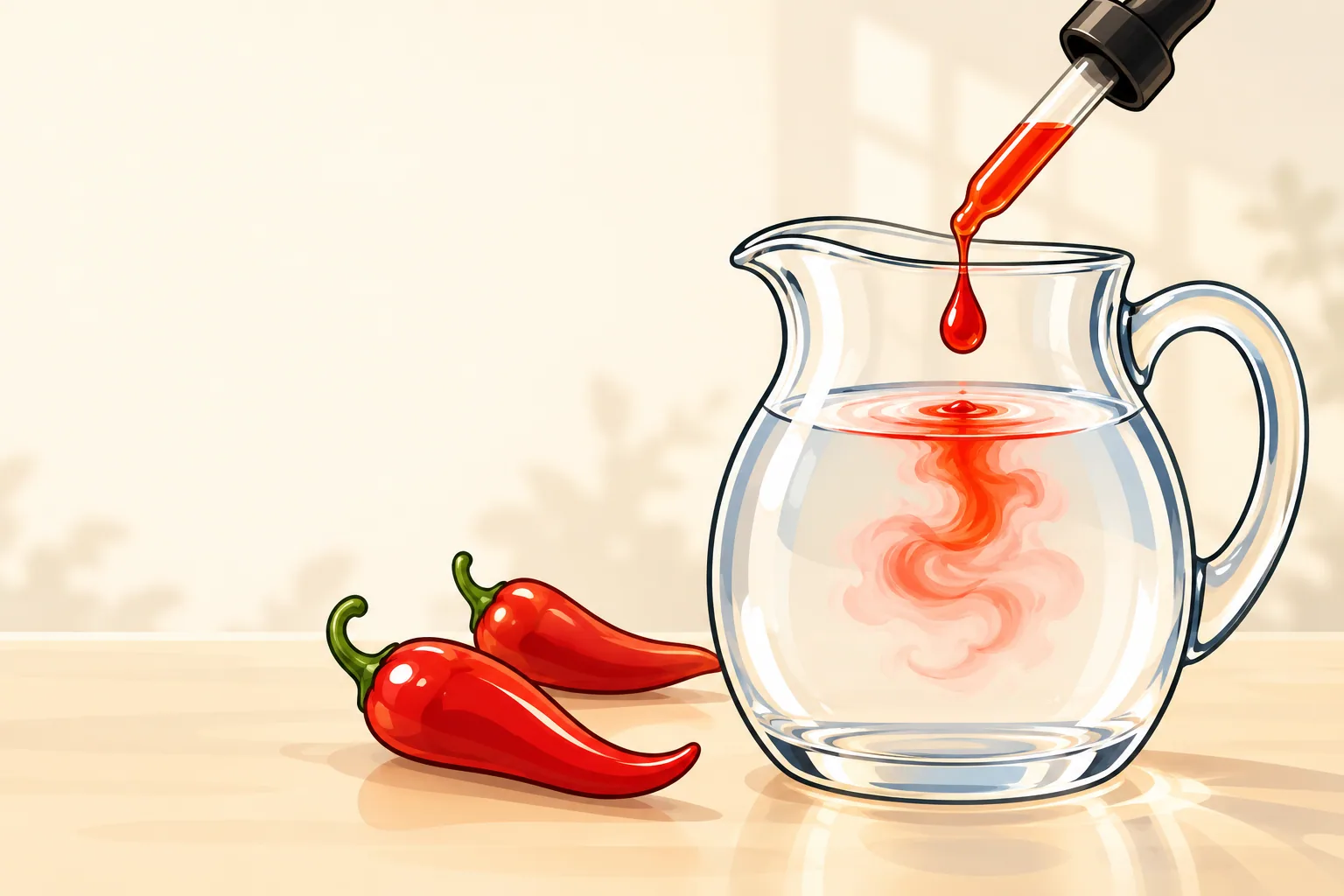
SHU stands for Scoville heat units, and each unit is one part of dilution. A pepper rated 100,000 SHU needs 1 part extract to 100,000 parts water before tasters stop feeling the heat1. NMSU's Chile Pepper Institute defines it the same way: a measure based on diluting a chile sample until a taster no longer perceives heat2.
Put a pepper you know into that sentence. A jalapeño averages about 5,000 SHU3, so if you stirred one drop of its extract into 5,000 drops of sugar water, you would only just feel a faint warmth. Here is the original test, step by step, as Wilbur Scoville described it in 19124.
- 1
Soak the pepper
Macerate one grain of ground capsicum overnight in 100 cc of alcohol.4
- 2
Filter
Shake it well and filter out the solids. What stays behind is your extract.4
- 3
Dilute in sweetened water
Add the extract to sweetened water in set proportions.4
- 4
Stop at the faint burn
Keep diluting until only a distinct but weak heat shows on the tongue. The proportion at that point is the rating: his Mombasa chillies tested 1 in 50,000 to 1 in 100,000.4
The higher the SHU, the more water it takes to make the heat go away.
What is one Scoville heat unit?
One SHU would be an extract you could only just taste with no water added at all. In practice, peppers down there read as zero: a bell pepper scores 05, and the 2014 Molecules study found five of its genotypes at 0 SHU6. The Heliyon review calls everything up to 700 SHU non-pungent1, so you can treat the first few hundred units as "no heat you will notice in a dish."
How big is each step on the Scoville scale?
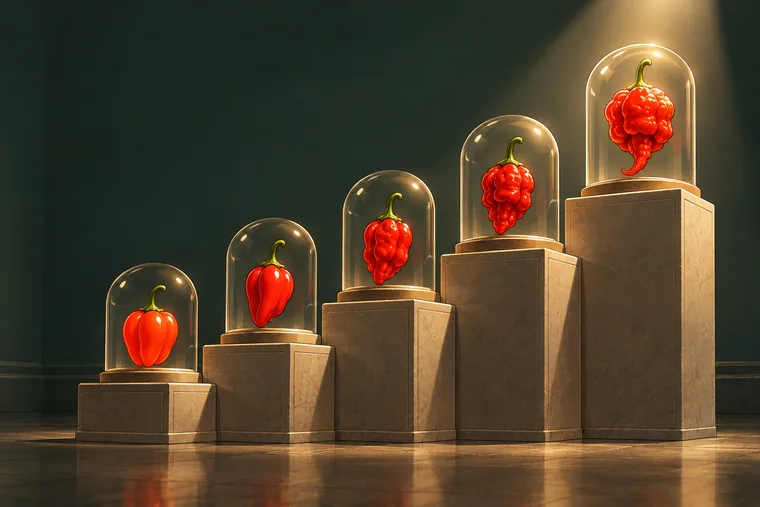
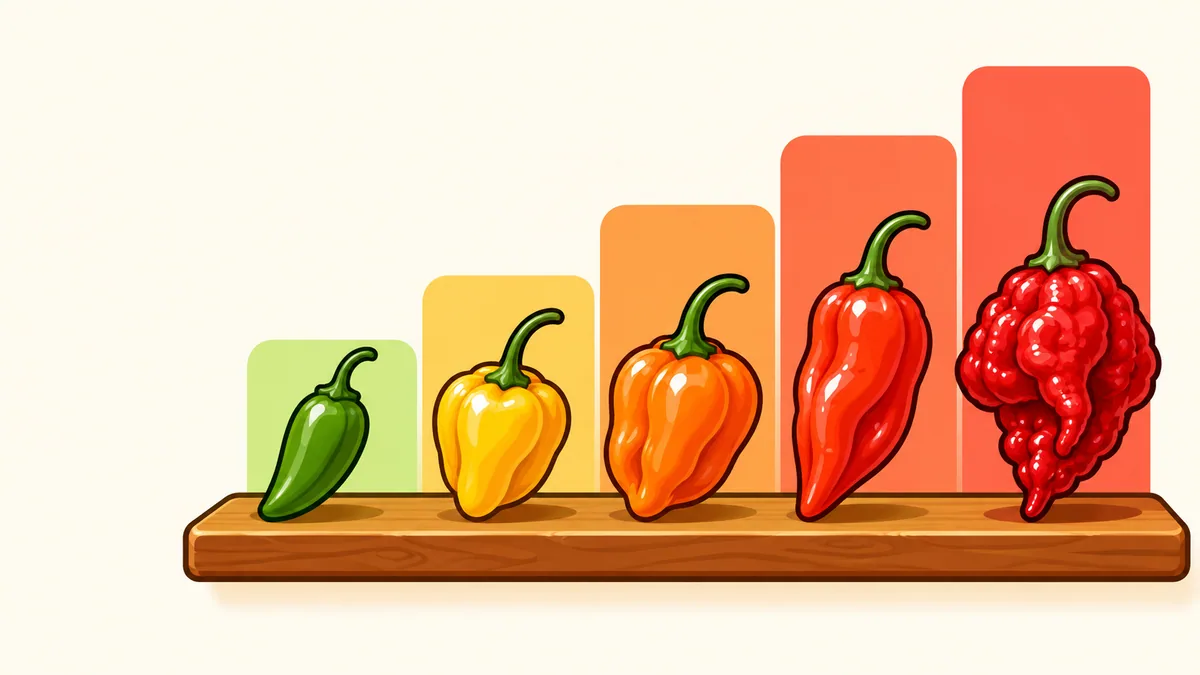
Each step on our chart is ten times the one before it. These peppers from the pepper index sit near each step, so you can feel the jump from one you know to the next.
Log scale; bars are published ranges.Sources for this line5. University of Florida IFAS Extension7. HortScience 42(2):222-2248. Guinness World Records
| Around | Pepper | Published heat | Kind of figure |
|---|---|---|---|
| 0 | Bell pepper | 0 SHU | Single figure |
| 1,000 | Poblano | 1,000–2,000 SHU | Range |
| 10,000 | Serrano | 10,000–25,000 SHU | Range |
| 100,000 | Habanero | 100,000–350,000 SHU | Range |
| 1,000,000 | Ghost pepper | 1,001,304 SHU | Lab mean, 2005 trial |
| Millions | Pepper X | 2,693,000 SHU | Guinness record average |
| 16,000,000 | Pure capsaicin | 16,000,000 SHU | Top of the scale |
The jalapeño, at 2,000 to 8,000 SHU3, sits between the first two steps. By midpoint a serrano (17,500) is 3.5 times a jalapeño (5,000), and a habanero (225,000) is about 45 times3.
How do you compare two SHU numbers yourself?
Take the midpoint of each range, then divide the larger by the smaller. A cayenne runs 25,000 to 50,000 SHU and a Thai pepper 50,000 to 100,0005; their midpoints are 37,500 and 75,000, so the Thai pepper carries about twice the heat per gram.
The same math works when a recipe names a pepper you don't have. Say it calls for one serrano and your kitchen only has habaneros: 225,000 divided by 17,500 is about 13, so each gram of your habanero carries roughly the heat of 13 grams of serrano3.
Skip the midpoint step and your answer can swing a long way. Compare the hottest cayenne you could get (50,000) with the mildest Thai pod (50,000) and you would call them equal, which tells you why we never compare a range top with a range bottom.
Does a higher SHU mean the whole pepper is hotter?
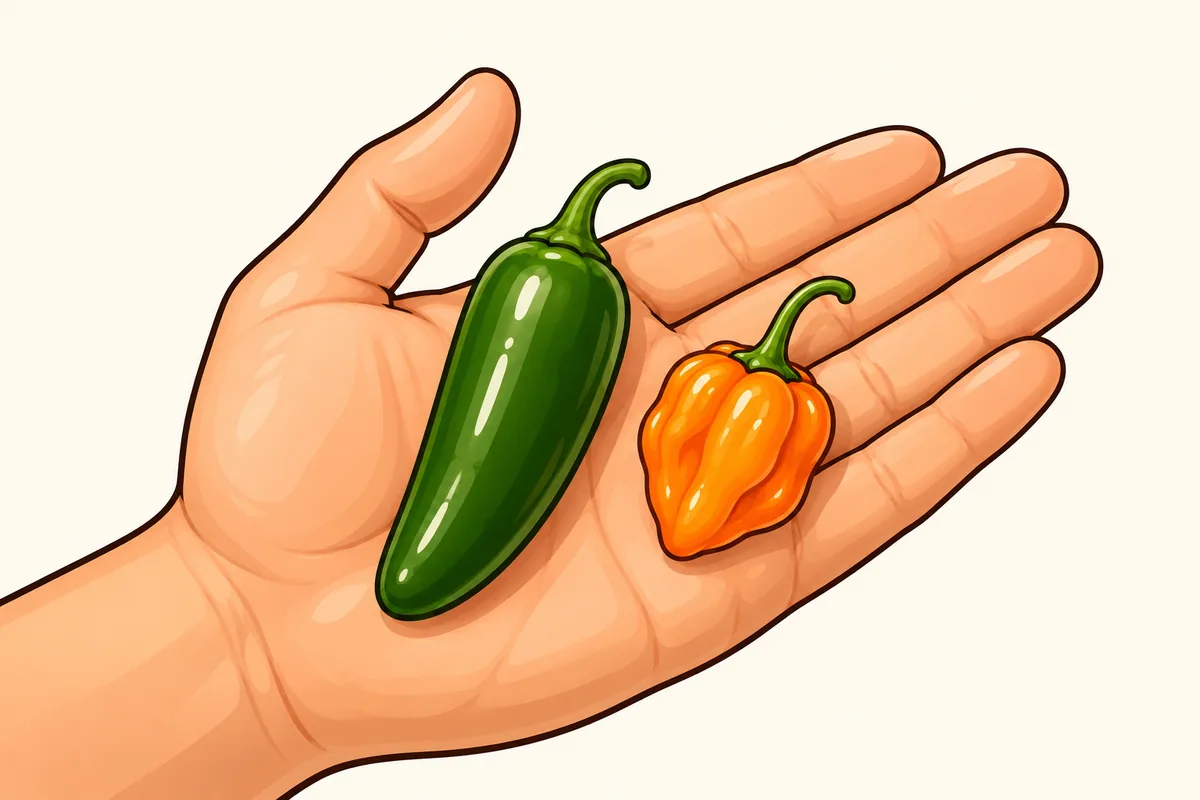
Per gram, yes; per pod, not always, and that difference matters when you cook. Labs measure SHU on a dried, ground sample, so the figure describes how concentrated the heat is7. How much heat lands in your pot also depends on how big the pod is and which parts of it you keep.
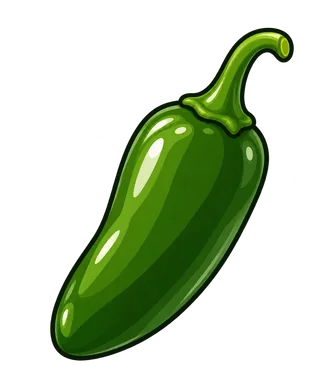
Jalapeño
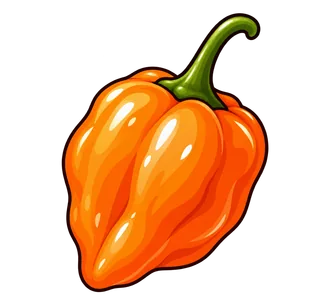
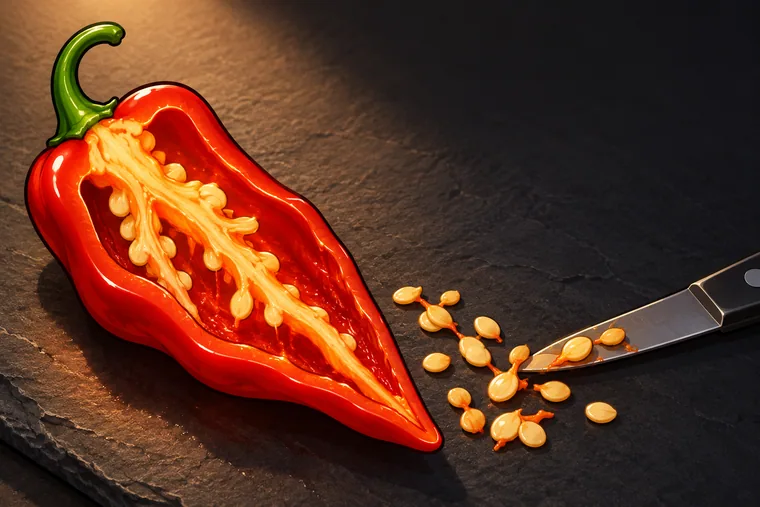
So a small habanero still outweighs a big jalapeño by a wide margin, because the gap in concentration is far larger than the gap in size. Where the heat sits matters just as much: about 89 % of a chile's capsaicin sits in the placenta, the pale tissue that holds the seeds, and only 5 to 6 % in the wall1.
How do labs turn a measurement into SHU?
Labs measure the capsaicinoids in a dried, ground sample by HPLC, in parts per million (ppm), then multiply the ppm by 167. That gives you a figure on the same scale Scoville's tasters used, without the tasters.
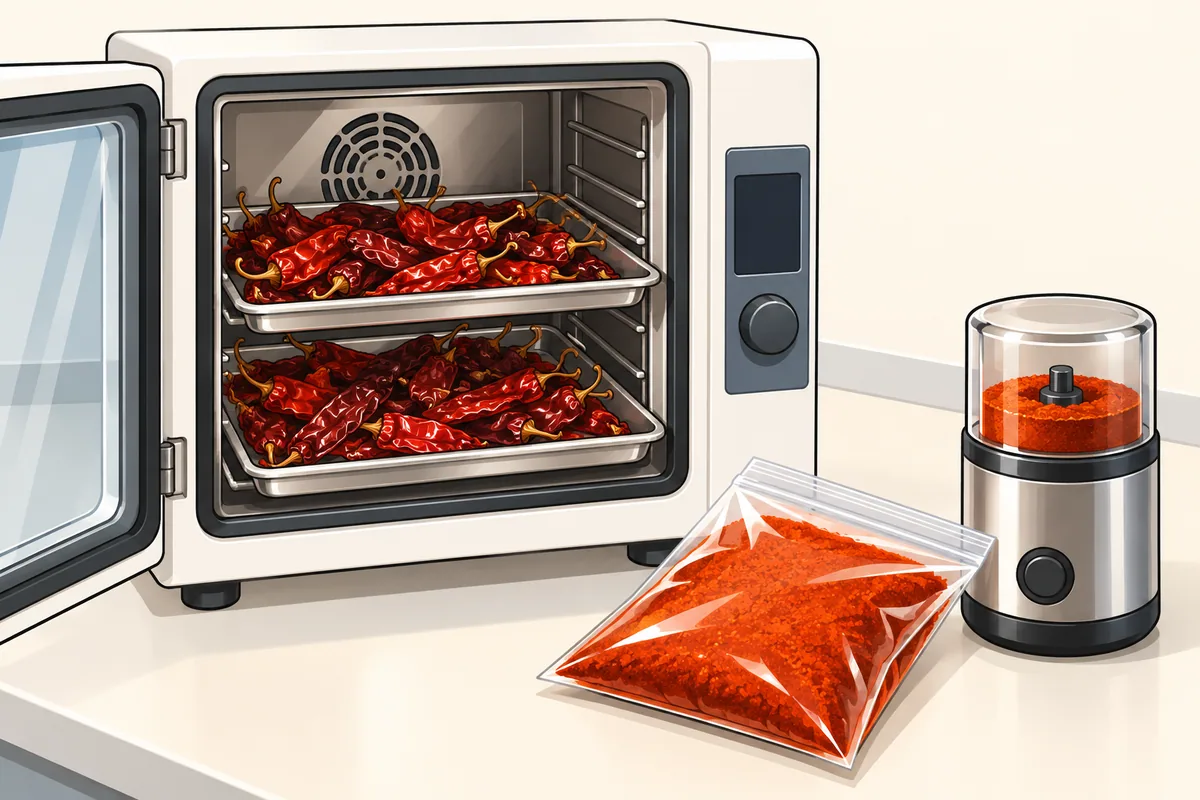
- Dry the fruitOven at 60 °C for 2 to 5 days in the 2014 study
- Grind to powderA laboratory mill, then sealed bags
- ExtractPowder in acetonitrile at 1 to 10, four hours in an 80 °C water bath
- Separate and measureCapsaicin and dihydrocapsaicin peaks
- Parts per millionCapsaicin plus 0.82 times dihydrocapsaicin
- SHUppm times 15 (ASTA) or times 16 (NMSU)
The table works the arithmetic for four samples you will meet on our pages.
| Sample | Capsaicinoids | Arithmetic | SHU |
|---|---|---|---|
| Pure capsaicin | 1,000,000 ppm (100 %) | 1,000,000 × 16 | 16,000,000 |
| Ghost pepper, 2005 trial | about 62,600 ppm | 1,001,304 ÷ 16, worked back | 1,001,304 |
| Habanero, top of range | about 21,900 ppm | 350,000 ÷ 16, worked back | 350,000 |
| Jalapeño, average | about 310 ppm | 5,000 ÷ 16, worked back | about 5,000 |
The top row is the check. At 100 % capsaicin the formula lands on 16,000,000 SHU, the rating the 2014 Molecules study gives pure capsaicin6.
Why do some labs use 15 instead of 16?
Not every lab uses the same factor. The 2014 Molecules study multiplied by 15 and took its formula from the American Spice Trade Association's official methods6, while the New Mexico researchers used 167.
The gap is about 6 %. The same sample that reads 1,000,000 SHU with 16 reads 937,500 with 15, so when two lab figures for one pepper differ by that much, the factor may be the whole story6.
Which compounds go into the number?
Mostly two. Capsaicin and dihydrocapsaicin make up over 90 % of the capsaicinoids in a chile fruit, and the 2014 study found those two drove its SHU ratings6. Its formula counted both, with each part of dihydrocapsaicin weighted at 0.82 of a part of capsaicin.
So SHU is a count of capsaicin and its close relatives, nothing else. Your pepper's sweetness, smoke or fruit never shows up in it, and neither does how fast the burn arrives or how long it stays; why peppers are spicy covers what happens in your mouth.
How do SHU numbers turn into words like mild or hot?
Science papers attach words to SHU ranges, and you will run into those words in studies and on our sources' pages. The Heliyon review uses five, listed here with a pepper from our index in each1.
| Word | SHU | A pepper in that range |
|---|---|---|
| Non-pungent | 0–700 | Bell pepper, 0 |
| Mildly pungent | 700–3,000 | Poblano, 1,000–2,000 |
| Moderately pungent | 3,000–25,000 | Serrano, 10,000–25,000 |
| Highly pungent | 25,000–70,000 | Cayenne, 25,000–50,000 |
| Very highly pungent | Above 80,000 | Habanero, 100,000–350,000 |
Look closely and you will spot a gap: the review leaves 70,000 to 80,000 SHU without a word1. A Thai pepper at 50,000 to 100,0005 runs straight across it, which is one reason we draw our own five bands from midpoints instead.
Is SHU the same as an ASTA pungency unit?
They measure the same thing, and Guinness accepts both: its hottest-chilli rules say Guinness measures the record in SHU and in American Spice Trade Association pungency units, both of which reflect capsaicin concentration9.
When you see a figure in ASTA units, check which factor the lab used before you compare it with an SHU number. The ASTA-based formula in the 2014 study multiplies by 156, so an ASTA-method result and an NMSU-method result for the same powder sit about 6 % apart.
Why is it called a Scoville heat unit?
The unit you read on every chart carries the name of the man who designed your pepper's test. Wilbur L. Scoville worked as a pharmacist at the Parke, Davis & Co. laboratory in Detroit, and he set out his dilution method in a 1912 note in the Journal of the American Pharmaceutical Association4.
His reason still makes sense if you have ever tasted a chile. Scoville wrote that the tongue picked up capsicum heat more finely than the analytical balance of his day could weigh it, and that the taste test was the only one he had found satisfactory4. The story of Wilbur Scoville follows the rest of his career.
So when you read "SHU," read it as "Scoville's dilution, in units." The labs dropped his tasters long ago, but they kept his scale, so you can still line up a 1912 figure and a 2023 record on one chart.
Encyclopaedia Britannica made this 70-second video on how science rates spicy heat, so you can see the whole idea of the scale in one short clip before you check a number.
Why doesn't your pepper match its SHU number?
Because an SHU figure describes pods someone else grew and tested. Your pepper can land well above or below it for reasons you can often spot:
- It grew somewhere else. NMSU breeders say genes, weather, growing conditions and fruit age all change heat, and published levels vary by year and place11.
- It came from a hot plant. In NMSU's 2012 super-hot trial, two Trinidad Moruga Scorpion plants passed two million SHU, and heat ranged widely across field plots12.
- You ate a different part. A bite of wall with no rib carries a small share of the capsaicin, since only 5 to 6 % sits in the wall1.
- The number was a range top. A habanero's 350,000 is the hottest end of its range5, and many pods sit lower.
- Two labs, two factors. A 15 or a 16 in the formula moves the result by about 6 %6.
Before you trust an SHU number
- Is it a range, a lab mean or a rounded figure? A range covers many pods; a mean comes from one harvest.7
- Where and when did the pods grow? Genes, weather, growing conditions and fruit age all change heat, so published levels vary by year and place.11
- Is it an average or a single pod? The Pepper X record is an average across specimens from four years of tests.8
- Which conversion factor did the lab use, 15 or 16?67
- Was the sample dried? Lab figures come from dried, ground fruit, so they describe heat per gram of dried fruit, not per gram of a fresh slice.67
When two figures still disagree after these checks, put them side by side on our chart: on a log axis a 6 % gap from the conversion factor barely moves a bar, so a gap you can see usually means a different harvest or a different kind of figure6.