On this page
- 1Do the seeds hold the heat, or the ribs they hang from?
- 2How much capsaicin is in seeds compared with ribs and wall?
- 3Where does the heat go inside a chile pod?
- 4Why do super-hot walls burn even with the seeds gone?
- 5Can you eat pepper seeds, and what happens if you do?
- 6How to scrape a chile so most of the heat comes out
- 7Should you leave the seeds in salsa, chili or a batch for drying?
- 8Which parts should you keep for the heat you want?
- 9Why do chiles put their heat right next to the seeds?
- 10What goes wrong when you deseed a chile
- 11Your next step after you deseed
- 12Sources
Do the seeds hold the heat, or the ribs they hang from?
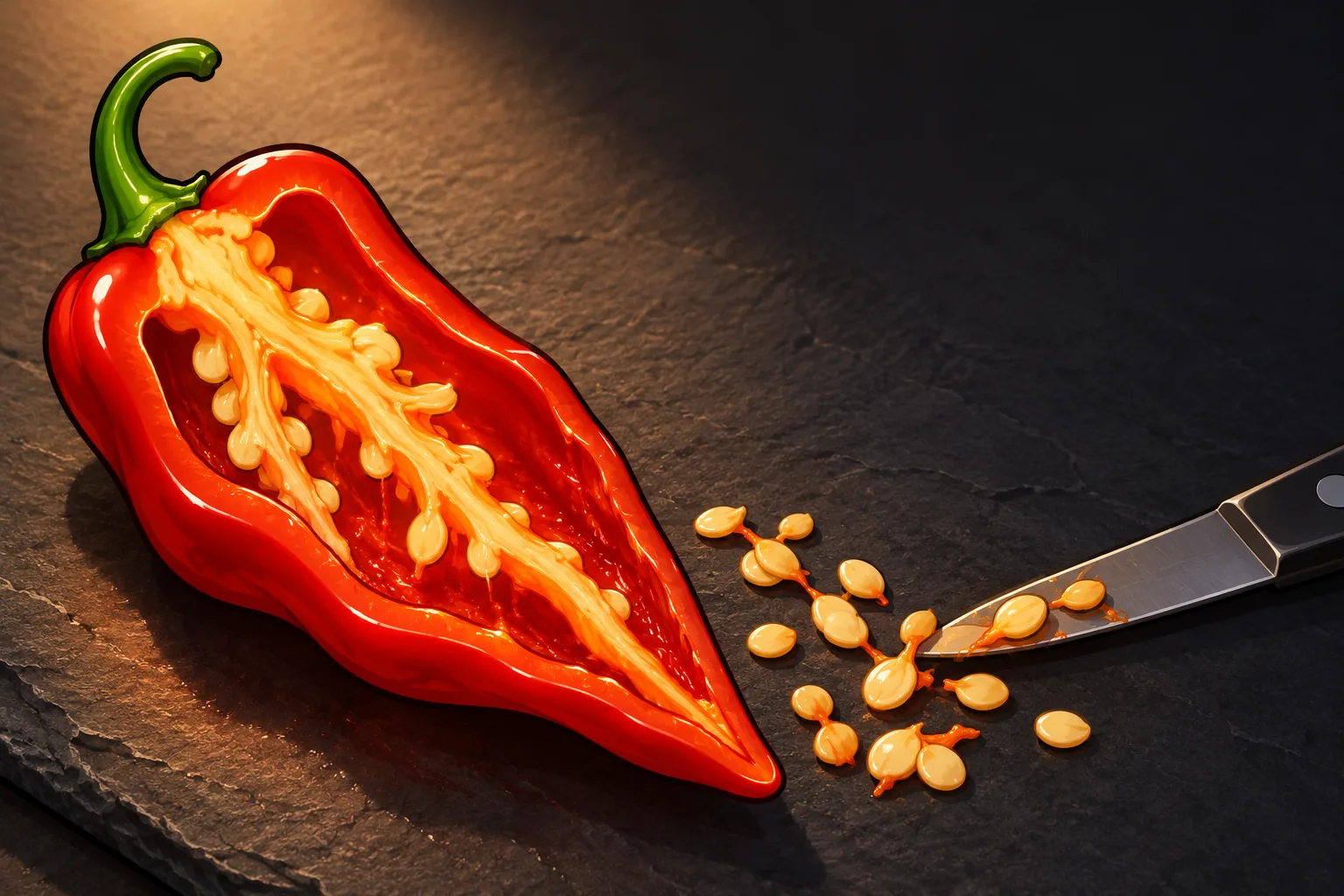
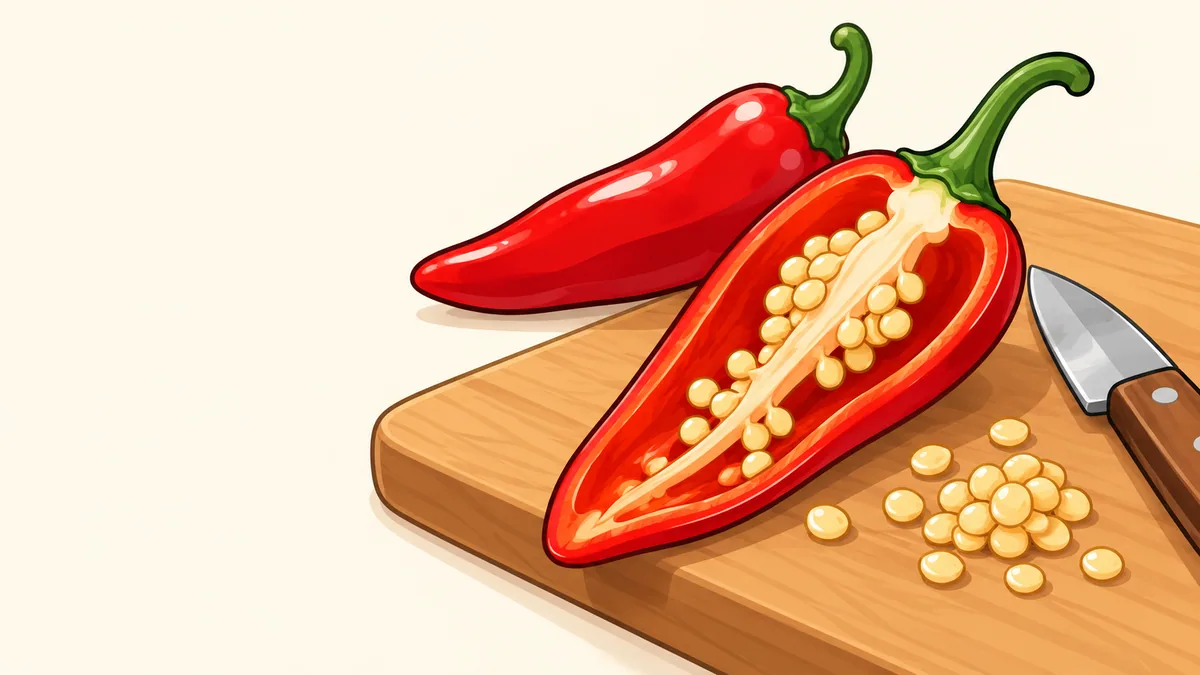
The ribs. That pale, spongy strip down the middle of the pod, the placenta, holds about 89 % of a chile's capsaicin, while the red wall holds only 5 to 6 %1. The seeds hang off that strip, so they pick up some heat, but they never make it themselves.
The same 2024 review explains why the strip runs so hot: capsaicin forms and builds up in tiny vesicles in the outer cells of the placental tissue1. A 2015 study put it even more plainly. Most chile peppers, the jalapeño included, make capsaicinoids only in vesicles on the placenta2.
So when someone tells you the seeds are the hot part, they have the right neighbourhood and the wrong house. The seeds borrow their heat; the ribs make it. Our heat science hub covers why that heat feels like a burn at all.
How much capsaicin is in seeds compared with ribs and wall?
Measurably less than in the ribs, and in the hottest species less than in the wall too. A Slovenian team split chiles from four species groups into placenta, wall and seeds and measured each part by dry weight3. In every species, the placenta came out on top, then the wall, then the seeds.
| Species group | Placenta | Wall | Seeds | Placenta ÷ seeds |
|---|---|---|---|---|
| Capsicum chinense (habanero group) | 2,600 | 1,738 | 748.7 | about 3.5× |
| C. chinense × C. frutescens | 3,004.3 | 1,809.2 | 1,135.4 | about 2.6× |
| C. annuum and C. baccatum | Lowest of the four groups | Lowest | Lowest | Same order: placenta, wall, seeds |
The two hottest groups carried 3.5 to 5 times more capsaicinoids than the other two3. The hottest single cultivar in the study, the Carolina Reaper, reached 7,334.3 mg per 100 g dry weight3, so even its seeds sit far above anything a bell pepper carries.
Why share and concentration both matter
The 89 % and the table measure two different things, and you need both. The 89 % is a share of the pod's total capsaicin across chiles in general; the table is how concentrated each part is, gram for gram, in the hottest species13. Those species are the ones whose walls make heat of their own, which is why their wall figures sit so close to the rib2.
Work it through for a habanero-type chile from the table. A gram of dried placenta carries about 26 mg of capsaicinoids, a gram of dried seed about 7.5 mg. Pick out the seeds alone and leave the rib, and you have removed the milder part of the core while keeping the hottest.
Why do the seeds taste hot at all?
Because they grow pressed against the producing tissue. The seeds have no capsaicin vesicles of their own in most chiles2, so the 748.7 mg the study found in C. chinense seeds most likely came from the rib they hung on3. That is also why a seed you scrape off a rib tastes hotter than you expect: it often carries a smear of placenta with it.
MyRecipes made this under-a-minute clip on whether chile seeds hold all the heat, so you can see a cook cut a pod open and point at where the heat sits, as a quick check on the numbers above.
Where does the heat go inside a chile pod?
From the rib outward. This tree follows the capsaicin from where the plant makes it to the parts that end up in your pan.
- Placenta (pale rib)About 89 %, made here in vesiclesHot
- contactSeedsCarry what touches them; lowest per gram in the 2021 study
- contact
- Red wall5–6 % in most chiles
- in super-hotsSuper-hot wallHas its own vesicles, so it burns tooSuper-hot
- in super-hots
Sources for this line1. Heliyon (Cell Press)2. Journal of the American Society for Horticultural Science 140(3):253-2563. Scientific Reports 11:4932
For a jalapeño at 2,000 to 8,000 SHU5, the left branch is the whole story: take the rib out and most of the heat leaves with it. The right branch only matters once you reach the super-hots.
Why do super-hot walls burn even with the seeds gone?
Because super-hots make capsaicin in the wall as well. Bosland's team compared super-hot chiles with jalapeño and bell pepper and found that the super-hots, rated above 1 million SHU, had grown extra capsaicinoid vesicles on the pericarp in addition to those on the placenta2. The study tied that second source directly to their extreme heat ratings.
That changes your prep. With a jalapeño you can scrape a half clean and get a mild pepper; with a Trinidad Moruga Scorpion or a Reaper, the clean half still burns because the flesh itself carries capsaicinoids. The table backs this up: in the C. chinense group, the wall held 1,738 mg per 100 g dry weight, more than twice the seeds3.
You can find the full band of these chiles, sorted by heat, on the super-hot peppers page.
Can you eat pepper seeds, and what happens if you do?
Seeds are part of the same pod you were already going to eat, and the poison center's guidance on hot peppers deals with the capsaicin dose, not with seeds as a separate risk6. A spoonful of jalapeño seeds adds a little heat; a spoonful of super-hot seeds adds a lot, because they sit against a much hotter rib.
Too much hot pepper of any kind can bring nausea, vomiting, stomach pain, diarrhea and a burning feeling6. With very hot peppers, the irritation can last several hours, and for some people days7. If your mouth is burning, small sips of milk or water may help, the poison center says6; in a 72-person test, whole and skim milk cut the burn the most of the drinks tried8.
How to scrape a chile so most of the heat comes out
Run a spoon down the rib, not a knife around the seeds. Since the rib holds the bulk of the capsaicin1, the goal is to lift it out in one strip with the seeds still attached.
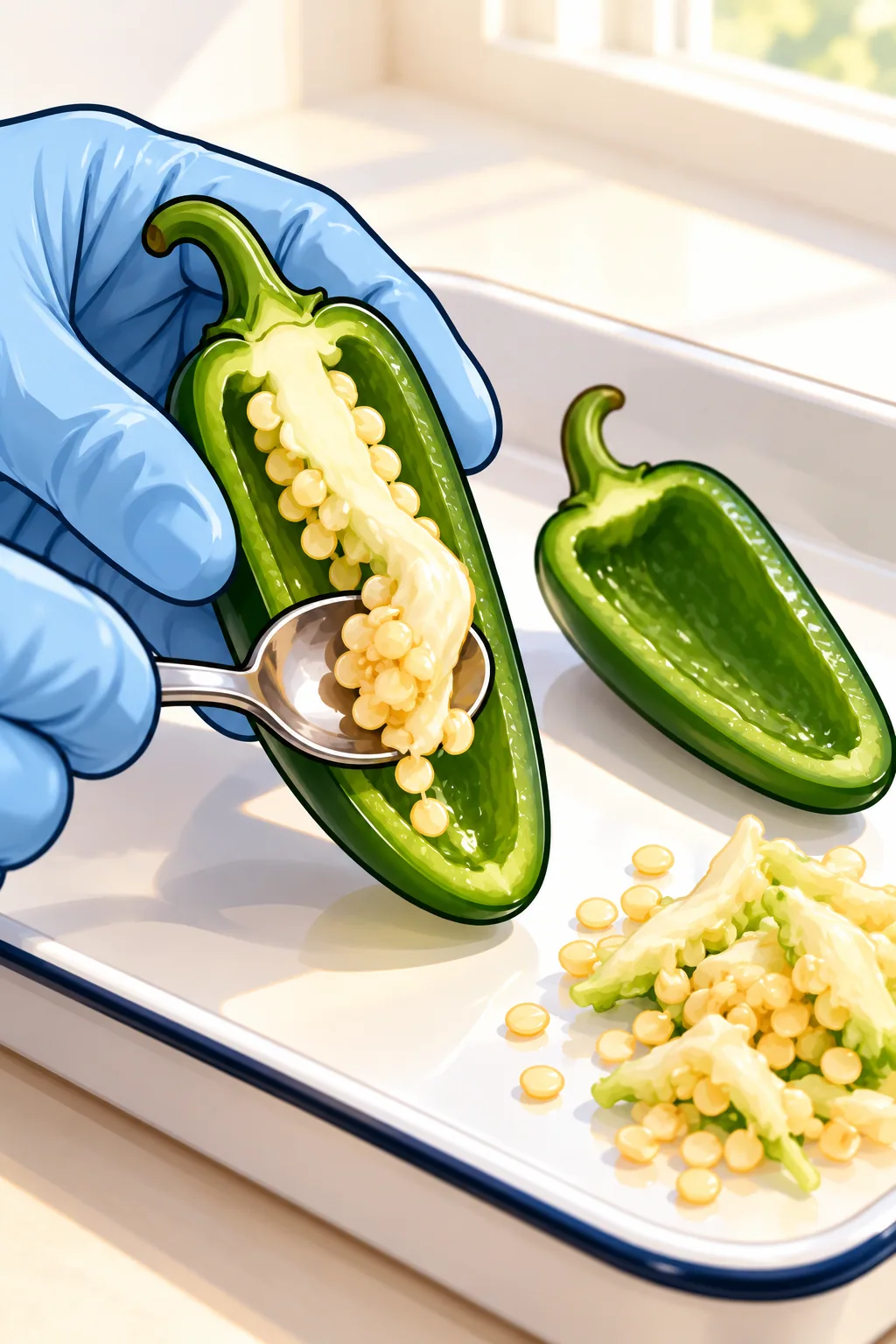
- 1
Put on gloves
Capsaicin on your fingers is the usual way heat reaches your eyes; the poison center's first step for eyes is 15 minutes of rinsing with warm water.6
- 2
Halve the pod lengthwise
Cut from stem to tip so the pale rib lies open along the middle of each half.
- 3
Scrape the rib with a spoon
Start at the stem end and push the bowl of a teaspoon under the rib, lifting it and the seeds out together.
- 4
Check the wall
Look for any pale streaks left on the flesh and scrape them off. In most chiles the clean wall holds only 5–6 % of the capsaicin.1
- 5
Taste a sliver
Try a tiny piece of the cleaned half before you add the rest to the pot, so you know what you are working with.
The cutting hot peppers guide covers knife work and board cleanup in full.
Should you leave the seeds in salsa, chili or a batch for drying?
For heat alone, the seeds barely move your result; the rib decides it. If you blend a salsa with the seeds in, you add the least concentrated part of the core3, so your salsa tastes about as hot as it would with the rib in and the seeds out. If you want your salsa milder, take the rib out, and the seeds come with it anyway.
Drying is the one place where you take everything out for a practical reason. University of California's preserving guide tells you to remove seeds, stems and membranes from large peppers before you dry them in a dehydrator or oven, and to keep the temperature at or below 140 °F9. You get faster, more even drying, and you lose the hottest strip of the pod along the way, so your dried pieces come out milder than the whole fresh pepper you started with.
For a pot of chili or a curry, your call depends on what you have. With jalapeños, leaving the seeds in costs you nothing worth worrying about. With habaneros, scrape the rib first and add your pepper a little at a time, since even its seeds sit against a rib that held 2,600 mg per 100 g dry weight in the 2021 tests3.
Which parts should you keep for the heat you want?
Decide by how much heat you want left, then cut to match. This table uses the share and concentration figures above.
| You want | What to do | Why it works |
|---|---|---|
| The pepper's full heat | Keep rib, seeds and wall | Nothing leaves; the rib alone holds about 89 % of the capsaicin |
| A little less heat | Remove the seeds, keep the rib | Seeds hold the least per gram, so the drop is small |
| Mostly flavor, little heat | Scrape out rib and seeds together | The rib goes, and most of the capsaicin goes with it |
| A super-hot you can handle | Scrape everything and use a small piece | The wall has its own vesicles and stays very hot |
Most people who want "less heat" stop at removing seeds, and that row tells you why the result surprises them. If a recipe tells you to seed a pepper for a milder dish, read it as "seed and de-rib."
Why do chiles put their heat right next to the seeds?
To pick who spreads them. Tewksbury and Nabhan found that capsaicin puts off the animals that destroy chile seeds while it leaves the birds that disperse them alone10. Packing the heat around the seeds protects exactly the part the plant needs to survive a meal.
For you, that means the hottest bite of a chile and the part the plant guards hardest are the same strip. The capsaicin page covers the molecule itself and its relatives.
What goes wrong when you deseed a chile
Most surprises come from leftover rib, from super-hot walls, or from your hands.
If the dish still came out too hot
- Pale streaks left on the wall. Any rib you missed still carries the most concentrated heat in the pod.3
- You removed seeds but kept the rib. Seeds hold the least capsaicin per gram, so taking only them changes little.3
- It was a super-hot. The wall makes capsaicinoids of its own, so a clean half still burns.2
- Your eyes sting an hour later. Capsaicin stays on bare skin; for eyes, rinse with warm water for 15 minutes.6
- The pod ran hotter than its label. A jalapeño ranges from 2,000 to 8,000 SHU, so two pods from one bag can differ a lot.5
Your next step after you deseed
If the pot already came out too hot, taming a dish that's too spicy gives you fixes by type of dish. If your hands burn after the scrape, the burning hands page has the poison center's skin steps in order.