On this page
- 1How do you work out your planting date?
- 2When should different regions plant out?
- 3Is your average last frost date a coin flip?
- 4How much lead time do superhots need?
- 5How do you know it is warm enough?
- 6When should you harden off seedlings?
- 7Should you buy transplants or start from seed?
- 8How many frost-free days does your pepper need?
- 9What happens if you plant late?
- 10How old should transplants be on planting day?
- 11Can you plant peppers earlier than that?
- 12What if frost comes after you plant?
- 13What if you live where frost is rare?
- 14Your planting-out day
- 15Sources
How do you work out your planting date?
Find your average last spring frost and count from it. Seeds go in 8 to 10 weeks before that date1, and plants go outside 2 to 3 weeks after it, once the soil has reached at least 60°F2. Everything else in your season hangs off those two steps.
- 8–10 weeks before the frost
Sow seeds indoors. Some types and cultivars need 12 weeks.1
- 1–4 weeks after sowing
Seedlings come up in 8–25 days at a soil temperature of 70–85°F.2
- About 2 weeks before planting out
- 2–3 weeks after the frost
- 70–85 days after planting out
First harvest for most sweet and hot types.1
- 90–120 days after planting out
Habanero types ripen.1
Sources differ on the indoor stretch, so you have some choice. UMN Extension counts about eight weeks back from the day you plant out rather than from the frost3, and UC IPM gives 4 to 6 weeks before the frost4. The 8–10 week figure from UMD and Penn State gives you the bigger, sturdier plant, and Utah State also grows its transplants for 8 to 10 weeks5. The seed starting calendar counts those weeks back for you.
Your USDA zone does not give you this date. A zone measures the coldest winter night, not the day of the last spring frost; the pepper growing zones hub explains the difference, and your county extension office has the local frost date.
What does that look like on a real calendar?
Here are the same offsets worked for two sample frost dates, an April 20 frost and a May 25 frost. Swap in your own date and count the same way.
| Step | Offset | Last frost April 20 | Last frost May 25 |
|---|---|---|---|
| Sow, slow types1 | 12 weeks before | January 26 | March 2 |
| Sow, most types1 | 10–8 weeks before | February 9–23 | March 16–30 |
| Plant out2 | 2–3 weeks after | May 4–11 | June 8–15 |
| First harvest, most types1 | 70–85 days after planting | July 13 – August 4 | August 17 – September 8 |
| Ripe habanero types1 | 90–120 days after planting | August 2 – September 8 | September 6 – October 13 |
The late frost pushes every date back five weeks. With a late frost, the slow peppers need warm weather well into October, so start them first and give them the sunniest spot. UMN Extension notes that pods ripening in cool, cloudy weather do not taste as good3. If your summers run that short, the short-season varieties list picks peppers that finish sooner.
When should different regions plant out?
Each state's extension service publishes its own window, and they line up with the frost-date rule you already have. Here are the ones read for this guide, so you can check yours against a neighbor.
| Region | Plant out |
|---|---|
| South Carolina Piedmont6 | May 1 – June 30 |
| South Carolina coast6 | April 1 – May 15; fall planting July 10 – August 10 |
| California north and north coast4 | May |
| California south coast4 | April – May |
| California interior valleys4 | March – June |
| California desert valleys4 | March |
| South Florida7 | August – February |
UC IPM calls its dates approximate, because the climate can vary a lot inside one region, and suggests you check with your local Master Gardener program4. Clemson does not recommend fall planting in the Piedmont at all6, so a second crop only works where the season runs long on both ends.
New Mexico State gives no calendar dates in its garden guide; it waits until after the last frost and until the soil warms8. That is the same rule this page uses, stated without the numbers.
Is your average last frost date a coin flip?
Close to it. NOAA's map shows the date after which freezing becomes less likely than not, a 50 percent line, based on the 1991-2020 normals9. Half of all years still see a freeze after that date, so the frost date you looked up is a starting point, not a promise.
The same normals also give the dates after which the chance of a freeze falls below 40, 30, 20 and 10 percent9. Climate.gov uses Boulder, Colorado as its example: the 50 percent date is May 6, and a gardener who wants only a 10 percent risk waits until after May 189. That is 12 days of difference in one town.
- 1
Look up your own 50 percent date
Open the Annual/Seasonal Normals page at NOAA's NCEI, choose the freeze-date data, and find your nearest station.9
- 2
Find the 10 percent date next to it
It always falls later. The gap tells you how risky early planting is where you live.9
- 3
Add the pepper buffer
Penn State plants out 2 to 3 weeks after the last frost, with the soil at 60°F or warmer.2
- 4
Check the forecast the week you plant
NOAA suggests the 6 to 10 day outlook and your local forecast, because a normal says nothing about this year.9
Run the Boulder numbers and the buffer does the work for you. May 6 plus 2 weeks is May 20, already past the 10 percent date of May 18. That is our arithmetic on two published figures, but it shows why the 2 to 3 week wait in the timeline above is more than caution: it moves your planting date past the unlucky tail of the frost odds. In a town where the 10 percent date sits more than 3 weeks after the 50 percent date, give the soil thermometer more say than the calendar.
How much lead time do superhots need?
About 12 weeks indoors, the long end of the range. UMD says some pepper types need 12 weeks before the frost1, and the slow Capsicum chinense peppers, habaneros and superhots, also take 90 to 120 days from transplant to ripe1. Your superhot gets a head start on both ends or it runs out of summer.
With an April 20 frost, that means you sow on January 26 and plant out with everything else in early May. The Carolina Reaper plan works the full season for one of them, including the seed tray that can take up to four weeks to show.
How do you know it is warm enough?
The calendar gets you close; your soil and the night air decide the day. Run these checks in order on the morning you plan to plant.
- 2–3 weeks past your frost date?Penn State's transplant window
- Soil 60°F or warmer?Read a soil thermometer at planting depth
- Night lows above 50°F?Check the 10-day forecast
- Plants hardened off?A week or two outside, flowers pinched off
- Plant out todayLate afternoon or a cloudy day
- Wait a few daysBelow 65°F soil, UMD says plants just sit there
Sources for this line1. University of Maryland Extension2. PlantVillage, Penn State University3. University of Minnesota Extension5. Utah State University Extension
- The soil reads at least 60°F at planting depth. UMD says plants set into soil below 65°F just sit there.12
- Night lows stay above 50°F.3
- The seedlings have spent a week or two hardening off outside.3
- Transplants are stocky and dark green, 5–8 inches tall with 6–9 leaves. Pick off any flowers or fruit first; plants that carry them establish slowly.5
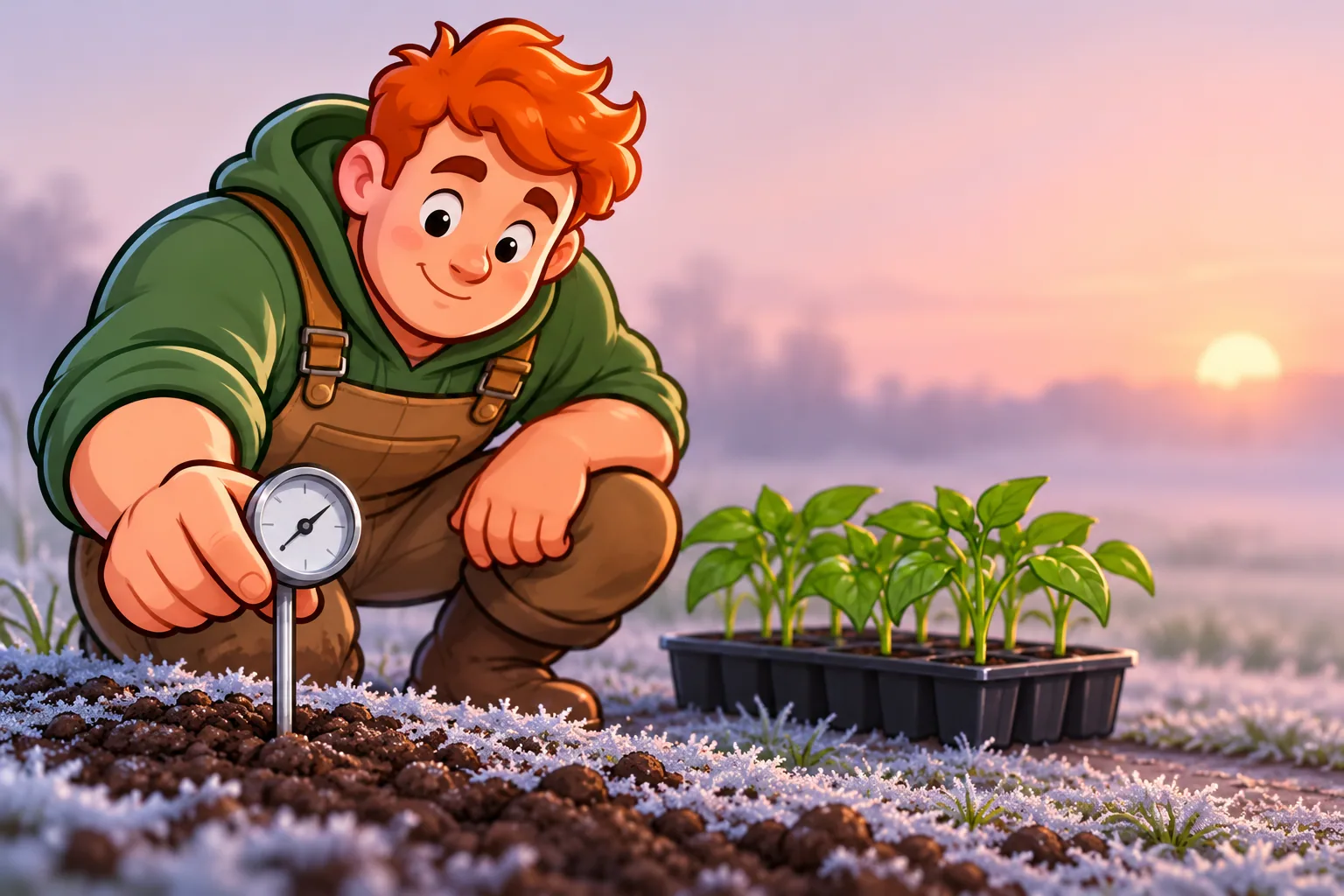
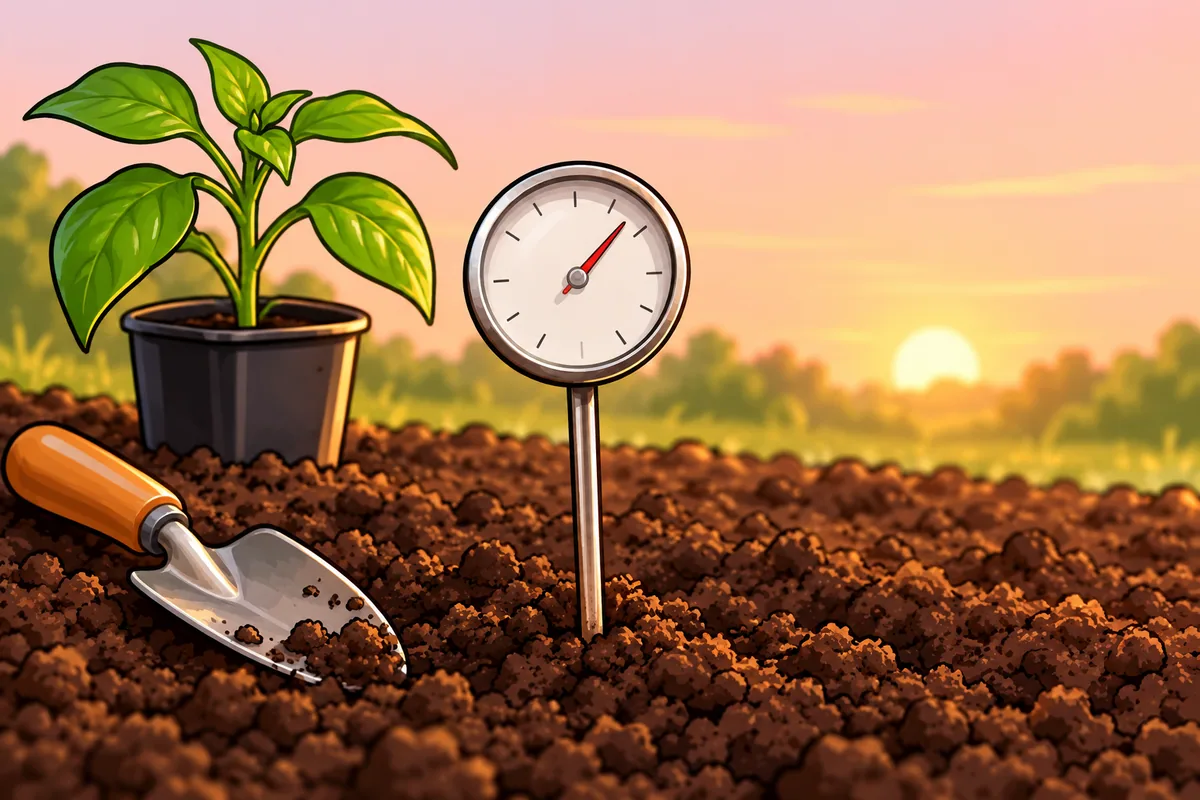
A soil thermometer settles it in a minute. A warm afternoon says little about the soil a few inches down, which is why Penn State and UMD set planting day by soil temperature. Push the probe in about 4 inches in the morning, when the soil runs coolest, and you get the number that matters.
When should you harden off seedlings?
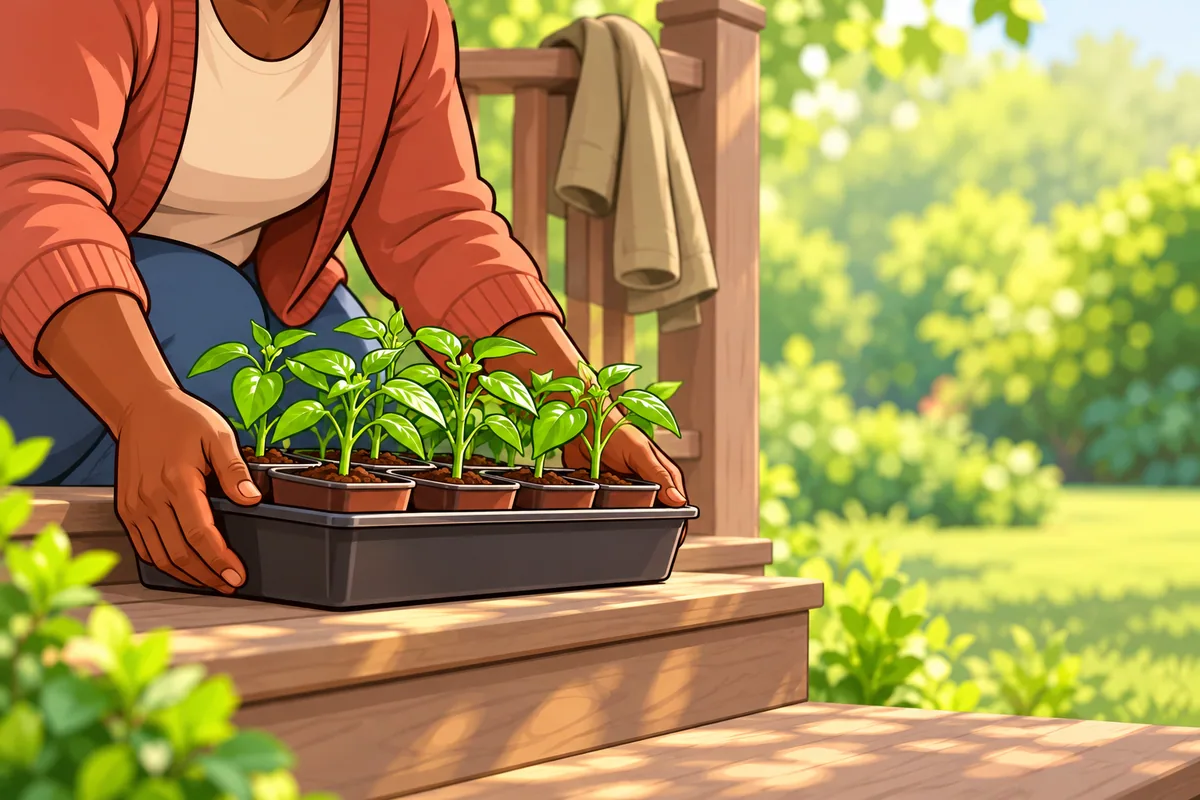
Start about two weeks before your planting date, while your plants still live indoors. UMN Extension cuts back water once plants are 4 to 5 inches tall and 6 to 8 weeks old, then moves them outside a little more each day over a week or two3; Penn State starts 7 to 10 days ahead2.
- 1
Ease off the water
Once plants are 4–5 inches tall and 6–8 weeks old, water a little less.3
- 2
Start with a couple of hours
Set the tray in a sheltered spot outside for a couple of hours of sun on the first day.3
- 3
- 4
Bring them in on cold nights
If the night drops below 55°F, the tray comes back inside.3
The hardening off guide covers wind, sun and what a scorched leaf looks like. If you skip this week, plants that have only known a windowsill or grow light go into full sun and wind at once, and they stall while they adjust.
Should you buy transplants or start from seed?
Either works if you time it to your frost date. The compare below shows what each one asks of you.
Buy transplants
Start from seed
Sowing straight into the garden is the third option, and the slowest. UC IPM puts the ideal soil for direct seeding at 77°F or above4, which most northern gardens reach only in early summer, so transplants win for you in most places.
How many frost-free days does your pepper need?
Count the days between planting out and your first fall frost, then compare them with the days your pepper needs. Maryland gives most sweet and hot types 70 to 85 days from transplanting to first harvest, a bell pepper 70 to 80 days to mature green plus 2 to 3 weeks more to ripen, and habanero types 90 to 120 days1. Penn State puts planting out 2 to 3 weeks after the last frost2.
| Frost-free season | Days left after planting out | Most types | Bells to ripe | Habanero types |
|---|---|---|---|---|
| 120 days | 99–106 | Enough: 70–85 | Close: 84–101 | Short: 90–120 |
| 150 days | 129–136 | Enough: 70–85 | Enough: 84–101 | Enough: 90–120 |
| 180 days | 159–166 | Room for a second picking | Enough: 84–101 | Enough: 90–120 |
A 120-day season is where the choices start to matter. You pick the pepper that fits, start a superhot indoors a few weeks earlier than the others, or put the plant in a pot you can move to a warm wall. Cool weather lengthens every figure, and UMN notes that pods ripening in cool, cloudy weather do not taste as good3. The short-season varieties page lists peppers built for the 120-day garden, and the fruit-set guide shows how to count back from your first fall frost.
What happens if you plant late?
You lose pods at the end of the season, not at the start. Maryland gives most sweet and hot types 70 to 85 days from transplanting to the first harvest1, so you can count forward from any planting date to see what you get.
Take Clemson's last spring date for the South Carolina Piedmont, June 306. Add 70 to 85 days and your first peppers come between September 8 and September 23. That works for a jalapeño, but a habanero type at 90 to 120 days1 would ripen from late September into late October, and only a long, warm fall gets it there.
A fall crop runs the same sum. Clemson plants coastal fall peppers from July 10 to August 106; 70 to 85 days later puts your harvest between mid-September and early November, while the coast stays warm. Inland, where Clemson does not recommend fall planting at all, the first cold nights arrive before the pods.
How old should transplants be on planting day?
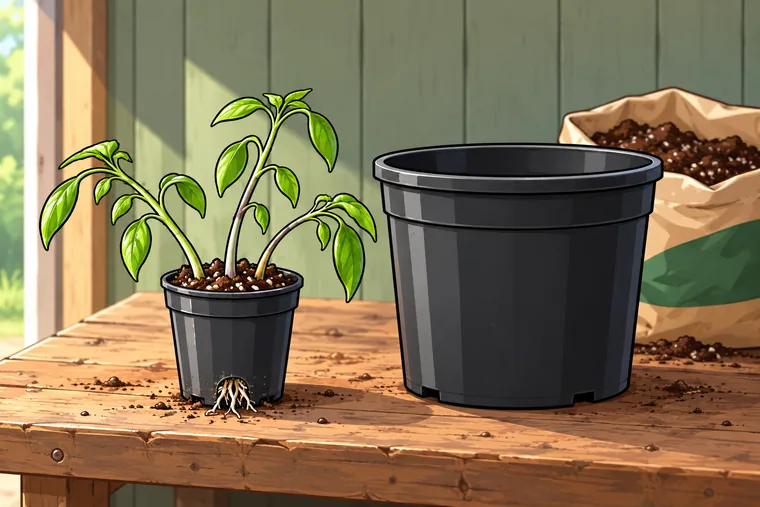
Six to ten weeks for most home-grown plants, depending on the guide you follow. Utah State grows transplants for 8 to 10 weeks, until they have 6 to 9 mature leaves5; Clemson sets out 6 to 8 week-old plants6; New Mexico State needs 6 to 8 weeks from seeding to transplant size8.
UC IPM is the outlier. It uses plants about 3 weeks old with 4 to 6 true leaves, wider than tall and slightly hardened off4, and starts them only 4 to 6 weeks before the frost. In a warm California spring that works; in a short northern season, the older, bigger plant gives you a head start you need.
Can you plant peppers earlier than that?
A little, with cover. Utah State Extension says black plastic mulch and row covers let you set plants out several weeks before the last frost date5, and plastic warms the soil while it keeps weeds down3.
Plant out on time
Plant early under cover
Early cover gives you its own risk. High temperatures during flowering and early fruit growth can make plants drop flowers and young fruit, so Utah State says to take covers off once the weather settles5.
What if frost comes after you plant?
Cover your plants that evening. Here is what the extension guides do at each end of the season.
- A cold night in late spring. Utah State protects young plants from cold air with hotcaps, tunnels or fabric row covers5. Peppers in pots go back inside, the same rule UMN uses for hardening off below 55°F3.
- A run of cool nights after planting. Nothing is wrong with your plants if they sit still for a week. UMD says peppers set into cool soil just sit there1; they pick up once the soil warms.
- A killing frost in fall. UMD pulls whole plants just before a killing frost and hangs them upside down in a warm place so the last pods ripen1.
The frost and cold guide covers how cold peppers can take and what frost damage looks like.
What if you live where frost is rare?
Then the summer heat sets your dates, not the frost, and you plant for the mild months. In south Florida, UF/IFAS gives a pepper planting window from August through February7, which keeps flowering away from the hottest months.
The heat limits explain the window. UC IPM says days above 100°F reduce pollination, fruit set and yield4, so in a hot climate you plant so the plants flower in the mild part of the year. The sun and heat guide covers shade and the hours peppers need.
Your planting-out day
Pick a calm, cloudy day or a late afternoon, and follow UMN Extension's order3:
- 1
Water the plants first
Soak the seedlings well before you take them out of their pots.3
- 2
Dig a hole the size of the root ball
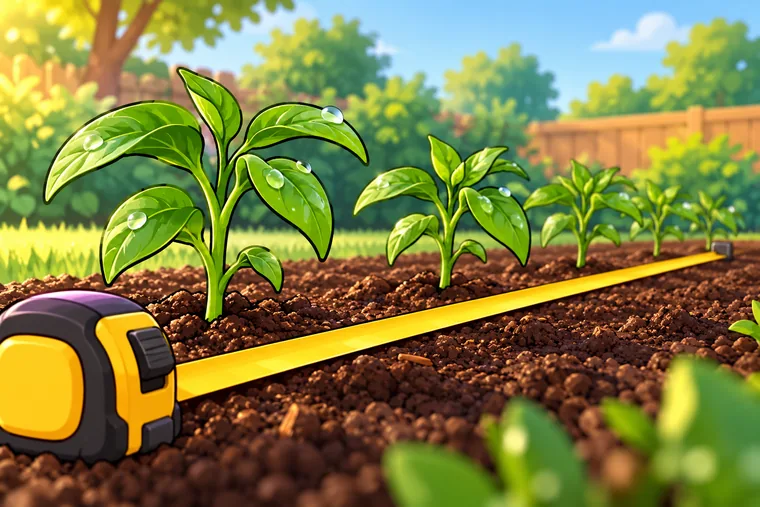
Space the holes about 18 inches apart in rows 30 to 36 inches apart.3
- 3
Set the plant at its old depth
Keep the stem at the soil line where it sat in the pot, and keep the roots undisturbed. Bury the whole rim of a peat pot so it cannot wick the root ball dry.3
- 4
Firm and water
Press the soil around the roots and water the transplant in.3
- 5
Shade a summer planting
If you plant out in hot weather, shade the plants at midday for the first week or cover them with floating row cover.4
The next jobs are feeding and spacing. The gaps for beds and rows come from pepper plant spacing, and the feeds that go in 4 and 8 weeks later from feeding peppers.