On this page
- 1Why is my pepper plant not producing fruit?
- 2Is your plant not flowering, or dropping its flowers?
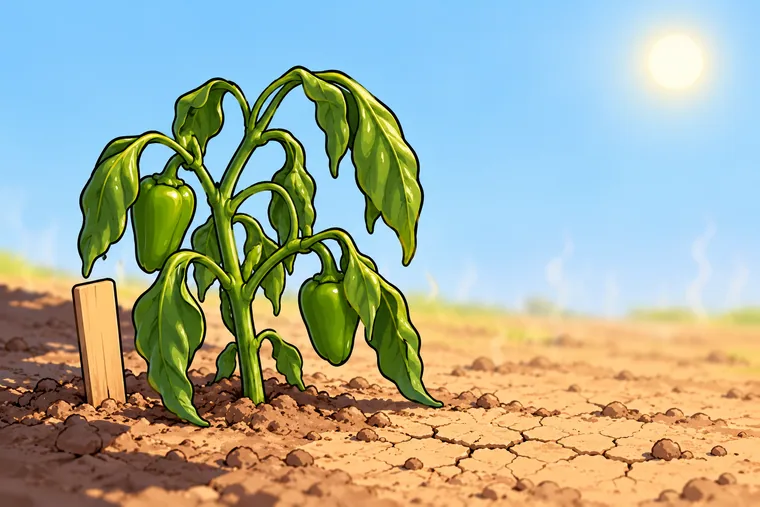
- 3Is it too hot or too cold for peppers to set fruit?
- 4Does too much nitrogen stop peppers from flowering?
- 5How long until peppers flower and fruit?
- 6Do pepper flowers need pollinating?
- 7Why does a potted pepper stop making fruit?
- 8How many peppers should one plant give you?
- 9Which flowers will not ripen before your first frost?
- 10Are thrips deforming your pepper flowers?
- 11Does picking more often give you more peppers?
- 12Should you pinch off pepper flowers?
- 13Should you wait, or change something?
- 14Getting a stalled plant to set fruit
- 15Sources
Why is my pepper plant not producing fruit?
Usually the weather, sometimes the feed, now and then the spot it grows in. Find the row that matches your plant; most of the fixes cost you little, and the first one is often to wait.
| Cause | What you see | Fix |
|---|---|---|
| Heat12 | Flowers drop in a hot spell; nights above 75°F, days above 90–95°F | Wait it out; afternoon shade; wet the leaves in hot, dry spells |
| Cold nights12 | Flowers drop early in the season when nights fall below 55–60°F | Wait for warmer nights; fruit set resumes as the weather improves |
| Too much nitrogenSources for this line1. Utah State University Extension3. New Mexico State University Cooperative Extension Service4. University of Maryland Extension | A big, bushy, dark green plant with few early fruits | Stop feeding nitrogen; side-dress only after the first fruits set |
| Dry or uneven soil15 | Flowers drop, fruit stays small, dark leathery spots on the blossom end | Water 1–2 inches a week, deep and even |
| Soil too wet for days12 | Poor flower set after a long wet spell, often in heavy soil | Water only when the soil needs it; plant in a raised bed where water stands |
| Too much shade24 | Few flowers in a spot with under 6 hours of sun | At least 6 hours of direct sun, 8–10 preferred |
| Hot, dry wind2 | Poor flower set in windy, dry weather | Shelter the plants from wind |
| Ripe fruit left on the plant2 | The plant slows down and stops setting new pods | Pick pods as they mature |
| Planted out with flowers on1 | Slow start and a poor crop | Pinch flowers and fruit off transplants before planting |
Two rows overlap with other problems you may also see. Dark leathery spots on the fruit belong to blossom-end rot, a calcium problem in the fruit tied to uneven water1, and yellowing leaves have causes of their own.
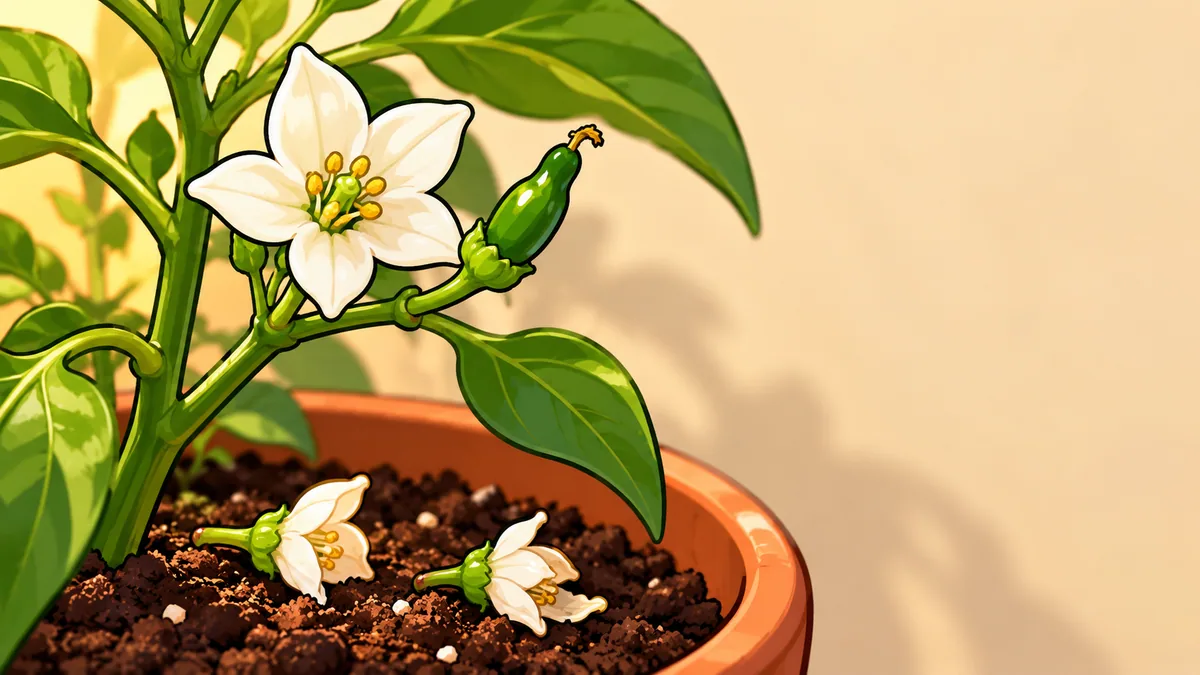
If your flowers open and then fall within a few days, the stage you are looking at has a guide of its own, with the same weather limits as the table below.
Is your plant not flowering, or dropping its flowers?
Look closely before you change anything, because your plant can fail in three different ways. A plant with no buds at all, a plant that opens flowers and drops them, and a plant that sets tiny pods that never grow each point you somewhere else.
- No flower buds at allCheck age, sun and feed first
- under 6 weeks outToo young, or flowers pinchedFirst flowers come roughly 3–6 weeks after transplanting (estimate)
- big and dark greenToo much nitrogen or shadeLarge leafy plants, few flowers (NMSU, Clemson, UMD)
- under 6 weeks out
- Flowers open, then fallFallen flowers or bare stems on the soil
- after a hot or cold weekNights or days out of rangeNights below 55–60°F or above 75°F; days above 90–95°F
- soil dried outDry or uneven soilBlossom drop and small fruit (NMSU H-240)
- after a hot or cold week
- Tiny pods that stop growingPods stay small for weeks
- hot spellHeat after the first setAbove 95°F, set stalls and gives a split set (NMSU H-230)
- uneven waterDry or uneven soilBlossom drop and small fruit (NMSU H-240)
- hot spell
Sources for this line1. Utah State University Extension2. University of Maryland Extension3. New Mexico State University Cooperative Extension Service4. University of Maryland Extension5. New Mexico State University Cooperative Extension Service6. Clemson Cooperative Extension, Home & Garden Information Center
The middle branch is the one you will see most. Flowers that fall after a week of hot nights tell you about the weather, and Utah State says the problem usually clears up as the weather improves1. A plant with no buds at all, on the other hand, is either young or busy growing leaves.
Pepper Geek explains why pepper flowers drop and what to do to get fruit to set, which pairs with that middle branch, while the weather limits in the table below stay the sourced ones.
Is it too hot or too cold for peppers to set fruit?
Often, yes, and you can check it against your own weather. Utah State says pepper fruits do not set and flowers abort when nights drop below 55°F or days pass 90°F, and that the problem usually clears up as the weather improves1. Other extension guides draw the lines a few degrees apart:
| Nights too cold | Nights too warm | Days too hot |
|---|---|---|
| Below 55°F | Not given | Above 90°F |
| Below 60°F | Above 75°F | Above 95°F |
| Below 60°F | Not given | Above 90°F |
| Mean below 55°F | Above 75°F (flowers drop) | Mean above 95°F |
| Not given | Not given | Above 100°F cuts pollination |
Read across the rows and you get a safe band: nights between about 60 and 75°F with days under 90°F. New Mexico State puts the best fruit set at days of 65 to 85°F with nights of 60 to 70°F5, and Clemson gives almost the same band, 70 to 85°F by day and 60 to 70°F at night6.
Heat can also strike halfway through. New Mexico State says that when temperatures pass 95°F after a plant has set several flowers, fruit set stalls and you get a split set: one early flush of pods, a gap, then a later flush3. That gap on your plant is the hot spell, written in peppers.
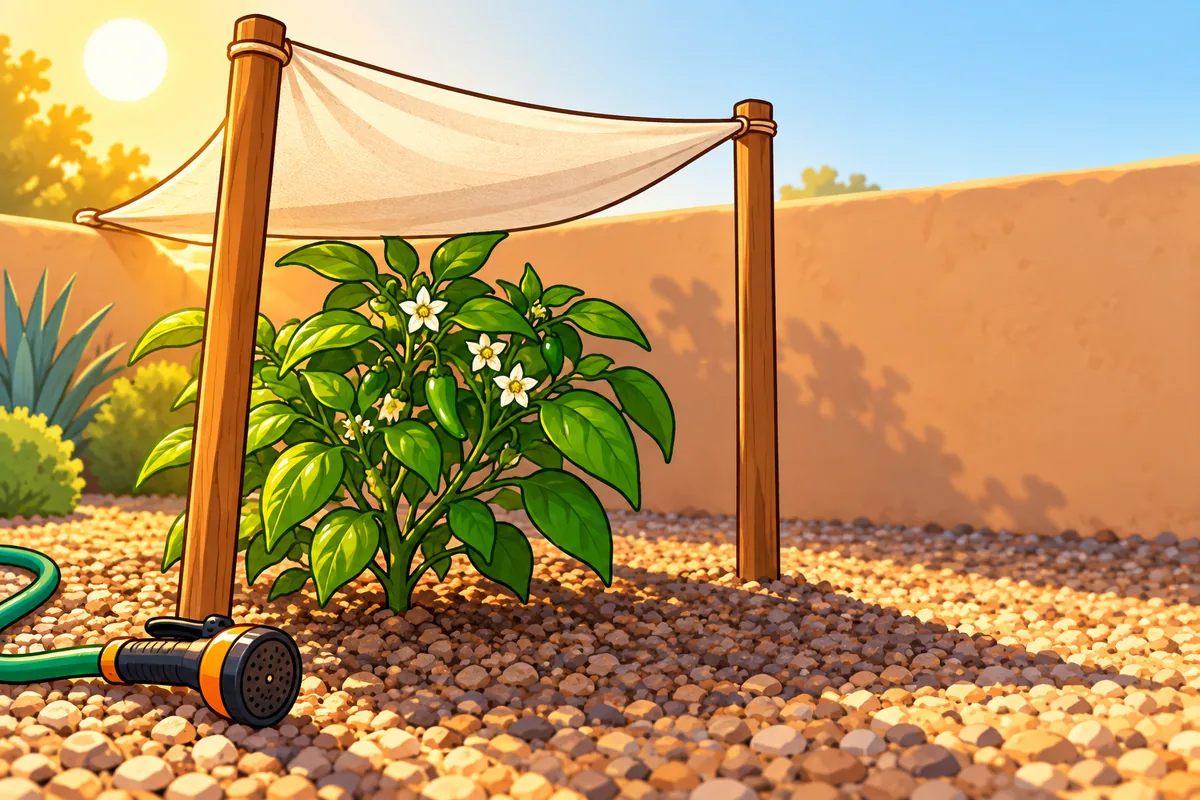
A plant with no peppers in late July has often just waited out June's heat, and the next flush is on its way. Illinois Extension describes exactly that: a plant with no fruit now may have lost its flowers weeks earlier, and it takes over 45 days from pollination to a ripe pepper8. Maryland adds two things that help in a heat wave, wetting the leaves in hot, dry spells and placing plants where they get late afternoon shade2. Maryland also notes that plants often stop blooming in midsummer when temperatures run high2, so you are not the only one with a bare plant in July.
Does too much nitrogen stop peppers from flowering?
It can slow your plant down. New Mexico State says too much nitrogen overstimulates growth and gives large plants with few early fruits3, and Utah State says over-fertilizing delays fruit set and maturity1. Clemson reads a plant with lots of foliage and few blossoms the same way6, and UF/IFAS tells you to cut the nitrogen once fruit appears, because too much can mean fewer peppers9.
Not every source goes that far, so weigh this one before you cut the feed. Illinois Extension agrees that nitrogen drives leafy growth but says overfeeding does not cause a lack of fruit on its own, and points at heat and pollination first8. So if your plant is huge and green, stop the nitrogen, but check the temperature table before you blame the feed. The fertilizer guide has the amounts that keep a plant from getting there.
What about a "bloom booster" with a big middle number? None of the extension guides read for this page say extra phosphorus makes a pepper flower. New Mexico State adds phosphorus before planting only when a soil test shows the soil is short of it5, so a soil test tells you more than a bottle label.
How long until peppers flower and fruit?
You can expect the first flowers roughly 3 to 6 weeks after you transplant, and green pods about 5 to 7 weeks after that. No extension guide read for this page gives the flowering date directly, so here is the estimate worked from two published figures.
The arithmetic
Maryland gives a bell pepper 70 to 80 days from transplanting to mature green4. New Mexico State says a chile reaches mature green 35 to 50 days after flowering3. Subtract one from the other:
| Step | Days |
|---|---|
| Transplant to mature green (bell)4 | 70–80 |
| Flowering to mature green (chile)3 | 35–50 |
| Transplant to first flowers (70 − 50 to 80 − 35)34 | About 20–45 |
If you grow habanero types, they run later: Maryland gives them 90 to 120 days from transplanting to harvest4, so a habanero with no pods in midsummer is often on schedule.
Once a flower opens and sets, the clock looks like this. Use it to tell whether the small green pods on your plant are on track.
- Day 0
The flower opens and sets; the petals fall and a tiny green pod stays behind.3
- About 4–5 weeks
The pod reaches its full length.3
- 35–50 days
The pod is mature green, ready to pick green.3
- 35–45 days
Utah State's figure from flowering to full red, yellow or orange color, depending on temperature and variety.1
The two figures overlap because they come from different places and varieties. You can plan on five to seven weeks from flower to a usable pod, and longer in a cool summer.
Do pepper flowers need pollinating?
Your peppers do it mostly themselves. Maryland Extension says pepper plants are largely self-fertile, though insects carry pollen between plants4. Illinois Extension points to research where pollinators raised fruit set and yield, and suggests you plant flowers for pollinators near the vegetables8.
If you grow indoors or under cover, no insects come to help you, which is where hand pollinating peppers comes in.
Why does a potted pepper stop making fruit?
Usually the pot itself. Your plant in a pot lives on the water and food that small volume holds, and three things go wrong more often there than in the ground.
- The pot is too small. UW–Madison and Maryland both set 5 gallons, 12 to 18 inches deep, as the minimum for one pepper410.
- The mix dries out between waterings. Once your plant is big and fruiting in summer heat, UW–Madison says you will need to water daily10, and dry soil drops flowers5.
- The feed ran out. Potting mix holds little food, so UW–Madison adds a slow-release fertilizer if the mix has none and follows the label from there10.
A pot on hot paving can also run hotter than the bed beside it. Move it where it gets the late afternoon shade Maryland suggests2, and it keeps the morning sun it needs.
How many peppers should one plant give you?
Fewer than you might hope, so check your plant against real numbers. Maryland expects 2 to 8 pounds from a 10-foot row4, UF/IFAS gives about 5 pounds per 10 feet in Florida gardens11, and Utah State plans on about 75 pounds from 100 feet of row1.
At 18 inches apart, a 10-foot row holds 6 plants. Divide Maryland's range by six and you get roughly 1/3 to 1 1/3 pounds of peppers per plant over the season, or a handful of bells and a few dozen small chiles. If your plant gave you three bell peppers by September, it is not broken.
Which flowers will not ripen before your first frost?
Any flower that opens less than about 5 weeks before your first frost will not give you a pod to pick green, and a flower that opens much later than 7 to 10 weeks out will not turn red. New Mexico State puts the wait from flowering to mature green at 35 to 50 days3, and Maryland adds 2 to 3 weeks more for a bell pepper to ripen after it reaches mature green4.
A master gardener answering for Oregon Extension works it the same way: pods mature in 45 to 55 days in good conditions, so subtract that from your first frost date and start pinching new blossoms about 60 days before frost12. Here is that count worked for a first frost on October 15, so you can swap in your own date:
| Goal | Days before frost | Last flower date |
|---|---|---|
| Oregon Extension rule for starting to pinch blossoms12 | 60 | Aug 16 |
| Pod to pick green (mature green)3 | 35–50 | Aug 26 to Sep 10 |
| Bell pepper to color up (mature green plus 2–3 weeks)34 | 49–71 | Aug 5 to Aug 27 |
After your date passes, pinch off new flowers and pods smaller than your thumb. The plant then sends its sugars to the pods that still have time, and the Oregon answer suggests you test the rule on half your plants and keep notes, because the weather is the part nobody controls12.
When a killing frost is on the forecast, Maryland says you can pull the whole plant and hang it upside down in a warmer place such as a garage, where the pods keep ripening4. The harvest guide covers what to pick before then.
Are thrips deforming your pepper flowers?
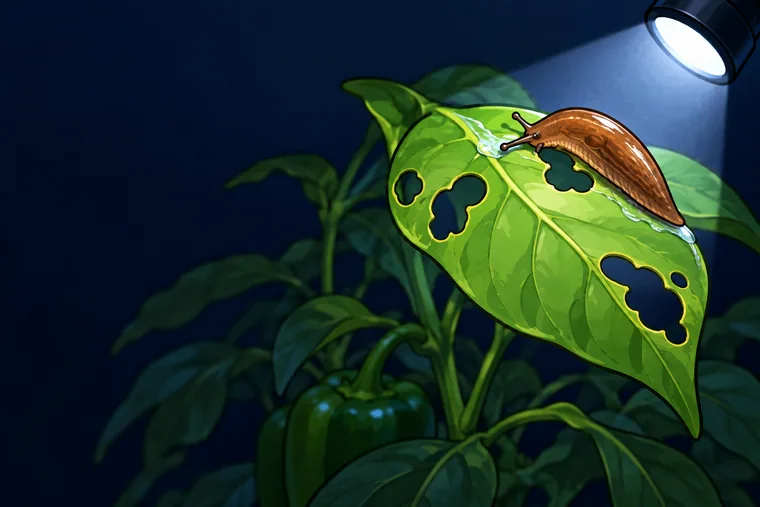
Look inside a few open flowers before you blame the weather. Thrips are pale yellow to light brown insects only about 0.06 inch (1.5 mm) long, small enough that you will not spot them from a standing height13. UC IPM says heavy feeding distorts plant growth, deforms flowers and leaves white-to-silvery patches on new leaves, often with tiny black specks in them13.
Here is how you check without a magnifier:
- Tap a flower over a sheet of white paper and watch for specks that move.
- Hang a yellow sticky card near the plant; UC IPM recommends the cards to track thrips13.
- Look for silvery patches with black specks on the newest leaves.
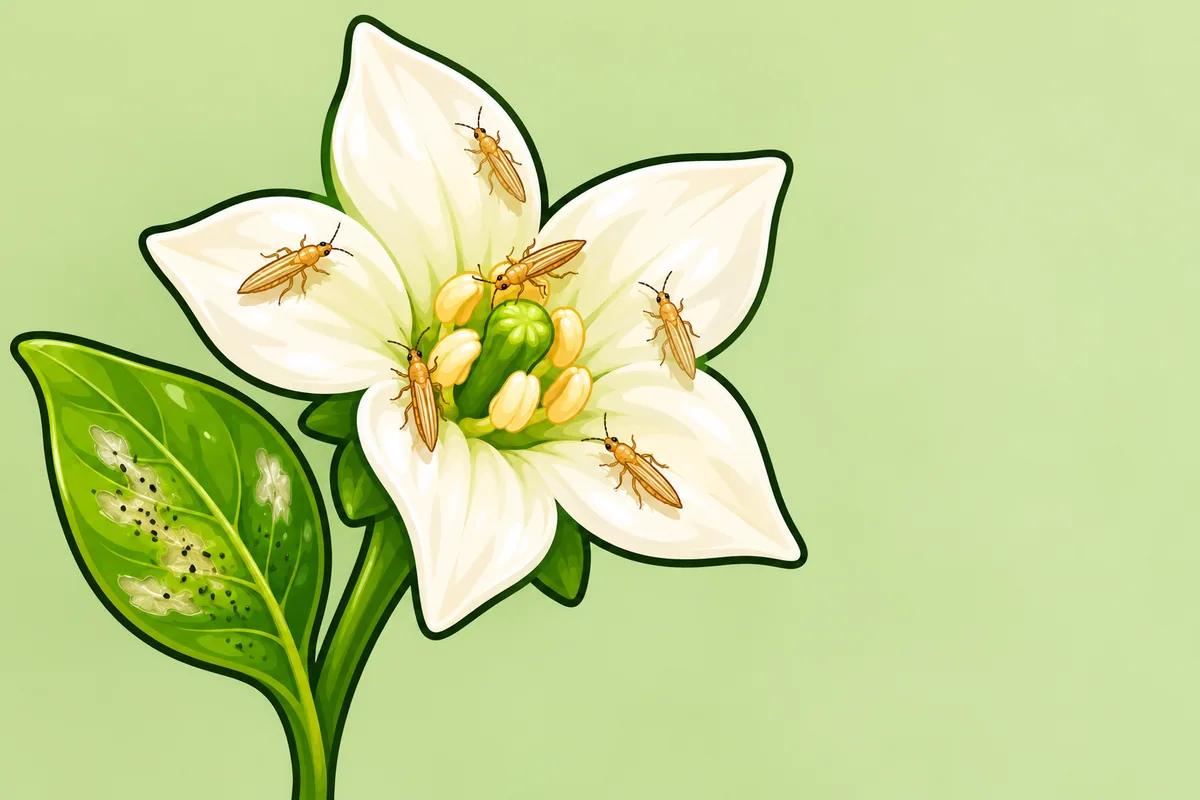
If you find a few thrips and a healthy flower, you can leave them alone, because UC IPM treats thrips mostly as a problem when numbers are high13. A flower that stays crumpled and a plant with silver-flecked new leaves means they are the cause, and the pest and disease guides show what to do next. Maryland adds that very high or very low temperatures can kill pollen, and it blames poor pollination for misshapen pods2.
Does picking more often give you more peppers?
Often, yes. Maryland lists failure to harvest regularly among the causes of poor fruit set, because it signals the plant to slow down flower and fruit production2. A plant hung with ripe red pods has, in its own terms, finished its job.
You do not have to wait for red. UC IPM says you can harvest a pepper any time after it reaches the color you want, and some bells can come off from the first green all the way through to dark red14. New Mexico State picks its green crop before the pods change color, once they are fully developed, firm and crisp when you squeeze them5.
So if your plant has a few big pods and no new flowers, pick some of them green. You get a meal now, and the plant gets its signal to keep going.
Should you pinch off pepper flowers?
Only on young transplants. Utah State removes flowers and fruit from transplants before planting, because plants that carry them establish slowly and yield poorly1, and Maryland pinches out early flower buds and small fruits as well4. Those early flowers cost the plant roots it needs for the rest of the summer.
After the plant settles in, leave the flowers alone. None of the extension guides read for this page pinch flowers on an established plant, and every flower you remove in July is a pepper you will not pick in August.
Should you wait, or change something?
Wait when the weather explains it; act when your plant or your soil does. The compare below puts the two side by side so you can match your own case.
Wait it out
Change something
- Healthy green plant, flowers forming and dropping1SignHuge, dark green plant with no buds, or flowers dropping in mild weather36
- A week of nights above 75°F or below 55–60°F, or days past 90°F12WeatherNights between 60 and 75°F and days under 90°F, yet still no set5
- Nothing drastic; shade in the late afternoon and wet the leaves in hot, dry spells2What to doStop nitrogen, check the sun hours, even out watering, pick every ripe podSources for this line1. Utah State University Extension2. University of Maryland Extension4. University of Maryland Extension9. UF/IFAS Gardening Solutions
Give your change two or three weeks to show. A flower that sets today still needs about five weeks to grow into a pod you would pick3.
Getting a stalled plant to set fruit
Run through these at your plant this week, in this order; you need nothing more than a finger and a weather record.
- Check the last ten nights. Below 55–60°F or above 75°F, wait; peppers set again as the weather improves.12
- Stop any nitrogen feed until you see small pods, then side-dress.49
- Push a finger into the soil. Give 1–2 inches of water a week, deep and not often, and keep it even.1
- Count the hours of direct sun: at least 6, and 8–10 is better. Move a pot if it falls short.4
- Pick every ripe pod so the plant keeps flowering.2
- In a heat wave, wet the leaves in the afternoon and give some late-day shade.2
- In a pot under 5 gallons, move the plant up a size and water it daily once it carries fruit.10
If the leaves are curling as well as the flowers dropping, the plant may be under attack; the leaf curl guide covers the pests that cause both. Otherwise, mark the date you made your change, and look under the leaves for small green pods three weeks later.