
Jwala Pepper, the Indian Cayenne-Type Chile at 85 Days
A long, thin, hot green chile from India that turns red and dries well.
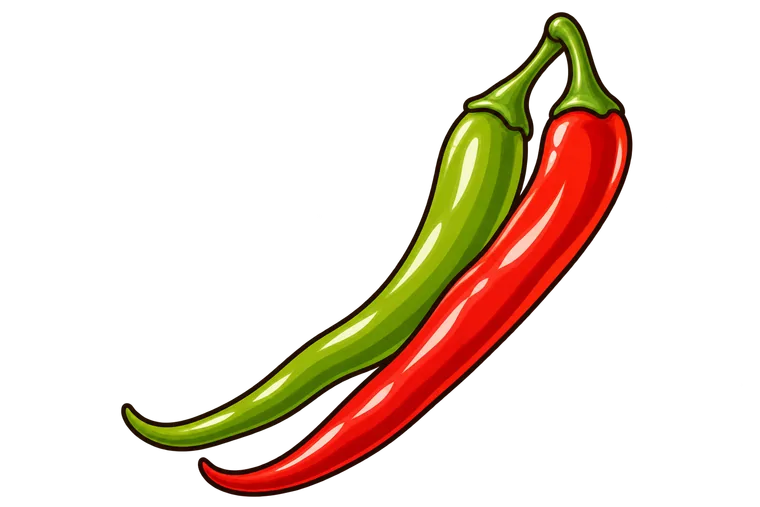
Hot, with no Scoville figure in the sources we read: the seed seller calls it hot and USDA files it as a cayenne type.
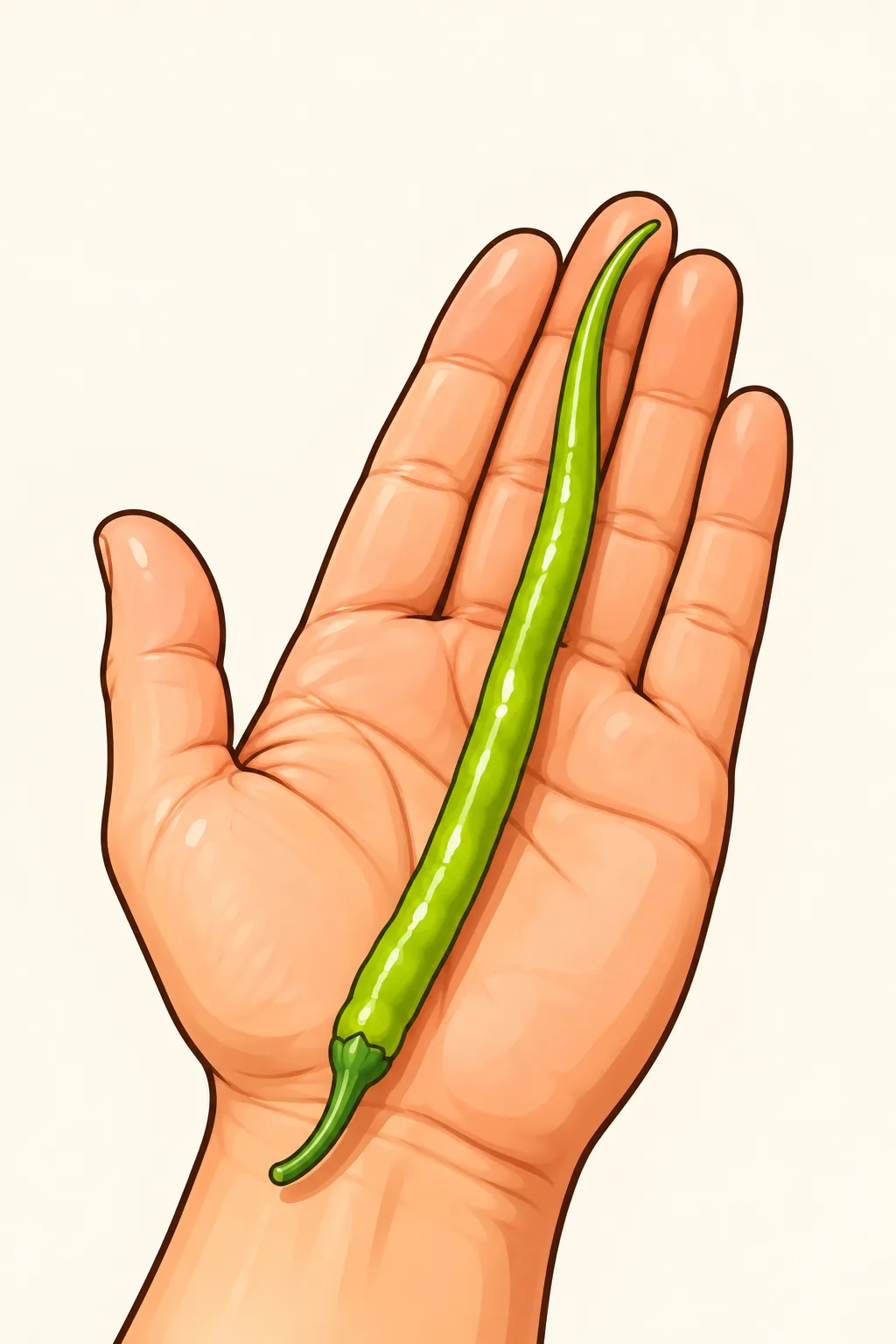
- Pods about 5½ inches long and ½ inch wide
- About 85 days to harvest
On this page
- 1What is a Jwala pepper?
- 2How hot is a Jwala pepper, if nobody prints a number?
- 3Should you cook your Jwala green or red?
- 4How do you turn Jwala pods into flakes?
- 5How do you cook with Jwala in Indian dishes?
- 6How do you grow Jwala peppers?
- 7How does a Jwala differ from a cayenne or a bird's eye?
- 8How do you keep fresh and dried Jwala?
- 9What can you use if you can't find Jwala?
- 10What goes wrong with Jwala peppers?
- 11Your next step with Jwala
What is a Jwala pepper?
A long, thin, hot Capsicum annuum chile from India, usually sold as Pusa Jwala. The USDA seed bank holds it as accession PI 640695, collected in India and received in 1999 from the Asian Vegetable Research and Development Center, and files it under one word: cayenne type1. The seed seller describes the same thing, an Indian variety with good yields of hot, cayenne-shaped pods2.
You'll know the plant by more than its pods. The seller notes light green stems and leaves and white flowers2, so it looks paler in a bed than most pepper plants. The pods ripen from light green to red2, and you can use them at either stage.
How hot is a Jwala pepper, if nobody prints a number?
Hot, and that's as precise as the sources get. The seller calls the pods hot and prints no Scoville figure for this variety2, and the USDA record gives no heat observation at all1. We don't show a number here because we couldn't find one anyone measured.
The cayenne label gives you a rough frame without a promise. UF/IFAS puts the cayenne at 25,000 to 50,000 SHU3, but a shared pod shape doesn't mean a shared heat, so treat that as a reason to be careful, not as Jwala's range. Test your own pods before you cook for others:
A safe first taste of a new batch
- Cut a thin ring from the middle of one pod, away from the seeds and white ribs.
- Taste it on a piece of bread, not on its own.
- Wait a full minute before you judge it.
- Keep milk or water nearby; Poison Control says small sips may help a burning mouth.4
If that ring makes you reach for the glass, use half a pod where your recipe asks for one green chile. Write down what you used, because the next batch from the same plant may run a little hotter or milder. If it barely registers, your batch runs mild and you can use them freely.
Should you cook your Jwala green or red?
Both work, for different jobs. The seller's uses lean on drying, flakes, stir-fries and Indian cooking2, and the pod's color decides which one suits it best.
| Stage and form | Best for | Why |
|---|---|---|
| Green, fresh | Stir-fries, a curry tempering, raw relish | Crisp and sharp; you can slit it whole into the pan |
| Red, fresh | Chutneys and sauces | More color; blends smoothly |
| Red, dried whole | Tempering oil, slow curries | Keeps for months in a jar |
| Red, crushed | Flakes for the table | The seller labels it good for hot pepper flakes 2 |
A practical habit if you grow it: pick some green for the week's cooking, and leave the rest to turn red on the plant for drying. That way one plant covers both.
How do you turn Jwala pods into flakes?
Ripen, dry, crush. Thin walls make a long pod like this one easier to dry than a fleshy pepper, and the seller lists it as a good drying spice pepper2.
- Light green podEdible now, but leave some on
- Ripe red podFull color for drying
- Dried until brittleSun, oven or dehydrator
- CrushedSeeds in for more heat, out for less
- Flakes in a jarSealed, away from light
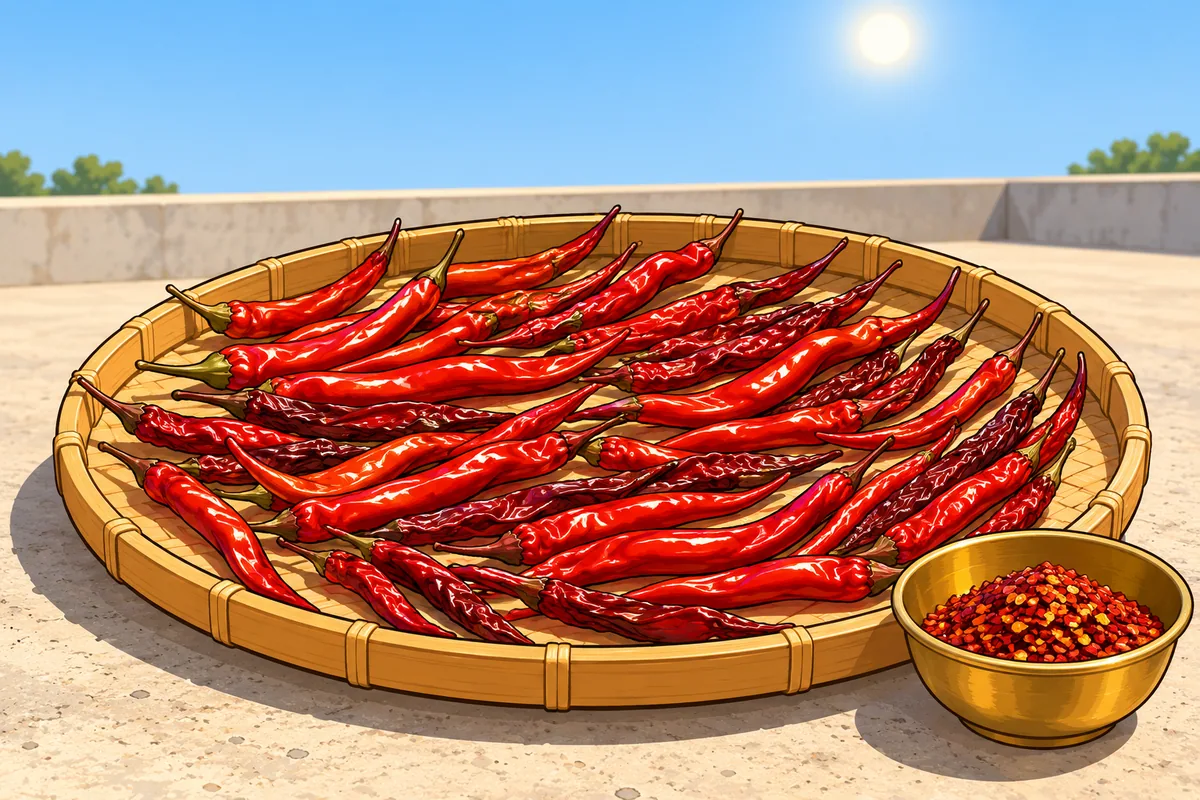
Dry only sound, unbruised pods and spread them in one layer so air reaches every side. If you don't have hot sun, an oven or dehydrator works; the pepper drying guide gives temperatures and times. Crush them with gloves on and a window open, because the dust finds your eyes before you notice it.
How do you cook with Jwala in Indian dishes?
The seller lists Indian cuisine among its best uses2. These are kitchen starting points; scale them to the heat of your batch.
- Tempering (tadka): slit one or two green pods and fry them in hot oil with mustard or cumin seeds for a few seconds before you pour it over dal.
- Curries: add one whole slit pod with the onions; take it out before serving if guests prefer less heat.
- Raw relish: chop a green pod fine with onion, lemon juice and salt as a side for rice.
- Stir-fries: slice pods on the diagonal and toss them in at the end so they stay crisp.
A whole slit pod gives you flavor with less burn than a chopped one, because less of the inside meets the food. When you want the heat, chop it; when you want the aroma, leave it whole.
Here's a worked example for a pot of dal for four. Heat two tablespoons of oil, add a teaspoon of cumin seeds, then one slit green Jwala and a pinch of asafoetida, and fry for about ten seconds until the pod blisters. Pour it straight over the cooked lentils and stir. Taste, and if you want more heat, chop a second pod into the pot rather than adding it whole. These amounts are a kitchen starting point, not a tested recipe, so adjust them to your batch.
How do you grow Jwala peppers?
Like a cayenne, with an eye on drainage. Here's what the record and the seller tell you to plan for:
Before you plant
- Count on about 85 days to harvest; start seeds indoors if your summer is short.2
- Leave room for a plant 24 to 36 inches tall.2
- Plant in a well-drained bed or a pot: the USDA accession scored 6 for Phytophthora root rot, on the susceptible side of its scale.1
- Expect pale, light green leaves; that's normal for this variety, not a sign of hunger.2
That last check saves you a lot of worry in the first month after planting. Gardeners often reach for fertilizer when leaves look light, but here the color is part of the variety.
How does a Jwala differ from a cayenne or a bird's eye?
Mostly in size and in how you use it. All three are hot C. annuum chiles in UF/IFAS's descriptions, but they come in very different pods3:
| Pepper | Pod | Usual form |
|---|---|---|
| Jwala | About 5½ × ½ in, green to red | Fresh green or dried red |
| Cayenne | Long, red, usually dried | Ground powder or dried flakes |
| Bird's eye (Thai) | About 1 in, under 1/5 in wide | Fresh or dried whole |
UF/IFAS says cayenne is generally dried and used as powder or flakes3, which is exactly the job the seller gives Jwala, so the two overlap most in a spice jar. The tiny bird's eye chili is the one to reach for when you want a lot of heat from a small piece. A fresh green Jwala sits in between: long enough to slit and fry whole, thin enough to slice into rings.
How do you keep fresh and dried Jwala?
Fresh pods keep best cool and dry, and frozen ones keep for months. NMSU's chile guide says chile keeps up to 12 months frozen, packed flat no deeper than 2 inches so it freezes quickly5. Freeze green pods whole; they slice easily straight from the bag into a hot pan.
Dried pods and flakes need a sealed jar away from the stove and out of the light, which fades the red. Make small batches of flakes and keep the rest as whole dried pods, since whole pods hold their color and aroma longer than crushed ones. If you open the jar and smell nothing, it's time to dry a new batch.
What can you use if you can't find Jwala?
Another long, thin, hot chile. A cayenne has the same pod type in the USDA record's terms1 and is easier to find fresh or dried, and the smaller Thai chili works if you want more heat in less space. Start with less than your recipe says and taste, since you're swapping one unmeasured heat for another. India has many more named chiles on the Indian peppers page.
What goes wrong with Jwala peppers?
Most problems you will meet with this pepper come from drying or from bare hands.
Problems and fixes
- Drying pods turn soft or show mold: they were bruised or piled up. Dry only sound pods in a single layer with air around them.
- Your hands burn after slitting a batch: Poison Control lists warm water, vegetable oil or diluted vinegar soaks for skin.4
- Dust from grinding flakes in your eyes: rinse with plenty of warm water for 15 minutes.4
- Fresh pods go limp in the fridge: freeze extras flat in bags no deeper than 2 inches; chile keeps up to 12 months frozen.5
- Plants collapse after heavy rain: likely root rot; move to a raised bed or pot next season.1
Your next step with Jwala
Buy or pick a handful of red pods and dry them this week; a small jar of your own flakes tells you more about this pepper than any label. To see it beside other chiles that dry well, the peppers for drying list is the next page to open.
Related peppers
 CayenneHot25,000–50,000 SHUBird's eye chiliHot50,000–100,000 SHU
 SerranoMedium10,000–25,000 SHU
 Thai chiliHot50,000–100,000 SHU
Published ranges.3
Related in Peppers
-
Aji Charapita, the Pea-Sized Amazon Chile at 30K–50K SHU
A tiny yellow chile from Iquitos and Pucallpa with a citrus aroma and a heat seed sellers compare to cayenne.6 min read -
Chiltepin Heat, 70,000–160,000 SHU in a Pea-Sized Wild Pod
The wild bird pepper of Sonora, Arizona and Texas, picked from shrubs that grow under desert trees.6 min read -
Espelette Pepper, 10 Basque Communes and 15 Days on the Wall
A conical red pepper from the French Basque Country whose powder the AOP rules call strong but not burning.7 min read -
Piri Piri Pepper, the 5 cm African Bird's Eye Chile
A small, fiery red chile known in Portugal and Mozambique, and sold abroad as African bird's eye.6 min read -
Siling Labuyo, the Philippine Wild Chili Sold at ₱800 a Kilo
The Philippines' everyday wild chili: soaked in cane vinegar, cooked into stews, and even eaten as a leaf.6 min read -
Tabasco Pepper Heat at 30,000–50,000 SHU, Plant to Mash
The small upright chile behind a Louisiana sauce, and a good one to grow.6 min read
Sources
· 5
- 1USDA ARS, Germplasm Resources Information Network (GRIN-Global) PI 640695, 'Pusa Jwala', Capsicum annuum L.
- 2Reimer Seeds (seed seller's product page for its own seed) Pusa Jwala Pepper Seeds
- 3University of Florida IFAS Extension HS-859/TR010: Pepper Production in Miami-Dade County, Florida
- 4National Capital Poison Center (Poison Control) Capsaicin: when the chili is too hot
- 5New Mexico State University Cooperative Extension (Guide E-324) Processing Fresh Chile Peppers (revised by Nancy C. Flores and Cindy Schlenker Davies)