
Aji Limo vs Aji Amarillo, Two Species at 50,000 SHU
Two Peruvian ajíes, one heat band, two different plants.
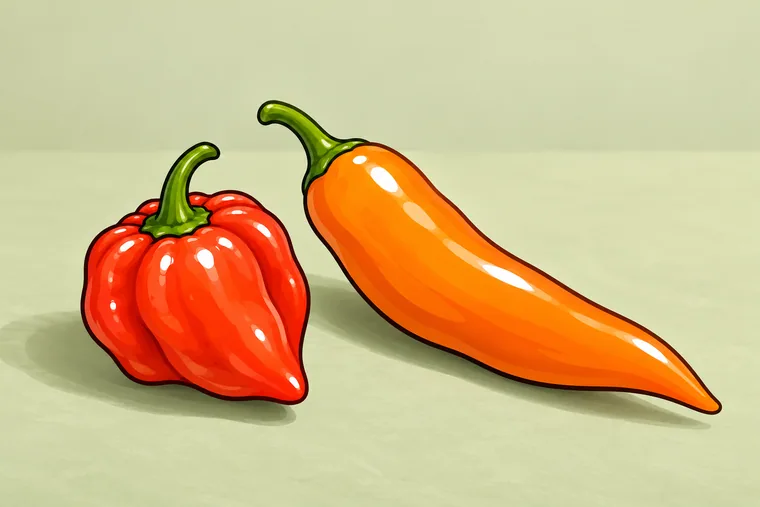
A tie on paper: one seller rates both at 30,000–50,000 SHU and says its powders of each test just under 50,000. No university or peer-reviewed range exists for either.
- Ají limo is Capsicum chinense, the habanero's species; ají amarillo is C. baccatum var. pendulum
- Limo comes in red, white, green, yellow or purple; amarillo is orange or yellow and colors a dish yellow
- Swap one for one by weight; the color of your dish changes more than its heat
On this page
- 1Is ají limo hotter than ají amarillo?
- 2Why might a limo still bite harder than the same weight of amarillo?
- 3How can you tell an ají limo plant from an ají amarillo plant?
- 4What do the two pods look like at a Peruvian market?
- 5Why can you buy amarillo paste almost anywhere but rarely find limo?
- 6Which Peruvian dishes take limo and which take amarillo?
- 7How do you swap ají limo for ají amarillo by weight?
- 8What trips cooks up when they trade one ají for the other?
Is ají limo hotter than ají amarillo?
Not by any figure you can find. Sonoran Spice rates both ají limo and ají amarillo at 30,000 to 50,000 SHU, and says its own powder of each tests just under 50,00012. PRODERNA, a German ingredient supplier, gives its amarillo the same 30,000 to 50,0003.
Both bars are sellers' specs for their own powders and pods; we found no lab range for either ají. Log scale; bars are published ranges.1
Two identical bars, and both rest on sellers' numbers. We searched for a university, government or peer-reviewed range for either ají and found none, so you should read the chart as a fair sign that the two land close, not as a lab verdict.
For your cooking, that makes the choice about flavor, color and the dish you have in mind, and the rest of this page helps you make it. Treat the two as one heat band and choose by what the pot needs.
Why might a limo still bite harder than the same weight of amarillo?
Because its species tends to run hotter, though nobody has shown it for these two ajíes. Peru's ají limo belongs to Capsicum chinense, and ají amarillo to Capsicum baccatum var. pendulum4. A 2018 study of chiles bought at the main market in Huancayo, Peru, found far more capsaicinoids in its C. chinense fruit than in its C. baccatum5:
Now the limits. The C. chinense in that study was a chile sold locally under another name, not ají limo, and the team sampled one market5. A Portuguese trial of 71 peppers found C. chinense reaching the highest heat but no direct link between species and pungency overall6.
So the species hint is real but loose. If you hold a limo and an amarillo of the same weight, the limo has the better odds of being the hotter pod; the seller specs say the difference may be small. Taste a sliver of each before you commit your whole pot.
Here is a quick way to run that test at home. Cut a thin ring from the middle of each pod, away from the seeds, and taste the amarillo first, since you expect it to be the milder one. Wait a minute, drink a little milk or water, then taste the limo. If you feel a clear step up, start the limo at two thirds of the weight in your recipe; if you feel no difference, swap them gram for gram.
How can you tell an ají limo plant from an ají amarillo plant?
Look at the flowers. The Capsicum monograph describes C. chinense flowers as dull white or greenish-white, two to four or five to a node, while it describes C. baccatum flowers as white with greenish-yellow spots inside7:
Ají limo (C. chinense)
The Bioversity guide makes the same point from the Peruvian side: C. baccatum flowers are white or cream with greenish or golden marks on the corolla, a trait that sets the species apart4. The flower spots are the quickest check in your garden. The Portuguese trial agreed: seed color, flower color, spots on the petals and the ring at the calyx were the traits that best separated the species6.

If you grow both from seed, wait for the first flowers before you label your pots, because the flower and calyx traits are the ones the monograph and the Portuguese trial rely on, and you can check them with your own eyes in a minute. A spotted flower means you have the amarillo; a plain greenish-white one with a ring under the fruit cap means the limo. The ají amarillo growing guide covers the season for the larger plant.
What do the two pods look like at a Peruvian market?
The colors give them away. The Bioversity market guide describes ají limo as long or round and red, white, green, yellow or purple, and ají amarillo as orange or yellow4:
| Trait | Ají limo | Ají amarillo |
|---|---|---|
| Species | Capsicum chinense | C. baccatum var. pendulum |
| Other names | Paringo, miscucho, banana | Escabeche, verde, criollo; dried, ají mirasol |
| Shape | Long or round | Not described in the guide |
| Colors | Red, white, green, yellow or purple | Orange or yellow |
| Forms sold | Fresh, powder | Fresh, dried, powder, paste |
The amarillo is by far the more common one. In a 2011 survey of 205 people in Lima, 89 % said they eat ají amarillo, the top answer of any ají4. Limo did not make that list, which tells you why you find amarillo paste abroad far more often than limo.
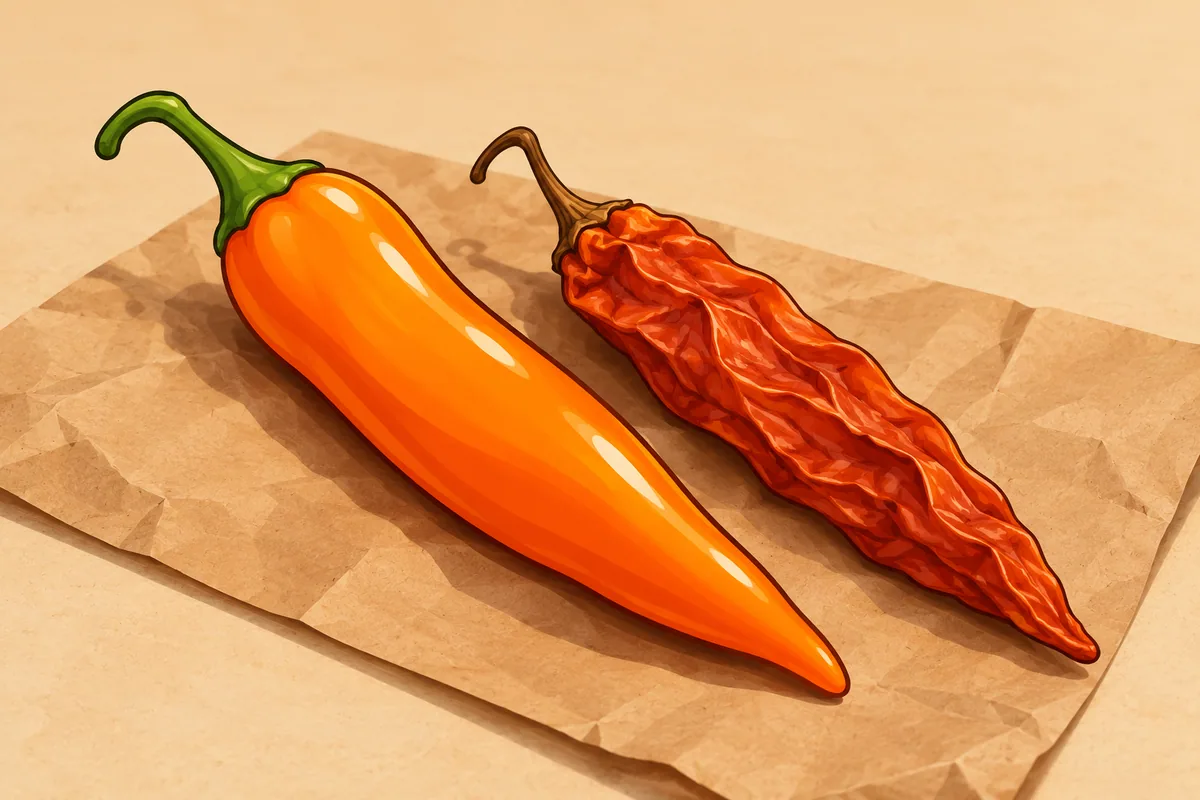
The dried amarillo has its own name, which trips up shoppers. Dried ají amarillo is sold as ají mirasol4, a different chile from the Mexican mirasol that dries into guajillo. If your recipe is Peruvian, the mirasol it means is your dried amarillo.
Why can you buy amarillo paste almost anywhere but rarely find limo?
Because Peru's own shoppers buy far more amarillo. In Lima's Wong supermarkets, ají amarillo made up 95.2 % of native ají sales from August to October 2010; at Tottus in May 2010 it was 79 %, with rocoto a distant second at 15 %4. Limo does sell in Lima, alongside panca, rocoto and mochero, but in smaller amounts4.
The guide calls amarillo the best-known C. baccatum in Peru and the one the country mainly grows, distributes and exports4. Exports of native ajíes are so small, it adds, that they often travel as personal parcels and never show up in export records.
For you, abroad, that means two things. Amarillo comes as paste, powder and dried mirasol in most Latin shops, while limo turns up mostly as powder, such as the 210 g jars of ground limo the guide lists from Peruvian brands4. If your recipe asks for fresh limo and you can't find it, a powder at the same heat band is a closer swap than skipping the ají.
Which Peruvian dishes take limo and which take amarillo?
The guide ties limo to hot sauces, ceviche and tiradito, and amarillo to a long list of cooked dishes4:
- Ceviche, tiradito or a raw hot salsaLimo's classic jobs
- Use ají limoHot
- Ají de gallina, causa, chupe or escabecheAmarillo's classic jobs
- Use ají amarilloHot
- Ceviche with color and heatThe guide lists ceviche under both
- Use limo for the bite, amarillo for the color
The pattern follows the pods. Limo goes in raw, sliced thin, where its sharp, citrus-like fruit wakes up a plate of fish; Sonoran Spice describes it as very fruity and citrusy1. Amarillo goes into the pot, often as a paste, where its yellow color and fruit carry a whole dish: PRODERNA calls it tropical and fruity with a raisin aroma3.
If your recipe uses jarred paste, the ají amarillo paste guide tells you what goes into it and how hot the jars run.
How do you swap ají limo for ají amarillo by weight?
Use the same weight, then fix the color. With the same seller heat band for both12, the honest swap is gram for gram:
| Recipe asks for | Swap with | Amount | Color change |
|---|---|---|---|
| 20 g fresh ají limo, a ceviche for four | Fresh ají amarillo | 20 g | Yellow-orange flecks in place of red, white or purple |
| 50 g ají amarillo, a pot of ají de gallina | Fresh ají limo | 50 g | The sauce loses much of its yellow |
| 1 tbsp amarillo powder | Limo powder | 1 tbsp | Color follows the limo's own color |
The middle row is the one to think twice about. Amarillo gives ají de gallina its yellow, and a red or purple limo cannot. If you must use limo there, add a pinch of turmeric or a spoon of yellow bell pepper purée for color, and keep the limo weight the same.
What trips cooks up when they trade one ají for the other?
Mostly names and colors. Run these checks before you cook:
Before you swap ají limo and ají amarillo
- Check the dried name: dried ají amarillo is sold as ají mirasol, not as a third ají.4
- Check the color of your limo: a purple or red one will change the color of a yellow sauce.4
- Treat the SHU figures as seller specs; no lab range exists for either ají.13
- Wear rubber gloves to seed either pod, and keep your hands away from your eyes.8
- If your hands burn after cutting, soak them in plain vinegar.8
The gloves point matters more than the band suggests. At up to 50,000 SHU, both ajíes reach the top of the cayenne range of 25,000 to 50,0009, so seeding a kilo of either for a party batch of paste is a job for gloves, not bare hands.
Your next step: decide whether your dish needs the limo's raw bite or the amarillo's yellow body, weigh the amount from the swap table, and taste a sliver of your pod before you add it. If you can't find either fresh, the ají limo stand-ins list what to buy instead, and the panca against the amarillo covers the third ají on most Peruvian shopping lists.
Related in Compare
-
Aji Panca vs Aji Amarillo, About 40× Apart in Heat
One yellow and hot, one burgundy and mild, often in the same pot.6 min read -
Arbol vs Guajillo Chiles, 14× Apart in One Field Trial
Two red dried chiles from the same bag aisle, one for heat and one for body.6 min read -
Cayenne vs Jalapeño, 7.5× the Heat and Swaps
One usually ends up in a jar of powder, the other in a fresh salsa.6 min read -
Ancho Pepper vs Guajillo, Heat That Flips With the Summer
The two dried chiles most red sauces start with, and the weather that decides their heat.6 min read -
Ancho vs Poblano, One Pepper Picked Green or Dried Red
Fresh green, ripe red, then dried: one plant, three stages, two names.6 min read -
Calabrian Chili vs Fresno, Up to 4× Hotter by EU Rules
A protected Italian name that covers a whole region's chiles, against one Californian cultivar.6 min read
Sources
· 9
- 1Sonoran Spice, seller page for its own product Aji Limo Powder
- 2Sonoran Spice, seller page for its own product Aji Amarillo Powder
- 3PRODERNA (J.H. Lüttge GmbH), ingredient supplier, spec for its own product AJI AMARILLO (whole and powder)
- 4Bioversity International, with INIA and Peru's Ministry of Agriculture and Irrigation Guía de oportunidades de mercado para los ajíes nativos de Perú (Jäger, Jiménez, Amaya, compilers)
- 5Pesquisa Agropecuária Tropical 48(3) (Universidade Federal de Goiás) Capsaicinoids and pungency in Capsicum chinense and Capsicum baccatum fruits (Gavilán Guillen, Tito, Gamarra Mendoza)
- 6Acta Horticulturae 939:315-322 (ISHS) Morphological characterization and determination of pungency in Capsicum spp. (Santos, Vasconcelos, Almeida, Dias Fernandes, Batista Leitão)
- 7PhytoKeys 200:1-423 (Pensoft) Monograph of wild and cultivated chili peppers (Capsicum L., Solanaceae)
- 8New Mexico State University Cooperative Extension Service (Guide E-324) Processing Fresh Chile Peppers (revised by Nancy C. Flores)
- 9UF/IFAS Gardening Solutions Peppers by Scoville Units